18 Japandi Guest Room Ideas for a Calm Minimal Stay
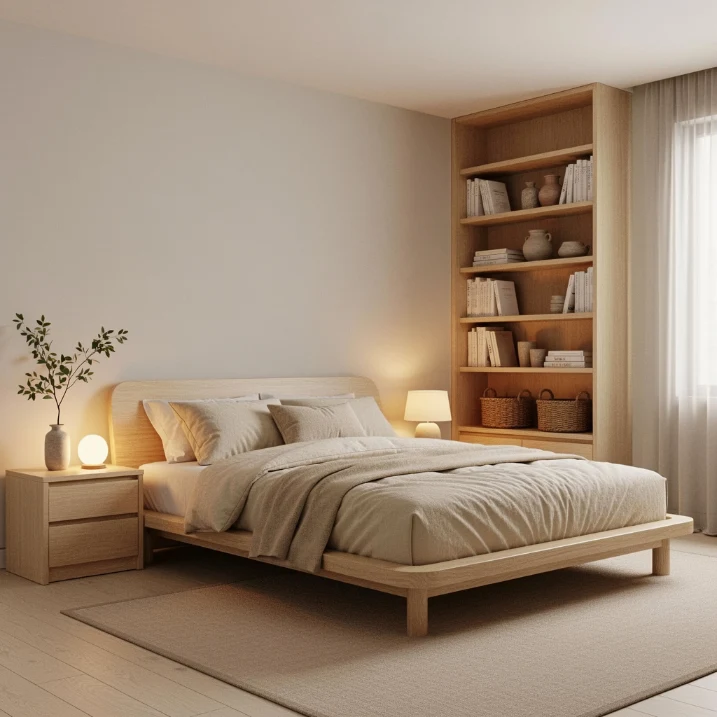
1. Neutral Toned Retreat
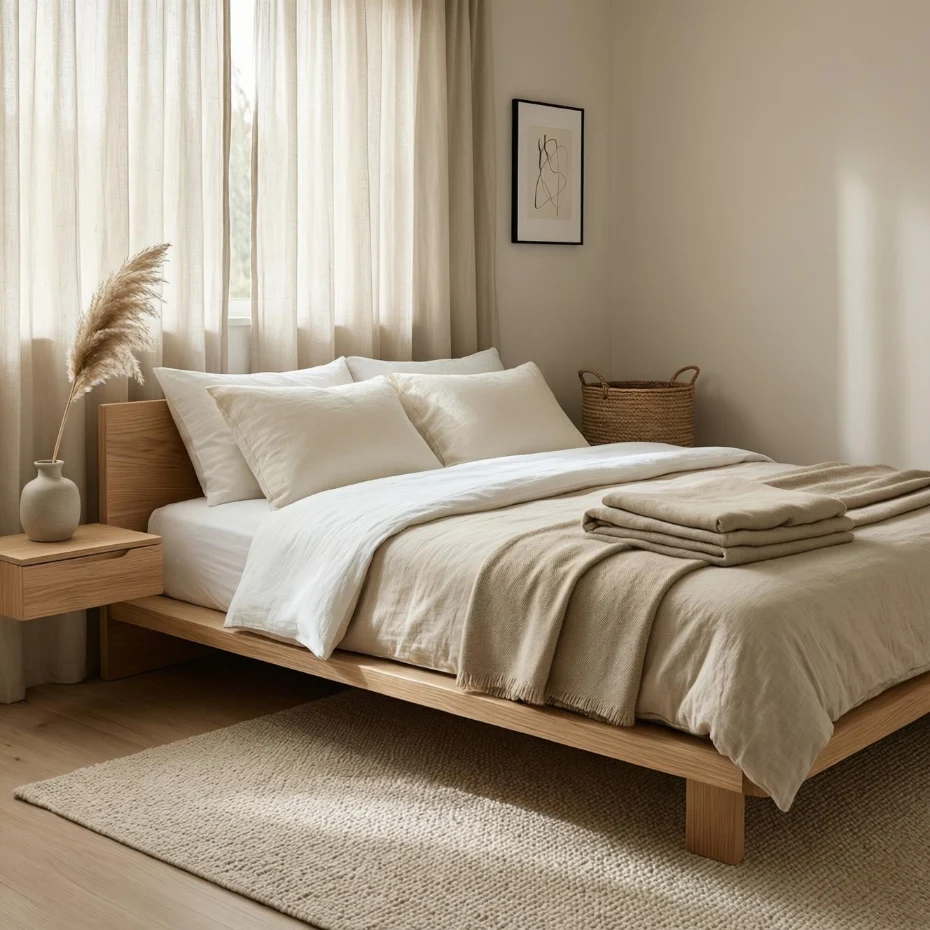
A Japandi guest room thrives on neutral, calming tones. Soft shades of beige, cream, and muted gray create a serene backdrop that encourages relaxation. Light wood furniture and simple textiles enhance warmth while maintaining minimalism.
Keep décor intentional and uncluttered. A simple vase or framed artwork can add character without overwhelming the space. This approach ensures guests feel welcomed into a peaceful, calming environment that balances Scandinavian and Japanese influences effortlessly.
2. Low Platform Bed Design
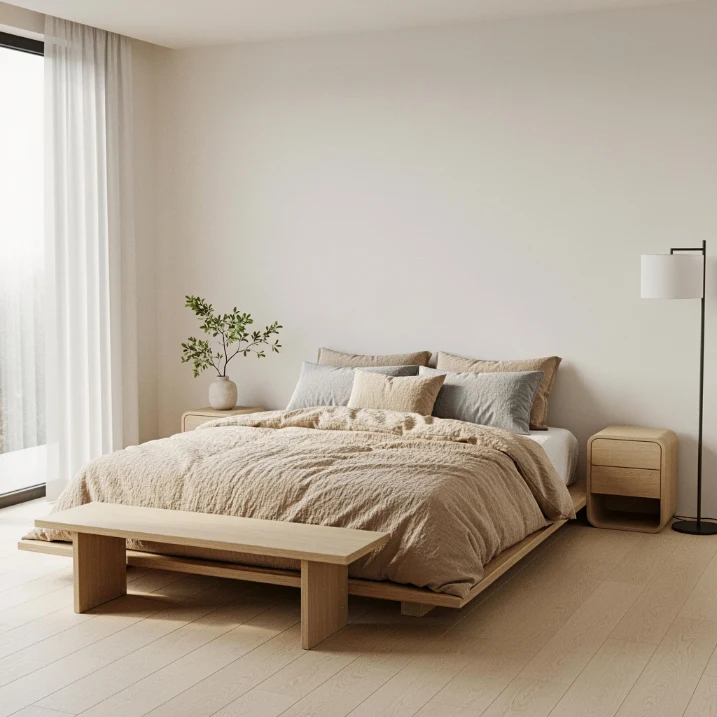
A low platform bed is both functional and visually grounding. Its clean lines complement the simplicity central to Japandi design while making the room feel open and airy. Neutral bedding enhances a restful atmosphere.
Pair the bed with minimal nightstands and soft lighting to maintain tranquility. Keeping furniture low and streamlined ensures the space feels uncluttered and calming, offering a guest room that is both stylish and soothing.
3. Natural Wood Accents
Wood is a key material in Japandi interiors, bringing warmth and a connection to nature. Light oak or ash tones for furniture and shelving balance the neutral palette while adding subtle texture.
Use wooden elements sparingly for cohesion. A small desk, shelving unit, or bedside table in natural wood ensures warmth without clutter. These accents create a serene and inviting environment, perfect for a calm guest stay.
4. Linen Bedding and Throws
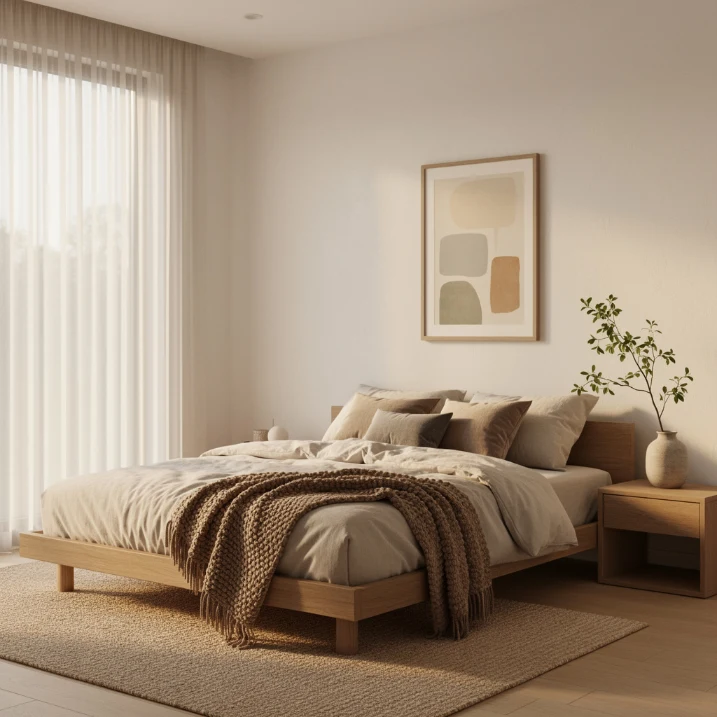
Linen bedding embodies casual elegance and comfort. Its breathable texture and soft drape create a relaxed, tactile experience for guests. Layered throws add depth and warmth while staying minimal.
Keep colors soft and cohesive, avoiding bold patterns. The tactile quality of natural fabrics promotes relaxation and aligns with Japandi principles, ensuring the bedroom feels both inviting and refined.
5. Minimalist Storage Solutions
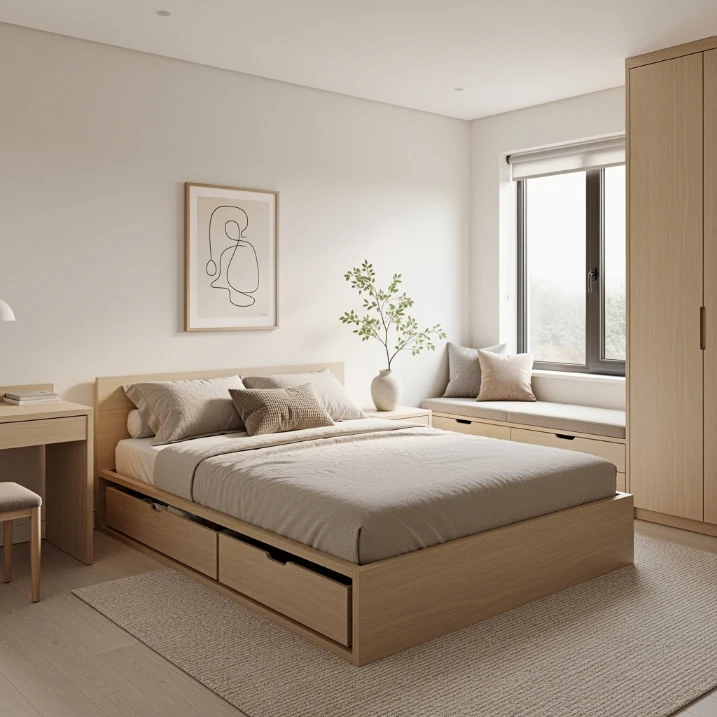
Hidden or minimalist storage prevents visual clutter. Simple drawers under beds or streamlined cabinets keep the space tidy without distracting from the serene aesthetic.
Avoid bulky storage units that overwhelm the room. By keeping essentials out of sight, the guest room remains calm, spacious, and functional, providing visitors with both convenience and a visually relaxing environment.
6. Shoji-Inspired Screens
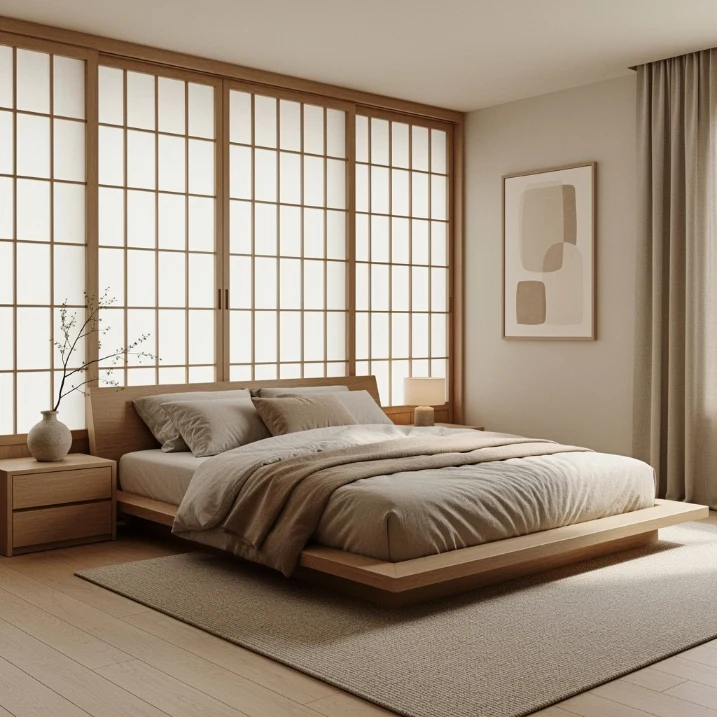
Shoji-style sliding panels subtly divide the space while allowing soft light to filter through. They introduce traditional Japanese influence while maintaining a modern, minimalist feel.
Pair with neutral tones and simple furnishings to enhance tranquility. Shoji screens not only add architectural interest but also help create a private, calming retreat for guests without compromising openness.
7. Soft Ambient Lighting
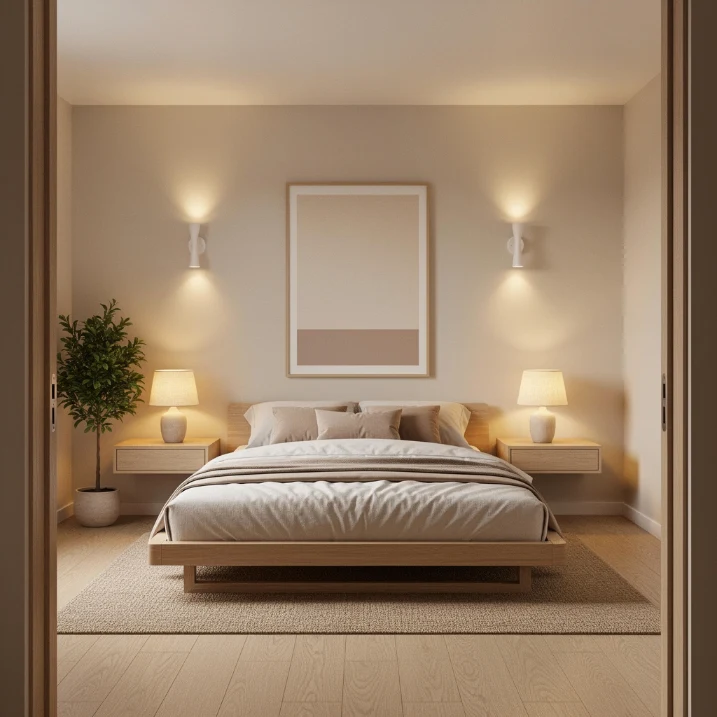
Warm, diffused lighting is essential in a Japandi guest room. Wall sconces or table lamps provide gentle illumination that enhances comfort and reduces harsh shadows.
Avoid bright overhead lights that feel stark. Layer lighting subtly to create an intimate, cozy atmosphere. Soft lighting transforms the room into a restful sanctuary where guests feel immediately relaxed.
8. Indoor Plant Touch
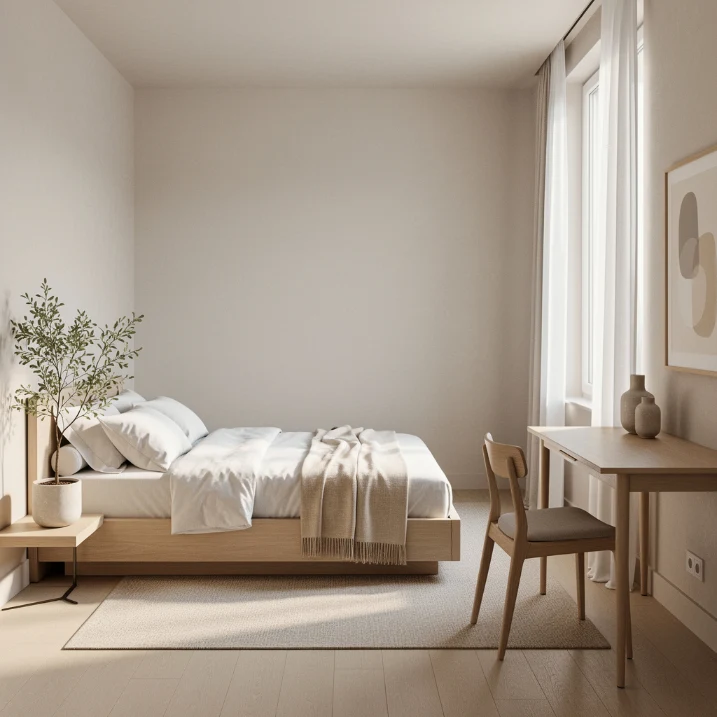
A small indoor plant introduces life and a natural focal point without overwhelming minimal design. Plants like succulents or bonsai work well in compact guest rooms.
Keep planters neutral in color and texture for harmony. This organic touch reinforces Japandi principles, connecting indoor spaces to nature and creating a calm, refreshing atmosphere for visitors.
9. Minimal Wall Art
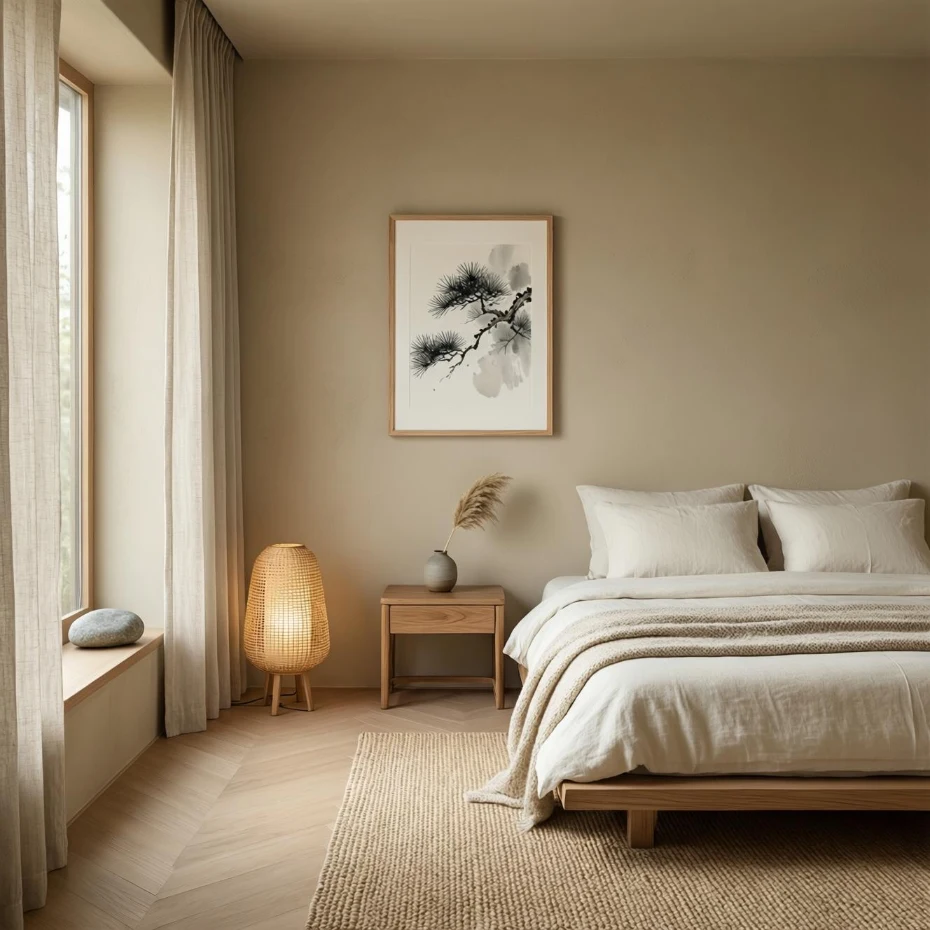
One or two pieces of simple, neutral-toned artwork add personality without clutter. Abstract shapes or nature-inspired prints maintain the calming aesthetic.
Ensure spacing is balanced and walls aren’t overcrowded. Minimal art allows guests to focus on the serenity of the space, reinforcing the restful, uncluttered atmosphere of the Japandi design.
10. Neutral Rug Layering
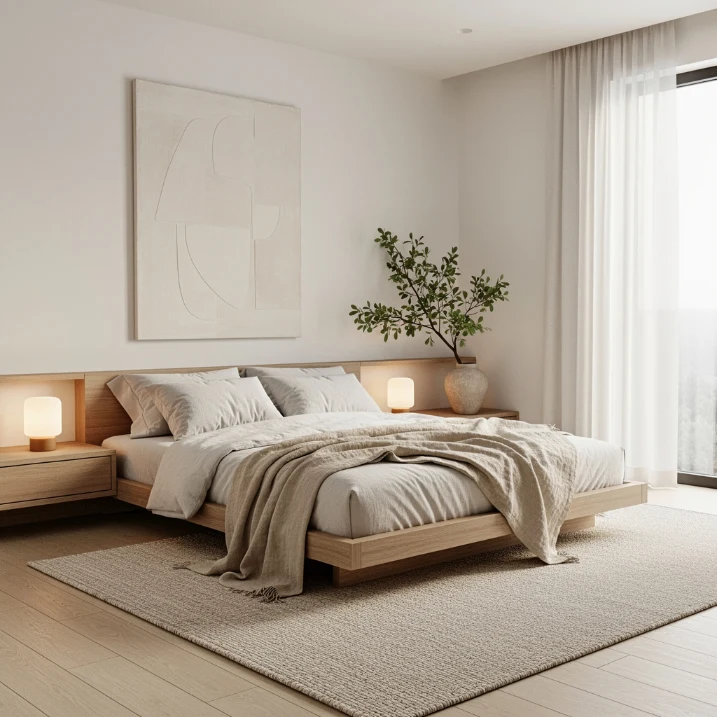
A soft, textured rug anchors the space and adds warmth underfoot. Neutral shades complement flooring and furnishings while enhancing comfort and visual cohesion.
Avoid overly bold patterns. Layering rugs subtly can add dimension without disturbing minimalism. This detail contributes to a cozy, grounded feeling in the guest room.
11. Small Desk Corner
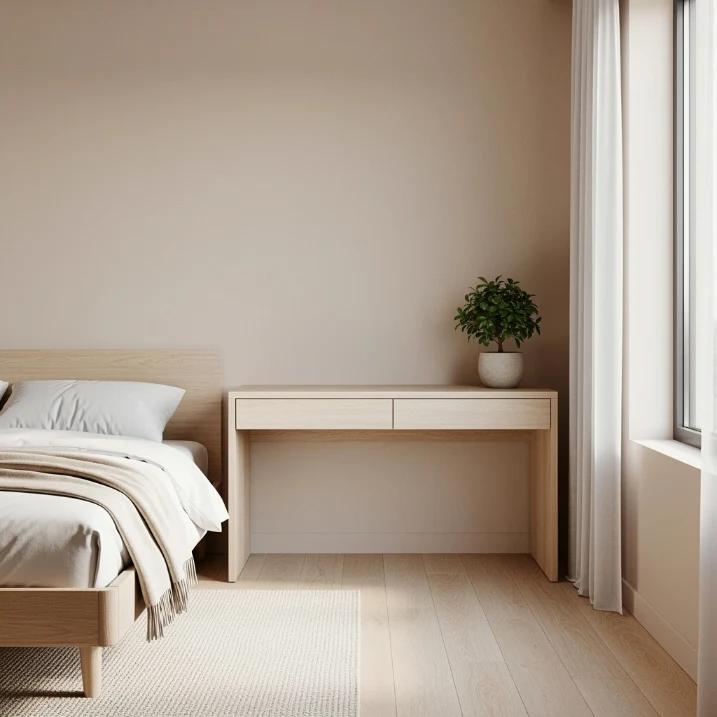
Including a compact desk or workspace adds functionality for guests. A streamlined wooden desk with minimal décor provides space for work or personal tasks.
Keep accessories minimal—perhaps a small plant or simple lamp. The focus is on utility without clutter, blending practicality with calm aesthetics seamlessly.
12. Tatami-Inspired Seating
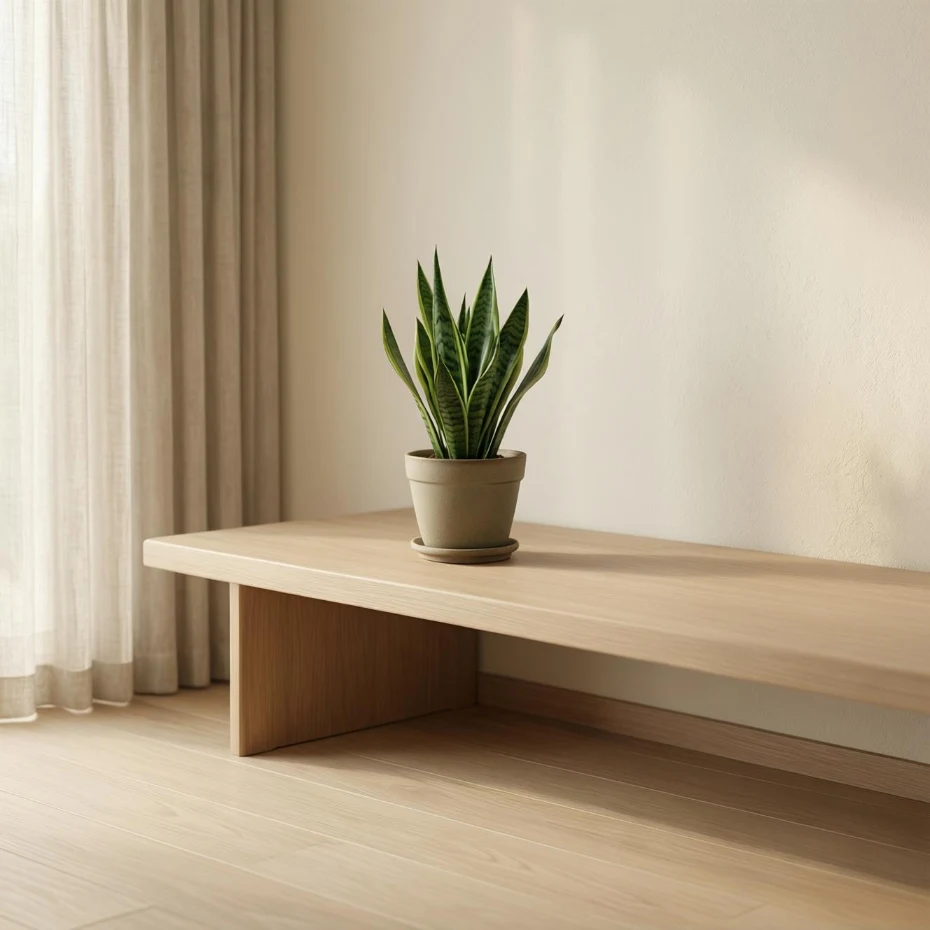
A low seating area inspired by tatami mats adds traditional Japanese touch. Simple cushions or floor seating create flexible spaces for reading or meditation.
Keep textures soft and colors neutral. This feature enhances the cultural authenticity of the room while promoting relaxation, offering guests a unique, serene experience.
13. Black Accent Detailing
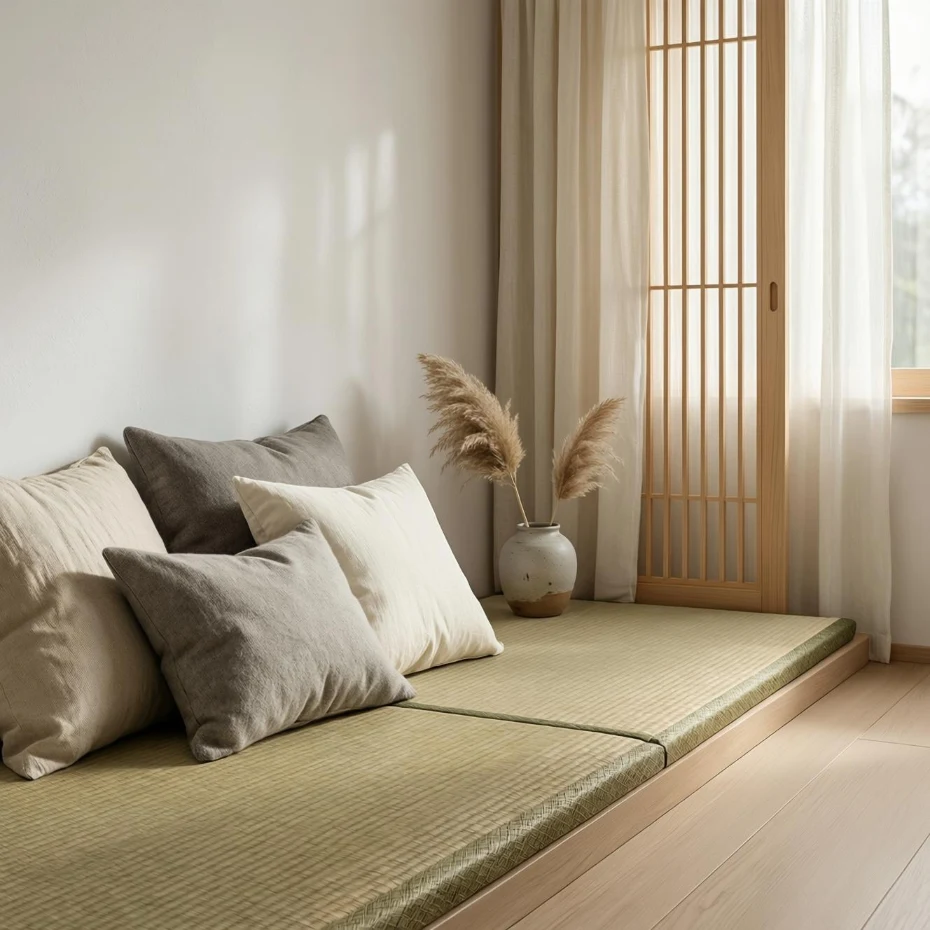
Subtle black accents provide contrast against neutral tones. Picture frames, handles, or light fixtures in matte black introduce sophistication without breaking minimalism.
Balance with light wood and soft textiles. These small, intentional contrasts add depth and modernity to the Japandi aesthetic while keeping the room calm and cohesive.
14. Soft Throw Pillows
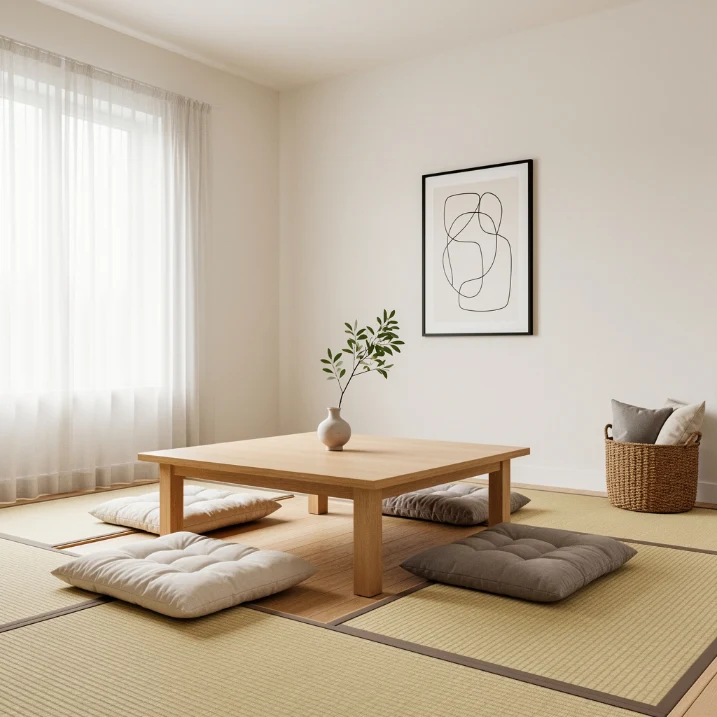
Layered throw pillows in natural fabrics add texture and comfort to the bed. Soft, muted colors maintain serenity while enhancing tactile appeal.
Avoid excessive patterns. Carefully selected pillows elevate the aesthetic and invite relaxation, allowing guests to feel nurtured in a cozy, refined environment.
15. Open Shelving Display
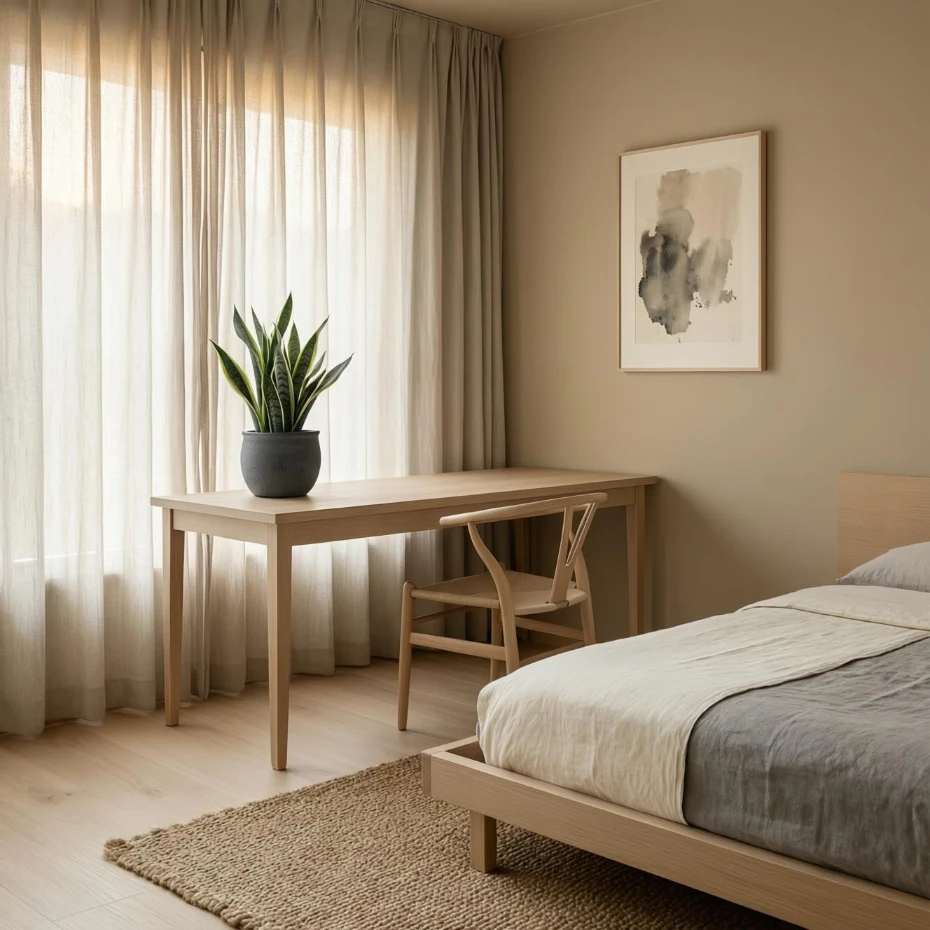
Open shelving displays a few curated items like books, small plants, or ceramics. Keeping it minimal reinforces the uncluttered feel of the room.
Balance items with spacing and neutrality. This subtle design element adds personality without overwhelming the calm, minimalist ambiance, creating visual interest with intentional restraint.
16. Warm Wood Flooring
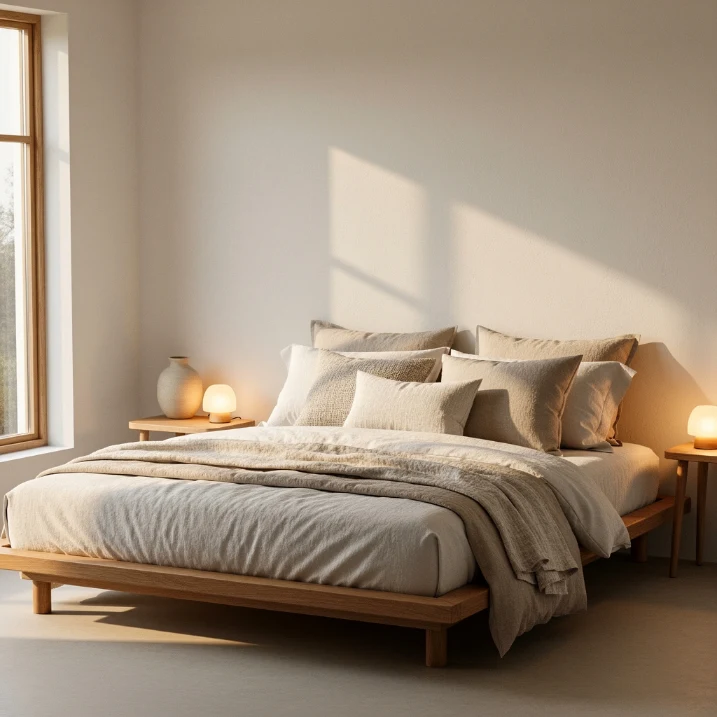
Warm wood flooring underpins the entire room, adding natural texture and grounding the space. Lighter oak or ash tones complement neutral walls and furnishings beautifully.
Pair with soft rugs or seating areas to maintain comfort. Flooring in natural wood reinforces the harmony between Scandinavian simplicity and Japanese warmth central to Japandi design.
17. Minimal Curtain Treatment
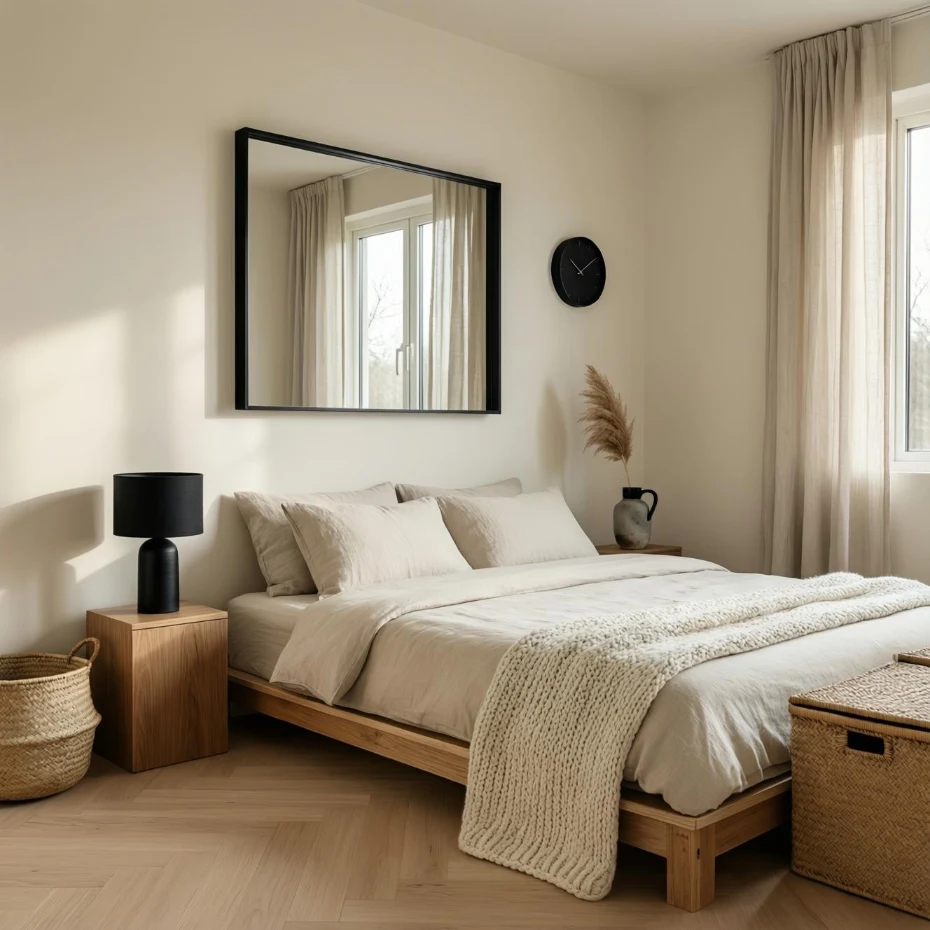
Light, airy curtains in natural linen allow daylight to gently fill the room. Avoid heavy drapes that block light or distract from minimal aesthetics.
Stick to neutral colors that blend with walls and flooring. Simple window treatments maintain openness while enhancing the calm, serene atmosphere that Japandi style embodies.
18. Intentional Accessory Placement
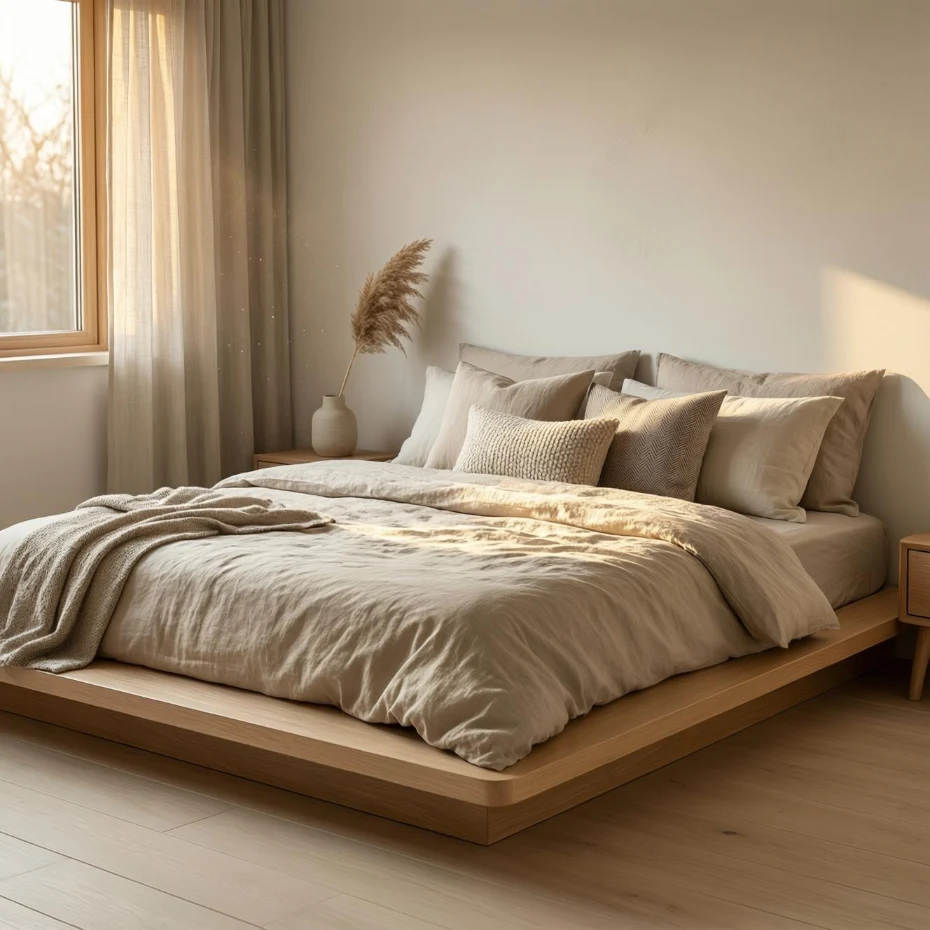
Every item in a Japandi guest room should be intentional. A single ceramic vase, small plant, or minimal tray creates visual interest without cluttering the space.
Focus on quality over quantity, keeping surfaces clear and cohesive. This careful curation fosters calm and allows guests to enjoy a serene, uncluttered, and thoughtfully designed stay.