17 Living Room Rug Styling Ideas You’ll Love
1. Oversized Neutral Jute Rug with Layered Textiles
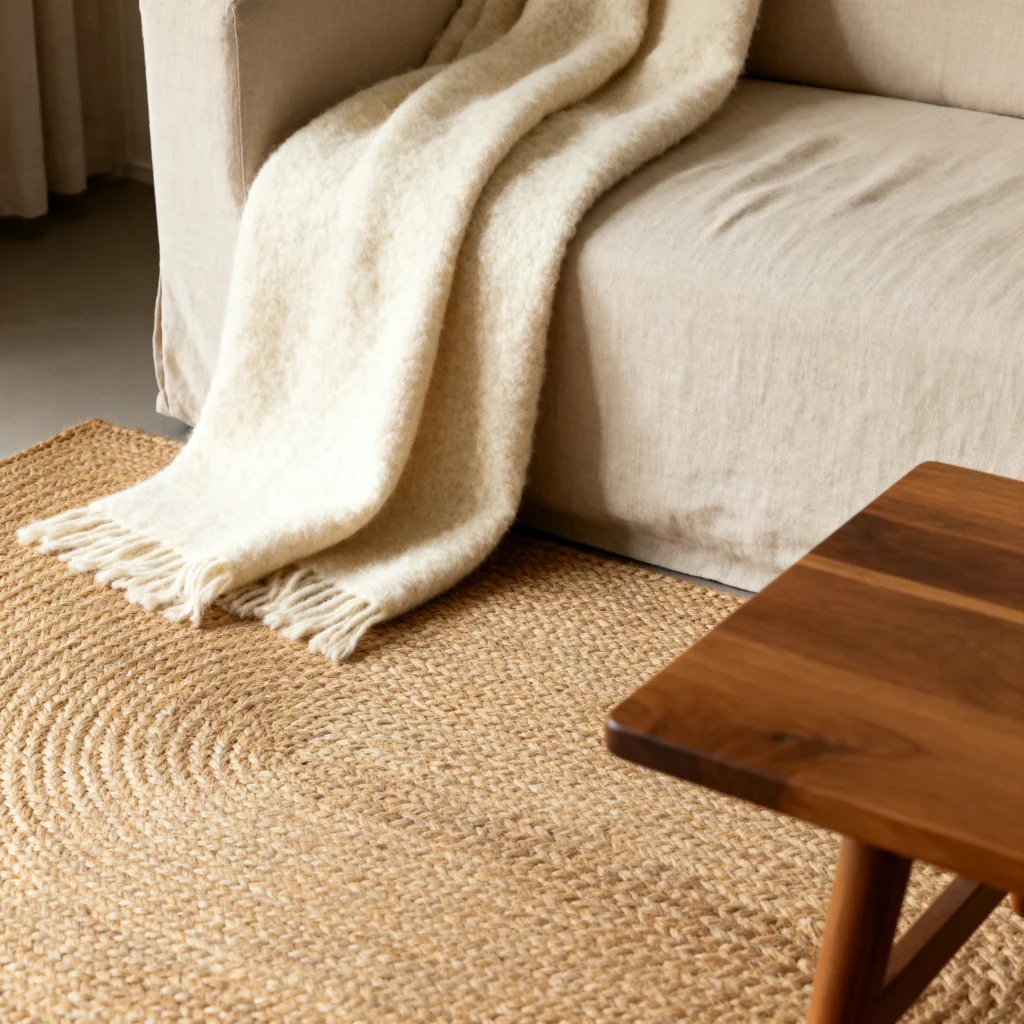
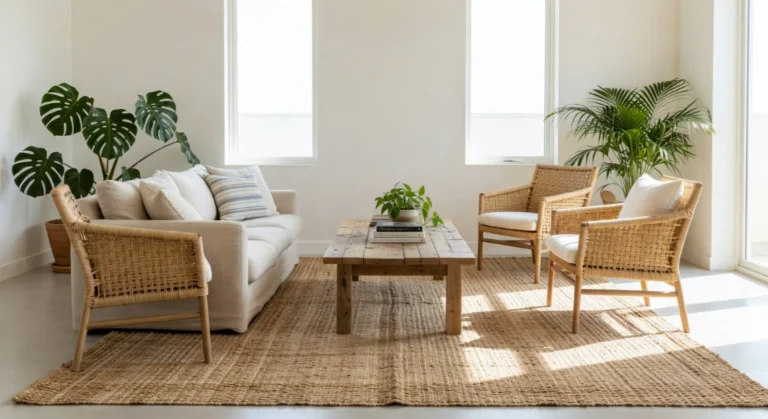
An oversized natural jute rug used as the foundational base layer beneath softer, more colorful textiles creates a living room floor composition of extraordinary organic warmth and textural richness that no single rug alone can achieve. The rough, honest fiber texture of jute establishes an earthy, grounded quality that connects the room’s design to natural materials and handcraft traditions while its neutral warm beige tone harmonizes effortlessly with every furniture color and upholstery fabric in the space above it. Layering a smaller, softer wool or cotton rug on top introduces color, pattern, and the kind of plush comfort underfoot that natural jute alone cannot provide.
The art of successful rug layering lies in selecting pieces whose scales, textures, and colors create genuine visual conversation rather than simply stacking whatever happens to be available. The base jute rug should extend generously beyond all furniture legs, ideally 24 inches or more beyond the sofa and chairs, to establish a sufficiently spacious floor plane for the layered composition above. The top rug should be sized to sit comfortably within the base layer with at least 12 inches of jute visible on all sides, creating a clearly defined layering relationship. Choose a top rug in a color or pattern that draws from at least one accent color already present in the room’s cushions, artwork, or decorative objects for a cohesive, intentionally designed result.
2. Bold Geometric Rug as the Room’s Focal Point
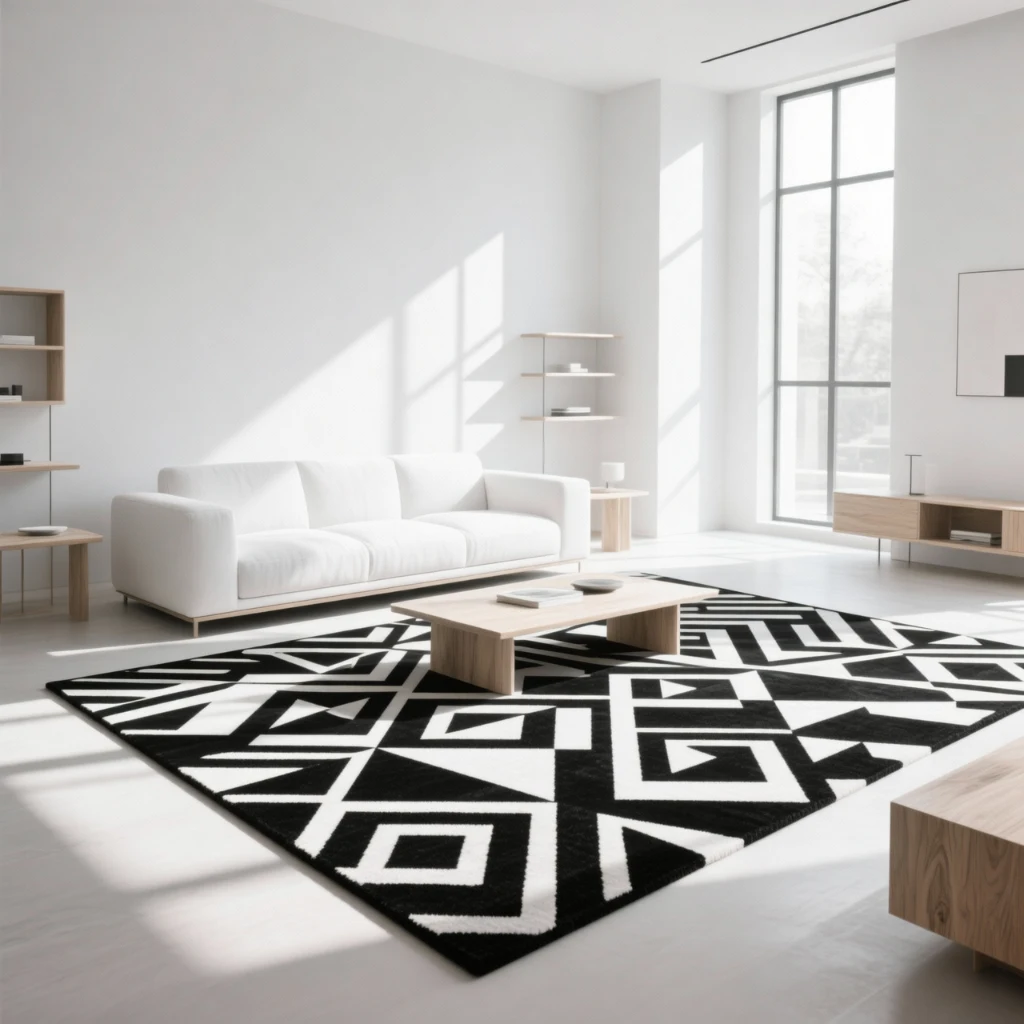
A bold geometric patterned rug positioned as the deliberate focal point of a living room creates an immediate visual anchor of graphic power and design confidence that organizes every other element in the space around its strong pattern energy. When walls, furniture, and accessories are kept intentionally simple and restrained, a geometric rug of sufficient scale and pattern boldness becomes the room’s undisputed design star, communicating a clear aesthetic vision and genuine decorating confidence without requiring expensive furniture or elaborate styling to create a living room of memorable, striking character. This approach is the secret weapon of minimalist interior design everywhere.
Selecting the right geometric pattern for focal point rug status requires considering both the scale of the pattern relative to the room dimensions and the color contrast level within the pattern itself. Large-scale geometric patterns, where individual motifs measure six inches or more across, read with maximum visual impact in rooms of standard or larger proportions, while smaller pattern scales can appear busy and visually agitating at focal point scale in generous rooms. High contrast patterns in black and white, navy and cream, or deep forest green and natural linen deliver the strongest focal point impact, while lower contrast geometric patterns in tonal colorways create a more sophisticated, quieter form of visual emphasis appropriate for rooms with more complex existing color and material compositions.
3. Vintage Persian Rug with Modern Furniture Mix
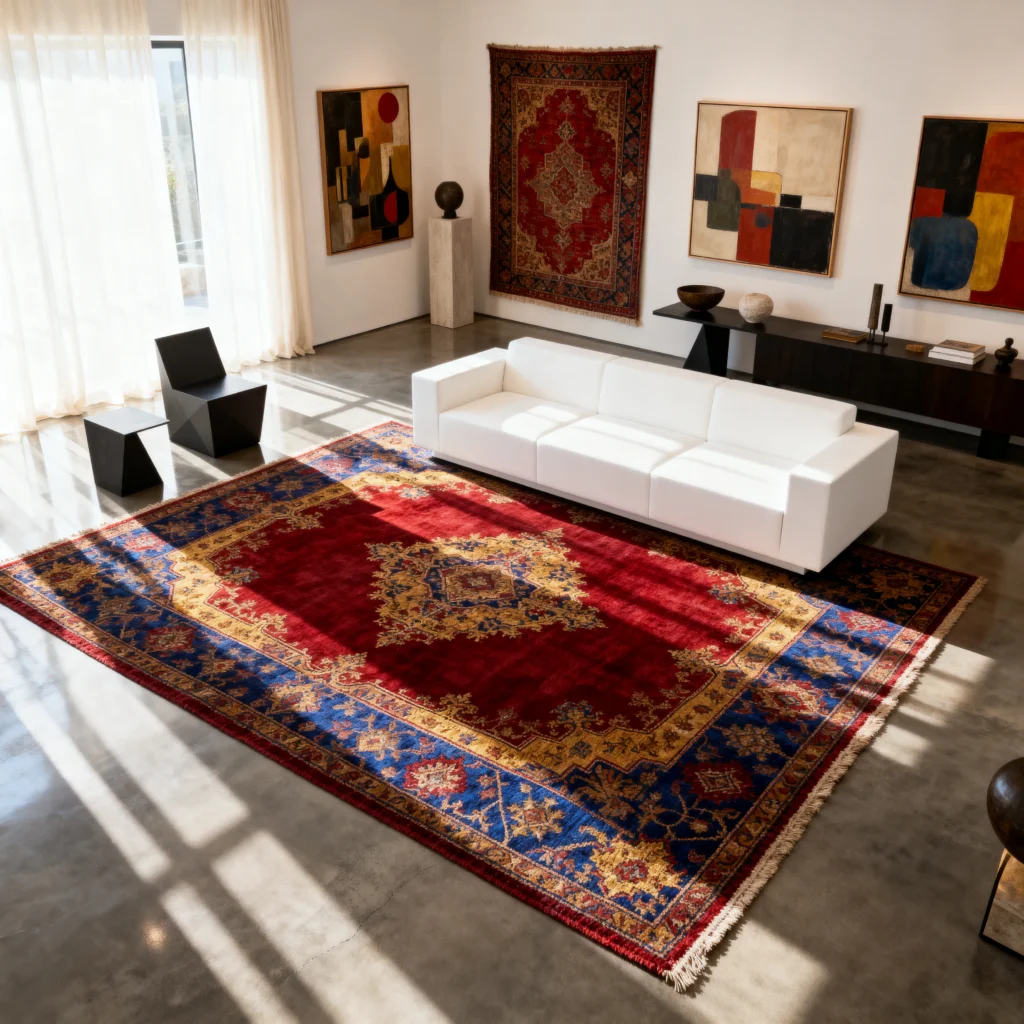
A genuine vintage Persian rug laid beneath contemporary clean-lined modern furniture creates the most intellectually sophisticated and visually rich living room aesthetic available in residential interior design, the beautifully resolved tension between the ancient and the present that defines truly curated, personally expressive home decoration. The extraordinary color depth, intricate hand-knotted pattern complexity, and irreplaceable historical character of an authentic Persian rug bring a dimension of cultural richness and material artistry to a modern room that no new rug, regardless of its quality or price, can authentically replicate. Against simple modern furniture, the rug’s complexity reads with maximum clarity and appreciation.
Integrating a vintage Persian rug successfully with modern furniture requires selecting upholstery and case goods pieces that are confident enough in their own simplicity to complement rather than compete with the rug’s visual complexity. Solid color upholstery in neutral linen, cream, warm gray, or a single color drawn directly from the rug’s palette works most harmoniously, allowing the rug pattern to remain dominant while furniture forms provide clean architectural structure. Avoid patterned upholstery fabrics entirely when using a Persian rug as the room’s primary pattern, as two competing complex patterns in the same space create visual chaos rather than the richly layered beauty that the vintage modern mix approach seeks to achieve.
4. Soft Blush Pink Rug with Warm Neutral Tones
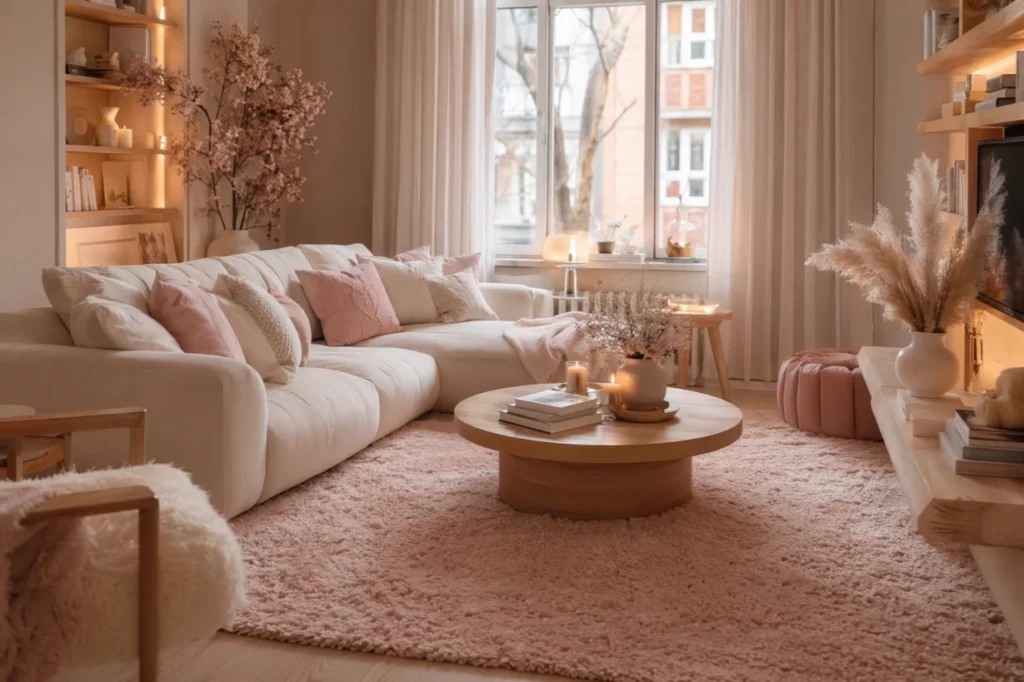
A soft blush pink rug in a living room surrounded by warm neutral tones creates an interior atmosphere of such gentle, enveloping warmth and romantic beauty that the space immediately feels like a sanctuary from the harder-edged world outside its walls. The rosy warmth of blush pink in rug form works its most beautiful magic when introduced into a palette of warm creams, natural linens, honey-toned woods, and aged brass or bronze metal accents, where the pink reads less as a bold color statement and more as a natural extension of the warm neutral family, adding a barely perceptible flush of rosy life that makes the entire room feel more vibrant, healthy, and genuinely welcoming than an all-neutral palette achieves alone.
The pile height and fiber composition of a blush pink rug dramatically affect how the color reads in the room, as high-pile shaggy rugs scatter light within their deep pile structure and appear softer and more muted than low-pile or flat-weave versions of the same color. Choose pile height based on the desired color intensity and the room’s practical requirements, as high-pile rugs in living rooms with heavy traffic or pets require significantly more maintenance to keep clean and looking fresh than low-pile alternatives. A medium-pile wool rug in blush provides the best balance of color vibrancy, tactile comfort, durability, and practical cleanability for most living room applications and household situations.
5. Striped Cotton Rug for Casual Coastal Vibes
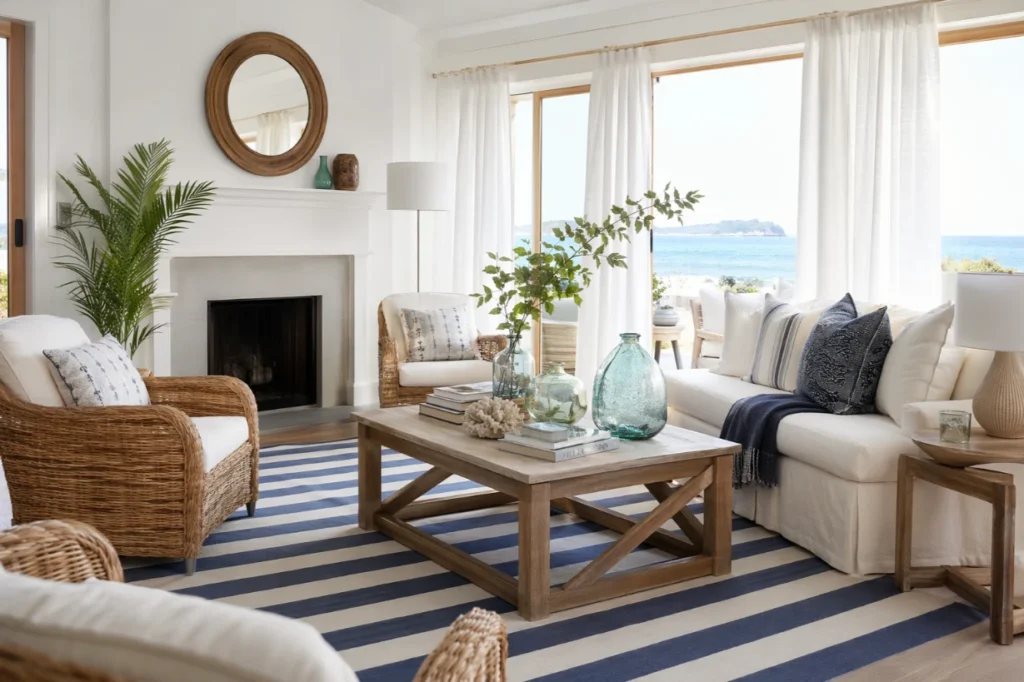
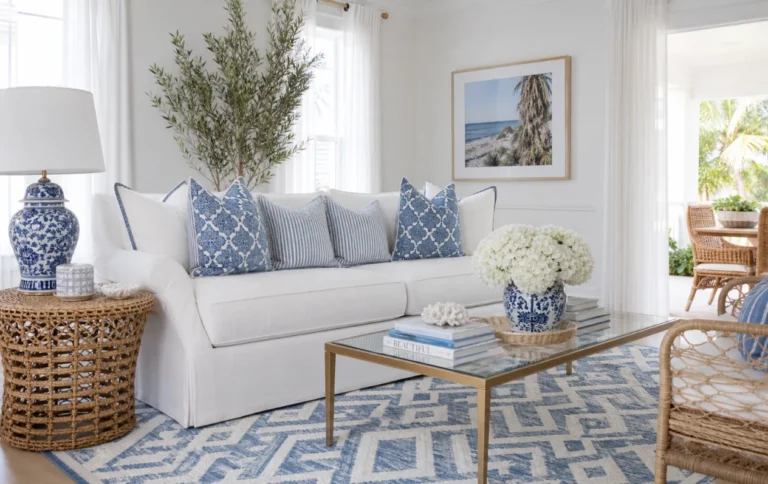
Wide-stripe cotton rug in navy blue and white creates an immediate atmosphere of coastal ease, maritime tradition, and effortlessly relaxed summer living that makes even a landlocked apartment feel like a beach house retreat of considerable style and genuine charm. The clean horizontal striping pattern reinforces the visual width of the room, making narrow living spaces feel more generously proportioned while the crisp high-contrast navy and white palette provides a graphic backbone around which every other element in the room can be organized with clarity and purpose. Cotton construction makes striped rugs among the most practical and washable options available for casual living spaces.
Styling a coastal striped rug requires embracing the relaxed, unlabored quality of genuine beach house interiors rather than over-decorating the space with too many nautical accessories that tip the aesthetic from effortlessly coastal into themed costume. Rattan or wicker accent chairs, linen-upholstered sofas in natural cream or warm white, simple pottery vessels, and carefully selected sea glass or driftwood objects create the authentic coastal material story without resorting to anchor motifs or lighthouse figurines. Natural light is the most important design element in the coastal interior, so keep window treatments minimal, sheer, and light-filtering rather than room-darkening to maintain the bright, airy quality that defines the best seaside living rooms and makes every day spent in them feel genuinely restorative.
6. Dark Charcoal Rug for Dramatic Contrast
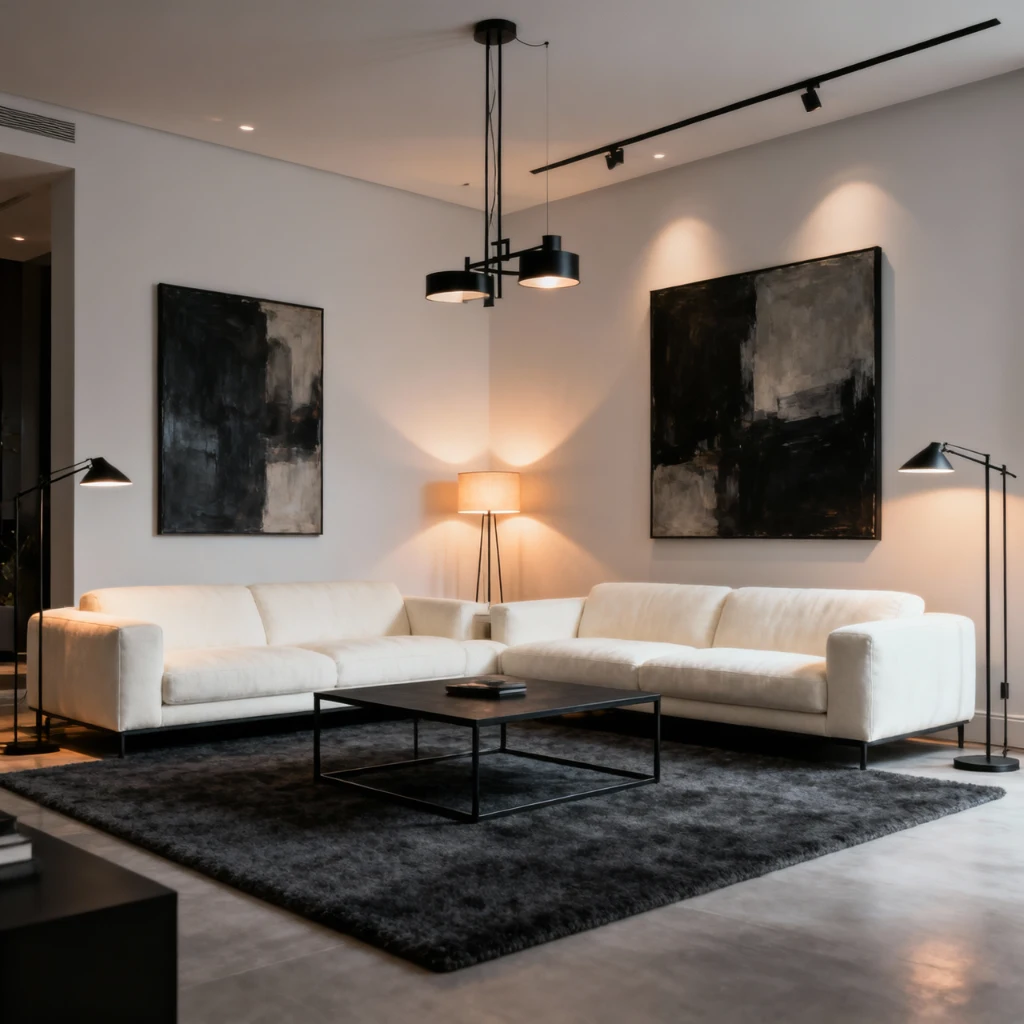
A deep charcoal rug in an otherwise light and airy living room creates a dramatic visual anchor of grounding darkness that gives the entire space an unexpected depth, sophistication, and architectural seriousness that pale rugs in the same room simply cannot provide. The charcoal floor plane creates a strong contrast with light-colored furniture and walls that reads as genuinely bold design decision making rather than the safe, expected neutral floor treatment that most living rooms default to without particular deliberation. This dark-floor-light-walls inversion of the conventional light-to-dark gradient from ceiling to floor creates a visual tension that makes the room feel curated, considered, and memorably distinctive.
Selecting the right charcoal rug requires careful attention to undertone temperature, as charcoal rugs with blue or green undertones create a cooler, more austere atmosphere while those with warm brown or red undertones deliver a more inviting, enveloping quality despite their dark value. Warm charcoal rugs with hints of espresso or graphite brown work most harmoniously in living rooms with warm-toned wood furniture, aged brass accents, and creamy rather than stark white wall colors. Pair a charcoal rug with generous, warm-toned ambient lighting from table lamps and floor lamps positioned to cast pools of golden light across the dark rug surface, creating the cozy, enveloping atmosphere that prevents a dark rug from making the room feel cold or somber rather than dramatically sophisticated.
7. Moroccan Beni Ourain Rug for Boho Luxury
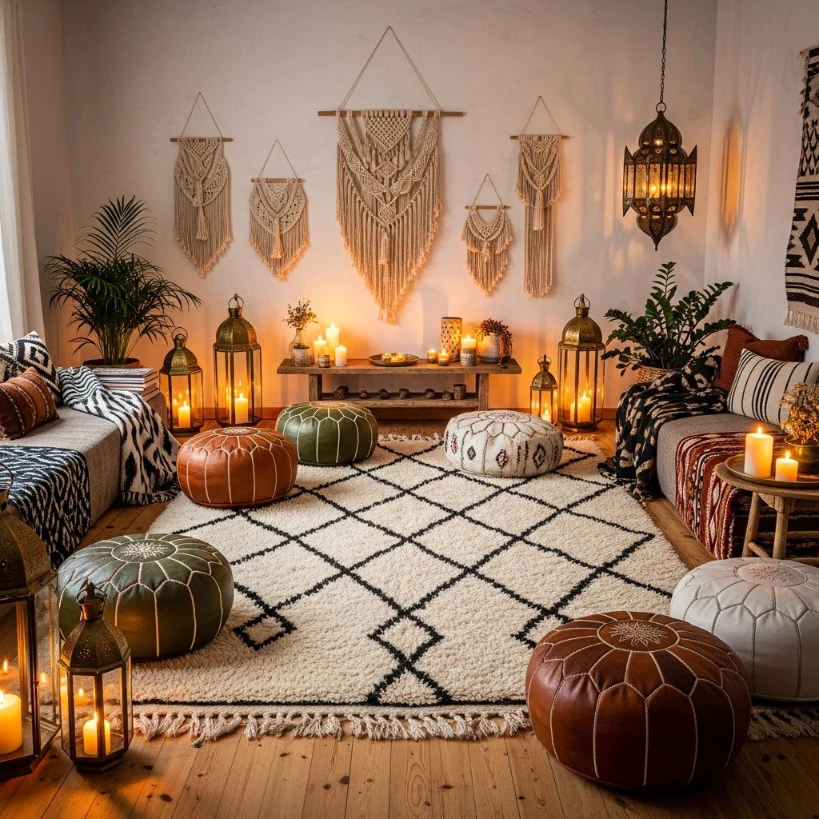
An authentic Moroccan Beni Ourain rug, hand-knotted from undyed natural sheep wool in the Atlas Mountains by Berber women following centuries-old weaving traditions, brings a layer of genuine artisanal cultural heritage and irreplaceable material beauty to a living room that no mass-produced rug can approximate regardless of how skillfully it mimics the Beni Ourain’s characteristic cream ground and irregular black diamond geometric motifs. The natural wool pile, thick and cloud-soft underfoot, creates a physical luxury of exceptional quality while the subtle irregularities in the hand-knotted pattern communicate authentic human craft that makes each rug genuinely one of a kind and permanently individual in its pattern expression.
Styling a Beni Ourain rug for maximum boho luxury impact requires surrounding it with other globally sourced artisanal objects that share its commitment to handcraft, cultural meaning, and material authenticity. Low-slung floor cushions in kilim fabric or printed cotton, brass Moroccan lanterns casting intricate shadow patterns on walls and ceiling, woven macrame wall hangings, and hand-thrown ceramic vessels in warm earth tones create a complete bohemian material story in which the Beni Ourain rug serves as the central, most valuable, and most visually commanding element. Resist the temptation to fill every surface with objects, as the Beni Ourain’s beauty is best appreciated when given sufficient visual breathing room to be properly seen and appreciated.
8. Green Botanical Print Rug for Nature-Inspired Interiors
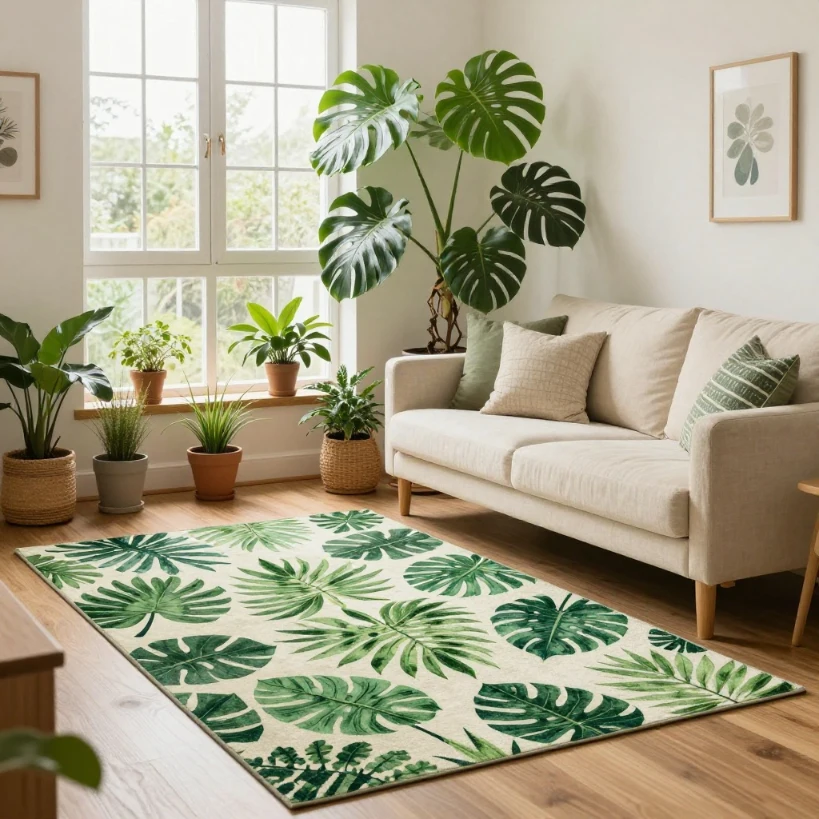
A green botanical print rug covered in lush leaf motifs, palm fronds, trailing vines, or oversized tropical plant forms creates a living room interior of such vibrant natural beauty and biophilic design richness that the space feels less like a conventional room and more like a garden-adjacent living environment where the boundary between interior and natural exterior has been deliberately and beautifully dissolved. The botanical rug pattern creates an immediate visual connection to living plant forms that resonates with a deep human evolutionary preference for natural environments, creating a space that feels genuinely restorative, energizing, and emotionally nourishing to every person who occupies it.
Integrating a botanical print rug with actual living indoor plants creates a beautifully layered natural environment where printed and living plant forms coexist in mutually reinforcing conversation. Position a large monstera, fiddle leaf fig, or dramatic bird of paradise plant near a corner of the rug so that the living plant’s actual leaves visually extend the botanical rug’s printed leaf composition into three-dimensional space, blurring the boundary between decoration and living organism in a manner of genuine design sophistication. Choose plant species that share a visual family resemblance with the rug’s printed botanical motifs for the most coherent and intentional plant-and-rug composition that reads as a single unified design decision rather than a series of unrelated decorating choices made independently over time.
9. Cream Shag Rug for Ultimate Cozy Comfort
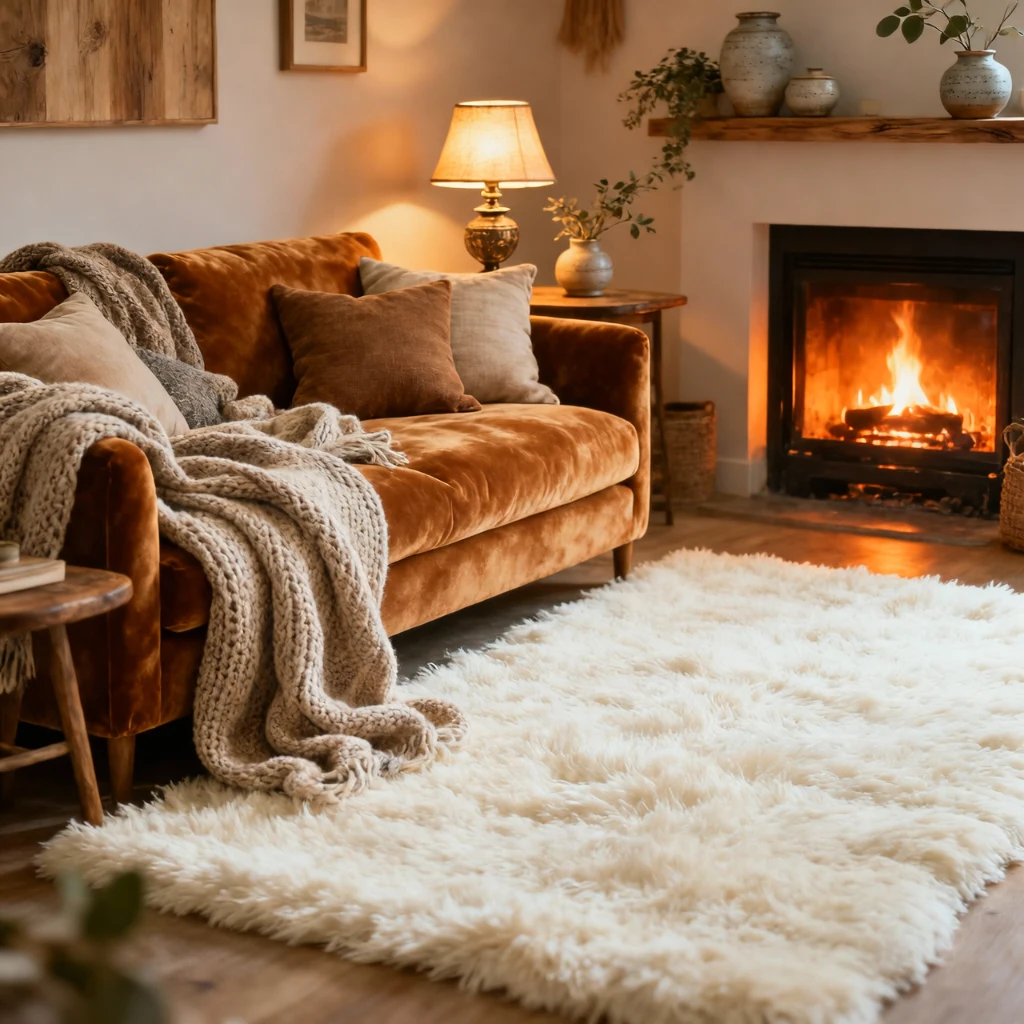
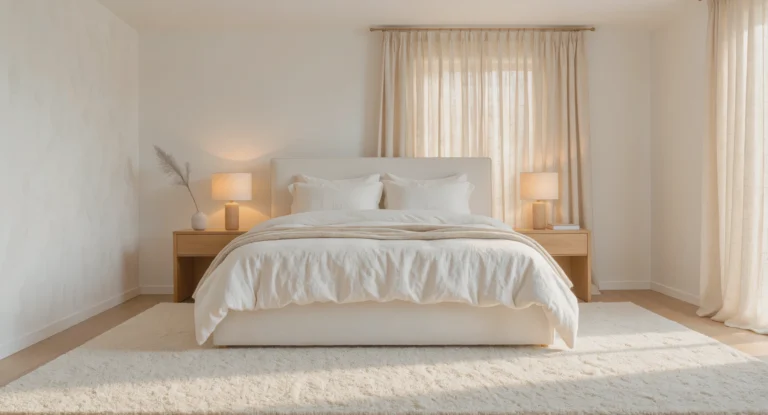
A thick, luxuriously piled cream shag rug is the single most powerful tactile comfort statement available in living room interior design, transforming the floor plane from a hard, cold, indifferent surface into a cloud-soft expanse of sensory luxury that invites bare feet, floor cushion lounging, and the kind of deeply relaxed physical ease that defines genuinely restorative home living. The cream color, warm enough to avoid clinical coldness but neutral enough to work with virtually every furniture color and material, reflects ambient light gently upward into the room, brightening the space from below and creating the cozy, enveloping glow that defines the Danish hygge interior aesthetic at its most perfectly realized.
Maintaining a cream shag rug in genuinely beautiful condition requires a committed care routine proportional to the rug’s considerable investment in both financial and aesthetic terms. Vacuum cream shag rugs with a suction-only attachment or an upright vacuum with the beater bar disabled to prevent pile matting and fiber breakage, working in multiple directions to lift the pile and remove debris from deep within the pile structure. Address spills immediately with clean white cloths and gentle blotting rather than rubbing motions that spread staining material deeper into the pile. Professional deep cleaning every 12 to 18 months using a rug specialist familiar with high-pile constructions restores the full loft, brightness, and sensory luxury of the pile to its original magnificent condition.
10. Navy Blue Rug with Brass and Warm Wood Accents
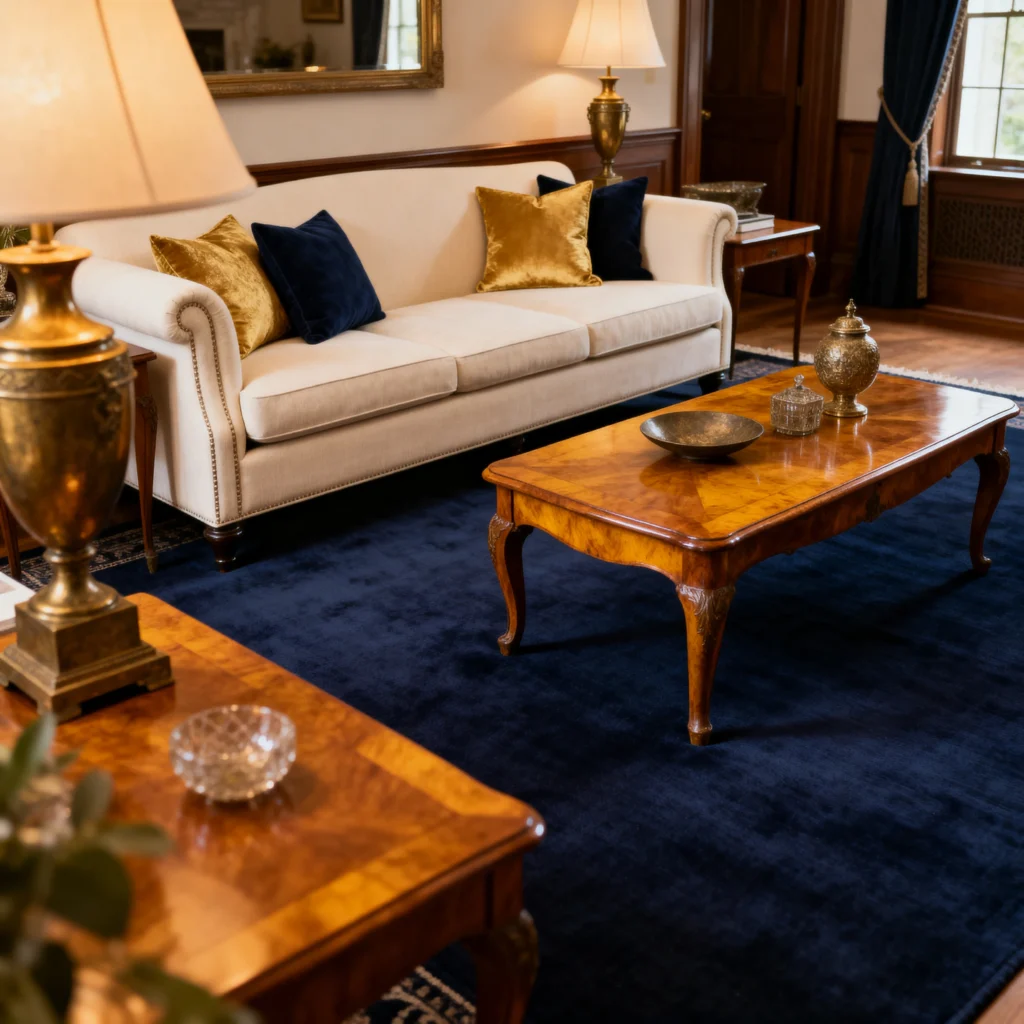
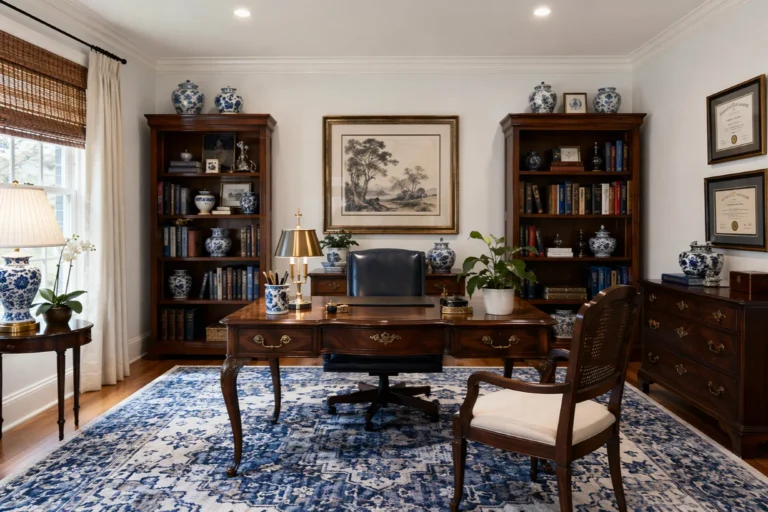
Deep navy blue anchors a living room with a color of extraordinary richness, depth, and timeless sophistication that has defined the most admired traditional and contemporary interiors for generations of interior designers and homeowners with genuine color confidence and aesthetic ambition. Navy on the floor creates a sense of grounded stability and visual weight that lighter rug colors cannot provide, making furniture appear to float on a deep, calm pool of color that gives the entire room’s composition a sense of deliberate architectural intention. Against warm honey wood tones and aged brass accents, navy blue achieves its most beautiful and harmonious expression.
The relationship between navy blue and aged brass is one of interior design’s most enduringly perfect material pairings, the cool depth of the blue making the warm, golden antiquity of the brass appear richer and more luminous by direct contrast while the brass simultaneously warms the navy and prevents it from reading as cold or somber. Build the brass accent story in a navy blue living room through multiple material touchpoints: table lamp bases, picture frame moldings, drawer pulls on side tables, tray surfaces, candle holders, and decorative objects, creating a cohesive warm metallic thread that runs through the room’s complete accessory composition and unifies the navy floor with the warmer furniture and wall tones above it.
11. Kilim Flatweave Rug for Global Eclectic Style
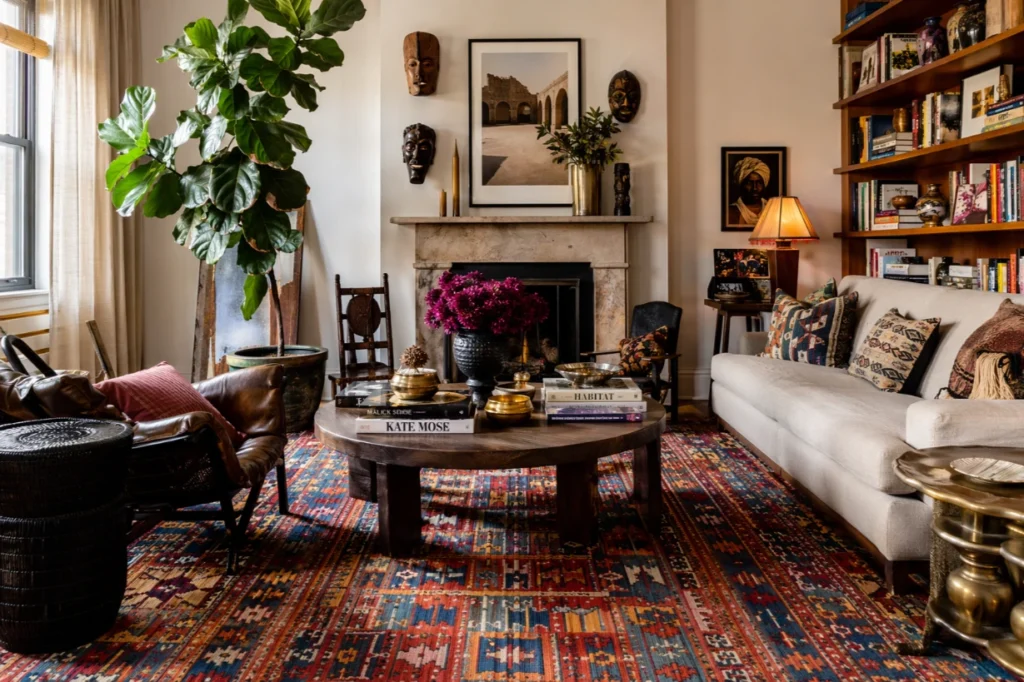
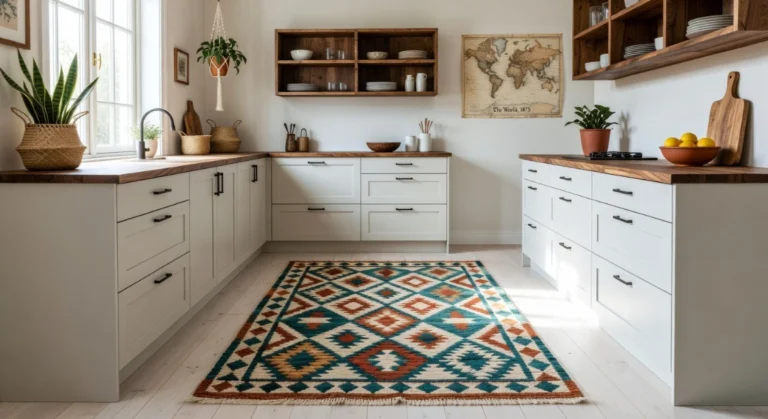
An authentic kilim flatweave rug with its vibrant geometric tribal patterns, saturated jewel-tone colors, and centuries of nomadic weaving tradition embedded in every hand-woven thread creates a living room of such genuine global character and visual richness that no amount of expensive furniture or elaborate decoration can replicate the quality of cultural depth and artistic heritage that a real kilim brings to the space it inhabits. The flat, low-pile construction of kilim weaving creates a distinctly different floor surface quality from knotted pile rugs, its crisp geometric patterns reading with graphic precision and its firm surface providing practical durability for high-traffic living room use.
Global eclectic living rooms styled around a kilim rug achieve their most successfully composed appearance when they embrace a consistent underlying color palette drawn from the rug itself rather than treating the kilim as a starting point for unlimited color addition. Identify the three most dominant colors in your kilim, typically a warm red or terracotta, a deep blue or indigo, and a warm cream or natural undyed ground, and use these three colors as the governing palette for every subsequent furniture, textile, and accessory decision in the room. This disciplined approach prevents the global eclectic style from devolving into visual chaos and ensures that every element in the room participates in a coherent, beautiful color story anchored by the extraordinary kilim at its center.
12. White and Gold Abstract Rug for Glam Interiors
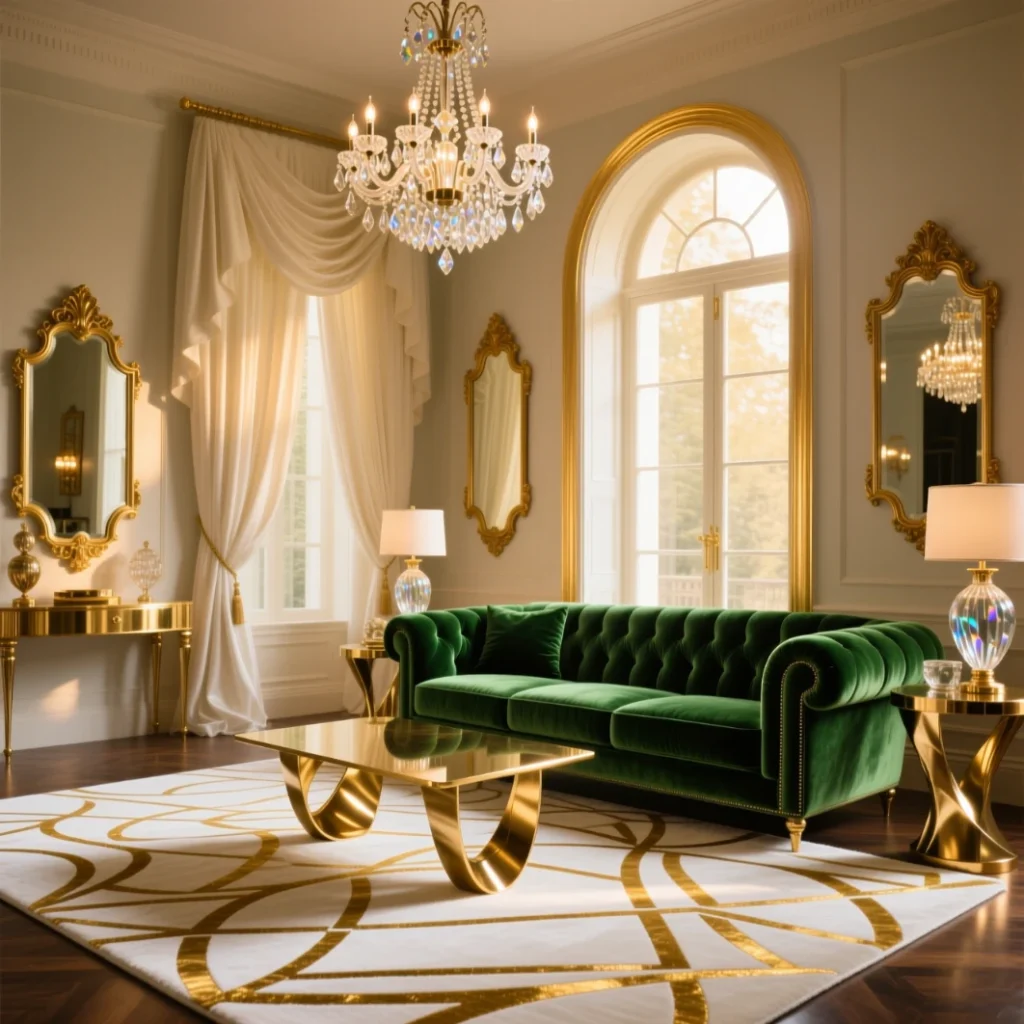
A white ground rug with abstract gold pattern work creates a living room floor of such unapologetic glamour and light-reflecting luxury that it establishes an immediate atmosphere of Hollywood Regency opulence and celebratory design excess that makes every ordinary Tuesday evening spent in the room feel like a special occasion worthy of champagne and beautiful company. The gold pattern on a white ground creates a composition of maximum luminosity, as the white reflects ambient light upward into the room while the gold pattern catches that light and returns it as warm, celebratory golden shimmer that flatters every person in the space and makes the room’s other luxury materials appear even more richly beautiful by association.
Styling a white and gold abstract rug for maximum glamorous impact requires committing fully to the luxury aesthetic rather than hedging toward casual or understated elements that undermine the rug’s inherent opulence. Deep jewel-tone velvet upholstery in emerald green, sapphire blue, or rich amethyst purple creates the most dramatically beautiful contrast with the white and gold floor, while mirrored surfaces, crystal accessories, and high-gloss lacquered finishes on side tables and decorative objects reinforce the room’s commitment to maximum reflectivity and light interaction. Avoid raw natural materials like jute, unfinished wood, and undyed linen in glamorous rug rooms, as their deliberate rusticity creates a tonal dissonance with the rug’s luxurious aspirations that the overall composition cannot successfully absorb.
13. Terracotta and Rust Rug for Warm Earthy Interiors
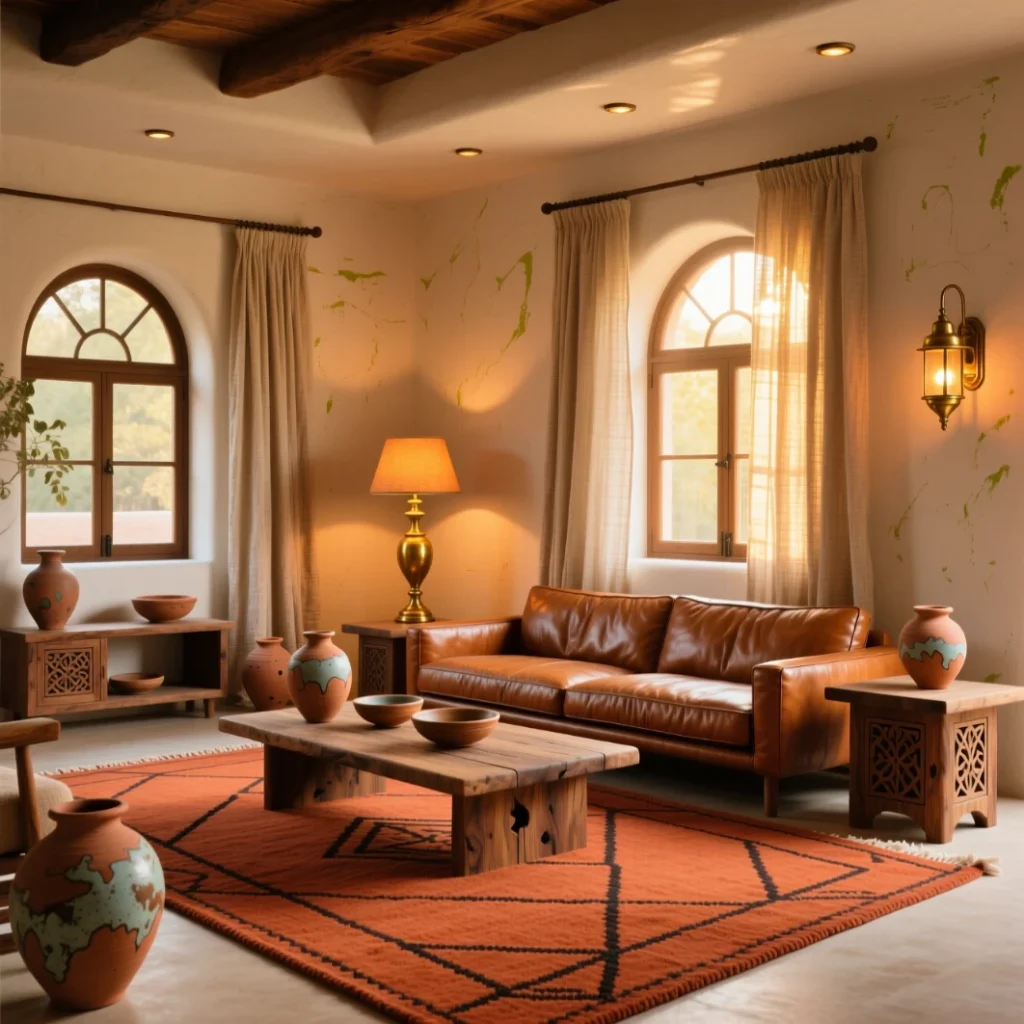
A terracotta and rust-toned rug brings the warm, sun-baked beauty of Mediterranean architecture, Southwestern adobe interiors, and ancient ceramic traditions directly into the living room floor plane, creating an earthy color foundation of such deeply satisfying warmth and organic richness that the entire room feels as naturally grounded and genuinely welcoming as the most beautiful spaces encountered in travel to warm-climate cultures. The orange-red family of terracotta and rust carries an ancient human resonance connected to fired clay, autumn leaves, and the warm tones of landscapes bathed in golden southern sunlight that speaks to something fundamental in how humans respond to certain colors with immediate feelings of warmth, comfort, and belonging.
The most beautiful earthy living rooms built around terracotta and rust rugs develop their warmth through a carefully layered accumulation of related natural tones and textures rather than through bold color contrast. Cream plastered walls, natural linen upholstery, honey-toned oak or walnut furniture, hand-thrown terracotta and cream pottery vessels, woven basket accessories, and soft leather cushion accents in tan and cognac tones build an earthy material story of extraordinary warmth and cohesion. Introduce living plants with warm-toned foliage, olive trees, orange-leafed autumn varieties, or the warm bronze-green of certain succulents for a biophilic element that reinforces the rug’s earthy color story with living botanical beauty.
14. Black and White Abstract Rug for Contemporary Spaces
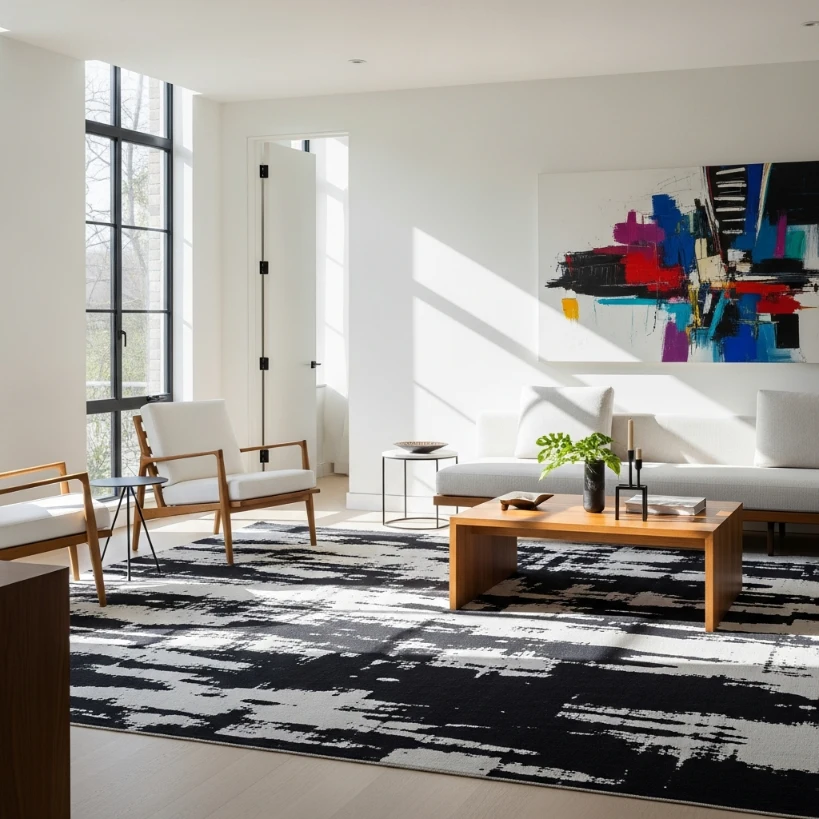
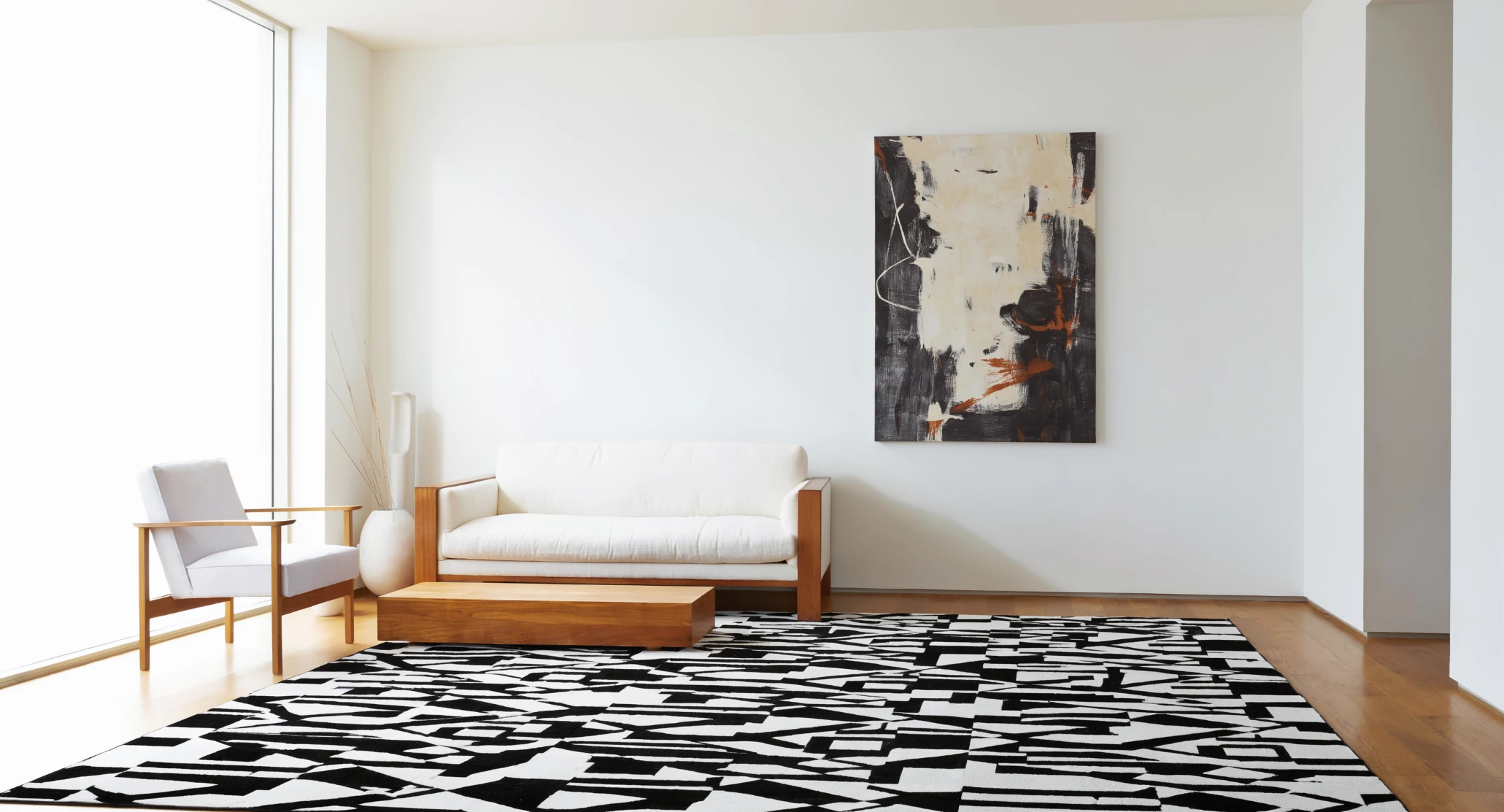
A bold black and white abstract rug creates a living room of pure contemporary graphic confidence that requires nothing more than simple, well-proportioned furniture and a single significant artwork to achieve an interior of genuine design authority and architectural sophistication. The high-contrast abstract pattern, whether expressed through organic painterly shapes, graphic gestural marks, or flowing abstract forms, gives the room’s floor plane an almost gallery-like quality that makes the living room feel less like a conventional domestic space and more like a considered creative environment inhabited by a person of clear aesthetic vision and artistic sensibility. This is interior design at its most intellectually rigorous.
Black and white abstract rugs succeed most powerfully in rooms where the surrounding environment exercises maximum restraint in color and pattern commitment, allowing the rug’s graphic energy to dominate the visual composition without competition from similarly assertive elements elsewhere in the space. Paint walls in the purest white available rather than warm creams or cool grays that reduce the contrast between wall surface and rug pattern. Select furniture in warm natural wood tones and white or very light neutral upholstery that recedes visually and supports the rug’s pattern without challenging its dominance. One bold, large-scale artwork hung on the primary wall creates the only acceptable counter-statement to the rug’s graphic power, creating a dialogue between floor and wall art that gives the room its complete contemporary design narrative.
15. Sage Green Rug with Natural Linen and Rattan
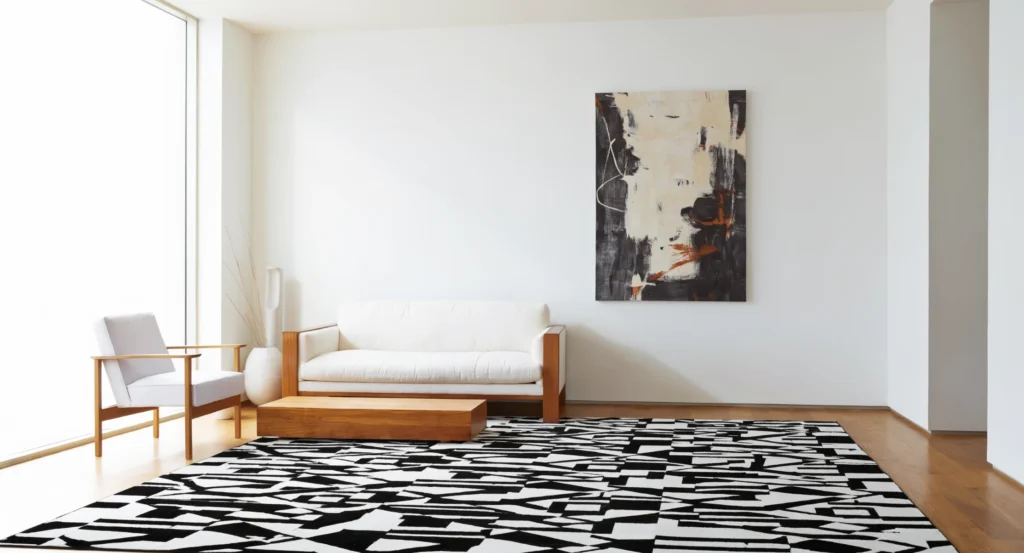
A muted sage green rug creates a living room floor of such profound natural calm and organic serenity that the entire space becomes a restorative sanctuary from overstimulation and visual noise, the specific quality of gentle, gray-green color that research consistently identifies as among the most psychologically soothing hues available in the human perceptual experience of color. Against natural linen upholstery and rattan furniture, sage green achieves its most beautifully harmonious expression, the three elements forming a complete natural material palette drawn from botanical, fiber, and woven craft traditions that resonates with the deep human preference for environments that reference the natural world with authenticity and material honesty.
The Japandi aesthetic, combining the minimalist functional clarity of Japanese design with the warm, human-scaled coziness of Scandinavian hygge principles, provides the most sympathetic design framework for a sage green, linen, and rattan living room composition. Japandi interiors achieve their distinctive peaceful quality through the disciplined elimination of unnecessary objects rather than the addition of decorative elements, so editing the room’s accessory count ruthlessly to retain only the most beautiful and personally meaningful objects is essential to achieving the serene, uncluttered atmosphere that makes this living room aesthetic so deeply appealing and genuinely restful for the people who inhabit it every day.
16. Indigo Blue Hand-Block Print Rug for Artisan Style
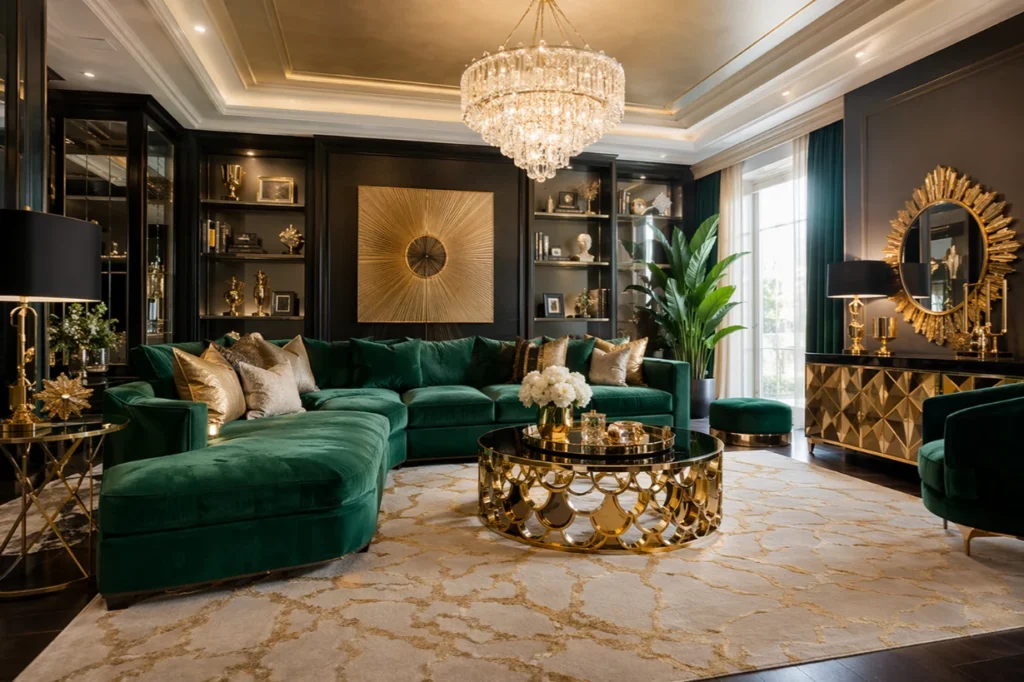
An indigo blue hand-block printed cotton rug carries the extraordinary heritage of Indian textile artisanship, the ancient resist-dyeing and hand-block printing traditions of Rajasthan and Gujarat, directly into the contemporary living room in a form of wearable cultural art that connects everyday domestic life to centuries of human creative achievement and craft mastery. The deep, luminous indigo of natural indigo dye, richer and more complex than any synthetic blue approximation, creates a color of such extraordinary depth and historical resonance that the rug becomes simultaneously a floor covering, an artwork, and a tangible connection to one of humanity’s oldest and most beautiful textile traditions. No machine-made product captures this quality.
Styling an indigo hand-block print rug for an artisan-inspired living room requires surrounding it with other objects that share its commitment to handcraft, cultural authenticity, and material honesty. Blue and white ceramic vessels in both traditional forms and contemporary shapes, hand-woven cushion covers in complementary indigo and natural tones, wooden furniture with visible joinery details that celebrate rather than disguise the material’s natural properties, and walls painted in the purest chalky white that allows the indigo rug’s color to read with maximum saturation and clarity create a complete artisan interior of genuine beauty and meaningful material depth that mass-produced interiors can observe but never authentically replicate.
17. Layered Round Rug for Unexpected Visual Interest
Layering a round patterned rug over a larger rectangular base rug creates one of the most visually unexpected and creatively satisfying living room floor compositions available in contemporary interior styling, introducing a circular form into the typically rectangular geometry of room and furniture arrangements that creates immediate visual surprise and a sense of deliberate, confident design thinking that makes the entire room feel freshly considered and personally expressive rather than conventionally assembled. The round rug’s circular form naturally draws the eye to the center of the seating arrangement, reinforcing the conversational focus of the living room with a geometric understatement of considerable elegance.
The furniture arrangement most sympathetic to a central round rug is one organized with equal radial attention to the rug’s circular form rather than the conventional parallel lines of sofa-facing-sofa that works most logically with rectangular rugs. Position a round coffee table directly at the center of the round rug, then arrange two or three seating pieces at equal distances around the coffee table’s perimeter, their front legs resting on the round rug’s edge zone. This circular seating geometry creates a fundamentally more intimate and egalitarian conversation arrangement than linear furniture groupings, as every seat relates equally to every other seat around the shared central table, making the layered round rug both a design choice of genuine visual beauty and a furniture arrangement strategy of real social and spatial intelligence.