16 Bedroom Rug Styling Ideas for a Dreamy Look
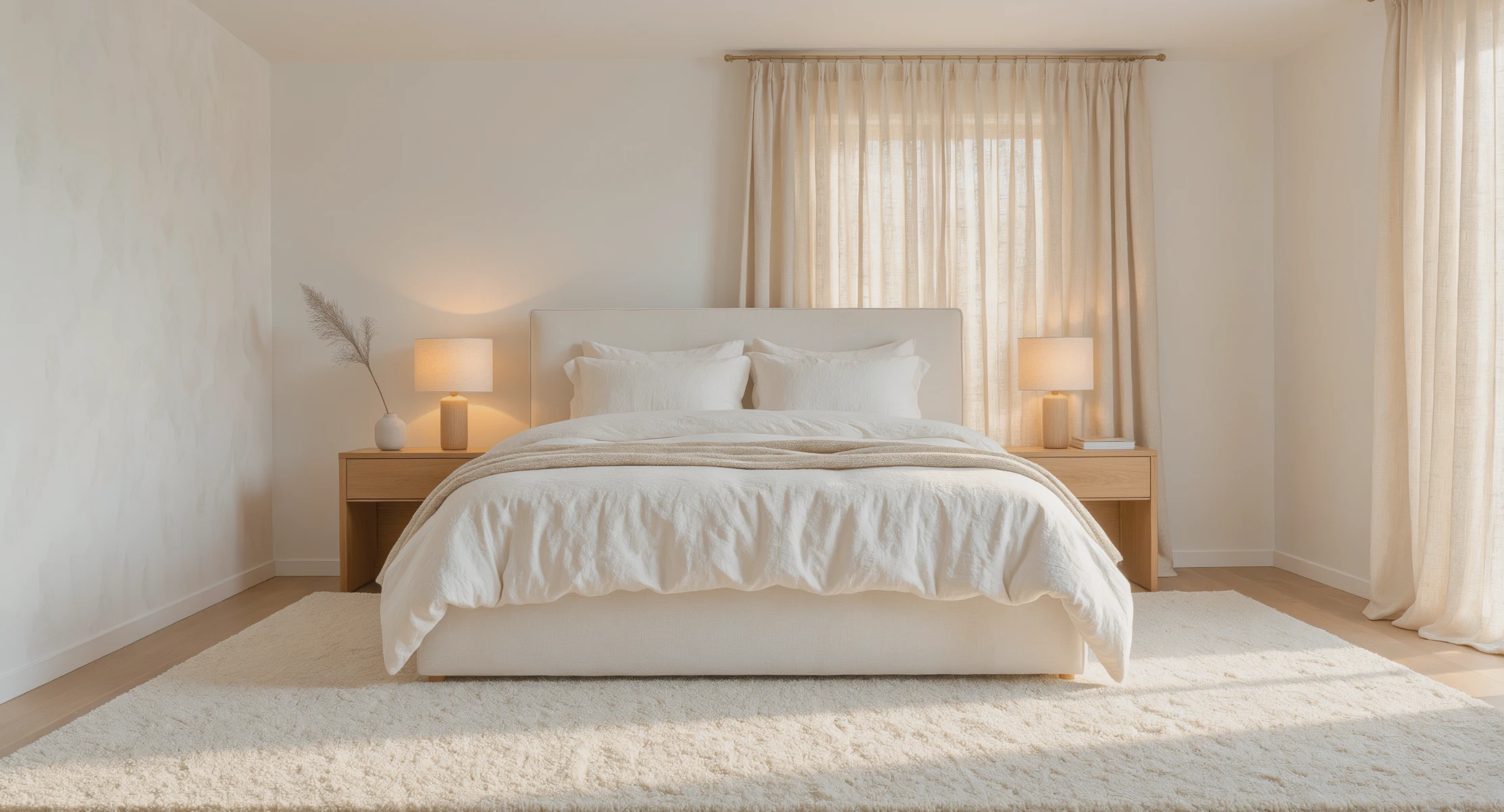
1. Center the Rug Under the Entire Bed
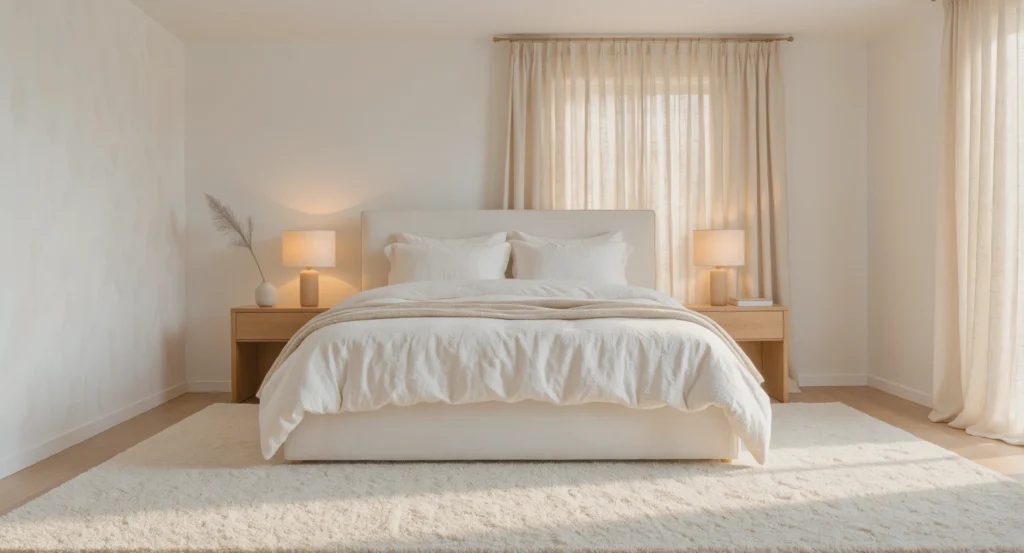
Centering a large rug directly beneath the entire bed is the most foundational and professionally recommended bedroom rug styling idea that creates an immediately balanced, grounded, and compositionally satisfying bedroom floor arrangement — anchoring the bed as the room’s undisputed focal point while providing generous, comfortable coverage on all accessible sides that makes every barefoot morning step feel genuinely considered, deliberately soft, and thoughtfully provided for by someone who genuinely understands how a beautifully styled bedroom should function at its most fundamental level.
The single most important rule of this classic bedroom rug styling approach is choosing a rug generously sized enough that it extends at least eighteen to twenty-four inches beyond the bed frame on every exposed side — the two sides where you step out of bed and ideally the foot as well. A rug that stops at the bed frame edge or barely extends a few inches beyond it will always appear awkwardly undersized and spatially disconnected from the furniture it is meant to anchor, regardless of how beautiful its pattern, color, or texture might be in isolation. For a king bed, choose a minimum 9×12 foot rug; for a queen, an 8×10 foot minimum.
2. Layer a Sheepskin Over a Neutral Base Rug
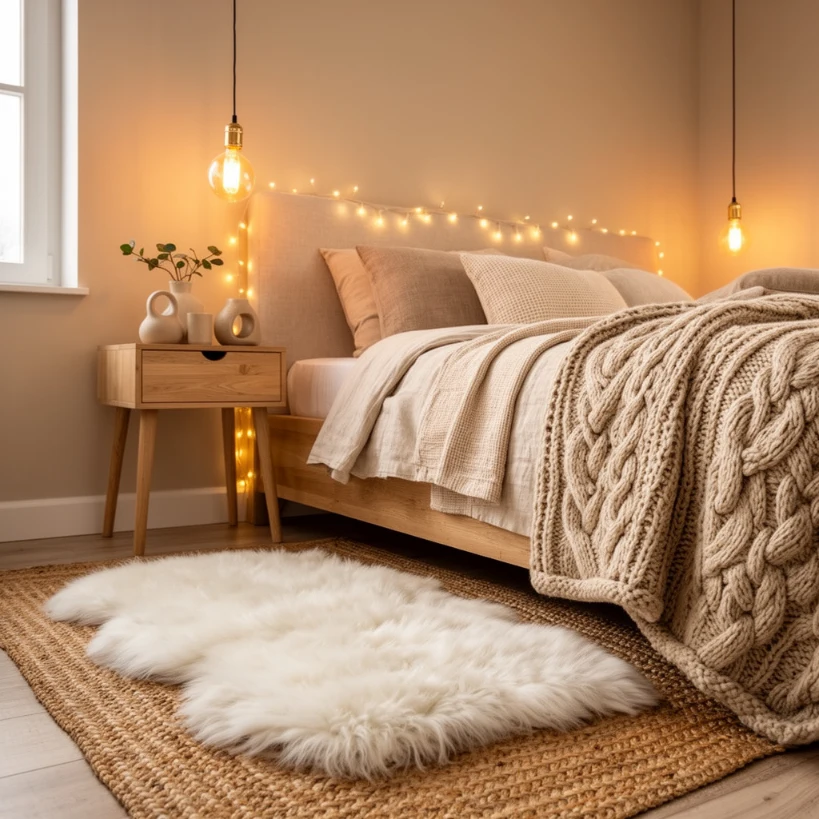
Layering a plush faux sheepskin over a larger neutral jute or flatweave base rug at the foot of the bed is the most textural and genuinely hygge-inspired bedroom rug styling idea that creates an extraordinary sense of depth, warmth, and material richness through the deliberate juxtaposition of two completely different textile experiences — the honest, organic, slightly rough earthiness of natural jute beneath meeting the impossibly soft, cloud-like, purely indulgent luxury of fluffy sheepskin pile above in a pairing that feels simultaneously rustic and lavishly comfortable.
Position the sheepskin throw casually at the foot of the bed — slightly off-center rather than perfectly aligned for the most effortlessly styled, naturally composed look — allowing a generous portion of the underlying jute rug to remain visible on either side and at the base of the sheepskin for the most visually interesting and texturally rich layered composition. This bedroom rug styling technique works beautifully year-round but feels especially appropriate and atmospherically perfect during autumn and winter months when the abundance of soft, warm textiles creates a genuinely cocooning, sensory-rich bedroom environment that makes retreating to bed feel like the most luxurious reward imaginable.
3. Use Two Matching Bedside Runners Instead of One Large Rug
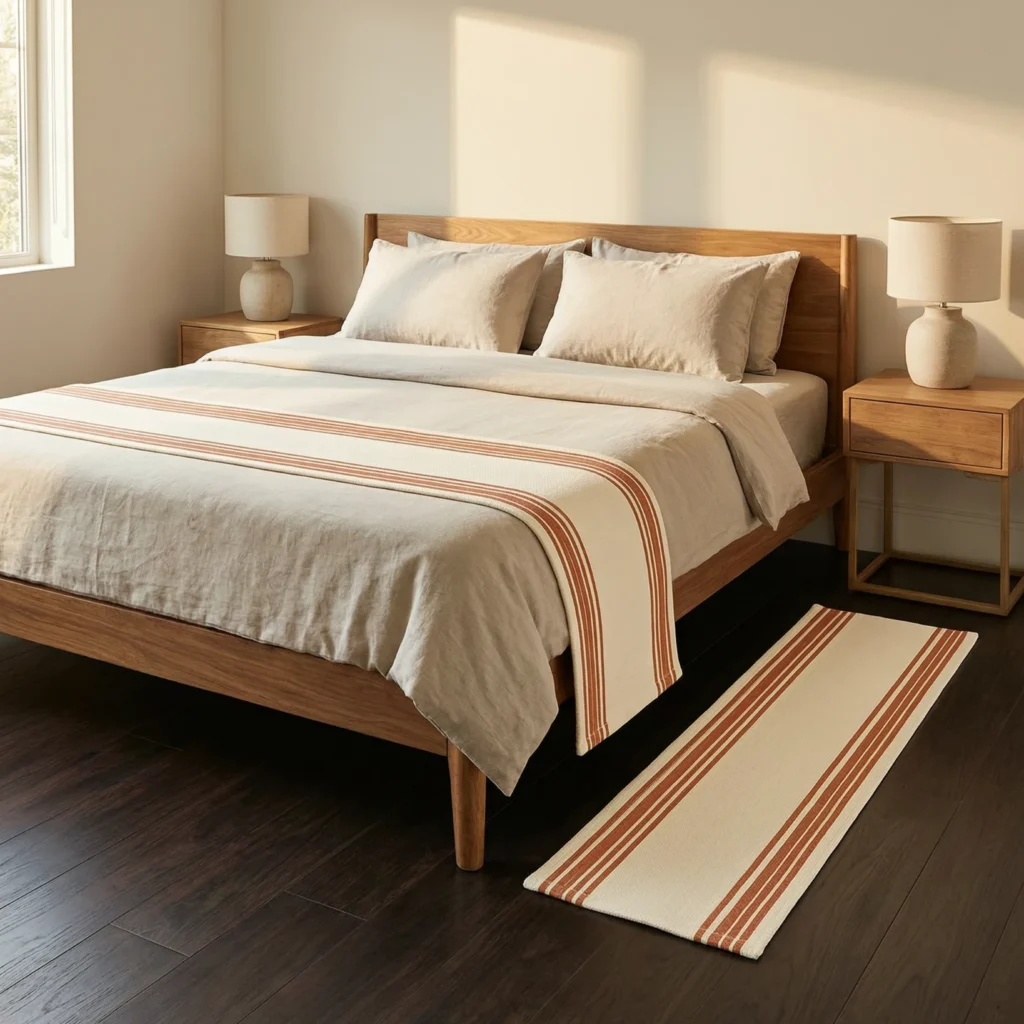
Using two matching bedside runners positioned symmetrically on either side of the bed instead of a single large area rug is the most architecturally elegant and space-efficient bedroom rug styling idea for bedrooms where a full-size area rug feels visually overwhelming, spatially impractical, or budget-prohibitively expensive — creating a perfectly balanced, deliberately symmetrical floor composition that frames the bed beautifully from both sides while exposing the beautiful hardwood, tile, or stone flooring between and beneath the bed as an intentional, visible design element.
Choose matching runners in the same color, pattern, and pile height for the most symmetrically satisfying and professionally styled result — each runner should be positioned so it begins at the top of the nightstand and extends at least two feet beyond the foot of the bed for adequate coverage of the primary foot traffic zone on each side. Standard 2×8 or 2.5×9 foot runners work beautifully for most queen and king bed configurations. This symmetrical dual runner bedroom rug styling approach works most strikingly in rooms with beautiful natural hardwood or stone floors worth deliberately showcasing between the two runner placements.
4. Layer a Vintage Kilim Over a Plush Shag Base
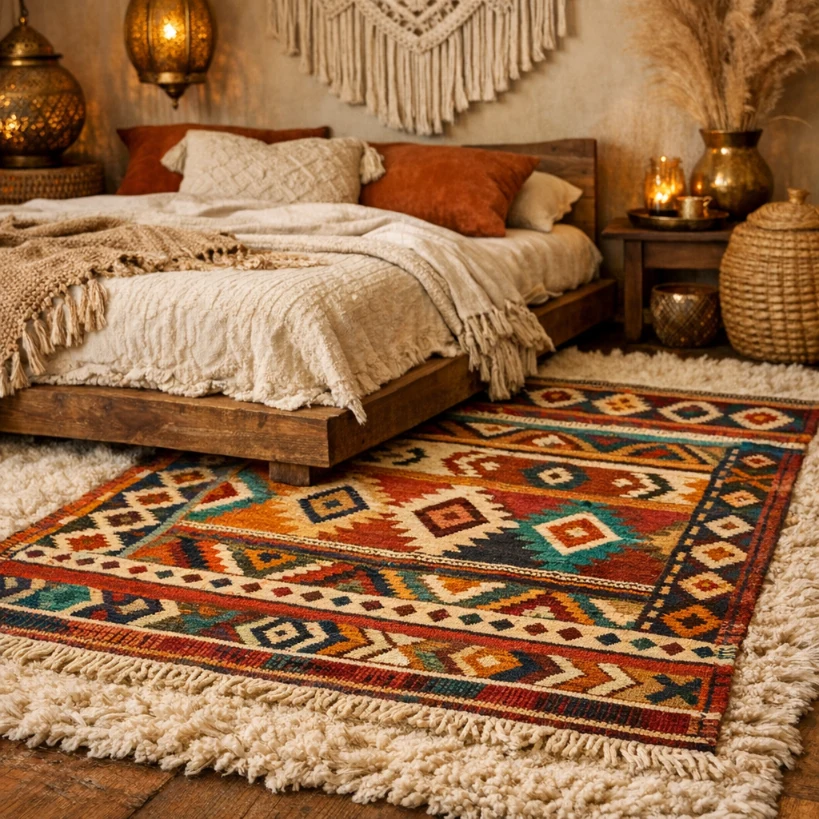
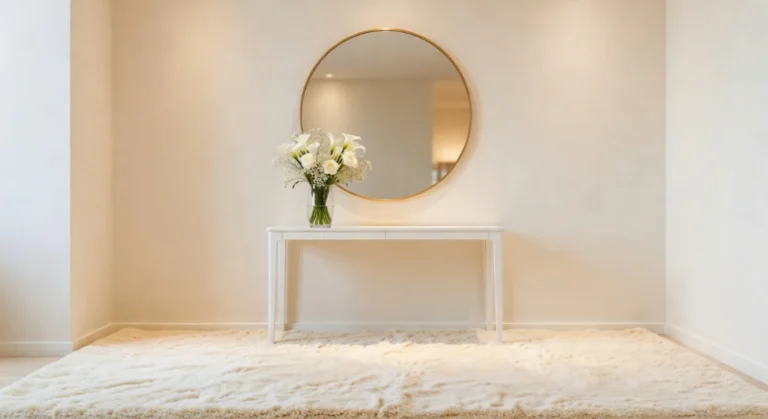
Layering a colorful vintage kilim over a plush cream shag base rug is the most boldly bohemian and textural bedroom rug styling idea that creates an extraordinary, multidimensional floor composition combining the visual richness of traditional woven kilim pattern with the physical luxuriousness of deep, soft shag pile — producing a bedroom floor that is simultaneously visually complex, texturally diverse, and genuinely beautiful from every angle and at every distance from which it is viewed within the room.
Position the vintage kilim at a slightly diagonal angle over the centered shag base for the most effortlessly styled, casually confident bohemian layering composition that feels genuinely collected and organically assembled rather than rigidly arranged and symmetrically precise. Allow the shag rug to extend at least twelve inches beyond the kilim on all sides for the most visually balanced layering proportion. The color palette of the kilim should reference at least two or three existing bedroom elements — the bedding, the wall art, the throw pillow collection — for a compositionally connected result that feels deliberately curated rather than accidentally assembled from incompatible decorative elements.
5. Extend the Rug Under the Entire Bed and Nightstands
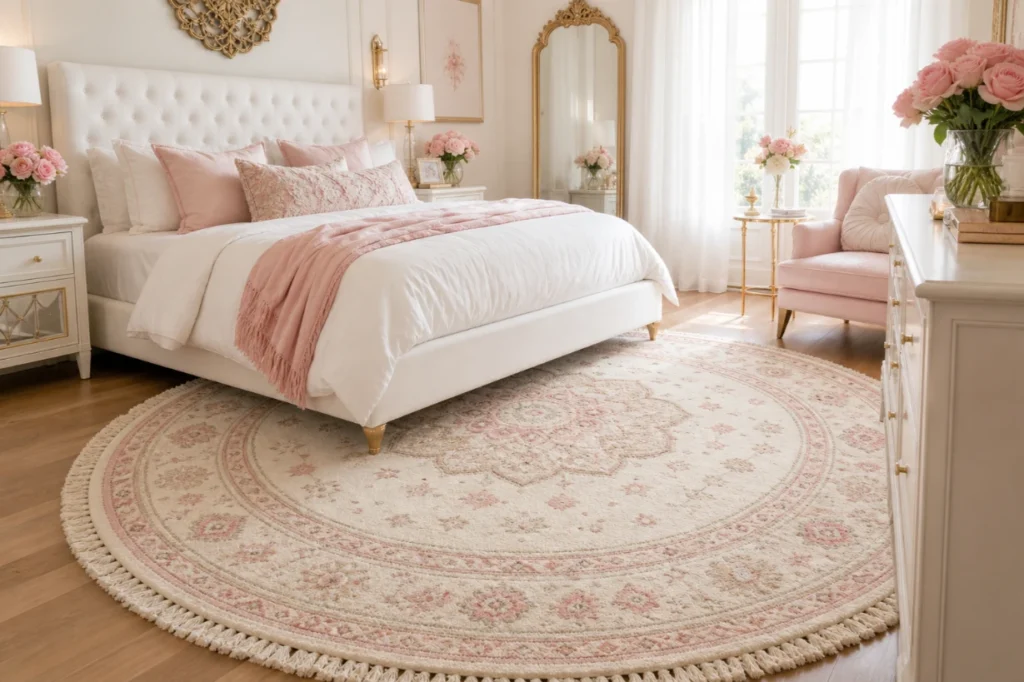
Extending the bedroom rug completely beneath the bed, both nightstands, and all associated bedside furniture is the most generously proportioned and interior-designer-approved bedroom rug styling idea that creates a complete, unified furniture island — a single, cohesive floor-level composition where every piece of bedside furniture appears to inhabit the same defined, rug-bounded territory rather than floating independently on the bare floor in a spatially fragmented and compositionally incomplete arrangement that makes even beautiful furniture appear less grounded and less intentionally placed than it truly deserves.
This extended rug placement approach requires the largest rug size in the bedroom — typically a minimum 10×14 foot rug for a king bed with flanking nightstands, and at least a 9×12 for a queen bed configuration with standard nightstand widths. The considerable investment in a larger rug is immediately and obviously justified by the dramatically more grounded, professionally styled, and spatially complete room that this generous sizing creates — because the proportional relationship between the rug and the furniture it contains is the single most impactful factor in determining how finished, considered, and genuinely beautiful any bedroom floor arrangement appears.
6. Place a Round Rug at the Foot of the Bed
Placing a large round rug at the foot of the bed rather than beneath it is the most unexpectedly creative and architecturally distinctive bedroom rug styling idea that breaks the conventional rectangular rug placement assumption to introduce a circular element at a location in the bedroom floor plan — the foot-of-bed zone — that receives significant foot traffic during the daily routine of getting dressed, selecting shoes, and moving through the bedroom space while simultaneously serving as a highly visible, decoratively prominent floor area viewed directly upon entering the room.
A round rug at the foot of the bed creates an immediate visual focal point that draws the eye downward toward the floor in a way that rectangular rug placements rarely achieve — the unexpected circular shape in a room full of rectangular furniture creates compositional tension and visual surprise that makes the entire bedroom feel more intentionally designed and more creatively thought through than a conventional rug arrangement would suggest. Choose a round rug with a diameter of at least six feet for adequate visual presence in a standard bedroom — smaller round rugs at the foot of the bed appear token and undersized rather than deliberately architectural in their placement intention.
7. Style with a Bold Pattern Rug Against Neutral Bedding
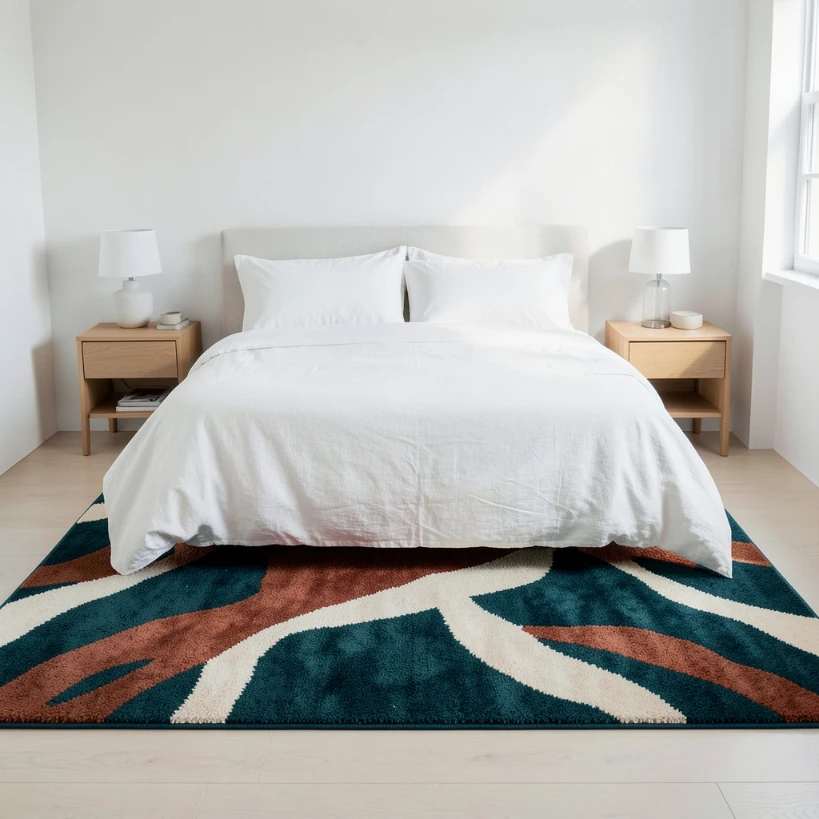
Pairing a boldly patterned rug with completely neutral, solid-colored bedding and simple, unadorned furniture is the most compositionally sophisticated and decoratively intelligent bedroom rug styling idea that allows the rug to serve as the room’s singular, undisputed decorative statement — treating the bedroom floor as a gallery wall equivalent where a single, bold, beautifully executed pattern-forward piece commands the viewer’s complete attention without competing for visual dominance against equally assertive bedding patterns, wall treatments, or accessory arrangements on surrounding surfaces.
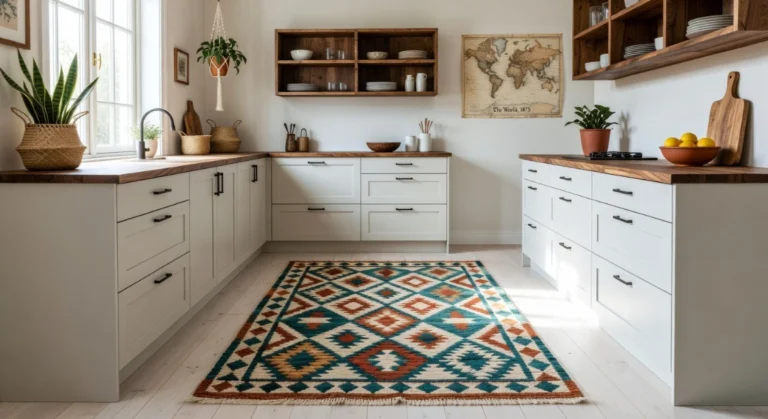
The success of this bedroom rug styling approach depends entirely on the restraint and genuine neutrality of every surrounding element — white or cream linen bedding without texture variation, minimal bedroom accessories reduced to only the most essential and simplest, wooden furniture in a clean, unornamented style, and wall treatments in plain white or the most subtle possible neutral tone that provides zero visual competition to the rug’s complex, color-rich, pattern-forward design statement on the bedroom floor. This editing-forward approach is counterintuitive for decorators who fear empty-looking spaces but produces the most genuinely gallery-like and sophisticated bedroom aesthetic achievable.
8. Layer Multiple Rugs in a Bohemian Stack
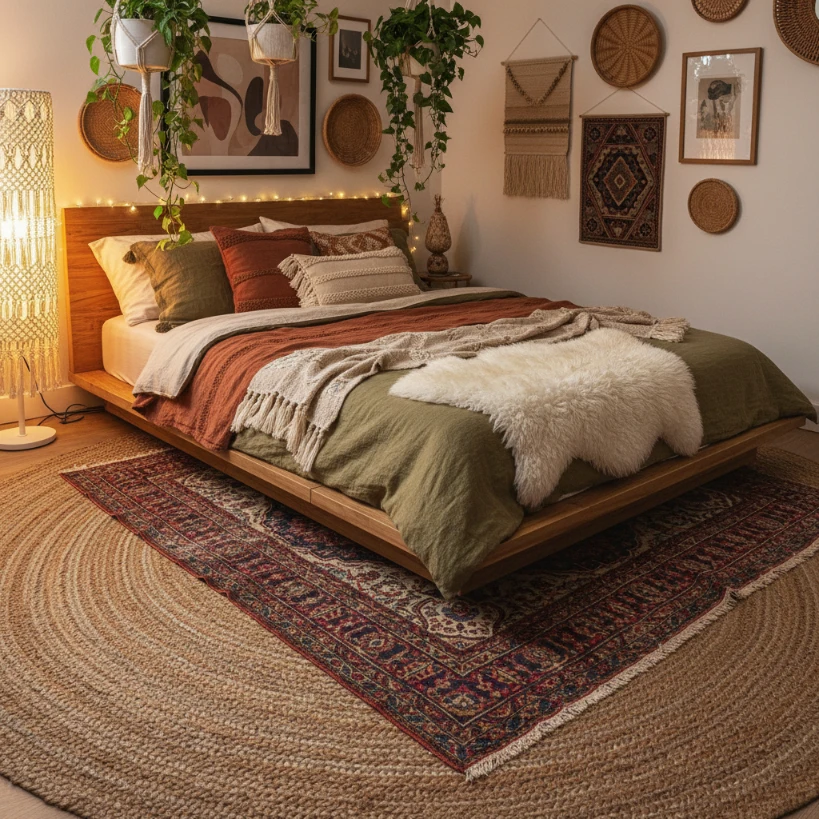
Layering three or more rugs of varying sizes, patterns, textures, and origins in a deliberately abundant, bohemian stack beneath the bed is the most maximally expressive and genuinely boundary-pushing bedroom rug styling idea for the decoratively confident bedroom designer who views the floor as the richest possible canvas for textile layering, pattern mixing, and the kind of gloriously abundant, collected-from-everywhere material accumulation that defines genuinely beautiful bohemian interior design at its most fully realized, personally expressive, and atmospherically immersive level.
The most visually successful three-rug bohemian stacks follow a clear structural hierarchy — a large, low-profile, neutral jute or flatweave base rug that extends generously beneath the bed on all sides, topped with a medium-sized vintage Persian or kilim in a rich pattern that serves as the composition’s primary visual statement, topped finally with a small accent rug — a sheepskin, a small tribal piece, or a decorative flat-weave — positioned slightly off-center for the most casually confident and organically assembled appearance. Each layer should be smaller than the one beneath it while sharing at least one color connection with the adjacent layer for visual cohesion across the complete stacked composition.
9. Choose a Rug Color That Matches the Headboard
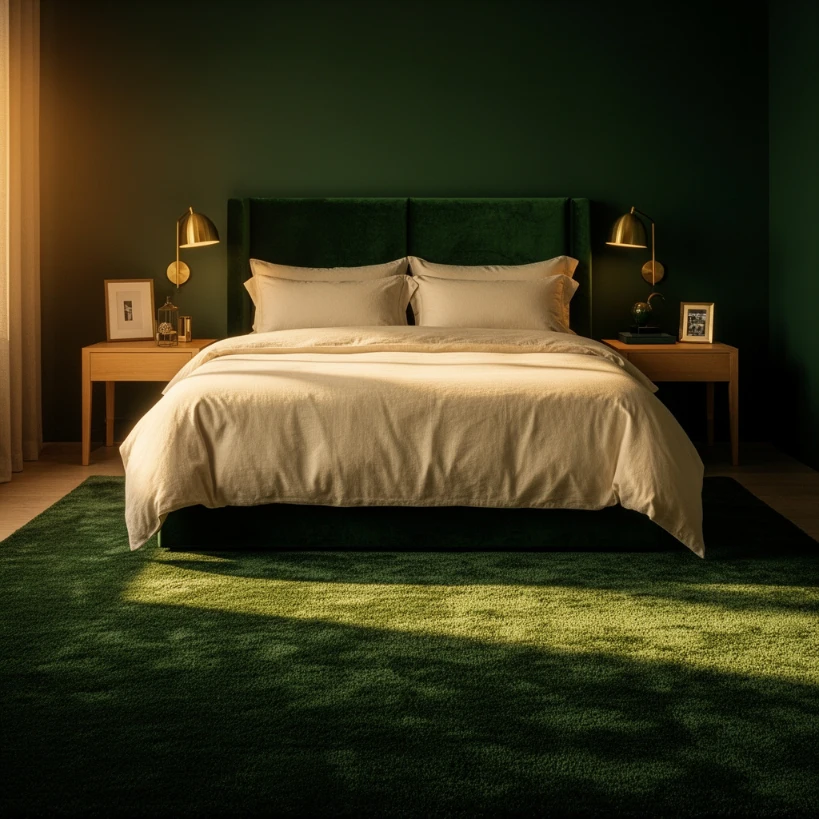
Choosing a bedroom rug in a color that directly matches or closely echoes the headboard’s upholstery or finish is the most compositionally unified and interior-design-sophisticated bedroom rug styling idea that creates a deliberate, tonal dialogue between the room’s two most visually dominant elements — the headboard above and the rug below — producing a vertical color story that connects the top and bottom of the bedroom’s visual composition in a way that makes the entire room feel cohesively planned, professionally considered, and genuinely beautifully thought through as a complete spatial design rather than a random accumulation of individually selected pieces.
This tonal matching technique is particularly powerful when applied to richly saturated, distinctive colors — a forest green velvet headboard paired with a deep sage or forest green plush rug, a navy blue linen headboard paired with a deep cobalt area rug, or a warm terracotta upholstered headboard paired with a rust-toned vintage rug — because the repetition of an unexpected, non-neutral color at both the top and bottom of the bedroom creates the most dramatically intentional and visually impactful tonal composition. Cream bedding between the matched headboard and rug provides essential visual breathing room and chromatic relief.
10. Use a Rug to Define a Reading Nook Corner
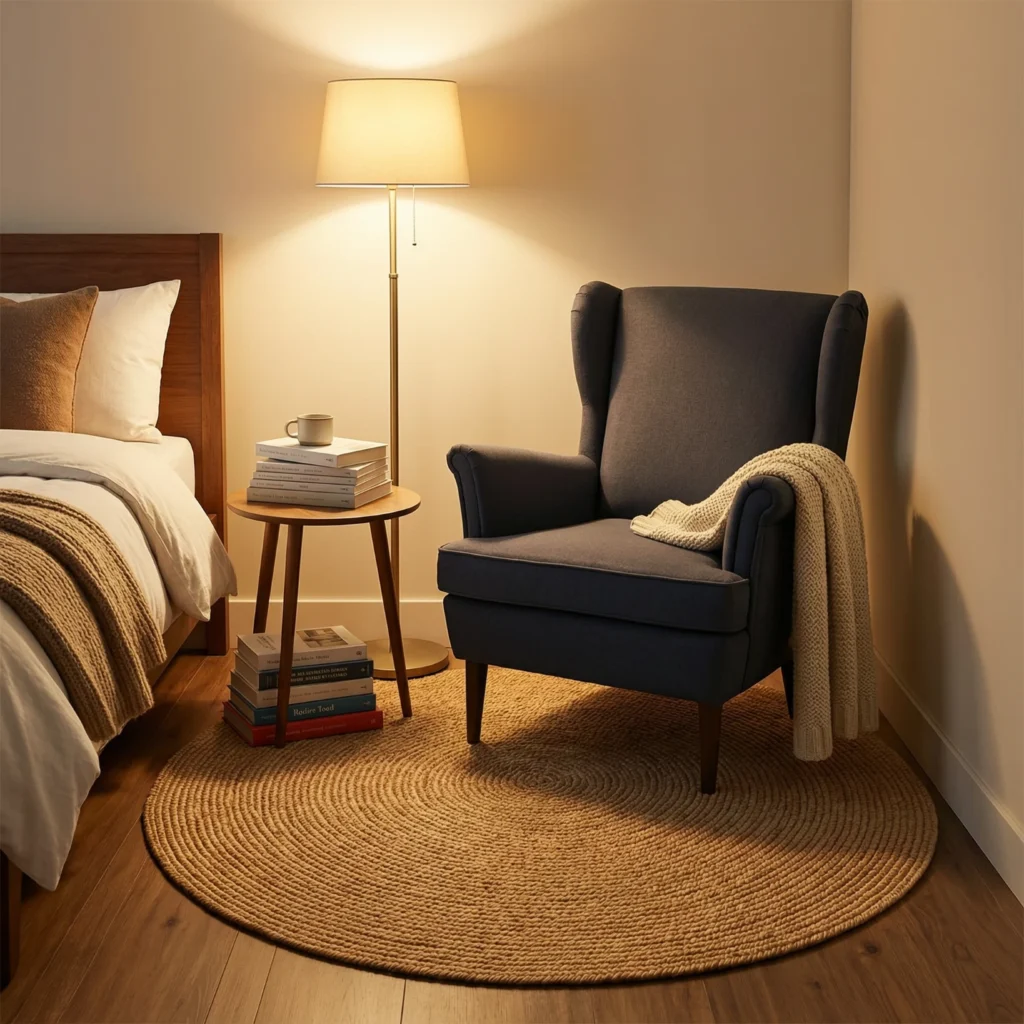
Using a separate smaller rug to define and anchor a reading nook corner within the bedroom is the most spatially intelligent and genuinely functional bedroom rug styling idea for larger bedrooms that contain sufficient square footage to accommodate a dedicated sitting and reading area as a distinct zone within the overall bedroom floor plan — creating an intimate, purposeful sub-space within the room that functions as a private retreat within the private retreat, complete with its own clearly defined, rug-bounded floor territory.
A round or small rectangular rug measuring four to six feet across works most effectively for a bedroom reading nook — large enough to fully contain the chair, the side table, and the floor lamp within its boundaries while small enough to read clearly as a distinct, separate floor zone from the main bedroom rug beneath the bed. Choose a rug for the reading nook that coordinates with rather than exactly matches the main bedroom rug — sharing a color palette while offering a different texture, scale, or pattern for a layered, collected quality that makes the reading nook feel like a genuinely distinct and personally curated micro-environment within the larger bedroom composition.
11. Pair a Dark Rug with Light Bedding for Contrast
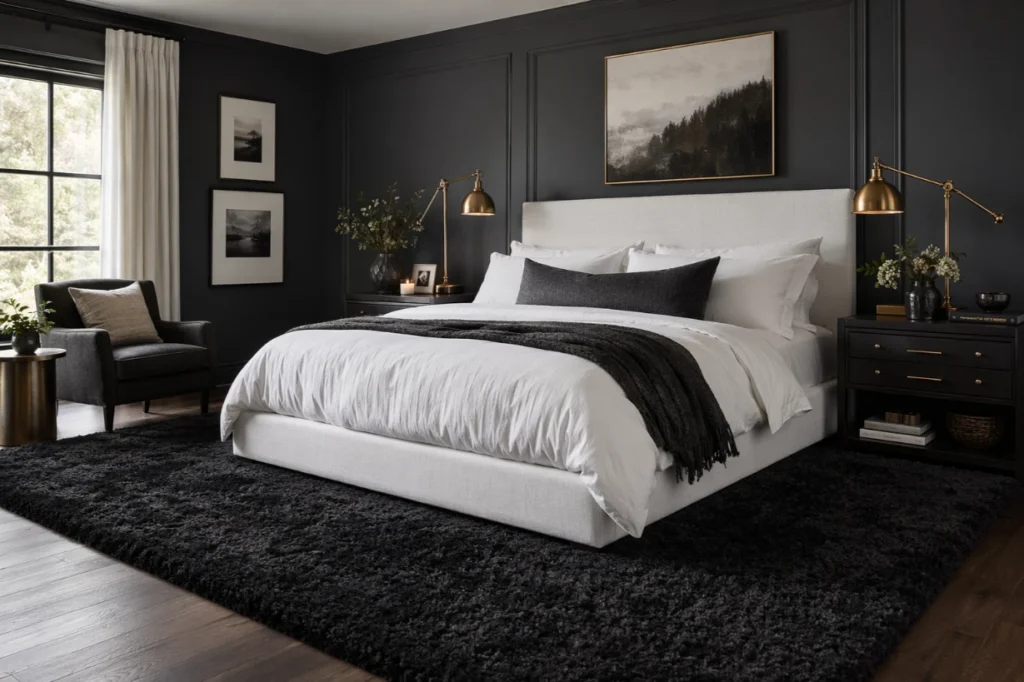
Pairing a deep, richly dark rug with clean white or cream bedding is the most dramatically beautiful and chromatically confident bedroom rug styling idea that leverages the fundamental design principle of high contrast to create a bedroom composition with genuine visual power, spatial definition, and the kind of sophisticated, thoughtfully considered interior design tension that makes the bed — dramatically light against a dramatically dark floor — appear more floating, more sculptural, and more intentionally staged as a beautiful three-dimensional composition than a more tonally matched approach would ever achieve.
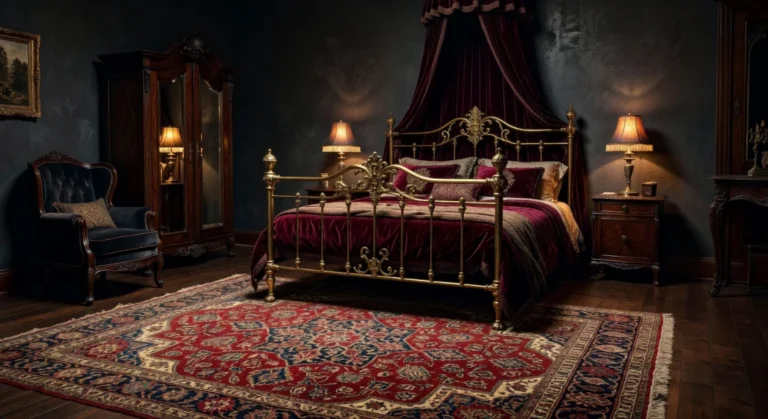
The most successful implementations of this dark rug and light bedding contrast approach ensure that the transition from dark floor to light bed is not the only contrast in the room — additional contrast elements in the form of dark wall color, dark furniture in walnut or ebony finishes, or dark accessories in matte black and charcoal grounds the dark rug within a broader compositional context that prevents it from appearing anomalous or disconnected from the overall bedroom palette. Warm brass or gold lamp bases and hardware introduce metallic warmth that bridges dark and light elements most elegantly.
12. Create a Focal Point with a Vintage Persian Rug
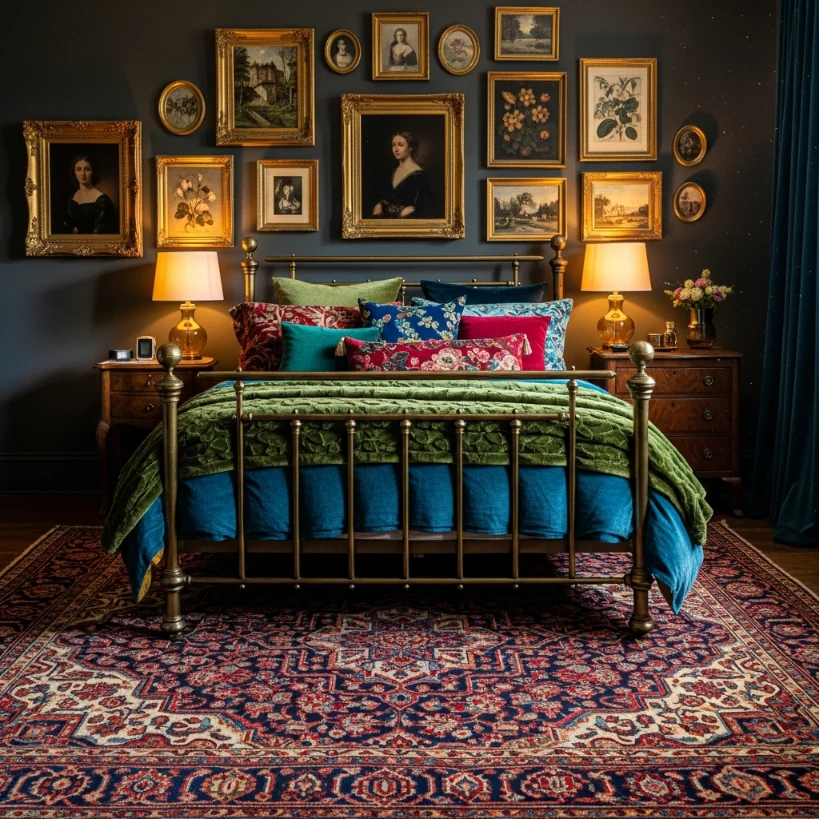
Centering a richly detailed vintage Persian rug beneath the bed as the bedroom’s primary decorative focal point is the most historically resonant and characterfully expressive bedroom rug styling idea that allows a single genuinely beautiful antique or antique-inspired textile — with its centuries-old pattern vocabulary, its hand-knotted craftsmanship, and its richly layered color depth achievable only through genuine aging or exceptional reproduction dyeing techniques — to single-handedly define the entire bedroom’s design direction, color story, and aesthetic personality without requiring any additional decorative intervention of similar complexity or visual ambition.
Source a genuine vintage Persian rug from Chairish, 1stDibs, or reputable local antique dealers for the most character-rich, historically authentic, and visually extraordinary result — the color variations, slight pattern irregularities, and surface patina of a genuinely aged carpet are irreplaceable qualities that production reproductions cannot honestly claim to match regardless of their technical sophistication or price point. Style the surrounding bedroom elements in response to the rug’s dominant colors — pulling upholstery, bedding, and wall paint choices from the rug’s specific palette for a compositionally unified result that feels genuinely curated around this extraordinary central textile.
13. Float the Rug Partially Under the Bed
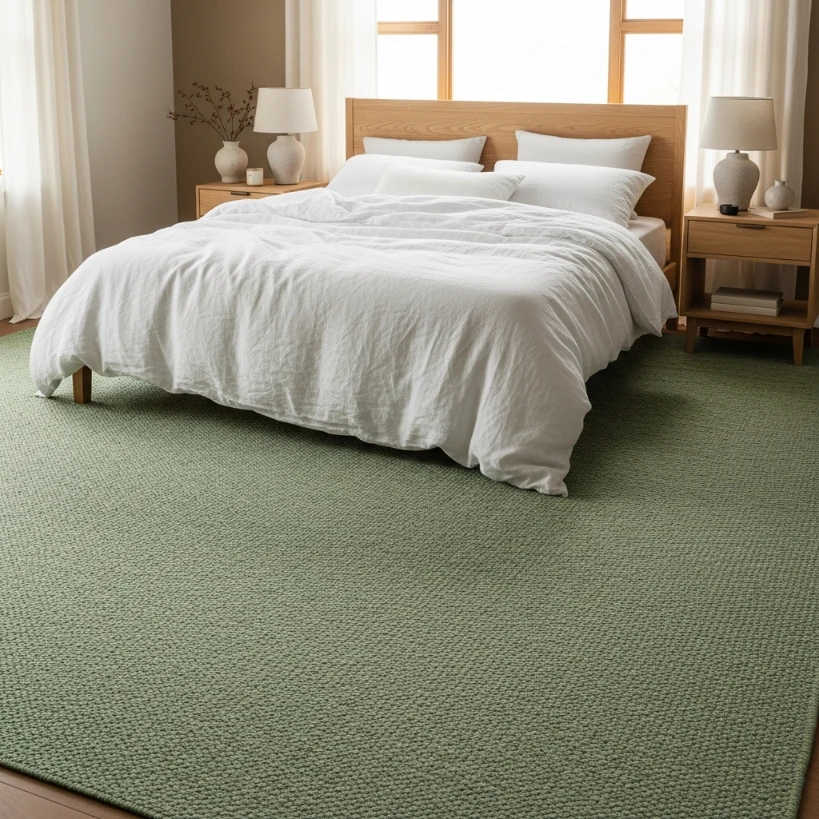
Floating the rug so that approximately two-thirds of its length slides under the bed while one-third remains fully visible at the foot is the most classically professional and spatially balanced bedroom rug styling idea that achieves the perfect compromise between the two extreme rug placement options — completely under the bed where almost nothing of the rug is visible, and completely in front of the bed where the rug appears to be floating disconnected from its furniture anchor — producing the most proportionally ideal and visually satisfying bedroom floor arrangement.
This partially floating rug placement technique requires precise positioning to achieve the most balanced result — the visible portion of the rug at the foot of the bed should be at least eighteen to twenty-four inches for adequate visual presence and practical barefoot comfort in the primary foot traffic zone. The rug must extend far enough under the bed that the side portions also provide sufficient visible coverage alongside the nightstands on each side. Use a non-slip rug pad cut two inches smaller than the rug on all sides for the most secure positioning that prevents the floating portion from shifting during normal bedroom use.
14. Mix Rug Textures — Smooth Base with Chunky Knit Accent
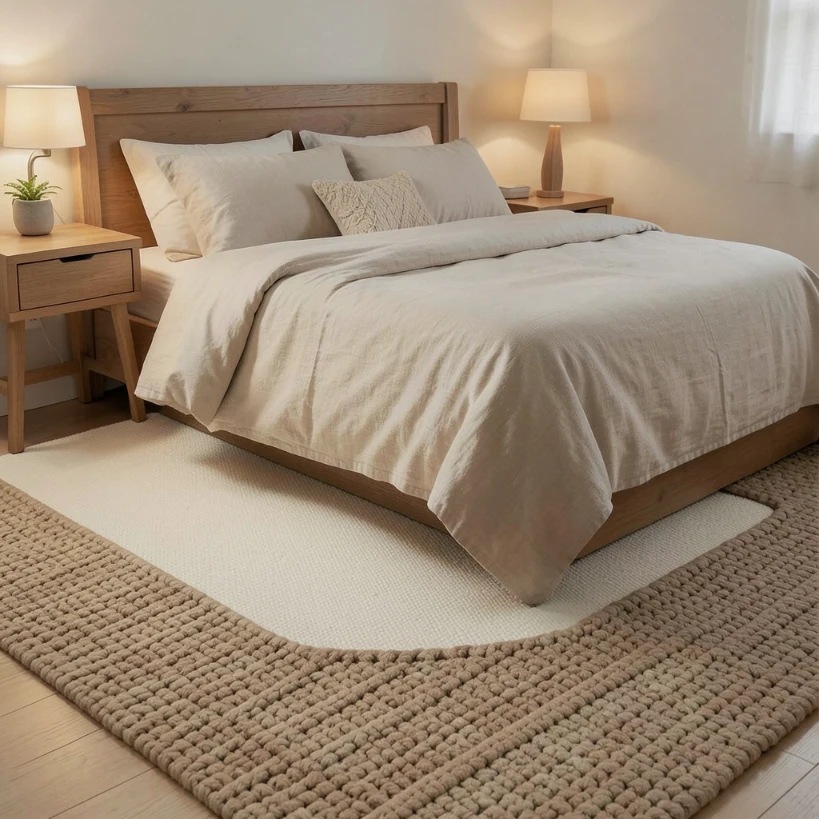
Mixing a smooth, flat, low-profile base rug with a chunky, heavily textured knit or hand-knotted accent rug creates the most tactilely rich and visually interesting bedroom rug styling idea for the texture-conscious decorator who understands that the most beautifully layered bedroom environments derive their sensory richness not from pattern or color complexity alone but from the deliberately assembled conversation between materials of wildly different physical characteristics — the smooth versus the rough, the flat versus the dimensional, the refined versus the raw and honestly handcrafted.
A flat-weave or low-pile base rug in a warm neutral — cream, oatmeal, or warm beige — provides the most compositionally quiet and texturally neutral foundation over which a chunky, heavily dimensional accent rug can make the most visually dramatic and tactilely extraordinary impact. Position the chunky knit or hand-knotted accent rug at the foot of the bed where it receives maximum visual attention from the room’s entrance and maximum practical foot contact during the morning getting-dressed routine. Choose accent rug dimensions that fit comfortably within the base rug’s footprint on all sides for a well-contained, compositionally balanced layered result.
15. Use a Patterned Rug to Introduce the Room’s Color Story
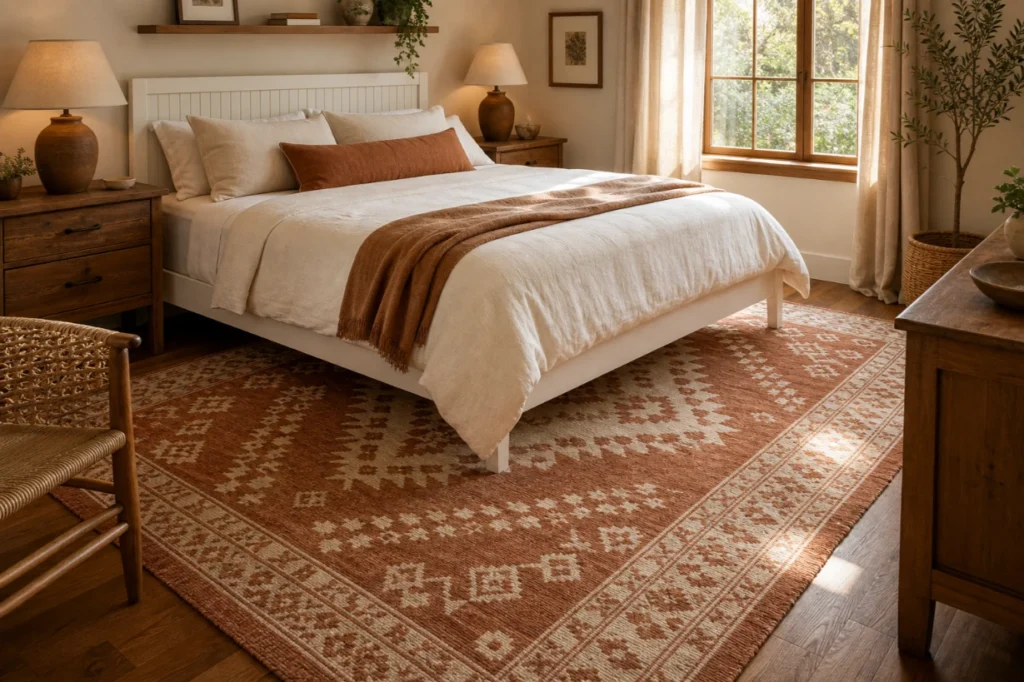
Using the bedroom rug as the room’s primary color-story generator — selecting the rug first and pulling every subsequent bedroom color choice directly from its palette — is the most interior-designer-approved and compositionally cohesive bedroom rug styling idea that ensures perfect color coordination between every element in the room through the simple, elegant discipline of treating the rug as the room’s master color palette from which all bedding, curtain, wall paint, and accessory colors are faithfully drawn rather than independently selected and hopefully compatible with each other.
This rug-first design approach is particularly powerful when applied to multi-color patterned rugs — florals, abstracts, vintage orientals, or geometric patterns containing three or more colors — because the rug’s existing color relationships have already been resolved by its designer in ways that guarantee inherent harmony between the colors it contains. Simply extract the rug’s colors and distribute them throughout the bedroom — its dominant color becomes the wall color or bedding selection, its secondary colors become the throw pillow and curtain choices, and its accent colors appear in the artwork, lamp bases, and smaller accessory details that complete the fully coordinated bedroom composition.
16. Style the Rug with a Bed Bench for a Layered Look
Adding a tufted or upholstered bed bench placed at the foot of the bed on the rug surface is the most hotel-inspired and genuinely complete bedroom rug styling idea that transforms a simple bed-plus-rug arrangement into a fully realized, multi-layered bedroom vignette — the bench creating an additional furniture element that sits entirely on the rug, increases the rug’s practical utility by anchoring additional weight that prevents shifting, and contributes a visually satisfying compositional layer between the bed and the open bedroom floor that makes the entire sleeping area appear more thoughtfully, professionally, and beautifully furnished.
Choose a bench that is approximately two-thirds the width of the bed for the most proportionally harmonious result — a bench that is too narrow appears token and undersized against a wide bed, while one that matches the full bed width eliminates the visual breathing room needed for the composition to feel balanced rather than crowded. The bench upholstery should coordinate with — but not exactly match — either the bedding or a significant bedroom accent color for a deliberately composed, multi-element vignette. Position the bench so its feet sit fully on the rug surface with a few inches of rug visible behind it for the most complete and professionally styled bedroom rug styling result.