17 Bohemian Rug Ideas for a Cozy Boho Home
1. Vintage Turkish Kilim Rug for Authentic Boho Living Room
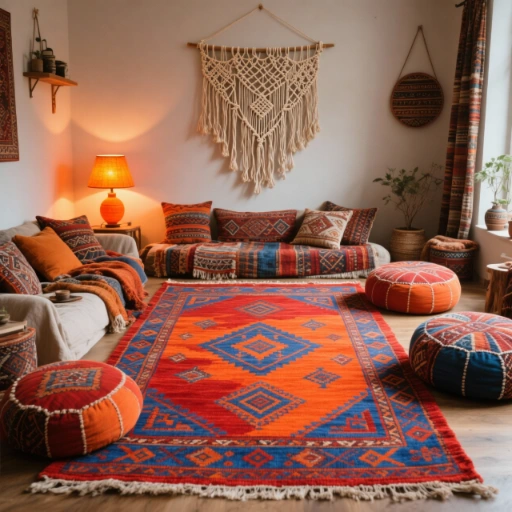
An authentic vintage Turkish kilim rug with its vibrant geometric tribal patterns, saturated jewel-tone colors, and centuries of nomadic weaving tradition woven into every hand-crafted thread creates the most genuinely characterful and culturally resonant foundation available for a bohemian living room of real depth and global design authenticity. The specific visual language of Turkish kilim weaving, with its bold geometric motifs, strong color contrasts, and the particular flatweave construction that gives kilim rugs their crisp pattern definition and practical durability, communicates an entire philosophy of decorative beauty rooted in the nomadic traditions of Anatolia and Central Asia that have produced some of the world’s most sophisticated and enduring textile art across thousands of years of continuous creative development. Against a kilim foundation, every other bohemian element in the room appears more intentional and more beautifully contextualized.
Sourcing a genuine vintage Turkish kilim rug requires patience, education, and the willingness to look beyond the artificially aged reproductions that flood the mass market with convincing appearances of vintage authenticity at prices that reflect their recent machine-made origins rather than the decades of actual use and weathering that give genuine vintage kilims their specific beauty and irreplaceable character. Visit specialist rug dealers with established relationships with Turkish rug importers, attend quality vintage textile markets and rug auctions where provenance information is available, or work with reputable online dealers who provide detailed condition reports and authenticity guarantees for every vintage piece they offer. The condition of a vintage kilim is not a simple good or bad determination but a nuanced assessment of how wear, fading, and any repairs have affected the specific piece’s visual character, as rugs with honest wear and beautiful natural fading often possess a patina of genuine authenticity more visually beautiful than pristine examples whose perfect condition suggests either exceptional preservation or recent production.
2. Layered Jute and Moroccan Beni Ourain Rug Combination
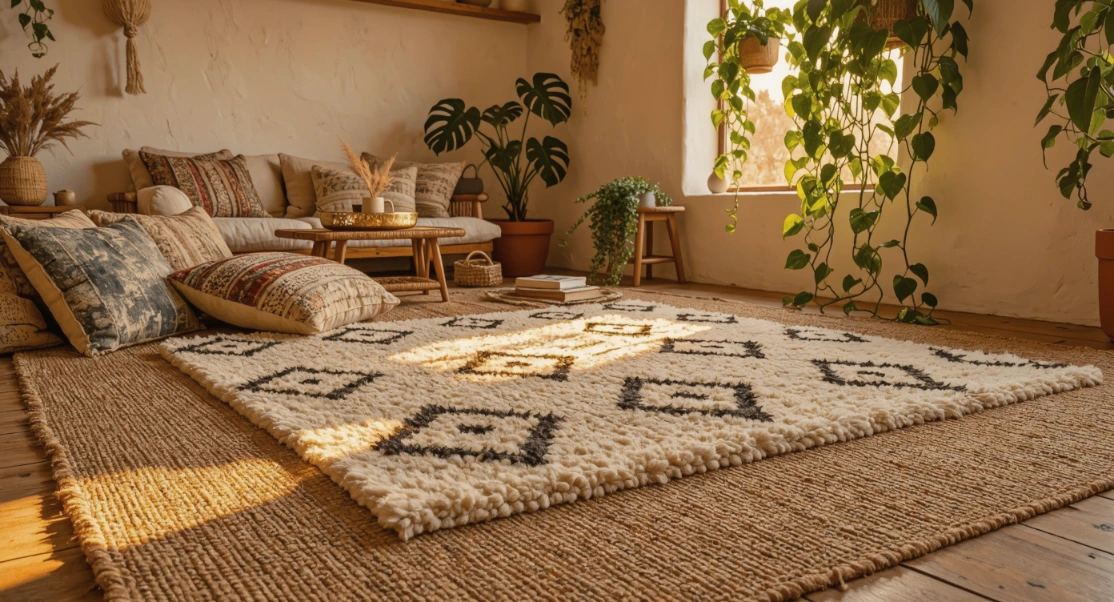
Layering an authentic Moroccan Beni Ourain cream wool rug over a large natural jute base rug creates a bohemian floor composition of such extraordinary textural richness and naturally sophisticated material contrast that it immediately transforms the room from simply furnished to genuinely curated with evident design knowledge and confident material sensibility. The Beni Ourain rug, hand-knotted by Berber women of the Atlas Mountains from undyed natural sheep wool using weaving traditions passed across generations within specific tribal communities, brings a quality of genuine cultural heritage and irreplaceable artisanal individuality to the layered composition that no mass-produced rug of equivalent visual appearance can provide, its slightly irregular knotting, natural wool pile variation, and the specific weight and drape of genuine Atlas Mountain wool creating a physical presence of authentic material luxury that rewards extended close examination.
The jute base layer beneath the Beni Ourain serves multiple functions simultaneously in the layered bohemian rug composition, providing the textural contrast of rough natural fiber against the Beni Ourain’s soft wool pile, extending the visual floor coverage to the room’s full furniture grouping beyond the Beni Ourain’s smaller central placement, and creating the specific layered quality that distinguishes a thoughtfully styled bohemian interior from one that simply places individual rugs without consideration for how they relate to each other and to the floor surface beneath them. Size the jute base generously, extending at least 18 inches beyond the Beni Ourain on all sides to create a clearly visible layering relationship that reads as deliberate rather than accidentally undersized, and choose a jute weave with sufficient textural coarseness to create genuine material contrast with the Beni Ourain’s soft wool surface visible at the layered edge where both materials meet.
3. Colorful Patchwork Rug for Maximalist Boho Bedroom
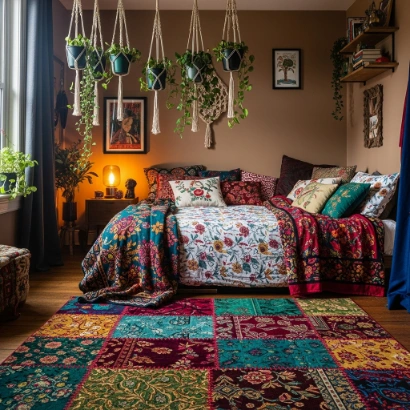
A colorful patchwork rug assembled from vintage fabric squares in rich jewel tones of teal, burgundy, gold, and emerald creates a maximalist bohemian bedroom floor piece of such joyful chromatic abundance and genuine artisanal individuality that it serves as the complete color program for the entire room’s palette, pulling together the varied jewel tones of the layered bed textiles, the hanging plant greenery, and the warm amber lamp light into a unified visual composition whose organizing logic the patchwork rug’s color range makes immediately comprehensible and aesthetically satisfying. Patchwork rugs in the bohemian context are not merely floor coverings but complete stories of textile culture, each fabric square potentially from a different time, place, and weaving tradition, assembled together into a new unified object of genuine creative synthesis and personal curatorial vision.
The construction quality of a patchwork rug determines both its visual beauty and its practical longevity in the bedroom application where it will experience regular foot traffic, furniture pressure, and the occasional moisture contact that daily residential use inevitably involves. The most durable and beautiful patchwork rugs use vintage textile fragments of genuine wool, cotton, or silk construction assembled on a substantial backing of canvas or burlap with strong linen thread in a sturdy flat-fell seam or overlocked edge finish that prevents individual fabric squares from separating at their joins under the mechanical stress of regular use. Avoid patchwork rugs assembled from synthetic fabric fragments regardless of their visual similarity to natural fiber versions, as synthetic fabrics lack the dimensional recovery after compression that natural fiber pile rugs possess and develop an increasingly flattened, matted appearance with use rather than the graceful even compression that well-made wool and cotton patchwork rugs experience across years of regular foot traffic.
4. Persian-Inspired Medallion Rug in Jewel Tones for Boho Dining Room
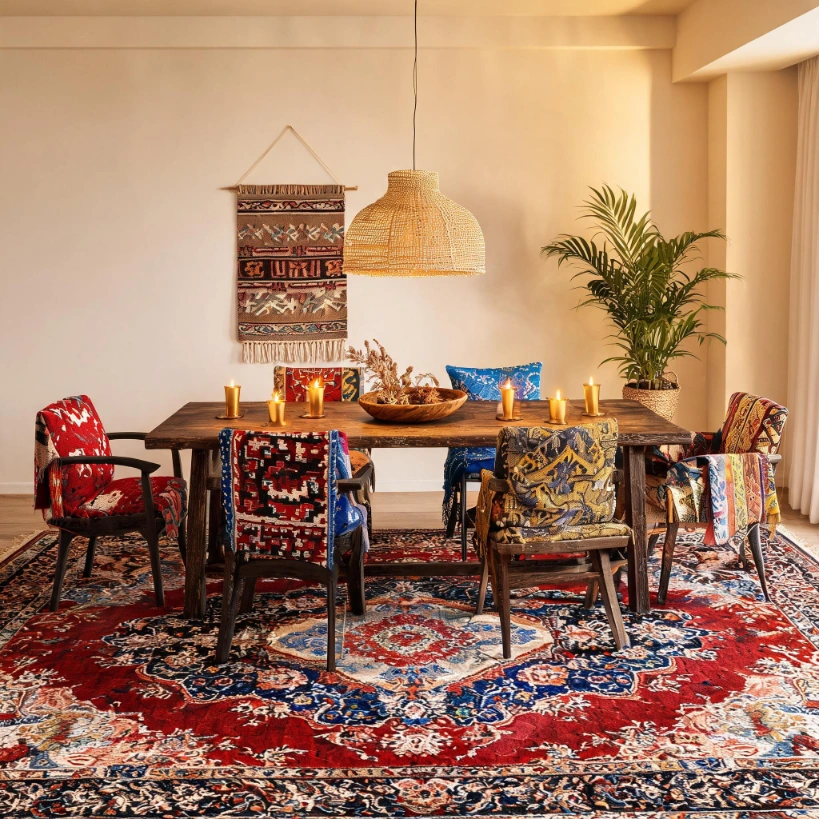
A Persian-inspired medallion rug in deep jewel tones of ruby red, sapphire blue, and gold beneath a bohemian dining table creates a floor composition of such concentrated decorative richness and historically resonant pattern complexity that it transforms the dining room from a purely functional eating space into a genuinely atmospheric room of global design character and daily aesthetic pleasure that makes every meal served within it feel like a celebration of beauty and cultural richness rather than a routine domestic obligation to be efficiently concluded. The medallion format, with its central ornamental motif radiating outward through increasingly complex border systems of botanical and geometric pattern, creates a floor composition organized around a visual center of gravity that naturally draws the dining table and chairs into a focused, intentional grouping above the rug’s central medallion.
Selecting the right size of Persian-inspired medallion rug for the bohemian dining room requires ensuring that all chair legs remain on the rug surface even when chairs are pulled out from the table for seating, as the common error of purchasing a rug too small for the dining table results in chair legs constantly catching on the rug edge as diners move in and out of their seats, causing both practical inconvenience and accelerated wear at the rug’s perimeter edges. For most dining tables seating six to eight people, a rug measuring at least nine by twelve feet provides sufficient floor coverage for comfortable chair movement in all directions, while tables seating four can typically be accommodated by an eight by ten foot rug that extends at least 24 inches beyond the table edge on all sides. Choose a rug with a low to medium pile height in the dining room application to prevent chair leg wobble on the uneven surface that deep pile creates and to facilitate easier removal of food spills and dropped debris from the rug surface during and after meals.
5. Natural Fiber Rug with Hand-Painted Tribal Motifs
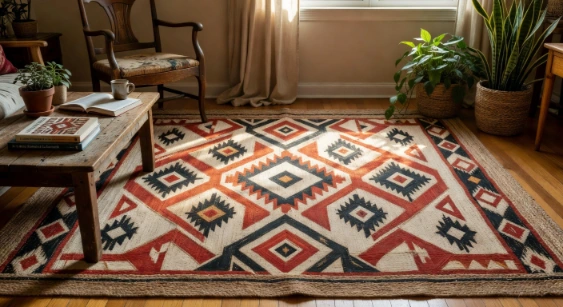
A natural sisal or jute rug with hand-painted tribal geometric motifs in terracotta, black, and cream creates a bohemian floor piece of such satisfying DIY artisanal character and earthy design originality that it represents the most personally expressive rug option available to the creative bohemian homeowner willing to invest several hours of careful painting work in exchange for a completely unique floor covering whose tribal motif design can be customized to reflect personal aesthetic preferences and specific interior color requirements that no commercially available rug can match with equivalent precision. The natural honey tones of the jute or sisal base provide the ideal warm neutral ground for tribal geometric designs painted in the earthy pigment palette that most naturally complements the material’s organic character.
Painting tribal motifs onto a natural fiber rug requires specific materials and a systematic working process that produces clean, crisp pattern edges rather than the fuzzy, paint-bled lines that inadequate preparation and inappropriate paint products inevitably produce on the textured surface of jute and sisal weaves. Select a high-quality outdoor or multi-surface acrylic paint with excellent coverage and flexibility that will not crack or flake as the natural fiber rug flexes with regular foot traffic, and apply the paint in two thin coats rather than a single thick application that tends to pool in the fiber valleys and create uneven coverage across the textured surface. Tape geometric designs using low-adhesion painter’s tape pressed firmly into the fiber surface to create the sharpest possible design boundaries, and seal the completed painted motifs with a clear flexible acrylic sealer that protects the painted surface from abrasion and moisture while maintaining the natural flexibility of the fiber construction beneath.
6. Round Wool Shag Rug in Earth Tones for Cozy Reading Nook
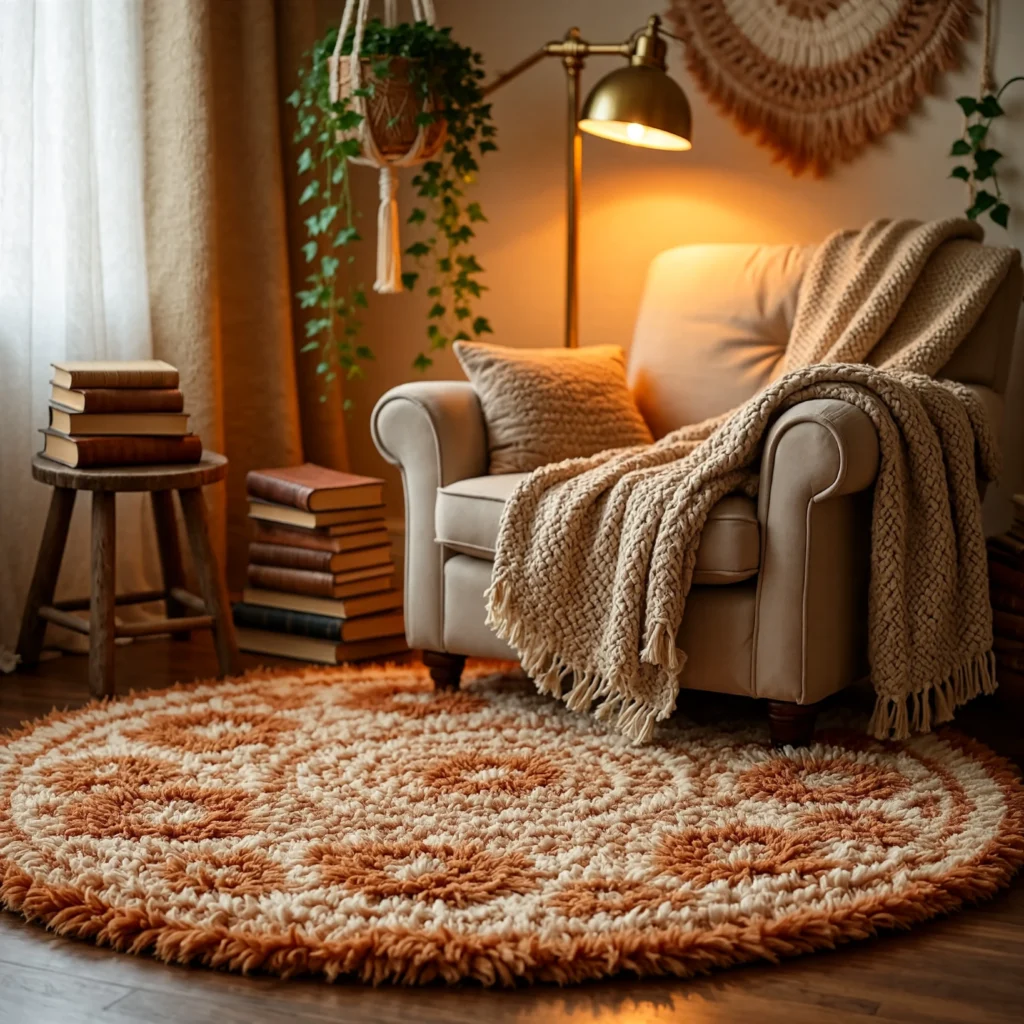
A thick round wool shag rug in warm earth tones of terracotta, caramel, and cream placed in a cozy bohemian reading nook creates a sensory environment of such extraordinary physical comfort and warm chromatic embrace that settling into the armchair positioned above it with a book and a cup of tea becomes one of the most genuinely restorative domestic rituals available to the person fortunate enough to have created this specific combination of soft floor, comfortable chair, warm light, and good reading material in a quiet corner of their home. The round rug form creates a natural circular boundary around the reading nook furniture that defines the intimate space of the nook within a larger room without the hard architectural boundary of actual walls, creating the sense of a personal retreat within shared domestic space.
Earth tone wool shag rugs combine the most practically appealing and visually warming qualities of the shag construction type with the most universally compatible and personally sustaining color palette available in the rug market, the terracotta, caramel, and cream tones of the earth family creating a chromatic environment of proven psychological warmth and comfort that research consistently associates with reduced anxiety, increased feelings of safety, and the specific quality of relaxed mental ease most conducive to deep reading and genuine cognitive rest. Maintain a wool shag rug in a reading nook application by vacuuming regularly with a suction-only attachment rather than a beater bar that can pull wool fibers from the backing and permanently damage the pile structure, and rotate the rug quarterly to distribute wear evenly across its surface rather than concentrating foot traffic wear in the specific zones most frequently walked upon during approach to and departure from the armchair above.
7. Vintage Overdyed Rug in Vivid Teal for Boho Bedroom Floor
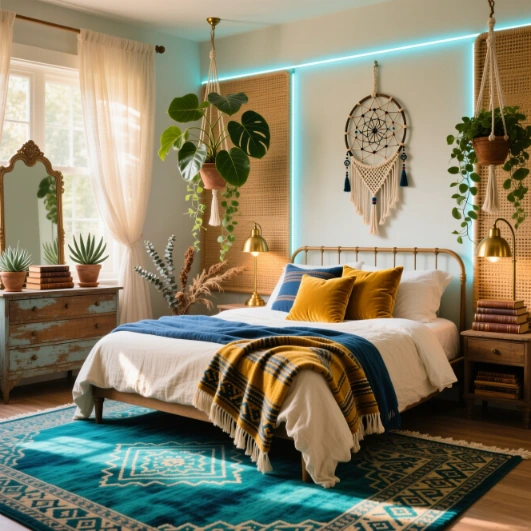
A vintage overdyed rug in vivid teal turquoise, its original traditional pattern still subtly visible through the bold new dye color as a ghost of its previous decorative identity, creates a bohemian bedroom floor piece of such rich chromatic confidence and layered visual complexity that it provides the complete color anchor and pattern foundation for the entire bedroom’s decorative program while simultaneously telling the specific story of creative transformation and renewed material life that makes overdyed rugs among the most conceptually interesting and visually sophisticated floor coverings available in the bohemian design vocabulary. The original pattern’s ghostly presence beneath the new dye adds a dimension of depth and mystery that solid-color rugs entirely lack and that most patterned rugs cannot achieve with equivalent subtlety.
The teal turquoise of a vivid overdyed rug creates the most versatile and decoratively productive color foundation available for a bohemian bedroom palette, as teal exists at the precise intersection of blue and green that allows it to harmonize with the full range of warm and cool color accents that bohemian bedroom styling typically employs, from the warm terracotta and burnt orange of southwestern-influenced textiles through the jewel tones of indigo, deep purple, and emerald that characterize globally inspired boho decoration to the natural neutrals of cream, linen, and natural wood that provide the essential tonal breathing space in any complex bohemian color composition. This chromatic versatility makes a teal overdyed rug the single most accommodating color choice available for a bedroom whose textile and accessory collection spans multiple color families and global design traditions simultaneously.
8. Woven Cotton Rug in Warm Stripes for Boho Kitchen
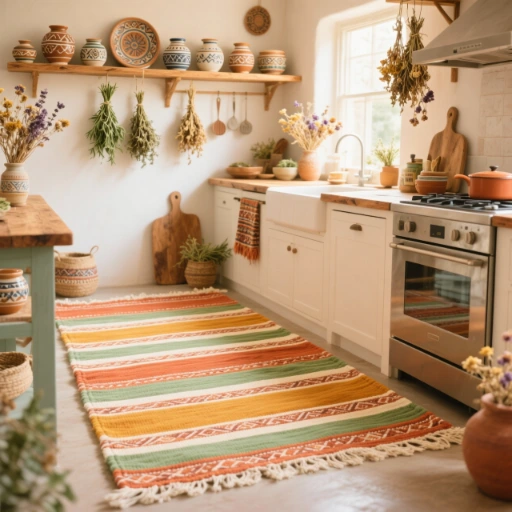
A woven cotton rug in warm horizontal stripes of terracotta, mustard, cream, and sage green brings cheerful bohemian color energy and practical washable performance to the kitchen floor in a combination of aesthetic vitality and functional appropriateness that makes the striped cotton rug the single most sensible and most visually successful rug choice available for the boho kitchen application. The kitchen is the most demanding environment in the home for floor coverings, exposing any rug placed within it to cooking spills, dropped food, tracked-in garden soil, grease spatters, and the constant foot traffic of the room most continuously occupied in most active households, making the machine-washable cotton construction of a quality woven cotton rug not merely a practical convenience but an absolute functional necessity for maintaining the visual freshness and hygienic cleanliness that a kitchen rug must sustain to remain a genuine decorative asset rather than a source of cleaning anxiety and accumulated staining.
The horizontal stripe orientation of a kitchen rug creates the specific spatial effect of visual width expansion that is particularly valuable in the typically narrow corridor configurations of many residential kitchen layouts, the eye following the stripe’s horizontal direction across the full width of the kitchen floor to make the space appear more generously proportioned than its actual dimensions. Select stripe widths proportional to the kitchen’s overall scale, with bold wide stripes of three to four inches reading best in larger kitchen spaces and more refined narrower stripes of one to two inches creating the most elegant result in compact kitchen configurations where heavy bold stripes would visually overwhelm the available space. The warm terracotta and mustard tones of the stripes create a natural affinity with wooden cabinetry and butcher block countertops that makes the striped kitchen rug appear specifically designed for its space rather than generically placed within it.
9. Handwoven Tapestry Rug with Abstract Botanical Motifs
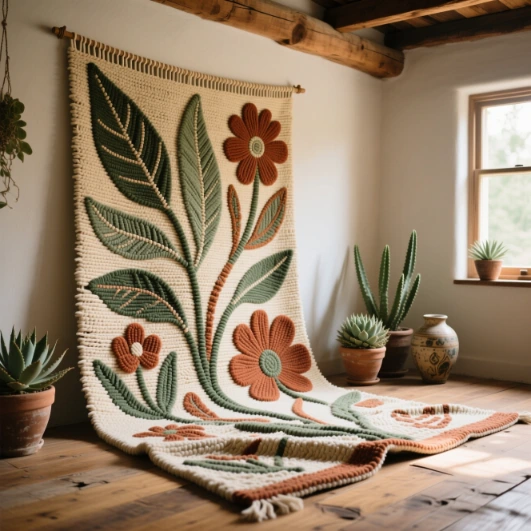
A handwoven tapestry rug with abstract botanical leaf and flower motifs created through traditional loom weaving techniques creates a floor textile of such genuine artisanal beauty and organic design intelligence that it occupies a creative territory between functional floor covering and wall-worthy textile art, capable of performing beautifully in either application depending on the specific needs and spatial configuration of the bohemian home that receives it. The botanical abstraction in the woven motif design, where leaf and flower forms are simplified and distilled into geometric shapes accessible to the loom’s horizontal and vertical weaving structure, creates pattern work of sophisticated visual complexity achieved through the most fundamental and most ancient of all textile production methods, creating a direct and unbroken connection between the rug and the earliest traditions of human decorative textile creation.
The specific earthy color palette of sage green, rust terracotta, and natural cream in a handwoven botanical rug creates a floor composition whose color relationships are drawn directly from the natural world in a way that synthetic or commercially dyed rugs rarely achieve with equivalent naturalness and depth, as the natural or low-impact fiber dyes used by artisan weavers working in traditional or ecologically conscious craft practices produce colors of genuine botanical and mineral origin that harmonize with living plant material, natural wood, and unprocessed fiber accessories in the bohemian interior with a naturalness and organic coherence that chemically bright synthetic dye colors consistently fail to provide regardless of how carefully they are initially selected. Position a handwoven botanical tapestry rug where natural light falls across its surface at different angles throughout the day to reveal the full textural depth and color complexity that the woven structure creates through its play of highlight and shadow across the interlocking fiber threads.
10. Tribal Print Cotton Dhurrie Rug for Boho Porch or Sunroom
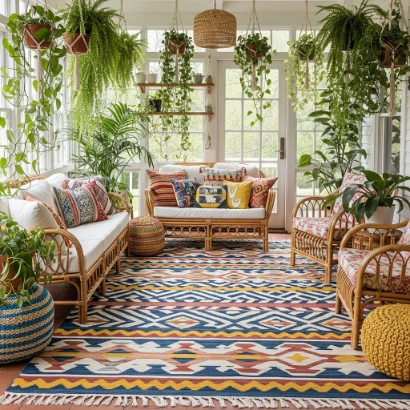
A flat-weave cotton dhurrie rug in bold tribal geometric print mixing navy, terracotta, cream, and mustard yellow creates a bohemian porch or sunroom floor composition of such vibrant visual energy and cheerful multicultural pattern confidence that it establishes the outdoor-adjacent space’s design character with immediate completeness, requiring only the addition of rattan furniture with colorful cushions and generous hanging plants to create a fully realized bohemian indoor-outdoor living environment of genuine tropical garden beauty and global decorative richness. The dhurrie rug tradition, originating in the Indian subcontinent where flat-weave cotton floor coverings have been produced for domestic and ceremonial use across centuries of continuous craft development, brings a specific cultural heritage and weaving vocabulary to the bohemian space that enriches its global aesthetic credentials with genuine craft authenticity.
Cotton dhurrie rugs are specifically well-suited to porch and sunroom applications because the flat-weave cotton construction offers the highest resistance to the moisture fluctuations, UV exposure, and temperature variations that covered outdoor and semi-outdoor spaces experience across the complete annual seasonal cycle in most residential climates. The absence of pile in the dhurrie construction eliminates the pile flattening, moisture retention, and mold vulnerability that deep-pile rugs develop in high-humidity outdoor applications, and the cotton fiber’s ability to release absorbed moisture more rapidly than wool or synthetic alternatives prevents the sustained dampness that creates rug deterioration and unpleasant odor in covered outdoor spaces. Shake or beat cotton dhurrie rugs outdoors monthly and machine wash according to manufacturer specifications quarterly to maintain their color vibrancy and pattern crispness across years of continuous use in the demanding porch or sunroom environment.
11. Midnight Navy and Gold Geometric Rug for Boho Glam Living Room
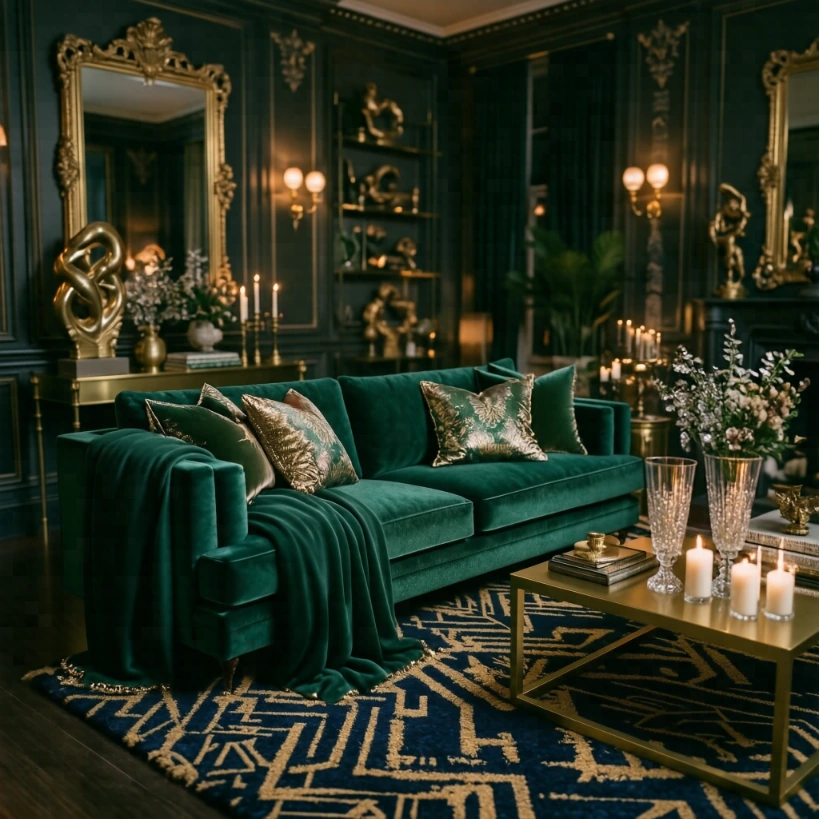
A midnight navy and gold geometric pattern wool rug in a bohemian glam living room creates a floor composition of such concentrated jewel-tone luxury and decorative sophistication that it elevates the bohemian aesthetic from its characteristic casual warmth to a genuinely glamorous register of design ambition and material opulence that demonstrates the full range of expressive possibility available within the bohemian design philosophy when its characteristic layering of pattern, texture, and global influences is applied with the confident material quality of genuine wool construction and the specific chromatic power of midnight navy and warm gold in direct decorative dialogue. This is bohemian design at its most confident and most magnificently appointed.
The specific combination of midnight navy and warm gold in a geometric rug pattern creates a chromatic pairing of maximum visual drama and cultural resonance, the deep navy providing a field of concentrated color depth and sophistication while the gold pattern elements float above this dark ground with a luminosity and warm metallic richness that references the most celebratory and most opulent traditions of decorative art across cultures and centuries from Islamic geometric gold work through Byzantine mosaic through Art Deco geometric ornament to contemporary luxury interior design. Against an emerald green velvet sofa and brass accessories, the navy and gold rug creates a complete jewel-tone color composition of extraordinary richness and visual impact that the bohemian glam aesthetic pursues as its defining decorative achievement, the specific quality of concentrated material luxury and chromatic sophistication that distinguishes bohemian glam from both standard bohemian styling and conventional luxury interior design.
12. Shaggy Cream and Natural Fiber Mix Rug for Minimalist Boho Style
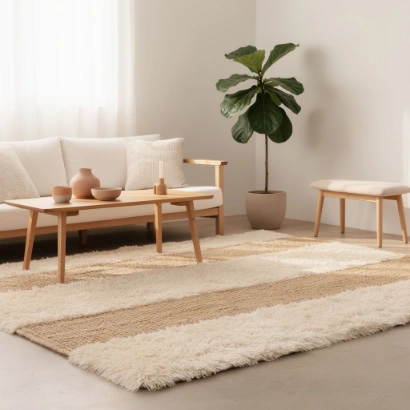
A shaggy cream and natural fiber mix rug that combines areas of fluffy cream pile with natural jute or sisal texture sections creates a floor piece of such interesting material contrast and sophisticated mixed-fiber construction that it appeals equally to the minimalist bohemian aesthetic that seeks organic material authenticity and textural interest within a restrained neutral palette and to the comfort-focused bohemian aesthetic that prioritizes the physical sensation of soft, deep pile underfoot. This material hybrid occupies a creative territory between the purely natural fiber rug and the purely comfort-focused shag construction, creating something genuinely new from the combination of two different textile traditions brought together in a single floor piece of original character and considerable tactile richness.
The minimalist bohemian aesthetic that this mixed-fiber rug most naturally serves represents a specific contemporary evolution of bohemian design philosophy that has emerged from the intersection of the Japandi aesthetic’s calm material simplicity and the traditional bohemian commitment to global craft traditions and natural material appreciation, creating a design sensibility that seeks the organic warmth and handcrafted character of bohemian design within a more restrained, less maximalist spatial context that prizes quality over quantity and considered curation over accumulated abundance. In this minimalist boho context, the cream and natural fiber mix rug serves as the room’s primary texture statement, its mixed construction providing sufficient material interest to satisfy the bohemian appetite for tactile complexity while maintaining the neutral tonal restraint that minimalist composition requires for its characteristic quality of serene visual calm and genuine spatial breathing room.
13. Vintage Floral Hooked Rug for Charming Boho Cottage Bedroom
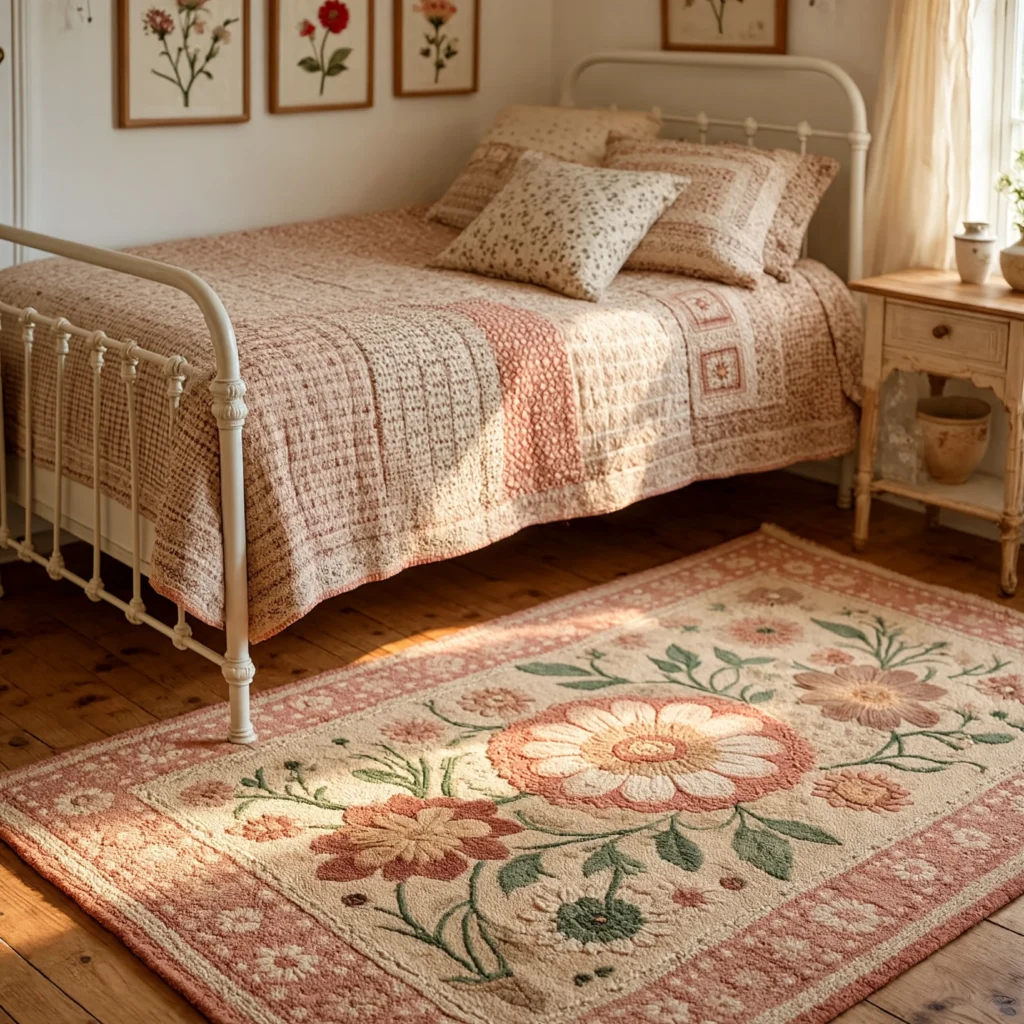
A vintage handmade hooked rug featuring a folk art floral design in warm faded tones of rose, dusty pink, sage green, and cream creates a bohemian cottage bedroom floor piece of such endearing domestic charm and genuine artisanal heritage that it immediately transforms any bedroom it enters into a space of warmth, softness, and the specific type of intimate personal beauty that mass-produced objects of equivalent visual appearance can never achieve because they lack the evidence of individual human hand and intention that every handmade object carries as its most valuable and most permanent quality. The hooked rug tradition, practiced by generations of American and European domestic craftswomen who created functional floor coverings from recycled fabric strips hooked through burlap backing, represents one of the most beloved and most democratically practiced fiber arts in Western craft history.
The faded quality of vintage hooked rug colors, achieved through decades of natural light exposure, foot traffic wear, and the gentle mechanical abrading that regular use applies to the looped fiber surface, creates a palette of such nuanced, complex beauty that contemporary designers attempting to reproduce these specific tones through deliberate dyeing processes consistently struggle to match the specific quality of naturally faded color that time and use produce in genuine vintage examples. The rose and dusty pink tones of a vintage floral hooked rug that have faded from their original bright versions carry a transparency and depth that fresh dyes of similar hue lack, the fading having removed the chromatic harshness of the original saturated pigment to reveal the specific muted, luminous quality of aged natural fiber dye that gives these veteran textiles their characteristic and much-prized antique color beauty.
14. Indigo Resist-Dye Rug with Batik-Inspired Pattern for Boho Sanctuary
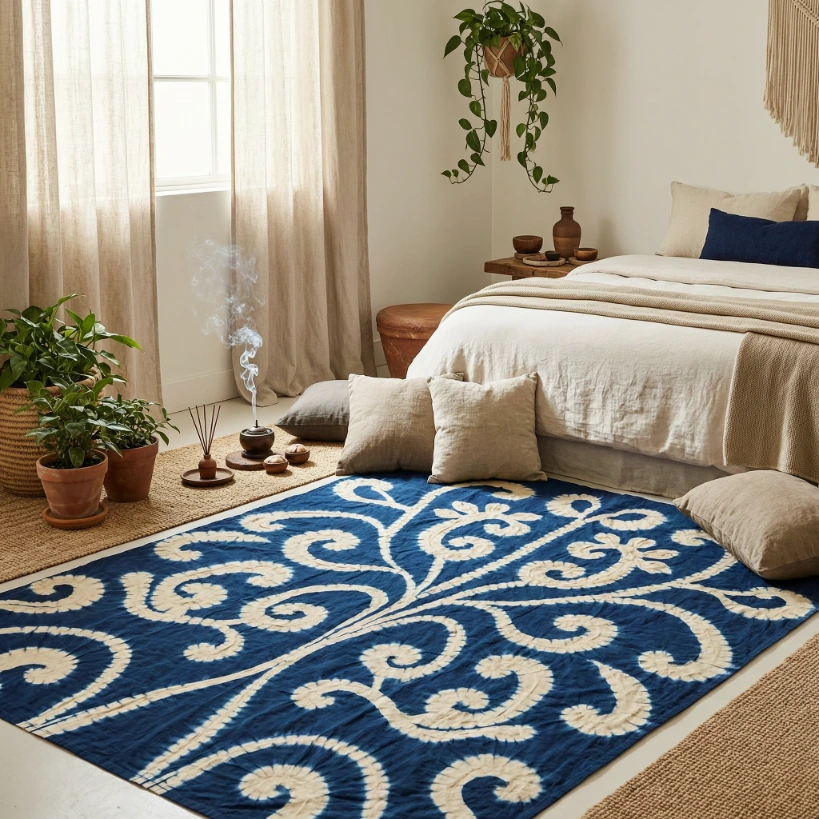
An indigo resist-dye cotton rug with batik-inspired flowing organic designs in deep indigo and natural cream creates a bohemian sanctuary floor piece of such profound cultural depth and meditative visual quality that it perfectly serves both the aesthetic and the spiritual intentions of a dedicated meditation or sanctuary space within the home, its deep indigo color carrying centuries of sacred significance across the Buddhist traditions of Southeast Asia, the Sufi textile traditions of Central Asia, and the indigenous dyeing traditions of West Africa where natural indigo has been the most important and most spiritually resonant dye material in the cultural textile vocabulary. The resist-dyeing technique, which uses wax, paste, or tying to prevent dye penetration in specific areas and create patterns of undyed natural fiber against the deep indigo field, produces organic, flowing pattern edges of extraordinary beauty that the precision of printed or woven pattern cannot replicate.
The deep indigo and natural cream color combination of the resist-dye rug creates a meditation space floor covering of maximum visual calm and psychological clarity, the deep indigo providing the color of focused mental depth and interior stillness that meditation traditions across cultures have associated with contemplative states of awareness while the natural cream reserve patterns introduce the essential luminous quality and breathing space that prevents the deep color from creating a visually oppressive or energetically heavy atmosphere in the intimate scale of a personal sanctuary space. Supplement the indigo rug with simple, carefully chosen accessories of natural material quality, unbleached cotton floor cushions, a single terracotta incense holder, a clear glass vessel of water, and a trailing plant of generous size, to create a complete sanctuary environment of genuine spiritual simplicity and profound material beauty that supports rather than distracts from the meditative intention of the space.
15. Colorful Berber Rug with Pompom Border for Playful Boho Room
A colorful Moroccan Berber-style rug with bright multicolor pompom fringe border in pink, yellow, orange, and blue creates a bohemian floor piece of such infectious, playful joy and genuine chromatic celebration that it transforms any room it enters from a simply furnished space into a genuinely festive environment of happy, uninhibited color pleasure that communicates the most exuberant and most life-celebrating dimension of bohemian design philosophy with complete and delightful visual immediacy. The pompom border detail, with its three-dimensional fiber spheres in multiple vivid colors dancing along all four edges of the rug, brings a tactile playfulness and dimensional color accent to the rug’s perimeter that no flat, woven border pattern can replicate in terms of physical exuberance and sheer decorative fun.
Pompom-bordered Berber rugs are equally at home in children’s rooms where their joyful color and tactile pompom detail invite the floor play and creative exploration that children’s spaces should actively encourage, creative studio spaces where the rug’s vibrant color energy stimulates creative thinking and artistic enthusiasm, and adult living rooms where the desire to inject genuine color personality and playful design confidence into the space without the commitment to a fully maximalist interior treatment makes the pompom-bordered rug the ideal single statement piece of concentrated decorative joy and chromatic boldness. Care for the pompom border by hand washing the individual pompom elements with gentle soap and cool water when they become soiled, allowing them to air dry completely in their three-dimensional form rather than machine washing the complete rug which can cause the pompoms to felt, shrink, and lose their round three-dimensional form permanently.
16. Naturally Dyed Wool Kilim in Botanical Tones for Earthy Boho Home
A naturally dyed wool kilim in botanical color tones of madder red, weld yellow, woad blue, and walnut brown creates a bohemian floor piece of such deep ecological integrity and genuine craft culture significance that it represents not merely a beautiful rug but a philosophical statement about the relationship between domestic beauty and natural material processes, the specific colors derived from plant and mineral sources carrying an inherent organic harmony and visual depth that synthetic dyes cannot replicate in their specific quality of botanical color relationship that makes naturally dyed textiles appear to belong together with living plant material, raw clay, and unprocessed natural fiber in a way that chemically produced colors rarely achieve with equivalent naturalness and visual ease.
The craft of natural dyeing using traditional plant-based dye sources including madder root for the specific warm red-orange tones beloved in traditional kilim weaving, weld or woad for the yellow and blue tones that feature prominently in traditional Anatolian and Central Asian kilim color vocabulary, and walnut hulls or oak galls for the warm brown and near-black tones that provide the grounding dark tones in traditional kilim palette compositions represents one of the most ancient and most ecologically sound approaches to textile coloring available, its thousands of years of continuous practice in the specific weaving regions where kilim production is most deeply rooted giving naturally dyed kilims their specific cultural authenticity and their connection to the complete ecological and agricultural systems of the landscapes from which their dye plants are sustainably harvested. Support this living craft tradition by purchasing naturally dyed kilims from verified artisan producers who can document their dye source materials and traditional dyeing processes.
17. Dramatic Black and Cream Berber-Style Rug for Moody Boho Aesthetic
A dramatic black and cream Berber-style rug with large-scale diamond geometric pattern in a moody bohemian living room creates a floor composition of such powerful graphic confidence and sophisticated chromatic restraint that it anchors the most dramatically dark and atmospherically rich expression of the bohemian aesthetic with the quiet authority of a floor piece that derives its considerable visual power entirely from the contrast of two colors rather than the chromatic complexity of multi-tonal compositions, proving that maximum bohemian design impact requires neither multiple colors nor elaborate pattern but only the boldest possible expression of a single graphic relationship executed at sufficient scale and with sufficient material quality to command the room with genuine presence and aesthetic authority. This is bohemian design at its most dramatically refined.
The moody bohemian aesthetic that a black and cream Berber-style rug most naturally inhabits represents the most sophisticated and most directionally adventurous evolution currently occurring within contemporary bohemian interior design, its embrace of deep, dark wall colors in forest green, charcoal, and midnight navy, its commitment to warm candlelight and amber lamp illumination over bright overhead lighting, and its layering of rich jewel-tone velvet and silk textiles over the characteristic natural fiber and global craft elements of traditional bohemian styling creating a register of bohemian design that feels genuinely adult, genuinely atmospheric, and genuinely new rather than the familiar warm and sunny bohemian aesthetic that has defined the style’s popular visual identity across the previous decade of its mainstream residential design influence and widespread decorating adoption.