16 Warm Mid Century Modern Walk-In Wardrobe Ideas You’ll Love
1. Warm Walnut Open Shelving System with Brass Rail
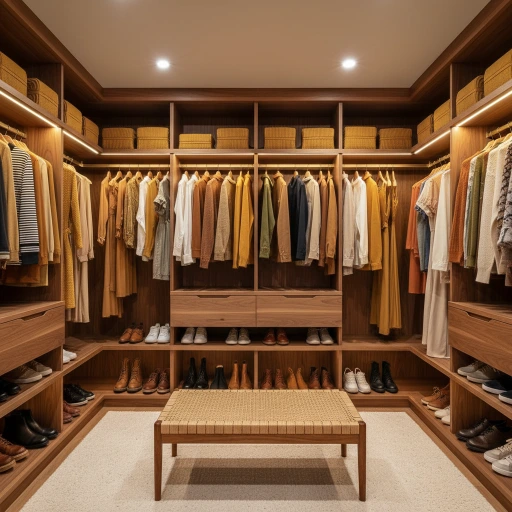
A floor-to-ceiling warm walnut open shelving system with brass hanging rails — the walnut’s rich chocolate-brown grain and warm amber undertones creating the specific material warmth that defines mid-century modern design’s most characteristic and most beloved aesthetic quality, the brass rails providing the warm metallic accent that connects the shelving system to the mid-century’s characteristic material vocabulary of natural wood paired with warm metals in combinations that feel simultaneously luxurious and genuinely organic — is the walk-in wardrobe idea that most completely and most authentically realizes the mid-century modern aesthetic within the functional context of a daily-use clothing storage space whose organizational intelligence and material quality create a room that is as genuinely pleasurable to occupy every morning as it is practically effective for the wardrobe management that its architectural space is designed to serve. The open shelving system’s specific advantage over closed cabinetry in the mid-century wardrobe context is the visual warmth of visible, organized clothing and shoes — their colors and textures contributing to the room’s complete material composition rather than being concealed behind doors that reduce the wardrobe to a surface of uniform cabinet fronts.
Specify the walnut shelving in solid wood rather than veneer where structural requirements allow — the solid wood’s specific weight, edge character, and aging quality being fundamentally different from the veneer-over-substrate alternative in ways that communicate genuine material quality to anyone who touches the shelves or observes their edge profile at close range. Design the shelving layout with specific attention to the proportional relationships between shelf heights — varying the shelf spacing to accommodate different clothing categories rather than creating a uniform grid of equal-height shelves that serves no specific storage requirement optimally. Allow a minimum height of 1600 millimetres for full-length hanging garments, 800 millimetres for folded trousers and jackets hanging from the brass rail, 350 millimetres between shelves for folded sweaters and shirts, and 150 millimetres between shelves for shoes displayed in pairs. Install the brass hanging rails using wall-mounted brackets of the same brass finish rather than the shelving-mounted saddle brackets that interrupt the shelving system’s clean vertical lines — the wall-mounted bracket creating the most architecturally resolved and most visually clean hanging rail installation within the open shelving’s overall composition.
2. Statement Teak Island with Velvet-Lined Drawers
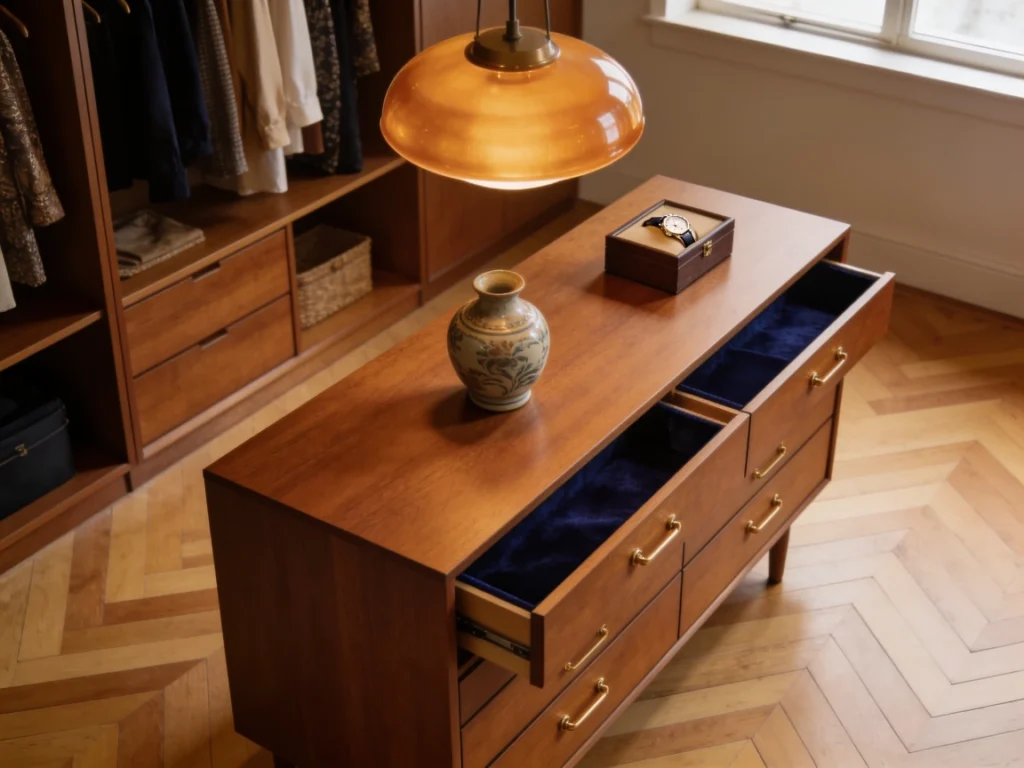
A statement teak center island — low-profiled at approximately 900 millimetres high, its clean geometric drawer fronts with recessed brass pulls, its solid teak construction communicating the genuine material quality and the specific gravity of a piece of furniture worth centering a room around, and its interior drawers lined in deep navy or forest green velvet that turns the act of opening each drawer into a specifically luxurious tactile and visual experience — is the walk-in wardrobe idea that most grandly and most functionally transforms the wardrobe from a utilitarian storage space into a genuine dressing room whose center piece possesses the furniture quality and the aesthetic authority of a designed object rather than a manufactured product selected from a standard catalogue. The teak island is the wardrobe’s most important single furniture piece — its presence creating the room’s specific visual center and organizing all other storage elements around its confident, horizontal, material-rich form.
Source the teak from a supplier who can confirm the timber’s origin and sustainability certification — either plantation-grown teak with FSC certification or genuinely reclaimed teak from deconstructed buildings and maritime structures, both providing the specific material character of genuine teak rather than the lighter, less distinctive character of the teak-look engineered timber products whose grain is printed rather than grown. Design the island with a minimum of six drawers in two or three graduated depth tiers — the shallowest top drawers of approximately 75 millimetres depth for jewelry, watches, and accessories, the medium drawers of 150 millimetres depth for folded knitwear and smaller clothing items, and the deepest drawers of 200 to 250 millimetres for folded jeans, sweaters, and bulkier items. Line each drawer in the specific velvet whose pile direction, color richness, and specific fiber content create the most protective and most visually beautiful interior — a silk-viscose velvet blend in a deep jewel tone providing the highest quality result whose tactile luxury and visual depth justify the additional cost over standard polyester velvet alternatives. Install soft-close drawer mechanisms with the genuine quality of full-extension, under-mount slides rather than the cheaper side-mount alternatives — the full-extension slide allowing complete drawer access and the soft-close mechanism providing the specific quality of controlled, quiet, deliberate closing that distinguishes genuinely excellent furniture from adequate storage.
3. Arched Mirror Wall with Integrated Lighting
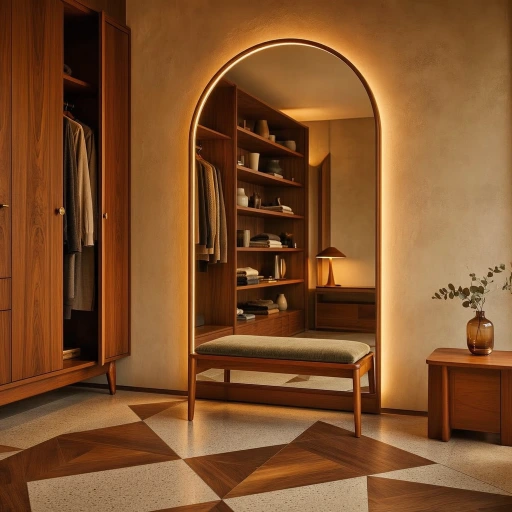
A large arched full-length mirror with warm LED strip lighting integrated into a recessed channel around the arch’s perimeter — the arch form referencing the mid-century modern’s characteristic use of the curved architectural element within otherwise rectilinear spatial compositions, the integrated perimeter lighting creating the warm, glamorous glow of a Hollywood dressing room mirror while the warm color temperature of the LED source most sympathetically illuminates the skin tones of the person dressing in front of it — is the walk-in wardrobe idea that most dramatically and most atmospherically transforms the functional mirror’s necessary presence in a dressing space into a genuine architectural feature of visual beauty and spatial significance that extends the wardrobe’s aesthetic program beyond the storage walls into the room’s primary human interaction surface. The arched mirror’s specific contribution to the mid-century wardrobe is architectural — its curved form providing the visual softness and the formal variety that prevents the wardrobe’s rectilinear shelving and cabinetry from creating a space of rigid geometric monotony.
Design the arch’s proportions with specific attention to its relationship with the wall surface it occupies — the arch’s spring-line at approximately 2 metres above the floor, creating sufficient vertical extent for the mirror to provide full-length viewing for any height of user, while the arch’s width of approximately 800 millimetres creates a reflection field wide enough to show the complete outfit worn rather than the truncated partial-body view of a narrower mirror. Source the mirror glass in a bronze or warm-tinted rather than clear glass — the slight warmth of a lightly tinted mirror creating a more flattering, more skin-kind reflection than the cold neutrality of clear glass while maintaining sufficient clarity for the practical assessment of clothing and grooming that the mirror’s functional purpose requires. Install the LED perimeter channel at a recessed depth of 20 millimetres behind a frosted diffuser strip that creates a continuous, even line of warm light around the arch’s profile rather than the visible individual point sources of an un-diffused LED strip whose individual diodes are visible as distinct dots of light rather than the continuous luminous line that the diffused version most beautifully achieves.
4. Rich Olive Green Paint with Warm Timber Accents
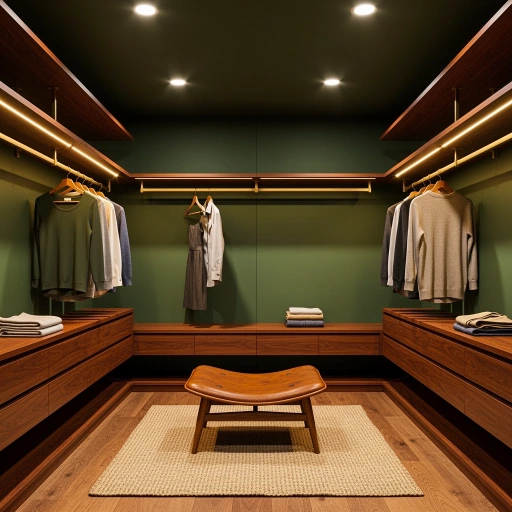
Deep olive green walls — their specific warm, slightly muted tone sitting at the precise intersection of green and brown that most authentically references the mid-century modern’s characteristic engagement with the natural world’s color palette, whose organic, botanical quality creates a wardrobe backdrop of extraordinary warmth and material richness against which the warm teak and walnut of the shelving and furniture appear more luminous, more vividly grained, and more genuinely warm than the same timber surfaces appear against neutral or white wall surfaces — combined with warm timber accents in teak and walnut, brass fixtures and hardware, and a natural fiber rug on the timber floor, is the walk-in wardrobe color and material combination that most completely and most atmospherically creates the specific quality of a mid-century interior at its most organic, most warm, and most genuinely connected to the natural world whose palette the movement’s designers drew upon with such consistent and such beautiful intelligence. The olive green wall is the single color decision that most powerfully defines the mid-century wardrobe’s complete aesthetic identity.
Select the olive green in a depth and warmth calibrated specifically to the wardrobe’s natural and artificial light levels — a deeper, more saturated olive for a well-lit wardrobe with generous natural light or high-quality warm artificial illumination whose bright light prevents the deep color from reading as dark or oppressive, and a lighter, slightly more grey-toned olive for a wardrobe with more limited natural light access whose deeper shade would create a genuinely cave-like atmosphere rather than the richly intimate atmosphere that the olive green most successfully achieves in well-lit conditions. Apply the olive paint in a flat or low-sheen finish rather than the semi-gloss or gloss finishes that reflect the wardrobe’s lighting back to the eye with the specific quality of reflective surfaces — the flat finish absorbing light rather than reflecting it and creating the specific matte depth that makes the olive appear most richly colored and most painterly beautiful in the wardrobe’s enclosed, intimately lit space. Pair the olive green with a white ceiling rather than extending the dark wall color to the ceiling plane — the white ceiling visually lifting the ceiling height, preventing the four-wall olive treatment from creating a claustrophobic enclosed feeling, and maximizing the reflection of ceiling-mounted lighting downward into the wardrobe space.
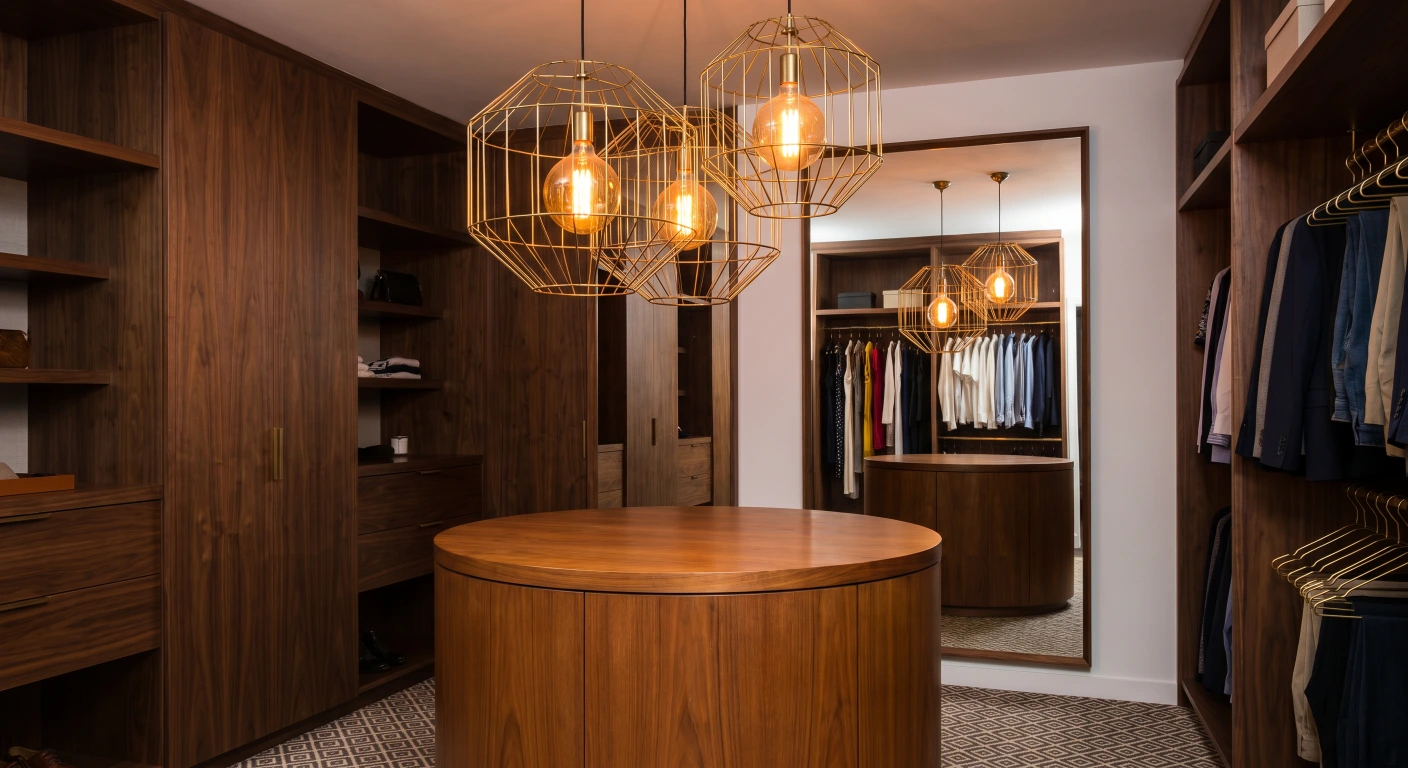
5. Geometric Brass Pendant Lights Over Island
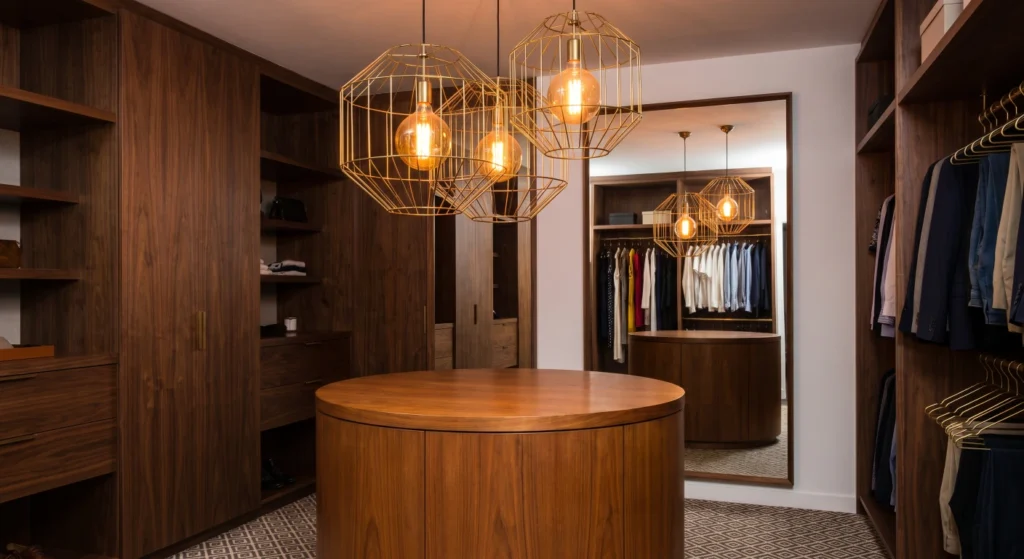
Geometric brass pendant lights — their cage or octagonal frame forms casting complex, angular shadow patterns across the wardrobe’s ceiling and upper walls while the warm filament glow of their Edison bulbs creates the specific amber, fire-like quality of mid-century modern lighting whose incandescent warmth most sympathetically illuminates the natural materials, organic colors, and human skin tones of the dressing experience — hung in a pair above the center island at the height that positions their light source and their decorative form most effectively within the room’s complete visual composition, are the walk-in wardrobe idea that most specifically and most elegantly adds the mid-century modern’s characteristic lighting aesthetic to the wardrobe space. Lighting in a mid-century wardrobe is not merely a practical utility but a genuinely significant design element whose fixture choice, light source temperature, and installation height communicate as much about the space’s design intelligence and period authenticity as any surface material or furniture selection.
Select pendant fixtures whose geometric form references the most iconic mid-century modern lighting design traditions — the Sputnik chandelier’s starburst geometry, the Nelson bubble lamp’s organic sphere, or the Gubi Bestlite’s functional precision all providing period-appropriate formal references at different aesthetic registers within the mid-century vocabulary. Size the pendants at a diameter of 250 to 350 millimetres for the installation over a standard walk-in wardrobe island — a size that provides sufficient visual presence to read as the room’s primary decorative ceiling element while maintaining the delicacy of form that geometric brass pendants achieve most beautifully when their wire gauge and brass section are sufficiently slender relative to the enclosed geometric form they describe. Specify Edison-style LED filament bulbs rather than standard LED bulbs — the visible filament’s warm amber glow creating the specific quality of incandescent light within the brass pendant cage that defines the mid-century lighting aesthetic most authentically and most atmospherically, while the LED technology provides the energy efficiency that the continuously illuminated wardrobe space’s practical requirements demand.
6. Herringbone Timber Floor with Area Rug
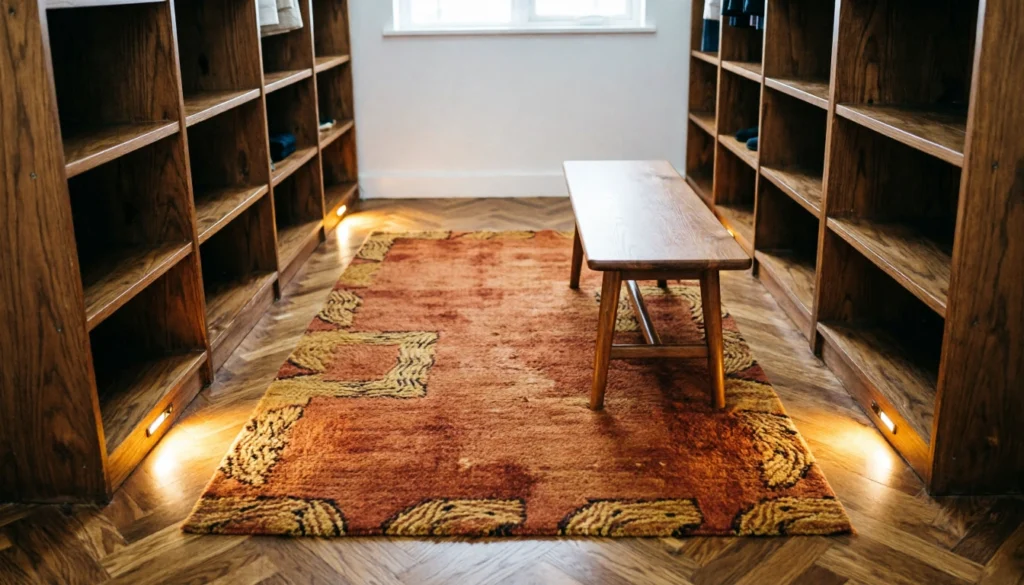
An oak herringbone parquet floor — its interlocking diagonal chevron pattern creating the most visually dynamic and the most historically resonant timber floor pattern available in the residential interior vocabulary, its warm honey and amber tones connecting the floor’s visual identity to the walnut and teak of the wardrobe’s furniture and shelving in the complete material harmony of a space whose every horizontal and vertical surface participates in the same warm, natural timber color story — combined with a natural wool area rug in a warm burnt orange, deep mustard, or brick red geometric pattern positioned along the central walkway of the wardrobe, is the walk-in wardrobe floor design that most completely and most beautifully creates the specific quality of mid-century modern floor planning in its most characteristic domestic application. The herringbone floor’s pattern provides the visual complexity that the mid-century wardrobe needs at the floor level to prevent the space from feeling simply like a well-organized storage room rather than a genuinely designed, genuinely beautiful dressing environment.
Specify the herringbone flooring in genuine solid hardwood — oak being the most appropriate and most widely available species for herringbone parquet in the mid-century modern wardrobe context, its specific grain character and warm natural color creating the most authentic period reference — rather than the engineered wood herringbone products whose lower plank thickness limits the number of times the floor can be sanded and refinished during its service life and whose click-lock installation method produces a slightly hollow, less substantial underfoot quality than the traditionally nailed solid hardwood herringbone installation. Install the herringbone with the chevron’s apex pointing toward the wardrobe’s primary viewing axis — the direction of the herringbone pattern influencing the visual perception of the space’s proportions, with a chevron pointing lengthwise along a narrow wardrobe visually elongating the space while a chevron pointing across the width visually broadens it. Select the area rug in a handwoven natural wool with a geometric pattern drawn from the mid-century’s textile heritage — the Scandinavian rya rug, the American flat-woven Navajo-influenced geometric, and the Danish wool carpet all providing appropriate period references whose specific warmth and pattern quality connect the rug most authentically to the mid-century modern’s characteristic floor textile preferences.
7. Built-In Window Seat with Cushioned Storage
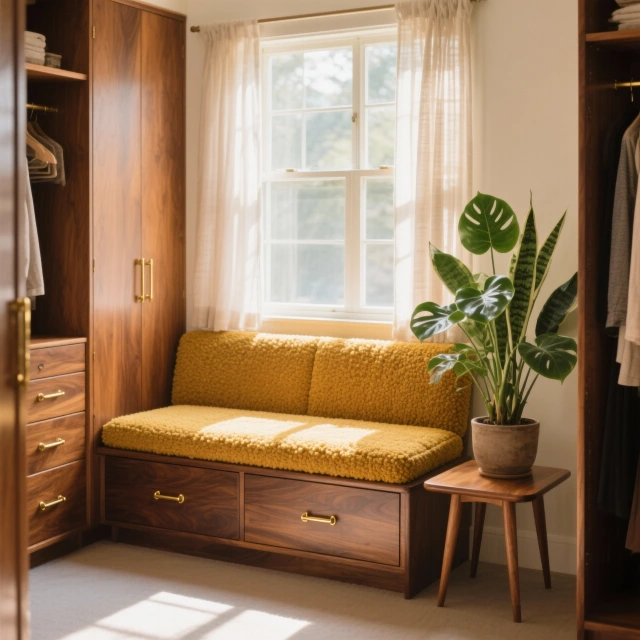
A built-in window seat — its base constructed from walnut-veneered cabinetry with brass-pulled storage drawers beneath the seat cushion, the seat cushion upholstered in a warm ochre or mustard boucle fabric whose specific textural character and warm yellow-orange color create the most authentically mid-century textile reference available in the contemporary upholstery market, the seat positioned beneath the wardrobe’s primary window where morning light streams across the cushion’s warm texture and the storage drawers’ warm timber surface in a domestic tableau of genuine daily pleasure — is the walk-in wardrobe idea that most warmly and most practically provides the human-scale seating element that every genuinely functional dressing space requires but that most walk-in wardrobe designs neglect in favor of maximizing storage provision at the cost of the comfortable seating that makes putting on shoes, considering outfit options, and spending a considered morning getting dressed genuinely pleasurable rather than rushed and standing. The window seat transforms the wardrobe from a storage space into a genuine room whose human occupation is served by furniture at multiple scales.
Design the window seat at the precise height that creates the most comfortable seated position for the primary user — a seat height of 450 to 480 millimetres from the floor providing the ergonomic sitting position for most adults whose knee angle and back support requirements are best served at this height range, while a seat height of 400 millimetres creates a more lounge-like, lower sitting position that is more comfortable for extended sitting but slightly less comfortable for the shoe-putting-on activity that is the window seat’s most frequent practical use. Construct the storage drawers beneath the seat base using the same walnut veneer and brass hardware that the wardrobe’s primary shelving employs — maintaining the material consistency that makes the window seat feel like an integrated element of the wardrobe’s complete design rather than an added afterthought whose different material creates a visual discontinuity. Upholster the seat cushion at a minimum thickness of 80 millimetres in a high-density foam whose compression resistance maintains the cushion’s shape through years of regular use rather than the soft foam that provides an initially comfortable feel but that flattens to an unsatisfactory thinness within months of installation in a regularly used seating position.
8. Warm Amber Lighting Scheme with Dimmer Control
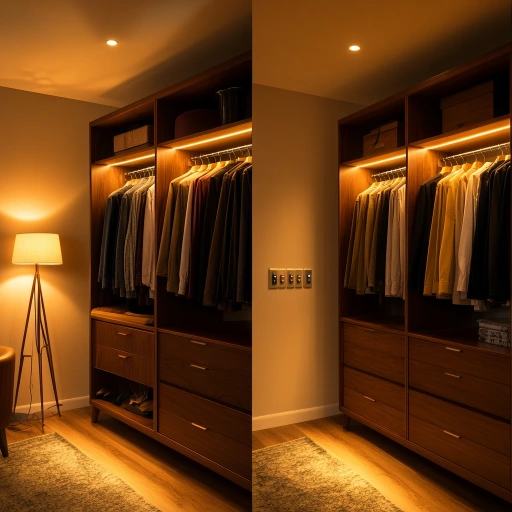
A warm amber lighting scheme with comprehensive dimmer control — recessed ceiling spotlights in a warm 2700 Kelvin color temperature positioned directly above the hanging rails and shelving sections for practical task illumination, under-shelf LED strips whose continuous warm light washes downward across the folded clothing on open shelves for secondary task light and dramatic visual effect, and a vintage-style floor lamp in the corner providing the layered ambient light that softens the more direct quality of the recessed ceiling fixtures — all controlled through a single dimmer system that allows the wardrobe’s complete lighting program to be adjusted from full brightness for the detailed inspection of clothing colors and condition to the softest ambient glow for the intimate evening ritual of outfit planning and preparation, is the walk-in wardrobe idea that most atmospherically and most functionally transforms the daily dressing experience from a utilitarian activity conducted under harsh fluorescent or neutral LED lighting into a genuinely pleasurable ritual conducted within a warm, beautifully lit environment whose specific amber quality flatters both the natural materials of the wardrobe’s surfaces and the skin tones of the person using it. Lighting quality is the single design decision that most powerfully determines whether a walk-in wardrobe feels genuinely luxurious or merely well-organized.
Install the recessed ceiling spotlights on a track system rather than fixed individual canopies — the track’s adjustable spotlight positions allowing the lighting to be redirected toward the specific shelving sections and hanging areas that the wardrobe’s final layout determines require illumination most, rather than fixed positions that cannot be adjusted after installation to respond to the final furniture placement. Specify all light sources at 2700 Kelvin color temperature with a Color Rendering Index of 90 or above — the high CRI being as important as the warm color temperature for the wardrobe’s specific requirement of accurate color assessment during clothing selection, as a CRI below 90 distorts the actual color of the clothing being examined in a way that leads to outfit combinations that appear harmonious under the wardrobe’s artificial light but reveal their genuine color relationship only in the natural daylight of the outside world. Install the under-shelf LED strips at the front rather than the back edge of each shelf — the front-positioned strip washing light downward and slightly forward across the shelf’s contents in the direction most useful for reading clothing labels and assessing folded item condition from the front, rather than the back-positioned strip that illuminates the wall behind the shelves more than the shelf contents themselves.
9. Cane-Front Cabinet Doors with Brass Hardware
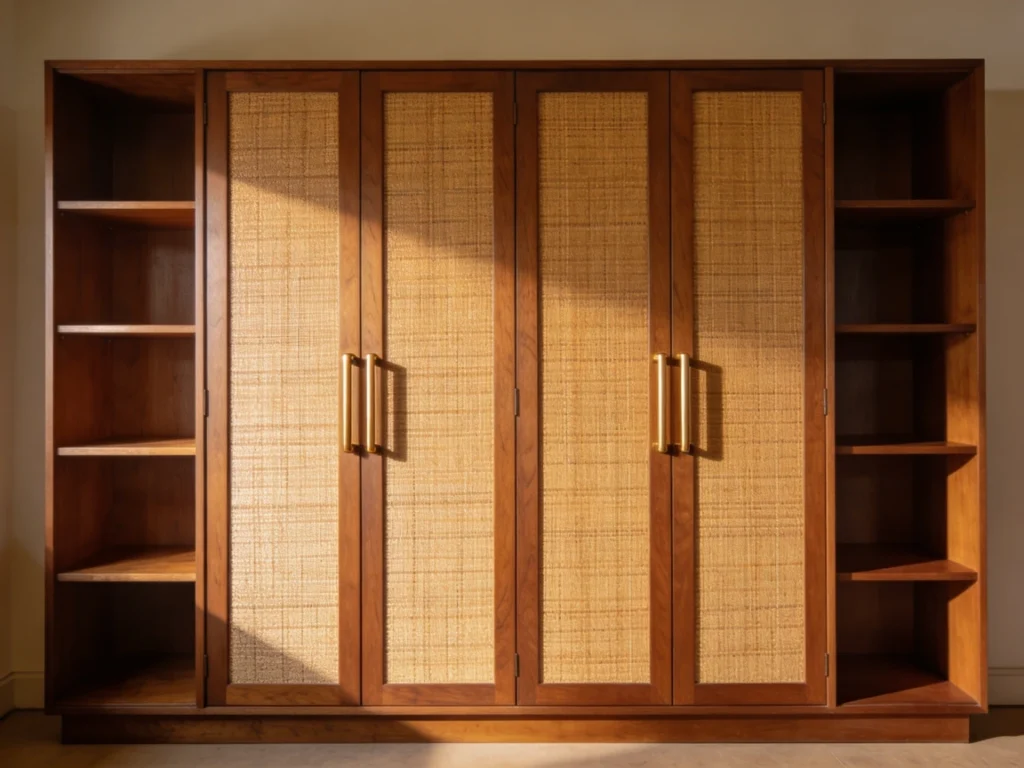
Closed cabinet sections with woven cane panel fronts — the cane’s natural honey-brown color and organic weave texture creating the most characteristically mid-century material reference available in cabinet door design, its semi-transparent mesh providing a visual softening of the cabinet interior while simultaneously revealing the general character of the stored contents in a way that solid timber or lacquered doors entirely prevent — flanked by open walnut shelving sections, the combination creating the specific balance between concealed storage and open display that the most thoughtfully designed walk-in wardrobes achieve by assigning the most visually organized storage categories to open shelving and the more utilitarian, more private storage categories to the cane-front cabinets whose weave provides discretion without the complete visual opacity of solid doors. The cane front is the mid-century wardrobe detail that most immediately and most authentically identifies the space’s period reference to anyone with visual knowledge of the mid-century modern design tradition.
Source cane webbing from a specialist cane and rattan supplier rather than a hardware store — the quality of the weave regularity, the consistency of the individual cane strands’ width and color, and the overall uniformity of the finished panel being significantly higher in specialist cane product than in the lower-quality alternatives whose irregular weave communicates a craft standard below what the mid-century wardrobe’s design quality requires. Specify the cane panel thickness and weave density appropriate for the cabinet door’s size — a larger door panel requiring a slightly coarser weave whose structural integrity under the door’s weight and the repeated opening and closing forces is greater than the finer weaves appropriate for smaller accent panels. Frame the cane within a walnut timber router — the routed recess receiving the cane panel and holding it flat and taut through a spline-and-slot joinery rather than simple adhesive that allows the cane to pull loose from the frame over time. Install the brass bar pulls in a horizontal orientation rather than a vertical one — the horizontal bar’s specific orientation referencing the mid-century modern’s architectural preference for horizontal emphasis and providing the most ergonomically effective grip geometry for the lateral pulling force that cabinet door opening requires.
10. Dedicated Shoe Display with Angled Timber Shelves
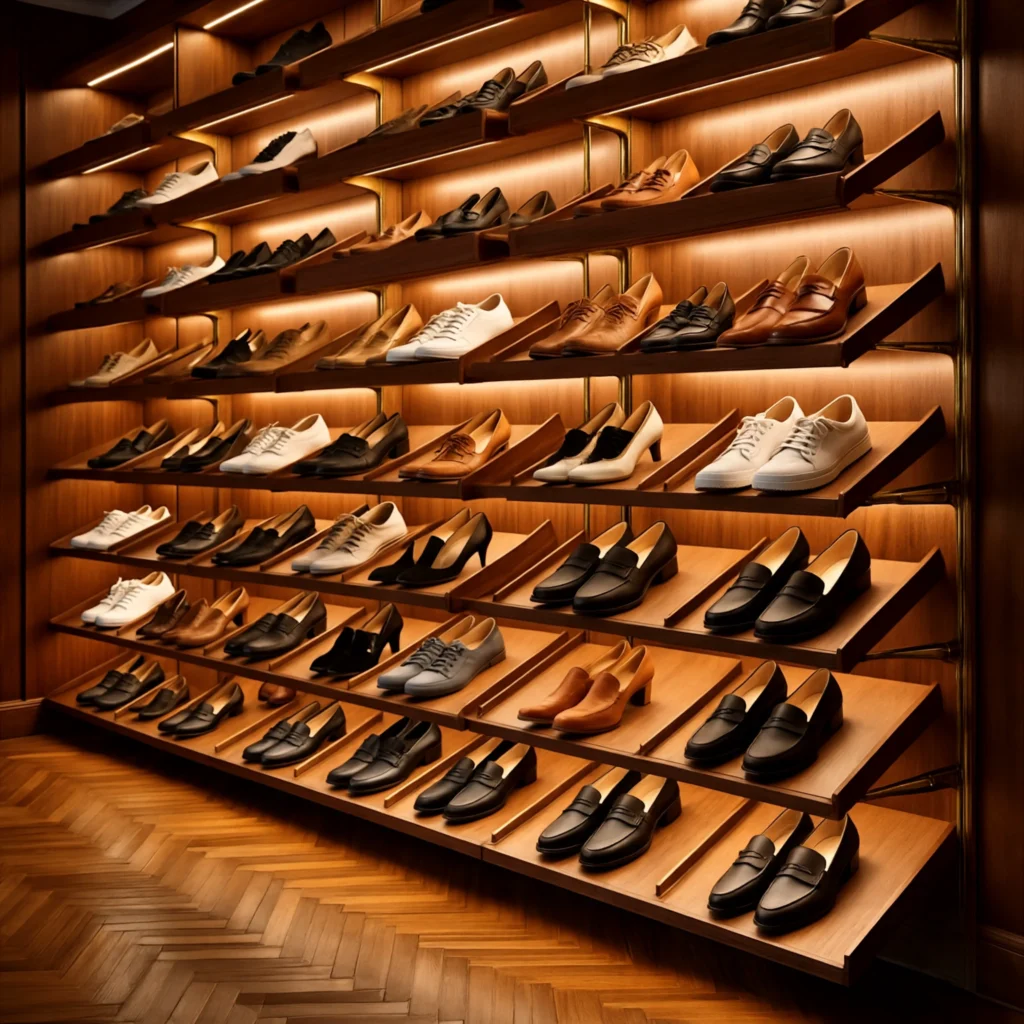
A dedicated shoe display wall with angled walnut timber shelves — each shelf tilted forward at approximately fifteen to twenty degrees from horizontal so that each displayed shoe pair presents its most visually interesting face toward the viewer, the forward tilt creating the specific display logic of a retail shoe presentation applied to the domestic wardrobe, the warm recessed lighting directed from above across each angled shelf illuminating every shoe’s leather, suede, or textile surface with the specific directional light that reveals material texture and color depth most beautifully — is the walk-in wardrobe idea that most ambitiously and most glamorously elevates the functional storage of shoes into a genuinely display-worthy presentation that treats the shoe collection as a curated personal collection of objects worth displaying as carefully and as beautifully as any other collection of designed objects in the home. The angled shoe display is the wardrobe detail that most effectively communicates the specific combination of genuine love for personal style and genuine investment in home design that characterizes the approach to dressing and domestic life that a well-designed walk-in wardrobe most fully embodies.
Design the shelf angle with specific attention to the heel height profile of the shoe collection being displayed — a fifteen-degree tilt being most appropriate for flat shoes and low-heeled styles, while a twenty-degree tilt is more appropriate for high-heeled shoes whose elevated heel creates a natural forward pitch that the additional shelf tilt accommodates more comfortably. Calculate the shelf spacing based on the tallest shoes in the collection — allowing at least 50 millimetres of vertical clearance above the highest point of any displayed shoe, plus the additional clearance required for the forward-tilt to create the correct display geometry without the shoe’s front toe touching the shelf above. Install a thin brass lip at each shelf’s front edge — a 15-millimetre-high brass strip preventing the forward-tilted shoes from sliding off the shelf’s angled surface while providing the warm metallic accent at each shelf’s most visible edge. Light each shelf from the ceiling-mounted recessed spotlights positioned specifically above each shelf row — the directional light’s raking quality across the shoes’ surfaces being most effectively created by spotlights positioned approximately 300 millimetres back from the shelf’s front edge, whose beam angle creates the most dramatically revealing illumination of each shoe’s material character.
11. Integrated Vanity Table with Tri-Fold Mirror
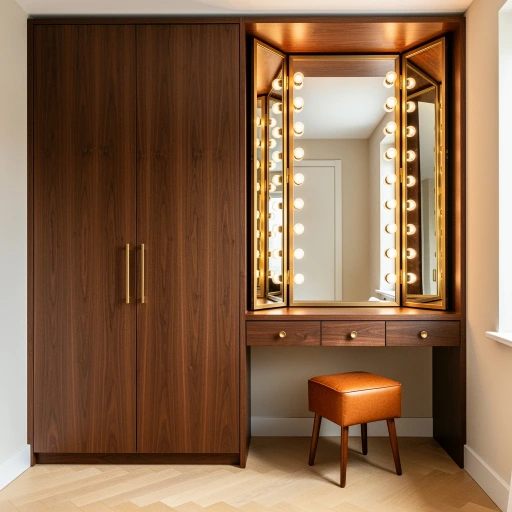
An integrated vanity table — a slim walnut desk surface at sitting height built into the wardrobe’s end wall, a tri-fold brass-framed mirror above it with the center panel fixed and the two outer panels hinged at approximately 120 degrees for the three-dimensional viewing capability that the tri-fold format provides, Hollywood-style warm bulb lights mounted vertically on both sides of the center mirror panel or framing the mirror’s perimeter for the most flattering and most even face illumination during makeup and grooming, and a vintage-style low stool upholstered in caramel leather positioned beneath — is the walk-in wardrobe idea that most completely and most luxuriously integrates the dressing and grooming activities of the daily morning routine within a single, beautifully designed space whose cohesive material palette and period-appropriate aesthetic make the complete sequence of dressing, grooming, and accessorizing feel like a unified ritual rather than the fragmented movement between the wardrobe, the bathroom, and a separate vanity that most domestic arrangements require. The integrated vanity makes the walk-in wardrobe a complete dressing room rather than a storage space with a mirror.
Design the vanity surface at a height of precisely 740 millimetres — the standard desk height that provides the most comfortable seated working position for most adults’ elbow and forearm positioning during the precise, controlled movements of makeup application, and that aligns with the standard stool heights available from quality mid-century-inspired seating manufacturers. Specify the vanity surface in a material that provides both genuine beauty and genuine practicality for its specific use — a quartz or stone surface providing the durability and stain resistance that cosmetics and perfume require from a regularly used surface, while the walnut frame and leg structure maintain the wardrobe’s complete material identity in the vanity’s construction. Source the tri-fold mirror in a brass frame whose profile and corner detailing reference the mid-century modern’s characteristic mirror and picture frame aesthetic — the frame’s section weight being sufficient to communicate quality and permanence without the visual heaviness that an oversized frame would impose on the mirror’s primary functional relationship with the person using it. Install the Hollywood mirror lights on a dedicated dimmer circuit that allows the illumination level to be adjusted from the full brightness required for precise makeup application to the gentler ambient level appropriate for the casual grooming that most morning and evening routines also require.
12. Warm Terracotta and Teak Color Palette
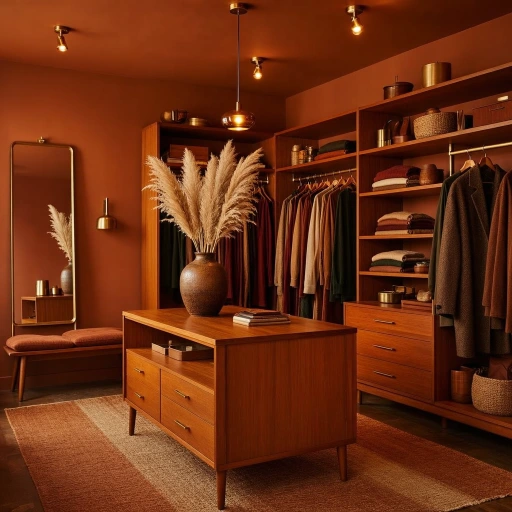
A terracotta wall paint combined with warm teak shelving and an island — the terracotta’s specific burnt orange-red tone occupying the precise position in the warm color spectrum that most richly references the earthen, clay, and ceramic material culture of mid-century modern design’s most beloved period objects, whose handmade pottery, molded plastic, and cast aluminum in warm oxide tones created the color story that the terracotta wall paint most directly and most movingly invokes — combined with the teak’s specific mid-range brown warmth and the brass fixtures’ warm gold, is the walk-in wardrobe color palette that most completely immerses the morning dressing experience in the full sensory richness of the mid-century modern aesthetic at its most warm, most organic, and most deeply connected to the natural material world. Terracotta and teak together create the mid-century wardrobe’s most distinctive and most immediately recognizable period color story.
Select the terracotta paint in the specific tone that most successfully bridges the orange and red without tipping into either the pink-orange of an overly bright coral or the red-brown of an excessively earthy clay — the optimal terracotta for a wardrobe wall sitting at approximately 30% red, 65% orange, and 5% brown in its color composition. Test the terracotta paint sample under both natural morning light and the warm artificial lighting of the wardrobe’s complete lighting scheme before committing to the final color — the specific appearance of terracotta changing significantly between the cool quality of morning daylight and the warm amber quality of the artificial illumination that the wardrobe’s lighting scheme provides, with the morning daylight tending to reveal the paint’s true color character and the warm artificial light warming the terracotta toward a more orange, less earthy reading. Pair the terracotta walls with white ceilings and white or very light timber skirting and architrave — the white providing the visual relief that prevents the warm terracotta from creating an enclosed, cave-like atmosphere in a space without large window openings and maintains the visual clarity that the detailed, organized shelving and hanging systems require for their practical function to be immediately legible to the person using the wardrobe.
13. Floating Walnut Credenza for Accessories Storage
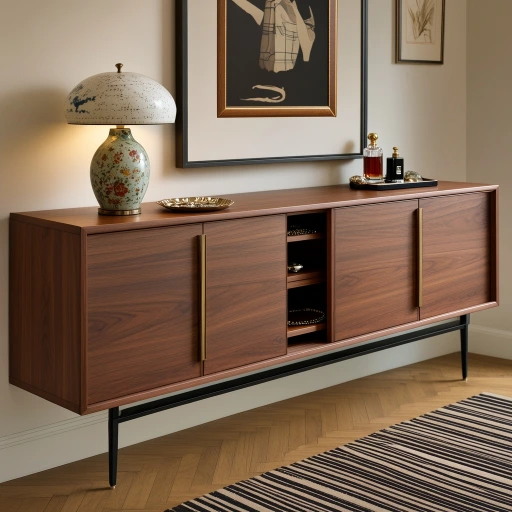
A floating walnut credenza — suspended on slim black steel legs at approximately 900 millimetres above the floor, its clean horizontal form and its combination of closed door storage with open shelf sections creating the specific mid-century modern sideboard aesthetic most immediately associated with the Danish and American furniture design movements of the 1950s and 1960s whose credenza and sideboard designs remain among the most enduringly influential and most widely referenced pieces in the entire history of modern furniture — used specifically for accessories storage and display in the walk-in wardrobe, its surface serving as a staging and display area for perfume bottles, a jewelry dish, a vintage ceramic table lamp, and the daily-use accessories whose organizational clarity and visual appeal contributes meaningfully to the wardrobe’s complete material composition, is the walk-in wardrobe idea that most directly and most authentically imports the iconic mid-century furniture form into the wardrobe context, creating a storage piece of genuine period design authority rather than the purpose-designed closet accessories storage unit whose functional efficiency cannot match the aesthetic and cultural resonance of a genuine credenza form.
Source the floating credenza from a specialist mid-century modern furniture maker or a quality reproduction manufacturer whose proportional fidelity to the original credenza form’s specific leg slenderness, door panel proportions, and hardware placement creates a piece of genuine period authenticity rather than the slightly proportionally-off versions that mainstream furniture retailers produce without the specific design knowledge that authentic mid-century credenza design demands. Specify the credenza’s width at a dimension appropriate for the wardrobe wall it will occupy — a piece too small for its wall appearing tentative and under-scaled, while a piece correctly proportioned to its wall creates the bold, confident horizontal statement that the mid-century credenza makes most powerfully when sized to occupy a significant proportion of its installation wall. Install the credenza’s wall-mounting hardware with genuine structural attention to the timber stud positions within the wall — the credenza’s weight and the leverage force of its wall-mounted suspension requiring fixing into genuine structural timber rather than the plasterboard or drywall that most walls present as their accessible surface at the credenza’s specific mounting height.
14. Graphic Geometric Wallpaper on Feature Wall
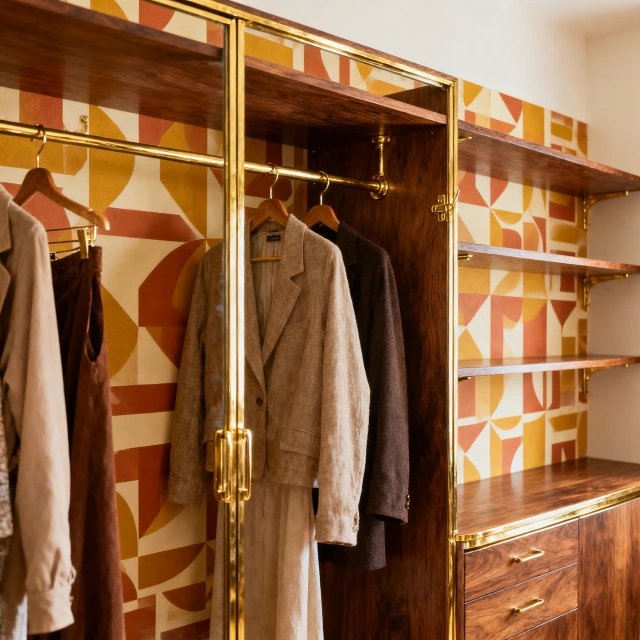
A graphic geometric wallpaper on the wardrobe’s feature wall — its bold, large-scale pattern in warm mustard, terracotta, and cream tones directly referencing the mid-century modern’s characteristic graphic design vocabulary of stylized, two-dimensional geometric forms drawn from the abstract expressionist art movement and the Bauhaus graphic tradition that together created the visual language of the period’s most celebrated textiles, ceramics, and graphic art — contrasting with the clean, undecorated walnut shelving on the adjacent walls and creating the specific visual tension between the bold, illustrated feature wall and the calm, material-focused storage walls that the most confidently designed mid-century interiors consistently exploit for dramatic effect. The geometric wallpaper feature wall is the wardrobe idea that most boldly and most joyfully introduces the mid-century’s graphic design heritage into the three-dimensional domestic space of the dressing room.
Select a wallpaper design whose geometric vocabulary is genuinely drawn from mid-century design sources — avoiding the broad category of geometric wallpaper that includes contemporary graphic interpretations and selecting specifically from designs that reference the Scandinavian textile design tradition of Marimekko and Åhlens, the American abstract textile design of the post-war period, or the Italian graphic design movement of the 1950s and 1960s whose specific formal vocabulary creates the most authentic period reference. Choose a pattern scale appropriate for the feature wall’s dimensions — a pattern whose repeat measures between 400 and 800 millimetres creates the most visually impactful result for a standard walk-in wardrobe wall height of 2.4 to 2.7 metres, as a smaller repeat creates the impression of busy wallpaper texture rather than bold geometric art, while a larger repeat creates the specific drama of a genuinely large-scale pattern whose geometric forms are individually large enough to be read as distinct design elements rather than surface texture. Apply the wallpaper exclusively to the feature wall and paint the remaining walls in the most recessive tone available in the wallpaper’s color palette — the single-wall application maintaining the feature wall’s visual distinctness and preventing the wardrobe from becoming visually overwhelming.
15. Leather-Handled Woven Baskets on Open Shelves
Leather-handled woven baskets on open shelves — natural seagrass, jute, or water hyacinth baskets in coordinating natural tones with a genuine leather handle attached at each basket’s center front, organized by size across the open walnut shelving with simple hand-lettered labels identifying each basket’s contents, the baskets’ natural fiber weave creating warm organic texture against the smooth walnut timber of the surrounding shelves — is the walk-in wardrobe idea that most practically and most beautifully solves the specific organizational challenge of open shelving whose completely transparent format requires either perfectly folded and visually organized clothing throughout or a storage medium that contains the less visually organized items behind a surface of its own coherent material beauty. The woven basket is simultaneously a practical storage container and a genuine decorative object whose natural fiber texture and warm organic color enrich the open shelving’s material composition rather than simply hiding the disorganized contents that would otherwise undermine the shelving’s visual quality.
Source the baskets from a specialist natural fiber supplier who can provide a complete set in matching weave style, weave density, and color tone rather than the mismatched collection of similar-but-not-quite-identical baskets that most home organization stores offer as alternatives to a genuinely coordinated set. Specify the leather handles in a vegetable-tanned leather that will develop a beautiful natural patina with use — the natural aging of the leather handle over months and years of daily touching creating the specific quality of graceful material aging that characterizes the finest domestic objects whose beauty increases with use rather than deteriorating toward eventual replacement. Label each basket using simple hand-lettered tags attached with leather cord — the specific categories including seasonal clothing, spare linens, accessories by type, and the more personal organizational categories whose specific names most accurately reflect the wardrobe’s actual contents — for the organizational clarity that transforms an attractive but potentially confusing array of covered baskets into a genuinely efficient and genuinely easy-to-use storage system whose labeled contents can be located immediately without the exploratory opening of multiple baskets that an unlabeled collection consistently requires.
16. Statement Botanical Art and Natural Accents
A large framed botanical art print — its warm amber and terracotta tones and its stylized, slightly abstracted plant forms referencing the mid-century modern’s characteristic graphic interpretation of the natural world through the specific visual language of the period’s most celebrated botanical illustration and textile design traditions — displayed on the wardrobe’s end wall above the island as the room’s primary art moment, accompanied by a small fiddle-leaf fig in a terracotta ceramic pot on the island’s surface, dried pampas grass in a vintage teak vase on one of the open shelves, and a mid-century ceramic candle holder providing warm fragrant light during the evening dressing ritual, is the walk-in wardrobe styling idea that most completely and most atmospherically activates the wardrobe’s material foundation with the living, organic, sensory richness of botanical elements and handmade ceramic objects whose specific warmth and natural character make the well-organized storage space feel genuinely inhabited, genuinely personal, and genuinely beautiful rather than the over-organized, sterile quality of a display wardrobe whose perfect organization has eliminated all evidence of genuine human occupation and genuine individual character.
Select the botanical print with specific attention to its color palette’s relationship with the wardrobe’s complete material story — choosing warm amber and terracotta tones that connect to the wall color, the timber’s warmth, and the brass fixtures’ gold in a color harmony whose coherence makes the artwork feel genuinely integrated into the wardrobe’s designed environment rather than a decorative addition whose color conflicts with rather than complements the surrounding material palette. Source the fiddle-leaf fig specifically rather than substituting with other large-leaf tropical plants whose specific visual character within a mid-century modern interior is less precisely appropriate — the fiddle-leaf’s large, architectural, violin-shaped leaves and its characteristic vertical, branching growth habit creating the exact botanical silhouette that the mid-century modern interior most successfully accommodates and most characteristically displays. Position the plant where morning light from the wardrobe’s window reaches its leaves — the plant’s practical light requirement and the specific beauty of morning light through a fiddle-leaf fig’s large, translucent leaves creating the most magical and most visually rewarding natural display available within the walk-in wardrobe’s complete visual program at the specific hour of day when the wardrobe is most actively and most pleasurably used.