17 Stylish 70s Living Room Decor Ideas to Try
1. Earthy Color Palette
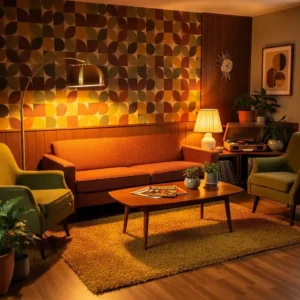
The 1970s were known for their warm, earthy color palettes that created cozy and inviting living spaces. Shades like burnt orange, olive green, mustard yellow, and chocolate brown were commonly layered together. These tones reflected nature and added a relaxed, grounded atmosphere to the home.
To recreate the look, choose a neutral base like beige or cream and add bold earthy accents through furniture, rugs, or throw pillows. Combine these colors with wood finishes and textured fabrics. The result is a nostalgic yet stylish living room that feels both vibrant and comfortable.
2. Statement Velvet Sofa
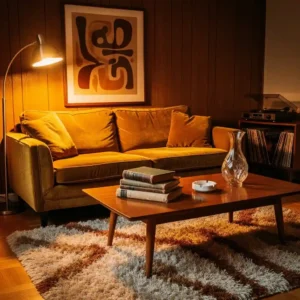
A velvet sofa instantly captures the glamour and comfort of 70s design. Rich shades like mustard, rust, or deep green bring personality while maintaining the cozy aesthetic of the era. The soft texture adds depth and visual richness to the living room.
Pair the sofa with wooden furniture and a patterned rug to enhance the retro vibe. Keep the surrounding décor simple so the sofa becomes the focal point. This bold furniture piece creates a perfect balance of vintage charm and modern comfort.
3. Shag Rugs for Texture
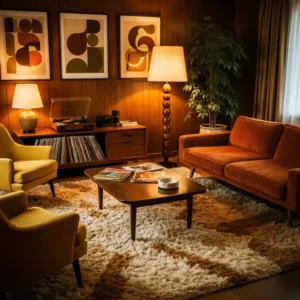
Shag rugs were one of the most iconic elements of 70s interiors. Their thick, plush texture made living rooms feel warm and relaxed. Placed under a coffee table or seating area, they instantly create a retro atmosphere.
Choose neutral or earthy shades to maintain authenticity. Pair the rug with low seating and simple wooden furniture. This textured layer not only enhances comfort but also adds the playful, laid-back spirit that defined the decade.
4. Wood Panel Accent Walls
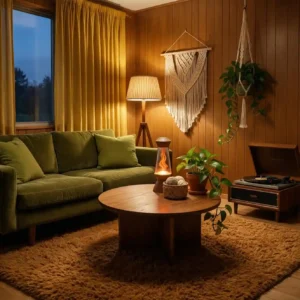
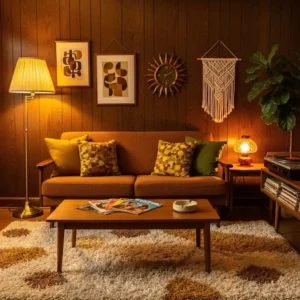
Wood paneling was widely used in 1970s homes to add warmth and depth to interiors. The natural tones created a cozy environment while highlighting the beauty of natural materials.
In a modern interpretation, consider using paneling on just one accent wall. Pair it with lighter furniture and neutral textiles to prevent the room from feeling too dark. This design choice brings vintage character while maintaining a fresh, balanced look.
5. Retro Geometric Patterns
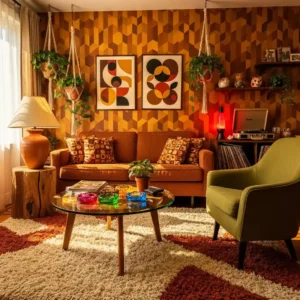
Geometric patterns were a bold hallmark of 70s design. Wallpaper, rugs, and cushions often featured eye-catching shapes and repeating designs that added movement and personality.
To keep the look stylish today, use geometric patterns sparingly. Choose one feature element such as a wallpapered wall or patterned rug. Balance it with solid colors and simple furniture for a modern retro aesthetic.
6. Low Profile Furniture
Low-profile furniture was extremely popular in the 1970s, giving living rooms a relaxed and informal feel. Sofas, chairs, and tables were often closer to the ground, creating a casual lounge-like atmosphere.
Combine low seating with soft cushions and layered rugs to enhance comfort. Keep the layout open and inviting. This design approach encourages conversation and reflects the laid-back lifestyle associated with the era.
7. Rattan and Wicker Accents
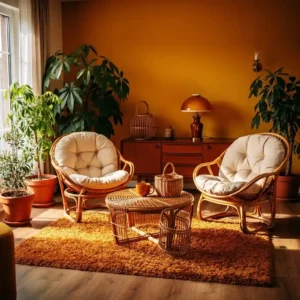
Natural materials like rattan and wicker were widely used in 70s interiors. These lightweight pieces added texture and a relaxed, bohemian vibe to living rooms.
Incorporate a rattan chair, woven baskets, or a wicker coffee table. Pair them with soft textiles and greenery to create a balanced look. These natural elements add warmth while keeping the space light and inviting.
8. Vintage Record Player Corner
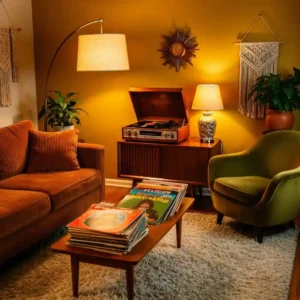
Music played a huge role in 70s culture, and many living rooms featured record players and vinyl collections. A dedicated music corner can instantly capture that nostalgic atmosphere.
Place a retro record player on a wooden console and display vinyl records nearby. Add a comfortable chair and soft lighting to complete the space. This setup creates a cozy area perfect for relaxing and enjoying music.
9. Indoor Plants Everywhere
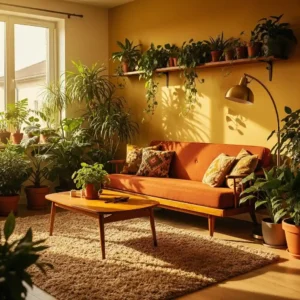
Indoor plants were essential to 70s decor, bringing life and freshness into the home. Popular choices included ferns, rubber plants, and hanging greenery that added a natural element.
Arrange plants at different heights using stands or hanging planters. Pair them with warm-toned furniture and natural textures. The greenery softens the room and reinforces the earthy vibe of the decade.
10. Curved Furniture Shapes
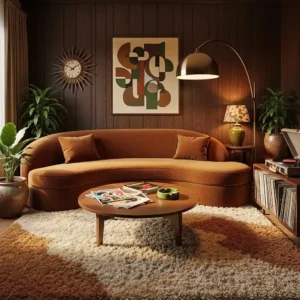
Curved furniture shapes were popular in the 70s, adding softness and flow to living spaces. Rounded sofas, circular tables, and curved chairs created a relaxed and stylish environment.
Combine curved pieces with geometric patterns for visual contrast. Keep the overall layout spacious to highlight the sculptural shapes. These curves give the room a playful retro feel while remaining modern and elegant.
11. Macramé Wall Decor
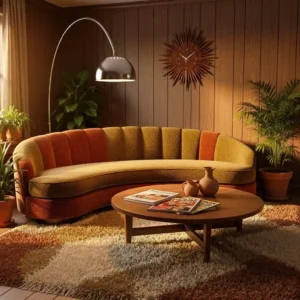
Macramé wall hangings were a defining decorative trend in the 1970s. Handmade textiles added a personal and artistic touch to living spaces while complementing natural materials.
Hang a large macramé piece above the sofa or on an accent wall. Pair it with wooden furniture and plants for a cohesive bohemian look. This handmade detail adds texture and character to the room.
12. Retro Lighting Fixtures
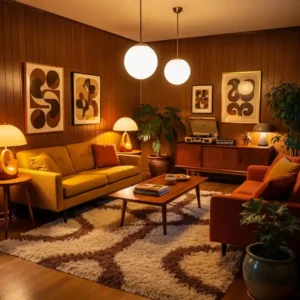
Lighting in the 70s often featured sculptural shapes and warm tones. Globe pendant lights, arc floor lamps, and metallic finishes were especially popular.
Use statement lighting to highlight key areas of the room. Keep bulbs warm to enhance the cozy atmosphere. These retro fixtures add both functionality and vintage style.
13. Bold Accent Chairs
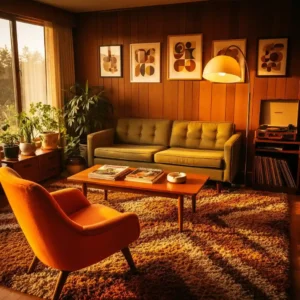
Accent chairs in vibrant colors were a common feature in 70s interiors. They added personality and visual interest to living rooms without requiring major changes.
Choose a chair in mustard, rust, or olive green. Pair it with neutral furniture to create contrast. This simple addition instantly introduces a playful retro vibe.
14. Large Retro Artwork
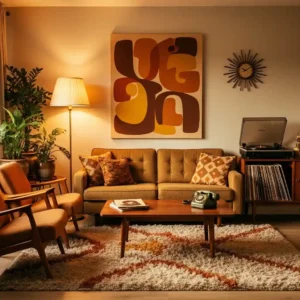
Large-scale artwork was often used in the 70s to create dramatic focal points. Abstract designs and bold color combinations reflected the creative spirit of the decade.
Place a statement piece above the sofa or on a main wall. Keep surrounding decor simple so the artwork stands out. This approach adds personality while maintaining balance.
15. Glass and Chrome Details
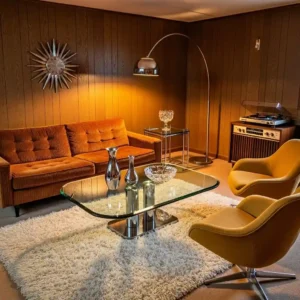
Glass and chrome furniture introduced a touch of modern glamour in 70s homes. Coffee tables with glass tops and metallic frames helped balance heavier wooden pieces.
Combine these materials with warm colors and soft textiles. The contrast between shiny metal and cozy fabrics creates visual interest. This blend of elements captures the stylish edge of 70s design.
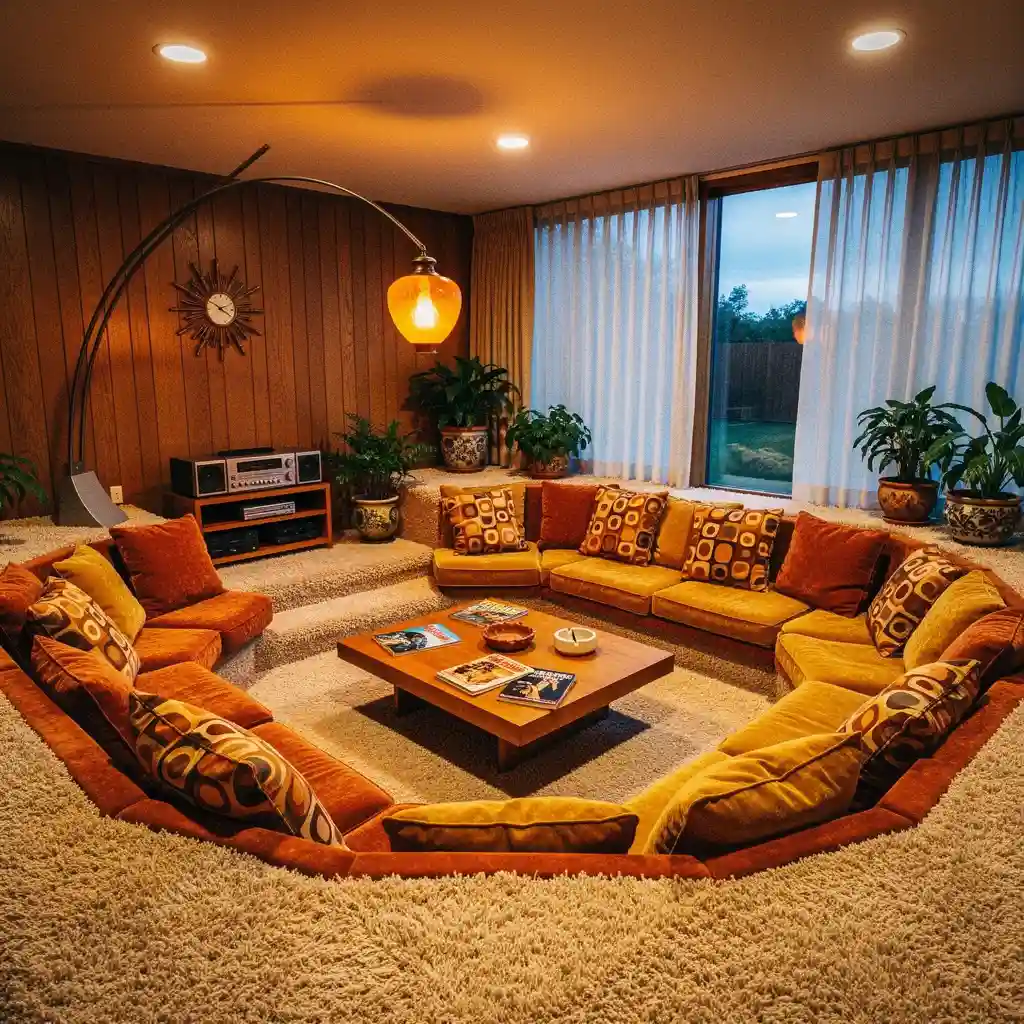
16. Sunken Conversation Pit
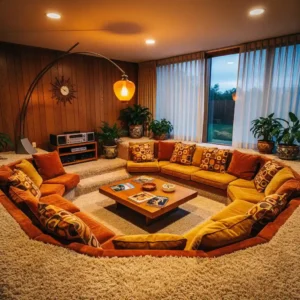
Conversation pits were a dramatic design feature popular in many 70s homes. The recessed seating area created an intimate space for socializing and relaxing.
Recreate the idea with sectional seating and layered rugs if a true pit isn’t possible. Add plush cushions and warm lighting to enhance comfort. This design encourages gathering and conversation.
17. Cozy Layered Textures
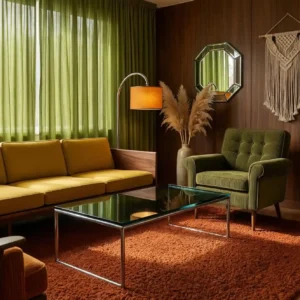
Layering textures was essential in 70s interiors. Combining velvet sofas, shag rugs, knit throws, and woven accents created a rich and comfortable environment.
Focus on mixing materials rather than adding too many decorative items. The contrast between soft fabrics and natural elements adds depth. This layered approach captures the warm, relaxed feeling that defined the decade.