14 Pillow Case Sewing & Pattern Ideas You’ll Love
1. Classic Envelope Pillowcase
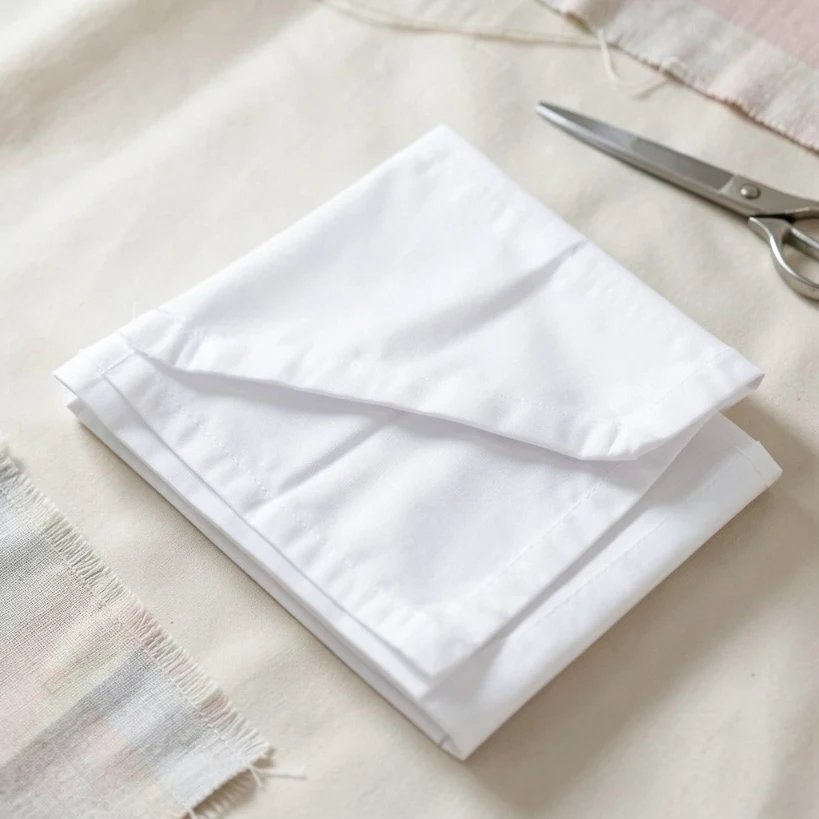
The classic envelope pillowcase is the ideal first pillowcase sewing project — requiring only straight stitches, no zips, no buttons, and producing a clean, professional result that looks indistinguishable from a shop-bought cover. Cut one front panel and two overlapping back panels from your chosen fabric, hem the inner edges of the back panels, then sew all pieces together with right sides facing. Turn through and press for a perfectly finished cover.
The overlapping envelope closure at the back keeps the pillow insert securely inside without any fastening hardware. This construction method is genuinely quick — an experienced sewist completes a standard pillowcase in under twenty minutes using this technique. Cotton percale, linen, and washed cotton are the most popular fabric choices, each producing a different drape and texture in the finished cover. The envelope pillowcase pattern is consistently the most downloaded and most saved beginner sewing project on Pinterest’s craft and sewing boards.
2. French Seam Pillowcase
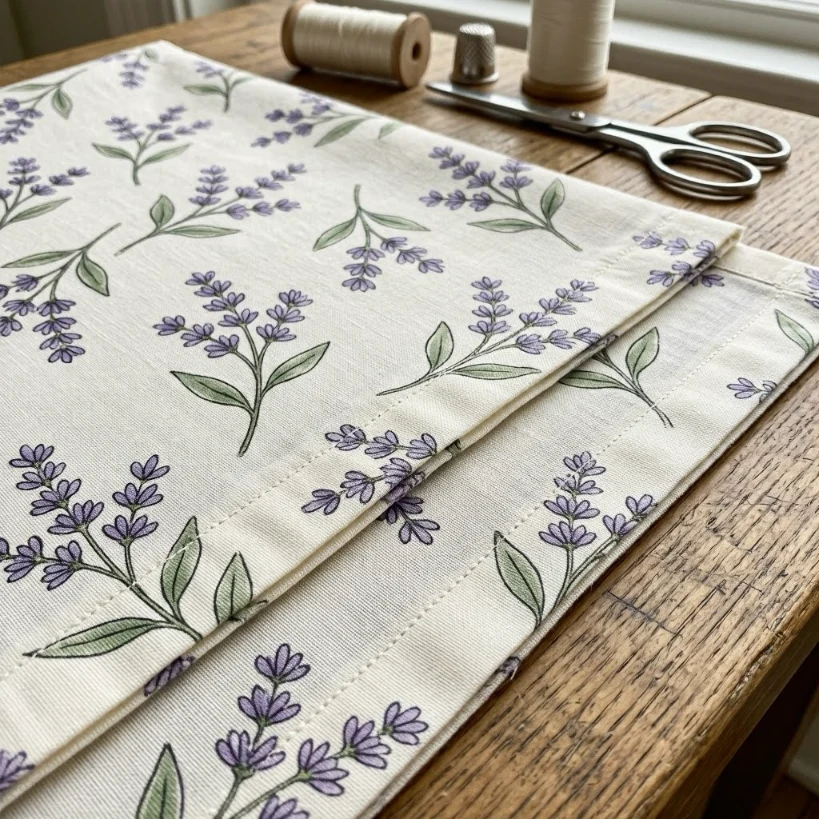
A French seam pillowcase uses the elegant French seam construction technique to completely enclose all raw fabric edges within the seam itself, producing a pillowcase with a beautifully neat interior finish that contains no visible raw edges, no overlocking, and no fraying risk whatsoever. This technique is particularly valuable for delicate fabrics — fine cotton lawn, silk, and lightweight linen — where raw edges would be especially prone to fraying with regular washing.
To sew a French seam, place fabric wrong sides together and sew a narrow initial seam, trim the seam allowance closely, then fold right sides together and sew a second seam that completely encloses the first. The result is a fully enclosed seam that looks immaculate both inside and out. Delicate floral cotton lawn and fine stripe fabrics are the most beautiful choices for French seam pillowcases. This refined sewing technique earns admiring saves on Pinterest’s intermediate sewing and technique boards.
3. Embroidered Hem Pillowcase
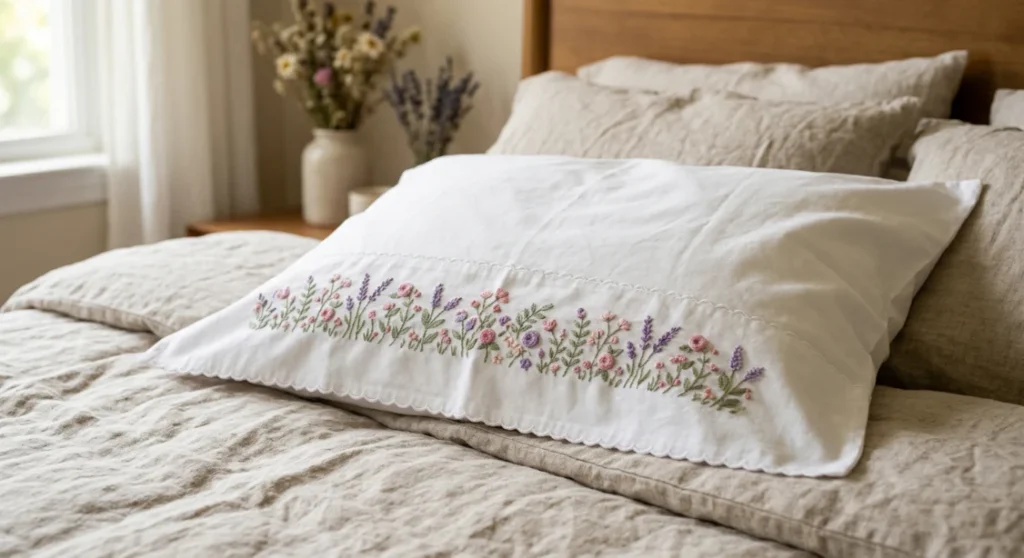
An embroidered hem pillowcase combines basic pillowcase sewing with decorative hand embroidery to create a sleeping textile of genuine artisan beauty. Sew a standard pillowcase with a generous 10-15cm wide cuff at the opening, then embroider a repeating botanical motif — small flowers, leaf sprigs, or a simple geometric border — along the cuff using basic embroidery stitches. The embroidered cuff is the feature that transforms a plain pillow cover into a genuine heirloom textile.
Lazy daisy stitch, stem stitch, and French knots are the most accessible embroidery stitches for beginners working on pillowcase cuffs. Soft pink, lavender, sage green, and warm yellow thread on white cotton creates the most timeless and versatile colour combination. Transfer your embroidery design onto the fabric using a water-soluble pen before stitching. Embroidered hem pillowcases make extraordinary handmade gifts for weddings, new homes, and special occasions and earn heartfelt saves on Pinterest’s embroidery boards.
4. Patchwork Pillowcase Pattern
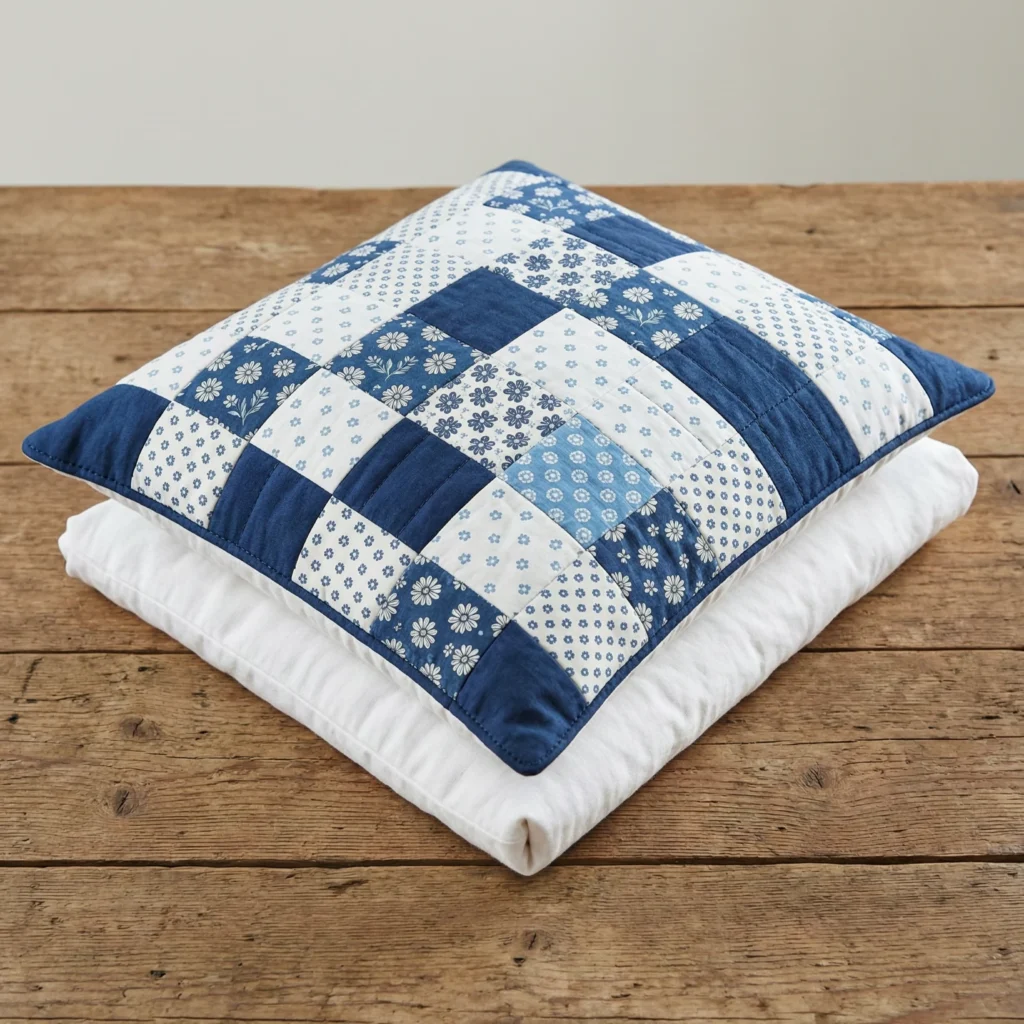
A patchwork pillowcase uses the traditional quilting technique of piecing together multiple fabric squares into a larger panel to create a pillowcase front of extraordinary pattern richness and personal meaning. Cut equal-sized squares from a coordinated selection of cotton print fabrics, sew them together in rows, join the rows into a complete patchwork panel, then attach a plain backing fabric to complete the cover using your preferred closure method.
The beauty of a patchwork pillowcase lies in the story told by its fabric selection — coordinating blue and white prints, warm floral combinations, or bold graphic contrasts all produce dramatically different aesthetic results from the same basic construction approach. Scraps from previous sewing projects are ideal for patchwork pillowcases, making this a beautifully sustainable project that transforms offcuts into something genuinely lovely. Patchwork pillowcase tutorials earn consistent saves on Pinterest’s quilting and sustainable sewing boards.
5. Oxford Pillowcase with Flat Flange Border
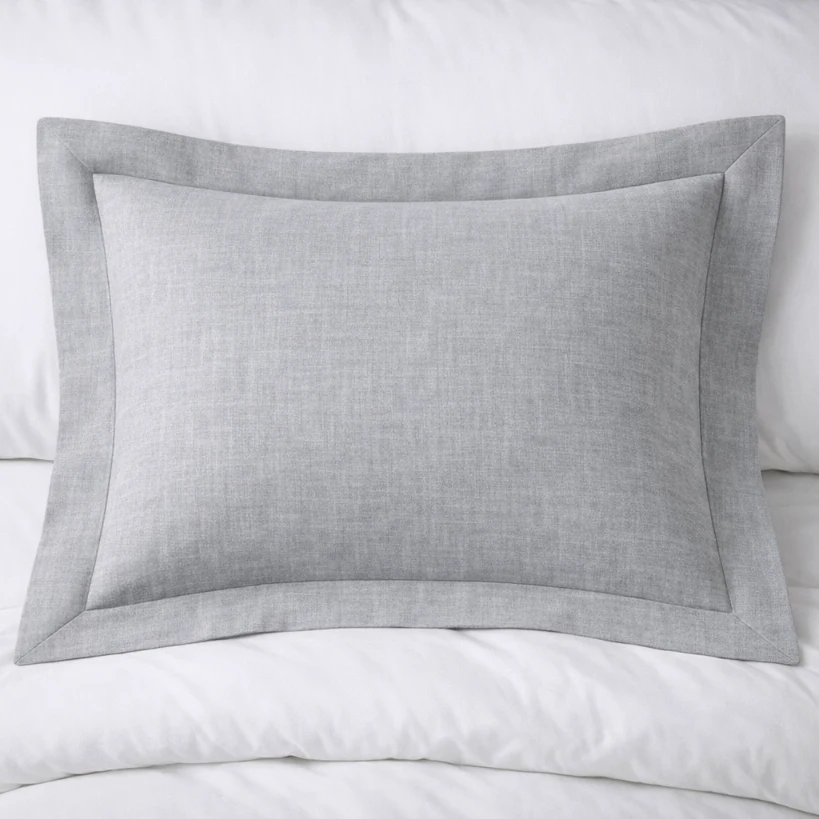
An Oxford pillowcase features a flat fabric border — typically 4-6cm wide — that extends beyond the pillow insert area on all four sides, creating a framed appearance that gives the pillow a more formal, hotel-quality presence on the bed. The flat flange border is created by sewing an additional seam parallel to and inside the outer edge after the main pillow construction is complete, creating a neat hollow border that lies flat around the pillow.
Mitered corners — where the border fabric is folded at precise 45-degree angles at each corner — give the Oxford pillowcase its most refined and professional appearance. Grey linen and crisp white cotton are the most popular fabric choices for Oxford pillowcases, their clean surfaces showcasing the precise flat flange border without distraction. This slightly more advanced pillowcase construction is deeply satisfying to complete and the finished cover looks genuinely luxurious. Oxford pillowcase tutorials earn admiring saves on Pinterest’s intermediate sewing boards.
6. Button Closure Pillowcase
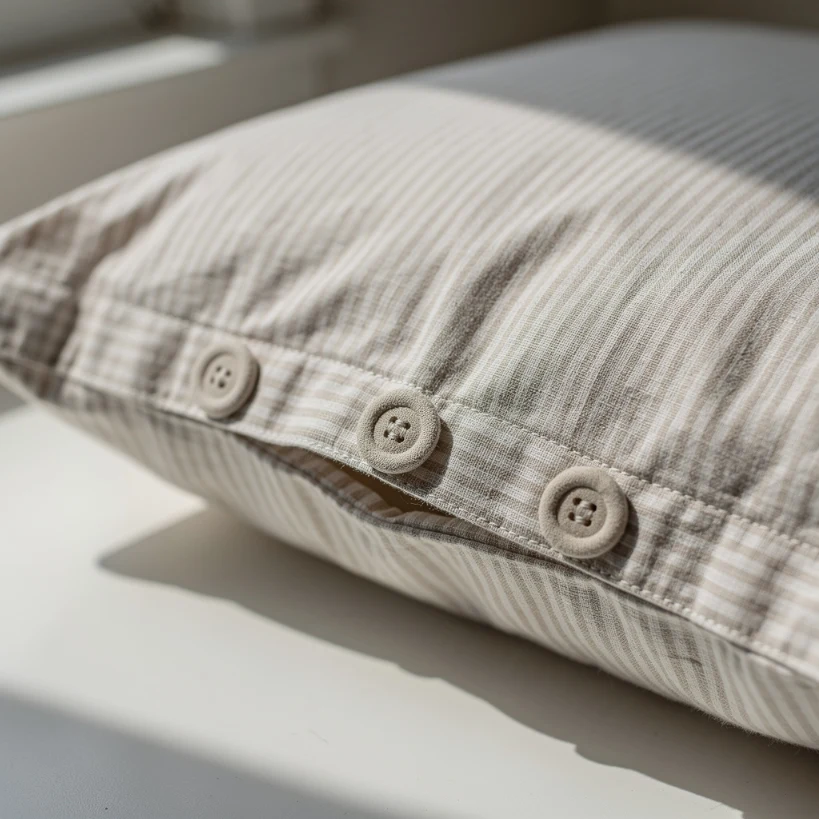
A button closure pillowcase replaces the standard envelope overlap with a row of carefully spaced buttons that fasten the opening with a neat, intentional detail that adds decorative character to an otherwise functional element. Cut buttonholes at regular intervals along one back panel edge and sew corresponding buttons to the opposite panel, creating a closure that is both secure and genuinely attractive. Fabric-covered buttons in a matching or complementary fabric add the most refined finish.
Ticking stripe, chambray, and washed linen are the fabric choices that showcase button closure pillowcases most beautifully — their classic textile quality complementing the traditional haberdashery detail of the button fastening. Ensure buttonholes are sized precisely to their corresponding buttons — too loose and the pillow opens during sleep, too tight and the opening and closing becomes frustrating with regular use. This charming pillowcase detail earns consistent saves on Pinterest’s traditional and cottage sewing craft boards.
7. Lace Trim Pillowcase
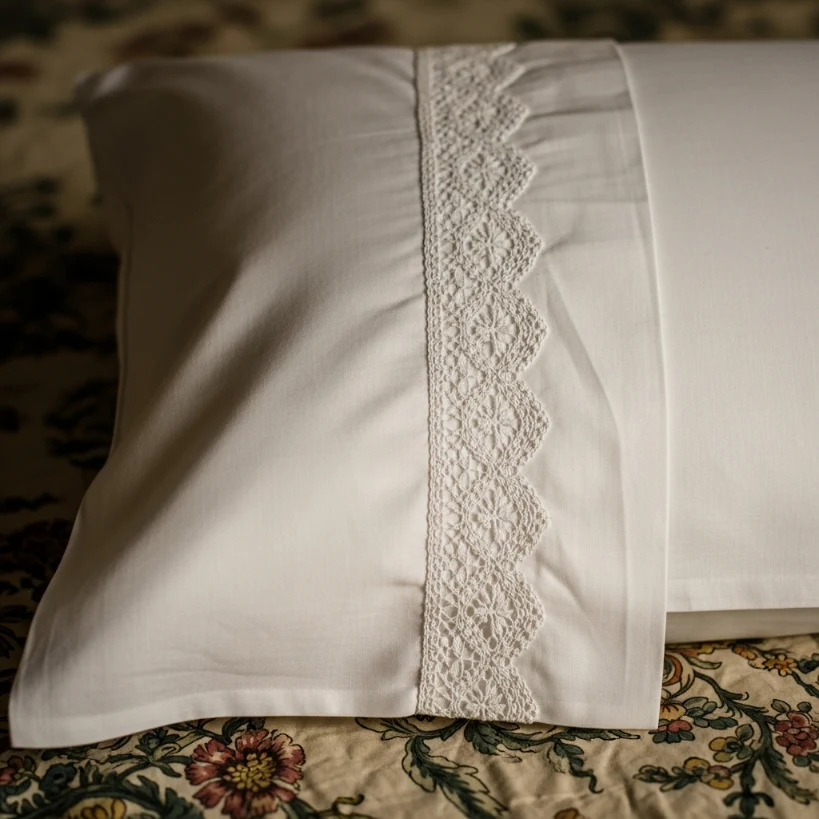
A lace trim pillowcase attaches a length of delicate cotton lace along the opening cuff of a standard pillowcase construction, transforming a plain functional cover into a romantically beautiful bedroom textile with significant heirloom quality. Choose a lace trim that is at least 4-5cm wide for sufficient visual impact — narrow lace disappears against the pillow fabric — and stitch it carefully along the hemmed cuff edge with a precise, even seam allowance throughout.
White cotton lawn, fine white linen, and soft cream cotton are the ideal base fabrics for lace trim pillowcases, their delicate weight and texture complementing the lace’s intricate pattern without competition. Vintage lace sourced from antique markets, old garments, or haberdashery clearance provides the most characterful and beautiful trim material. Machine-washable cotton lace is the most practical choice for bedding applications. Lace trim pillowcases earn deeply nostalgic and warmly admiring saves on Pinterest’s romantic and heritage sewing boards.
8. Colour Block Pillowcase
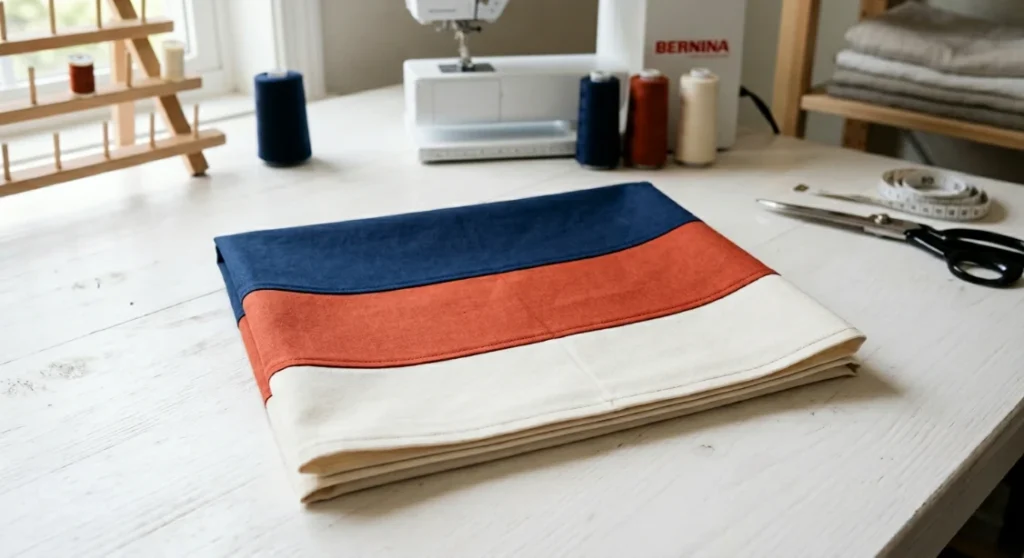
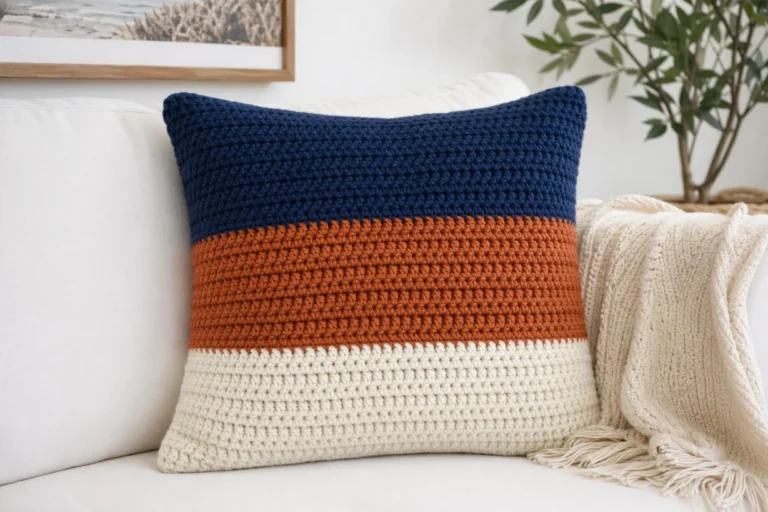
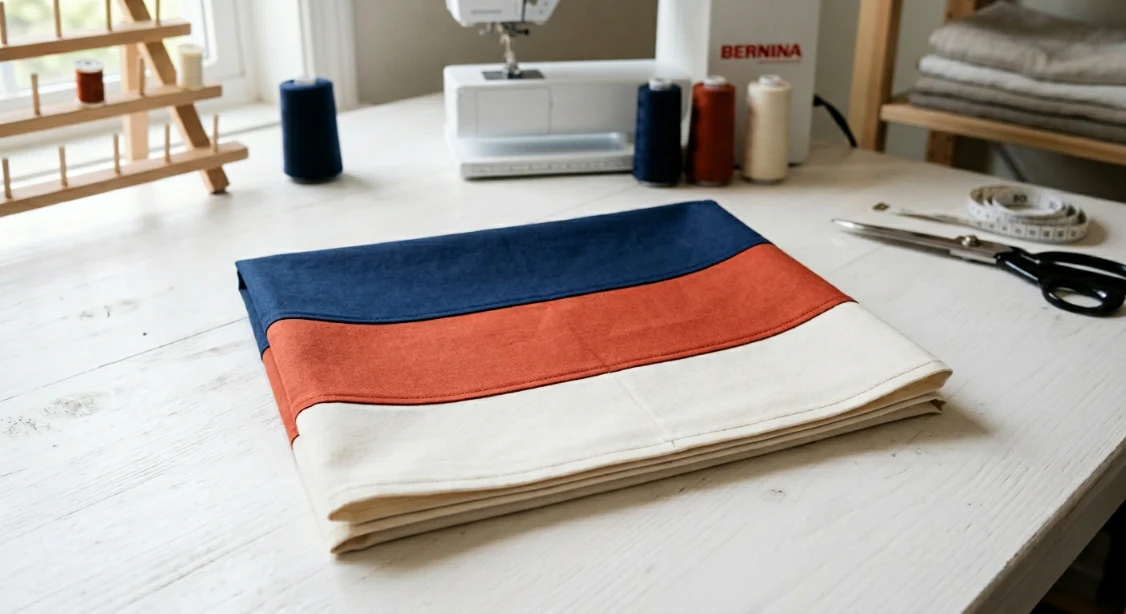
A colour block pillowcase divides the front panel into two or three bold sections of contrasting solid colour fabric, creating a graphic, contemporary cover that requires no pattern-matching, no complex techniques, and no advanced sewing skills beyond straight seams. Cut equal or proportionally graduated horizontal or vertical bands from your chosen solid fabrics, sew them together precisely with perfectly straight seam lines, then construct the pillowcase using your preferred closure method.
The colour combination choices are infinite — deep navy with warm terracotta and cream creates a sophisticated contemporary palette, blush with burgundy creates a romantic tonal gradient, and black with white creates maximum graphic impact. The key to a beautiful colour block result is absolute precision in the seam lines — any wavering in the straight seams between colour blocks immediately undermines the graphic clarity that makes the design effective. Colour block pillowcase projects earn strong saves on Pinterest’s modern sewing boards.
9. Pintuck Detail Pillowcase
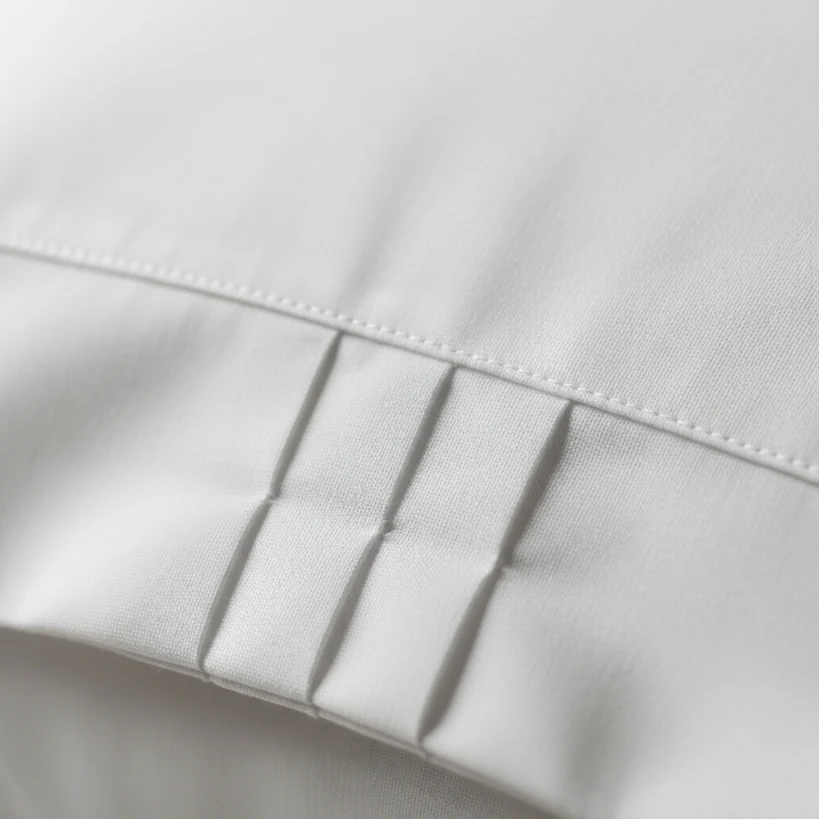
Pintucks are tiny parallel folds of fabric stitched in place to create a raised decorative surface detail that adds texture and subtle visual interest to an otherwise plain pillowcase. Sew three to five evenly spaced pintucks across the cuff of a standard white cotton pillowcase by folding the fabric in narrow 3-5mm parallel lines and stitching each fold down precisely at an even distance from the folded edge. Press each pintuck carefully with a hot iron for crisp definition.
The beauty of pintucks is their elegant restraint — they add genuine decorative craftsmanship to the pillowcase without introducing any colour contrast or pattern complexity. Crisp white cotton percale showcases pintuck detail most beautifully, the tiny raised folds casting delicate shadow lines that shift as the fabric moves in natural light. This refined sewing technique requires patience and precision but rewards the effort with a pillowcase of genuine luxury quality. Pintuck pillowcase tutorials earn admiring saves on Pinterest’s advanced sewing and refined textile craft boards.
10. Tie Closure Pillowcase
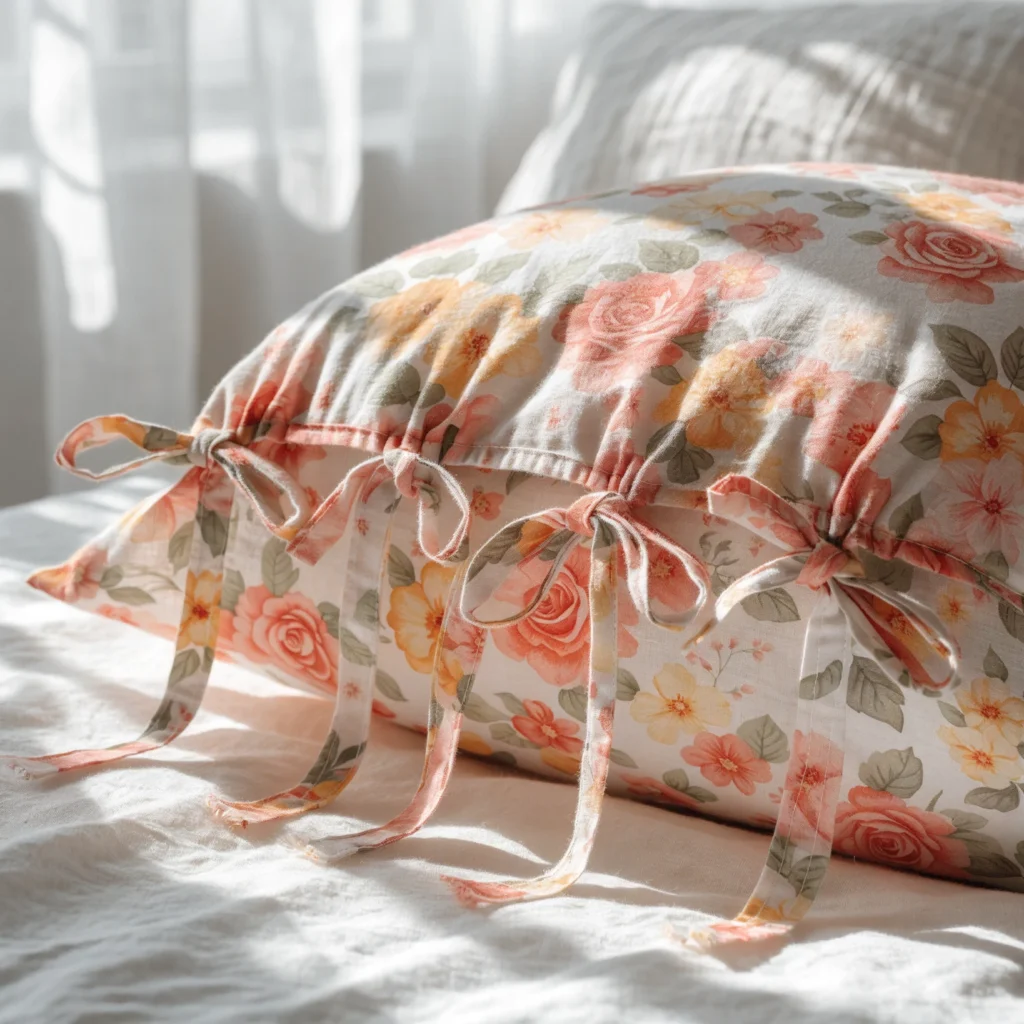
A tie closure pillowcase replaces all mechanical fastening hardware with simple fabric ties sewn in pairs along the opening edge — a charming, entirely fabric-based closure that creates pretty bow details when fastened and gives the pillowcase a handmade, romantic quality that no zip or button closure can replicate. Cut narrow strips of the pillowcase fabric, fold and stitch them into neat ties, and attach them in opposing pairs along both edges of the opening.
Four pairs of ties — two pairs on each opening edge — provide secure fastening while creating an appealing row of soft bows along the pillow opening. Soft floral cotton, washed linen, and fine cotton lawn are the most beautiful fabric choices for tie closure pillowcases, their relaxed drape complementing the softness of the tied bow closure. The completed pillowcase has a genuinely bespoke, artisan quality. Tie closure pillowcase tutorials are consistently popular on Pinterest’s romantic and beginner sewing boards.
11. Monogram Embroidered Pillowcase
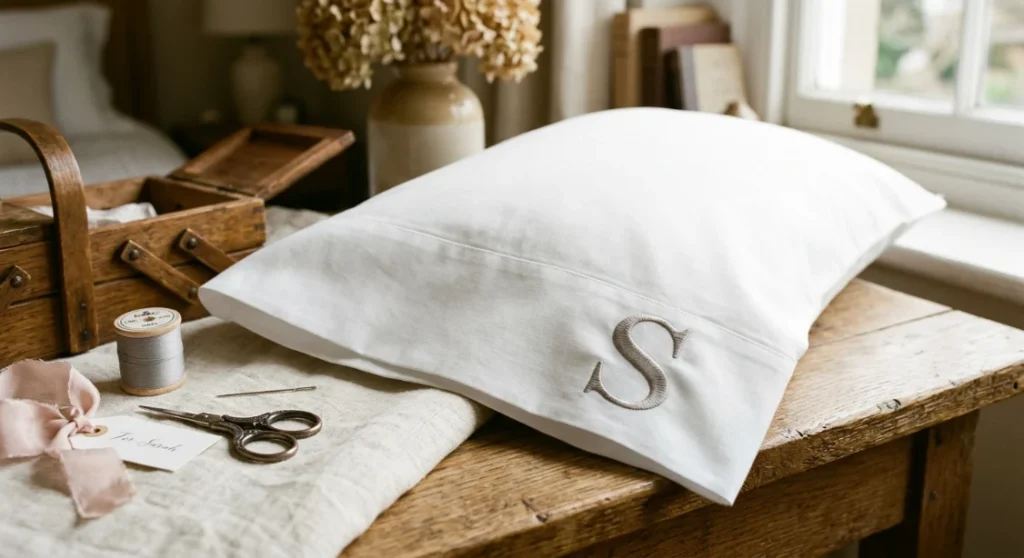
A monogram embroidered pillowcase personalises a beautifully sewn pillowcase with a single embroidered initial or set of initials at the corner of the opening cuff, creating a bespoke sleeping textile with the kind of personal identity marker traditionally associated with fine household linen. Embroider the chosen monogram letter in satin stitch using a clearly drawn serif or script font template transferred onto the fabric before stitching begins.
Satin stitch filled letters in soft grey, dusty rose, navy, or warm gold thread on white cotton create the most classic and elegant monogram pillowcase results. The monogram can be embroidered by hand for complete control over stitch placement, or programmed into an embroidery machine for precise, consistent results at higher volume. Monogrammed pillowcases are among the most popular personalised handmade gift items in the sewing world and earn consistently devoted saves on Pinterest’s personalised gift and heirloom sewing boards.
12. Ruffle Edge Pillowcase
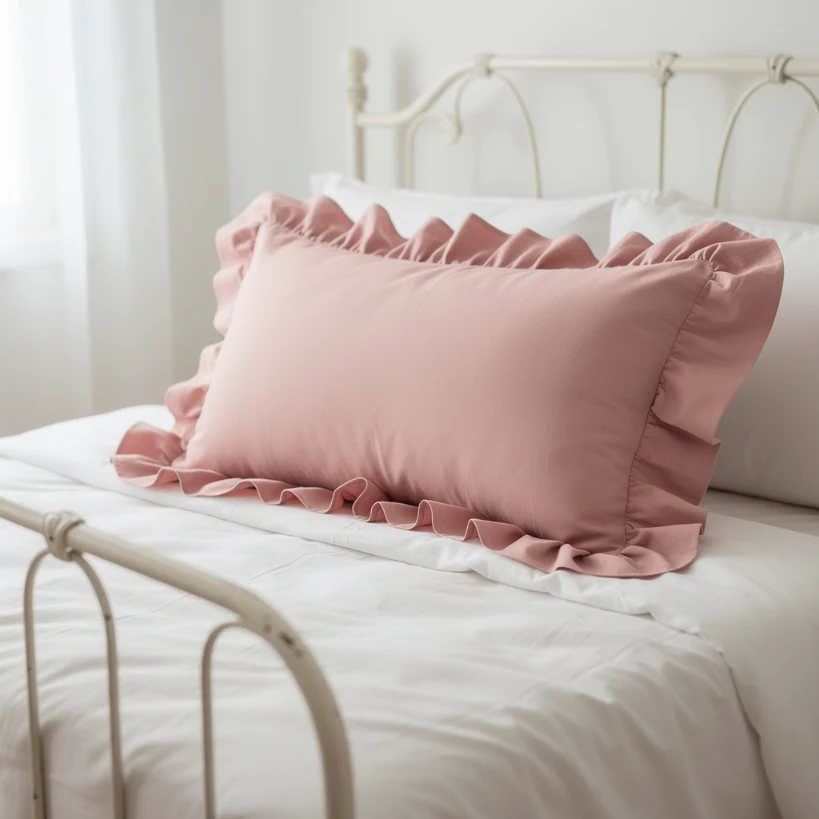
A ruffle edge pillowcase attaches a gathered fabric frill around all four outer edges of the pillow, creating a soft, romantic border of gathered fabric that frames the entire cushion with feminine movement and decorative generosity. Cut a long fabric strip twice the circumference of the pillow, gather it evenly to fit, and attach it to the outer seam of the pillowcase with right sides together before turning through to reveal the completed ruffle border.
The fullness of the gather ratio determines the character of the finished ruffle — a gentle 1.5:1 gather ratio produces a soft, relaxed frill, while a 2:1 or 3:1 ratio creates a more exuberant, densely gathered ruffle of considerably more visual impact. Soft blush, white, and pale lavender cotton fabrics create the most beautiful ruffle pillowcases for romantic bedroom styling. Ruffle edge pillowcase tutorials consistently earn enthusiastic saves on Pinterest’s romantic sewing and bedroom styling boards.
13. Striped Pattern Pillowcase
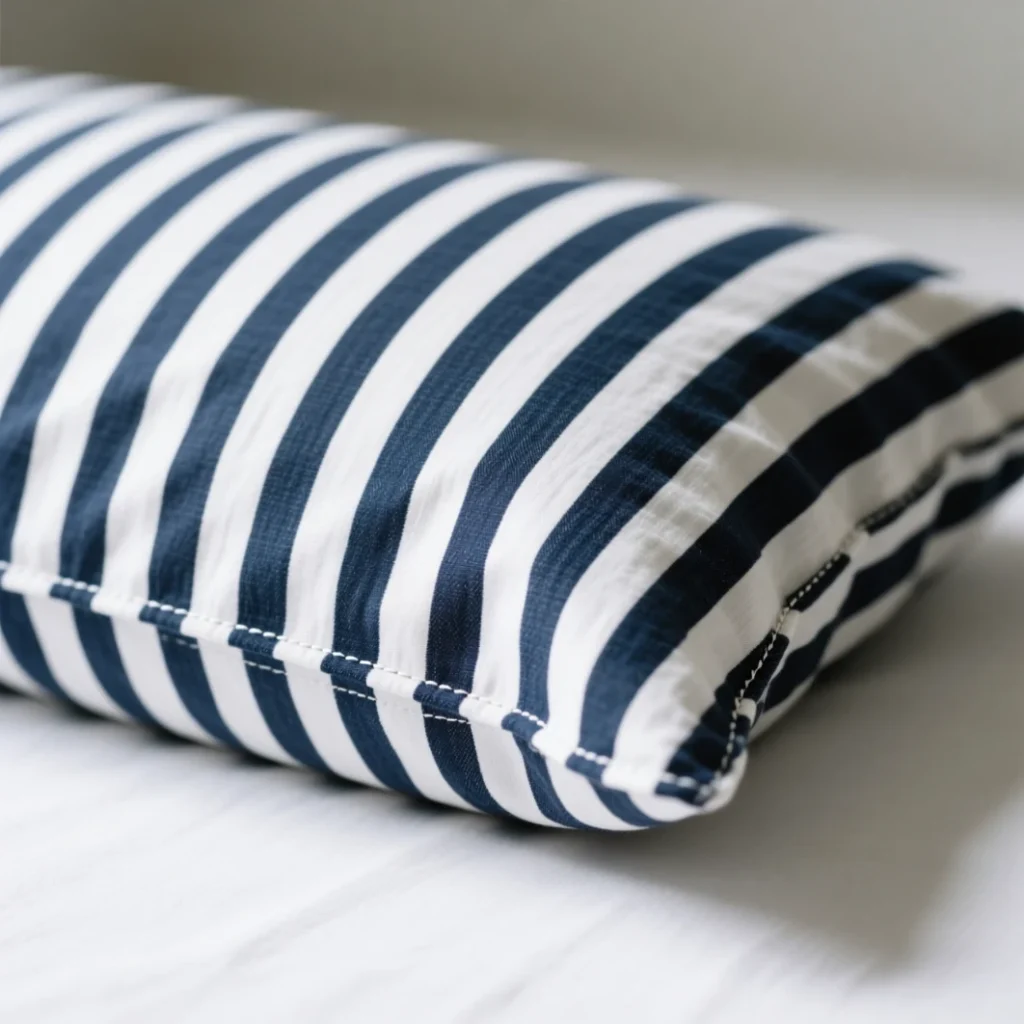
A striped fabric pillowcase is one of the most graphically satisfying sewing projects available — the precise, repetitive pattern of woven stripes rewarding the sewist’s attention to grain line alignment with a finished result of crisp geometric clarity. Choose a bold ticking stripe, a classic awning stripe, or a fine pin stripe depending on the scale and aesthetic you are working toward. Cut all pattern pieces with the stripes running consistently vertical on the front panel.
Grain line precision is the most important construction consideration for stripe pillowcases — any deviation from the straight grain causes the stripes to appear wonky or misaligned, immediately undermining the graphic clarity the pattern demands. Press each seam carefully as you sew to maintain stripe alignment throughout. Navy and white, black and cream, and red and white are the most classic and versatile stripe colour combinations for pillowcases. Striped pillowcase projects earn consistent saves on Pinterest’s classic and graphic sewing boards.
14. Quilted Pillowcase
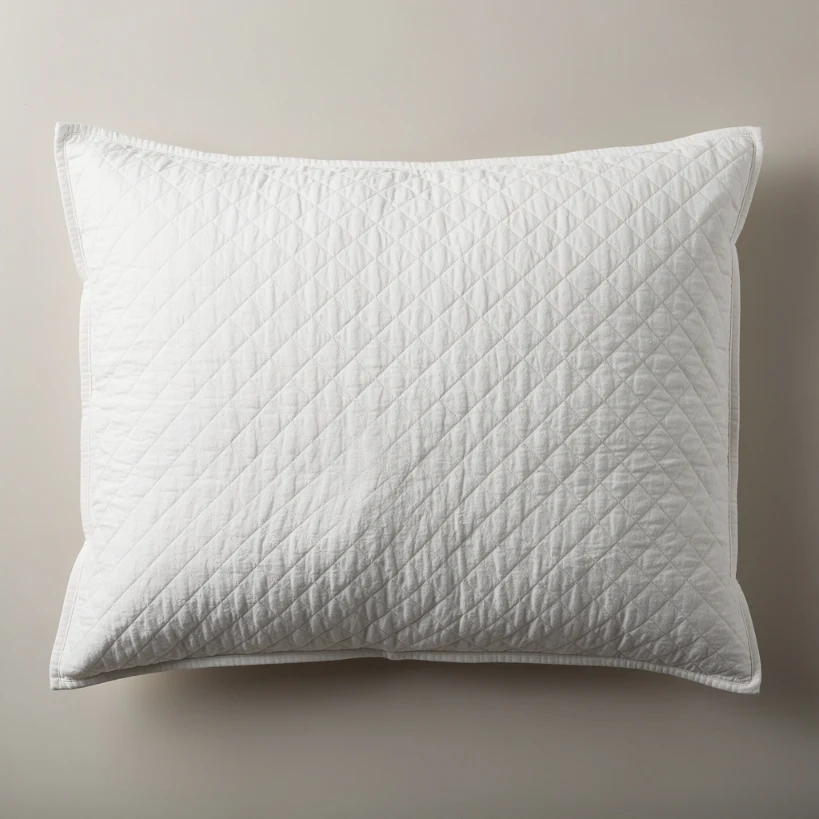
A quilted pillowcase sandwiches a thin layer of wadding between the outer fabric and an inner lining, then stitches all three layers together in a regular quilting pattern — diagonal crosshatch, parallel lines, or a simple grid — to create a pillowcase with exceptional texture and gentle warmth. The raised quilted surface adds a three-dimensional quality that no single-layer pillowcase can achieve and creates a genuinely sumptuous sleeping textile.
Use a low-loft wadding for pillowcase quilting to maintain a manageable, flat profile that does not make the cover too stiff or bulky for comfortable use. A diagonal crosshatch quilting pattern in 5cm spacing creates the most balanced and visually satisfying result on a standard pillowcase scale. Soft white cotton, pale grey linen, and warm cream chambray fabrics all showcase quilted texture beautifully without introducing competing pattern complexity. Quilted pillowcase tutorials earn devoted saves on Pinterest’s advanced sewing and luxury textile craft boards.