16 Breathtaking Modern Spanish Mediterranean Homes You’ll Fall in Love With
1. Whitewashed Stucco Villa with Terracotta Roof and Infinity Pool
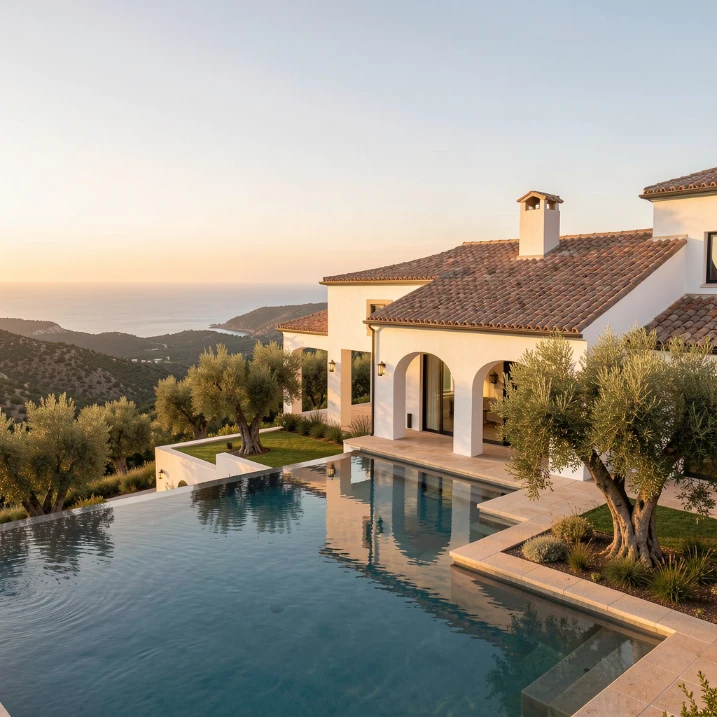
A whitewashed stucco villa crowned with authentic terracotta clay roof tiles and anchored by a seamlessly integrated infinity pool represents the purest and most romantically complete expression of Spanish Mediterranean residential architecture available in contemporary luxury home design, combining the ancient building traditions of Andalusia with the modern amenities and refined spatial planning that distinguish genuinely extraordinary homes from merely beautiful ones. The brilliant white of properly executed lime stucco under Mediterranean sunlight achieves a luminosity of such extraordinary intensity that the home appears to generate its own radiance, the stark white walls creating deep shadow pools in every loggia, arcade, and recessed opening that give the facade a sculptural depth and dramatic chiaroscuro quality that flat-walled contemporary architecture cannot replicate.
The infinity pool, positioned to exploit the site’s most dramatic views whether over coastal water, terraced vineyard landscape, or rolling olive grove, completes the Spanish Mediterranean villa composition by adding a horizontal plane of reflective blue water that mirrors the sky above and connects the domestic architecture to the broader landscape in a relationship of visual dialogue and mutual enhancement. Mature olive trees, their silver-green canopies and gnarled silver-gray trunks providing a living connection to the agricultural landscape traditions of Mediterranean Europe, should be positioned with the deliberate care of a landscape architect rather than planted casually, their placement near the pool terrace and along the main approach providing filtered shade, organic texture, and an irreplaceable sense of established permanence that newly planted trees cannot approximate regardless of their initial size.
2. Courtyard-Centered Home with Moorish Fountain and Arched Arcades
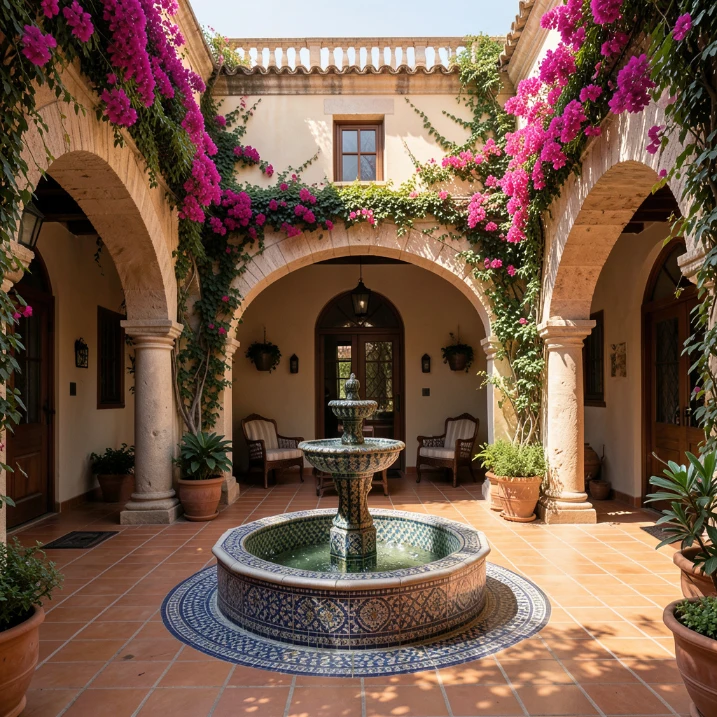
A Spanish Mediterranean home organized around a central interior courtyard with an authentic Moorish-influenced mosaic fountain at its heart represents the most historically resonant and spatially sophisticated residential organization available within the Mediterranean architectural tradition, drawing directly from the extraordinary courtyard house typology refined across eight centuries of Moorish occupation of the Iberian Peninsula into one of the world’s most perfect solutions to the challenge of creating private outdoor space, natural ventilation, and architectural beauty within a single integrated domestic composition. The courtyard organizes every room of the house around a shared center of water, light, and plantings that makes every interior space feel connected to the outdoors without sacrificing privacy or thermal comfort.
Arched stone or stucco arcades surrounding the courtyard on all sides create the covered transitional zones between interior rooms and exterior garden space that are perhaps the most beloved and frequently photographed elements of Moorish-influenced Andalusian domestic architecture, their repetitive curved forms creating a hypnotic rhythm of light and shadow that changes character dramatically across the course of a single day as the sun moves across the sky above the open courtyard center. The arcade floor of terracotta tile or hand-cut stone provides the most beautiful and historically appropriate paving material for this transitional zone, its warm earth tones harmonizing with the cream or ochre stucco walls above and the planted courtyard garden at the center where bougainvillea in magenta or deep purple climbs the columns and walls with the exuberant botanical generosity that defines the most beautiful Spanish courtyard gardens.
3. Hillside Perch with Panoramic Terrace and Clay Tile Cascades
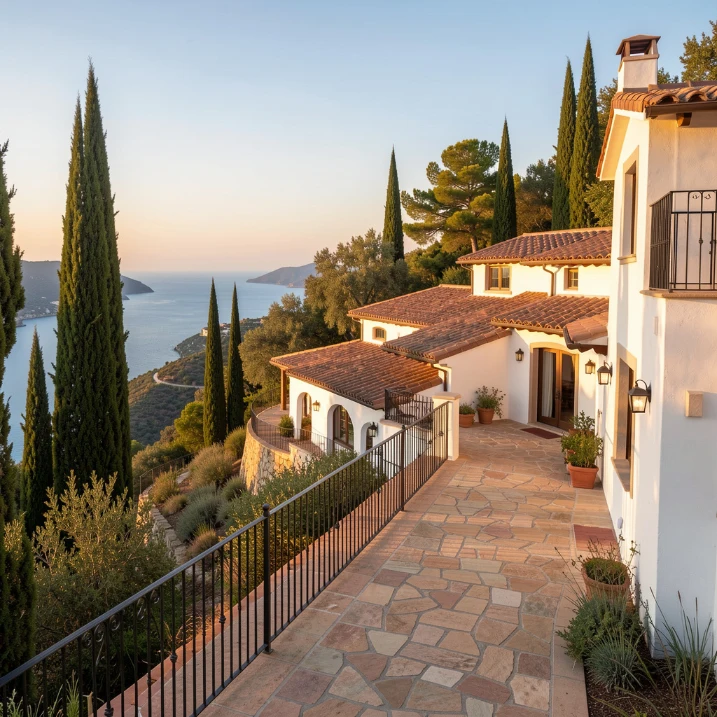
A Spanish Mediterranean home built into a dramatic hillside with its roofline cascading at multiple levels that follow the natural terrain contours creates an architecture of such organic site integration and picturesque silhouette that it appears to have grown from the hill itself over centuries rather than being designed and constructed within a specific brief period of human planning and building activity. The stepped, cascading terracotta tile rooflines at varying heights create a complex skyline profile that reads differently from every approach angle, revealing new compositional relationships between roof planes, tower elements, chimney stacks, and planted pergola structures as the viewer’s perspective changes with movement around the site. This is architecture that rewards exploration.
The panoramic stone terrace extending from the main living level over the hillside drop below creates the most extraordinary outdoor living experience available in residential design, its position at the edge of the hillside producing a dramatic sense of height and spatial expansiveness that ground-level terraces simply cannot provide regardless of how beautifully they are designed and furnished. Wrought iron railings in traditional scrollwork or simple vertical bar patterns provide the safety boundary without obstructing the view, their dark metal silhouettes against the bright sky and distant landscape adding a graphic decorative detail that references centuries of Spanish decorative metalwork tradition with appropriate restraint and elegance. Cypress trees planted on either side of the primary terrace view axis frame the panorama like living architectural columns, their vertical dark green forms providing compositional definition that prevents the view from appearing unstructured and boundless in a way that can paradoxically reduce rather than increase its perceived magnificence.
4. Modern Minimalist Take with Clean Lines and Traditional Materials
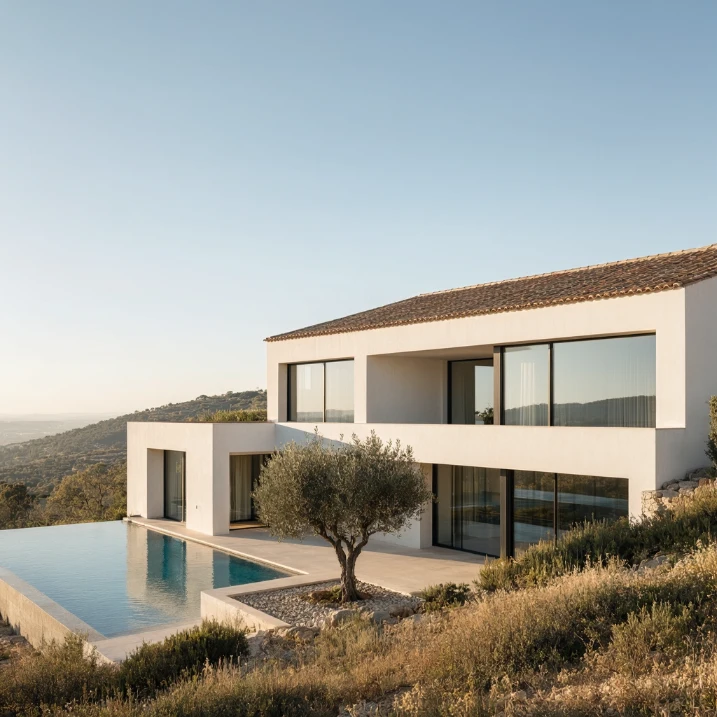
A minimalist contemporary interpretation of Spanish Mediterranean residential architecture that distills the tradition’s essential material vocabulary, white stucco walls, terracotta tile, wrought iron, and natural stone, into clean geometric volumes of precise modern proportion creates a home of such intellectually satisfying design resolution and genuine architectural innovation that it honors its historical sources without being enslaved by them, producing something that feels simultaneously rooted in place and cultural tradition and genuinely of its own creative moment. This is the Spanish Mediterranean home for the design-sophisticated owner who loves the tradition deeply enough to want something more than faithful reproduction and has the architectural vision to commission genuine creative interpretation.
The reduction of the traditional terracotta tile roof to a single, low-pitched plane of minimal pitch and maximum geometric simplicity preserves the material’s cultural and visual identity while eliminating the picturesque complexity of multiple cascading roof levels that traditional compositions employ for a cleaner, more architecturally focused result. Floor-to-ceiling steel-framed window walls in the minimalist Spanish Mediterranean home dissolve the boundary between the white stucco interior and the courtyard or landscape beyond with a transparency that traditional small-windowed Mediterranean architecture never permitted but that contemporary structural engineering makes possible without sacrificing the thermal performance that deep window reveals and generous overhangs maintain even in large-opening modern wall systems. The single olive tree in a minimalist gravel courtyard is the most eloquent possible landscape statement for this architectural approach, one perfectly chosen living element communicating more design confidence than an elaborate planting composition could achieve.
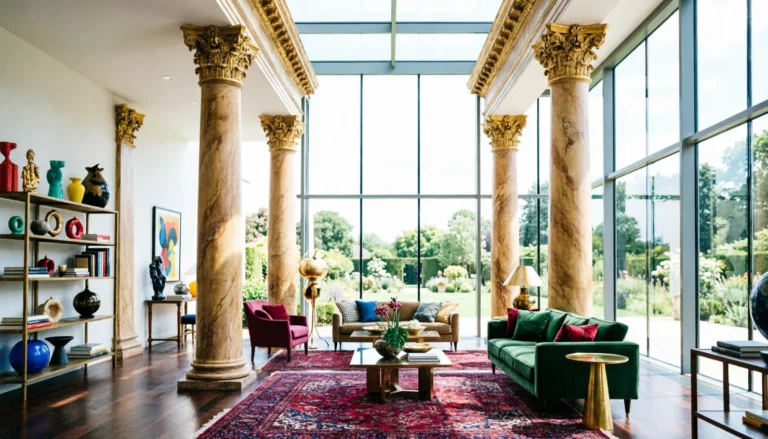
5. Grand Estate with Colonnade Entry and Formal Gardens
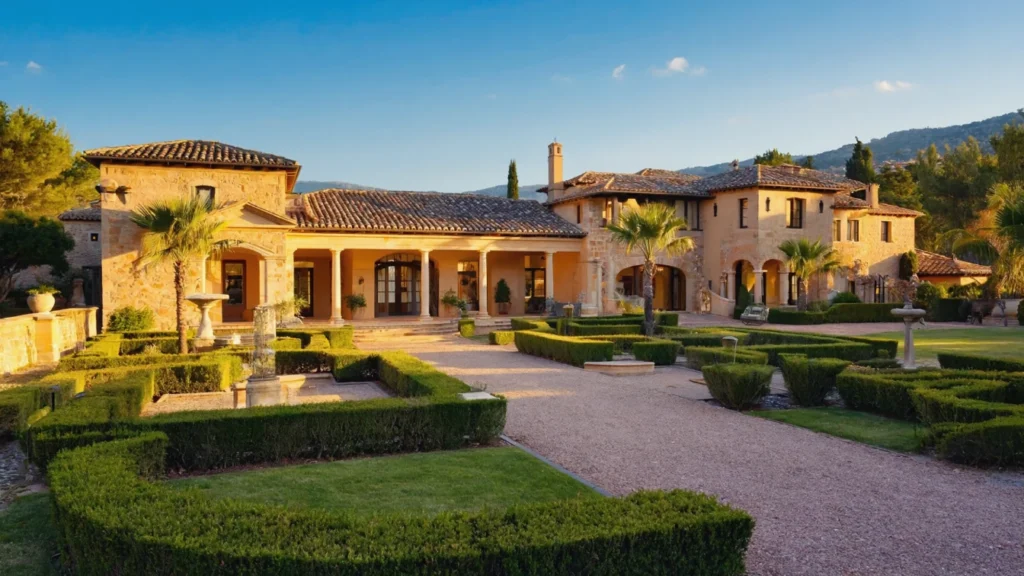
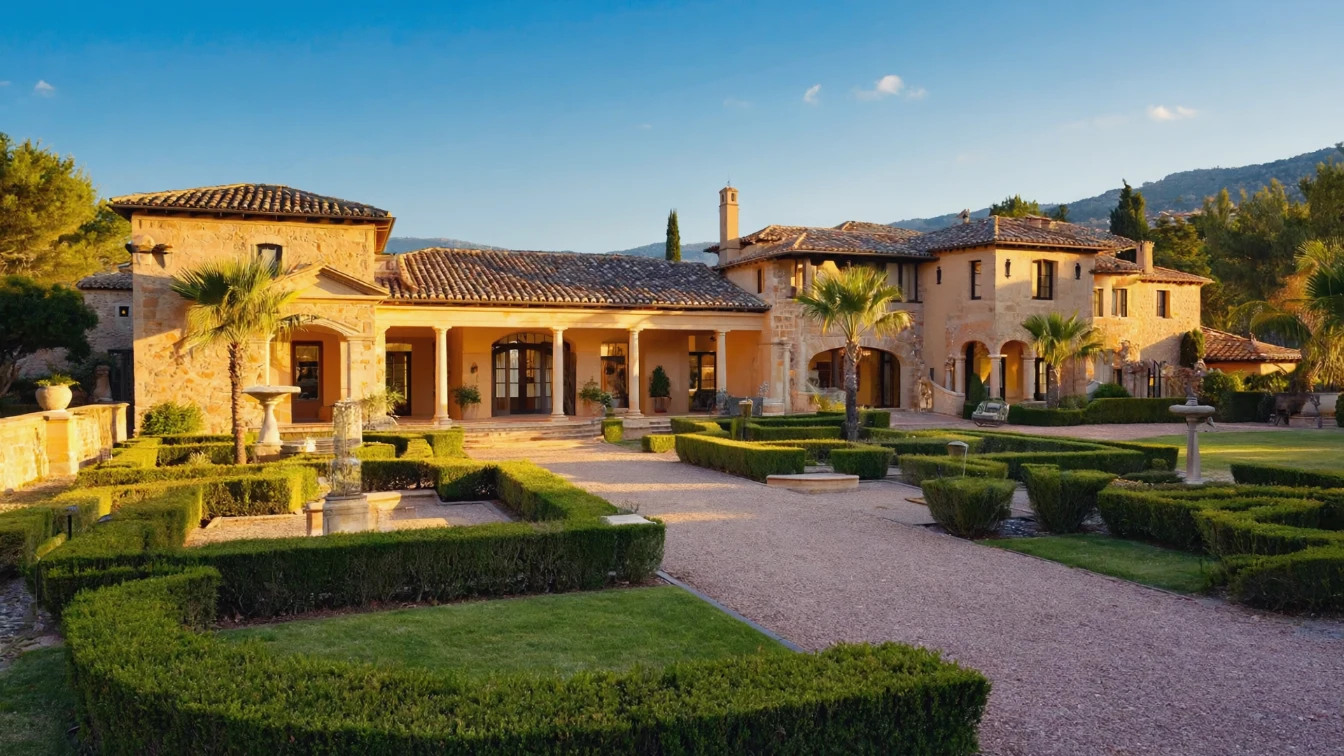
A grand Spanish Mediterranean estate organized around a formal colonnade entry portico flanked by symmetrically planned gardens represents the highest expression of Spanish colonial residential architecture at its most confident, monumental, and unapologetically magnificent, creating an approach sequence of such dramatic architectural theater and cultivated landscape beauty that every arrival at the property feels like a genuinely ceremonial occasion worthy of the extraordinary architectural stage that has been created to receive it. The colonnade, with its series of stone or cast concrete columns supporting a covered entry arcade, establishes the home’s architectural ambition and material quality from the first moment of arrival, communicating with complete confidence that the building behind it will be equally impressive and equally carefully considered in every detail.
Formal symmetrical gardens flanking the main entry drive and surrounding the colonnade create the cultivated landscape setting that gives a grand estate its sense of permanent, maintained beauty and architectural intentionality that distinguishes it from merely large homes without the landscape investment and design commitment that genuine estate character requires. Clipped evergreen hedges in box, yew, or the Mediterranean native rosemary create the geometric structure that formal garden design requires, their precisely maintained forms providing the green architectural elements that complement and extend the building’s geometry into the landscape. A central fountain at the axis point where the entry drive terminates and the colonnade begins creates the focal point and acoustic amenity that transforms the formal garden arrival sequence into a complete sensory experience of architectural and natural beauty combining sight, sound, and scent in a single perfectly orchestrated composition of genuine residential grandeur.
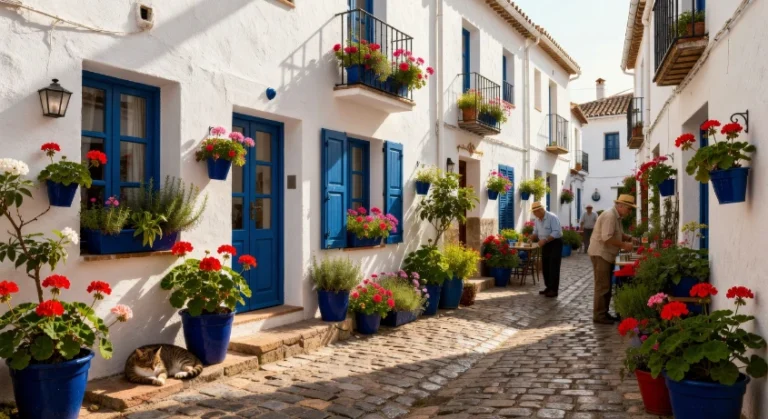
6. Coastal Cliffside Home with Blue Shutters and Sea Views
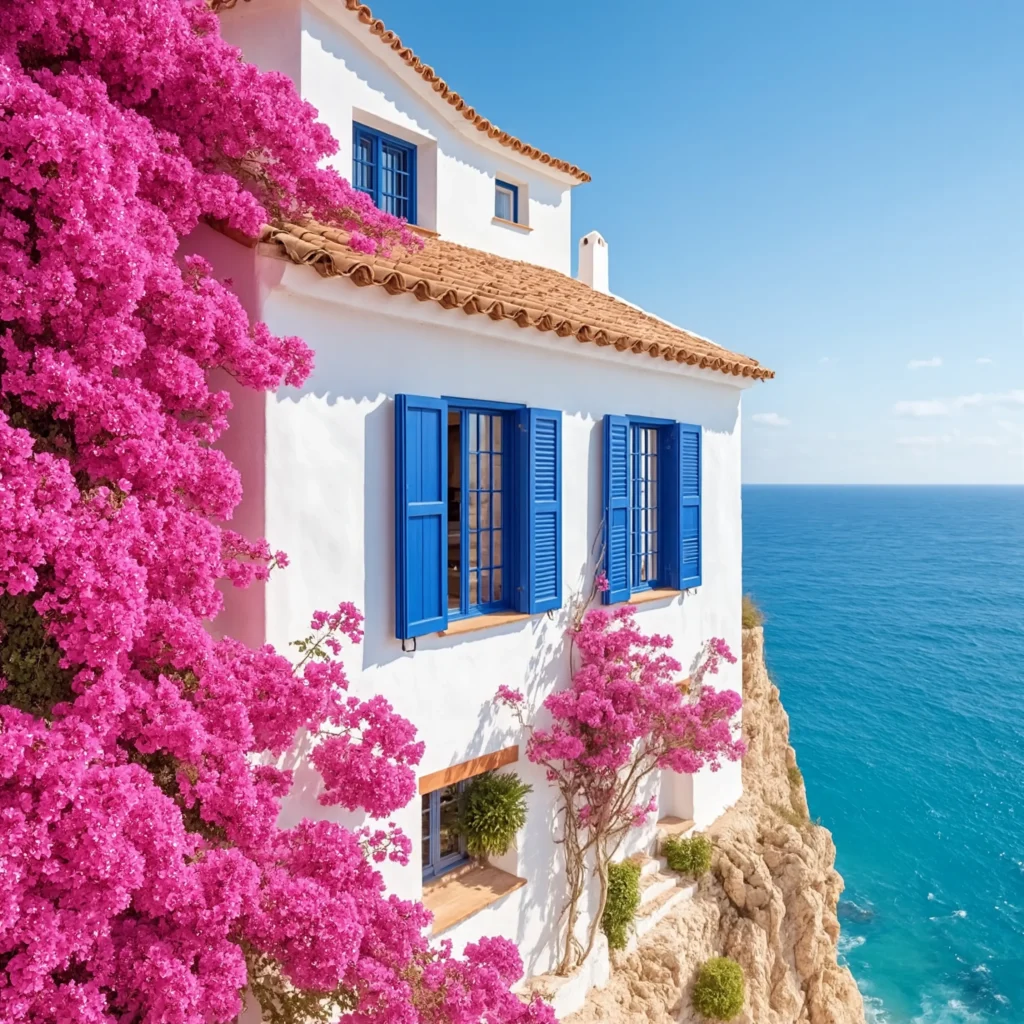
A Spanish Mediterranean coastal home perched dramatically at a cliff edge with brilliant white stucco walls pierced by windows dressed in deep cobalt blue wooden shutters creates one of the most romantically beautiful and compositionally perfect residential images available in the entire repertoire of world architecture, the combination of stark white walls, deep blue accents, terracotta tile warmth, and the brilliant turquoise of the Mediterranean sea below and beyond producing a color composition of such natural perfection and emotional resonance that it has inspired painters, photographers, and architects for centuries without ever becoming exhausted or predictable. This is the home that defines Mediterranean dream living for most of the world.
The deep cobalt blue of the wooden shutters, a color derived from traditional Mediterranean exterior paint traditions that used local mineral pigments to achieve the specific blue associated with the villages of coastal Andalusia, the Balearic Islands, and the Greek Cyclades, creates the essential color accent that prevents the brilliant white stucco from reading as clinical or stark by introducing warmth through color contrast and historical cultural reference simultaneously. Bougainvillea in magenta, orange, or deep purple trained across the white stucco walls between windows adds the botanical abundance and vivid color drama that characterizes the most beautiful coastal Mediterranean homes, its vigorous seasonal flowering creating a living decoration of extraordinary generosity and romantic beauty that changes character with the seasons while maintaining year-round interest through its dense evergreen foliage even in dormant periods between the spectacular flowering displays that make it the defining plant of Mediterranean domestic architecture.
7. Hacienda Style with Exposed Beam Ceilings and Tiled Floors
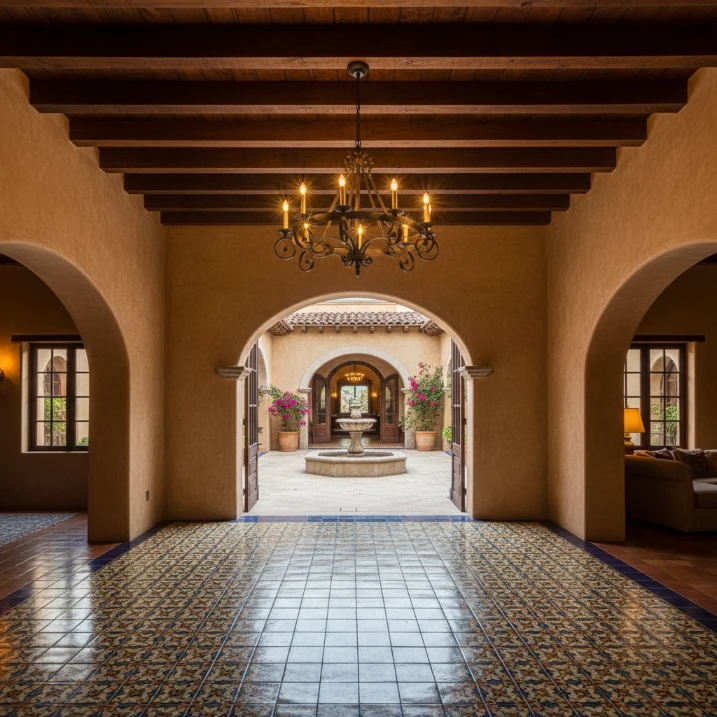
A Spanish hacienda-inspired home where massive exposed dark wood ceiling beams, hand-painted Talavera ceramic tile floors in vibrant geometric and floral patterns, and thick plastered walls of genuine architectural substance create interior spaces of such sensory richness, material warmth, and historical depth that every room feels like a discovery of extraordinary domestic beauty that rewards extended occupation and close material examination rather than a space designed primarily for photographic effect or architectural display. The hacienda typology, developed across three centuries of Spanish colonial building in Mexico and the American Southwest, represents one of the most successful and beautiful solutions to the challenge of creating comfortable, beautiful, and climatically appropriate domestic space in hot, sunny landscapes that has ever been achieved in residential architecture.
Talavera ceramic tile flooring in the hacienda home creates a floor surface of such brilliant color, artistic complexity, and cultural depth that it constitutes one of the most beautiful and historically significant material choices available in residential architecture, each hand-painted tile a unique work of ceramic art produced in the workshops of Puebla, Mexico or Talavera de la Reina, Spain using techniques and pigment formulas refined across five centuries of continuous production. The specific patterns most associated with authentic Talavera work, geometric borders framing central floral medallions in cobalt blue, terracotta, yellow, and green on a white ground, create floor compositions of extraordinary visual richness when installed in large areas where the complete pattern repeat can develop its full decorative splendor across the generous floor planes that hacienda architecture’s generous room proportions provide.
8. Walled Garden Home with Rose-Covered Pergola and Stone Fountain
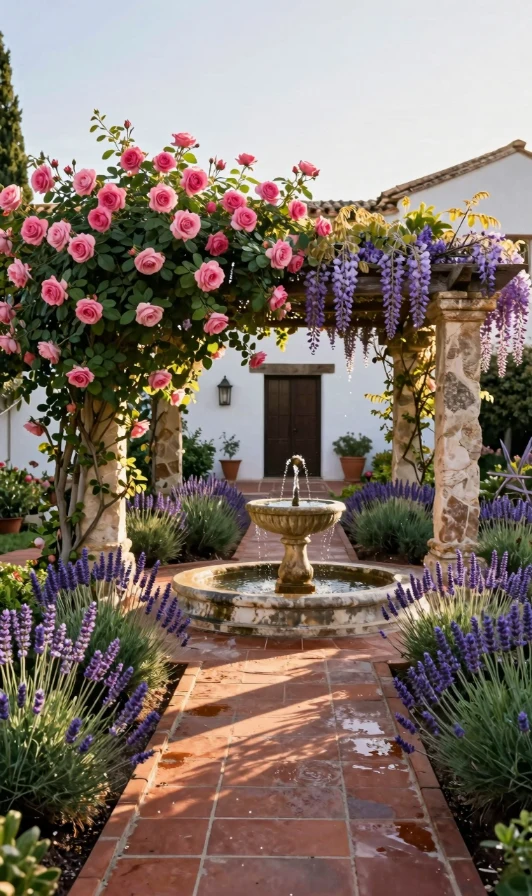
A Spanish Mediterranean home enclosed within high garden walls with a rose-covered stone pergola and ancient stone fountain at the garden’s heart creates a residential experience of such complete, enclosed beauty and sensory abundance that every moment spent within the garden walls feels genuinely removed from the pace and pressure of the world beyond them, the walls functioning not merely as property boundaries but as the defining architectural gesture that creates the most essential quality of the best Spanish Mediterranean gardens, which is the extraordinary contrast between the arid, sun-exposed landscape beyond and the lush, shaded, water-cooled paradise within. The garden wall is the gift of privacy and the promise of beauty.
The stone fountain at the garden’s center, its water trickling from a wall-mounted lion’s head or carved stone basin into a shallow circular pool below, provides both the visual focal point around which the garden’s planting composition is organized and the acoustic element that most powerfully transforms the garden’s atmosphere from a beautiful outdoor space into a genuinely restorative sanctuary. The specific sound of moving water in a garden, neither the dramatic force of a large fountain nor the complete silence of a still pool but the gentle, intimate trickle of modest water movement, has been recognized across Mediterranean garden traditions from ancient Rome through Moorish Spain to contemporary landscape design as the single most effective tool for creating the particular quality of calm, enclosed serenity that distinguishes a garden of genuine therapeutic power from one of merely visual beauty.
9. Tower House with Panoramic Roof Terrace and Bell Tower
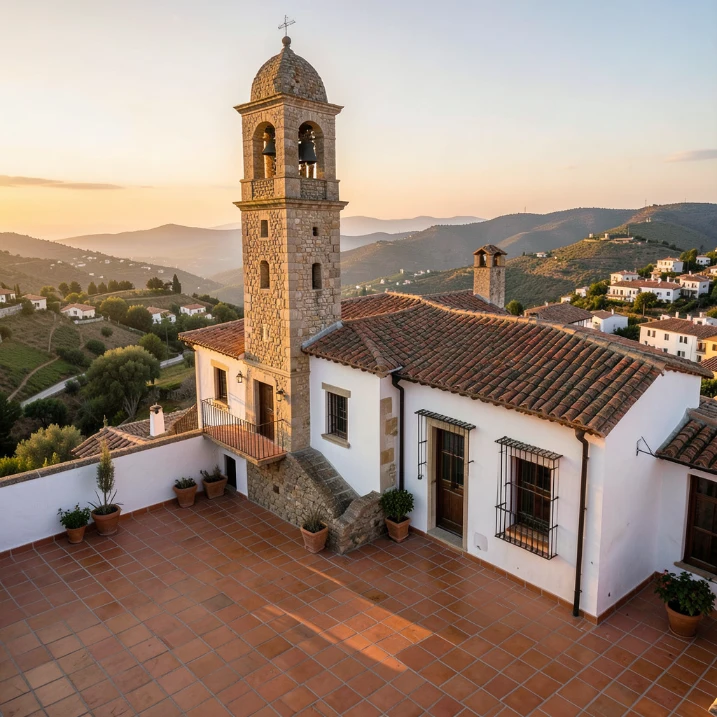
A Spanish Mediterranean tower house with a genuine stone bell tower rising above the main residential structure creates a residential silhouette of such romantic, picturesque drama and medieval architectural character that it commands the landscape with the confident authority of a building that has always occupied its site and intends to remain for centuries more, its vertical presence visible from great distances and its rooftop terrace offering the most expansive panoramic views available in the landscape to the family fortunate enough to occupy the rooms within its substantial walls. Tower houses represent one of the oldest continuous residential building traditions in Mediterranean Europe, their origins in medieval defensive architecture giving them an inherent sense of permanence and historical depth that no quantity of decorative detail applied to a conventional residential structure can replicate.
The panoramic roof terrace accessible from the tower’s upper level provides an outdoor room of extraordinary spatial drama and sensory richness, its position at significant height above the surrounding landscape creating a quality of elevated openness and visual command that ground-level terraces cannot approximate regardless of their design beauty or material quality. Furnish the roof terrace with simple, durable outdoor furniture appropriate to the elevated exposure, a stone or ceramic outdoor dining table with matching chairs, a low daybed or chaise for afternoon reading and rest, and simple terracotta pots of drought-tolerant herbs and flowering plants that bring botanical softness to the hard stone surfaces without requiring irrigation systems incompatible with a rooftop location. Install wrought iron railings around the terrace perimeter in a simple vertical bar pattern that frames the views without obstruction while providing appropriate safety boundaries for all users of this elevated outdoor space.
10. Desert Modern Spanish Home with Cactus Garden and Rammed Earth Walls
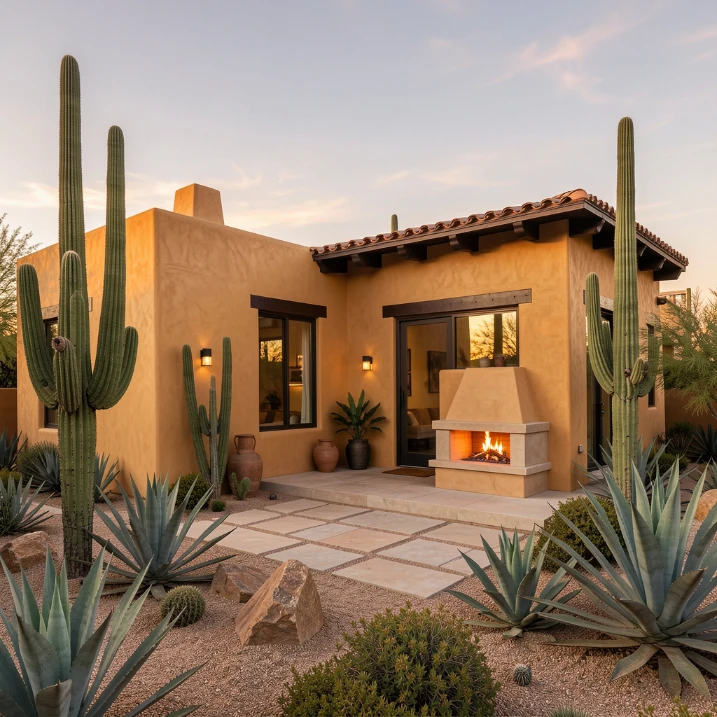
A desert-adapted Spanish Mediterranean home with rammed earth textured exterior walls in warm ochre and sand tones surrounded by a dramatic cactus and succulent garden creates a residential architecture of such extraordinary landscape integration and cultural synthesis that it represents the most successful contemporary fusion of Spanish colonial building traditions with the indigenous desert building techniques of the American Southwest, creating something genuinely new from two extraordinarily rich architectural inheritances rather than simply imitating either tradition without understanding the environmental logic and material wisdom embedded within each. The rammed earth walls share their geological color and texture vocabulary with the desert landscape they emerge from, making the home appear to have been excavated from the ground rather than constructed upon it.
The cactus and succulent landscape surrounding a desert Spanish Mediterranean home creates a planting composition of such sculptural drama, architectural presence, and ecological authenticity that it constitutes a genuine outdoor room of living architecture rather than merely a decorative garden in the conventional sense. Tall saguaro cacti at 20 to 40 feet height provide the vertical elements that balance the home’s horizontal mass, their anthropomorphic forms and dramatically ribbed surfaces creating living sculptures of extraordinary individual character that take decades to develop and are irreplaceable once established. Agave species in blue-gray and warm yellow-green tones provide the middle ground of the composition with their architectural rosette forms, while lower sedums, aloes, and prickly pear cacti complete the ground plane with a textural carpet of botanical diversity that supports local wildlife while requiring essentially zero irrigation once properly established in the appropriate desert climate.
11. Tuscan-Influenced Spanish Home with Vineyard Landscape
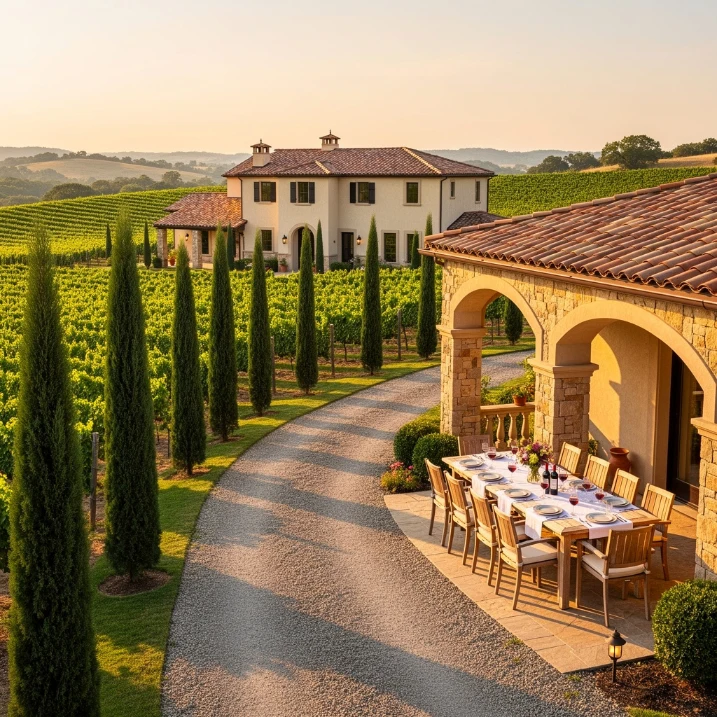
A Spanish Mediterranean home with Tuscan architectural influences set within a working vineyard landscape creates the most romantically complete and aspirationally beloved residential vision available in contemporary luxury home culture, combining the warm material beauty of Mediterranean building traditions with the agricultural abundance and seasonal drama of the wine-producing landscape that has defined the most admired and most photographed residential environments of southern Europe for generations of design enthusiasts, travel photographers, and lifestyle magazine editors who have established the vineyard estate as the single most universally desired residential setting in the contemporary Western imagination. The vine rows stretching to the horizon are both functional agriculture and extraordinary landscape design.
The stone loggia, a covered outdoor room open on one or more sides to the vineyard view, is the architectural element that most completely embodies the Mediterranean philosophy of indoor-outdoor living that defines the residential experience of the best homes in this tradition. Set with a long farm table for outdoor dining beneath the vine-covered pergola roof, the loggia becomes the room where the most memorable meals and most cherished family conversations occur across the warm months of the year, its position at the boundary between the cultivated domestic interior and the productive agricultural landscape beyond creating a spatial experience of profound connectedness to the natural and agricultural cycles of the specific place that no purely interior room can replicate regardless of how beautifully it is designed or how luxuriously it is furnished.
12. Seaside Retreat with Blue Mosaic Pool and Whitewashed Terraces
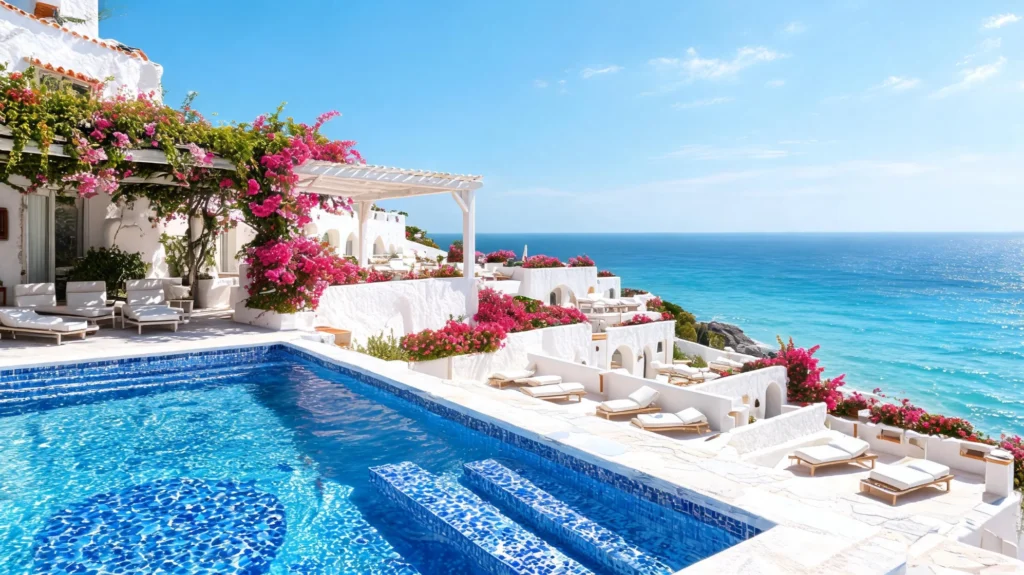
A Spanish Mediterranean seaside retreat with a cobalt blue mosaic-tiled swimming pool and multiple whitewashed terrace levels descending in cascading progression toward the ocean creates a residential landscape composition of such extraordinary visual drama and sensory completeness that it represents the absolute pinnacle of Mediterranean outdoor living design, every terrace level offering a different elevated perspective on the sea while the intensely colored pool at one level provides an aquatic focal point of vibrant blue that visually connects the architecture to the ocean it overlooks in a deliberate chromatic dialogue of extraordinary beauty. The cobalt blue mosaic tile, its small handmade pieces creating a richly textured surface that catches and fragments light in constantly shifting patterns, is the jewel of the composition.
The design of multiple terrace levels on a Mediterranean seaside site requires the same careful attention to retaining wall construction, drainage engineering, and plant material selection that produces genuinely beautiful and practically functional results rather than the visual ambition without technical resolution that characterizes less thoroughly considered terraced landscape projects. Natural stone retaining walls in the local geological material create the most beautiful and site-authentic terrace boundaries, their texture and color harmonizing naturally with both the whitewashed architecture above and the natural rocky landscape below. Plant each terrace generously with Mediterranean species appropriate to the coastal salt exposure and water availability of the specific site, using bougainvillea, plumbago, rosemary, lavender, and drought-tolerant ornamental grasses to create a planting composition of genuine botanical beauty that thrives in the specific conditions rather than struggling against them with constant supplemental care and intervention.
13. Adobe Ranch with Saltillo Tile Floors and Exposed Vigas
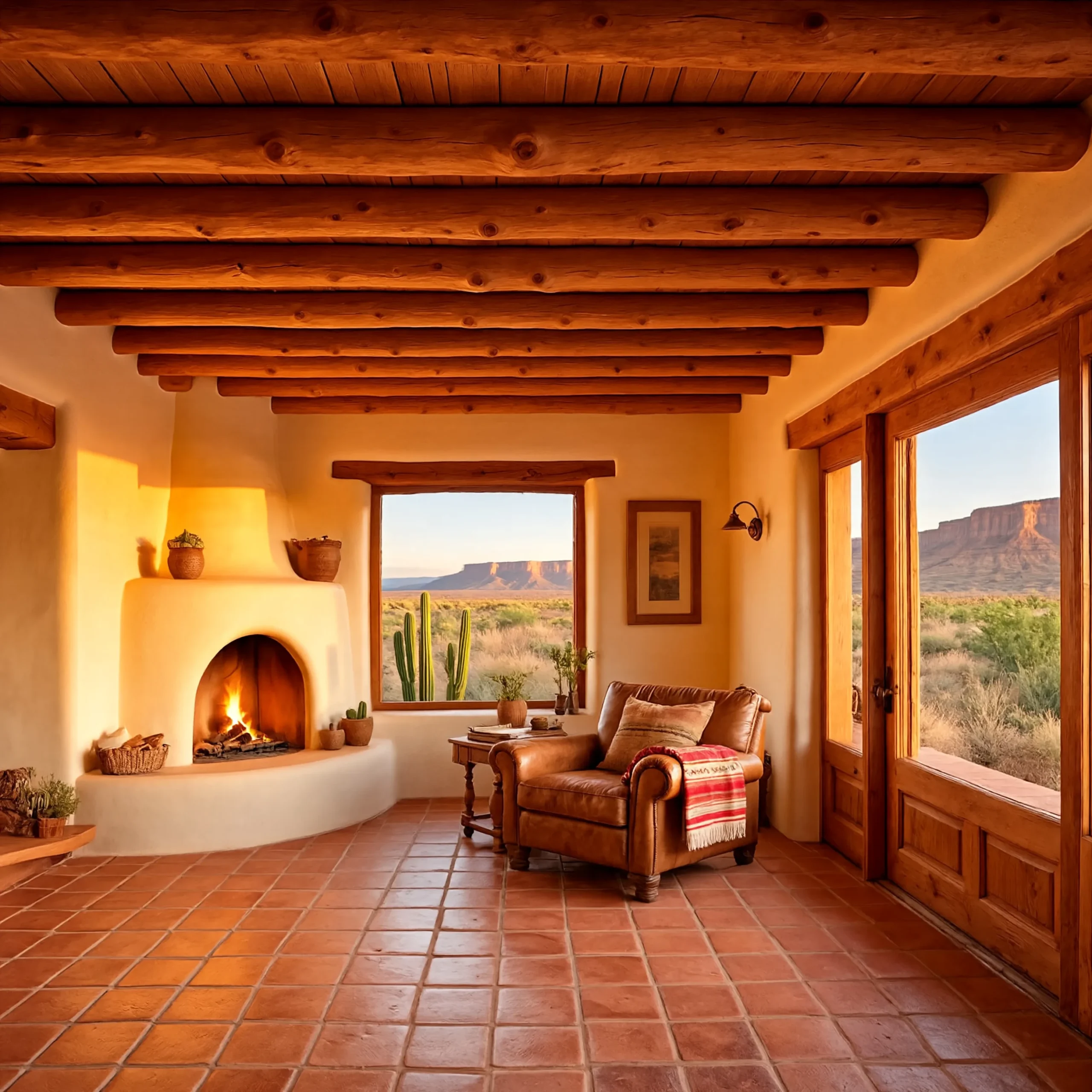
An adobe ranch home with authentic saltillo tile floors, exposed viga ceiling beams, and the thick, thermally massive walls of genuine adobe or rammed earth construction creates a residential interior of such profound warmth, material authenticity, and culturally specific beauty that it represents the most complete American expression of the Spanish colonial building tradition, a tradition brought to the American Southwest by Spanish missionaries and colonists in the sixteenth and seventeenth centuries and refined across four centuries of continuous building practice into the specific regional architecture that defines the most beautiful domestic spaces of New Mexico, Arizona, and southern California. Every material in this home tells a story of cultural synthesis and environmental intelligence.
Saltillo tile floors, hand-made from unglazed terracotta clay in the Mexican town of Saltillo using production methods essentially unchanged across centuries of continuous manufacture, create the most historically authentic and visually beautiful floor surface available for Spanish colonial interiors, their warm orange-red tones varying naturally between individual tiles in a way that gives large floor areas a living, organic quality that machine-made ceramic tiles of identical dimensions and perfectly consistent color cannot approximate. The natural variation in saltillo tile color and surface texture results from the handmade production process and wood-fired kiln conditions that produce slightly different results for each batch of tiles, making every saltillo floor genuinely unique. Seal saltillo tile with a penetrating sealer followed by a topcoat of traditional Mexican carnuba wax for the most authentic finish that enriches the tile’s natural warm color while providing adequate surface protection for daily residential use.
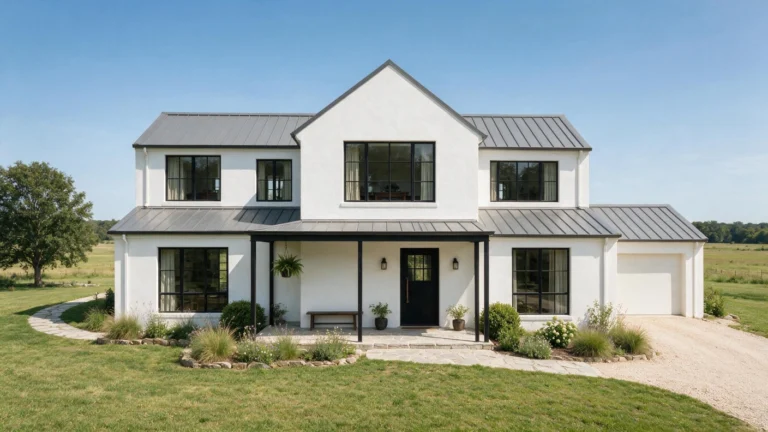
14. Modern Spanish Farmhouse with Steel Windows and Olive Grove
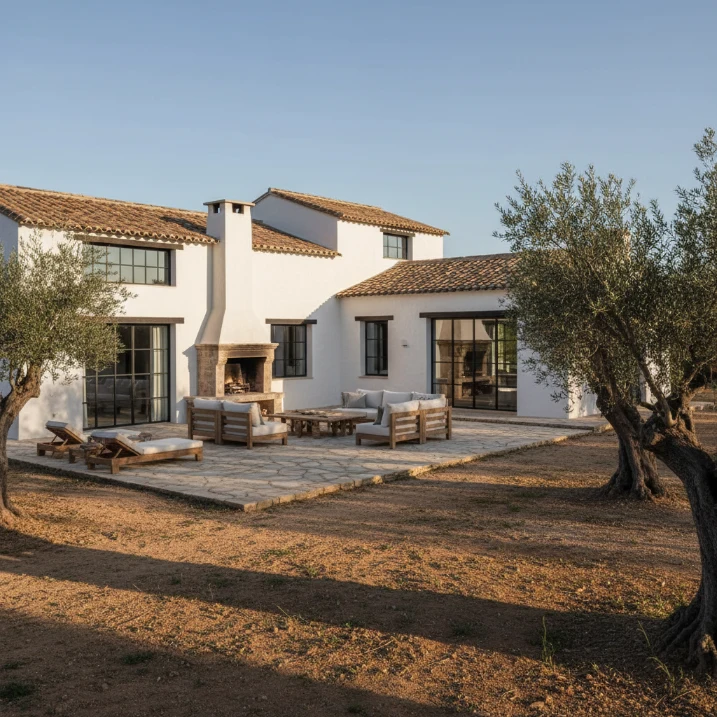
A modern Spanish farmhouse combining thick white stucco walls and traditional terracotta tile with large black steel-framed windows of contemporary design and an ancient surrounding olive grove creates a residential architecture of such beautifully resolved tension between historical tradition and contemporary innovation that it immediately establishes itself as a home of genuine intellectual design ambition and confident aesthetic vision, neither purely traditional in its replication of historical forms nor aggressively contemporary in its rejection of the place and cultural tradition from which it draws its essential character. This is architecture that knows exactly where it comes from and where it wants to go simultaneously.
The ancient olive grove surrounding the modern Spanish farmhouse is not merely landscape but a complete environmental context of extraordinary historical depth and sensory richness that transforms the home from a building on a site into a building within a living landscape of considerable age, agricultural significance, and year-round biological activity. Ancient olive trees, some specimens in southern Spain exceeding 1000 years of age, create a grove canopy of silver-green light filtered through millions of small reflective leaves that produces an atmospheric quality of diffused, gently shifting illumination unique to olive grove environments and quite unlike any other landscape type in the Mediterranean world. Position the main living terrace beneath the oldest and most magnificent olive trees in the grove to take maximum advantage of their natural canopy shade, their extraordinary visual character, and the meditative quality of sitting beneath a tree that has been growing in this specific place longer than any human institution currently operating in the world.
15. Luxury Spanish Villa with Indoor-Outdoor Living and Glass Walls
A luxury Spanish Mediterranean villa with full-height sliding glass walls that open completely to dissolve the boundary between the main living space and the outdoor terrace and pool creates a residential spatial experience of such extraordinary openness, light quality, and indoor-outdoor integration that it represents the most contemporary and architecturally ambitious development of the Mediterranean living tradition, using modern structural engineering and glass technology to achieve what the original tradition always aspired to through loggias, courtyards, and deep covered terraces, which is the complete integration of domestic life with the outdoor climate, landscape, and light of the Mediterranean environment in a way that makes the distinction between inside and outside genuinely irrelevant during the long warm months of the Mediterranean year.
The seamless visual and physical flow between the furnished interior living space and the outdoor terrace, pool, and garden that full-height glass wall systems create requires careful attention to the continuity of floor material across the threshold to be fully successful in its spatial ambition, as a change in floor material at the glass wall line reintroduces the indoor-outdoor distinction that the glass wall itself eliminates. Use the same large-format stone, terracotta, or concrete tile both inside and outside the glass wall line, extending the interior floor surface continuously across the threshold and several meters onto the exterior terrace surface before transitioning to a different outdoor material further from the building. This continuous floor plane creates the visual impression of a single unified floor extending from the inner wall of the room to the edge of the terrace and pool beyond, making the room feel as though it occupies not just the enclosed floor area but the complete terrace and garden landscape visible through and beyond the open glass walls.
16. Cliffside Spanish Retreat with Natural Stone and Sea-View Plunge Pool
A cliffside Spanish Mediterranean retreat built from the natural stone of the cliff itself, its horizontal masonry courses following the geological layering of the coastal rock formation it emerges from, with a small private plunge pool cantilevered dramatically over the cliff edge above a sheer drop to the turquoise sea far below, creates perhaps the single most dramatically positioned and architecturally audacious residential vision available in the complete Mediterranean architectural tradition, a home that does not merely occupy a spectacular site but becomes part of it in a relationship of such complete material and geological integration that the boundary between natural cliff and constructed dwelling is genuinely and permanently ambiguous. This is architecture as the most adventurous form of site-specific sculpture.
The cantilevered plunge pool at the cliff edge achieves a spatial drama and emotional intensity that no conventionally positioned pool of any size or design quality can replicate, its position at the literal edge of the earth creating a swimming experience of such extraordinary sensory context that immersion in its waters while looking out over the open sea hundreds of feet below produces a sensation of floating between earth and water, between the solid geological permanence of the cliff and the infinite fluid motion of the Mediterranean that has been eroding and sculpting this coastline for millions of years before any human settled beside it. The structural engineering required to safely cantilever a water-filled pool over a cliff edge requires a specialized structural engineer with specific experience in coastal geology and cantilevered concrete design, as the combination of water weight, wind loading, seismic forces, and coastal salt air corrosion creates a genuinely demanding structural challenge that rewards the investment in truly exceptional engineering expertise with a result of permanent, breathtaking architectural magnificence.