18 Dreamy Spanish Mediterranean Homes with Warm Coastal Charm
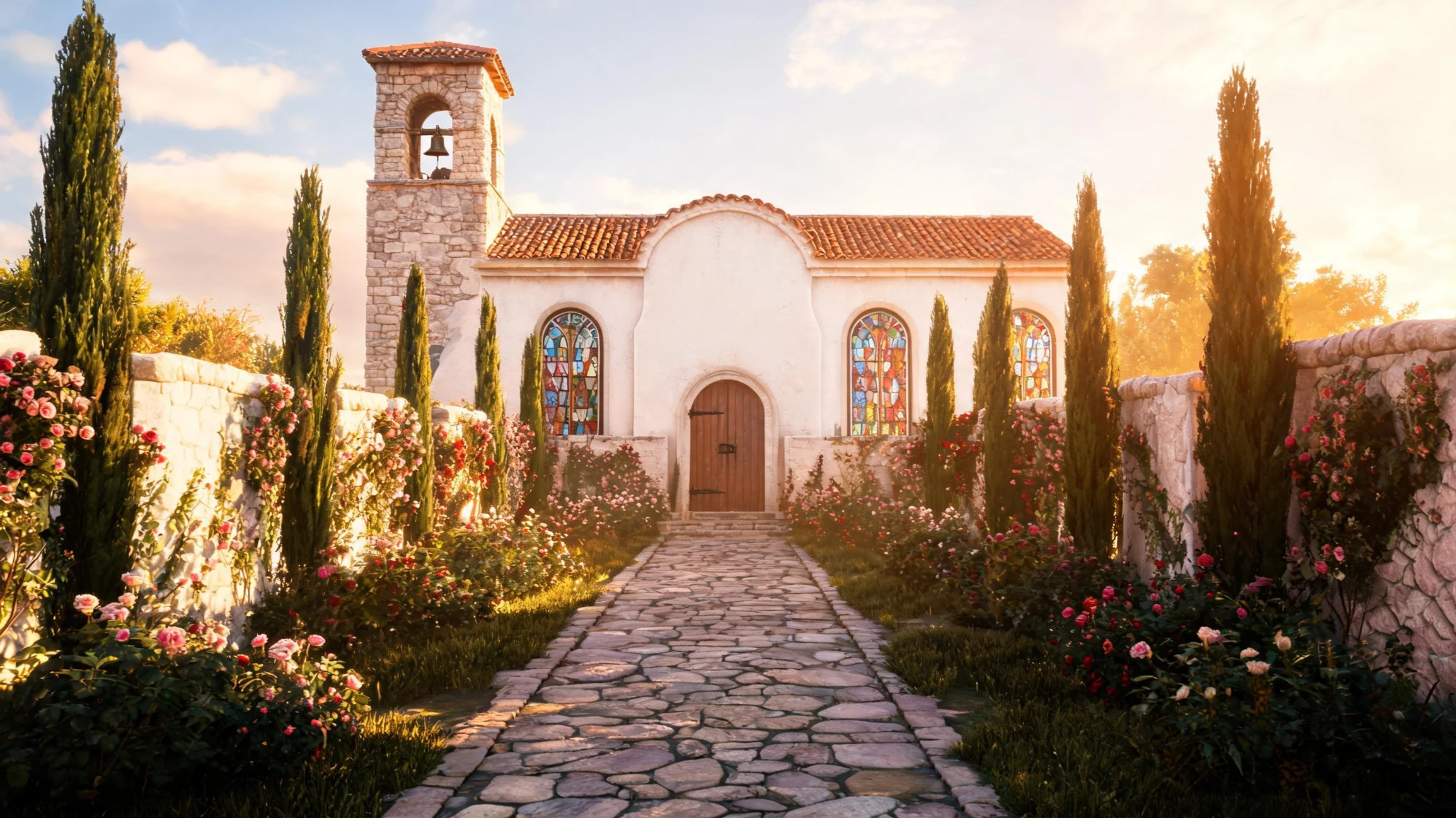
1. Bougainvillea-Draped Whitewashed Villa with Terracotta Courtyard
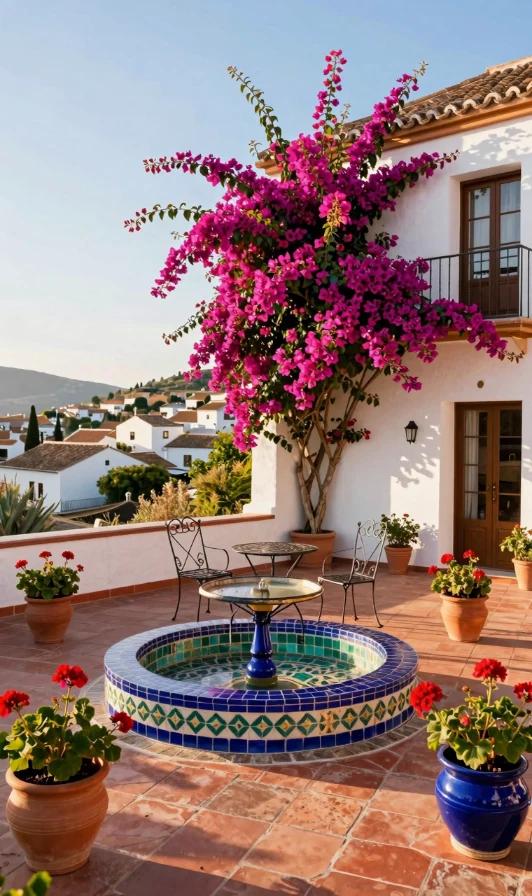
A whitewashed villa completely enveloped in the cascading magenta abundance of bougainvillea in full bloom creates the single most romantic and emotionally arresting image available in the entire vocabulary of Spanish Mediterranean residential architecture, the stark brilliant white of the lime-washed stucco walls providing the perfect luminous canvas against which the bougainvillea’s vivid bracts perform with the maximum possible chromatic intensity and visual exuberance that only a plant of such extraordinary flowering generosity can deliver. This is the home that exists most completely in the collective imagination of everyone who has ever dreamed of Mediterranean coastal living, its beauty so immediately recognizable and so universally resonant that encountering it in reality produces the particular pleasure of finding that something you have only ever seen in photographs is even more beautiful and more emotionally moving in person than any image could prepare you for.
The terracotta-tiled courtyard enclosed within the villa’s arms creates the private outdoor room that is the social and spiritual heart of traditional Andalusian domestic life, its mosaic fountain providing the gentle water sound that transforms enclosed outdoor space from a merely pleasant garden into a genuinely restorative sanctuary of coolness, beauty, and sensory calm in the hot Mediterranean afternoon. Arrange the courtyard with the casual, accumulated character of genuine long occupation rather than the deliberate symmetry of formal garden design, allowing ceramic pots of varying sizes and ages to cluster organically near the fountain and along the arcade walls, their geraniums and herbs spilling over the rim with the untidy abundance of plants that receive consistent care and abundant sunlight rather than the restrained, controlled growth of formally pruned specimens. Wrought iron furniture in simple traditional forms, chairs with curved backs and woven rush seats, a small round table with a mosaic top, completes the courtyard with human-scaled furnishing of appropriate cultural authenticity and timeless practical charm.
2. Sunset-Facing Terrace Home with Citrus Grove and Clay Tile Roof
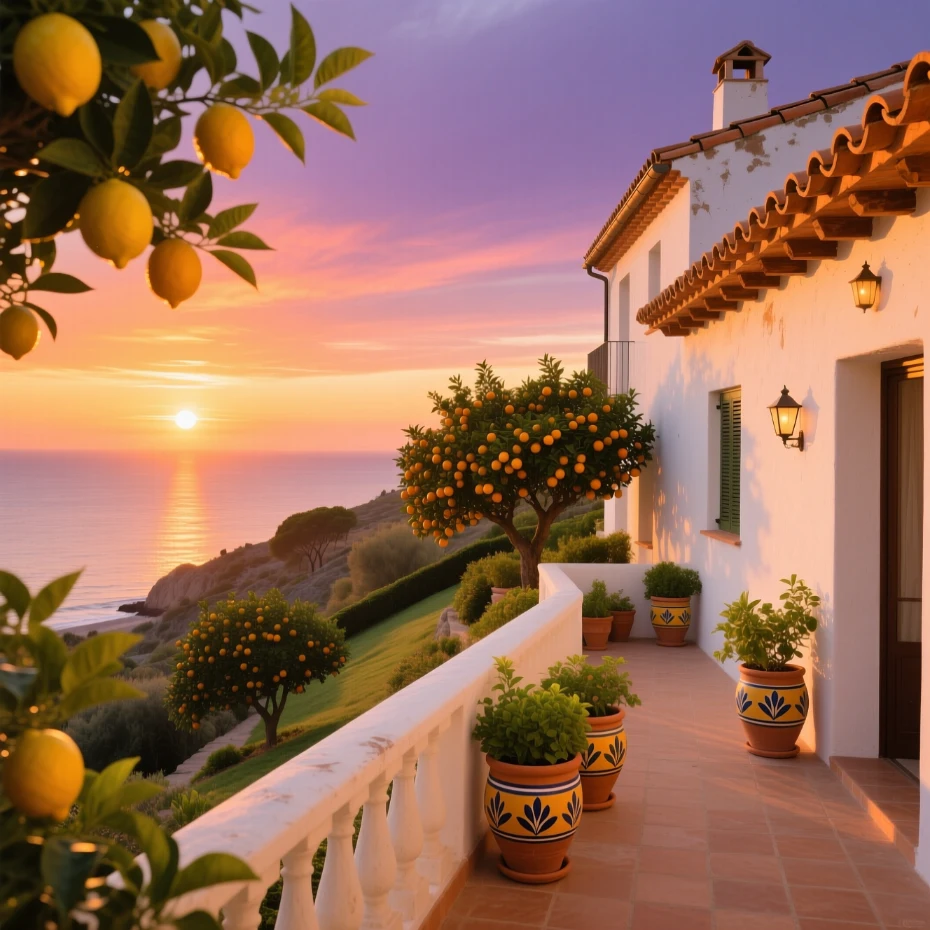
A Spanish Mediterranean home positioned with deliberate precision to face the western horizon, its wide terrace perfectly oriented for the daily ritual of watching the sun descend over the sea in a performance of color so extraordinary and so reliably beautiful that it transforms the simple act of sitting with a glass of wine at the end of the day into one of the most genuinely pleasurable and consciously appreciated experiences that residential architecture can organize and frame for its occupants, creates a home whose orientation is itself the primary design gesture from which all other architectural decisions logically and beautifully follow. The sunset-facing terrace is not merely an amenity but a philosophy of daily life made physical and permanent in stone and tile and mortar.
A mature citrus grove filling the garden below the sunset terrace adds a layer of sensory richness to the evening ritual that visual beauty alone cannot provide, the fragrance of orange blossom in spring and the warm citrus scent of ripening fruit through summer and autumn drifting upward to the terrace with every warm evening breeze in a continuous aromatic reminder of the extraordinary privilege of living in a landscape capable of producing such abundant, fragrant, productive beauty within the domestic garden. Lemon and bitter orange trees planted in the traditional Spanish patio garden arrangement, their whitewashed trunk bases and clipped canopies creating a formal yet generous grove composition visible from the terrace above, provide both the living landscape structure that gives the garden its character and the practical fruit harvest that connects the home to the agricultural traditions of Mediterranean coastal culture in the most direct and tangibly pleasurable way imaginable.
3. Pastel-Washed Fishing Village Home with Window Boxes and Blue Shutters
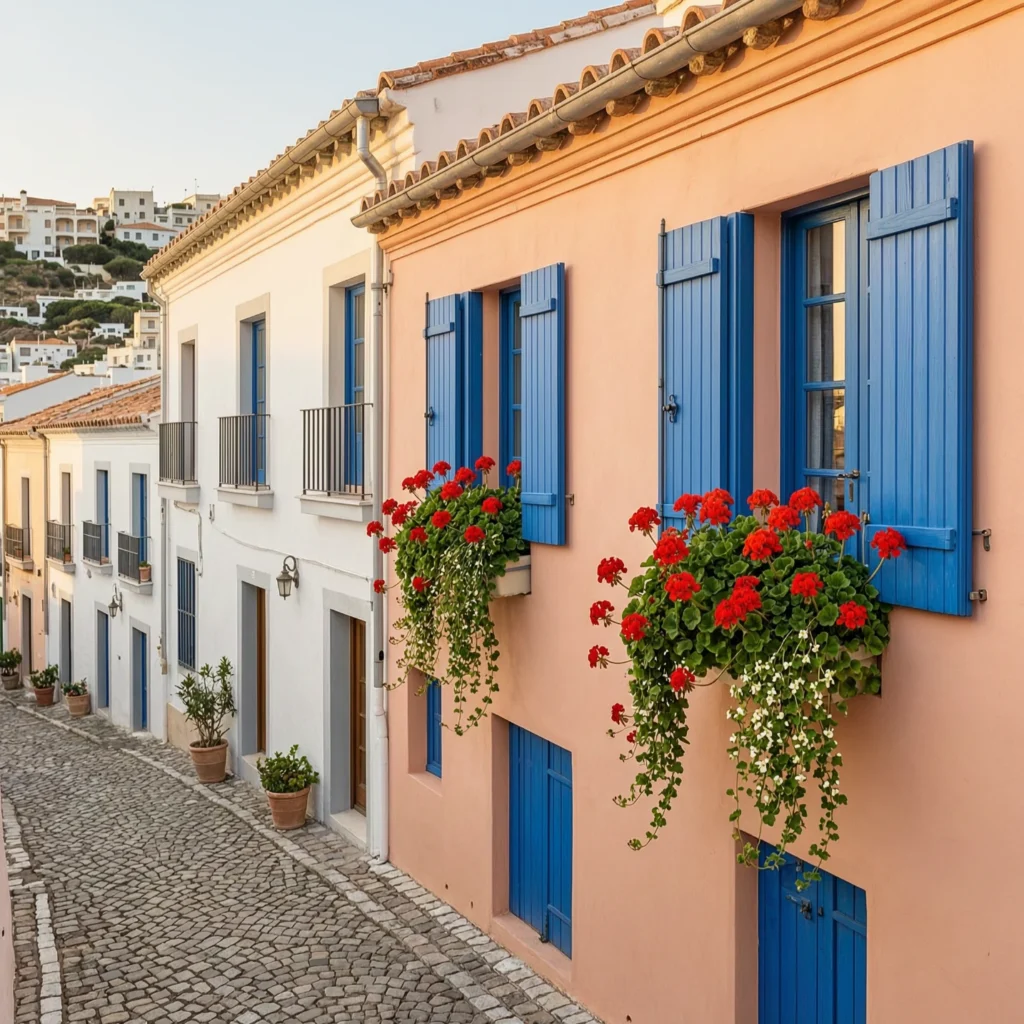
A Spanish Mediterranean fishing village home painted in a soft warm pastel, the particular coral-tinged peach or faded rose that appears on the oldest and most characterful buildings of Cadaques, Nerja, and the ancient coastal villages of the Costa Brava, creates a residential image of such gentle, accumulated beauty and genuine lived-in character that it communicates an entire way of life organized around simplicity, community, and the daily pleasures of coastal living with complete visual immediacy and emotional warmth. The pastel pigment, originally derived from local mineral earths mixed into lime wash and applied by hand in successive thin coats that built both color depth and weather resistance, develops a patina of extraordinary beauty over decades as the lime carbonates and the color deepens in sheltered areas while bleaching gently on the most sun-exposed surfaces.
Window boxes overflowing with red geraniums and trailing greenery are among the most beloved and most photographed details of Spanish coastal village architecture precisely because they are genuinely functional domestic objects, the simple practical result of residents wanting to grow flowers in the small spaces available to them in densely built village streets, rather than decorative elements designed for picturesque effect. Their casual, abundant, slightly untidy growth communicates the authentic domestic character that distinguishes a genuinely lived-in home from an architecturally perfect but emotionally cold building designed primarily for visual appreciation. Plant window boxes with the specific combination of deep red Pelargonium hortorum geraniums, trailing Lobularia maritima sweet alyssum in white, and the occasional cascading Dichondra silver falls that characterizes the most beautiful traditional Spanish window box compositions, the red blooms providing the vivid color accent against the pastel walls while the trailing elements soften and animate the rigid geometry of the box itself.
4. Arched Loggia Home Overlooking Turquoise Cove
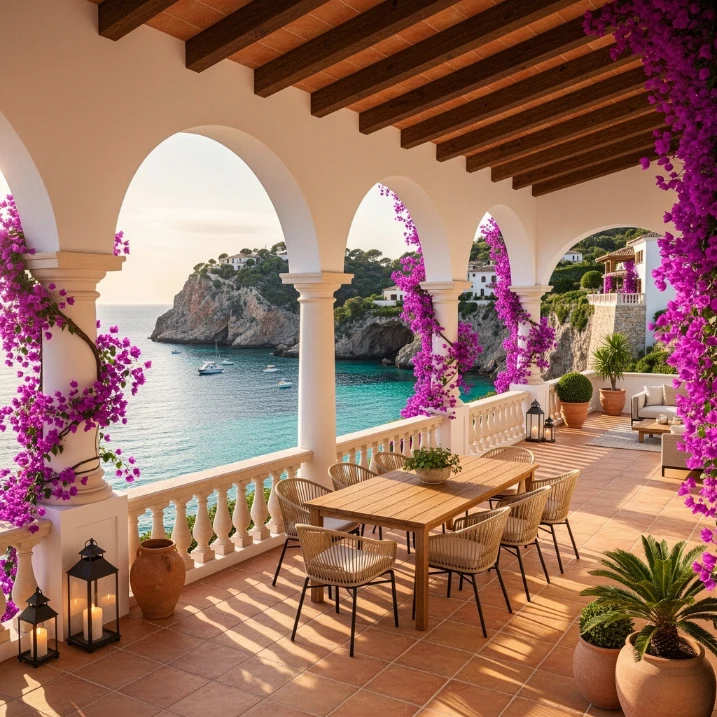
A Spanish Mediterranean home with elegant stone arched loggias at multiple levels looking directly over a private turquoise cove creates a residential experience of such concentrated, daily-renewed coastal magic that the distinction between living within a home and inhabiting a dream becomes genuinely unclear to anyone fortunate enough to spend extended time within its gracefully proportioned arched rooms open to the sea air, the sound of water below, and the continuously shifting spectacle of light on the turquoise surface of the cove that changes hour by hour from the silver-blue of early morning through the brilliant gem-like intensity of midday to the warm gold and rose of late afternoon and the deep violet of evening. Each level’s loggia offers a different elevation and therefore a different relationship with the water below.
The arched loggia at the primary living level, with its series of semicircular arches supported on elegant columns of carved local limestone or cream-painted stucco, creates the most perfect possible intermediate space between the cool, shaded interior and the brilliant sunlit exterior, a covered outdoor room open to the sea breeze and the view while sheltered from the direct overhead sun that makes unshaded terraces uncomfortably hot during the long summer midday hours in southern Mediterranean latitudes. This covered transitional space, furnished with a long dining table for outdoor meals and a collection of comfortable upholstered chairs arranged for conversation and view-watching, becomes the room where Mediterranean domestic life most completely expresses its distinctive character of gracious, unhurried pleasure in beautiful natural surroundings shared generously with family and friends across long afternoons and evenings of genuine leisurely contentment.
5. Garden Oasis Home with Jasmine-Covered Walls and Mosaic Pathways
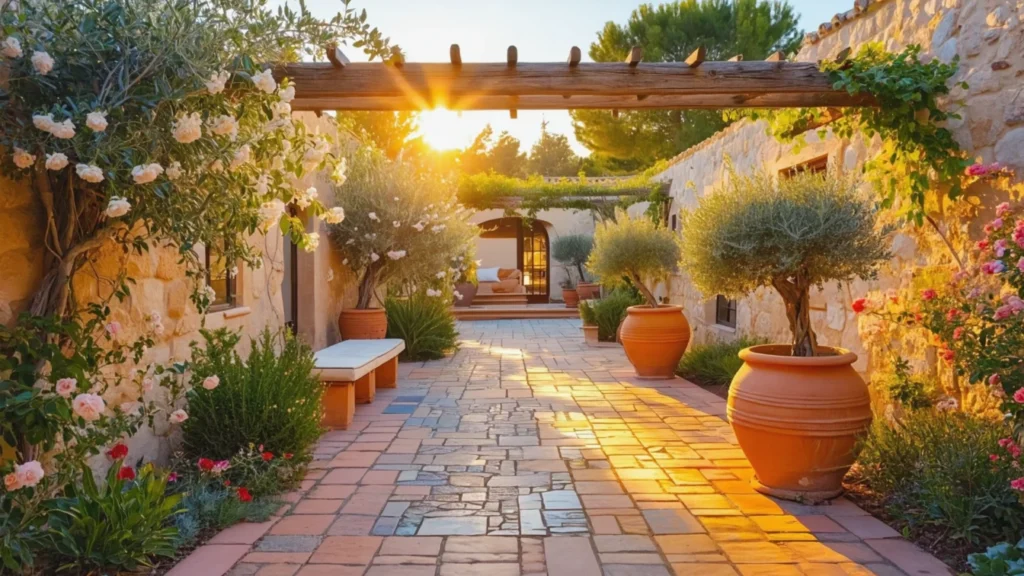
A Spanish Mediterranean home whose garden walls are completely clothed in the cascading white flowers and intoxicating fragrance of star jasmine in full summer bloom creates a domestic outdoor environment of such overwhelming sensory richness and romantic beauty that the garden itself becomes the home’s primary room, a fragrant, living outdoor space of genuine architectural quality and extraordinary daily pleasure that the enclosed interior rooms, however beautifully designed and furnished, cannot match in sensory completeness during the long warm months when outdoor living is both possible and genuinely superior to any indoor alternative the home can provide. The jasmine-covered wall is the garden’s most powerful element, combining visual beauty, fragrance, and the sense of abundant natural generosity that defines the most beautiful Mediterranean garden traditions.
Hand-laid mosaic tile pathways winding through the garden connect different garden rooms and planting areas with a decorative floor surface of such vibrant color and artisanal craftsmanship that the pathway itself becomes a destination rather than merely a functional route between places. Traditional Spanish mosaic tile work in cobalt blue, terracotta, cream, and emerald green arranged in geometric patterns derived from Moorish tilework traditions creates a garden floor of genuine cultural heritage and visual beauty that weathers gracefully with age, each broken tile edge and individual color variation becoming more characterful and beautiful with each passing season of use and weathering rather than deteriorating as less durable surface materials inevitably do with time and weather exposure. Terracotta urns of generous proportions planted with clipped olive trees, their formal topiary forms providing the architectural structure that prevents the lushly planted garden from appearing uncontrolled, complete the composition with a material weight and visual gravity that balances the delicate fragrance and cascading softness of the jasmine-covered walls above.
6. Seaside Farmhouse with Rustic Stone Exterior and Herb Garden
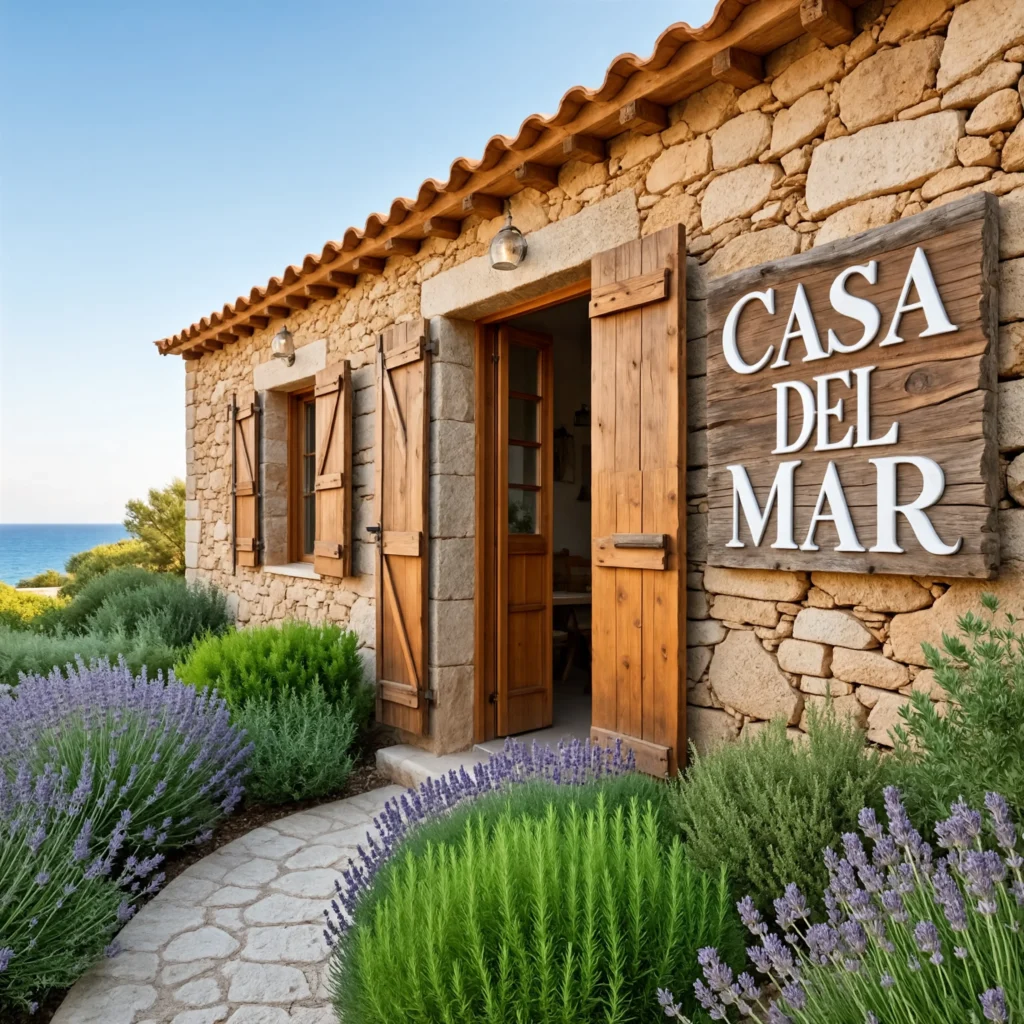
m the rough natural stone of the local landscape, its walls laid in the traditional dry stone or lime-mortared masonry technique that produces the warm, textured surface of irregular stones in varying sizes fitted together with the patient skill of a craftsman who understands that the beauty of natural stone construction lies entirely in the honest expression of material irregularity rather than the false perfection of machine-cut uniformity, creates a residential architecture of such genuine material authenticity and site-specific character that it appears not merely appropriate to its coastal Mediterranean setting but completely inevitable, as though the farmhouse could not exist anywhere else and would look wrong in any other landscape than the specific rocky, salt-aired, sun-bleached coastal terrain it has always occupied. This is architecture grown from place.
The abundant kitchen herb garden beside the farmhouse door, planted with rosemary, lavender, thyme, sage, marjoram, and the specific Mediterranean herbs that have grown in these gardens for as long as people have cooked with the ingredients of the coastal Mediterranean landscape, connects the home to the agricultural traditions of its region with a practicality and sensory richness that purely ornamental gardens cannot provide. The fragrance of sun-warmed rosemary bruised underfoot on the stone path to the front door, the lavender’s sweet heavy scent on warm afternoons, and the sharp freshness of freshly cut thyme in the kitchen create an olfactory environment of extraordinary sensory pleasure that makes arriving at and departing from the farmhouse a consistently pleasurable sensory experience throughout the growing season, the herbs’ fragrance marking the transition between the exposed coastal landscape beyond the garden and the warm, food-scented interior of the farmhouse kitchen within.
7. Blue and White Village Home with Rooftop Terrace and Sea View
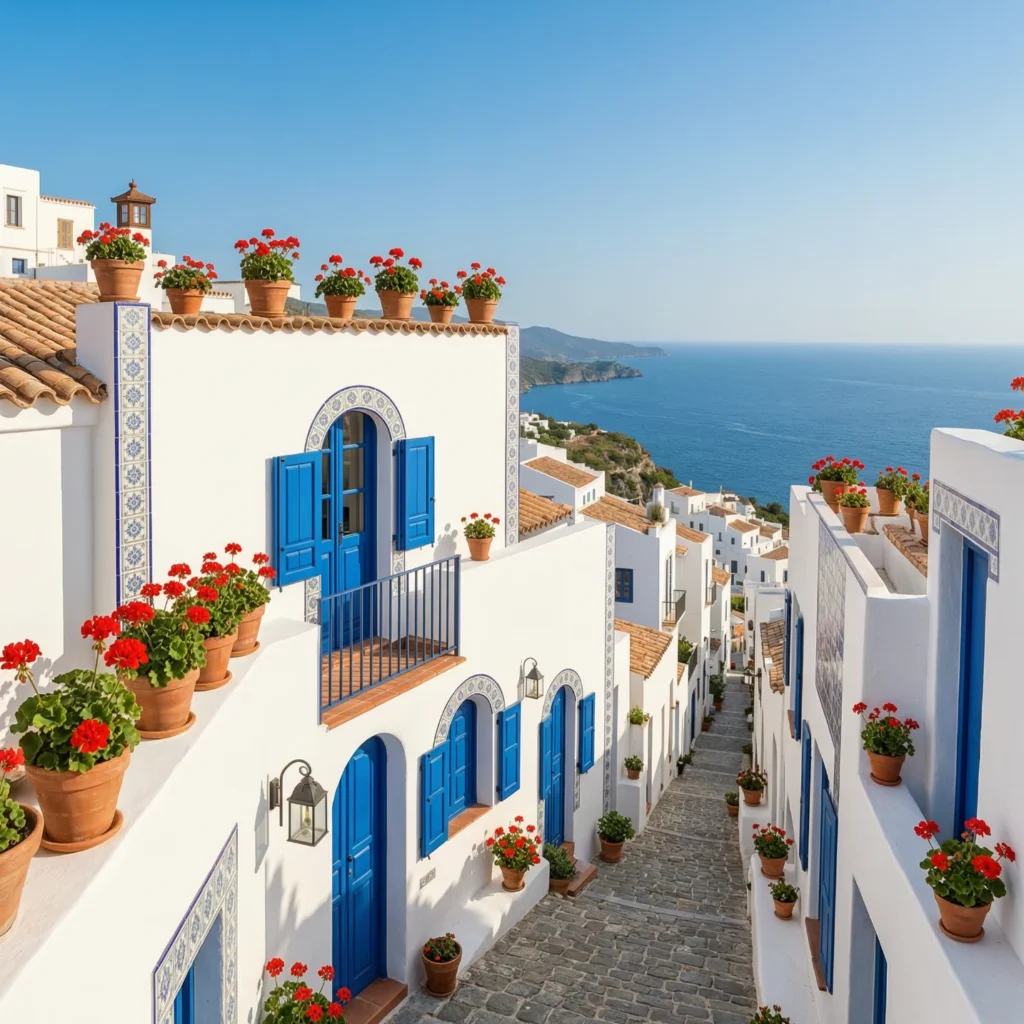
A Spanish Mediterranean village home painted in the iconic combination of brilliant white and deep cobalt blue with a rooftop terrace offering unobstructed panoramic views over the surrounding village rooftops and the sea beyond creates the most universally beloved and emotionally resonant image of Mediterranean coastal domestic life available in the complete architectural vocabulary of the region, its blue and white palette drawing from the specific chromatic tradition shared by the most admired coastal villages of Andalusia, the Balearic Islands, and the Cyclades in a color combination of such natural perfection and deep cultural resonance that it has defined the Mediterranean dream for the entire modern world. The rooftop terrace accessible by an exterior stair adds a layer of outdoor living possibility unique to the village home typology.
The rooftop terrace of a Spanish village home offers a quality of life quite different from and in many ways superior to the garden-level terraces of larger suburban and rural properties, its elevated position above the surrounding village roofscape providing a panoramic perspective on the daily life of the community below while its intimacy and enclosure within the parapet walls creates a private outdoor room of considerable charm and practical utility for everything from morning coffee to evening stargazing. Furnish the rooftop with simple durable materials appropriate to its exposed coastal location, whitewashed concrete benches built into the parapet wall surface, a collection of terracotta pots in graduated sizes planted with geraniums, herbs, and trailing plants that bring botanical softness to the hard roof surface, and a simple stretched canvas awning that provides afternoon shade without obstructing the precious sea views that make the rooftop terrace the most valuable room in the entire village home.
8. Romantic Pink Plaster Home with Wisteria Pergola and Stone Well
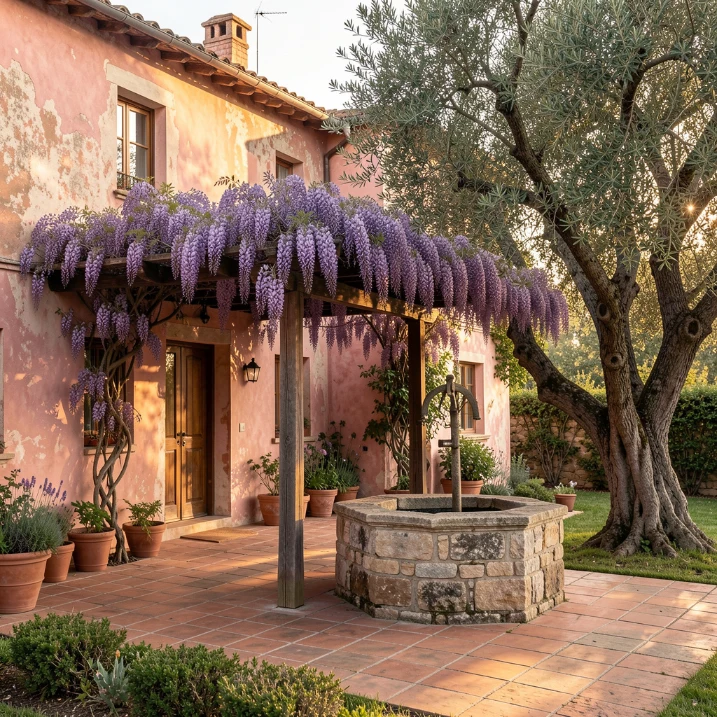
A Spanish Mediterranean home with aged pink plaster walls developing the beautiful, slightly irregular patina of authentic lime wash that has been renewed across many decades of patient maintenance creates an exterior surface of such accumulated visual beauty and genuine temporal depth that no newly constructed or freshly decorated building can replicate its particular quality of earned, unhurried loveliness regardless of how skillfully the materials are applied or how carefully the color is matched. The pink comes from the iron-rich local earth pigments traditionally mixed into lime wash throughout southern Spain, producing a warm rosy tone that ranges from the palest shell pink in the most sun-bleached areas to the deeper coral of sheltered wall surfaces that retain more original pigment density, creating a naturally varied color field of extraordinary subtle beauty across the complete facade.
Wisteria in full purple-blue bloom covering the entire wooden pergola over the terrace creates a flowering canopy of such breathtaking beauty and intoxicating fragrance that the two to three weeks of its peak flowering each spring become among the most cherished and most eagerly anticipated events of the domestic calendar, a seasonal spectacle of botanical magnificence that transforms the terrace from a pleasant outdoor room into a genuinely magical flowering bower of such concentrated loveliness that photographs taken during wisteria season consistently receive more admiring responses than images of the same space at any other time of year. The ancient stone well in the garden corner, its iron-railed winch mechanism still functional though no longer necessary for water supply, provides the most powerful single element of historical depth available in the Mediterranean garden, its presence suggesting centuries of continuous domestic occupation and the accumulated human stories of all the families who have drawn water from this specific well across the long history of the property.
9. Cliffside Home with Natural Rock Pool and Cascading Terraces
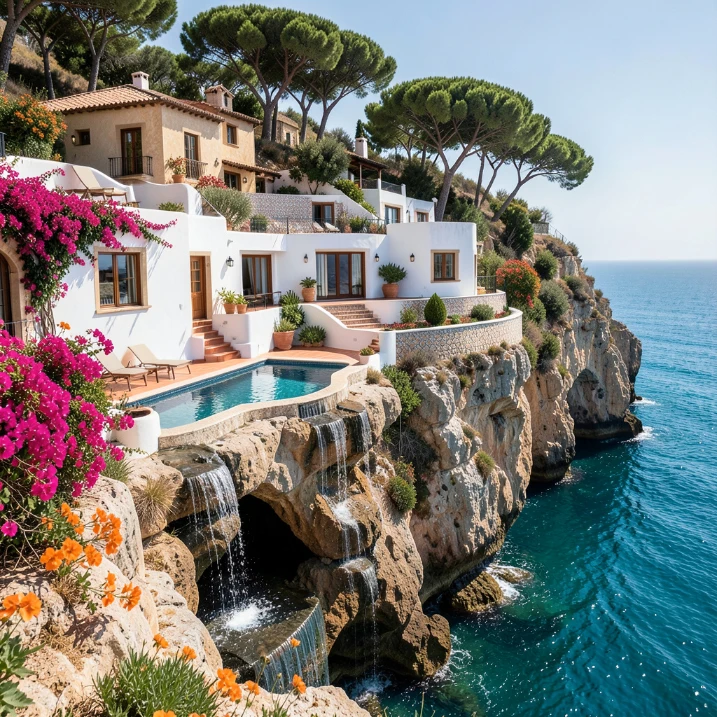
A Spanish Mediterranean cliffside home where a natural rock pool carved from the cliff formation itself provides swimming in a vessel of ancient geological beauty rather than a conventionally constructed concrete pool creates a residential experience of such extraordinary natural immersion and site-specific uniqueness that it achieves the ultimate aspiration of the most ambitious residential architecture, which is to create a home that could only exist in this precise location and whose most spectacular features are not the result of human design ingenuity alone but of a profound collaborative dialogue between architectural imagination and the specific natural gifts of an irreplaceable site. The natural rock pool is the ocean’s extension into the domestic realm rather than a domestic imitation of the ocean.
Cascading whitewashed terraces descending from the main residential level toward the sea in a series of stepped outdoor rooms, each with its own specific character, planting, and furnished purpose, create a complete outdoor living sequence that moves the occupant progressively from the cool shaded interior through increasingly sun-exposed and sea-adjacent spaces in a gradual transition that makes the act of walking down to swim in the natural rock pool feel like a ritual passage through a carefully designed sequence of outdoor architectural experiences rather than simply a functional route to a swimming facility. Plant each terrace level with species appropriate to its specific microclimate and sun exposure, with shade-tolerant ferns and climbing plants on the most sheltered upper terraces and increasingly drought-tolerant and salt-resistant Mediterranean natives on the lower terraces most directly exposed to the coastal wind, spray, and intense sun that characterize the cliff-edge environment.
10. Lantern-Lit Evening Terrace with Hand-Painted Azulejo Tiles
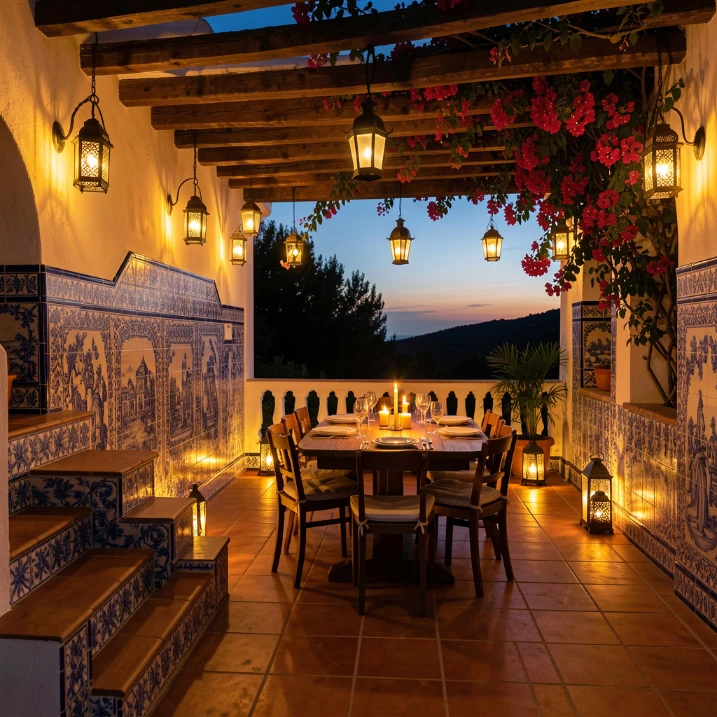
A Spanish Mediterranean terrace transformed by evening into a lantern-lit outdoor dining room of extraordinary warmth and intimacy, its walls decorated with hand-painted blue and white azulejo tile panels depicting the traditional botanical and geometric motifs of the Iberian ceramic tradition that stretches in continuous creative development from Moorish Al-Andalus through the great Portuguese and Spanish tile workshops of the sixteenth and seventeenth centuries to the contemporary ceramic artists who continue the tradition today, creates a domestic outdoor environment of such concentrated cultural beauty and sensory richness that dining within it on a warm summer evening becomes one of the most memorable and genuinely civilized pleasures that residential architecture at its most generous and most culturally informed is capable of providing. The tiles glow in the lantern light with a luminosity that daylight cannot reveal.
Hand-painted azulejo tile panels commissioned from contemporary ceramic artists working in the traditional hand-painting techniques of Seville, Lisbon, or Valencia are among the most significant and personally meaningful decorative investments available for a Spanish Mediterranean home, their combination of genuine cultural heritage, individual artistic expression, and permanent material beauty creating wall surfaces of extraordinary quality that improve the terrace’s character year after year rather than dating or declining in interest as more fashionable decorative approaches inevitably do. Commission panels that depict subjects of personal significance, the specific coastal landscape visible from the terrace, the botanical species growing in the garden, or scenes from the family’s life in the home, for the most meaningful and personally resonant azulejo installation that transforms generic decorative artistry into something permanently and specifically yours.
11. Hacienda Courtyard Home with Tiled Pool and Citrus Trees
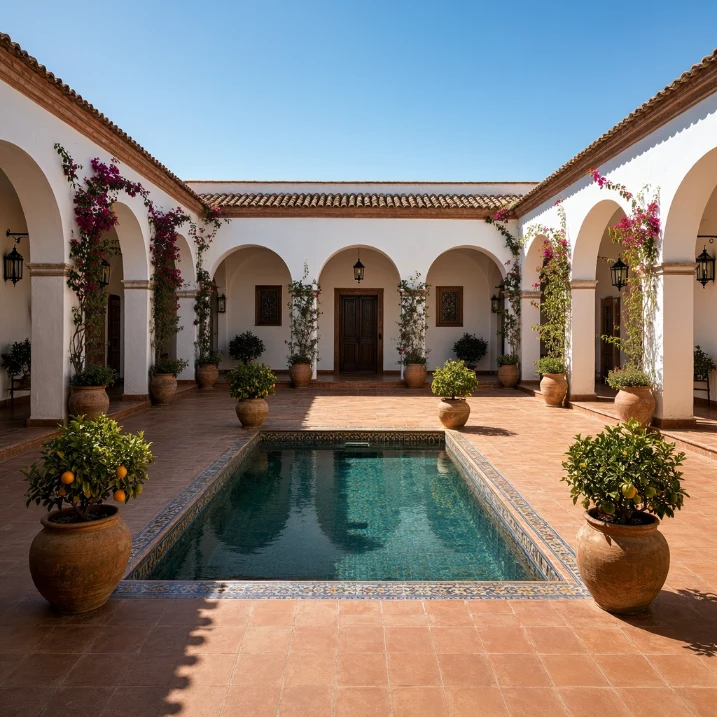
A Spanish hacienda home organized around a central courtyard where a square pool lined with hand-painted ceramic tiles in cobalt blue and white geometric patterns reflects the sky above and the arched arcades surrounding it on all four sides creates the most perfectly enclosed and self-contained residential outdoor world imaginable, a domestic universe complete within its own beautiful boundaries where the seasons are marked by the citrus trees’ cycles of flowering and fruiting rather than by changes in the visible landscape beyond the courtyard walls. The tiled pool, too shallow for lap swimming but perfectly proportioned for cooling dips and visual reflection, is the heart of the courtyard composition around which every other element is organized in deliberate and harmonious relationship.
Mature citrus trees in large terracotta pots arranged around the pool edge bring the agricultural abundance and fragrant seasonal flowering of the Mediterranean garden into the most intimate proximity with the home’s daily domestic life, their branches heavy with fruit reaching over the pool’s tiled edge and their white flowers perfuming the courtyard air during the extraordinary weeks of spring bloom with a fragrance of such pure Mediterranean intensity that it immediately and involuntarily evokes the specific sensory memory of the best coastal Spanish places in everyone who has experienced them. The terracotta pots themselves, in the largest sizes available from traditional Spanish pottery manufacturers in Impruneta clay or local Andalusian red clay, are objects of considerable decorative beauty in their own right, their warm orange-red surfaces developing an attractive mineral patina with age and outdoor exposure that makes the most beautiful pots in a mature courtyard garden among the most characterful and irreplaceable objects in the entire residential composition.
12. Whitewashed Chapel Home Conversion with Original Stone Bell Tower
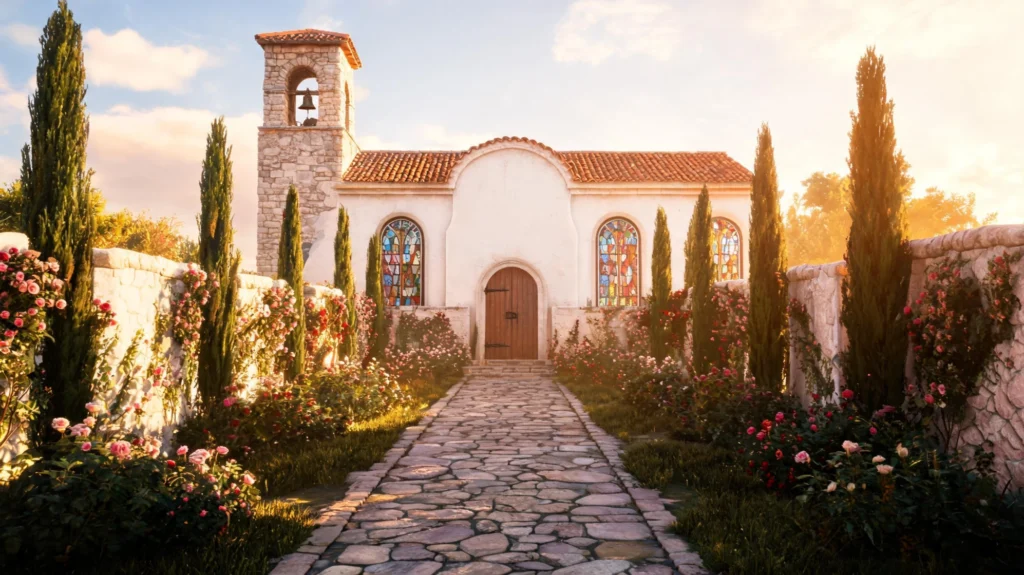
A Spanish Mediterranean home created through the sensitive conversion of a historic whitewashed chapel, its original stone bell tower preserved and integrated into the residential program as a library tower or observation room, and its arched stained glass windows retained as the extraordinary light-filtering elements they have always been, creates a home of such profound architectural character and irreplaceable historical depth that it occupies a category entirely its own among residential properties, combining the spatial qualities and material heritage of a sacred building with the warmth, comfort, and personal expression of a genuinely loved domestic interior in a creative dialogue between historic preservation and contemporary living that produces the most characterful and memorable homes available anywhere in the Mediterranean world. Sacred spaces, when lovingly domesticated, retain something of their original atmosphere.
The conversion of chapel into home requires the most delicate and respectful architectural approach available, one that preserves every significant historic element including original stone floor surfaces, carved architectural details, the bell tower structure, and any surviving painted or tiled interior decoration while adding the domestic amenities and spatial subdivisions that make the building genuinely livable as a private residence without compromising the spatial qualities and architectural character that make the historic building worth converting rather than demolishing and replacing with new construction. The original chapel nave, with its soaring ceiling height and generous proportions, typically becomes the home’s primary living space, its height and volume creating an interior room of extraordinary spatial drama and emotional power that no purpose-built residential living room of equivalent floor area can replicate in terms of architectural character and the specific quality of light that large arched windows at significant height provide.
13. Beachfront Bungalow with Hammock Garden and Outdoor Shower
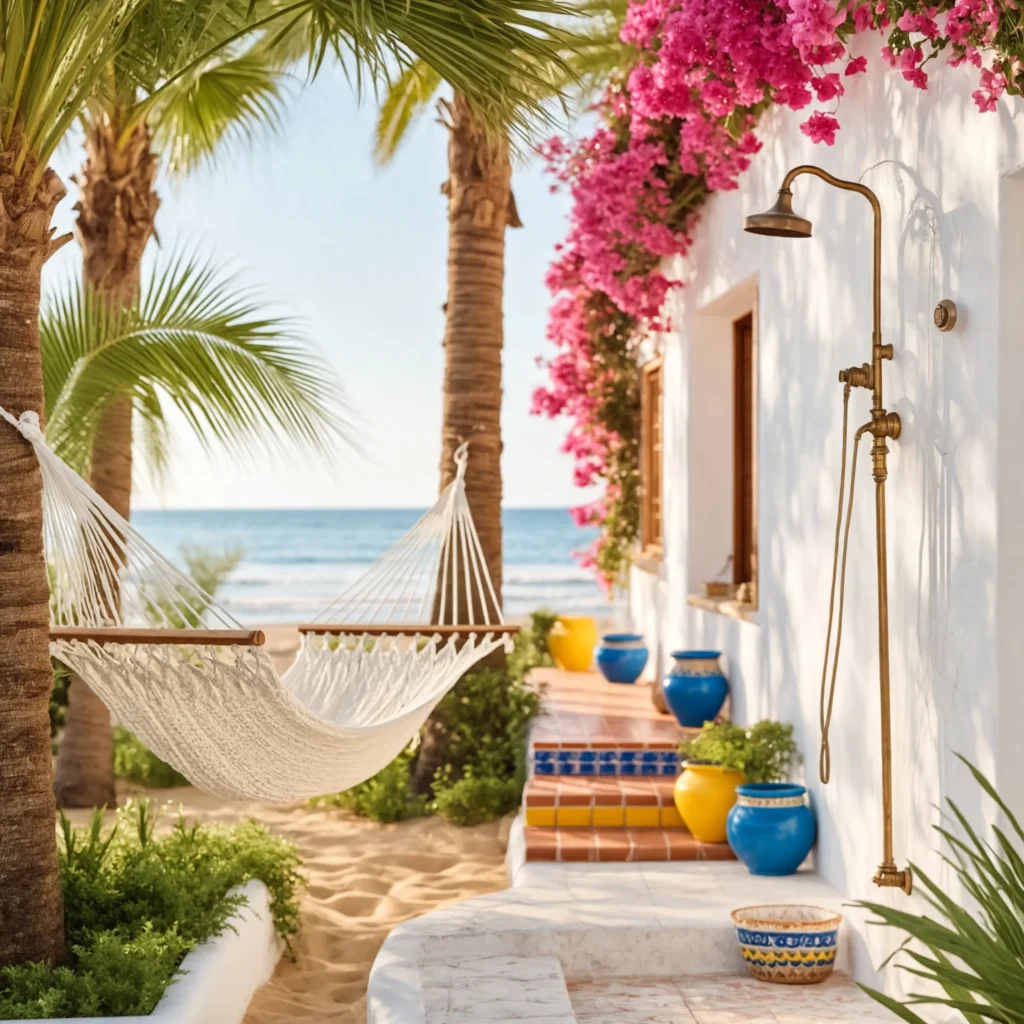
A Spanish Mediterranean beachfront bungalow where the terracotta-tiled terrace steps lead directly onto beach sand and a hammock strung between mature palm trees provides the most perfect possible afternoon rest station within direct earshot of breaking waves creates the most relaxed, unpretentious, and genuinely joyful expression of Mediterranean coastal domestic life, stripping the tradition’s characteristic beauty down to its most essential elements and allowing the simple pleasures of sun, sea, sand, and complete physical ease to constitute the primary residential amenity rather than architectural elaboration or decorative complexity. The hammock and the outdoor shower and the direct beach access are the amenities that matter most at a beachfront bungalow, and their generous provision communicates a philosophy of residential pleasure that prioritizes actual lived experience over the merely impressive appearance of a home designed primarily to be admired from the street.
The outdoor shower beside the bougainvillea-covered wall is among the most beloved and most practical features of any Mediterranean beach property, providing the functional necessity of rinsing salt and sand from skin and hair before entering the home while creating an outdoor bathing experience of genuine sensory pleasure in the warm Mediterranean climate where showering in the open air with the sound of the sea nearby and the warmth of the late afternoon sun on wet skin constitutes one of the most simple and completely satisfying daily rituals available in the entire catalog of coastal Mediterranean pleasures. Build the outdoor shower from materials consistent with the home’s architectural character, a simple terracotta tile floor, a rough-plastered or stone-clad wall, and a simple iron pipe fitting with a generously wide showerhead, and plant the surrounding wall generously with bougainvillea and jasmine that create a fragrant botanical screen of natural privacy and extraordinary beauty.
14. Ancient Olive Farm Conversion with Vaulted Ceilings and Stone Floors
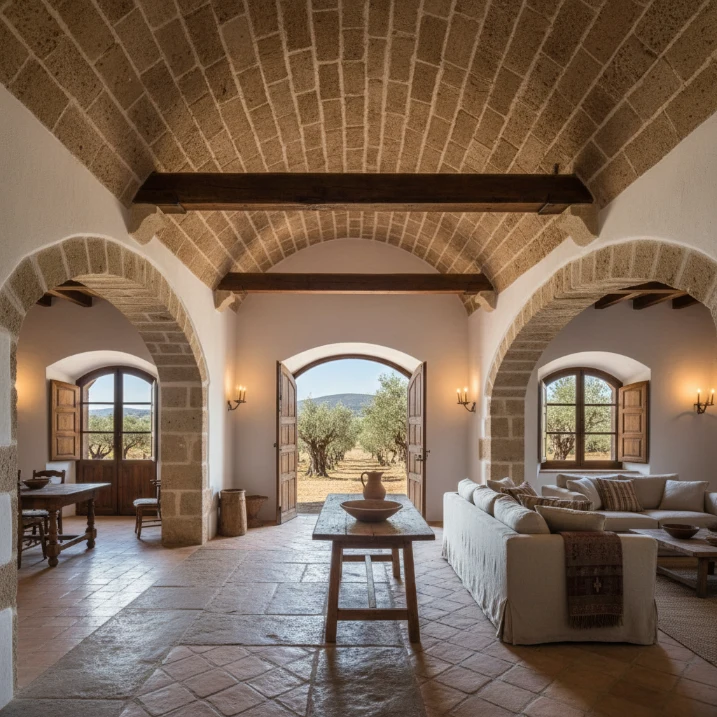
An ancient olive farm building converted into a Spanish Mediterranean home, its original vaulted stone ceilings and solid masonry walls of extraordinary thermal mass retained as the primary spatial and material character of the interior, creates a domestic environment of such genuine historical depth and architectural authenticity that the home feels less like a designed residential interior and more like a space that has been slowly revealed and inhabited over centuries, each room a discovery of original material beauty that patient restoration has uncovered and preserved rather than replaced with the smooth, standardized surfaces of new construction. The vaulted stone ceiling is the space’s most magnificent element, its curving stone surface gathering and reflecting both artificial and natural light with a quality unique to masonry vault construction.
The original terracotta and stone floors of an ancient Spanish farm building are among the most beautiful and historically significant floor surfaces available in residential architecture, their specific color, texture, and wear pattern the result of centuries of use and the accumulated patina of the specific clay, mineral, and stone materials of the region where the building was constructed. Restore rather than replace original floors wherever possible, using consolidating treatments that stabilize loose or crumbling tile surfaces without altering their appearance and careful sympathetic patching with reclaimed materials of matching age and provenance where damaged areas require filling. The irregularities and wear marks in ancient floors are not defects requiring correction but evidence of historical authenticity that gives the converted farm home its irreplaceable sense of temporal depth and genuine material character that new construction, however skillfully executed and whatever its budget, cannot provide by any other means than the passage of actual time.
15. Village Square Home with Wrought Iron Balconies and Flower Cascade
A Spanish Mediterranean village home facing the local square with ornate wrought iron balconies on every level, each one overflowing with cascading geraniums, petunias, and trailing plants in vivid reds, pinks, and purples that create a vertical garden of extraordinary color abundance across the entire facade, creates the most quintessentially Spanish residential image in the complete visual vocabulary of Mediterranean village architecture, the kind of building that makes visitors reach for their cameras with genuine emotion and that locals have walked past every day of their lives with an affectionate familiarity that has never quite become the indifference that constant exposure to beauty sometimes produces in people fortunate enough to live surrounded by it daily. The flower-draped balcony facade is Spanish domestic pride made beautiful and public.
Wrought iron balcony railings in the traditional Spanish decorative style, with vertical bars set at regular intervals and horizontal rails bent into simple scrollwork patterns at the top and bottom, provide the structural framework that makes the flower cascade possible while contributing their own decorative character to the facade through the play of their dark iron forms against the brilliant white of the plastered wall behind them. The specific arrangement of balcony flowers requires regular attention and genuine horticultural knowledge to maintain at the level of abundance and color intensity that the most celebrated Spanish balcony facades achieve, with geraniums requiring deadheading and fertilizing through the growing season and trailing plants needing regular pinching to maintain the cascading form that spills over the balcony edge rather than growing upright and losing the downward visual flow that gives the flower facade its most spectacular quality.
16. Terraced Hillside Home with Rose Garden and Sea Chapel View
A Spanish Mediterranean terraced hillside home with a rose garden in full summer bloom distributed across multiple terrace levels, each one visible from the level above in a descending composition of color and fragrance that fills the entire hillside with botanical abundance, and a small whitewashed chapel on the headland visible in the middle distance against the glittering sea creates a residential view of such complete romantic beauty and poetic compositional perfection that it achieves the quality of a great landscape painting in which every element, the foreground roses, the middle distance chapel, and the background sea and sky, contributes to a total visual experience of extraordinary emotional resonance and genuine, deeply felt beauty. This is a home whose view is itself a form of daily spiritual sustenance.
Rose gardens on Mediterranean hillside terraces present specific horticultural challenges and rewards that differ substantially from rose cultivation in cooler climates, the intense summer heat and low rainfall of the Mediterranean coastal climate requiring careful variety selection favoring the old garden rose species and David Austin English roses bred for heat tolerance and extended flowering rather than the hybrid tea varieties developed primarily for the cooler, moister growing conditions of northern European gardens where the modern rose breeding tradition has been most intensively practiced. Ancient rose varieties including Rosa damascena, the Damascus rose whose petals have been distilled for rosewater and perfume in the Mediterranean since antiquity, Rosa centifolia, and the various climbing species roses that have been cultivated in Spanish and Moorish gardens for many centuries offer the most authentic and climatically appropriate rose choices for a Spanish Mediterranean hillside garden, their fragrance, their historical associations, and their proven adaptability to Mediterranean conditions making them the ideal botanical companions for a home of genuine historical sensitivity and cultural awareness.
17. Romantic Pink Bougainvillea Arch Entry with Cobblestone Path
A Spanish Mediterranean home entry where a dramatic bougainvillea arch in vivid pink completely frames the front door in a flowering portal of such intense botanical beauty and sensory richness that every arrival and departure through it becomes a genuinely pleasurable sensory event rather than a merely functional transition between interior and exterior, creates the most romantically beautiful and emotionally resonant home entry available in the entire vocabulary of residential garden design. The bougainvillea arch frames the front door as though it were a painting, the brilliant pink bracts creating a saturated color border around the wooden door that makes the entry composition read as a consciously designed work of living art rather than the casual accumulation of a garden left to grow without particular intention or design guidance.
The cobblestone path leading to the bougainvillea arch through a small garden bordered with lavender and rosemary creates a brief but complete arrival sequence of genuine sensory richness that prepares the arriving visitor for the beauty of the home beyond through the progressive revelation of fragrance, color, and texture as they move from the public street through the garden to the private entry. The specific sensory experience of walking on cobblestones through lavender borders toward a bougainvillea arch engages hearing through the sound of feet on irregular stone, smell through the combined fragrances of lavender and rosemary released by brushing contact with the path-side planting, sight through the progressive revelation of the pink arch growing larger and more vivid with each step toward it, and touch through the warmth of sun-heated stone underfoot and the gentle brush of herb foliage against passing legs in a complete multi-sensory arrival experience of extraordinary design sophistication achieved through the most simple and natural of all available garden design means.
18. Dreamy White Hilltop Villa with Infinity Pool and Valley Views
A white Spanish Mediterranean hilltop villa where the infinity pool’s edge dissolves seamlessly into the valley and mountain landscape beyond in a breathtaking visual illusion of water meeting horizon creates the most aspirationally perfect and genuinely magnificent residential vision available in the complete catalog of contemporary luxury home design, combining the ancient beauty of the Spanish Mediterranean architectural tradition with the most spectacular site position and the most technically accomplished pool design to produce a home that achieves something genuinely extraordinary in the residential category, which is the complete sensation of living not within a house that occupies a landscape but within the landscape itself, the boundaries between built and natural, between domestic and wild, between human creation and geological time dissolved in a single seamless spatial experience of breathtaking beauty and profound emotional impact.
The specific quality of late afternoon Andalusian light falling on white stucco at the precise golden hour before sunset creates a visual phenomenon of such extraordinary beauty that photographers, painters, and architects have been pursuing and celebrating it for centuries without exhausting its capacity to produce images of genuine magnificence and emotional resonance. The warm, low-angle golden light rakes across every texture and surface irregularity in the white stucco walls, transforming them from simple flat planes into richly dimensional surfaces of warm shadow and brilliant highlight that communicate the material reality of the building with far greater tactile vividness than the flat overhead light of midday or the cool diffused light of morning ever achieves. Plan outdoor entertainment and personal enjoyment of the hilltop villa’s terrace and infinity pool to coincide with this golden hour whenever possible, as the specific quality of beauty available in this brief daily window of extraordinary illumination is among the most precious and most irreplaceable gifts that a well-positioned Spanish Mediterranean hillside home provides to its fortunate occupants every clear-sky afternoon of the long Andalusian summer.