17 Stunning Spanish Mediterranean Exteriors Full of Sun-Kissed Beauty
1. Brilliant White Stucco with Terracotta Tile Roof and Wrought Iron Details
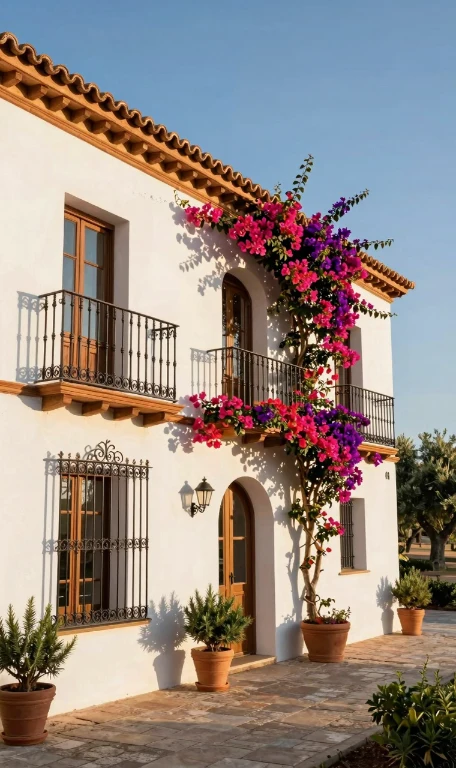
Brilliant white smooth stucco walls crowned with authentic terracotta clay roof tiles and dressed with ornate black wrought iron window grilles create the most immediately recognizable and universally beloved Spanish Mediterranean exterior available in the complete residential architectural vocabulary of the region, a combination of such natural material harmony and deep cultural resonance that it communicates the entire story of Andalusian domestic architecture with complete visual clarity and immediate emotional impact to every person who encounters it regardless of their architectural knowledge or travel experience. The specific brilliance of properly executed lime stucco under direct Mediterranean sunlight achieves a luminosity that synthetic acrylic stucco finishes cannot replicate, the lime’s reflective crystalline surface structure scattering light in a way that makes the wall appear to glow with its own internal source rather than simply reflecting the sun’s rays from a passive surface.
Wrought iron window grilles in the traditional Spanish reja style, their vertical bars set at regular intervals with horizontal rails bent into simple or elaborate scrollwork patterns depending on the specific regional tradition being referenced, provide the essential security function that originally motivated their development in medieval Andalusian domestic architecture while creating the most characterful and culturally specific exterior decorative detail available in the Spanish Mediterranean design vocabulary. Commission custom wrought iron rejas from a skilled blacksmith working in traditional techniques rather than selecting catalog designs fabricated in welded mild steel, as the specific quality of hand-forged iron, its surface texture, its slightly irregular form, and its superior corrosion resistance in coastal salt air environments, distinguishes authentic rejas of genuine character from decorative imitations that approximate the visual result without the material authenticity and craft quality that give original ironwork its lasting beauty and genuine historical resonance.
2. Honey Golden Limestone Exterior with Arched Entry and Cypress Allée
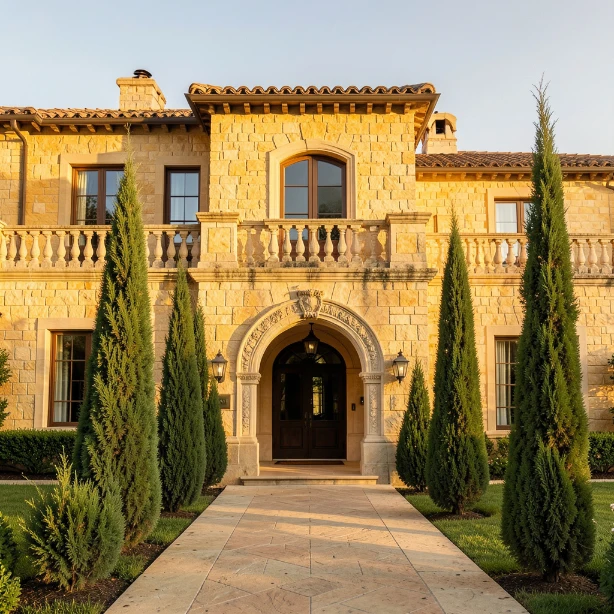
A Spanish Mediterranean exterior built from warm honey golden limestone with a grand arched entry portal of carved stone detail and a formal cypress tree allée creating the approach creates a home of such natural material magnificence and ceremonial arrival sequence that every approach to the front door becomes a brief but genuinely theatrical experience of architectural beauty and landscape drama designed with the specific intention of making arrival feel like a significant and pleasurable event rather than a merely functional transition from vehicle to interior. Golden limestone’s extraordinary quality of appearing to store and radiate the warmth of the sun’s energy rather than simply reflecting it from its surface makes stone construction in this material uniquely beautiful in the specific quality of late afternoon Mediterranean light that most magnificently reveals the stone’s color depth and surface texture.
The formal cypress tree allée flanking the approach to the limestone entry creates a living architectural element of such powerful spatial definition and Mediterranean cultural resonance that it transforms an ordinary residential driveway into a processional approach of genuine grandeur and historical dignity appropriate to the architectural ambition of the limestone home it introduces. Italian cypress trees, Cupressus sempervirens in its fastigiate form, planted at regular intervals of eight to twelve feet in two parallel rows that create a tall dark green living colonnade on either side of the approach, require fifteen to twenty years of establishment to achieve the mature height and density that produces the most magnificent allée effect, making early planting immediately upon property acquisition the single most time-sensitive landscape investment available to owners of aspirational Spanish Mediterranean estate properties who want to enjoy their allée in its full magnificent maturity rather than its promising adolescence.
3. Cascading Bougainvillea Facade with Painted Tile House Numbers
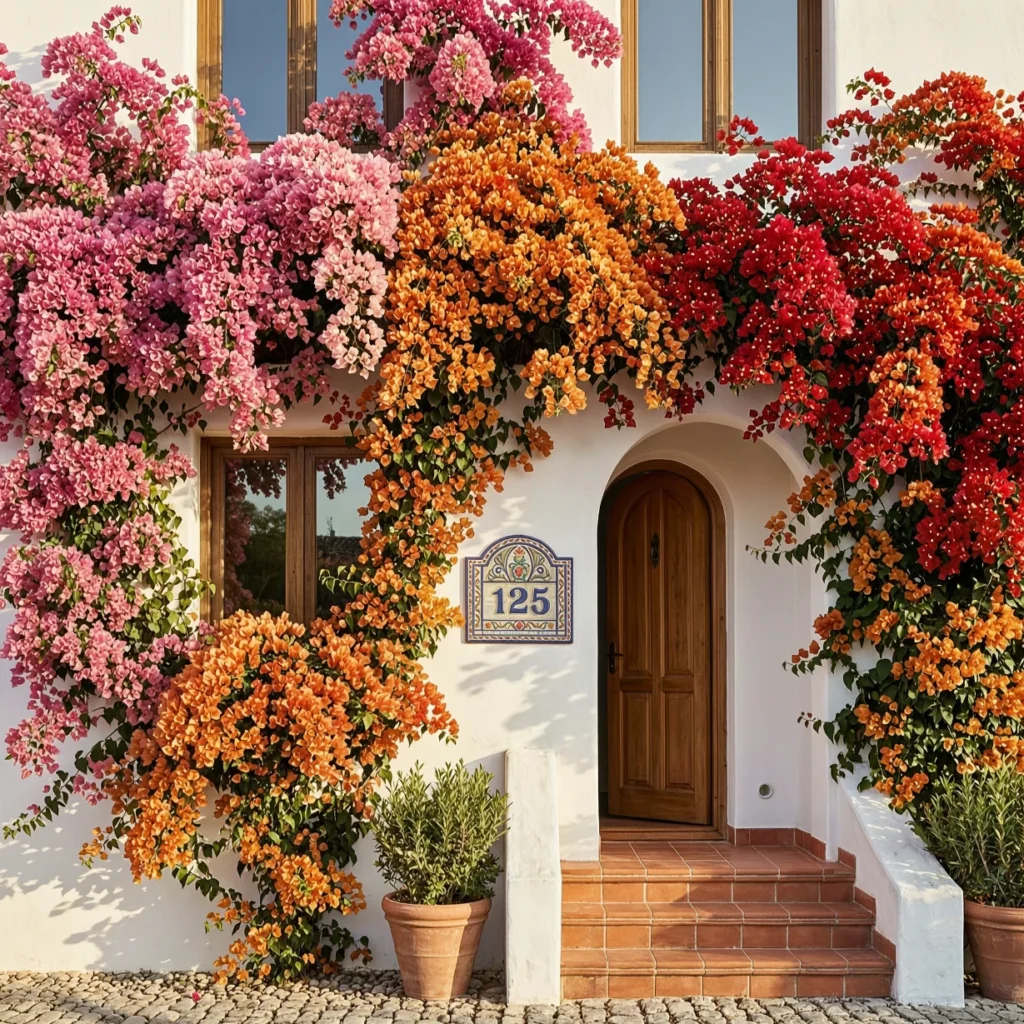
A Spanish Mediterranean home exterior where cascading bougainvillea in mixed tones of vivid pink, deep orange, and bright magenta completely covers the white stucco facade in a continuous flowering waterfall of such extraordinary botanical abundance and chromatic exuberance that the architecture beneath becomes almost secondary to the living botanical performance occurring across its surface creates an exterior of genuinely unparalleled seasonal beauty that draws gasps of admiration from every person who encounters it during the long peak flowering period that transforms the home from a beautiful building into what appears to be a living sculpture of concentrated Mediterranean botanical magnificence. The mixed color planting of multiple bougainvillea varieties creates a more complex and visually interesting flowering display than single-color plantings, their different tones creating areas of color intensity and variation across the facade surface that read as a living abstract painting of extraordinary vivid beauty.
Hand-painted ceramic tile house number panels mounted beside the arched wooden front door add a small but culturally specific decorative detail of genuine artisanal charm that references the beautiful tradition of painted ceramic address tiles found on the most characterful and historically significant domestic buildings throughout Andalusia, Portugal, and the Balearic Islands, where the simple necessity of identifying a house number has been transformed through centuries of ceramic craft tradition into an opportunity for small-scale decorative art of remarkable variety and individual character. Commission a house number tile panel from a contemporary ceramic artist working in the traditional hand-painting techniques of the region, incorporating the specific botanical, geometric, or figurative motifs of the local Andalusian tradition alongside the practical address information in a composition that makes the smallest architectural detail of the entire facade a genuine work of decorative art worthy of the botanical magnificence surrounding it.
4. Terracotta Pink Washed Walls with Carved Stone Window Surrounds
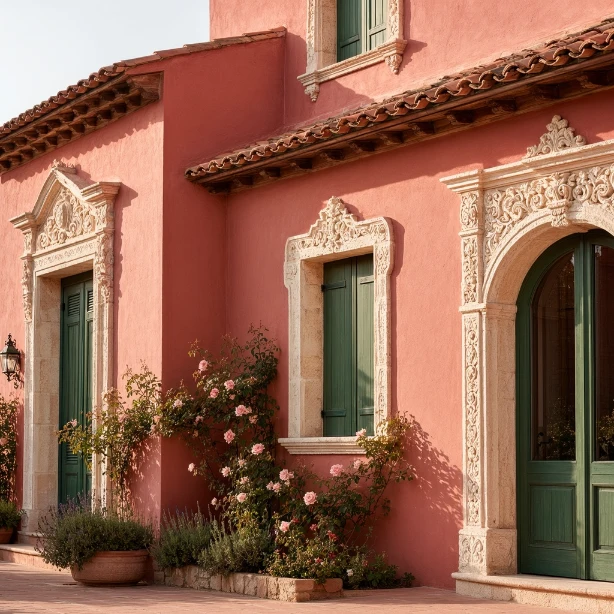
Warm terracotta pink limewashed walls contrasting with elaborately carved white limestone window surrounds create a Spanish Mediterranean exterior of such rich chromatic warmth and decorative architectural ambition that it references the specific tradition of Spanish Baroque residential architecture in which the contrast between richly colored plaster walls and elaborately carved stone ornament around openings creates a facade composition of theatrical decorative splendor and genuine artistic sophistication. The terracotta pink lime wash color, derived from the iron-rich earth pigments of the specific regional geology, creates a wall surface that varies subtly in color depth across the facade as different surface orientations catch light at different angles, creating a naturally dimensional color field of extraordinary subtle beauty that flat-painted surfaces can never replicate regardless of how carefully the paint color is matched.
Elaborately carved limestone window surrounds in the Spanish Churrigueresque or Plateresque decorative tradition, with their richly detailed botanical, figural, and geometric ornament carved in relief from the warm cream limestone that provides the ideal material for this level of sculptural complexity and surface detail, transform the functional necessity of window framing into a genuine opportunity for architectural sculpture of considerable artistic ambition and cultural specificity. Commission carved stone window surrounds from skilled stone carvers working in the traditional Spanish decorative carving repertoire rather than selecting standardized cast stone moldings that approximate the profile of carved stone work without the hand-cut surface quality, depth of relief, and individual artistic character that distinguish genuine carved stonework from its more economically produced cast alternatives in the quality of visual richness and authentic craft heritage they deliver to the exterior composition.
5. Whitewashed Village Exterior with Flower-Filled Street and Blue Accents
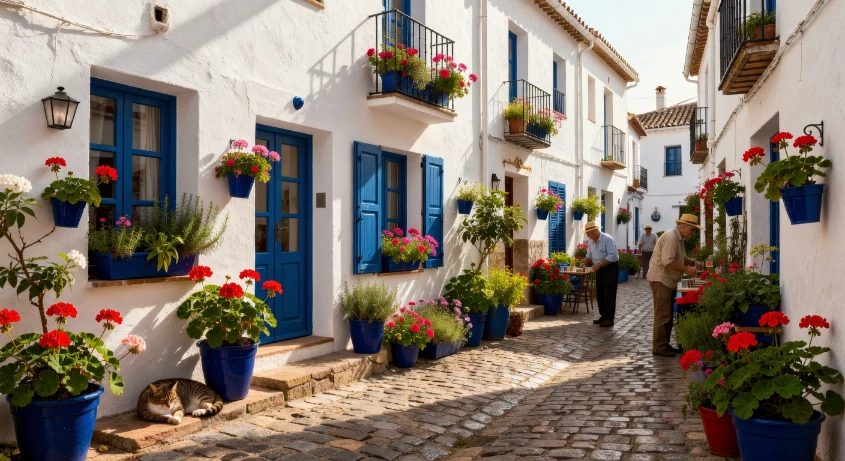
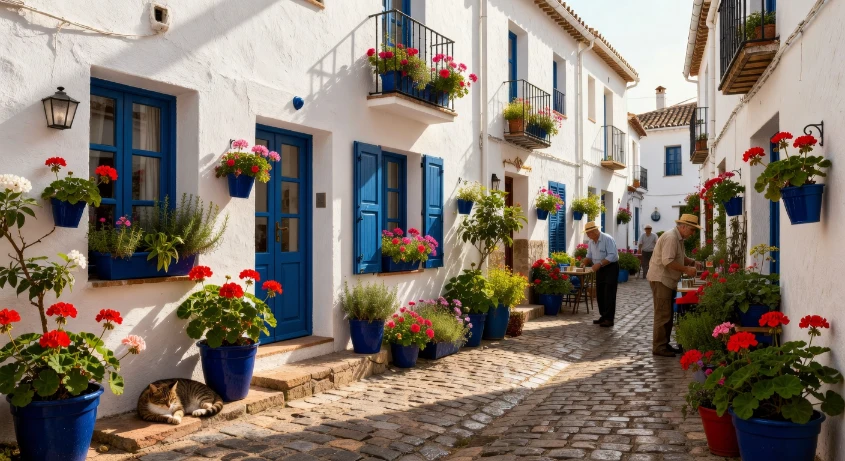
A Spanish Mediterranean village home exterior on a narrow cobblestone street where brilliant white limewashed walls are dressed with cobalt blue painted wooden shutters, doors, and flower pots, and the surrounding street surfaces are covered with colorful potted geraniums and herbs on every available horizontal surface, creates the most complete and emotionally resonant expression of the famous white villages of Andalusia, the pueblos blancos whose collective visual magnificence has made them among the most photographed residential environments on earth and whose specific combination of brilliant white architecture and exuberant botanical street decoration communicates a philosophy of shared public beauty and communal aesthetic commitment that makes the village streetscape itself the most important residential amenity rather than any private interior room or private garden. Beauty here belongs to everyone.
The cobalt blue paint color used on shutters, doors, window frames, and ceramic pots in the white villages of Andalusia is not a randomly selected decorative choice but a specific chromatic tradition with genuine functional history, the blue pigment originally derived from copper sulfate that was painted onto exterior woodwork for its documented insecticidal properties that protected wooden elements from insect damage in the warm Mediterranean climate where wood-boring insects cause significant structural damage to unprotected exterior timbers. The transition from functional treatment to beloved decorative tradition occurred gradually as generations of village residents observed that the blue color was also extraordinarily beautiful against white walls under Mediterranean sunlight and continued its application for its visual quality long after synthetic wood preservatives made its original functional rationale obsolete. Select the specific cobalt blue of the Andalusian village tradition, a saturated, slightly warm blue with green undertones rather than the cool navy-adjacent blues of northern European exterior paint traditions, for the most culturally authentic result.
6. Grand Hacienda Exterior with Bell Tower and Arched Arcade
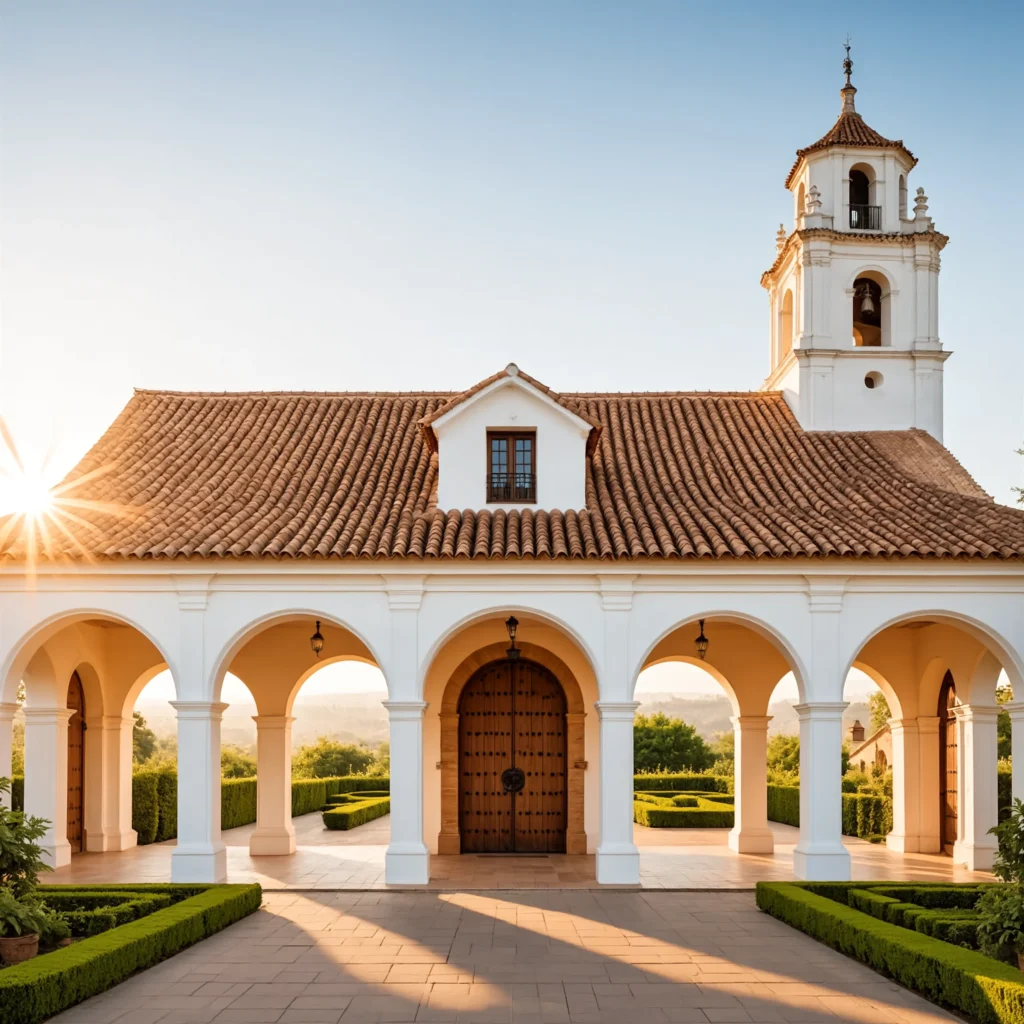
A grand Spanish hacienda exterior featuring a tall whitewashed bell tower rising above the main roofline and a full-length arched arcade spanning the complete width of the main facade creates an architectural composition of such monumental scale and institutional historical resonance that the private residential building achieves the dignity and presence of the great mission and convento buildings of the Spanish colonial period while remaining unmistakably a residence of generous domestic character and genuine human warmth rather than the institutional austerity of its ecclesiastical architectural sources. The bell tower rising above the horizontal arcade establishes a vertical accent of commanding presence visible from great distances that gives the hacienda its distinctive silhouette and makes it immediately recognizable and memorable in its landscape setting.
The full-length arched arcade spanning the facade creates a covered exterior gallery of extraordinary practical value and architectural beauty that transforms the transition between the building’s interior and the courtyard garden beyond from a simple doorway crossing into an extended intermediate zone of shaded outdoor space suitable for sitting, working, entertaining, and the unhurried observation of the courtyard garden and landscape beyond that characterizes the most pleasurable and distinctively Mediterranean domestic activities. The repetitive rhythm of the arcade’s arches, each one framing a slightly different view of the garden beyond and casting a differently proportioned pool of shade on the terracotta tile floor beneath depending on the sun’s position in the sky at different times of day and year, creates an architectural element whose visual interest and spatial richness increases rather than diminishes with extended familiarity and daily observation across the complete cycle of seasons.
7. Coastal White and Azure Exterior Overlooking Private Harbor
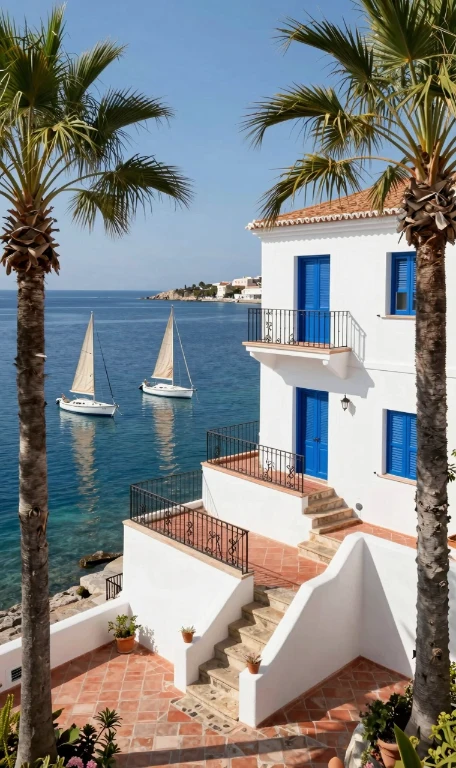
A Spanish Mediterranean coastal home exterior in brilliant white with azure blue accent details overlooking a private harbor with sailboats riding at anchor in the water below creates a residential exterior composition of such complete coastal dream quality and genuine site-specific beauty that it exists at the pinnacle of the Mediterranean residential aspiration that has motivated people from every corner of the world to seek properties on the Spanish Mediterranean coast with a longing and a determination that testifies to the extraordinary power of this specific combination of architecture, landscape, and sea to produce genuine and deeply felt happiness in the people fortunate enough to inhabit it. The private harbor below transforms the view from extraordinary to truly exceptional.
Multiple terrace levels with wrought iron railings descending the coastal slope from the main residential building toward the harbor create a cascading outdoor living composition of considerable spatial complexity and experiential richness, each level offering a different elevation relationship with the water below and the coastal landscape beyond and providing a different quality of wind protection, sun exposure, and privacy appropriate to different activities and times of day throughout the long Mediterranean outdoor living season. Position the primary entertaining terrace at the level that offers the most complete and visually balanced view of both the private harbor and the open sea beyond the harbor entrance, the foreground interest of the moored sailboats and the harbor infrastructure providing the middle-distance compositional element that prevents the sea view from reading as a flat, undifferentiated expanse of blue without the spatial layering that makes landscape views of greatest visual depth and sustained interest.
8. Rustic Stone Masonry Exterior with Climbing Roses and Wooden Shutters
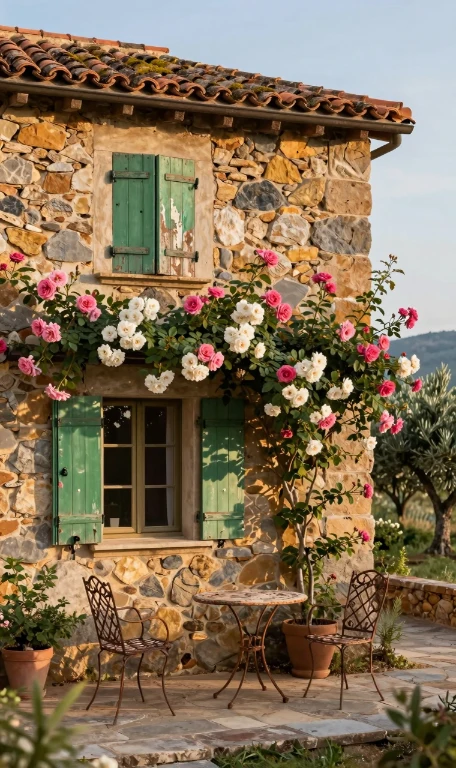
A Spanish Mediterranean exterior built from irregular natural stone masonry in warm honey and gray tones, its walls substantially covered in climbing roses in full pink and white bloom with aged wooden shutters in faded green completing the composition, creates a residential exterior of such deeply romantic accumulated beauty and genuine temporal depth that it appears less like a designed architectural composition and more like an organic accumulation of beauty that has developed slowly and naturally across many decades of patient occupation and botanical growth, each element adding its specific layer of character and patina to a whole that exceeds the sum of its parts in the quality of genuine, earned loveliness that only time and continued loving attention can produce in a building and its garden. The faded wooden shutters are more beautiful than new ones could ever be.
Climbing roses trained across a stone facade require the patient long-term management strategy of a gardener who thinks in decades rather than seasons, establishing the primary structural framework of old wood canes in the first three to five years of establishment and thereafter maintaining the balance between the productive young flowering wood that produces the most abundant and beautiful bloom display and the structural old wood framework that supports and organizes the complete climbing rose composition across the facade surface. Select climbing rose varieties with demonstrated vigor, disease resistance, and repeat flowering characteristics suited to the specific aspect and microclimate of the wall surface being planted, as a climbing rose poorly matched to its wall orientation and regional climate will struggle and perform disappointingly regardless of how carefully it is planted and maintained, while a well-chosen variety in the right position will reward minimal intervention with decades of extraordinary facade-covering beauty.
9. Minimalist White Box with Terracotta Accents and Statement Olive Tree
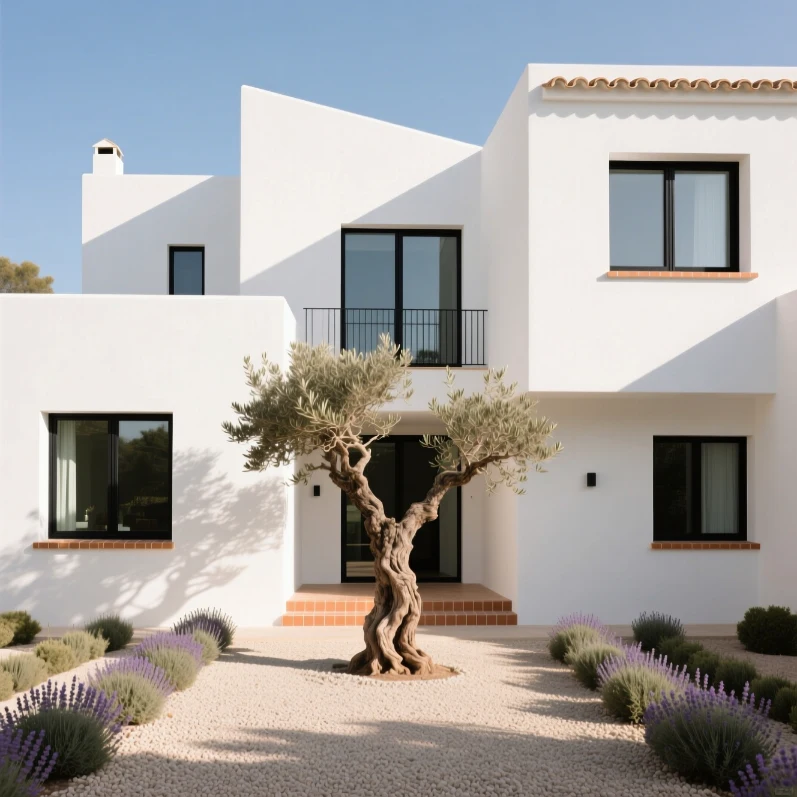
A minimalist Spanish Mediterranean exterior of clean white geometric volumes with terracotta tile accent details and a single magnificent ancient olive tree positioned as the sole landscape statement in a minimal gravel courtyard creates an architectural exterior of such refined design intelligence and confident aesthetic restraint that it communicates genuine design sophistication through disciplined subtraction rather than decorative addition, each carefully chosen element carrying maximum visual weight precisely because nothing unnecessary competes with it for attention. The ancient olive tree in the minimalist white courtyard is not merely a landscape element but the exterior’s primary artwork, its gnarled, silver-gray trunk and silver-green canopy providing the organic complexity and temporal depth that the precise white geometry of the building deliberately withholds from its own formal expression.
The specific placement of the ancient olive tree within the minimalist white courtyard requires the same level of spatial deliberation and compositional precision that a sculptor applies to positioning a significant work within an exhibition space, considering not only the tree’s current form and position but the shadow it will cast across the white courtyard walls and gravel ground surface at different times of day and different seasons of the year, as the shadow patterns of an olive tree’s delicate compound canopy across a brilliant white wall surface constitute one of the most beautiful and continuously changing visual displays available in the Mediterranean residential landscape. Position the tree to cast its most complex and beautiful afternoon shadow patterns across the primary wall visible from the main interior living space, making the changing shadow display a constant visual amenity of genuine contemplative beauty observable from the comfort of the interior throughout the day.
10. Ornate Plasterwork Facade with Azulejo Tile Panels and Loggia
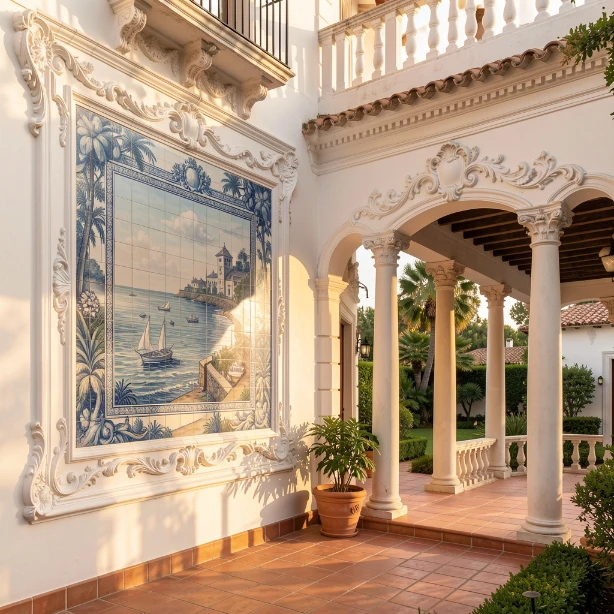
A Spanish Mediterranean exterior with elaborate white plasterwork ornamental facade details combined with a large hand-painted azulejo ceramic tile panel depicting a coastal scene or botanical composition and an elegant loggia creates an exterior of such concentrated decorative ambition and cultural heritage richness that every square meter of its surface rewards close examination with new discoveries of artisanal detail and historical decorative vocabulary that the complete building reveals only gradually across many visits and extended periods of attentive looking. The azulejo tile panel, scaled generously enough to read as a significant architectural feature from across the street, is the exterior’s most spectacular individual element, a permanent outdoor mural of ceramic art that combines the tile-making heritage of Seville and Valencia with the pictorial ambitions of the great fresco traditions of Spanish wall painting.
Commissioning a large-scale azulejo tile panel for a Spanish Mediterranean exterior facade is among the most significant and personally meaningful architectural investments available to the owner of a home of genuine cultural ambition and aesthetic seriousness, the finished panel representing not merely a decorative surface treatment but a permanent contribution to the tradition of Spanish ceramic art that has produced some of the world’s most beautiful and most enduring decorative artworks across five centuries of continuous creative development. Work with a ceramics studio specializing in traditional azulejo techniques and large-format tile panel production, providing the studio with detailed architectural drawings showing the panel’s intended dimensions, mounting position, and the surrounding architectural context that will frame it, and allowing the ceramic artists sufficient creative latitude within the agreed subject matter and color palette to produce work of genuine artistic quality rather than a mechanical reproduction of a specified image.
11. Sunset Orange Washed Exterior with Tiled Staircase and Garden Walls
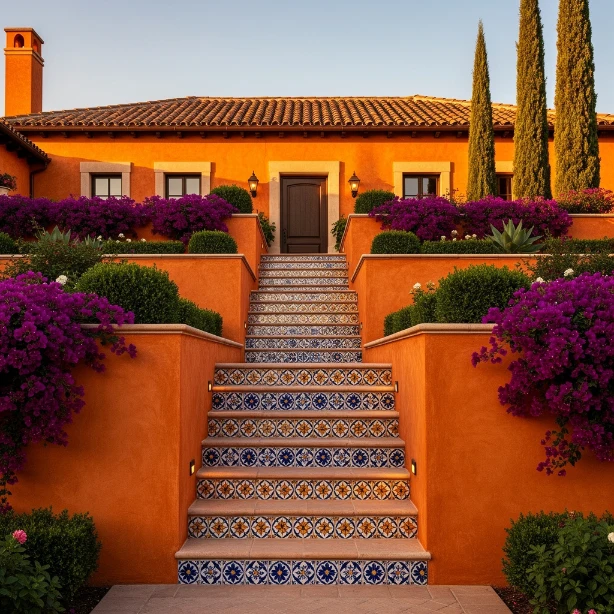
A Spanish Mediterranean exterior washed in warm sunset orange limewash creates a residential facade of such bold chromatic confidence and radiant warmth that the building appears to absorb the Mediterranean sun’s energy throughout the day and release it as its own warm glow during the amber hours of late afternoon and evening when the low-angle sunlight interacts with the orange-toned wall surface to produce a luminosity of extraordinary warmth and visual power that makes the building appear almost self-illuminating rather than simply surface-reflecting. The specific orange tone of sunset lime wash, derived from iron oxide pigments mixed into traditional hydraulic lime in precise proportions that vary between regions and individual craftsmen, creates a color of remarkable depth and richness that synthetic paint finishes cannot replicate in their quality of internal luminosity and natural tonal variation.
The elaborate hand-painted ceramic tile staircase descending through the tiered garden creates a decorative architectural element of such stunning visual impact and artisanal ambition that it transforms the functional necessity of garden level changes into a genuine opportunity for architectural art of significant scale and cultural heritage depth. Each tiled riser and landing surface offers a canvas for the ceramic painter’s art, with traditional geometric patterns, botanical motifs, maritime scenes, and abstract compositions all finding their place within the complete staircase composition that rewards both the distant view of its complete decorative program and the intimate close examination of individual tile paintings that reveal their full detail and craft quality only at arm’s length. The deep purple of bougainvillea planted against the orange walls provides the complementary color contrast of maximum visual drama and botanical beauty that amplifies the warm orange tone of the walls by the simultaneous contrast effect that adjacent complementary colors produce in human color perception.
12. Pale Cream Exterior with Iron Lanterns and Dense Jasmine Coverage
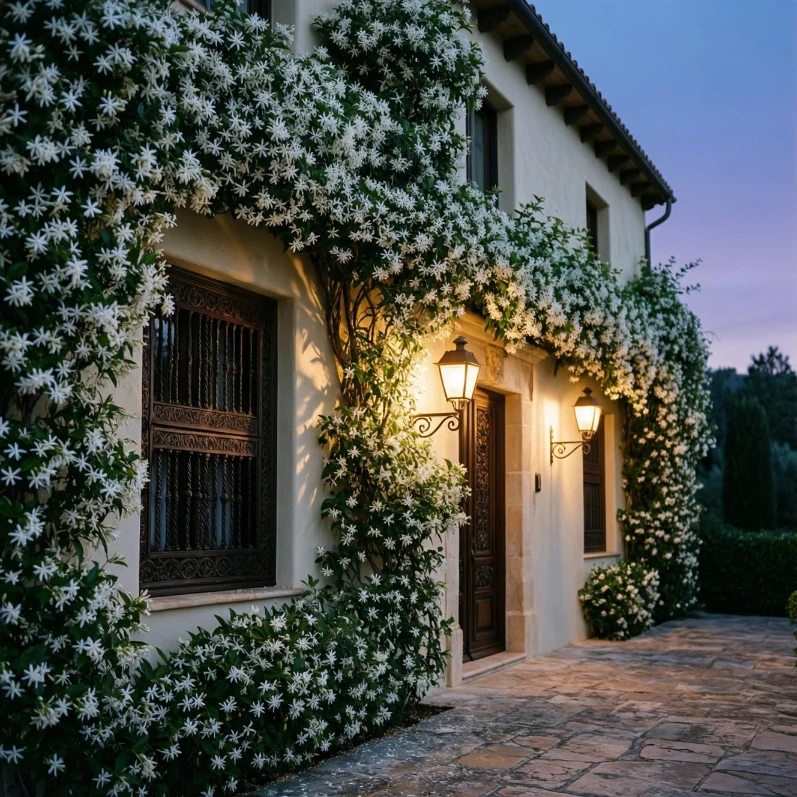
A pale cream Spanish Mediterranean exterior almost entirely covered in dense white-flowering jasmine captured at the blue hour of dusk with antique iron lanterns casting warm pools of golden light across the fragrant floral surface creates a residential exterior of such overwhelmingly romantic beauty and multi-sensory completeness that the image it produces exists at the very limit of what a residential building can achieve in terms of pure atmospheric loveliness, the combination of the soft cream wall color, the white jasmine flowers, the warm lantern light against the blue evening sky, and the implied fragrance of the jasmine in full bloom creating an exterior so completely beautiful that it seems to belong in the imagination rather than on an actual street in the actual world. This is the exterior that makes people believe in perfection.
The specific quality of light produced by antique iron wall lanterns at dusk on a jasmine-covered cream facade involves a subtle but important distinction between the effects of different light source temperatures and fixture types that dramatically affects the romantic atmospheric quality of the result. Traditional iron lanterns burning candles or fitted with warm-toned Edison-style filament bulbs in the 2200K to 2700K color temperature range produce the specific warm amber light that interacts most beautifully with cream wall surfaces and white jasmine flowers, the warm light enriching the cream wall tone toward a warm honey color and giving the white jasmine flowers a slightly warm golden tint that prevents them from appearing cold or harsh against the evening sky. Cool LED light sources in lanterns of identical form produce a categorically different and considerably less romantic result, the blue-white light creating an institutional quality entirely at odds with the romantic atmospheric intention of the exterior composition.
13. Adobe Style Exterior with Rounded Parapets and Desert Garden
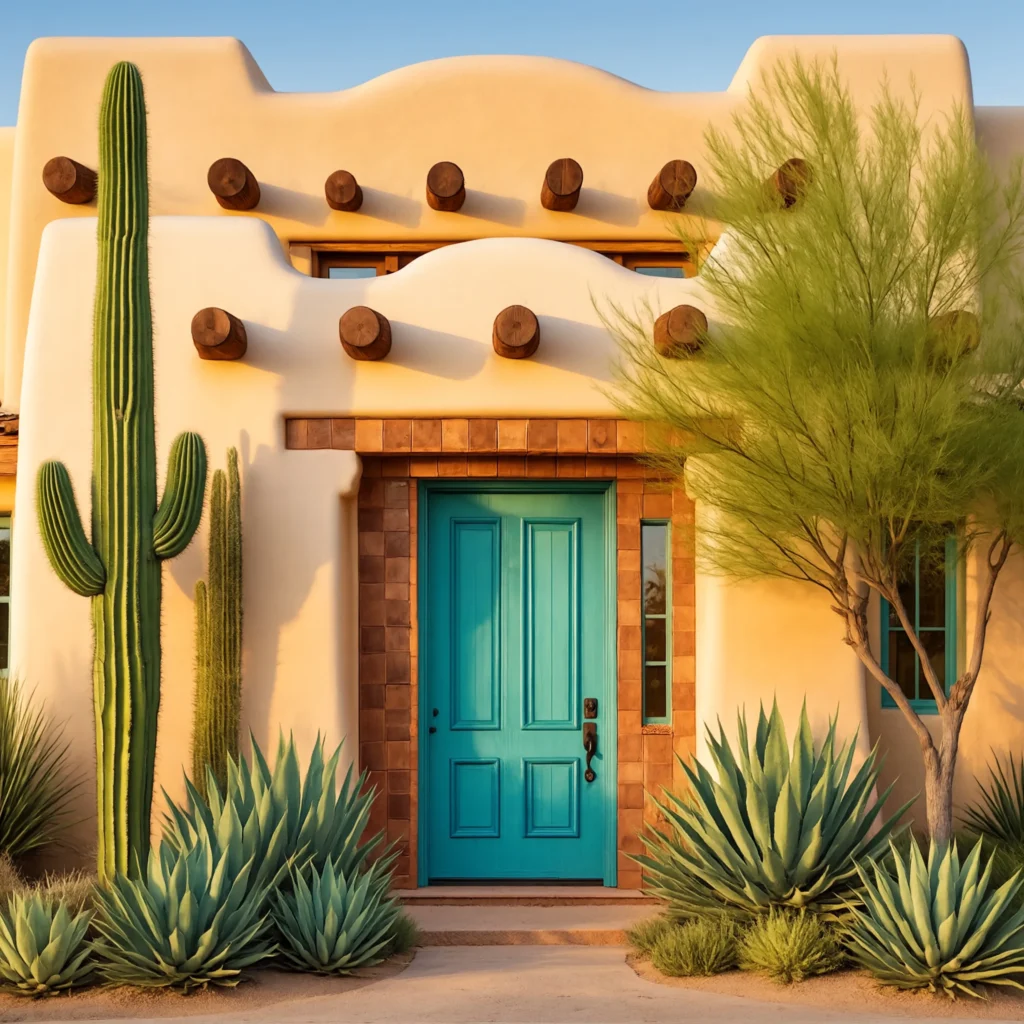
A Spanish colonial adobe exterior with soft rounded parapet walls in warm cream and ochre tones and traditional wooden vigas projecting through the parapet creates an architectural exterior of such profound regional specificity and material authenticity that it appears not merely appropriate to its desert Southwest landscape context but completely and inevitably of it, as though the building has grown from the same geological material as the desert floor it occupies rather than being designed and constructed by human hands following a specific architectural program. The rounded parapet walls, their forms achieved through the natural behavior of hand-applied adobe plaster over earthen or masonry substrate, create the specific softness of form that distinguishes authentic adobe construction from its flat-parapet imitations and gives the building its organically sculptural quality of apparent geological formation rather than architectural design.
Traditional wooden vigas projecting through the adobe parapet walls create the most distinctive and immediately recognizable detail of Spanish colonial New Mexico and Arizona architecture, their rounded timber forms providing structural evidence of the roof construction within while decorating the exterior with a series of horizontal projecting elements that cast their own specific shadows on the stucco wall surface below them across different times of day and season. The vigas, typically crafted from ponderosa pine or Douglas fir logs with their bark removed and surfaces smoothed but not finished to machine-perfect uniformity, weather gracefully in the dry desert climate to a beautiful silver-gray tone that harmonizes naturally with the warm cream and ochre of the adobe walls beneath them while providing a material contrast of textural richness between the rough organic timber surface and the smooth plasticity of the surrounding stucco that defines the visual character of authentic adobe architecture.
14. Multicolored Tile Roof Exterior with Barrel Vault Entry and Iron Gate
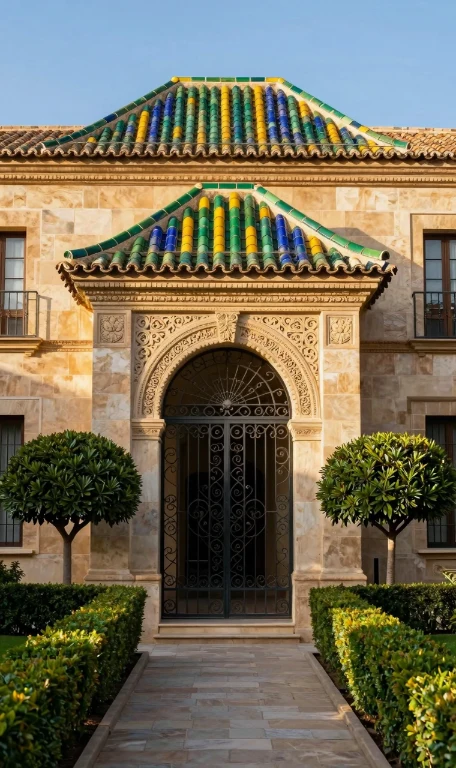
A Spanish Mediterranean exterior featuring an elaborate multicolored glazed ceramic tile roof in the specific Valencian tradition of mixed green, yellow, and blue geometric patterns creates an architectural exterior of such extraordinary decorative ambition and chromatic magnificence that the roof itself becomes the building’s most spectacular and most culturally specific element, a vast decorative surface visible from considerable distances whose complex pattern of differently colored glazed tiles arranged in traditional geometric compositions references one of the most celebrated regional decorative traditions in European architecture and transforms the functional necessity of weather protection into a genuine artwork of considerable scale and cultural heritage significance. The Valencian tile roof tradition produces roofscapes of unique beauty.
The barrel vaulted entry with ornate iron gate creates the formal threshold between public approach and private residence in a form of sufficient architectural grandeur and decorative richness to be worthy of the spectacular multicolored tile roof it introduces, the vault’s curved masonry surface and the gate’s ornate ironwork combining to create an entry portal of theatrical architectural ambition that makes every arrival at the home a genuinely ceremonial experience of passing through a beautifully designed transitional space between the ordinary world beyond and the extraordinary domestic world within. Commission the iron gate from a skilled blacksmith working in the traditional Valencian decorative ironwork vocabulary, incorporating the specific botanical and geometric motifs of the regional tradition alongside any personal heraldic or symbolic elements of particular meaning to the family who will pass through it daily across the years of their occupation of this exceptional residence.
15. Wisteria-Draped Pergola Exterior with Travertine Terrace and Fountain
A Spanish Mediterranean exterior where wisteria in full cascading purple bloom completely covers a large wooden pergola structure over a travertine terrace during the brief but extraordinary weeks of peak spring flowering creates an exterior composition of such transient, overwhelming beauty and sensory completeness that it produces in its observers the specific emotion of beauty so intense it verges on sadness at its impermanence, the awareness that this exact flowering perfection will last only two to three weeks before the purple bracts fall and the green foliage canopy that replaces them, however pleasant, cannot match the transcendent magnificence of full bloom. The wisteria pergola at peak flowering is the most beautiful seasonal event available in the Spanish Mediterranean garden calendar.
Travertine terrace paving beneath the wisteria pergola creates a floor surface of such naturally beautiful warm cream and honey tones and rich geological texture that it provides the ideal material companion for both the purple wisteria above and the whitewashed home exterior beyond, its warm limestone coloring harmonizing with the cream stucco walls while its surface texture adds material richness and historical depth to the terrace composition. Natural travertine requires sealing with appropriate penetrating stone sealer to prevent water staining and surface erosion in the outdoor application, and selecting a honed or brushed surface finish rather than polished travertine for the terrace application provides both the non-slip safety performance essential for an outdoor surface that will be wet with rain and fountain spray and the more relaxed, natural aesthetic appropriate to the Mediterranean outdoor living context in which polished stone would appear overly formal and incongruously refined.
16. Copper-Domed Tower Home with Climbing Fig and Stone Balustrade
A Spanish Mediterranean tower home exterior where a copper dome at the tower’s peak has developed its beautiful blue-green verdigris patina over years of weathering and climbing fig covers the lower tower walls in dense dark green foliage creates an architectural exterior of such extraordinary material richness and accumulated temporal depth that it achieves the quality of apparent antiquity that is among the most desirable and most difficult to achieve qualities in residential architecture, communicating not merely that this is a beautiful building but that it is a building of genuine age and historical significance that has earned its beauty across decades of patient weathering, botanical colonization, and the slow chemical transformations that turn new copper to green and new fig stems to a dense architectural tapestry of extraordinary natural decoration.
The climbing fig, Ficus pumila, trained across the lower tower walls creates a botanical wall covering of such dense, uniform dark green foliage that the masonry surface beneath becomes completely invisible, transforming the tower’s lower zone from a stone-faced architectural surface into a living green skin of smooth, closely overlapping leaves that moves gently in the breeze and changes slightly in color and texture with the seasons. Climbing fig attaches itself to masonry surfaces using adhesive aerial roots that grip the wall surface directly without requiring trellis support, making it the most architecturally integrated climbing plant available for covering stone and masonry walls, though its vigorous growth requires annual trimming at window openings, roof lines, and any other architectural elements that must remain clear and functional rather than being incorporated into the botanical wall coverage that the fig extends across every available surface with enthusiastic and continuous vegetative ambition.
17. Grand Symmetrical Estate Exterior with Fountain Forecourt and Formal Hedging
A grand symmetrical Spanish Mediterranean estate exterior organized around a formal stone fountain forecourt with matching wings on either side of the main entry block and clipped formal box hedging in precise geometric patterns creates the most complete and historically resonant expression of Spanish colonial residential grandeur available in contemporary luxury home design, a building of such confident architectural scale and formal compositional discipline that it achieves the specific quality of institutional dignity and permanent significance that the most admired great houses of the Spanish colonial tradition communicated to every person who approached them across centuries of continuous occupation and architectural veneration. The symmetry is not merely aesthetic but philosophical, expressing order, permanence, and the serious human ambition to create something worthy of lasting beyond a single generation.
The formal stone fountain at the forecourt’s center creates the axial focal point around which the estate’s complete compositional symmetry is organized, its water providing the acoustic and visual animation that prevents the formal symmetrical composition from reading as rigid or lifeless despite its deliberate geometric discipline and bilateral exactitude. Commission the forecourt fountain from a stone carver working in the traditional Spanish figural or ornamental vocabulary, selecting a design of appropriate scale to the forecourt dimensions and architectural grandeur of the surrounding estate exterior, as a fountain too small for its forecourt reads as an afterthought while one of appropriate monumental scale becomes the true center of gravity around which the entire estate composition finds its most complete and most magnificently resolved architectural expression across every season and every quality of Mediterranean light from the brilliant clarity of midsummer noon to the warm amber of autumn late afternoon.