15 Bohemian Pillow Ideas for a Cozy Aesthetic
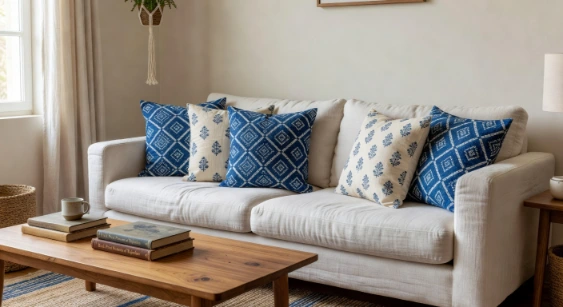
1. Vintage Kantha Quilt Pillow Covers in Warm Jewel Tones
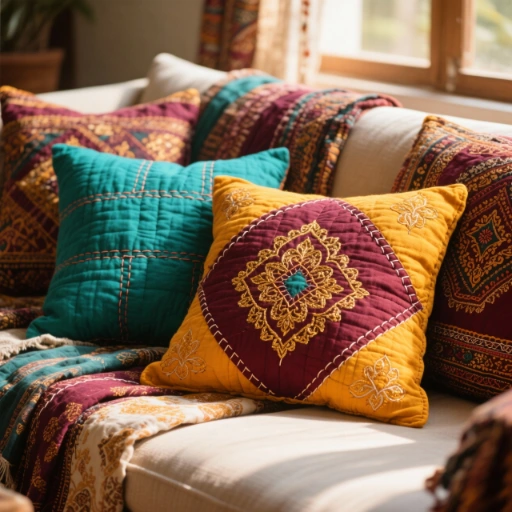
Vintage kantha quilt pillow covers made from repurposed antique Indian sari fabric layers stitched together with the traditional running stitch technique create bohemian pillows of such extraordinary textile heritage and genuine material complexity that each cover tells an entire story of global craft culture, the specific kantha stitching visible across the fabric surface as a dense pattern of small running stitches that simultaneously quilt the layered fabric, decorate the surface with subtle linear texture, and testify to the considerable hand-stitching skill and patient labor of the women who created the original textile from which the pillow cover was fashioned. The jewel-tone color palette of vintage kantha fabric, developed through the specific dye traditions of Bengal and Rajasthan across generations of sari production, achieves a depth and warmth of chromatic richness that contemporary reproductions consistently fail to replicate.
Sourcing genuine vintage kantha pillow covers rather than mass-produced kantha-print alternatives requires engagement with fair trade importers, specialty textile dealers, and ethical craft organizations that work directly with artisan communities in West Bengal and Rajasthan where authentic kantha stitching traditions remain actively practiced. Genuine vintage kantha shows the specific quality of hand-stitching with slightly irregular stitch spacing and occasional thread color variations that reflect the individual stitcher’s hand, while the fabric itself shows the natural wear and slight transparency of genuinely aged and previously used textile material that gives vintage kantha its specific atmospheric quality of accumulated domestic history. Mix three to five kantha pillow covers in complementary jewel tones across a sofa or bed, allowing the varied patterns to create visual rhythm without requiring identical repetition that would eliminate the eclectic spontaneity that makes kantha pillow groupings so immediately and effortlessly beautiful in the bohemian interior context.
2. Handwoven Wool Pillow with Geometric Tribal Pattern
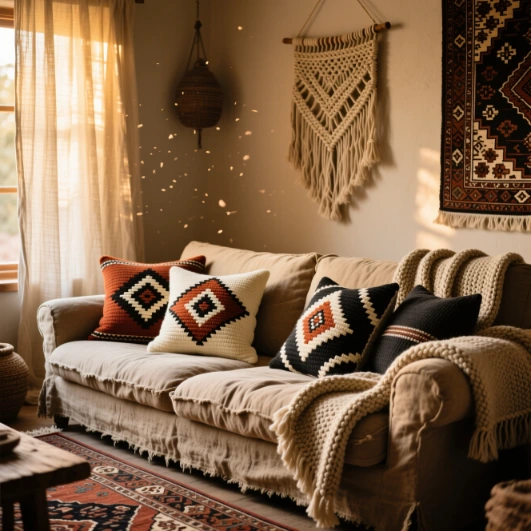
A handwoven wool pillow cover with bold geometric tribal pattern in terracotta, cream, and charcoal creates a bohemian pillow of such genuine craft authority and material warmth that it immediately elevates the sofa or bed it occupies from simply furnished to genuinely curated with evident knowledge of global weaving traditions and confident material sensibility. The specific quality of handwoven wool fabric, with its visible warp and weft structure, its slight dimensional irregularities, and the particular warmth and weight of genuine wool fiber construction, creates a pillow surface of tactile richness and visual depth that machine-woven alternatives of equivalent visual pattern cannot replicate in terms of the physical pleasure of handling and the specific atmospheric warmth that genuine wool textile construction introduces into any room where it is used as the primary upholstery material.
The geometric tribal vocabulary of the woven pattern draws from the extraordinary breadth of global weaving traditions that span the Americas, Africa, Central Asia, and Scandinavia, each tradition offering its own specific geometric language and color relationship logic that communicates entire cultural philosophies about the relationship between human creative intelligence and the mathematical structures underlying natural and cosmological order. Select tribal pattern pillow covers whose geometric vocabulary references a specific weaving tradition you have genuine knowledge of and genuine appreciation for rather than treating all tribal patterns as interchangeable decorative motifs without cultural specificity, as the bohemian interior’s most deeply beautiful and most ethically grounded expression comes from genuine global craft appreciation rather than superficial cultural borrowing that treats the material culture of other peoples as a costume rather than a living creative tradition deserving respectful understanding and conscious acknowledgment.
3. Velvet Pillow Covers in Deep Jewel Tones with Embroidered Detail
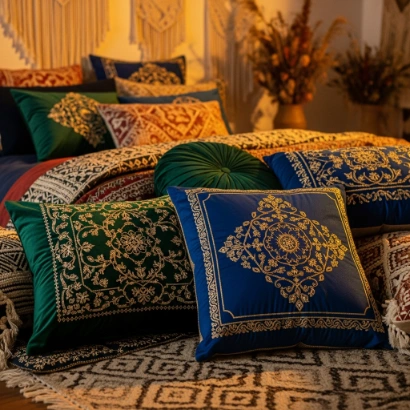
Deep jewel-tone velvet pillow covers with delicate gold thread embroidered floral and geometric details create bohemian pillows of such concentrated luxury and sensory richness that they bring the specific quality of opulent material pleasure into intimate daily contact with the people who use them, the smooth directional sheen of velvet fabric shifting between deep saturated color and lighter reflective luminosity with every change in viewing angle and illumination direction in a continuous display of material beauty that rewards the sustained attention that only the most genuinely excellent fabrics can sustain across extended familiarity. Against the complex color depth of emerald, teal, and sapphire velvet, gold thread embroidery creates a warm metallic accent of extraordinary precision and decorative refinement.
The gold thread embroidery that distinguishes the most beautiful velvet bohemian pillow covers from plain velvet alternatives requires the specific techniques of metallic thread embroidery, including couching, goldwork, and zardozi embroidery traditions of India and the Middle East that have developed specialized approaches to working with metal-wrapped threads that cannot be drawn through fabric in the conventional manner of cotton or silk embroidery without damaging the metallic coating that gives them their reflective quality. Zardozi embroidery in particular, practiced by skilled artisans in Lucknow and Varanasi using gold and silver wire, sequins, and beads applied to velvet and silk ground fabrics in elaborate floral and geometric compositions, produces velvet pillow covers of such extraordinary technical accomplishment and decorative magnificence that they represent genuine wearable art whose craft heritage stretches back to the Mughal imperial court where this embroidery tradition reached its greatest historical flowering of technical virtuosity and artistic ambition.
4. Macrame Pillow Covers with Fringe and Knotted Texture
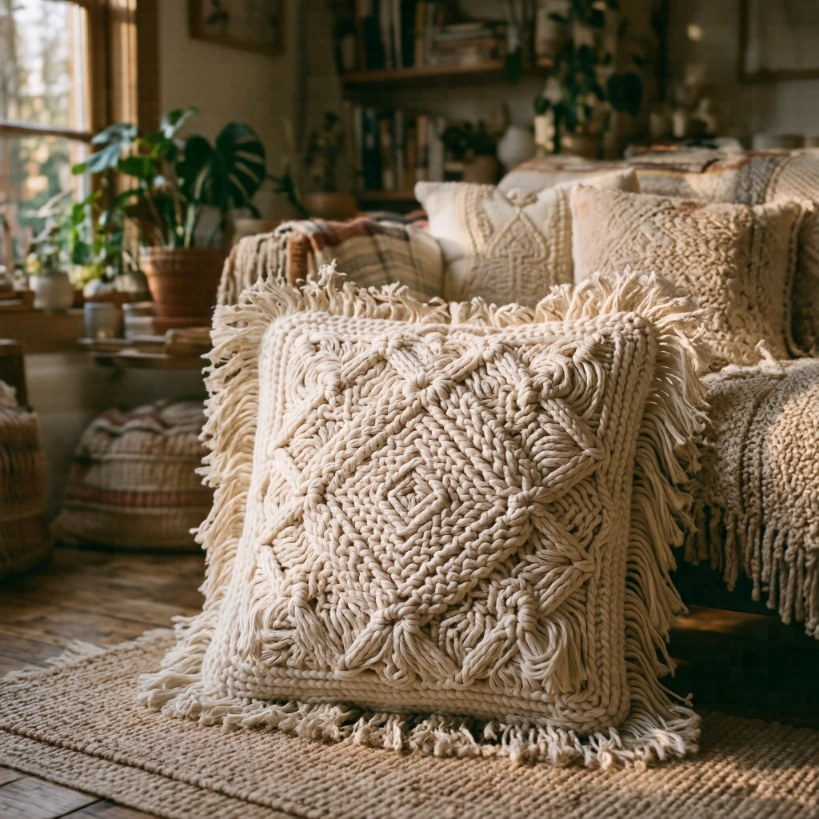
A macrame pillow cover with an intricate knotted front panel in natural cotton cord and generous fringe border creates a bohemian pillow of such tactile artisanal character and three-dimensional textural interest that it transforms the flat pillow form into a genuine textile sculpture of considerable craft depth and visual complexity, the relief of the knotted cord surface creating shadow patterns that shift with changing light conditions in a continuous low-key display of textural animation that makes the macrame pillow perpetually interesting to look at and endlessly pleasurable to touch. The natural cotton cord’s warm ivory and cream tones place the macrame pillow in the most universally compatible zone of the neutral palette, allowing it to work harmoniously with virtually every color combination and every textile pattern it shares a sofa or bed surface with.
Creating a macrame pillow cover as a personal craft project represents one of the most accessible and most immediately rewarding fiber arts projects available to the beginner crafter, as the basic square knot and half-hitch techniques that create the most beautiful macrame pillow front panels can be learned and applied proficiently within a few hours of practice on test cord before committing to the complete pillow panel project. Work the knotted panel over a pillow insert of the intended finished size rather than attempting to calculate finished dimensions from the working dimensions of the knotted panel, as macrame cord contracts and shifts significantly during the knotting process in ways that make dimensional prediction from mathematical calculation alone consistently inaccurate. Back the completed knotted panel with a simple cotton canvas or linen backing fabric stitched to the panel’s perimeter with a basic envelope closure that allows the pillow insert to be inserted and removed for washing without requiring zipper installation.
5. Block-Printed Cotton Pillow Covers in Indigo and Cream
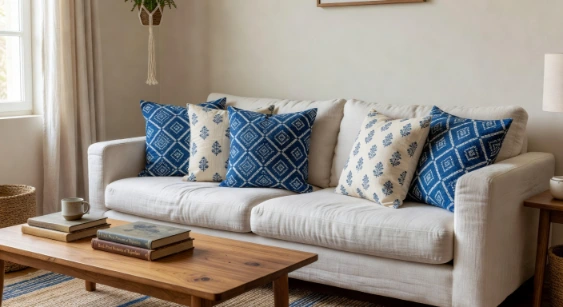
Hand block-printed cotton pillow covers in indigo and cream, their surfaces marked with the slight printing imperfections and color variations that distinguish genuine hand block printing from mechanically reproduced pattern work, create bohemian pillows of such authentic artisanal character and deep cultural craft heritage that they bring the entire tradition of Rajasthani block printing directly into the domestic interior as a daily accessible form of genuine living craft culture rather than a museum artifact observed from a respectful distance without physical contact or intimate use. The indigo and cream color combination, drawn from the ancient indigo dyeing traditions of South Asia that have produced some of the world’s most beloved and most enduring textile color relationships, creates a palette of maximum visual clarity and botanical color depth that is simultaneously bold enough to make a definite design statement and neutral enough to work harmoniously with virtually every other color and pattern in a complex bohemian pillow grouping.
The slight imperfections of hand block printing, including occasional ink bleeding at pattern edges, slight misalignment between adjacent pattern repeats, and variations in ink density between individual stamp applications, are not defects requiring correction but marks of genuine handcrafted authenticity that distinguish real block-printed textiles from their perfectly uniform machine-printed imitations. These specific imperfections testify to the individual human hand that applied each stamp, the specific pressure and angle of each application, and the organic variability of the printing process that makes genuine hand block-printed textiles irreplaceable records of individual craft practice rather than anonymous products of automated manufacture. Seek out block-printed pillow covers from fair trade organizations and ethical importers who work directly with the artisan printing communities of Jaipur, Bagru, and Sanganer where traditional block printing techniques remain actively practiced as living craft traditions supporting multigenerational family artisan businesses.
6. Suzani Embroidered Pillow Covers from Central Asia
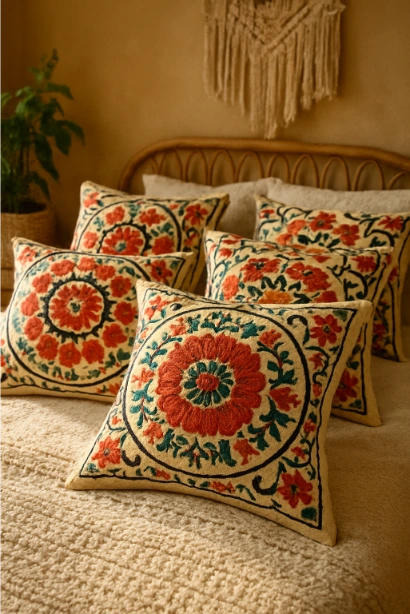
Authentic suzani embroidered pillow covers from Uzbekistan, Tajikistan, or Afghanistan, their surfaces covered in the dense chain stitch or satin stitch silk thread embroidery of large-scale floral medallion designs in vibrant coral, red, orange, teal, and black on a cream cotton or silk ground, create bohemian pillows of such extraordinary textile artistry and Central Asian craft heritage significance that they represent among the most culturally rich and artistically accomplished textile objects available for use in the contemporary interior regardless of design style or decorating philosophy. The suzani embroidery tradition, practiced by women who began creating these large ceremonial textiles as part of their wedding trousseau and worked on them across months or years before their marriage, represents a complete social and artistic practice of deeply personal and communal significance that gives every authentic suzani object a specific human story of creation, intention, and cultural meaning beyond its considerable visual beauty.
The scale of suzani embroidery patterns, with individual floral medallions often measuring six inches or more in diameter, creates a visual presence on the pillow surface that is dramatically bolder and more arresting than the smaller repeat patterns of most embroidered textiles, making a single suzani pillow cover sufficient to define the color and pattern direction of an entire pillow grouping when used as the dominant statement piece around which other, more quietly patterned pillows are organized in supporting complementary relationship. Mix suzani pillow covers with solid velvet pillows in colors drawn from the suzani’s dominant embroidery tones, simple block-printed cotton pillows in complementary neutral patterns, and plain linen or cotton pillows in natural undyed tones that provide essential tonal rest within the richly patterned grouping and allow the suzani’s extraordinary embroidery to perform at maximum visual impact against its supporting neutral companions.
7. Pom-Pom Trim Pillow Covers in Warm Earth Tones
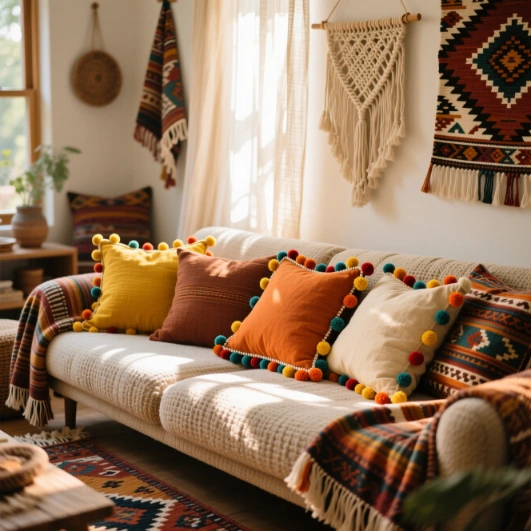
Pillow covers with colorful pompom trim borders in warm earth tones of mustard, terracotta, burnt orange, and cream create bohemian pillows of such joyfully playful decorative character and warm chromatic personality that they bring an essential dimension of lighthearted design confidence and genuine decorative fun to the bohemian interior that more serious or more formally beautiful pillow options sometimes lack, communicating through their three-dimensional pompom borders the specific freedom from decorative solemnity that the bohemian aesthetic celebrates as one of its most defining and most liberating qualities. The pompom trim transforms the pillow from a passive rectangular upholstered form into an object of lively dimensional character and tactile invitation that makes every sitting and every reclining position on a pompom-trimmed pillow a small ongoing sensory pleasure of soft round fiber contact.
The making of pompom-trimmed pillow covers represents one of the most approachable and most immediately gratifying of all textile craft projects, as the pompoms themselves can be created from any yarn or fiber material using a cardboard template or commercial pompom maker tool, and the finished pompoms can be attached to a purchased pillow cover using a simple hand-stitching technique that requires minimal sewing skill and produces professional-looking results with minimal practice. Create pompoms in four to six complementary earth tones from the same yarn fiber type for the most cohesive and visually harmonious trim border, spacing them consistently around the pillow’s complete perimeter at intervals of two to three inches depending on the pompom size and the overall pillow dimensions. Mix pompom pillow covers with other bohemian textile types including embroidered cotton, block-printed linen, and plain velvet for a complete pillow grouping of varied texture and decorative character that the pompom pillows enliven with their specific quality of cheerful dimensional animation.
8. Kilim-Pattern Pillow Covers with Tassel Corners
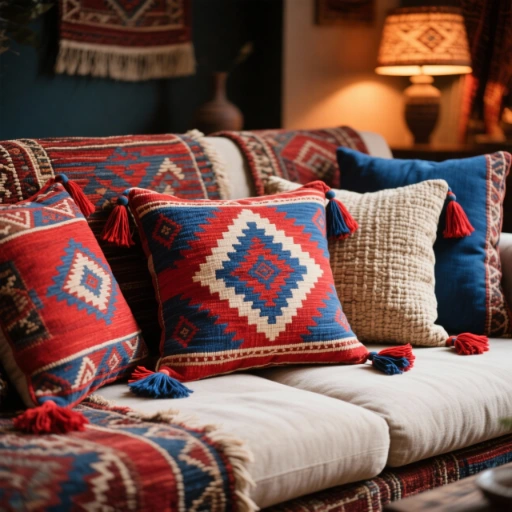
Kilim-pattern pillow covers with decorative tassels at all four corners in coordinating colors create bohemian pillows of such bold geometric pattern confidence and globally inspired decorative richness that they bring the complete visual language of Turkish and Anatolian flat-weave rug design into the intimate upholstered scale of sofa and bed cushions, making the extraordinary pattern vocabulary of kilim weaving accessible as a daily tactile and visual experience rather than only as a floor-level observation from the standing or seated position that conventional rug placement allows. The corner tassels add a finishing detail of traditional decorative significance that references the tassel and fringe traditions of Middle Eastern and Central Asian textile arts where these hanging fiber elements carry both protective symbolic meaning and considerable decorative charm.
The bold geometric vocabulary of kilim pattern design, with its strong diagonal lines, bold diamond and triangle forms, stepped geometric shapes, and high-contrast color blocking in saturated jewel tones and earthy naturals, creates the highest pattern-to-surface-area ratio available among textile design traditions, meaning that kilim pattern pillow covers deliver more visual interest per square inch than virtually any other pattern type available in the bohemian pillow market. This extraordinary pattern density makes kilim pillow covers the most powerful pattern statement pieces available for bohemian pillow groupings, requiring careful management of their visual weight within the complete pillow composition to prevent them from overwhelming the grouping’s total visual impact. Use no more than two kilim pattern pillow covers within a single grouping of six to eight pillows, positioning them as the dominant pattern anchors around which simpler, more quietly patterned companions create the essential visual breathing room that prevents pattern saturation.
9. Linen and Cotton Mix Pillow Covers with Tassels in Natural Tones
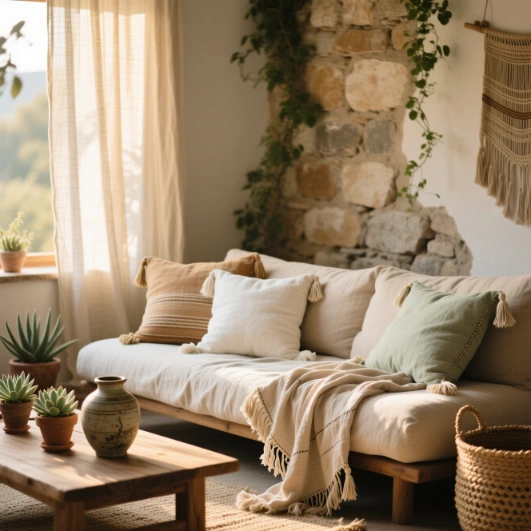
Linen and cotton mix pillow covers in warm natural undyed and softly dyed tones of cream, oatmeal, warm white, and pale sage with generous tassel details create bohemian pillows of such refined organic simplicity and genuine material quality that they represent the minimalist bohemian aesthetic at its most beautifully resolved, delivering warmth, texture, and the specific quality of natural fiber authenticity that bohemian design values most fundamentally while maintaining the tonal restraint and visual calm that more maximalist pillow approaches sacrifice in favor of chromatic abundance and pattern complexity. These are the pillows for the bohemian home that has found its most mature and most completely confident aesthetic expression in the beauty of honest natural materials presented without embellishment beyond the material’s own inherent qualities.
Linen fiber’s specific surface character, with its natural slub variations that create slight irregularities in the woven fabric surface, its distinctive cool-hand feel that warms to body temperature rapidly upon contact, and its progressive softening with washing and use that transforms stiff new linen into the beautifully supple, slightly worn quality of well-loved vintage linen over time, creates a pillow surface of genuinely evolving character that improves with use rather than degrading as synthetic fabrics do under the mechanical stress of regular handling and washing. Source linen and cotton mix pillow fabrics from mills working with organically grown or sustainably produced fiber where the natural processing methods preserve the fiber’s inherent character rather than the aggressive chemical processing that conventional linen production employs to achieve more uniform surface appearance at the cost of the specific tactile and visual qualities that make natural linen one of the world’s most beautiful and most historically significant textile materials.
10. Mudcloth-Inspired Pillow Covers in Black and White
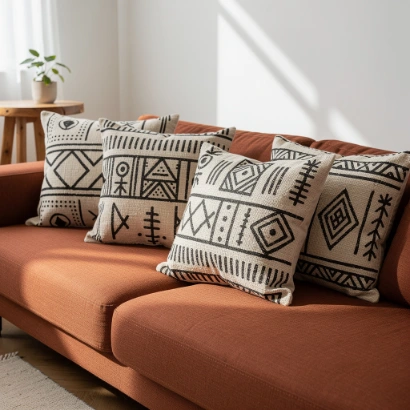
Mudcloth-inspired pillow covers with hand-painted looking black and white geometric and abstract symbol patterns on cream cotton create bohemian pillows of such powerful graphic confidence and West African textile cultural heritage that they bring the specific visual language of Malian bogolan cloth into the domestic interior as an artistically bold and culturally significant decorative element whose stark black and cream color contrast and abstract symbolic pattern vocabulary create a visual statement of maximum impact achieved with minimum chromatic complexity. The mudcloth pattern tradition of Mali, where women apply fermented mud to cotton cloth in traditional geometric and symbolic designs that carry specific cultural meanings related to social identity, ceremonial occasion, and cosmological belief, represents one of the world’s most sophisticated and most visually compelling textile art traditions.
The graphic black and white pattern contrast of mudcloth-inspired pillow covers creates the maximum possible visual impact within the pillow grouping context, making them the most powerful graphic statement pieces available for bohemian pillow arrangements and requiring the same careful compositional management as other high-impact pattern types to ensure they contribute boldness and definition to the grouping rather than overwhelming its visual balance. Mix mudcloth-inspired pillows with warm terracotta, rich ochre, and deep forest green solid pillows that provide the chromatic context that prevents the stark black and white contrast from reading as cold or harsh within the warm material environment of the bohemian interior, the warm colors surrounding the mudcloth pattern creating a temperature balance that allows the graphic boldness of the black and white to read as confident and powerful rather than austere or disconnected from the warmth that defines the bohemian aesthetic at its most fundamentally inviting and most genuinely cozy.
11. Embroidered Floral Pillow Covers in Folk Art Style
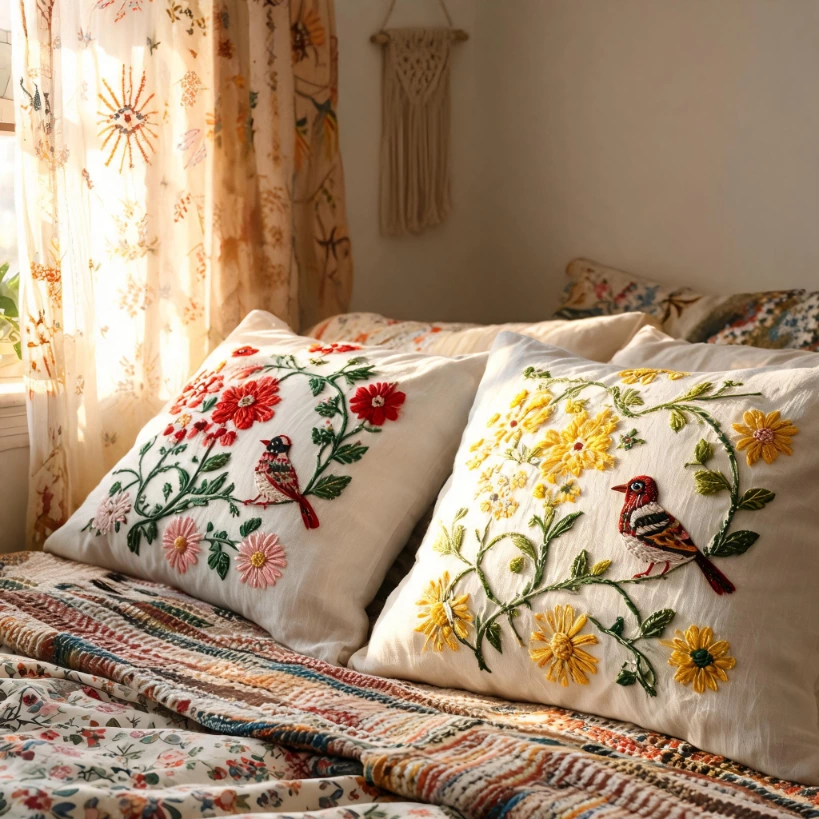
Embroidered floral pillow covers in a folk art style with naively hand-embroidered flowers, leaves, and birds in bright thread colors on a white or natural linen ground create bohemian pillows of such endearing domestic charm and genuine artisanal warmth that they bring the specific quality of folk textile traditions from Eastern Europe, Scandinavia, and Latin America into the bohemian interior as a joyful celebration of the decorative embroidery practices that generations of domestic textile makers have used to transform functional fabric into personal artistic expression accessible to anyone with a needle, thread, and the patient creative spirit to stitch beauty into the fabric of daily life with their own hands. Folk embroidery pillow covers are the most democratically produced and most personally expressive of all the bohemian pillow types.
The folk art embroidery style, characterized by its deliberately simplified botanical and zoological forms, its confident use of bright saturated thread colors without the tonal shading of more academically influenced embroidery traditions, and its pleasingly imprecise execution that embraces individual variation rather than pursuing technical perfection, creates embroidered textiles of such immediate visual charm and genuine personal expressiveness that they communicate the specific quality of joyful creative engagement that distinguishes folk art from fine art in its most essentially human and most universally accessible quality. Create folk art embroidered pillow covers using basic embroidery stitches including stem stitch for outlines, satin stitch for filled shapes, French knots for textural details, and lazy daisy stitch for simple petal and leaf forms that are all learnable within a single afternoon of focused practice before beginning the actual pillow cover embroidery project.
12. Vintage Tapestry Pillow Covers with European Hunting Scene
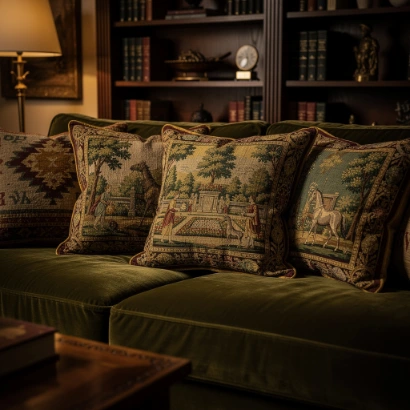
Vintage tapestry weave pillow covers featuring classical European hunting or garden scenes in rich muted tones of forest green, burgundy, gold, and brown create bohemian pillows of such sophisticated historical character and genuine antique textile quality that they bring the specific aesthetic register of European decorative arts tradition into the bohemian interior as a layer of historical depth and material culture complexity that enriches the global textile conversation of the bohemian pillow grouping with a specifically Western craft heritage of considerable artistic ambition and centuries of continuous production at the highest levels of European luxury weaving craft. Genuine vintage tapestry fabric, whether cut from antique wall hangings, upholstered furniture remnants, or historical fabric panel pieces, possesses a specific weight, density, and color depth that contemporary reproduction tapestry fabrics cannot replicate.
The muted, aged color palette of genuine vintage tapestry fabric, where the original richly saturated dye colors have softened over decades of light exposure into the complex, slightly faded tones of genuinely aged textile, creates a palette of extraordinary visual sophistication and historical beauty that works with remarkable harmony in bohemian pillow groupings alongside the saturated colors of new textiles, the aged tones providing the tonal variation and historical depth that prevents the grouping from reading as entirely new and commercially assembled rather than gradually accumulated across time and diverse sources. Position vintage tapestry pillow covers as the most historically sophisticated element in a bohemian pillow composition, using them as the anchor pieces around which more colorful, more pattern-active contemporary global textiles are organized in supporting relationship that benefits from the tapestry’s tonal authority and historical gravitas.
13. Tie-Dye and Shibori Pillow Covers in Indigo Tones
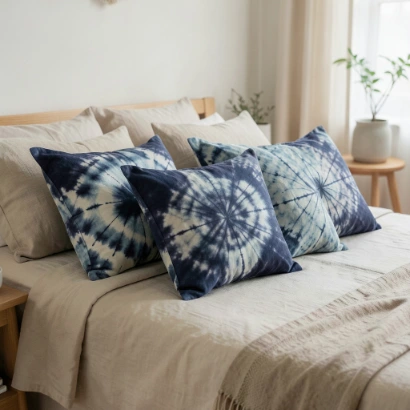
Shibori indigo-dyed pillow covers with organic resist-pattern designs created through traditional Japanese folding, binding, and clamping techniques create bohemian pillows of such serene material beauty and genuine artisanal individuality that no two pillows in a shibori collection are ever exactly identical, each one carrying the specific pattern that resulted from the particular folding and binding configuration used in its dyeing, making a grouping of shibori pillows a collection of genuinely unique objects rather than a matched set of commercially uniform products. The deep indigo and pale blue tonal range of genuine indigo shibori work creates a color composition of meditative calm and botanical depth that makes shibori pillows among the most psychologically restful and visually serene of all the bohemian pillow options available.
The Japanese shibori dyeing tradition encompasses multiple specific techniques including itajime clamped resist, arashi pole-wrapping resist, and nui thread-gathered resist that each produce characteristically different pattern types ranging from the geometric precision of itajime’s folded and clamped designs through the diagonal diagonal stripe of arashi to the soft circular gathering of nui, allowing the shibori pillow collection to encompass considerable visual variety within the consistent indigo and natural cotton color palette that unifies all shibori pieces into a cohesive aesthetic whole despite their individual pattern differences. Learn the fundamental shibori techniques through hands-on workshops offered by fiber arts studios, craft centers, and community colleges in most metropolitan areas, or through comprehensive online instruction resources that provide sufficient technical detail and visual demonstration to guide successful home shibori dyeing projects using natural or fiber reactive indigo dye formulations.
14. Patchwork Velvet Pillow Covers in Rich Mixed Tones
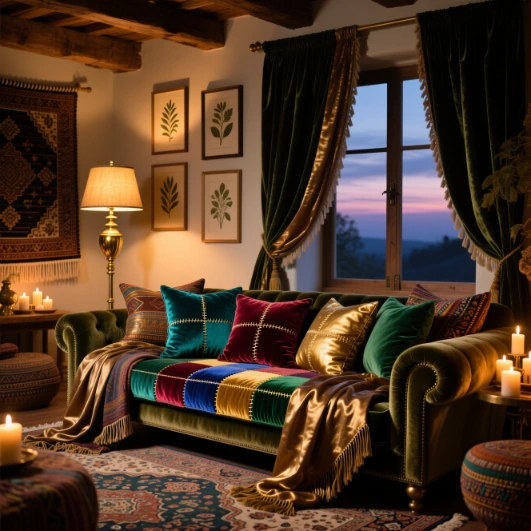
Patchwork velvet pillow covers assembled from rich mixed jewel-tone velvet squares in deep teal, sapphire, burgundy, gold, and forest green create bohemian pillows of such concentrated material luxury and chromatic richness that they represent the maximalist bohemian aesthetic at its most opulently beautiful and most completely committed to the philosophy of more being definitively and joyfully more when the materials are sufficiently extraordinary to justify and reward the abundance in which they are presented. Each velvet square within the patchwork contributes its own specific color depth and directional sheen to the complete pillow surface, the velvet nap’s light-direction sensitivity creating continuously shifting color variations as different patches catch light at different angles depending on the pile direction established during their cutting from the parent fabric.
The construction of patchwork velvet pillow covers requires specific sewing techniques that differ from standard patchwork construction in cotton or linen, as velvet’s pile direction creates a potential for mismatched pile directions between adjacent patches that makes the seam lines between patches appear as strong visual lines of color or sheen contrast rather than the subtle linear details that well-matched pile direction produces in velvet patchwork of genuine craft quality. Ensure that all velvet squares within the patchwork are cut with the pile running in the same direction across the complete pillow front before assembly, marking the pile direction on the reverse of each square with a directional arrow before cutting to prevent confusion during the assembly process that produces the pile-direction errors that cannot be corrected after seaming without complete disassembly and re-cutting of all affected pieces.
15. Natural Sheepskin and Faux Fur Pillow Covers for Ultimate Cozy Texture
Natural sheepskin and faux fur pillow covers in warm cream, ivory, and soft gray create bohemian pillows of such extraordinary tactile luxury and sensory warmth that they achieve the ultimate purpose of the cozy bohemian aesthetic more completely and more immediately than any other pillow type, the deep, cloud-soft pile of genuine sheepskin or high-quality faux fur creating a physical experience of comfort and warmth so immediate and so completely satisfying that every contact with these pillows reinforces the home’s fundamental character as a sanctuary of genuine physical ease and generous sensory pleasure. The cream and ivory tones of natural sheepskin and the softest faux fur options provide the essential luminous warmth that brightens any bohemian interior from the floor of cozy nooks to the layered surfaces of abundantly pillowed reading chairs and beds.
Natural sheepskin pillow covers from ethically raised and humanely processed sheep provide the most genuine and most luxurious version of this tactile pillow experience, the specific qualities of natural wool fiber including its natural lanolin content, its ability to regulate temperature by absorbing and releasing moisture, and the dimensional recovery of each individual fiber after compression creating a pillow surface that maintains its full loft and sensory quality across years of regular use in a way that synthetic faux fur alternatives cannot sustain with equivalent longevity and consistent tactile performance. For households where genuine sheepskin is not appropriate for ethical or practical reasons, select the highest-quality faux fur available with the longest and most densely planted pile, the most convincing natural variation in fiber length and color across the pile surface, and the most substantial and dimensionally stable backing fabric that prevents the faux fur pile from shifting, matting, and losing its loft under the regular compression of ordinary residential pillow use.