18 Bohemian Kitchen Ideas Full of Warm Charm
1. Open Shelving with Collected Ceramic and Pottery Display
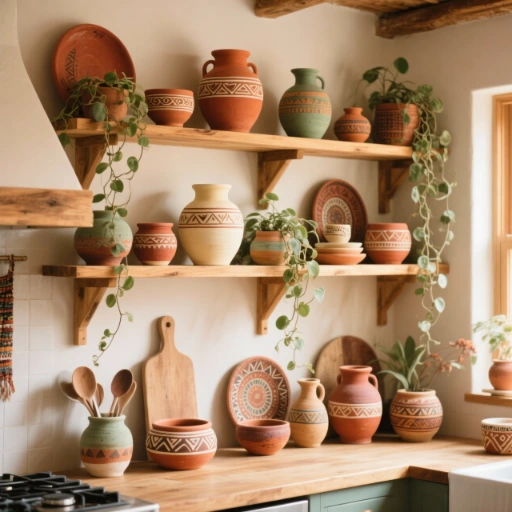
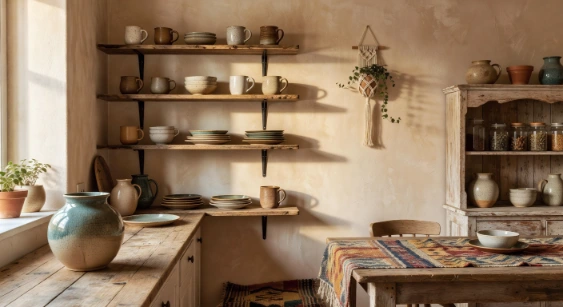
Open wooden shelving displaying a carefully assembled collection of handmade ceramics, artisan pottery, and global earthenware creates the most immediately characterful and genuinely personal statement available in bohemian kitchen design, transforming functional storage into a continuously evolving display of craft culture appreciation and material beauty that tells the complete story of the cook who uses this kitchen through the specific objects they have chosen to surround themselves with in their most essential domestic workspace. The beauty of a genuinely collected ceramic display lies entirely in its specificity and organic accumulation rather than in the coordinated uniformity of a purchased set, each piece carrying its own individual character, its specific origin story, and its unique material qualities of glaze, form, and firing that no two handmade ceramics ever exactly replicate.
Building a ceramic and pottery open shelf display of genuine beauty requires the understanding that the most visually compelling ceramic collections develop their character through the sustained accumulation of individually beautiful pieces across time rather than through the simultaneous purchase of a large number of pieces in a single shopping expedition, as the pieces acquired over years of consistent engagement with craft markets, pottery studios, and global artisan sources develop the specific quality of deliberate selection and genuine personal connection that distinguishes a true collection from a bulk-purchased assemblage of superficially similar objects. Organize the display with attention to the visual rhythm created by the alternation of tall and short pieces, wide and narrow forms, matte and glazed surfaces, and the specific color relationships between adjacent objects, allowing trailing plants positioned strategically between ceramic groupings to introduce organic softness and living color that prevents the display from reading as a static arrangement rather than a dynamic living composition of material beauty.
2. Terracotta Tile Backsplash with Hand-Painted Talavera Accents
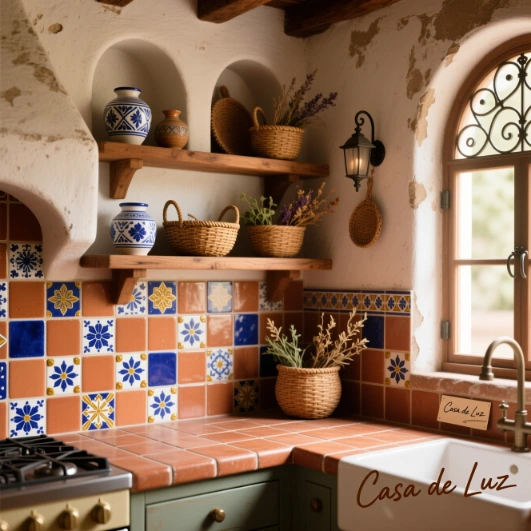
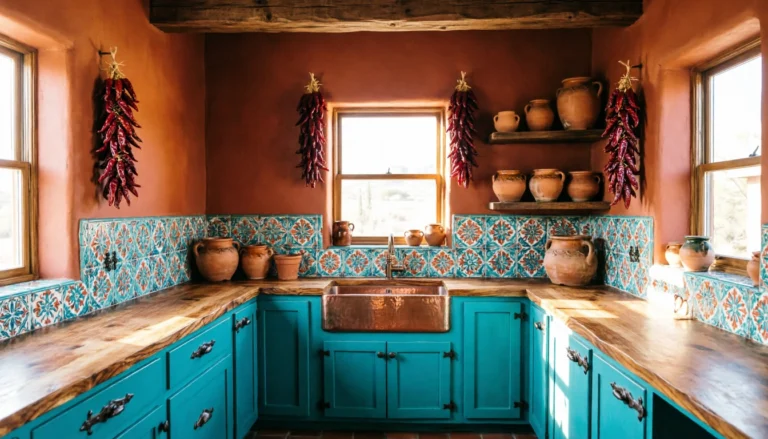
A terracotta tile backsplash with hand-painted Talavera ceramic accent tiles scattered throughout as colorful individual jewels within the warm clay field creates a bohemian kitchen wall surface of such extraordinary craft beauty and genuine cultural heritage richness that it transforms the purely functional necessity of kitchen splash protection into a complete decorative statement of global ceramic art appreciation that makes the kitchen’s primary work wall one of the most visually rewarding and artistically significant surfaces in the entire home. The warm orange-red of the terracotta base tiles creates the perfect warm clay backdrop against which the vivid cobalt, white, and gold of the hand-painted Talavera accents read with maximum chromatic clarity and decorative impact.
Authentic Talavera ceramic tiles from the workshops of Puebla, Mexico, where this specific hand-painting tradition has been continuously practiced since Spanish colonial craftsmen combined indigenous Mesoamerican ceramic traditions with Moorish-influenced Spanish majolica techniques in the sixteenth century, create backsplash accent elements of genuine cultural and artistic significance that mass-produced ceramic imitations printed with similar motifs cannot replicate in terms of the specific quality of hand-painted individuality, the depth of the majolica glaze, and the connection to a living craft tradition of real historical continuity and genuine artisanal community. Source authentic Talavera tiles through Mexican craft importers, specialty tile dealers working with certified Puebla producers, or directly from Talavera artisan studios whose certification marks verify the authenticity of their production methods and their connection to the genuine craft tradition rather than the extensive market of cheaper imitations produced outside the protected geographical indication that governs authentic Talavera certification.
3. Hanging Herb Garden with Macrame Pot Holders Above Kitchen Counter
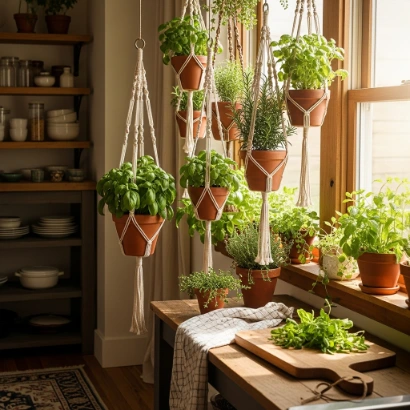
A hanging herb garden with fresh culinary herbs suspended in terracotta pots by handmade macrame pot holders at varying heights above the kitchen counter creates a bohemian kitchen feature of such complete functional beauty and sensory richness that it simultaneously provides the most practical possible access to fresh herbs during cooking, fills the kitchen with the continuously released fragrances of living basil, rosemary, thyme, and mint, and creates a genuinely spectacular visual display of cascading green botanical life that brings the specific quality of a garden brought indoors directly into the heart of the home’s most essential and most continuously occupied working space. The macrame pot holders add their specific quality of artisanal craft beauty to the functional hanging system, their knotted cotton cord creating warm cream tones and tactile textural interest that complements the natural terracotta pots and the lush green herb foliage in a complete natural material composition of organic beauty.
Designing a hanging herb garden for kitchen use requires specific attention to the practical growing requirements of culinary herbs that will be regularly harvested rather than merely displayed, as kitchen herbs need sufficient light, appropriate watering frequency, and adequate pot size to maintain healthy productive growth rather than the rapid decline that overcrowded, under-lit, or inconsistently watered herb plants inevitably experience when their growing conditions are determined by decorative placement logic rather than horticultural necessity. Position the hanging herb garden in the kitchen zone that receives the most natural light throughout the growing day, typically within three to four feet of the largest kitchen window, and select pot sizes that provide sufficient root volume for each herb species to establish healthy root systems capable of supporting the vigorous top growth that regular culinary harvesting requires to continuously regenerate the flavorful young foliage that makes fresh herbs so valuable and so much more flavorful than their dried alternatives.
4. Warm Wooden Kitchen Ceiling with Exposed Beam and Hanging Pots
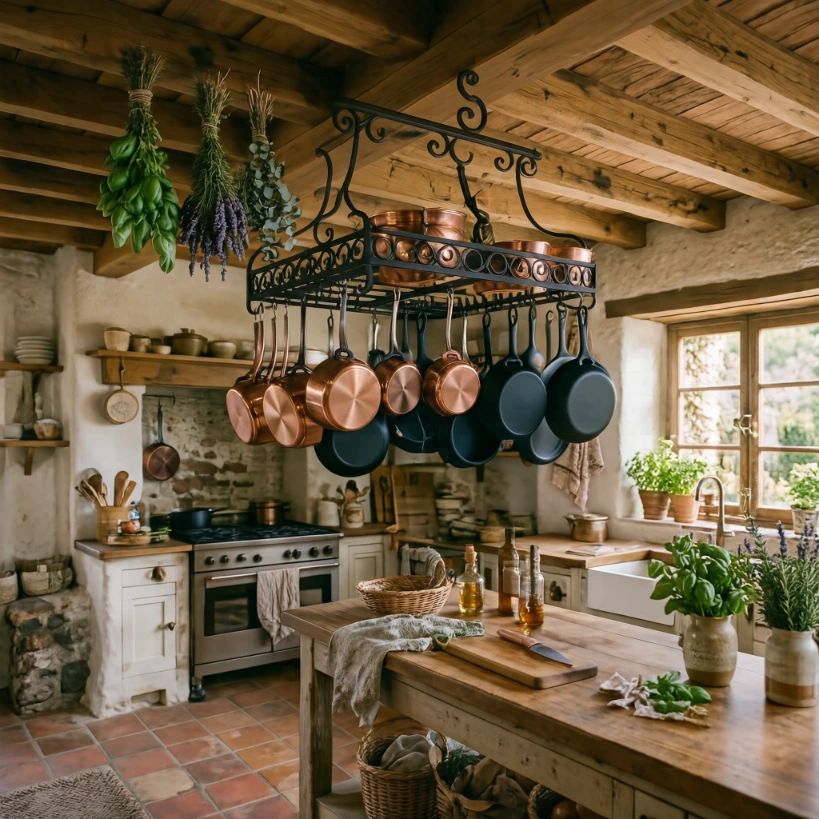
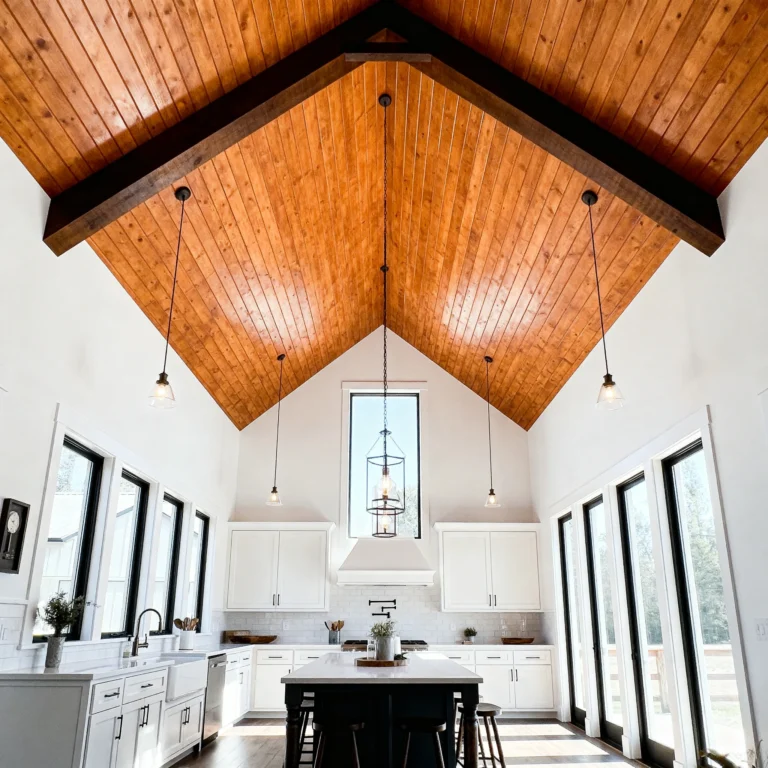
A bohemian kitchen with warm honey-toned exposed wooden ceiling beams and a substantial iron pot rack hanging from them displaying a collection of copper and cast iron cookware creates a kitchen atmosphere of such genuine artisanal warmth and culinary seriousness that the ceiling itself becomes the room’s most spectacular and most characterful design feature, transforming the typically ignored overhead plane of the kitchen into a complete display of the cook’s material culture and culinary craft values communicated through the specific selection and arrangement of cookware that hangs above the primary work surface as a permanent exhibition of functional beauty. The warm honey tones of the exposed wooden beams create the essential thermal quality that defines the bohemian farmhouse kitchen aesthetic at its most completely beautiful and most genuinely inviting.
The hanging pot rack suspended from ceiling beams serves the bohemian kitchen’s design goals at multiple levels simultaneously, providing highly practical immediate-access storage for the most frequently used cookware while creating the visual spectacle of copper and cast iron forms hanging at varying heights against the warm wood ceiling in a functional installation of considerable decorative power and material richness. Select the copper cookware for the pot rack display with attention to both functional quality and visual character, as the warm burnished tones of well-maintained copper create the most beautiful visual relationship with the honey-toned wooden beams and the warm kitchen atmosphere while also delivering genuine cooking performance advantages including excellent heat conductivity and precise temperature control that justify the investment in quality copper pieces whose functional excellence matches their considerable visual beauty.
5. Colorful Patterned Tile Floor in Geometric Moroccan Style
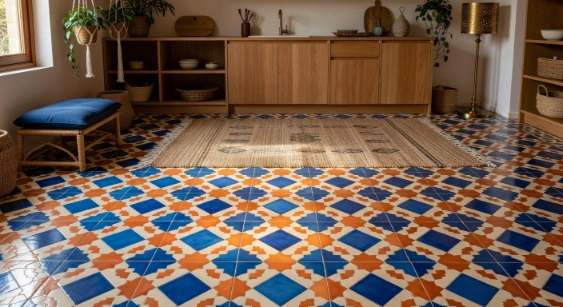
A colorful geometric Moroccan-style cement tile floor in a rich pattern of cobalt blue, terracotta, black, and cream creates a bohemian kitchen of such immediate visual drama and global decorative confidence that the floor itself becomes the kitchen’s primary artistic statement, every other element in the space subordinated in visual hierarchy to the extraordinary pattern underfoot that transforms the most fundamental plane of the kitchen interior into a continuous display of geometric art referencing the extraordinary tile design traditions of Morocco where zellige mosaic and pressed cement tile have produced some of the world’s most beautiful and most mathematically sophisticated decorative surface patterns across centuries of continuous craft development. Against simple, understated cabinetry that wisely steps back from competition with the spectacular floor, the Moroccan tile pattern performs at maximum visual impact.
Pressed cement tiles in Moroccan geometric patterns require specific installation and maintenance approaches that differ significantly from ceramic tile applications and that must be carefully followed to preserve both the beauty and the structural integrity of the cement tile surface across years of kitchen use. Seal cement tiles with a high-quality penetrating stone and cement sealer before grouting and again after grouting installation is complete, as unsealed cement tiles are highly porous and will absorb kitchen oils, acidic food spills, and cleaning product residues that permanently stain the tile surface and alter the brilliant color vibrancy of the geometric pattern that makes these floors so spectacularly beautiful in freshly installed condition. Reapply penetrating sealer annually in high-traffic kitchen applications to maintain the protective barrier that prevents staining and preserve the tile’s color depth across the extended period of use that the cement tile’s genuine material quality and beautiful design vocabulary fully justifies as a long-term kitchen flooring investment.
6. Woven Rattan Cabinet Fronts with Warm Wood Frames
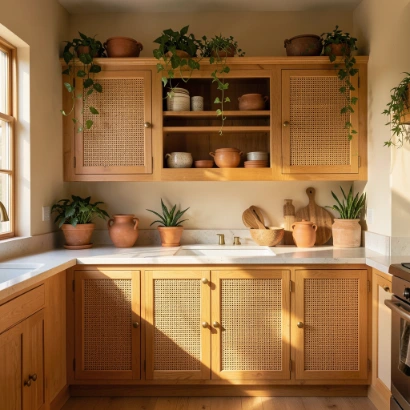
Kitchen cabinets with woven rattan cane insert fronts in warm honey-toned wooden frames create a bohemian kitchen material palette of such genuine organic warmth and artisanal craft character that they transform the typically cold, flat surfaces of conventional kitchen cabinetry into textured, light-filtering panels of natural fiber beauty that breathe visual life into the kitchen’s most dominant surfaces while simultaneously providing a semi-transparent view into the cabinet interior that encourages the beautiful organization of dishware, glassware, and pantry goods as deliberately displayed collections rather than randomly stored accumulations hidden behind opaque cabinet doors. The warm honey tones of natural rattan complement virtually every kitchen color palette and material combination available in the bohemian kitchen design vocabulary.
The installation of woven rattan cane inserts into existing cabinet door frames is among the most accessible and most dramatically impactful kitchen renovation projects available to the handy homeowner willing to invest a moderate amount of time and a genuinely modest material budget into transforming a dated or characterless kitchen into a space of genuine bohemian personality and organic material warmth. Remove existing cabinet door panels by routing out the panel from the back of the door frame, leaving the frame structure intact, and replace the removed panel with a sheet of pre-woven rattan cane webbing cut to the frame’s interior dimensions and secured around the frame’s back edge using a staple gun and decorative tacking strips that create a clean, professionally finished edge between the rattan and the wooden frame. Apply a coat of clear matte furniture wax to the rattan webbing surface after installation to protect the natural fiber from kitchen moisture and cooking grease accumulation that can discolor and weaken the rattan over time without appropriate surface protection.
7. Vintage Rug Runner on Bohemian Kitchen Floor
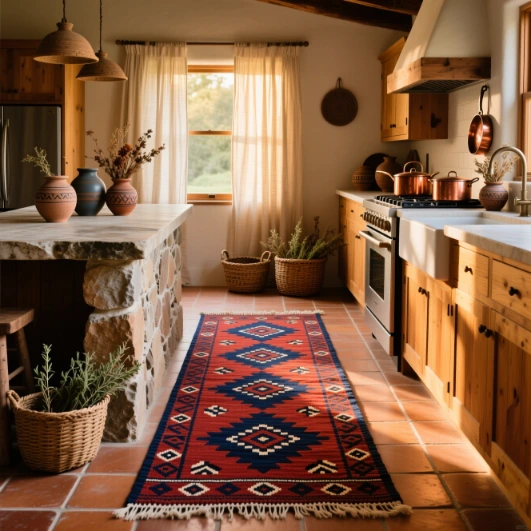
A vintage tribal pattern wool rug runner laid on the kitchen floor between the island and the primary cabinet run creates a bohemian kitchen feature of such unexpected warmth and genuine domestic charm that it single-handedly transforms the kitchen’s atmosphere from the typical cool hard-surfaced utilitarian work environment into something considerably more welcoming, more personally expressive, and more genuinely comfortable for the extended periods of standing that serious cooking requires. The specific comfort advantage of a thick wool rug under foot during long cooking sessions is practically significant as well as aesthetically beautiful, the wool pile’s natural cushioning providing measurable relief from the fatigue that hard tile, stone, and wood floors impose on the feet, legs, and lower back during extended standing work.
Selecting a vintage rug runner for kitchen use requires balancing the genuine aesthetic advantages of an authentic vintage textile against the practical challenges that kitchen environments present for any floor covering placed within them, including cooking spills, grease spatters, dropped food, water from the sink area, and the dragging of heavy pots and appliances across the rug surface. Choose runners with low to medium pile height in the kitchen application, as low-pile constructions are significantly easier to vacuum and spot-clean than deep pile alternatives and less likely to create trip hazards at their edges where they transition to the surrounding hard floor surface. Apply a non-slip rubber rug pad beneath the runner to prevent movement on hard kitchen floor surfaces, and establish a regular spot-cleaning routine using appropriate wool cleaning products that addresses cooking spills promptly before they penetrate the wool fiber and create permanent stains that even professional cleaning cannot fully remove.
8. Dried Flower and Herb Bundles Hanging from Kitchen Beams
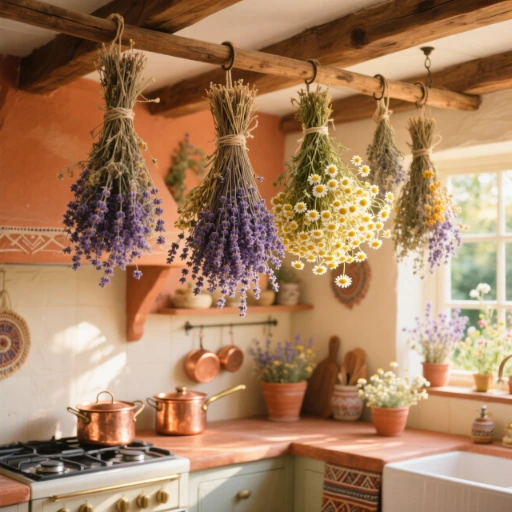
Abundant bundles of dried lavender, chamomile, sage, rosemary, and meadow flowers hanging upside down from kitchen beams or ceiling hooks create a bohemian kitchen feature of such enchanting botanical beauty and extraordinary aromatic richness that the kitchen becomes genuinely one of the most sensory-rich and atmospherically beautiful rooms in the home, the warm fragrances of drying herbs and flowers released continuously as they complete their drying process perfuming the kitchen air with a complex botanical scent of such genuine natural beauty that no candle or diffuser product can replicate the specific quality of fragrance that actual drying plant material produces in a warm, naturally ventilated kitchen environment. The visual spectacle of abundantly hung herb and flower bundles against warm terracotta or cream kitchen walls creates a domestic tableau of such complete cottage garden romance and genuine culinary culture authenticity that it appears to have evolved naturally over years of seasonal harvesting rather than being deliberately arranged for decorative effect.
Harvesting and hanging herbs and flowers for both culinary preservation and kitchen decoration requires attention to the specific harvesting timing and drying conditions that produce the most flavorful preserved herbs and the most beautiful dried botanicals simultaneously. Harvest culinary herbs at the moment before their flower buds fully open when the essential oil content in the leaves is highest and the flavor most concentrated, cutting long stems that can be gathered into generous bundles and secured with natural twine at the stem base before hanging with the foliage downward to allow the essential oils to drain toward and concentrate in the leaves rather than evaporating upward from the cut stem ends. Hang the bundles in the kitchen where they receive good air circulation and warmth that accelerates drying while avoiding direct intense sunlight that bleaches the colors of the dried botanicals more rapidly than the gentle indirect light that preserves the warm natural tones of dried lavender, chamomile, and rosemary most successfully.
9. Artisan Copper and Brass Hardware Throughout Kitchen
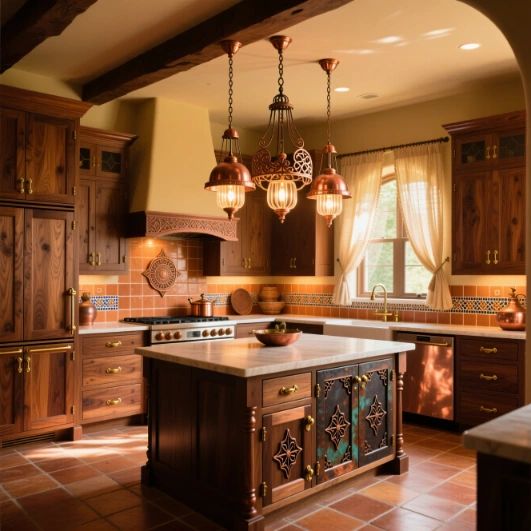
Artisan copper and brass hardware installed throughout the bohemian kitchen on every cabinet door pull, drawer handle, faucet fitting, light fixture, and decorative element creates a complete warm metallic material story of such extraordinary atmospheric coherence and genuine material luxury that the kitchen appears to be illuminated from within by its own warm golden light source, every copper and brass surface catching and reflecting ambient light in warm amber tones that amplify the kitchen’s natural and artificial illumination into a continuous display of warm metallic warmth that makes the entire space appear more beautiful, more inviting, and more thoughtfully designed than the same kitchen with cold chrome or brushed nickel hardware could achieve regardless of any other design quality. Copper and brass are the definitive bohemian kitchen metals.
Selecting artisan copper and brass hardware rather than mass-produced alternatives provides both the specific aesthetic qualities of genuine handcrafted metalwork and the particular joy of knowing that each piece was shaped by a skilled craftsperson rather than stamped from sheet metal by automated machinery without the individual variation and surface character that distinguishes handmade objects from their industrial equivalents. Artisan metalwork studios and specialty hardware makers available through Etsy and craft market networks produce kitchen hardware pieces of extraordinary variety in both form and finish, from the bright burnished copper of freshly worked and polished pieces through the warm reddish-brown of naturally developing patina to the deep chocolate and near-black of fully aged unlacquered copper that has been allowed to develop its complete natural oxidation patina over years of environmental exposure. Allow unlacquered copper and brass hardware to develop its natural patina rather than polishing it to artificial brightness, as the naturally aged surface acquires a depth and warmth of color that polished bright metal cannot achieve.
10. Global Spice Collection in Mismatched Glass Jars on Open Shelf
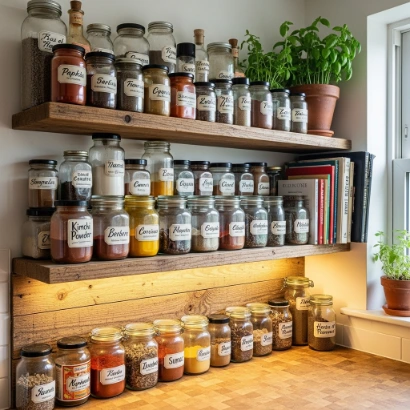
A global spice collection displayed in mismatched glass jars and vintage apothecary bottles on an open kitchen shelf creates a bohemian kitchen feature of such vivid color display and genuine culinary culture expression that it transforms a practical storage solution into a complete artistic installation of warm pigments, exotic fragrance, and culinary geography that communicates the cook’s adventurous global palette and genuine engagement with the world’s most extraordinary spice traditions with complete visual immediacy and sensory persuasion. The specific colors of a comprehensive global spice collection, the deep red of Kashmiri chili and smoked paprika, the vivid yellow of turmeric, the warm orange of saffron, the deep brown of cinnamon and cloves, and the pale green of dried herbs, create a chromatic display of extraordinary natural pigment beauty that rivals any deliberately curated color composition in its visual richness and genuine material authenticity.
Organizing a global spice collection in mismatched glass vessels requires the same compositional awareness as any other bohemian shelf display project, with the additional functional dimension of creating a storage system that allows rapid and confident identification of specific spices during the intense focus of active cooking when the need to locate exactly the right spice quickly is a genuine practical priority rather than a casual browsing experience. Handwrite labels in consistent script on small kraft paper tags tied to jar necks with natural twine rather than applying adhesive labels that are difficult to remove cleanly when jars are repurposed for different spices, and organize the collection with some consistent logic beneath its apparent decorative randomness, grouping spices by cuisine tradition, by flavor profile, or by frequency of use in a system that the cook can navigate quickly during the heat of kitchen activity without the visual charm of the display requiring the practical functionality of the storage system to be sacrificed.
11. Painted Kitchen Island in Earthy Bohemian Color
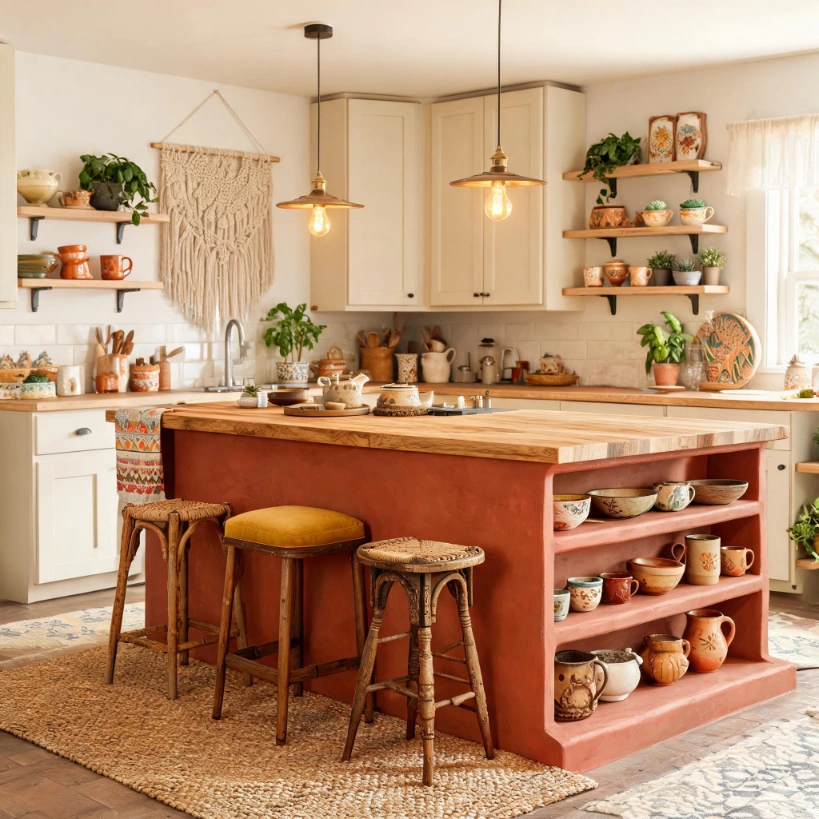
A kitchen island painted in a warm earthy terracotta or sage green color contrasting with lighter surrounding cabinetry creates a bohemian kitchen focal point of such confident color personality and distinctive visual character that it transforms the island from a merely functional work surface into the kitchen’s primary architectural personality element, a piece of kitchen furniture with the specific quality of a beloved antique or vintage piece that was chosen for its individual character rather than its matching coordination with the surrounding cabinetry. The contrasting color treatment signals a design philosophy of eclectic gathering and individual personality over the coordinated uniformity of matching kitchen suites, communicating the specific bohemian commitment to spaces that reflect their occupant’s genuine aesthetic choices rather than a developer’s or designer’s default to safe, broadly appealing neutrality.
The painted kitchen island’s color choice represents the single most impactful and most reversible design decision available in the bohemian kitchen renovation context, as paint allows the complete transformation of a functional piece of kitchen furniture for a comparatively modest financial investment that can be refreshed, modified, or completely changed in color direction whenever the creative spirit demands a new chromatic expression without the major expense and disruption of structural cabinetry replacement. Select a high-quality kitchen and bathroom specific paint formulated for high-humidity, high-traffic environments that provides excellent adhesion to previously painted or primed wood surfaces and superior resistance to the moisture, grease, and cleaning product exposure that kitchen furniture surfaces experience in daily residential use. Apply two to three thin coats with light sanding between coats rather than single thick applications that create brush marks, drips, and uneven sheen that detract significantly from the finished quality of a painted furniture piece.
12. Wabi-Sabi Plaster Walls with Organic Texture
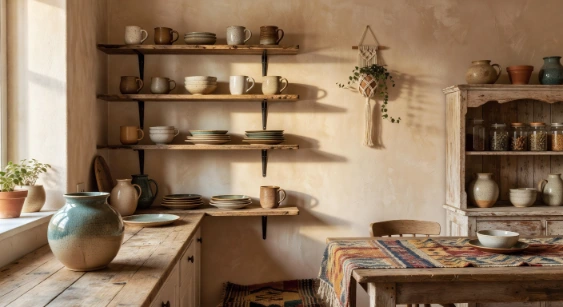
Wabi-sabi style plaster walls with organic textured finish showing natural variation and deliberate imperfection in warm cream and sand tones create a bohemian kitchen wall surface of such quietly profound beauty and philosophical depth that the kitchen itself becomes a lived expression of the Japanese aesthetic philosophy of finding beauty in imperfection, transience, and the natural processes of weathering and variation that give genuinely aged and handcrafted surfaces their irreplaceable character and their specific quality of earned, patient beauty that no artificially perfect surface can approximate. The organic plaster wall texture, with its gentle undulations, slight color variations, and evidence of the hand that applied it, transforms the kitchen’s dominant surface into a living study in the aesthetics of natural material authenticity.
Applying wabi-sabi style textured plaster to kitchen walls requires selecting plaster products specifically formulated for kitchen use that provide the moisture resistance and cleanability that kitchen environments demand without the smooth, hard surface that moisture-resistant conventional wall coatings produce at the cost of the organic texture and color variation that define the wabi-sabi plaster aesthetic. Limewash paint applied over a conventional painted wall surface creates a convincing approximation of aged plaster at significantly lower cost and complexity than true plaster application, its translucent layers building depth and color variation that simulates the specific tonal complexity of genuine aged lime plaster surfaces with remarkable fidelity when applied with the specific technique of brush-applied coats wiped back before complete drying to create the characteristic variation between lighter and darker zones that characterizes authentic limewash application. Apply multiple thin coats in slightly varying tones within a consistent warm neutral palette for the most nuanced and most authentically aged final result.
13. Colorful Stained Glass Window Panel for Kitchen Charm
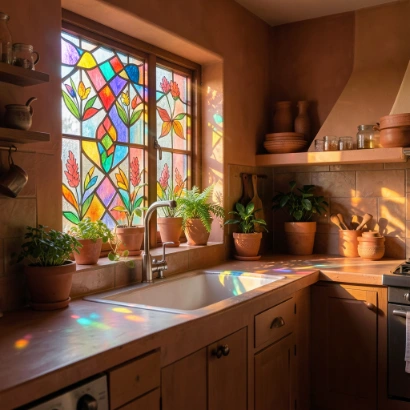
A handmade stained glass window panel in a colorful botanical or geometric design installed in or beside the kitchen window creates a bohemian kitchen feature of such genuinely magical light-transforming beauty that it changes the entire atmosphere of the kitchen during the hours when sunlight passes through its colored glass panels, casting jewel-toned reflections of red, amber, cobalt, and green across the kitchen surfaces, countertops, and walls in a continuously shifting display of colored light that makes the kitchen appear to be a space of almost sacred beauty during the specific morning or afternoon hours when direct sunlight strikes the colored glass at the angles that produce the most spectacular projected color displays. No other kitchen design element can create this specific quality of living, moving colored light.
Commissioning a handmade stained glass panel from a glass artist working in traditional lead came or copper foil techniques provides both the genuine craft quality and the specific artistic vision that transforms this kitchen feature from a decorative accessory into a genuine work of art permanently installed at the heart of the home’s most daily-used working space. Discuss the specific botanical, geometric, or abstract design direction with the glass artist before commission, providing reference images of the kitchen’s color palette and existing material character to ensure the stained glass panel’s color selection and pattern vocabulary create a harmonious dialogue with the surrounding kitchen rather than competing with it for visual dominance. Select glass types that balance translucency for maximum colored light projection with sufficient opacity for the privacy protection that kitchen windows sometimes require depending on the specific site conditions and urban or suburban context of the property.
14. Hanging Pendant Lights in Woven Rattan or Bamboo Shades
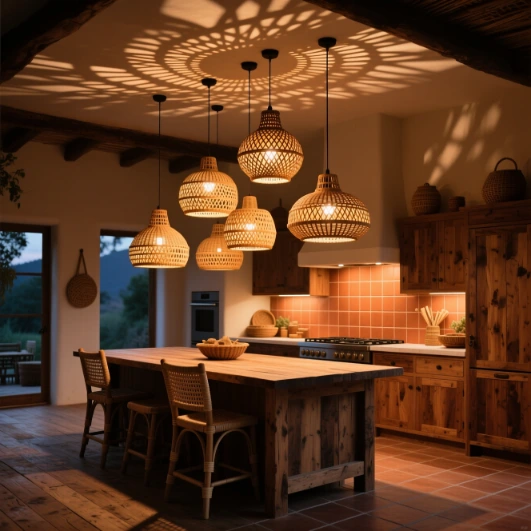
Hanging pendant lights with woven rattan or bamboo shades at varying heights above the kitchen island or dining area create a bohemian kitchen lighting feature of such extraordinary atmospheric warmth and natural material beauty that they transform the kitchen’s artificial lighting from a purely functional illumination system into a significant decorative element that simultaneously provides the practical light required for kitchen work and dining and creates the specific warm, dappled, amber-toned atmosphere of intimate illumination that defines the most beautiful and most genuinely inviting bohemian kitchen environments. The warm light glowing through the gaps in the woven fiber shade casts intricate shadow patterns on the ceiling and surrounding surfaces that create a living light installation of remarkable natural beauty and constantly shifting visual interest.
The selection of appropriate woven shade sizes and hanging heights for kitchen pendant lighting requires balancing the aesthetic desire for generous, visually substantial shades with the practical requirements of task illumination that kitchen work surfaces demand for safe and comfortable use during food preparation. Hang pendant shades over the kitchen island at a height of 28 to 36 inches above the counter surface for the most effective task illumination that still allows comfortable visual connection across the island without the shade obstructing eye-level sightlines between people working on opposite sides of the island surface. Select woven rattan or bamboo shades with a relatively open weave pattern for kitchen use rather than densely woven shades that block most of the light source’s output, as the kitchen requires sufficient downward illumination for safe knife work and ingredient identification that densely woven shades significantly compromise regardless of their visual beauty in the ambient illumination context.
15. Antique Wood Dining Table in Kitchen Eating Area
📸 Image Prompt: Warm inviting bohemian kitchen with antique or vintage solid wood farmhouse dining table in kitchen eating area, mismatched vintage wooden chairs and bench seating, linen table runner with tassel ends, ceramic candleholders and fresh flowers in earthenware vase as centerpiece, warm afternoon light, lived in family kitchen aesthetic, vintage wood table kitchen photography, photorealistic high resolution
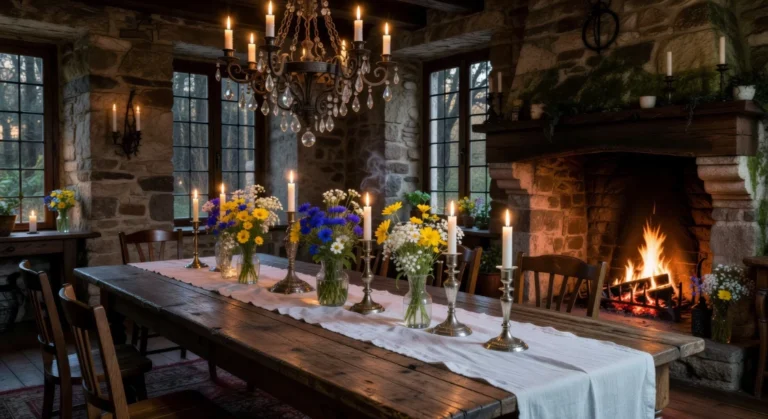
An antique or vintage solid wood farmhouse dining table in the kitchen eating area surrounded by mismatched vintage chairs and bench seating creates a bohemian kitchen gathering space of such genuine domestic warmth and accumulated material character that every meal eaten at it feels subtly different from and more richly contextualized than the same meal at a new, perfectly matched dining suite, the specific quality of aged wood with its dents, marks, and patina of long use creating a table surface of irreplaceable personal history that communicates the particular warmth of a home where real life has been lived with genuine engagement and honest affection for beautiful, imperfect, genuinely used things rather than the pristine preservation of objects too precious for daily contact with the full vitality of domestic life. Mismatched chairs amplify this quality of authentic accumulation.
The deliberate mismatching of chairs in a bohemian kitchen eating area communicates the most fundamental principle of the bohemian design philosophy, which is that beauty comes from the specific, the individual, and the personally meaningful rather than from manufactured uniformity and coordinated matching that substitutes commercial convenience for genuine aesthetic vision and personal creative intelligence. Assemble a mismatched chair collection with the same compositional awareness applied to any other bohemian gathering of varied objects, maintaining a consistent underlying logic of shared material, finish tone, or approximate scale that creates visual coherence despite the variety of individual chair forms, styles, and origins. Mix wooden chairs with rush or woven seats alongside simple painted wooden chairs, a vintage bentwood chair, and a wooden bench on one side of the table for the most genuinely bohemian seating composition that balances variety and coherence in the precise ratio that the best bohemian design consistently achieves.
16. Wall-Mounted Spice Rack with Terracotta Pots
📸 Image Prompt: Creative bohemian kitchen wall with rustic wooden wall mounted spice rack holding collection of terracotta clay pots of varying sizes filled with fresh and dried herbs and spices, handwritten labels on pots, herbs growing in some pots, warm kitchen wall light, artisan functional kitchen storage photography, terracotta pot herb display, photorealistic high resolution
A wall-mounted wooden spice rack holding terracotta clay pots of varying sizes as both fresh herb planters and dried spice storage creates a bohemian kitchen wall feature of such completely integrated functional beauty that it achieves the highest aspiration of thoughtful kitchen design, which is the complete synthesis of practical storage utility and genuine decorative pleasure in a single wall element whose usefulness and beauty are inseparable rather than in tension as they so frequently are in conventional kitchen storage approaches that prioritize function over character or character over function rather than finding the creative solution that delivers both simultaneously and completely.
Crafting handwritten labels for the terracotta pot spice collection using a fine brush and waterproof ink or a paint marker creates the specific quality of personal artisanal character that distinguishes a genuinely bohemian kitchen feature from its commercial equivalents, the handwriting itself communicating the specific personality and aesthetic sensibility of the person who created the kitchen’s functional beauty rather than the anonymous uniformity of printed labels that could belong to any household in any kitchen of similar style and aspiration. Use consistent ink color and script style across all labels for sufficient visual coherence while allowing the natural variation of handwritten rather than typed text to provide the subtle individual character that makes each label unique within the unified collection, and consider writing the herb or spice names in multiple languages that reflect the global culinary traditions from which each ingredient is most essentially drawn for a label system of both practical information and genuine global culinary culture appreciation.
17. Lush Indoor Plant Collection Throughout Kitchen
📸 Image Prompt: Lush vibrant bohemian kitchen completely filled with abundant indoor plant collection of varying sizes and species, large monstera and trailing pothos on shelves, small succulents on windowsill, hanging plants from ceiling hooks, terracotta pots throughout, warm kitchen light making plants glow green, biophilic design kitchen photography, jungle kitchen aesthetic, photorealistic high resolution
A lush indoor plant collection distributed abundantly throughout every available kitchen surface, shelf, windowsill, and hanging position creates a bohemian kitchen of such extraordinary biophilic richness and living botanical generosity that the kitchen environment achieves the genuine quality of a domestic jungle, every surface softened and enlivened by the specific organic presence of living plants that purify the air, regulate humidity, and provide the continuous psychological benefit of natural green connection that environmental psychology research consistently identifies as one of the most powerful contributors to human wellbeing, reduced stress, improved mood, and the specific quality of restorative calm that environments rich in natural living material consistently produce in their human occupants beyond the purely visual pleasure of their botanical beauty.
Building a kitchen plant collection of genuine lush abundance requires selecting species specifically suited to the varying microclimatic conditions that different kitchen zones present, as the high humidity of the sink area, the heat fluctuations near the cooker, the bright direct light of a south-facing windowsill, and the lower light levels of interior shelf positions each create distinct growing environments that favor different plant species with different environmental tolerances and light requirements. Monstera deliciosa and trailing pothos handle the lower light levels of interior shelf and hanging positions with excellent grace while producing the large-leafed tropical foliage that creates the most spectacular visual impact in the kitchen’s upper display zones, while herbs, succulents, and compact flowering plants thrive in the bright windowsill positions that receive the direct sunlight their more demanding light requirements necessitate for healthy productive growth and continuous visual vitality across the complete annual growing cycle.
18. Handmade Ceramic Backsplash Tiles in Irregular Organic Shapes
📸 Image Prompt: Stunning unique bohemian kitchen backsplash with handmade ceramic tiles in irregular organic shapes and varied matte glazes in warm tones of cream sage green dusty rose and terracotta, visible hand forming marks and slight dimensional irregularities, warm natural light revealing glaze depth, wooden shelving above, artisan ceramic tile installation photography, handmade ceramic kitchen aesthetic, photorealistic high resolution
A bohemian kitchen backsplash created from handmade ceramic tiles in irregular organic shapes and varied matte glazes in warm tones of cream, sage green, dusty rose, and terracotta creates the single most genuinely unique and artistically ambitious kitchen surface treatment available, as the combination of hand-formed tile shapes that eschew the geometric precision of manufactured tiles and the specific quality of individually glazed ceramic surfaces whose color and surface character varies slightly between adjacent tiles creates a backsplash of such complete material individuality and genuine ceramic art quality that it could not be replicated in any other kitchen anywhere because no two handmade ceramic tiles are ever exactly identical and no two installations of such tiles could ever produce the same specific configuration of form, color, and glaze variation. This backsplash is permanently and completely one of a kind.
Commissioning a handmade ceramic tile backsplash from a professional potter or ceramic artist requires the specific collaborative approach of working with the artist’s natural creative process rather than imposing rigid specifications that would constrain the organic variation that makes handmade ceramic tiles so extraordinarily beautiful compared to their manufactured alternatives. Establish the overall color palette direction, the desired tile scale range, and the general surface character preferences in initial design conversations while allowing the ceramic artist creative latitude in the specific tile forms, glaze applications, and surface textures that emerge from their individual working process, as the most beautiful handmade ceramic tile installations result from this collaborative relationship between the homeowner’s general design vision and the ceramic artist’s specific craft intelligence and material sensitivity rather than from the imposition of tight specifications that eliminate the creative freedom that produces the most genuinely exceptional ceramic work.