15 Traditional English Fireplace Ideas with Timeless Appeal
1. Inglenook Fireplace with Oak Beam Lintel
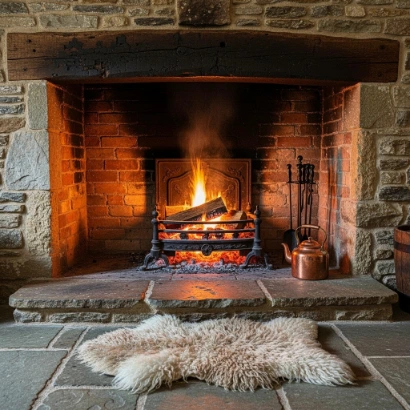
An inglenook fireplace with a reclaimed oak beam lintel is the oldest, most architecturally magnificent, and most atmospherically powerful of all traditional English fireplace forms, representing the direct descendant of the great medieval hall hearth around which entire households gathered for warmth, cooking, light, and the fundamental social rituals of daily domestic life across many centuries of English history. Source a genuinely aged oak beam with visible adze marks, mortise joints, and the beautiful dark carbonized surface that develops only through actual proximity to fire across many decades of use, as these marks of genuine age and honest service give the inglenook lintel its irreplaceable visual authority and historical authenticity that no new timber however carefully distressed can convincingly replicate. The inglenook’s characteristic deep recess, wide opening, and brick or stone-lined interior creates a fireplace of truly monumental domestic scale that transforms the surrounding room into a space organized entirely and naturally around the ancient, primal pleasure of an open fire.
Furnish the inglenook hearth with a substantial cast iron fire basket or dog grate holding a generous arrangement of split hardwood logs, a full set of polished steel or wrought iron fire irons in their companion stand, and a copper or brass coal scuttle that gleams warmly in the reflected firelight. Place a worn sheepskin rug directly on the flagstone floor in front of the hearth as an irresistible invitation to sit close to the fire, and add a low oak settle or a pair of Windsor chairs positioned within or immediately beside the inglenook to create the most intimate, sheltered, and gloriously warm seating arrangement that any English domestic interior has ever devised or perfected. This inglenook fireplace idea earns the deepest, most passionate, and most consistently devoted Pinterest engagement of any traditional English fireplace concept because it speaks directly to the most fundamental and universal human longing for warmth, enclosure, firelight, and the ancient, irreplaceable comfort of gathered life around an open hearth.
2. Georgian Marble Surround with Carved Mantel
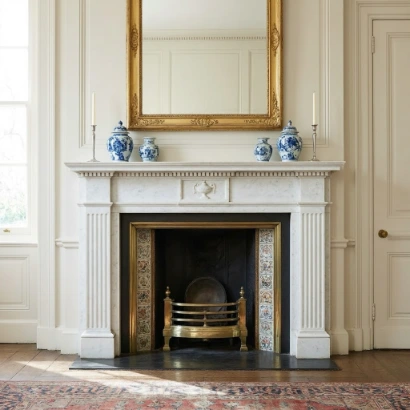
A Georgian marble fireplace surround with a carved mantelpiece is the most refined, classically proportioned, and architecturally distinguished of all traditional English fireplace forms, bringing the full intellectual authority of eighteenth-century Neoclassical design to any room it occupies with a confidence and elegance that has never diminished across more than two and a half centuries of continuous admiration and imitation. Choose a white statuary or veined Carrara marble surround featuring the characteristic Georgian decorative vocabulary of fluted pilasters, reeded jambs, a carved central tablet bearing a classical motif — an urn, a swag of husks, a Vitruvian scroll — and a clean horizontal mantel shelf supported by a dentil or egg-and-dart cornice of impeccable precision and restraint. The Georgian fireplace’s defining quality is its perfect proportional relationship between all its component parts, a relationship governed by the classical orders and executed with a mathematical clarity that makes even very plain examples of the type unmistakably beautiful and permanently satisfying to the eye.
Install a period-appropriate brass register grate within the marble opening, choosing a design with cast decorative panels, a polished steel fender, and a pair of brass-topped fire dogs for a complete hearth arrangement of authentic Georgian character and practical wood or coal-burning functionality. Dress the mantel shelf with a symmetrically arranged collection of blue and white Chinese export porcelain, a pair of ormolu candlesticks or silver candelabra, and a single small oil painting or a convex gilt mirror above the central tablet to complete the mantelpiece composition according to the eighteenth-century decorating conventions that gave the Georgian interior its characteristic quality of serene, intelligent, and beautifully ordered domestic elegance. This Georgian marble fireplace idea earns magnificent Pinterest engagement because it represents the most perfectly realized and historically complete expression of the English classical interior tradition — a fireplace that is simultaneously a functional hearth, an architectural element, and a genuine work of decorative art of permanent, timeless, and absolutely irreplaceable beauty and distinction.
3. Victorian Cast Iron Fireplace with Decorative Tiles
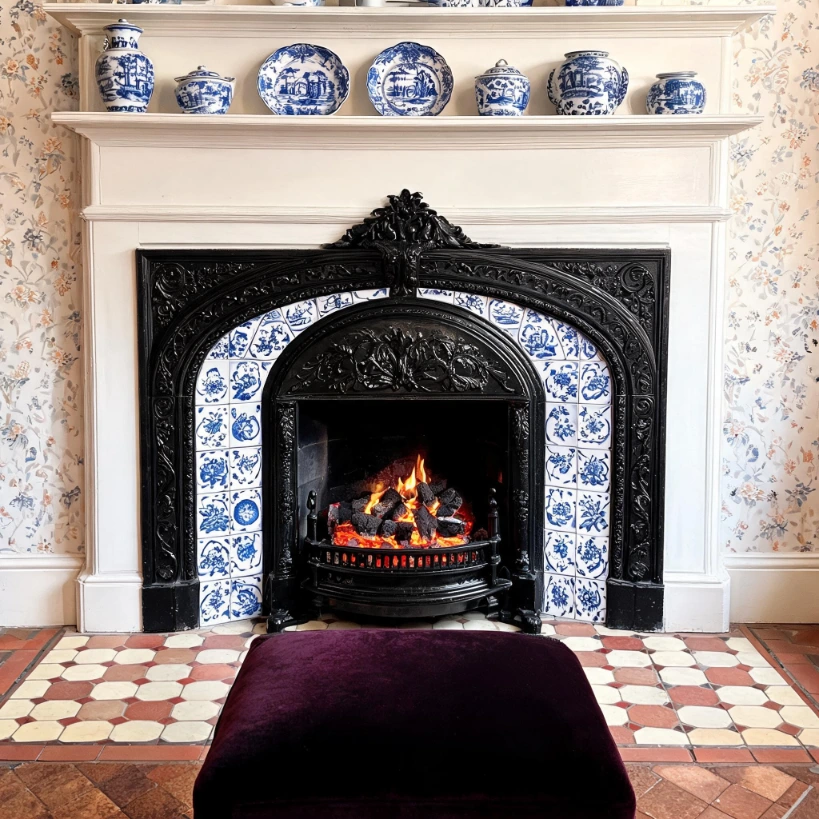
A restored Victorian cast iron fireplace with hand-painted decorative tiles is the most ornately detailed and visually complex of all traditional English fireplace types, reflecting the Victorian period’s exuberant, eclectic, and thoroughly unapologetic love of decorative richness, material variety, and the display of manufacturing skill at every scale from the grandest architectural element to the smallest incidental detail. Source a genuine Victorian cast iron register grate with its characteristic arched hood, decorative cast panels bearing naturalistic floral, gothic, or aesthetic movement motifs, and its original tile rebates designed to receive the hand-painted glazed tiles that give the Victorian fireplace its most distinctive and visually captivating feature. Choose original or period-reproduction Minton, Maw, or Wedgwood tiles in blue and white transfer patterns, hand-painted sunflowers and japonesque motifs, or geometric encaustic designs that represent the full decorative ambition and artistic range of Victorian ceramic production at its most confident and accomplished peak.
Pair the cast iron grate with a white painted timber overmantel surround featuring graduated shelving tiers above the main mantel shelf, creating additional display surfaces for a carefully arranged collection of blue and white pottery, small bronze figures, framed photographs in silver frames, and the various accumulated objects of Victorian decorative life that give the overmantel its characteristic quality of dense, richly layered, magnificently cluttered visual interest and domestic personality. Lay a tiled hearth in terracotta and cream encaustic tiles to complete the floor-level element of the fireplace composition, and add a buttoned velvet fender stool in a complementary jewel tone positioned across the full width of the fender for the most genuinely Victorian and supremely comfortable fireside seating arrangement. This Victorian cast iron fireplace earns exceptional Pinterest engagement because it is the most decoratively complex and visually rewarding of all traditional English fireplace types, offering an almost inexhaustible richness of detail, pattern, color, and historical character that rewards close examination and repeated visual discovery.
4. Arts and Crafts Fireplace with Handmade Tiles
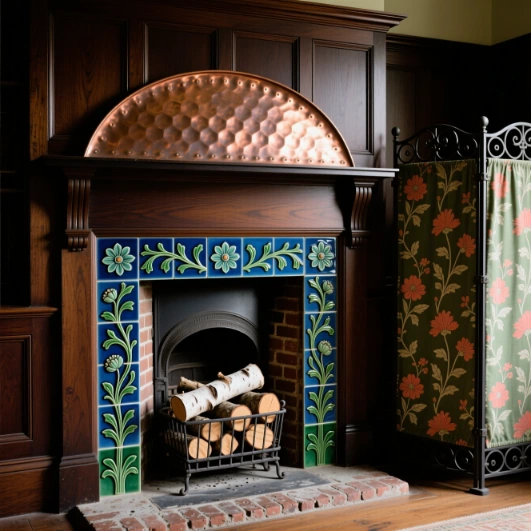
An Arts and Crafts fireplace featuring handmade relief tiles and a simple oak surround is the most philosophically principled and artistically distinctive of all traditional English fireplace forms, embodying the movement’s foundational belief in honest materials, skilled handcraft, and the moral and aesthetic superiority of objects made by hand with genuine artistic intention over those produced by industrial machinery without human creative involvement. Choose an oak surround of deliberate simplicity — plain chamfered jambs, an unornamented horizontal mantel shelf, and perhaps a single carved panel of stylized natural foliage above the opening — allowing the quality of the timber and the precision of the joinery to provide all the decorative interest that the surround requires without recourse to applied ornament or historical pastiche. Line the tile cheeks and hearth apron with handmade relief tiles by William de Morgan, William Morris, or contemporary studio tile-makers working in the Arts and Crafts tradition, choosing designs of stylized peacocks, medieval flora, lustre-glazed fish, or interlacing vine patterns in the deep jewel tones — peacock blue, bottle green, ruby red, warm ochre — that define the Arts and Crafts ceramic palette at its most magnificent and memorable.
Add a beaten copper canopy or hood above the fireplace opening as the most characteristic and authentically Arts and Crafts metalwork detail available to this fireplace type, its hand-hammered surface and warm reddish-gold tone providing a beautiful material counterpoint to the deep glazed tones of the surrounding tiles. Place a simple iron log basket filled with silver birch logs on the hearth, position a Liberty-fabric embroidered firescreen beside the grate, and hang a beaten copper or pewter convex mirror above the mantel shelf to complete the Arts and Crafts fireplace arrangement according to the movement’s own principles of beautiful, functional, honestly made, and aesthetically unified domestic design. This Arts and Crafts fireplace earns devoted Pinterest engagement because it represents the most ideologically coherent and artistically ambitious of all traditional English fireplace philosophies — a complete, principled vision of beauty achieved through the honest application of genuine skill, quality materials, and deeply held artistic conviction.
5. Edwardian White Painted Fireplace with Fluted Columns
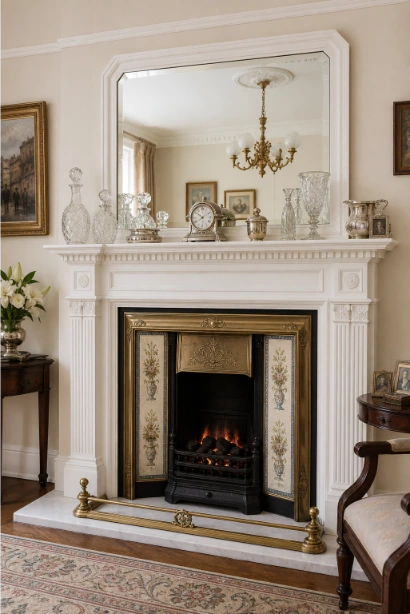
An Edwardian white painted timber fireplace with fluted column pilasters is the most elegantly proportioned and domestically refined of all traditional English fireplace types from the early twentieth century, representing the period’s characteristic tendency toward a lighter, more feminine reinterpretation of Georgian Neoclassical motifs freed from the heavy material gravity and ornate complexity of full Victorian elaboration. The Edwardian fireplace’s defining qualities are its crisp white paint finish, its delicate fluted pilasters with carved Ionic or Composite capitals, its light dentil or modillion cornice, and its overall sense of airy, accomplished elegance that makes it equally at home in a formal drawing room and a comfortable bedroom without ever feeling either too grand or too modest for its specific domestic context. Source an original Edwardian fireplace from a salvage dealer or commission a sympathetic reproduction from a specialist manufacturer using period patterns and traditional paint finishes of the appropriate quality and character.
Install a period-appropriate brass and enamel tiled insert within the painted surround, choosing a design with floral or geometric enamel tiles in soft Edwardian colors — pale blue, sage green, or ivory — and a polished brass fender of elegant, simple profile. Dress the mantel shelf with a collection of crystal and silver dressing table objects, a pair of bud vases with white sweet peas or narcissi, and a small carriage clock, then hang a beveled glass overmantel mirror in a white painted frame directly above to reflect the room and amplify the fireplace’s considerable light-gathering and space-enhancing qualities. This Edwardian white fireplace earns consistent Pinterest engagement because it is the most versatile, most broadly applicable, and most timelessly lovely of all traditional English fireplace types — a fireplace that improves virtually every room it inhabits regardless of the period, style, or decorative ambition of the surrounding interior.
6. Stone Cottage Fireplace with Bread Oven Alcove
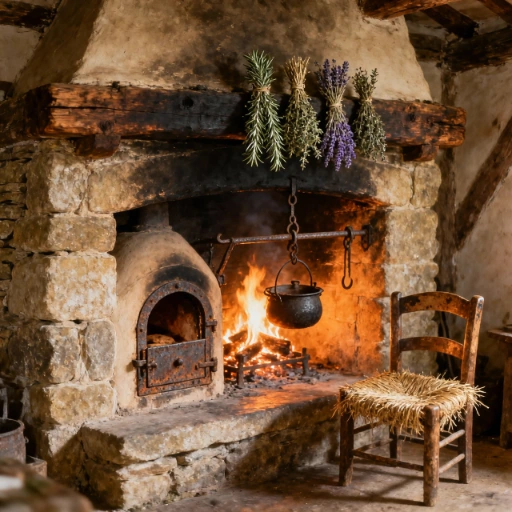
A stone cottage fireplace with a bread oven alcove is the most primitive, most historically complete, and most powerfully evocative of all traditional English fireplace forms, preserving in a single architectural feature the entire domestic economy of the pre-industrial English cottage and its intimate, resourceful, fire-centered way of life across many centuries of rural English history. Choose rough-hewn local limestone, granite, or sandstone blocks laid with minimal mortar and maximum irregularity for the surround construction, allowing the natural variation in stone color, texture, and form to create a fireplace of raw, elemental beauty that makes no concession to the smooth refinements of formal architectural design. The integral bread oven alcove to one side of the main hearth opening — with its original cast iron door, domed interior, and soot-darkened stone surfaces — is the most historically significant and architecturally fascinating element of this fireplace type, preserving a direct material connection to the daily domestic life of generations of English country families for whom this hearth was the sole source of heat, light, and cooked food throughout the entire year.
Furnish the stone hearth with the most authentic and historically appropriate accessories — a cast iron pot crane or adjustable chimney crane for hanging cooking vessels over the fire, a simple iron trivet, a clay or cast iron pot, and perhaps a long-handled toasting fork — choosing objects that speak honestly of the fireplace’s original functional character rather than purely decorative accessories inappropriate to its vernacular, working-kitchen origin. Hang bunches of dried rosemary, lavender, and sage from the oak beam above the hearth opening for fragrance and color, and place a simple rush-seated wooden chair beside the fire for the most authentic and atmospherically perfect companion piece to this most genuinely historic and deeply moving of all traditional English fireplace forms. This bread oven fireplace earns exceptional Pinterest engagement because it represents the most complete and emotionally powerful surviving evidence of the English cottage’s ancient domestic life — a fireplace that is simultaneously a historical artifact, a functional hearth, and an irreplaceable architectural witness to the daily realities of English rural life across many centuries.
7. Library Fireplace with Flanking Bookshelves
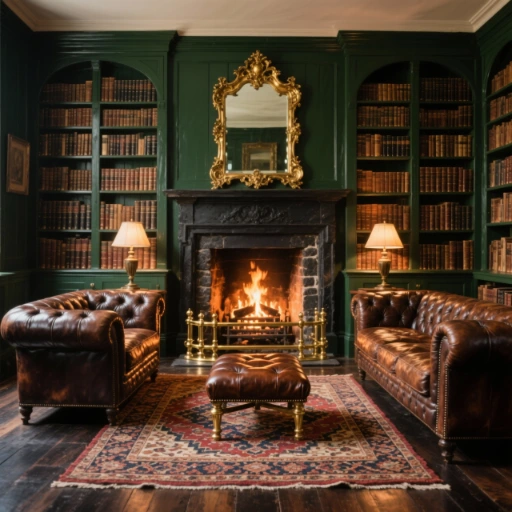
A library fireplace flanked symmetrically by floor-to-ceiling bookshelves is the most intellectually distinguished and architecturally complete of all traditional English fireplace arrangements, creating a unified chimney breast composition of extraordinary visual authority in which the fireplace and its surrounding library shelving function together as a single, grandly scaled piece of fitted furniture that defines the entire room’s character and purpose. Design the flanking bookshelves to the same height as the chimney breast and paint them in the same deep, saturated color — forest green, Oxford navy, or warm charcoal — as the fireplace surround itself, creating a continuous horizontal band of dark-painted joinery that frames the fire opening and extends outward to embrace the full width of the chimney breast wall with harmonious, carefully proportioned symmetry. Fill the shelves floor to ceiling with leather-bound volumes arranged by color and height, interspersed with bronze figures, portrait miniatures, and small antique objects that give the library wall its characteristic quality of accumulated, purposeful, intellectually rich visual density.
Position a substantial leather Chesterfield sofa directly facing the fire at the optimal distance for comfortable warmth and conversation, and add a generously proportioned brass club fender with padded leather seat tops around three sides of the hearth as the most practically useful and historically authentic fireside seating accessory in the English library tradition. Hang a large gilt overmantel mirror above the mantel shelf to reflect the firelight and the book-lined walls behind the sofa in a continuously shifting composition of amber light and leather spine colors that is one of the most beautiful and deeply satisfying visual experiences available in any domestic interior. This library fireplace concept earns outstanding Pinterest engagement because it represents the absolute pinnacle of the English intellectual domestic tradition — a fireplace arrangement that is simultaneously grand and intimate, historically authoritative and personally comfortable, and visually spectacular in a way that inspires genuine admiration and profound, lasting desire in every person who encounters it.
8. Bedroom Fireplace with Cast Iron Hob Grate
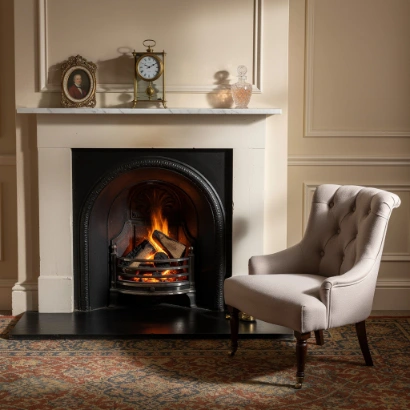
A bedroom fireplace with an original cast iron hob grate is the most intimately scaled and personally domestic of all traditional English fireplace types, creating the most private, most quietly luxurious, and most genuinely comforting form of fireside experience available within the English country house — the bedroom fire lit on a cold evening, warming the room for the retiring hour and providing a last meditative focus of flickering light before sleep. Choose a simple white painted timber surround of modest, unpretentious proportions appropriate to a bedroom’s more intimate scale and personal character, framing an original cast iron hob grate with its characteristic flat-topped hobs on either side of the fire opening that were originally used for keeping a bedroom kettle warm or simmering a small pot of posset or spiced ale for an unwell household member. The hob grate’s arched decorative hood, polished steel fire bars, and compact proportions make it the most perfectly scaled and most authentically period-appropriate fireside fitting for a traditional English bedroom interior of any era from the mid-Georgian period through to the Edwardian.
Dress the white marble mantel shelf with the most intimate and personally scaled accessories appropriate to a bedroom setting — a French carriage clock ticking quietly in the center, a small portrait miniature in an oval gilt frame, a crystal perfume bottle catching the firelight, and perhaps a pair of small enamel boxes or a china figurine on either side — creating a mantel composition of personal, unhurried, gently beautiful domestic detail that feels entirely appropriate to the private world of a well-appointed English country house bedroom. Position a small button-backed nursing chair or a comfortable tub chair directly beside the hearth as the perfect reading and firegazing seat for winter evenings. This bedroom fireplace idea earns deeply felt Pinterest engagement because it represents the most intimate and personally meaningful of all traditional English fireplace experiences — the private domestic luxury of a bedroom fire on a cold night that has remained one of the most universally desired and profoundly comforting pleasures of English country house life across every century of its long, warm, and beautiful history.
9. Drawing Room Fireplace with Matching Overmantel
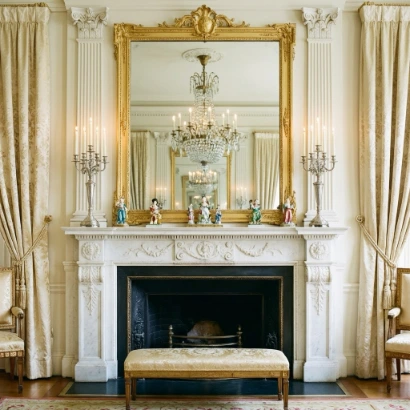
A drawing room fireplace with a matching carved overmantel and central mirror is the most formally magnificent and socially commanding of all traditional English fireplace compositions, representing the drawing room’s role as the principal reception space of the English country house and the fireplace’s consequent responsibility to make the most impressive, the most beautiful, and the most culturally authoritative decorative statement of any element within it. Commission or source a matched marble surround and carved timber overmantel as a unified architectural composition, designing the overmantel to rise from the mantel shelf to the cornice or even beyond, incorporating a large central beveled mirror flanked by carved pilasters, graduated shelving tiers, and perhaps a broken pediment at the apex that makes the full chimney breast treatment read as a single, grandly scaled piece of architectural furniture of the highest decorative ambition. The unity of surround and overmantel transforms the entire chimney breast from a simple fireplace wall into a complete interior architectural composition of genuine grandeur and formal decorative authority.
Dress the overmantel shelves with a carefully arranged symmetrical display of Meissen or Chelsea porcelain figures, pairs of blue and white Chinese vases, small bronze and ormolu objects, and miniature portrait paintings in oval gilt frames — building the display with the precise, formally balanced symmetry that the classical overmantel composition demands and that the drawing room’s ceremonial social character historically required. Place tall silver or ormolu candelabra on the mantel shelf flanking the overmantel base, a silk-covered fender stool across the full width of the brass fender, and a pair of matching armchairs angled toward the fire on either side to complete the drawing room fireplace arrangement. This drawing room overmantel fireplace earns magnificent Pinterest engagement because it is the most formally splendid and architecturally ambitious of all traditional English fireplace concepts — a complete, unified composition of extraordinary decorative grandeur that represents the English country house interior at its most magnificent, most accomplished, and most timelessly and irreplaceably beautiful.
10. Kitchen Range Fireplace with Bread Shelves
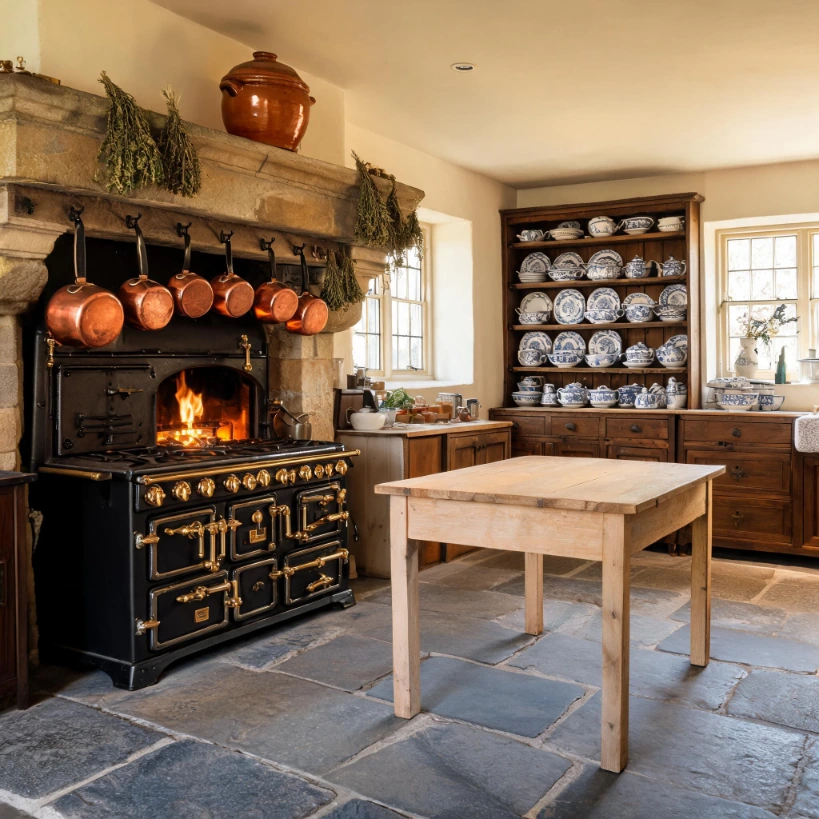
A kitchen range fireplace with a wide stone mantel and surrounding bread shelves is the most functionally historic and domestically warm of all traditional English fireplace forms, preserving the kitchen hearth’s original role as the productive, nourishing, fragrant center of the English country house’s entire daily domestic life and the source of all its warmth, food, and gathered household community. Install or restore an original Victorian or Edwardian cast iron range — an Aga, a Rayburn, or a period open range with its characteristic ovens, hotplates, and brass fittings — set within a wide stone or brick kitchen fireplace opening that communicates the enormous scale and functional importance of the original kitchen hearth from which the modern cooking range is directly descended. The range’s continuous low-level warmth, its quietly ticking mechanical sounds, and the faint smell of warming cast iron combine to create the most powerfully domestic and emotionally comforting kitchen atmosphere available to any English country home regardless of its age, size, or architectural character.
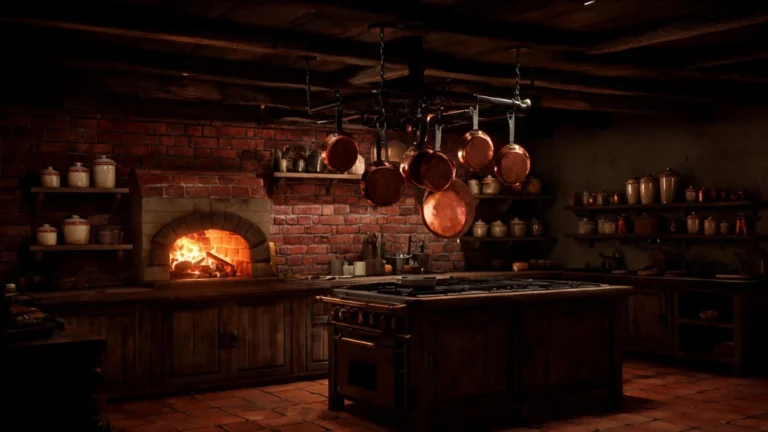
Build or restore the wide stone mantel above the range to provide a generously proportioned shelf for warming plates, displaying large kitchen pottery, hanging bunches of drying herbs and flowers, and resting the various practical implements of an actively used country kitchen that give this mantel its honest, working character so entirely distinct from the purely decorative drawing room or library mantlepiece. Arrange copper saucepans of varying sizes on hooks below the mantel edge, hang bundles of dried lavender, rosemary, and bay from the mantel soffit, and place a large stoneware bread crock beside a pair of salt-glazed storage jars on the mantel shelf itself. This kitchen range fireplace earns profound and devoted Pinterest engagement because it represents the most emotionally resonant and materially honest of all traditional English fireplace forms — a hearth that is not decorative but genuinely, warmly, and irreplaceably useful at the living center of the most important room in the entire English country house.
11. Regency Period Fireplace with Brass Inlay
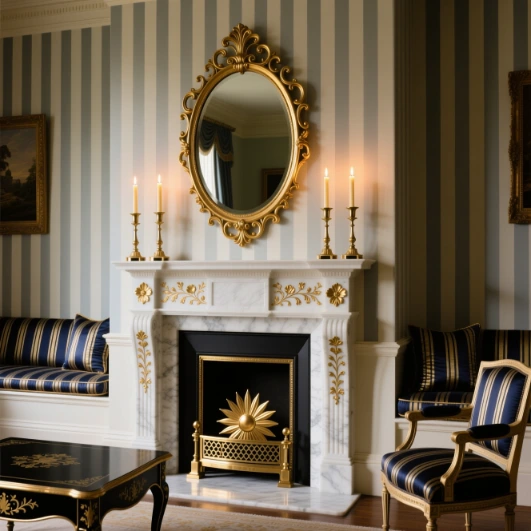
A Regency period fireplace with brass inlay stringing on the marble surround is the most exquisitely refined and decoratively sophisticated of all traditional English fireplace types from the early nineteenth century, representing the culminating refinement of English Neoclassical fireplace design in the period of its greatest elegance, its most assured technical accomplishment, and its most precisely calibrated sense of decorative proportion and material luxury. The Regency fireplace’s characteristic distinguishing features — thin brass stringing inlaid into white or colored marble pilasters and friezes, brass Anthemion or honeysuckle motifs applied to the frieze tablet, an exceptionally crisp and shallow mantel shelf profile, and a register grate of fine reeded brass design — represent the application of Regency design principles to the fireplace with the same refined exactitude that characterized the period’s furniture, silver, and decorative arts across every medium and domestic context. The total effect is one of brilliant, cool, perfectly controlled decorative intelligence that remains as visually compelling and as formally satisfying in the present day as it was at the height of its original fashionable triumph in the second decade of the nineteenth century.
Install a period-appropriate brass register grate with a sunburst or fan-vaulted cast panel design and a polished brass fender of the correct Regency profile — elegant, relatively low, and finished to the highest standard of metalwork quality — to complete the fireplace opening with the caliber of craftsmanship that the Regency marble surround demands and deserves. Hang a convex bullseye mirror in a carved gilt frame above the mantel shelf — the most characteristically Regency of all mirror forms — to reflect the room’s occupants and candlelight in the slightly distorted, fish-eye perspective that gives this mirror type its uniquely fascinating and period-specific visual character. This Regency brass inlay fireplace earns outstanding Pinterest engagement because it is the most precisely period-specific and decoratively accomplished of all traditional English fireplace types — a fireplace of genuine historical distinction whose qualities of material refinement, proportional perfection, and quietly dazzling decorative intelligence reward close examination with a pleasure that only increases with familiarity and knowledge.
12. Rustic Brick Fireplace with Wooden Mantel
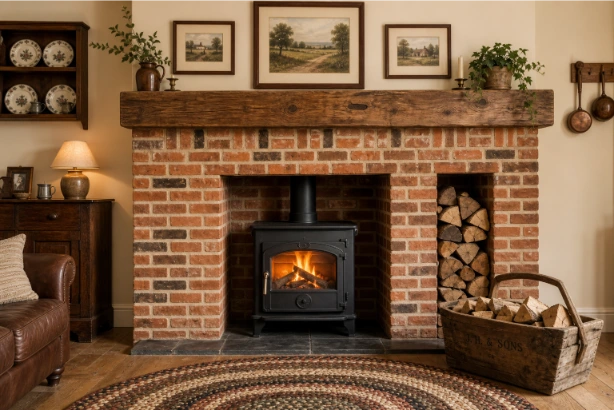
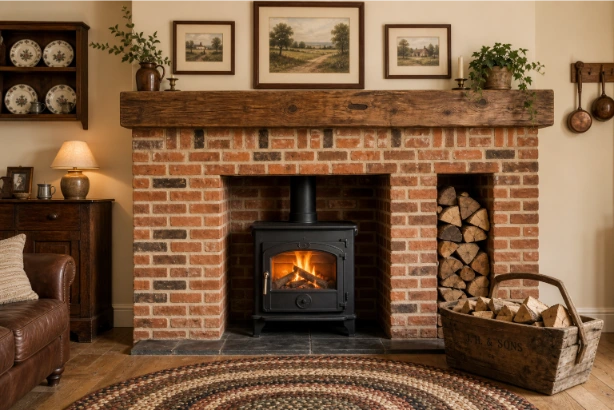
A rustic brick fireplace with a thick reclaimed timber mantel shelf is the most straightforwardly honest and unpretentiously beautiful of all traditional English fireplace types, celebrating the simple material dignity of handmade brick, genuine timber, and the visual directness of a fireplace that makes no claim to formal architectural pretension but achieves instead a warm, solid, completely authentic beauty through the quality of its materials and the honesty of its construction. Choose handmade or reclaimed red brick in the warm, slightly varied tones and subtly irregular surface texture that machine-made modern brick entirely lacks, laying the fireplace surround in traditional Flemish or English bond with slightly recessed mortar joints that emphasize each brick’s individual character and the overall composition’s satisfying material rhythm. The handmade brick’s warm ochre, terracotta, and sand tones create a fireplace that glows with its own material warmth even when the fire is unlit, making it a beautiful and comforting presence in the room throughout every hour of the day and every season of the year.
Select a reclaimed pine or oak mantel shelf of substantial thickness — at least four inches deep and wide enough to overhang the brick surround generously on either side — choosing a piece with visible grain, natural color variation, and perhaps some original saw marks or minor imperfections that confirm its genuine reclaimed character and honest material provenance. Set a cast iron wood-burning stove within the brick opening for maximum heating efficiency and the most visually satisfying combination of traditional brick surround with contemporary burning technology. This rustic brick fireplace earns enthusiastic Pinterest engagement because it is the most immediately achievable, most broadly applicable, and most genuinely warm and welcoming of all traditional English fireplace types — a fireplace whose simple, honest material beauty and unaffected domestic character make it as appropriate and appealing in a modern country cottage as in the most historic and characterful of genuine English rural homes.
13. Gothic Revival Fireplace with Pointed Arch
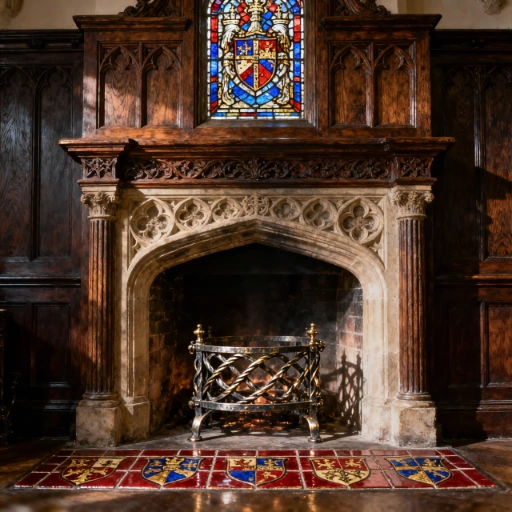
A Gothic Revival fireplace with a pointed arch surround and carved medieval decorative motifs is the most dramatically romantic and architecturally theatrical of all traditional English fireplace types, channeling the spiritual and aesthetic authority of English Gothic ecclesiastical architecture into the domestic interior with a bold, imagination-stirring effect that makes an immediate and unforgettable impression on every person who enters the room. Choose a carved stone or painted timber surround with a steeply pointed arch above the fire opening, flanked by slim pilasters bearing carved trefoil, quatrefoil, and crocketed Gothic motifs executed with the archaeological precision and genuine love of medieval decorative language that distinguished the best Gothic Revival designers from their more superficial imitators. The pointed arch’s dramatic silhouette dominates the chimney breast wall with an authority that is simultaneously spiritual and domestic — recalling the great Gothic fireplaces of medieval English castles and manor houses while functioning entirely appropriately within the context of a nineteenth or twentieth century English country house interior of serious decorative ambition.
Install a polished wrought iron fire basket with twisted medieval-style bar work and decorative finials that complement the Gothic decorative vocabulary of the surrounding stone surround, and lay a heraldic encaustic tiled hearth featuring fleur-de-lis, heraldic shields, and medieval foliate patterns in terracotta and cream. Add a carved oak overmantel with linen-fold panel details above the mantel shelf and perhaps a small panel of stained glass set into the chimney breast directly above the overmantel apex for a jewel-bright burst of medieval color and light. This Gothic Revival fireplace earns tremendous Pinterest engagement because it is the most boldly imaginative and romantically distinctive of all traditional English fireplace types — a fireplace that transforms its surrounding room into a space of genuine historical drama and architectural fantasy that rewards the courage of its decorative conviction with an interior experience of extraordinary and permanently memorable beauty.
14. Painted Overmantel Landscape Panel
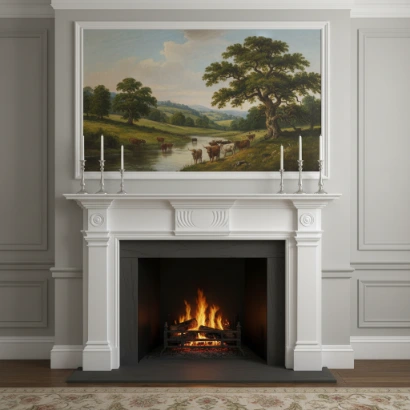
A painted landscape panel set into the overmantel above the fireplace is one of the most artistically distinguished and historically significant traditional English fireplace treatments, transforming the chimney breast into a permanently installed work of art that brings a romanticized vision of the English countryside landscape into the interior of the country house in the most direct and visually commanding possible form. Commission an original oil or egg tempera painting of the surrounding landscape — depicting the actual fields, woodland, hills, and skies visible from the house’s windows in their most idealized and beautifully composed form — and fit it into a purpose-built painted timber overmantel frame that integrates the painting architecturally with the fireplace surround below and the paneled room walls on either side. The painted overmantel panel’s integration into the architectural fabric of the room gives it a permanence and authority that no separately hung painting however large can achieve, making it simultaneously a decorative feature, an architectural element, and a permanent artistic commission of genuine cultural significance.
Choose a subject and compositional approach that reflects the eighteenth-century English landscape painting tradition of Claude Lorrain-influenced pastoral beauty — ancient oaks framing a middle distance view of parkland and grazing cattle, a meandering river reflecting the sky, a harvest scene in the golden late-afternoon light of an English summer — rendered in the warm, amber-toned palette and idealized compositional language of the great English country house landscape tradition. Frame the painted panel within carved pilasters and a cornice that precisely match the architectural language of the fireplace surround below, unifying the complete chimney breast composition from hearth level to cornice with a single, continuously developed architectural and artistic intention. This painted overmantel fireplace earns exceptional Pinterest engagement because it represents the most artistically ambitious and culturally significant of all traditional English fireplace ideas — a chimney breast treatment that elevates the fireplace from beautiful furnishing to permanent artwork and makes the room it occupies a place of genuine, lasting, and irreplaceable artistic distinction.
15. Farmhouse Fireplace with Pewter and Iron Accessories
A broad English farmhouse fireplace dressed with pewter and iron accessories is the most materially honest and domestically complete of all traditional English fireplace expressions from the rural vernacular tradition, creating a hearth arrangement of extraordinary authenticity and warmth that celebrates the working materials, productive rhythms, and simple, genuine beauty of English agricultural domestic life across many centuries of unbroken rural continuity. Choose a wide, low fireplace opening spanned by a heavy oak beam lintel of substantial section, with a brick-lined interior hearth broad enough to have accommodated the serious cooking fires of an active farmhouse kitchen before the arrival of the enclosed iron range that brought a new order of cooking efficiency and a new aesthetic of enclosed, controlled heat to the English farmhouse interior in the nineteenth century. The farmhouse fireplace’s characteristic horizontal proportions, its emphasis on breadth over height, and its lack of any formal architectural pretension communicate immediately and honestly the productive, practical, earth-connected character of the English farming household that built, used, and maintained this hearth through every season of agricultural labor and domestic life.
Arrange a display of genuine antique pewter plates, chargers, and tankards on the oak mantel shelf and a wall-mounted plate rack above it, choosing pieces with the beautiful dull silver patination and slight irregularity of surface that distinguish hand-cast period pewter from modern reproduction ware. Hang iron pot hooks, ladles, and long-handled cooking implements from the oak beam above the hearth, position an iron trivet beside the grate, and lay a bundle of dried lavender against the fireback for fragrance and color. Place a hand-hooked rag rug of traditional geometric pattern on the flagstone floor directly in front of the hearth to define the fireside as a particular domestic zone of warmth, color, and textile comfort within the broader stone-floored farmhouse interior. This farmhouse pewter and iron fireplace earns the most devotedly enthusiastic and emotionally engaged Pinterest responses of any traditional English fireplace concept because it represents the most genuinely historic, most materially authentic, and most profoundly rooted expression of the English domestic hearth — a fireplace that is not beautiful because it is decorated but because it is honest, complete, and timelessly, deeply, and irreplaceably real.