15 Mexican Hallway Design Ideas with Vibrant Charm
1. Talavera Tile Accent Wall
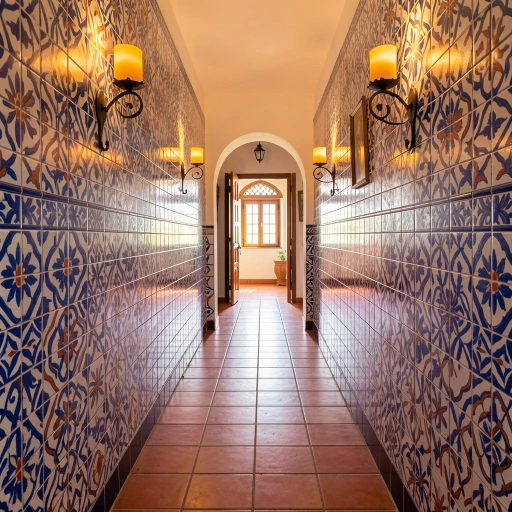
A Talavera tile accent wall is the single most impactful and most authentically Mexican design statement you can introduce into a hallway space — transforming an ordinary transitional corridor into a gallery of hand-painted ceramic artistry that tells the centuries-old story of Mexican craft tradition with every intricate geometric pattern, every hand-applied cobalt brushstroke, and every beautifully imperfect tile that makes this style of wall treatment more genuinely beautiful than any factory-produced alternative could ever approach. Talavera’s distinctive color palette — deep cobalt blue, warm terracotta, sun-soaked yellow, forest green, and clean white — creates a hallway atmosphere of extraordinary visual richness that welcomes every person who enters with an immediate, unmistakable sense of place and cultural warmth that is impossible to replicate through any other single design decision.
Install Talavera tiles from floor to dado height for a traditional wainscoting approach that pairs beautifully with a whitewashed plaster upper wall, or commit fully to a complete floor-to-ceiling tile wall for maximum dramatic impact in a narrow hallway where a single statement surface can transform the entire spatial experience. Source tiles from authentic Talavera producers in Puebla, Mexico — the UNESCO-recognized birthplace of this specific ceramic tradition — to ensure the genuine hand-painted quality, natural pigment depth, and slight surface variation that distinguishes authentic Talavera from mass-produced ceramic imitations. Pair the tile wall with warm terracotta floor tiles, a wrought iron wall sconce with amber glass, and a carved wooden console table beneath for a complete, cohesive, and deeply authentic Mexican hallway design that honors the full visual tradition it references with complete sincerity and genuine craft appreciation.
2. Arched Doorways with Colorful Molding
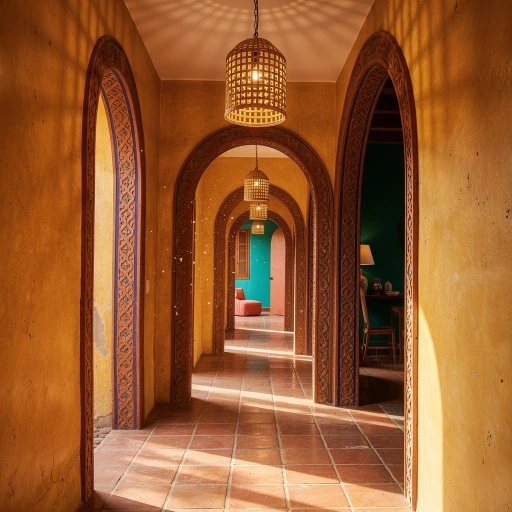
Arched doorways outlined with hand-painted decorative molding in traditional Mexican colors are the architectural intervention that most fundamentally and most permanently transforms a hallway from a functional transitional space into a genuinely beautiful, culturally resonant passage that makes every movement through the home feel like a journey through a thoughtfully designed environment rather than a utilitarian necessity. The arch is the defining architectural element of authentic Mexican and Spanish Colonial interior design — its curved form softens the hard angles that dominate contemporary construction, creates a visual sense of depth and layered space that makes even narrow hallways feel more generous and more architecturally interesting, and provides the perfect framing device for the colorful, inviting rooms visible beyond each successive threshold.
Hand-paint the molding that follows each arch’s curve in a combination of colors drawn from the traditional Mexican palette — cobalt blue on a warm terracotta base, ochre yellow outlined in forest green, or deep burgundy outlined in cream white — using a brush-applied technique that intentionally maintains the slight variations and brushstroke texture of handmade application rather than the uniform precision of painter’s tape and roller. The imperfection is the authenticity. Commission a local artisan or decorative painter who understands traditional Mexican decorative motifs — geometric borders, stylized botanical forms, and the specific color combinations of pre-Columbian and colonial Mexican visual culture — to apply a complete decorative border that transforms each arch from simple structural opening into a framed, painted work of architectural art. This design decision requires neither renovation nor major construction — it is achievable in any home with arched openings and the willingness to commit to genuine color and craft.
3. Rustic Terracotta Floor with Painted Borders
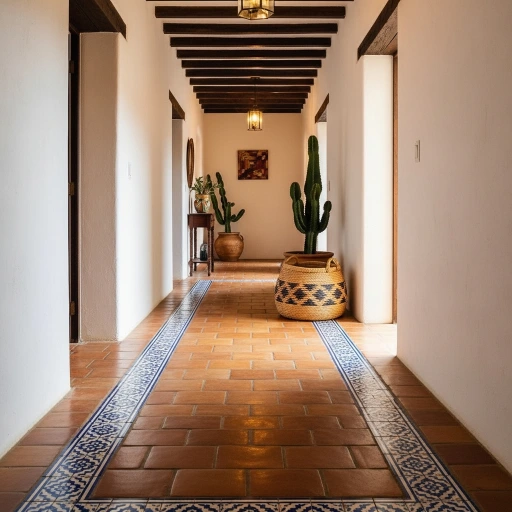
A rustic terracotta tile floor with hand-painted decorative borders running along both edges of the hallway is the foundational design element that most completely establishes the authentic Mexican hacienda aesthetic from the ground up — literally — creating the warm, earthy, sun-baked visual foundation upon which every other Mexican design element in the hallway builds with natural harmony and material cohesion. Terracotta’s specific warm orange-red tone is one of the most deeply characteristic colors of the Mexican interior tradition, drawing its visual authority from thousands of years of use in Mexican architecture, from pre-Columbian fired clay to colonial hacienda construction, making it simultaneously the most historically grounded and the most immediately recognizable single material choice in the authentic Mexican design vocabulary.
The painted border transforms an already beautiful terracotta floor into a uniquely personalized, artisan-crafted surface with the visual complexity and cultural specificity of a custom-commissioned work rather than a standard flooring installation. Apply the border using outdoor-grade floor paint in cobalt blue and white — the most classically Mexican color combination — in geometric patterns inspired by traditional Mexican textile and ceramic motifs: interlocking squares, stepped diamond patterns, stylized cross forms, and the repeating border geometries of pre-Columbian Zapotec and Mixtec visual culture. Seal the finished painted border with multiple coats of penetrating floor sealer for durability and long-term color preservation through years of regular foot traffic. Pair the terracotta and painted border floor with whitewashed adobe walls, exposed wooden ceiling beams, and handwoven natural fiber runner rugs for a complete, layered, and deeply authentic Mexican hallway floor treatment that grounds the entire design with warmth, history, and genuine craft beauty.
4. Vibrant Papel Picado Banner Ceiling Installation
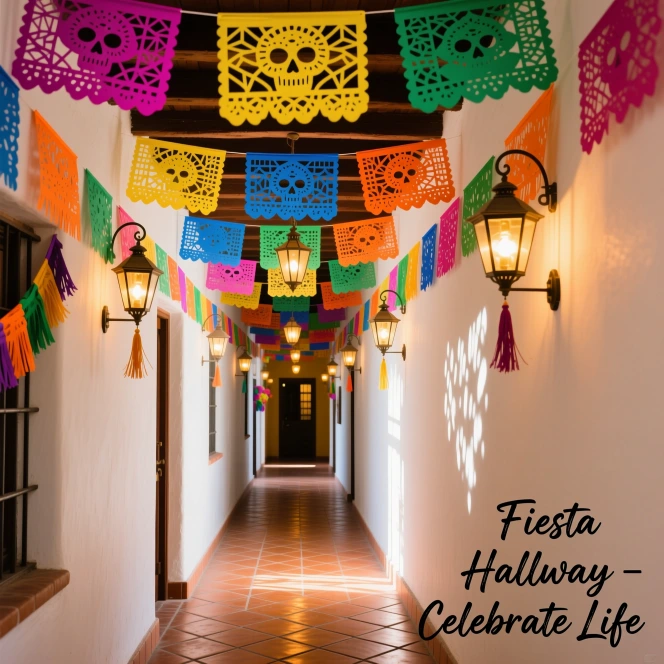
A ceiling installation of traditional papel picado banners strung across the full length of a hallway is the single most festive, most joyful, and most immediately transformative decorating decision available for bringing authentic Mexican celebratory spirit into an interior space — because the simple act of hanging dozens of tissue paper banners in every vivid color of the Mexican fiesta palette simultaneously fills the ceiling with visual movement, casts intricate patterned shadows on the walls below as light filters through the cut designs, and creates the specific atmosphere of ongoing celebration that is one of Mexican culture’s most genuinely beautiful and most generously shared gifts to the world. Papel picado — literally “perforated paper” — is a centuries-old Mexican folk art tradition in which tissue paper is folded and cut into intricate designs featuring flowers, skulls, birds, and geometric patterns before being strung across streets, markets, and celebration spaces.
String the banners across the hallway ceiling at varying heights — some strands higher, some lower, creating a layered canopy effect that gives the installation three-dimensional visual depth rather than a flat single-level decoration. Choose tissue paper papel picado for an authentic, translucent effect that allows light to pass through and cast gorgeous colored shadows, or source the more durable polyester fabric versions that provide the same visual impact with significantly extended longevity for permanent installation rather than seasonal decoration. Combine multiple colors in each strand and mix strand colors freely for the maximum visual exuberance that is both culturally authentic to the tradition’s original street festival context and genuinely beautiful in a domestic interior application. Add woven paper lanterns and painted tin star lights interspersed between the banner strands for additional festive layers that make the hallway ceiling a complete, spectacular, and culturally rich overhead installation.
5. Hand-Painted Mural of Mexican Landscape
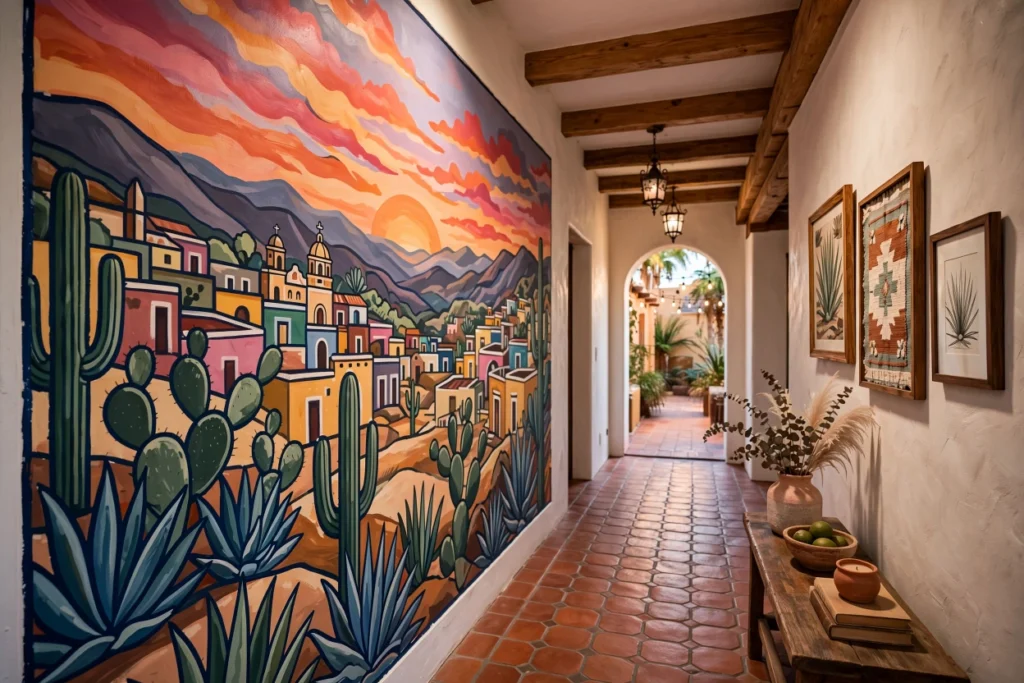
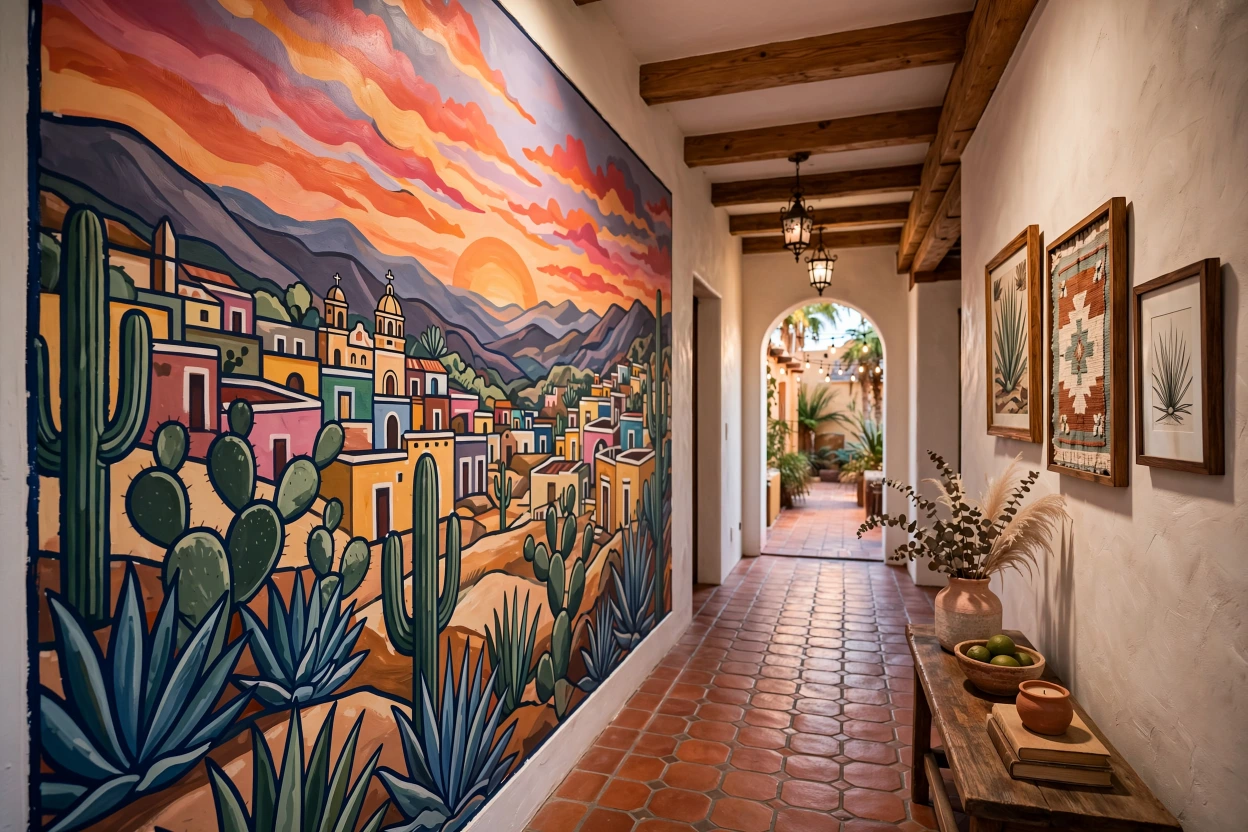
A hand-painted Mexican landscape mural covering one complete hallway wall is the most ambitious, most visually spectacular, and most permanently transformative of all Mexican hallway design ideas — a commissioned artwork that turns a domestic corridor into an immersive cultural experience, surrounding anyone who passes through with the specific visual poetry of the Mexican landscape and its extraordinary beauty of color, light, and organic form. Commission a mural artist with genuine knowledge of and affinity for Mexican folk art traditions — the distinctive flat color fields, strong black outlines, simplified but expressive forms, and the specific color palette of traditional Mexican amate paper painting and retablo folk art — to create a scene that places the viewer within the Mexican landscape’s most beloved visual elements simultaneously.
Design the mural to include the landscape elements most central to the Mexican visual tradition — the dramatic silhouette of agave and maguey plants in the foreground, the architectural form of organ pipe cactus against a cobalt sky, the warm ochre and sienna of dusty Mexican mountain ranges in the middle distance, the colorful geometry of a village’s whitewashed walls and terracotta rooftops climbing a hillside, and the extraordinary color intensity of a Mexican sunset sky moving through deep orange, vivid pink, and darkening cobalt from horizon to zenith. Reference the work of Diego Rivera, Frida Kahlo, and the Mexican Muralism movement for the mural’s compositional confidence and political visual language, but draw most directly from the more intimate folk art tradition of retablos, ex-votos, and Oaxacan wood carving for the specific flatness, brightness, and storytelling directness that makes this style most beautiful in a domestic hallway context where it is encountered at close range and intimate viewing distance every single day.
6. Wrought Iron Wall Sconces and Candlelit Lanterns
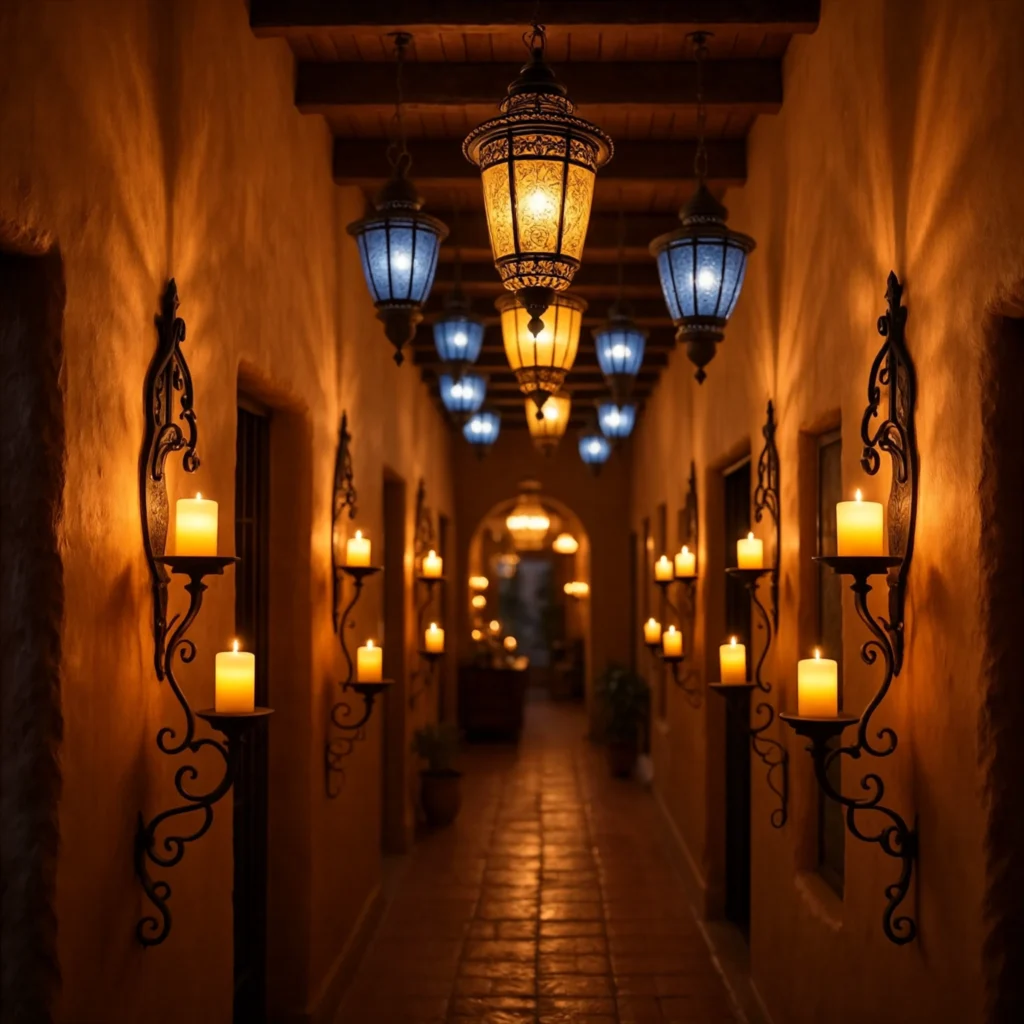
Wrought iron wall sconces paired with hand-blown glass lanterns hanging at varying heights from ceiling hooks is the Mexican hallway lighting design approach that most completely and most atmospherically captures the warm, intimate, candlelit quality of the authentic hacienda interior — an approach to light that treats illumination not as a practical utility to be delivered at maximum efficiency but as a atmospheric element to be curated with the same care and aesthetic intentionality as any other dimension of the designed space. Wrought iron has been the definitive material of Mexican decorative metalwork for centuries, its blackened, hand-forged quality representing an unbroken craft tradition that connects contemporary Mexican interiors to the colonial-era smithing workshops where this distinctive aesthetic language was first fully developed and most originally expressed.
Choose wrought iron sconces with scroll and spiral detail work that references the organic, plant-inspired forms most characteristic of traditional Mexican ironwork — avoid geometric or minimalist contemporary sconce designs that lack the visual warmth and cultural specificity that makes wrought iron the right material choice for this design direction. Pair with hand-blown Mexican glass lanterns in amber, cobalt blue, and deep green — the specific colors of authentic Guadalajara and Tlaquepaque blown glass that cast their specific colored light onto surrounding walls in the most beautifully warm and atmospheric way. Install candles or warm-toned Edison bulb inserts within the lanterns for the maximum amber warmth appropriate for a Mexican hacienda lighting concept. Vary the hanging heights of ceiling lanterns dramatically — some very low, some higher — to create the layered, informal, organic distribution of light sources that gives authentic hacienda interior lighting its characteristic intimacy, warmth, and the specific quality of beautiful imprecision that no symmetrically planned lighting scheme can replicate or approach.
7. Colorful Woven Textile Runners and Wall Hangings
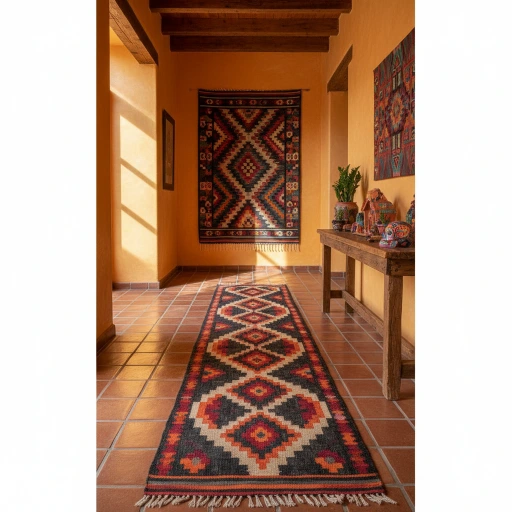
A vibrant handwoven Zapotec or Oaxacan textile runner on the floor paired with a large woven wall hanging mounted on the opposite wall is the Mexican hallway textile installation that most richly and most completely demonstrates the extraordinary breadth and depth of Mexican weaving traditions — placing two of the country’s most celebrated and most technically sophisticated textile art forms in direct visual conversation within a single domestic space in a way that creates an immersive, culturally resonant corridor experience that honors the craft knowledge and artistic vision of the indigenous weavers who developed these traditions over centuries of patient, accumulated skill. Zapotec geometric textiles from Teotitlán del Valle in Oaxaca — woven on traditional backstrop and floor looms using natural wool dyes derived from cochineal insects, indigo plants, and mineral pigments — produce the most visually powerful and most authentically Mexican floor runners available anywhere.
Choose a runner featuring the most dramatic and most geometrically complex Zapotec patterns available — the bold diamond lattices, stepped fret patterns, and lightning zigzags of traditional Zapotec design in the most vivid natural dye colors: deep cochineal red, bright indigo blue, warm marigold yellow, and rich dark charcoal — and run it the full length of the hallway floor for maximum visual impact and maximum practical protection of the terracotta tiles beneath. Mount a complementary woven wall hanging of equal visual richness at eye height on the facing wall — a large backstrap-loomed piece featuring figural imagery from Oaxacan mythology, a geometric all-over pattern in complementary colors, or a pictorial narrative textile in the tradition of Tenango de Doria embroidery from Hidalgo. Together, these two textile pieces transform the hallway walls and floor into a complete, gallery-quality presentation of Mexico’s most beautiful and most culturally profound woven art traditions.
8. Mexican Folk Art Gallery Wall
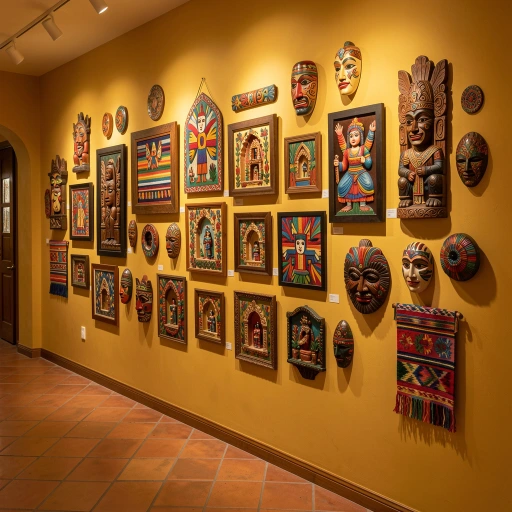
A Mexican folk art gallery wall assembled from an eclectic, salon-style grouping of authentic pieces spanning multiple Mexican craft traditions — Oaxacan alebrijes wood carvings, Huichol yarn paintings, painted tin retablos, ceramic masks from Guerrero, and embroidered textile panels from Chiapas — is the hallway design idea that transforms a domestic corridor into a genuine museum of living Mexican craft culture, surrounding daily movement through the home with the accumulated beauty, spiritual power, and artistic brilliance of the country’s most extraordinary folk art traditions. The gallery wall format is particularly appropriate for Mexican folk art because this tradition encompasses so many materially, regionally, and stylistically distinct art forms that a diverse collection naturally produces more visual richness, cultural depth, and aesthetic interest than any single medium could achieve independently.
Arrange the pieces in an organic, asymmetric salon-style grouping that allows each work to be read both individually and as part of the collective visual conversation — mix frame sizes, frame materials, and framed with unframed pieces freely, placing a large Huichol yarn painting as the compositional anchor and building outward with smaller retablos, ceramic masks, carved animals, and textile fragments at varying heights and intervals. Choose frames in natural wood, painted black iron, or leave particularly powerful pieces unframed and directly mounted for the most authentic, lived-in, personally curated gallery atmosphere. Light the wall with directional track lighting or individual picture lights that illuminate each piece from above, creating the dramatic interplay of light and shadow on the textured surfaces of carved wood, raised yarn work, and embossed tin that reveals the full three-dimensional beauty of these extraordinary objects in the most flattering and most respectful display light possible.
9. Adobe-Style Textured Plaster Walls in Warm Ochre
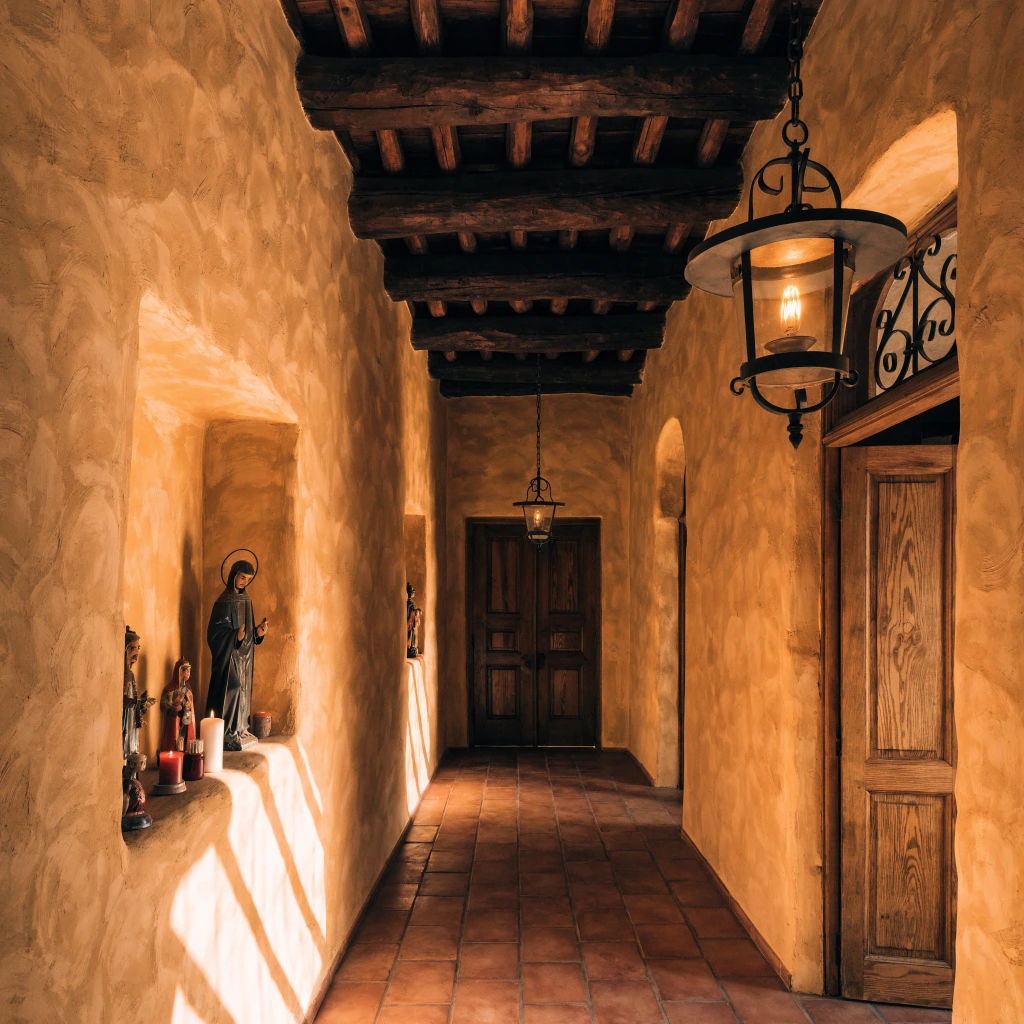
Hand-applied textured plaster walls in warm ochre yellow are the most authentically hacienda and most deeply atmospheric wall treatment available for a Mexican-inspired hallway — a finish that references the thousand-year tradition of Mexican adobe construction and lime plaster application while delivering a contemporary interior warmth, tactile depth, and visual complexity that smooth painted walls simply cannot approach regardless of their color choice or paint quality. The specific ochre yellow tone — drawn from natural iron oxide pigments and associated with the most beautiful pre-Columbian and colonial Mexican architecture from Guanajuato’s painted facades to Oaxaca’s golden stone buildings — is the single most evocative and most culturally specific wall color choice in the entire Mexican interior design palette.
Apply the plaster in a multi-layer process using a lime or clay-based plaster mixed with natural iron oxide pigment — applying successive layers with a flat steel trowel in varying directions, creating the specific organic surface texture of overlapping trowel strokes that gives authentic adobe plaster its characteristic visual depth and tactile interest. Sand lightly between layers for a finish that is smooth enough to be practical for a hallway surface but textured enough to catch and reveal light from multiple angles throughout the day as natural light changes its angle of incidence against the wall surface. Build a traditional nicho — a rounded, arched wall niche approximately twelve inches deep — into one section of the hallway wall to display santos, candles, and meaningful small objects in the traditional Mexican domestic devotional space format. Install exposed wooden viga ceiling beams painted in a deep umber or left in natural color for the most complete and most architecturally genuine hacienda hallway ceiling treatment.
10. Painted Tin and Mirror Collection
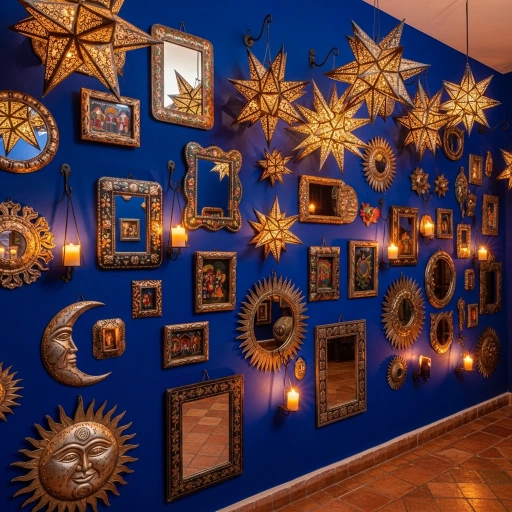
A curated collection of painted and punched tin mirrors, framed retablos, star lanterns, and decorative tin sun and moon faces arranged in an abundant, layered display on a deep cobalt blue wall is the Mexican hallway design idea that most brilliantly combines practical function — the mirrors expand the hallway’s perceived width and amplify its available light — with decorative richness, cultural authenticity, and the specific quality of handmade, individually imperfect beauty that defines the hojalatería craft tradition of Mexican tin work at its finest and most characterful. Mexican tin work, produced primarily in Oaxaca, San Miguel de Allende, and Mexico City’s traditional craft markets, encompasses an extraordinary range of forms and techniques: punched tin lanterns that cast intricate starfield shadow patterns, hand-painted tin mirrors with stylized animal and floral imagery, embossed tin frames with botanical relief patterns, and cut tin decorative objects in sun, moon, cross, and animal forms.
Arrange the collection densely and asymmetrically across the wall — more is genuinely more in this specific design context, and the visual abundance of multiple tin objects at varying heights and scales creates the atmospheric richness that a sparse arrangement cannot approach. Include at least three to four mirrors of varying sizes and frame styles within the collection to provide the light-amplifying and space-expanding practical benefits that make this decorative approach especially intelligent in narrow hallway spaces where every inch of perceived width and every lumen of reflected light contributes meaningfully to spatial comfort and aesthetic pleasure. Light the collection from below with small upward-directed spotlights or from above with a punched tin star ceiling lantern that casts its distinctive constellation pattern across the cobalt wall and the assembled tin collection simultaneously, creating a unified, magically atmospheric quality of light that makes the hallway the most visually distinctive and most memorable transitional space in the entire home.
11. Cactus and Agave Plant Styling
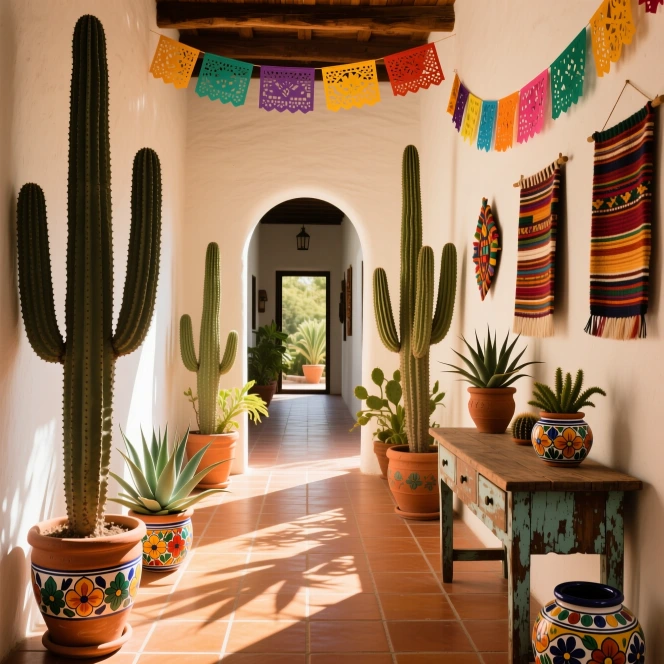
Dramatic tall cactus and sculptural agave plants in hand-painted terracotta and Talavera ceramic pots styling the hallway floor and console surfaces is the Mexican-inspired botanical design approach that simultaneously introduces the most distinctly Mexican of all natural forms into the domestic interior while providing the living, growing, low-maintenance presence of genuine plant life that makes any hallway feel more welcoming, more alive, and more visually interesting than a space occupied exclusively by inanimate objects and decorative surfaces. The cactus and agave are not merely decorative plants in Mexican cultural context — they are deeply symbolic organisms with profound cultural, agricultural, and spiritual significance in Mexican civilization, representing resilience, adaptation, and the specific beauty of surviving and thriving in conditions of apparent scarcity that have shaped Mexican identity and aesthetics for millennia.
Choose dramatic specimen plants with genuine sculptural presence for the primary floor-level statements — a tall, branched Euphorbia tirucalli or a striking architectural Euphorbia ingens for the dramatic vertical presence of a saguaro without the practical challenges of housing genuine desert cacti indoors, flanked by substantial blue agave plants in large Talavera ceramic pots with the bold cobalt and white geometric patterns most characteristic of authentic Pueblan tile craft. Place smaller barrel cacti, prickly pear pads in interesting shapes, and varied succulent arrangements in hand-painted smaller terracotta pots along the console table surface and in the floor niches between larger specimens. The combination of multiple plant heights, multiple plant forms, and multiple pot styles — some matching Talavera, some rough hand-painted terracotta, some sealed and aged — creates the rich, layered botanical composition that authentic Mexican interior plant styling achieves through abundance, variety, and the genuine love of the specific plant forms that define the Mexican natural landscape so powerfully and so beautifully.
12. Hammered Copper Console Table and Accessories
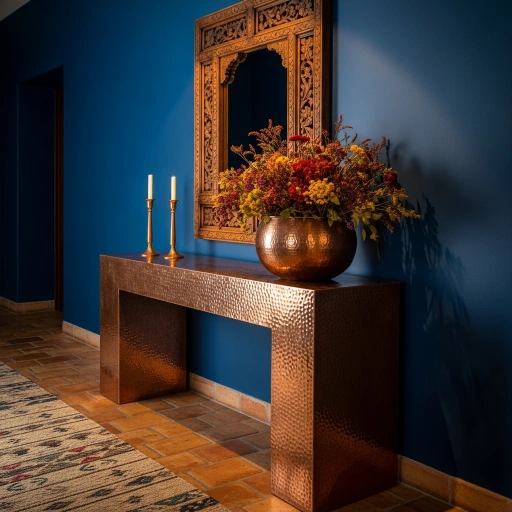
A hammered copper console table serving as the hallway’s primary furniture piece, styled with copper bowls, candleholders, and decorative objects, is the Mexican hallway design element that introduces the most warmth, the most material luxury, and the most culturally specific craft heritage into the corridor’s decorative program — because copper work, produced in the town of Santa Clara del Cobre in Michoacán where the craft has been practiced continuously since pre-Columbian times, represents one of the most extraordinary and most visually beautiful of all Mexican metalworking traditions. The hammered surface of authentic Michoacán copper work — each facet created by individual hammer blows that leave a distinctive convex dimple pattern across the entire metal surface — catches and disperses light in a way that no other material surface can replicate, creating a visual shimmer and textural depth that becomes more beautiful as natural light changes its angle throughout the day.
Source a console table from an authentic Michoacán copper workshop or a reputable Mexican craft importer to ensure the genuine hand-hammered quality that distinguishes artisan copper work from machine-pressed alternatives — the difference in visual richness, tactile interest, and material warmth between hand-hammered and industrially processed copper is immediately and profoundly apparent to anyone who has experienced both. Style the console surface with a composition that showcases the copper theme without becoming monotonous — a large hammered copper bowl filled with dried marigold flowers or preserved bougainvillea, a pair of hammered copper candleholders of varying heights with pillar candles, a small carved wooden saint figure, and a Talavera ceramic decorative object that introduces the cobalt blue and white color contrast against the copper’s warm reddish gold. Mount a large carved wooden mirror with an ornate frame above the console for the classic hallway entry composition that provides the practical function of a last-look mirror while anchoring the console with a visually substantial overhead element.
13. Day of the Dead Inspired Decorative Accents
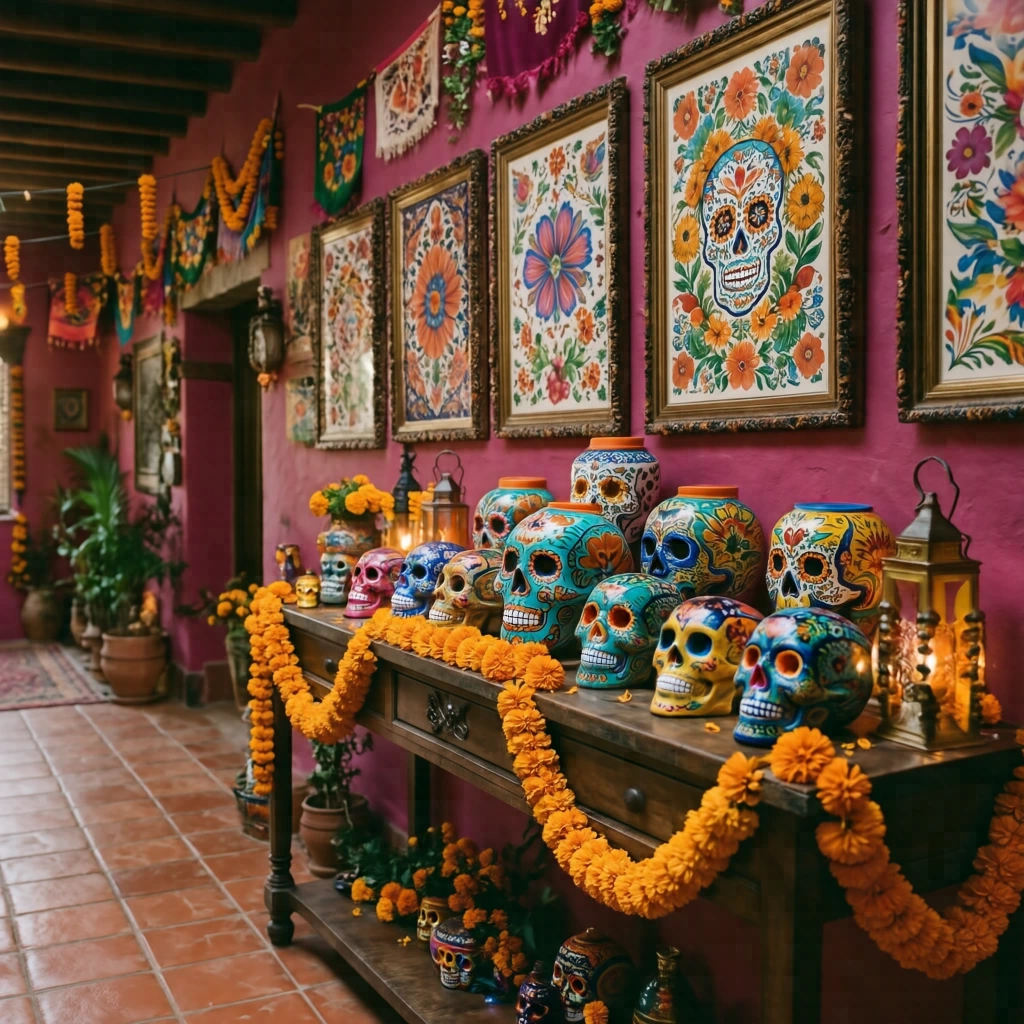
Day of the Dead inspired decorative accents — painted ceramic sugar skulls, framed calavera folk art prints, dried marigold garlands, and painted tin skull lanterns — incorporated thoughtfully and joyfully throughout the hallway design is the Mexican cultural design approach that most powerfully challenges the Western association of skull imagery with morbidity by revealing the profound difference between the Mexican tradition’s genuinely celebratory, love-filled, and life-affirming relationship with death and the fear-based death aesthetics of other cultural traditions. Día de Muertos is one of the world’s most beautiful cultural ceremonies — a festival that honors the continued presence of beloved deceased family members with marigold flowers, food offerings, photographs, and joyful celebration rather than grief and absence — and bringing its visual language into the home hallway creates a space that honors memory, celebrates life, and expresses one of humanity’s most sophisticated and most emotionally mature relationships with mortality.
Assemble the Day of the Dead accents with the same curatorial care and cultural sensitivity that would be applied to any meaningful folk art collection — sourcing painted ceramic calavera skulls from Oaxacan artisan cooperatives, framing authentic calavera illustrations from Mexico City graphic art tradition including the work of José Guadalupe Posada whose iconic calavera imagery established the visual language the entire tradition subsequently built upon, and hanging dried or artificial marigold garlands — the flower of the dead, whose strong fragrance is believed to guide the souls of the departed back to their altars — along the console edge and hallway ceiling. Add framed family photographs mounted at eye height alongside the folk art prints in the tradition of the home ofrenda altar, creating a genuine, personal version of this beautiful cultural practice rather than a purely decorative approximation of it. This is the Mexican hallway design idea that creates the most emotionally resonant and most culturally authentic corridor in any home.
14. Wooden Carved Door and Entryway Surround
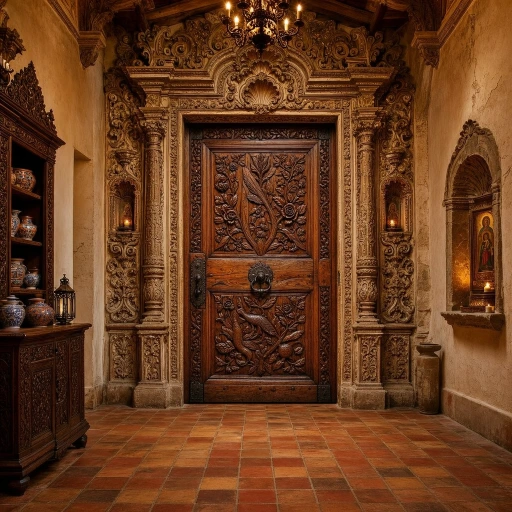
A beautifully hand-carved solid wood door with deep relief carving of botanical vines, birds, and flowers, surrounded by a carved plaster or stone entryway surround with Baroque-inspired churrigueresque decorative details, is the single most architecturally ambitious and most permanently impressive Mexican hallway design investment — a feature that transforms the corridor’s primary functional element, the doorway itself, into a work of art that establishes the home’s entire design character and cultural sensibility from the very first moment of entry. Mexican woodcarving tradition, particularly as practiced with the dense, aromatic hardwoods of Michoacán and Oaxaca — mesquite, cedar, and tropical hardwoods with extraordinary grain depth and natural fragrance — produces furniture and architectural elements of a beauty and craft depth that is genuinely unmatched in Western woodworking traditions.
Commission or source a carved door featuring the organic, deeply undercut botanical relief carving most characteristic of the finest Mexican woodwork — vines climbing with three-dimensional naturalism up both stiles, flowers opening in full carved bloom at the door’s center panels, birds perching on carved branches with feather detail that reveals itself more fully the closer you examine it. Request solid wood construction with mortise and tenon joinery rather than veneered panel construction — the weight, solidity, and resonant sound of a genuinely solid carved wood door is itself a sensory experience that communicates quality, permanence, and genuine craft investment with every single opening and closing. Pair the carved door with hand-forged wrought iron hardware — a large escutcheon plate, a substantial pull handle, and strap hinges with decorative pointed tips — that continues the handmade craft language of the door itself into its functional metalwork elements. Illuminate the door with directional lighting that rakes light across the carved surface, creating dramatic shadow depth in every botanical relief and revealing the full three-dimensional beauty of the carving under conditions that the carver originally intended and most beautifully anticipated.
15. Vibrant Maximalist Color Blocking on Walls
Bold maximalist color blocking across the hallway’s walls — painting each surface a different saturated, vivid color drawn from the most iconic and most distinctly Mexican palette — is the Mexican hallway design approach that requires the least craft investment, the smallest budget, the fewest decorative objects, and the most personal courage while delivering the most visually dramatic, the most immediately joyful, and the most unmistakably Mexican result of any idea on this list. This approach draws direct inspiration from the color philosophy of Luis Barragán, Mexico’s greatest architect and the most important colorist in the history of modern architecture, whose work in Mexico City and Guadalajara demonstrated conclusively and beautifully that saturated, unmixed color applied with confidence to architectural surfaces creates spiritual atmosphere, emotional depth, and spatial transformation that no object, no furniture, and no conventional decoration can replicate or approach.
Choose three colors from the Barragán palette that has defined the most celebrated Mexican architectural interiors of the twentieth and twenty-first centuries — the deep magenta pink of Casa Gilardi’s corridor, the electric cobalt blue of the Cuadra San Cristóbal stable walls, and the burning saffron yellow of the Casa Barragán garden wall — applying each to a different wall surface within the hallway to create the color blocking effect that Barragán used to activate spatial experience through chromatic contrast. Use full-strength, zero-white-added saturated paint in these specific tones rather than softened or pastelized interpretations that lose the specific intensity and emotional charge that makes this color philosophy genuinely powerful rather than merely attractive. Keep every other design element radically simple — white ceiling, terracotta floor, minimal folk art, a single plant — so that the color does the entire experiential and spiritual work of the hallway design without competition, dilution, or distraction. This is Mexican design at its most pure, its most powerful, and its most genuinely, completely, and magnificently itself.