16 French Interior Design Ideas Full of Timeless Charm
1. Herringbone Parquet Wood Floors
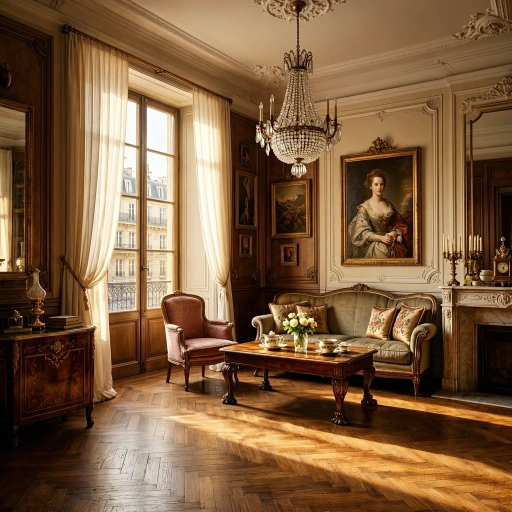
Herringbone parquet wood floors represent one of the most instantly recognizable and deeply beloved signatures of authentic French interior design, gracing the grand apartments of Paris and the elegant country homes of Provence with equal beauty and architectural authority for well over three centuries. The interlocking zigzag pattern of precisely cut rectangular wood blocks creates a visual rhythm of extraordinary geometric sophistication that elevates any room from simply furnished to genuinely designed, communicating a quality of craftsmanship and historical depth that no other flooring treatment can approach. French interior designers and Parisian apartment dwellers have maintained an unbroken loyalty to herringbone parquet precisely because its beauty is genuinely, demonstrably timeless.
The warm honey and amber tones of classic French herringbone parquet — traditionally laid in oak, then waxed to a soft, matte sheen rather than a high gloss — create a floor of incomparable warmth and natural beauty that harmonizes effortlessly with every element of the French interior design vocabulary. Aged and slightly worn herringbone floors are particularly prized in authentic French interiors, their gently scuffed patina communicating the irreplaceable quality of genuine historical occupation that newly installed floors, however beautifully crafted, cannot replicate for many decades. This foundational French interior design element consistently earns the most passionate appreciation from interior design audiences worldwide, representing for millions the ultimate expression of effortless Parisian domestic elegance.
2. Ornate Plaster Ceiling Moldings
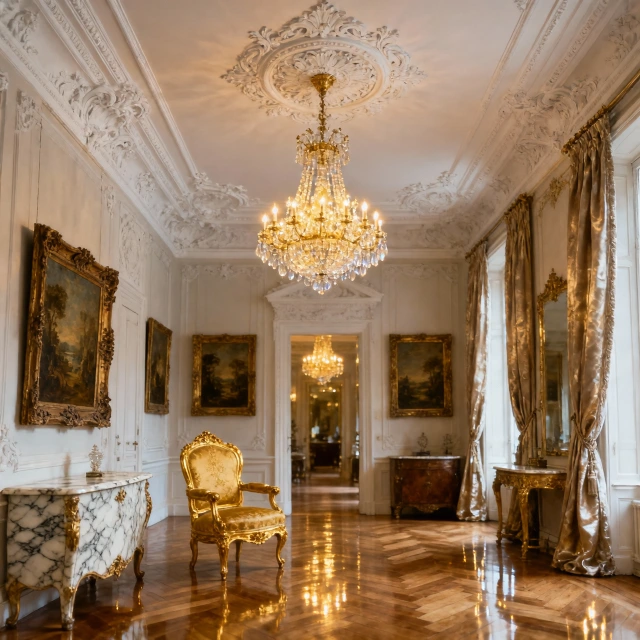
Ornate plaster ceiling moldings — ceiling roses, egg-and-dart cornices, acanthus leaf friezes, and deeply profiled crown moldings — define the architectural character of authentic French interior design with a classical authority that immediately transports any space into the refined aesthetic world of the grand Parisian apartment and the elegant French country château. These intricate plasterwork details, perfected by French craftsmen during the seventeenth and eighteenth centuries under the influence of the Baroque and Neoclassical movements, bring a vertical richness and overhead visual complexity to rooms that transforms the experience of inhabiting them from merely comfortable to genuinely magnificent. The white-painted ceiling becomes, in the French interior tradition, an active architectural participant rather than a passive neutral surface.
Contemporary French interior designers honor this magnificent plasterwork heritage by restoring original moldings with extraordinary care in historic Haussmann apartments while installing sympathetically scaled classical plaster details in new constructions and renovations that aspire to the timeless French aesthetic. The interplay between an elaborate plaster ceiling and a beautifully proportioned crystal or gilded bronze chandelier hung from a central ceiling rose creates the defining overhead composition of the authentic French interior — a moment of architectural grandeur that makes every other design element in the room feel more justified, more elegant, and more permanently beautiful. This quintessential French interior design feature generates consistent, passionate admiration from global audiences who recognize in it the pinnacle of European domestic architectural achievement.
3. Toile de Jouy Fabric and Wallpaper
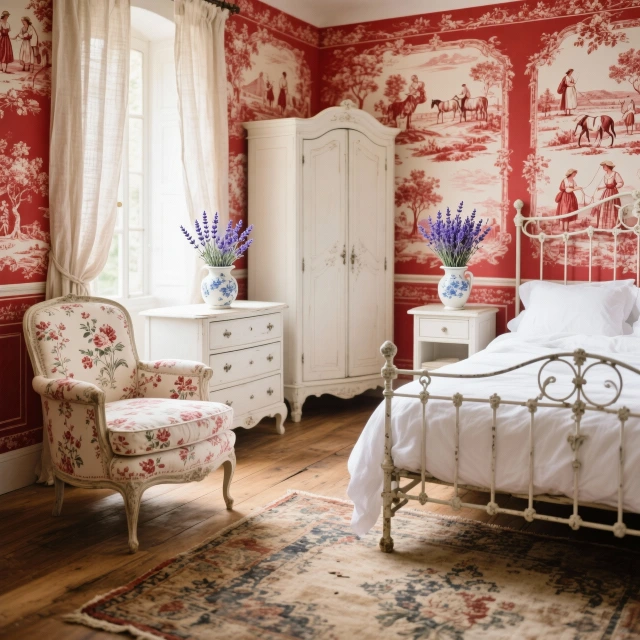
Toile de Jouy — the iconic French printed fabric featuring delicate monochromatic pastoral scenes, romantic floral compositions, and elegant narrative vignettes printed on fine cotton or linen — stands as one of the most recognizably and enduringly French of all interior design elements, carrying within its precisely engraved repeat patterns the entire romantic aesthetic vision of eighteenth-century French domestic culture at its most charming and refined. Originally produced at the Manufacture de Jouy-en-Josas near Versailles from 1760 onward, toile de Jouy fabric and wallpaper transformed French interiors with a pictorial richness and narrative intimacy that purely abstract or geometric patterns could never provide. Its beauty has never required updating or reinterpretation.
The classic French interior design practice of using toile de Jouy comprehensively — papering walls, upholstering armchairs, lining bed canopies, and covering cushions in coordinating or matching toile — creates an immersive, enveloping room environment of remarkable decorative richness that feels simultaneously maximalist in its pattern coverage and perfectly harmonious in its tonal restraint. The traditional colorways of soft red on cream, classic blue on white, and warm black on ecru provide an instantly recognizable French aesthetic signature that photographs with extraordinary beauty and consistently inspires devoted appreciation from interior design audiences who associate toile de Jouy with the most romantically idealized vision of French country living imaginable.
4. The Bergère Armchair
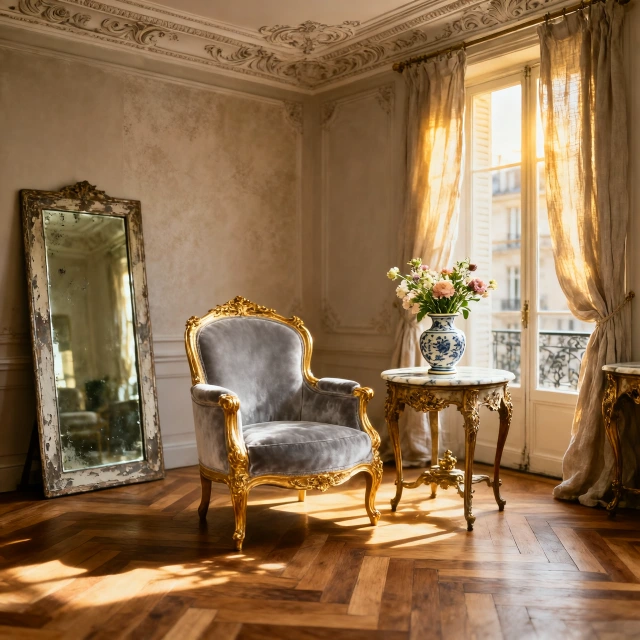
The bergère armchair — with its distinctive enclosed upholstered sides, generously cushioned seat, and elegantly carved exposed wood frame — represents perhaps the single most characteristic and beloved seating form in the entire French interior design tradition, combining aesthetic refinement with genuine sitting comfort in a way that reflects the French domestic philosophy of luxurious, civilized everyday living with admirable completeness. Developed in France during the early eighteenth century as a more enclosed and comfortable evolution of the open-armed fauteuil, the bergère quickly became the preferred seating form of the French aristocratic interior and has maintained its position of aesthetic authority in French design consciousness through every subsequent century without interruption or diminishment.
Upholstered in pale grey velvet, faded silk damask, classic toile de Jouy, or luxurious ivory linen, the bergère armchair introduces a note of aristocratic French elegance into any interior that no other seating form can precisely replicate, its carved gilded or painted wood frame providing the ornamental detail that distinguishes it as a genuine piece of furniture-making art rather than simply a functional sitting object. A pair of bergère armchairs positioned symmetrically before a fireplace, beside a window, or flanking a writing desk creates the defining conversational arrangement of the authentic French interior — an invitation to seated, face-to-face human connection of the kind that French domestic culture has always considered among life’s most essential pleasures. This iconic French interior design piece earns consistent admiration from global audiences who recognize its perfect marriage of beauty and civilized comfort.
5. Antique Gilt-Framed Mirrors
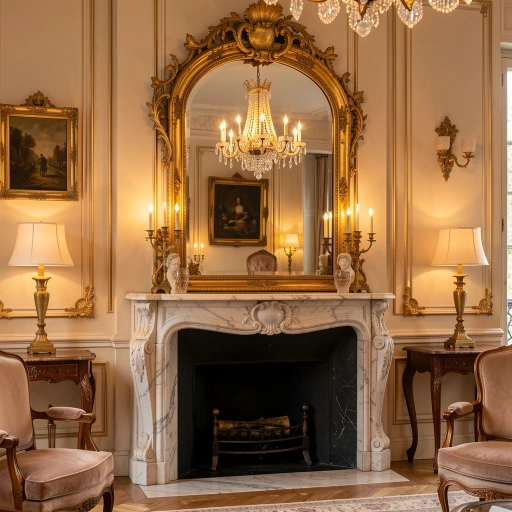
Antique gilt-framed mirrors occupy a position of absolute centrality within the French interior design tradition, serving simultaneously as light-amplifying functional objects, grandly decorative architectural elements, and powerful symbols of the French aesthetic philosophy that beauty, luxury, and visual pleasure are not indulgences but rather genuine necessities of the well-lived domestic life. The gold leaf frames of classic French mirrors — carved with acanthus leaves, scrolling foliage, shell motifs, and architectural molding profiles — represent some of the finest examples of French decorative arts craftsmanship produced during the Louis XIV, XV, and XVI periods, making original antique pieces objects of genuine historical and artistic significance beyond their decorative function.
Positioned above a marble fireplace mantel, at the end of an enfilade corridor, or spanning an entire wall between tall windows, an antique gilt-framed mirror performs optical magic in French interiors — doubling the apparent depth of rooms, multiplying reflected candlelight and chandelier sparkle, and creating a sense of infinite, layered space that makes even modestly proportioned Parisian apartments feel genuinely palatial. The slightly foxed and subtly distorted mirror glass of genuine antique examples adds an atmospheric, time-worn quality of visual depth that perfectly silvered modern mirrors entirely lack, their gentle imperfections communicating the irreplaceable beauty of age and authentic French provenance. This iconic French interior element consistently generates the most aspirational responses from global interior design audiences.
6. Linen Curtains Pooling on the Floor
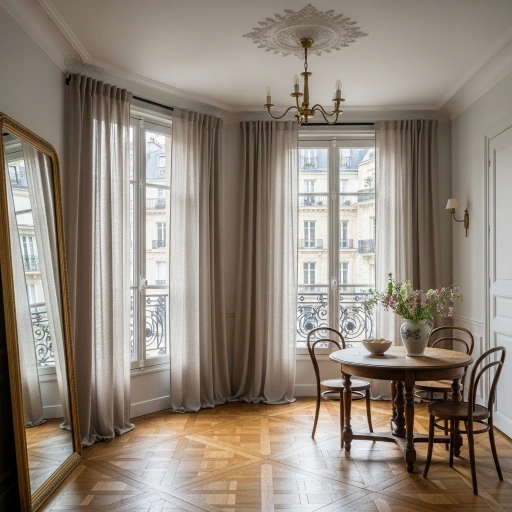
Linen curtains cut generously long to pool elegantly on the floor represent one of the most quietly sophisticated and distinctly French approaches to window treatment, communicating a relaxed, confident luxury that carefully hemmed and precisely fitted curtains somehow never quite achieve despite their technical superiority. The French interior design philosophy embraces the slightly excess fabric puddling softly on the parquet floor as a deliberate gesture of abundance and aesthetic ease — an acknowledgment that beauty sometimes requires a little beautiful impracticality. Natural linen’s characteristic texture, slight translucency, and beautiful range of warm neutral tones from pale oat to warm flax make it the quintessential French window fabric for apartments and country houses alike.
The practice of hanging linen curtains from ceiling-mounted or very high rails — drawing the eye upward to emphasize the magnificent ceiling heights of classic French Haussmann apartments and country house reception rooms — creates a vertical drama that transforms windows from simple openings into grand architectural statements of light, fabric, and proportion. The soft, diffused light filtered through natural linen during morning hours fills French interiors with a warm, golden luminosity of extraordinary beauty that heavier, more opaque window treatments entirely prevent. This deceptively simple French interior design approach consistently inspires passionate admiration from global audiences who recognize in linen curtains pooling on parquet floors the most effortlessly elegant expression of the French domestic aesthetic ideal.
7. A Zinc or Marble Kitchen Counter
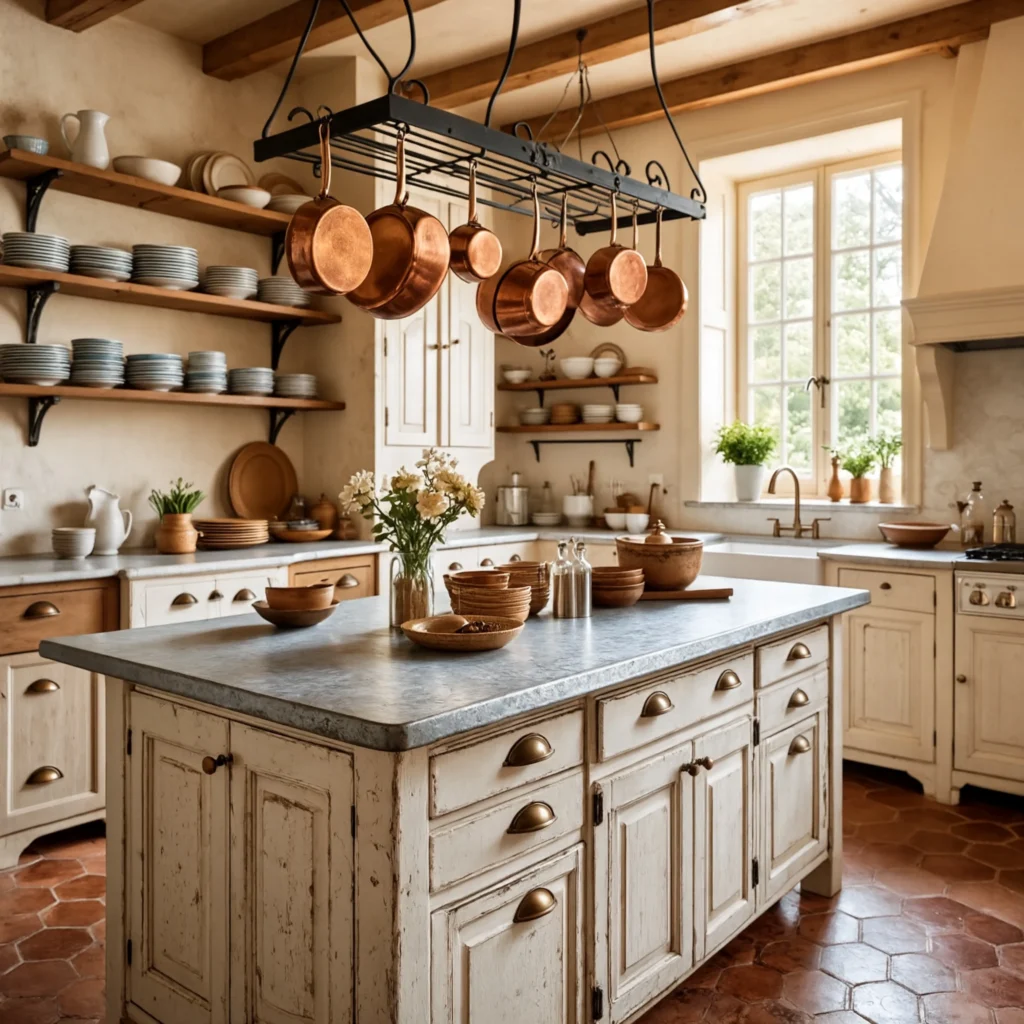
Zinc and marble kitchen countertops embody the French culinary philosophy made material — the deeply held national conviction that food preparation is not merely a domestic chore but a civilized, sensory-rich daily practice deserving of beautiful, authentic, enduring surfaces that become more characterful and personally meaningful with every meal prepared upon them. Aged zinc countertops — their surface naturally softening and developing a beautiful pale grey patina through honest daily use — are the definitive surface of the classic French bistro and farmhouse kitchen, carrying within their matte, slightly irregular surfaces the accumulated evidence of thousands of meals and the irreplaceable warmth of genuine culinary history. Marble provides an equally beautiful but more formally elegant alternative suited to the Parisian apartment kitchen.
The beauty of both zinc and marble as French kitchen counter materials lies fundamentally in their honest acceptance of age, use, and time — qualities that synthetic, perfectly consistent modern countertop materials actively resist and that the French interior design sensibility positively celebrates as evidence of genuine domestic life authentically and beautifully lived. Pairing a zinc or marble counter with white painted cabinetry, open shelving displaying beautiful ceramic dishes, and copper pots hanging overhead creates the defining composition of the authentic French kitchen — a space of genuine working beauty that serves the serious business of French cooking with appropriate material dignity and enduring aesthetic grace that improves with every passing year of devoted culinary use.
8. Statement Chandelier in Every Room
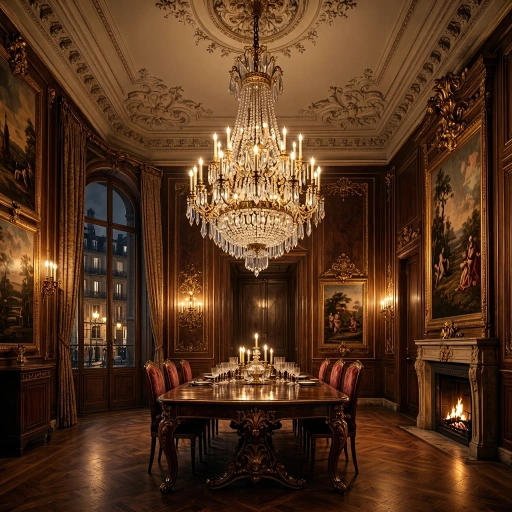
The statement chandelier occupies a position of unrivaled importance within the French interior design tradition, serving as the ultimate expression of the French belief that lighting should be beautiful before it is functional — that the quality of light within a room is an aesthetic and emotional matter of the highest domestic significance rather than simply a practical engineering consideration. From the magnificent rock crystal chandeliers of the Palace of Versailles to the elegant bronze and glass fixtures of classic Haussmann apartments and the charmingly simple wrought iron chandeliers of Provençal farmhouses, the French interior tradition encompasses an extraordinary range of chandelier aesthetics unified by a shared commitment to overhead lighting as the room’s primary decorative statement.
Contemporary French interior design embraces chandeliers across every price point and aesthetic register — from genuine eighteenth-century crystal masterpieces to beautifully crafted contemporary reinterpretations that honor the formal vocabulary of French lighting design with modern materials and production methods. The fundamental requirement of the authentic French interior chandelier is that it commands attention, fills the room with warm, multi-directional light that flatters both the architectural space and its human occupants, and communicates through its design a genuine commitment to beauty as a daily domestic priority rather than a special-occasion luxury. This definitive French interior design element consistently generates the most aspirational engagement from global audiences who recognize the chandelier as the living symbol of the French art of beautiful living.
9. Patinated Antique Furniture Mixed Freely
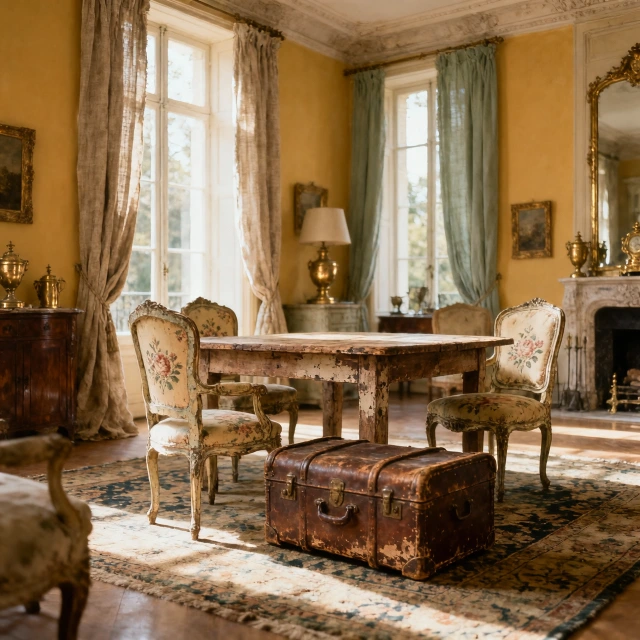
The French approach to antique furniture — embracing pieces across multiple periods, styles, and conditions and mixing them with confident, apparently effortless freedom — represents perhaps the most philosophically distinctive aspect of authentic French interior design, standing in sharp contrast to the period-matched, stylistically consistent room settings favored by more cautious Anglo-Saxon decorating traditions. French interior design celebrates the beautiful patina of age — the worn gilt of a Louis XV console, the slightly faded silk of a Napoleon III bergère, the wonderfully distressed surface of a painted provincial armoire — as evidence of genuine historical life and honest material beauty rather than as defects requiring correction or concealment. Imperfection is not tolerated but genuinely cherished.
The remarkable visual coherence achieved by a French interior that mixes freely across periods — a Louis XVI painted chair beside a nineteenth-century leather trunk beside a twentieth-century Modernist coffee table — derives not from stylistic matching but from a shared commitment to quality, patina, and human scale that transcends period and style boundaries with complete authority. French homeowners and interior designers possess an instinctive confidence in their aesthetic judgment that allows them to bring together apparently incompatible pieces and create from them a room of perfect harmony and deeply personal character. This supremely sophisticated French interior design philosophy consistently inspires the most admiring responses from global audiences who recognize in it the highest expression of domestic aesthetic confidence and genuine connoisseurship.
10. Classic French Blue and White Kitchen
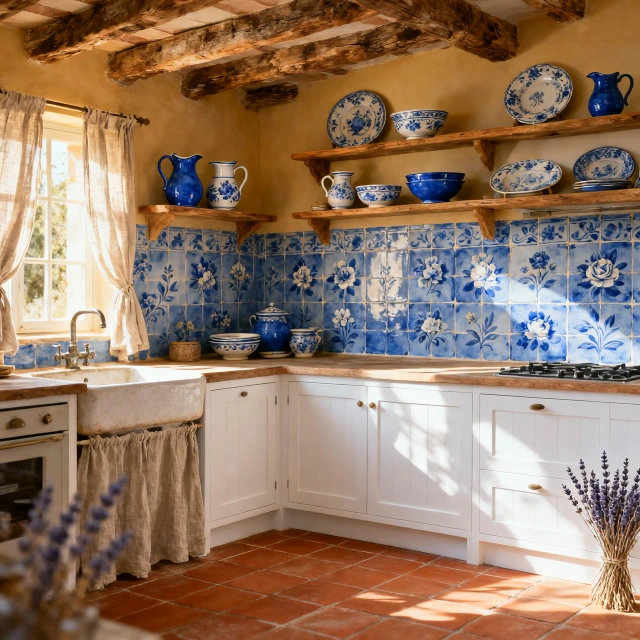
The classic French blue and white kitchen — anchored by hand-painted Provençal tiles, white painted cabinetry, and a lovingly assembled collection of blue and white ceramics displayed on open shelving — represents one of the most timelessly appealing and consistently beloved expressions of the French country interior aesthetic, evoking the warmth, abundance, and sensory pleasure of Provençal daily life with immediate and irresistible visual power. The particular blues associated with authentic French kitchen design — from the soft periwinkle of Quimper faience to the deep cobalt of traditional Provençal pottery — possess a warmth and vibrancy that distinguishes them from colder, more clinical blue tones, making them perfect partners for the warm whites, natural wood, and terracotta accents that define the French country kitchen interior.
Building a French blue and white kitchen around an extensive displayed ceramics collection — mixing Quimper plates, Moustiers faience bowls, Apt earthenware serving dishes, and simple white bistro café au lait bowls — creates an evolving, personally curated kitchen display that tells the story of a genuine engagement with French material culture and the beautiful craft traditions of the French pottery-making regions. The combination of displayed blue and white ceramics with hand-painted tiles, open wooden shelving, and copper cooking vessels creates a French kitchen of extraordinary sensory and visual richness that has inspired devoted admiration from interior design audiences across the globe for generations, consistently representing the ideal of beautiful, functional, culturally rooted domestic design.
11. The French Writing Desk and Chair
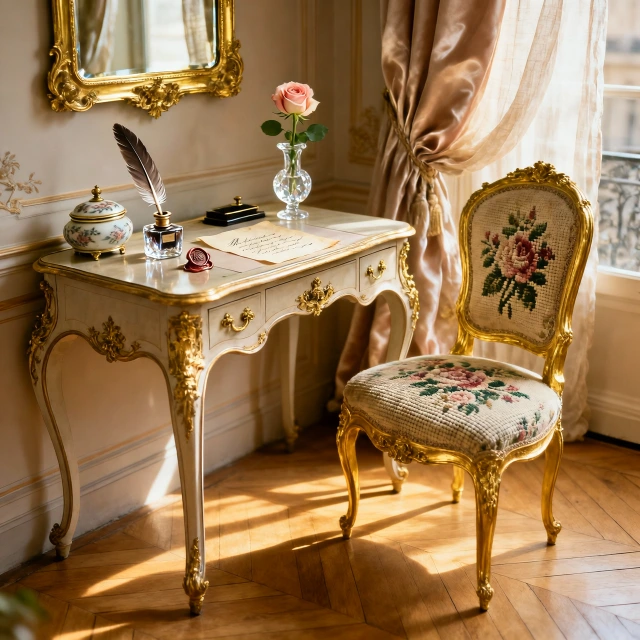
The French writing desk — slender-legged, elegantly proportioned, and exquisitely detailed with marquetry inlay, ormolu mounts, or delicate painted decoration — represents within the French interior design tradition a piece of furniture imbued with profound cultural significance, embodying the French national reverence for intellectual life, literary culture, and the ancient, civilizing art of correspondence conducted with appropriate beauty and physical grace. The classic French bureau plat, secrétaire à abattant, and bonheur du jour writing desk forms, developed to their aesthetic perfection during the Louis XV and Louis XVI periods, create living room and bedroom corners of incomparable elegance and purposeful beauty that speak directly to the French ideal of a domestic life enriched by reading, writing, and serious engagement with ideas.
Positioning a French writing desk before a tall window — allowing morning light to fall across its beautifully detailed surface, the curved gilt chair pulled close, a small arrangement of fresh flowers in a porcelain vase nearby — creates the most characteristically and romantically French of all domestic interior vignettes, a corner of intimate, purposeful beauty that communicates the highest aspirations of French domestic culture with perfect physical and aesthetic economy. The desk as a fully functioning, daily-used piece of living room or bedroom furniture rather than a purely decorative period object embodies the French interior design principle that beautiful antique pieces should be actively inhabited rather than reverently preserved at a respectful distance from actual domestic life.
12. Exposed Stone Walls in French Country Homes
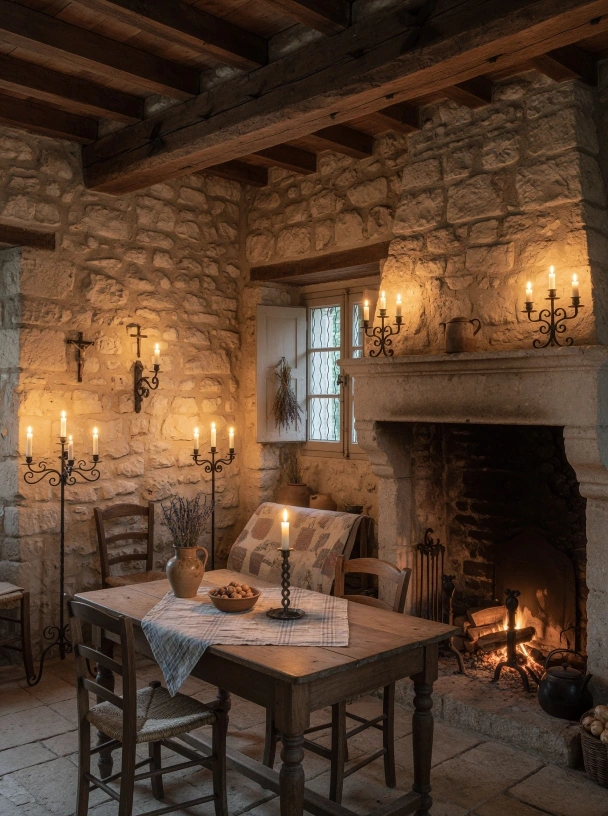
Exposed stone walls — the ancient limestone, granite, and sandstone masonry of French farmhouses, mills, and manor houses revealed in all their massive, textured, historically resonant beauty — create the defining material atmosphere of authentic French country interior design, connecting domestic spaces directly and physically to the geological and agricultural history of the French landscape in a way that no applied finish or decorative treatment could ever replicate or convincingly simulate. The irregular surface of hand-cut stone blocks laid in lime mortar, their varied tones of warm honey, pale grey, and sandy cream catching light differently at every hour of the day, creates a wall of incomparable visual richness and atmospheric depth that becomes more beautiful and more deeply appreciated with every year of intimate domestic familiarity.
Contemporary French country interior design celebrates exposed stone walls by keeping surrounding decoration deliberately simple and materially honest — heavy wooden beams overhead, terracotta tile or worn stone floors below, simple iron fixtures and plain linen textiles providing company for the stone walls without competing with their overwhelming architectural presence. A large stone fireplace set within an exposed stone wall creates the primordial heart of the French country interior — a primal domestic focal point of warmth, light, and sheltering solidity that connects the most sophisticated modern inhabitant to thousands of years of human experience gathered around fire within stone walls against the cold. This profoundly beautiful French interior design element inspires the most emotionally resonant responses from global audiences who recognize in it something ancient, true, and permanently meaningful.
13. Open Shelving Displaying Beautiful Objects
Open shelving displaying a curated collection of beautiful objects — antique ceramics, crystal decanters, leather-bound books, small bronze sculptures, botanical specimens, and personally meaningful keepsakes — represents within the French interior design tradition a fundamental act of domestic self-expression and aesthetic declaration, transforming mere storage into an ongoing, evolving public exhibition of the homeowner’s visual intelligence, cultural enthusiasms, and accumulated connoisseurship. The French approach to displayed objects rejects the Anglo-Saxon instinct to conceal domestic possessions behind closed cabinet doors, embracing instead the philosophically confident position that beautiful things deserve to be seen, shared, and appreciated as active contributors to the quality of daily domestic life.
The art of French open shelf curation lies in achieving apparent effortlessness through considerable deliberate effort — balancing heights and volumes, mixing opaque and transparent objects, introducing organic botanical elements among geometric ceramic forms, and allowing sufficient empty space between groupings to let each object breathe and communicate its individual beauty without competition. Regular reorganization of displayed objects keeps open shelving visually fresh and prevents the visual deadening that occurs when arrangements become too permanent and too familiar. This quintessentially French interior design practice generates consistent and enthusiastic appreciation from global audiences who recognize in the beautifully curated open shelf the most intimate, revealing, and genuinely personal expression of the French art of living beautifully within one’s own domestic space.
14. Romantic French Bedroom with Canopy Bed
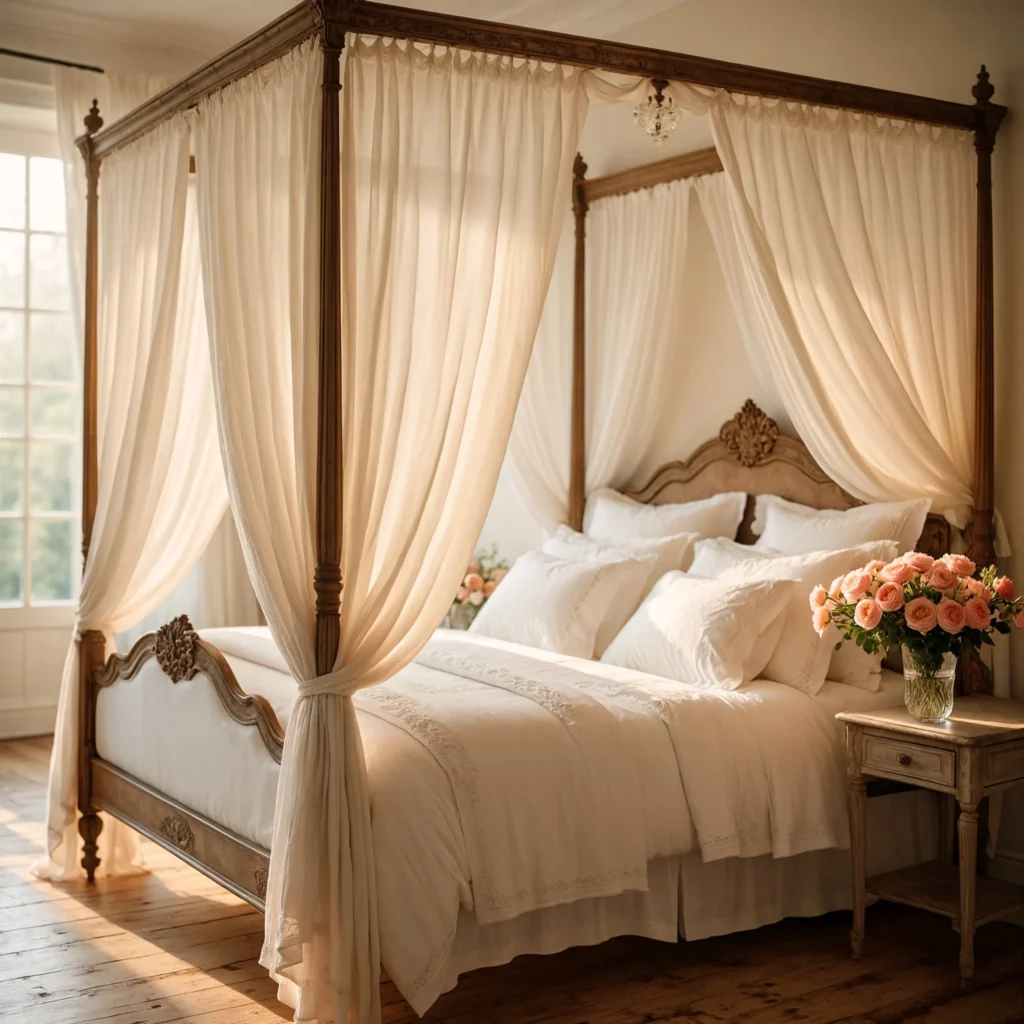
The romantic French canopy bed — its four carved posts rising to support a fabric-draped crown of flowing linen, gauze, or embroidered cotton that encloses the sleeping space in a private, sheltered world of textile beauty — represents the ultimate expression of the French bedroom’s fundamental design philosophy: that sleep, rest, and intimate domestic life deserve surroundings of genuine beauty, sensory richness, and romantic architectural drama that make the bedroom the most personal and most elaborately considered room in the entire French home. From the grand lit à baldaquin of the French château to the simpler draped iron bed of the Provençal farmhouse, the canopied bed has served as the French bedroom’s defining centerpiece for centuries without interruption.
Contemporary French interior designers interpret the canopy bed with a beautiful range of aesthetic approaches — from the grandly architectural four-poster hung with heavy embroidered linen panels to the delicately minimalist single fabric drape hung from a simple ceiling-mounted ring above a plain white bed — unified by a shared commitment to creating within the bedroom a sheltered, intimate, fabric-enclosed sleeping environment of genuine beauty and romantic atmosphere. Surrounding a canopy bed with white-painted antique furniture, a beautifully worn parquet floor, tall linen curtains filtering morning light, and a bedside table bearing fresh garden roses creates the most perfectly, unmistakably French of all bedroom interior design compositions — a room of timeless romantic beauty that no other design tradition approaches with quite the same devoted aesthetic conviction.
15. The French Kitchen Garden and Botanical Prints
Antique botanical prints — precise, beautifully hand-colored scientific illustrations of plants, flowers, vegetables, and herbs originally produced for the great French botanical encyclopedias and horticultural publications of the eighteenth and nineteenth centuries — occupy a cherished and enduring place within the French interior design tradition, bringing to domestic walls a quality of scientific beauty, natural history reverence, and graphic elegance that feels simultaneously educational and deeply decorative. The precise linework, careful hand-applied color, and orderly taxonomic presentation of classic French botanical illustrations create a visual language of quiet authority and organic beauty that harmonizes with virtually every room in the French interior — kitchen, living room, bedroom, and corridor alike.
The French practice of hanging botanical prints in orderly grids — matching frames arranged with mathematical precision to create a symmetrical wall composition of multiple prints — creates a display of remarkable visual power and intellectual coherence that honors the scientific seriousness of the original publications while transforming the domestic wall into an elegant, botanically themed gallery of natural beauty. Pairing framed botanical prints with living potted herbs on kitchen windowsills, fresh garden flowers in ceramic vases, and dried herbal wreaths above doorways creates a cohesive botanical narrative throughout the French interior that connects the domestic space to the French passion for gardens, markets, cooking, and the extraordinary sensory richness of the natural world that underlies so much of the most enduring French aesthetic achievement.
16. The French Art of Imperfect, Lived-In Beauty
The most defining, most philosophically distinctive, and ultimately most inspiring characteristic of authentic French interior design is not any specific furniture form, fabric pattern, architectural detail, or color palette, but rather the deeply held cultural conviction that genuine domestic beauty is inseparable from the evidence of real human life actively, passionately, and intelligently lived within it. The French concept of beautiful imperfection — the slightly worn velvet of a beloved bergère, the peeling paint on a Provençal shutter, the mismatched ceramics assembled over a lifetime of market visits, the faded silk of an inherited curtain — represents a mature, confident aesthetic philosophy that finds in the marks of honest time and daily use not defects requiring correction but evidence of genuine domestic richness requiring celebration and preservation.
This fundamental French interior design philosophy — that a room should look as though genuinely, happily inhabited by people who love beautiful things and use them without excessive reverence — produces domestic spaces of an atmospheric warmth, personal authenticity, and effortless visual elegance that no amount of expensive purchasing, perfect styling, or interior design intervention can manufacture from scratch without the essential ingredient of real time, real use, and the genuine accumulation of a life beautifully and thoughtfully lived. It is this quality, ultimately, that makes French interior design the most widely admired, most consistently inspiring, and most enduringly influential domestic aesthetic tradition in the entire history of interior design — a tradition built not on perfection but on the far rarer and far more beautiful quality of genuine, inhabited, imperfect human grace.