17 Mid Century Office Decor Ideas for a Stylish Workspace
1. Iconic Eames Chair as the Centerpiece
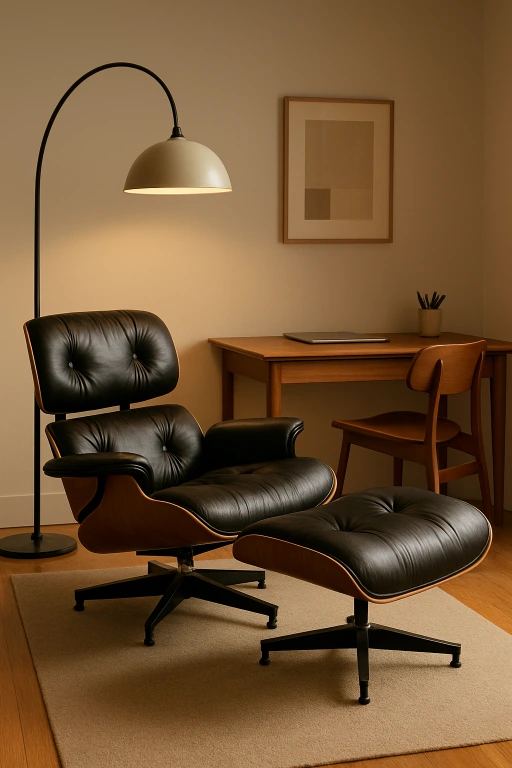
The Eames lounge chair and ottoman stands as the single most recognizable and culturally significant piece of mid-century modern furniture ever produced, making it the ultimate centerpiece investment for any home office or workspace aspiring to genuine mid-century design authenticity and lasting aesthetic authority. Designed by Charles and Ray Eames for Herman Miller in 1956, this iconic chair combines molded walnut plywood shells with generously cushioned black leather upholstery to create a seating experience of extraordinary physical comfort and visual sophistication that has remained in continuous production for nearly seven decades without requiring a single design revision. Its presence in a mid-century office instantly elevates every surrounding design element by simple proximity.
Positioning an Eames lounge chair and ottoman in a reading corner of the mid-century home office — beside a warm floor lamp, within reach of a well-stocked bookshelf, and oriented toward a garden view or architectural window — creates a workspace vignette of incomparable elegance and genuine functional purpose that serves both serious intellectual work and restorative reading breaks with equal grace. The chair’s warm walnut tones harmonize instinctively with the teak credenzas, oak desks, and rosewood shelving units that populate the broader mid-century office design vocabulary, making it a unifying anchor piece around which every other workspace element finds its natural position. This definitive mid-century office decor investment consistently generates the most passionate appreciation from design audiences worldwide.
2. Walnut Wood Desk with Tapered Legs
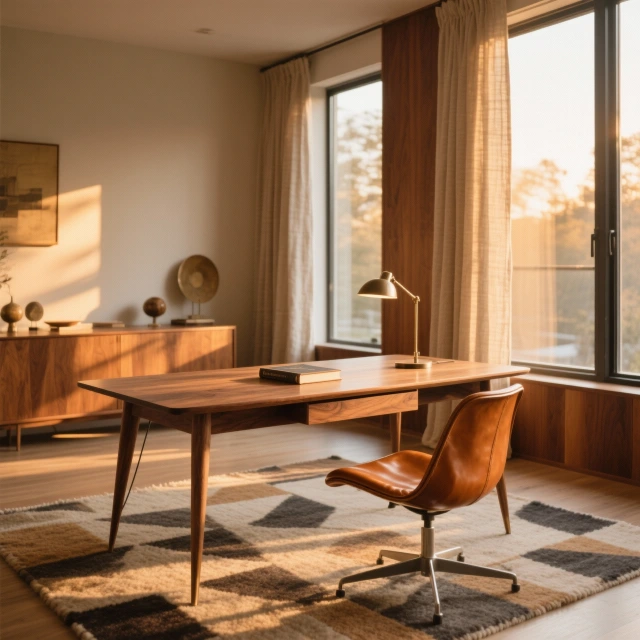
A solid walnut wood desk with distinctive tapered legs represents the quintessential mid-century modern workspace surface, combining the organic warmth and richly figured grain of genuine hardwood with the clean, architecturally resolved design language that defines the mid-century modern movement at its most beautifully functional and enduringly appealing. The tapered leg detail — a defining visual signature of mid-century furniture design that appears across chairs, tables, credenzas, and desks of the period — lifts the desk visually from the floor, creating a sense of lightness and spatial generosity beneath the work surface that makes even compact home offices feel open, airy, and thoughtfully proportioned. Walnut’s deep chocolate tones warm any workspace immediately and completely.
The working surface of a well-designed mid-century walnut desk provides a daily tactile pleasure that no manufactured composite or laminate alternative can replicate — the slight warmth of real wood beneath the hands, the gentle variation of grain texture across the surface, and the gradual development of a rich patina through honest daily use create a working relationship between maker and user that deepens meaningfully over time. Keeping the desktop deliberately minimal — a single task lamp, a leather desk pad, a small ceramic pen holder, and perhaps one carefully chosen decorative object — allows the walnut surface itself to remain the primary visual statement of the mid-century office workspace, its natural beauty requiring no competition or embellishment beyond honest exposure to warm natural and artificial light.
3. Teak Credenza for Storage and Display
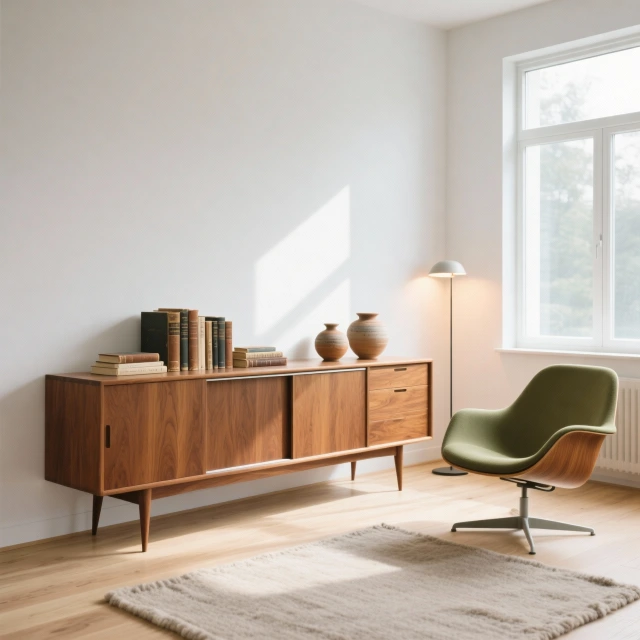
The long, low teak credenza — with its sliding or tambour panel doors, precisely tapered legs, and beautifully figured wood surfaces — serves as the mid-century home office’s most versatile and architecturally satisfying storage and display solution, combining generous practical capacity with a visual elegance and horizontal proportional grace that taller, bulkier storage units entirely lack. Originally designed for the dining rooms and living rooms of mid-century modern homes, the credenza has been enthusiastically adopted by the home office as a surface of extraordinary dual functionality — concealing filing, equipment, and practical office supplies behind its beautiful wooden doors while simultaneously providing an uncluttered top surface for curated display that contributes significantly to the overall aesthetic quality of the workspace.
The top surface of a mid-century teak credenza styled with deliberate care — a curated selection of design books stacked horizontally, a beautifully glazed ceramic vessel, a small sculptural object, and perhaps a single trailing plant — creates the mid-century office’s most characterful and personally expressive display vignette, communicating the workspace inhabitant’s aesthetic sensibilities and intellectual interests with immediate, articulate clarity. Positioning the credenza along the wall behind or beside the main desk creates a cohesive mid-century office composition of considerable visual authority, the horizontal line of the credenza echoing and reinforcing the clean, low-slung proportional vocabulary that defines the mid-century modern aesthetic from floor to eye level with perfect geometric consistency.
4. Tulip or Pedestal Side Table
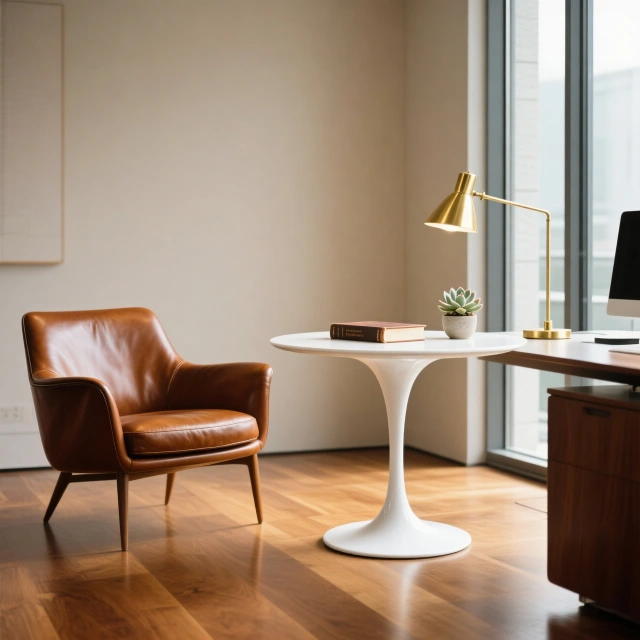
The tulip pedestal table — Eero Saarinen’s revolutionary 1956 design for Knoll featuring a single sculptural base supporting a round tabletop, eliminating the visual clutter of four conventional legs — represents one of mid-century modern design’s most elegant and intellectually satisfying solutions to the perennial problem of furniture overcrowding the visual field of a carefully designed workspace. Saarinen’s stated ambition to resolve what he called the “slum of legs” beneath tables and chairs produced in the tulip table a piece of such pure, organic sculptural intelligence that it has remained in continuous production for nearly seven decades, its timeless form appearing as fresh and formally resolved today as it did when first exhibited at the Museum of Modern Art in 1956.
Positioned beside a leather reading chair or at the end of a mid-century modern desk as an auxiliary work surface, the tulip pedestal table introduces a note of sculptural elegance and formal inventiveness to the home office that conventional four-legged side tables — however beautiful their individual design — simply cannot match in terms of genuine conceptual originality and spatial generosity. The white Carrara marble-topped version creates a particularly beautiful contrast with warm walnut and teak wood tones that dominate the mid-century office palette, its cool luminous surface providing visual relief and textural variety within an otherwise warm, wood-dominated workspace aesthetic. This iconic mid-century office design piece consistently generates enthusiastic appreciation from design audiences who value both historical significance and enduring contemporary relevance in equal measure.
5. Architectural Floor Lamp with Adjustable Arm
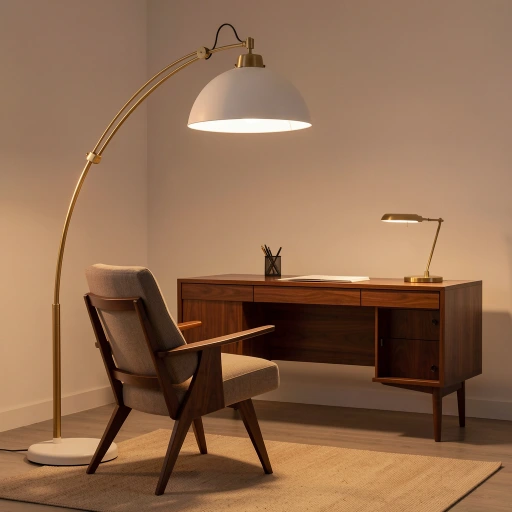
The architectural floor lamp with an adjustable articulated arm — whether the elegant arc lamp sweeping dramatically overhead, the precise Arco lamp by Castiglioni brothers, or the versatile tripod floor lamp with a directional shade — represents the mid-century modern office’s most important and most design-forward lighting investment, combining genuine functional adjustability with a sculptural formal presence that contributes enormously to the overall aesthetic character of the workspace. Mid-century modern lighting design was characterized by a profound commitment to the idea that functional objects should be beautiful objects — that the mechanism of adjustment, the engineering of the arm, and the geometry of the shade should all be resolved into a coherent visual composition of genuine artistic merit.
The warm, directional light cast by a well-positioned mid-century floor lamp creates precisely the intimate, task-focused illumination that serious desk work and reading require, while simultaneously establishing the warm, atmospheric quality that distinguishes a genuinely designed mid-century office from a merely furnished workspace. Brass and warm gold metal finishes on mid-century floor lamp arms and bases complement the walnut, teak, and rosewood tones of surrounding furniture with particular beauty, creating a cohesive warm material palette that feels unmistakably and authentically mid-century modern in its tonal harmony and material consistency. This essential mid-century office lighting investment consistently earns the highest appreciation from design audiences seeking workspaces of genuine aesthetic ambition and daily functional excellence.
6. Sunburst or Starburst Wall Clock
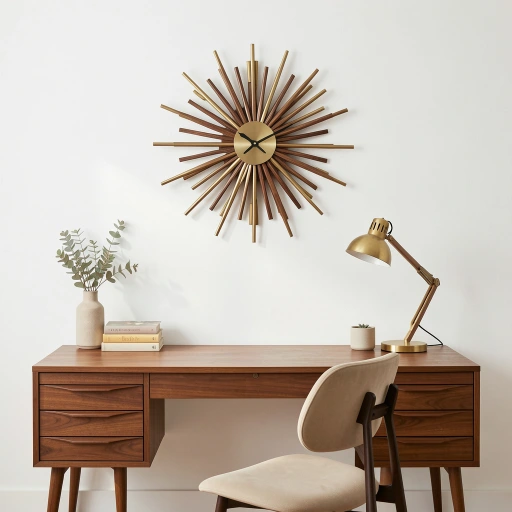
The sunburst or starburst wall clock — its radiating brass or painted wood spokes emanating from a central clock face in a design that simultaneously references the atomic age optimism, solar energy symbolism, and formal geometric adventurousness of mid-century modern decorative arts — stands as one of the most immediately recognizable and enthusiastically beloved wall accessories in the entire mid-century office design vocabulary. Originally popularized in American homes and offices of the 1950s and 1960s as an expression of the era’s fascination with atomic science, space exploration, and dynamic geometric abstraction, the sunburst clock has returned to contemporary workspace interiors with remarkable cultural authority as both a functional timepiece and a genuine piece of period decorative art.
Positioned prominently on the primary feature wall of a mid-century home office — against a warm neutral background that allows its radiating form to read with maximum visual clarity and graphic impact — a large sunburst clock creates an immediate focal point of playful elegance and retro-modern personality that no conventional square or round clock format can replicate. The warm brass and walnut material combinations most associated with authentic mid-century sunburst clock design integrate seamlessly with the broader warm wood and metal aesthetic vocabulary of the mid-century office, ensuring that the clock contributes to rather than disrupts the cohesive material harmony of the carefully composed workspace. This iconic mid-century office decor piece generates consistent, enthusiastic Pinterest saves from design audiences who recognize in it the perfect marriage of functional timekeeping and genuine decorative artistry.
7. Geometric Patterned Area Rug
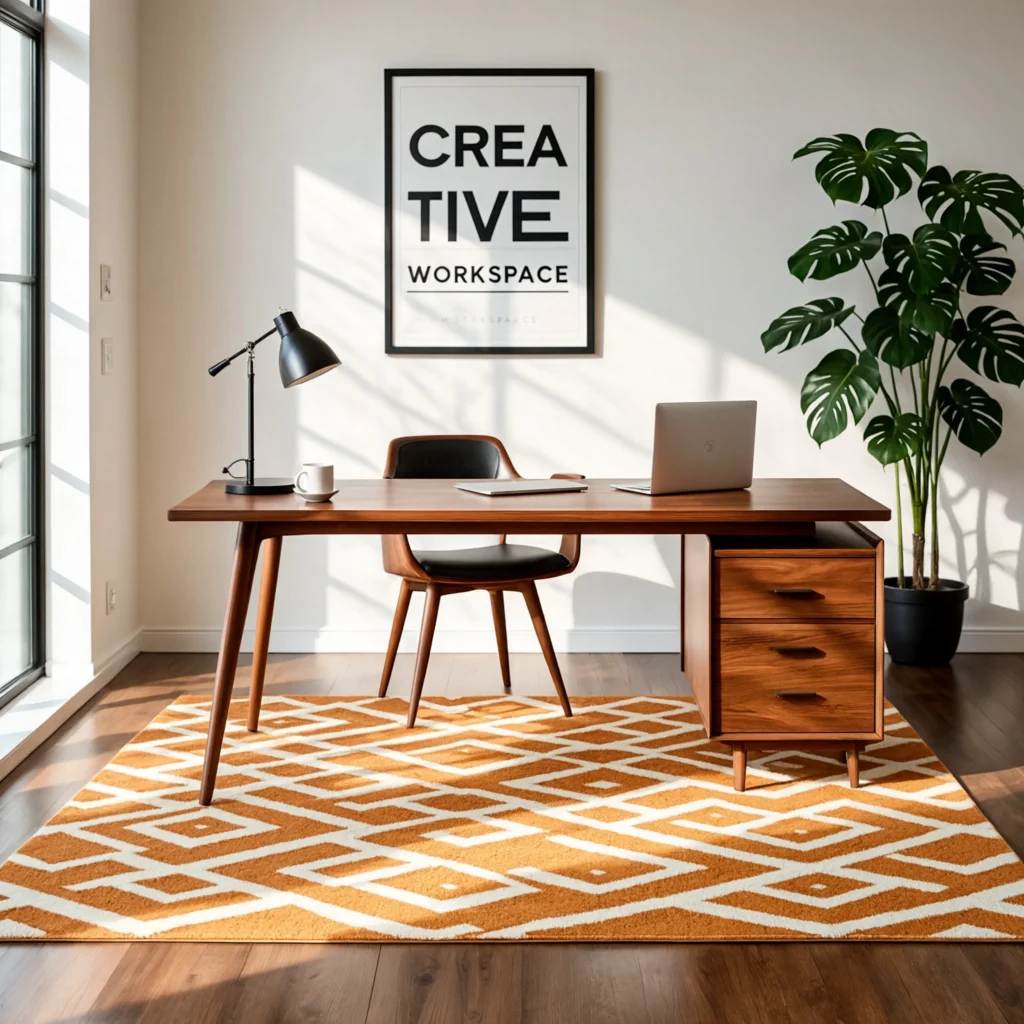
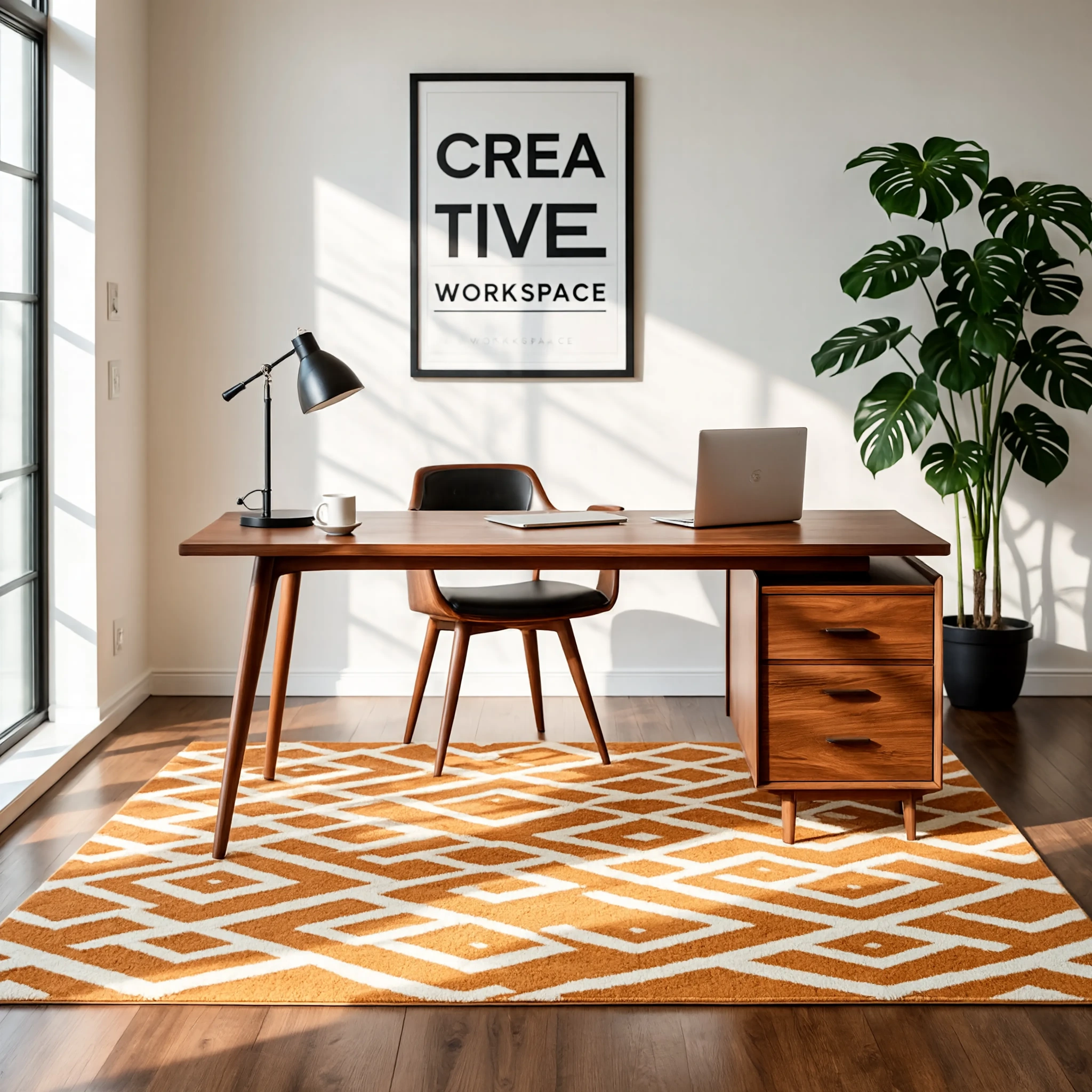
A bold geometric patterned area rug in the warm ochre, burnt orange, mustard yellow, olive green, and cream tones most closely associated with authentic mid-century modern design provides the home office floor with a graphic visual foundation of considerable aesthetic power and period accuracy that immediately communicates a coherent, confident mid-century design intention throughout the entire workspace. The geometric vocabulary of mid-century rug design — diamonds, chevrons, abstract organic shapes, and precisely repeating grid patterns drawn from the era’s broader fascination with mathematical order, atomic structure, and dynamic visual rhythm — creates floor coverings of genuine graphic sophistication that function simultaneously as practical underfoot comfort and deliberate decorative art installations within the mid-century office.
The practical benefits of a well-chosen geometric area rug in the home office extend considerably beyond its obvious aesthetic contributions — defining the primary desk and seating zone within a larger open-plan space, providing acoustic dampening that reduces the reverberant quality of hard floor surfaces, protecting beautiful wood floors from chair and desk leg wear, and creating a visually coherent island of designed space that anchors the entire mid-century office furniture arrangement with geometric authority. Choosing a rug whose color palette introduces one or two accent tones not present in the surrounding furniture — a warm ochre against predominantly walnut and cream surroundings, for example — adds the visual depth and chromatic interest that makes a mid-century office feel genuinely, completely designed rather than simply furnished with period-appropriate pieces.
8. Floating Wall Shelves in Walnut or Teak
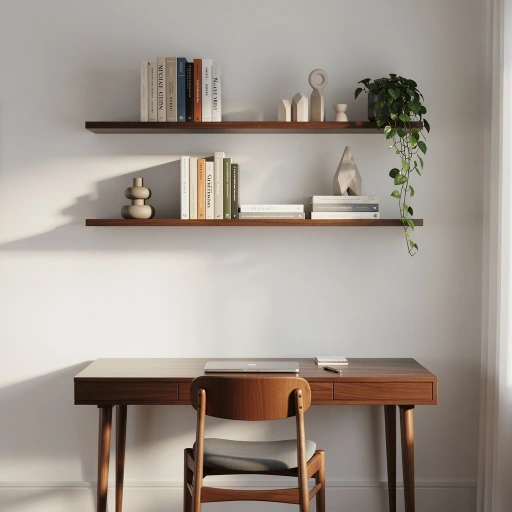
Floating wall shelves in rich walnut or warm teak — their clean, bracket-free profiles projecting cleanly from the wall surface with the visual confidence of architectural elements rather than applied furniture — represent the mid-century modern home office’s most elegant solution to the dual requirements of practical book and object storage and deliberate wall composition, achieving both with a spare, architecturally resolved simplicity that freestanding bookshelves cannot replicate in terms of spatial lightness and visual integration with the surrounding wall plane. The mid-century modern design movement’s fundamental commitment to the elimination of unnecessary visual elements — its conviction that every line, every joint, and every surface should justify its presence through genuine functional or aesthetic contribution — finds its purest storage expression in the floating wall shelf.
The curation of objects displayed on mid-century floating shelves requires the same deliberate editorial attention that the broader mid-century design philosophy brings to every aspect of workspace design — selecting books with complementary spine colors arranged with conscious attention to visual rhythm, placing ceramic objects of varying heights and volumes with careful consideration of negative space between groupings, and introducing one or two organic elements to provide visual relief among the geometric precision of books and designed objects. Warm indirect lighting directed upward or downward across floating shelves from concealed LED sources creates a mid-century office wall of extraordinary atmospheric richness during evening working hours, the warm wood surfaces glowing against the surrounding wall with a depth and material beauty that no other storage solution approaches.
9. Leather Desk Pad and Accessories
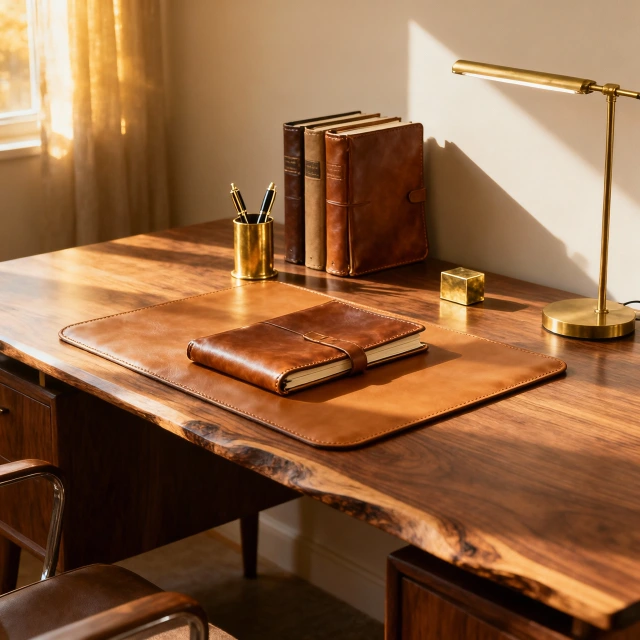
A tan or cognac leather desk pad anchoring the primary working surface of a mid-century modern office creates an immediate impression of cultivated professional refinement and material quality that instantly elevates the aesthetic status of the entire workspace, transforming a beautiful wood desk into a complete, considered composition of complementary materials that honors the mid-century modern tradition of combining natural materials with functional precision. Leather’s warm, matte surface provides a writing and working surface of genuine tactile pleasure — slightly resistant under the pen, pleasantly cool to the touch, and possessed of a quiet, sophisticated visual presence that synthetic alternatives entirely lack — while protecting the beautiful walnut or teak desk surface beneath from the inevitable minor scratches and marks of daily working use.
Building a complete mid-century desk accessory set around a leather pad — adding a brass pen holder, a small leather-covered notebook, a simple ceramic coffee cup, and a precisely positioned task lamp — creates a desk styling composition of remarkable cohesion and visual satisfaction that communicates genuine attention to the quality and consistency of every working object within the mid-century office environment. The combination of tan leather with warm brass hardware represents one of the most characteristically and authentically mid-century modern material pairings available to the contemporary workspace designer, its warm, analog richness providing a powerful and humanizing counterpoint to the digital screens and technological equipment that necessarily occupy the modern home office alongside these beautifully crafted period-appropriate accessories.
10. Abstract Mid-Century Artwork on the Wall
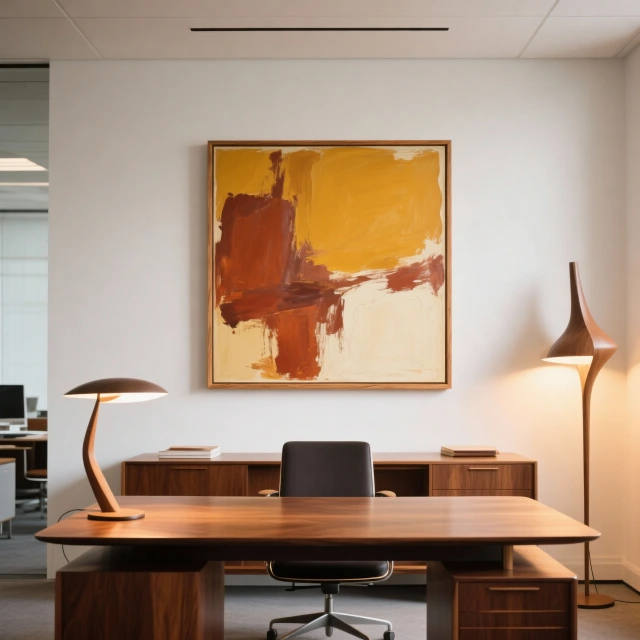
Large-scale abstract artwork in the warm, earthy color palette most closely associated with authentic mid-century modern design — ochre yellows, burnt oranges, terracotta reds, olive greens, and warm creams applied with the bold, gestural confidence of Abstract Expressionism and the graphic clarity of hard-edge abstraction — transforms the primary feature wall of the mid-century home office into a powerful visual statement of artistic intention and aesthetic sophistication that communicates the workspace inhabitant’s design literacy with immediate, articulate authority. The mid-century modern movement maintained an unusually close and productive relationship between fine art and interior design, with the abstract paintings of the New York School and the graphic works of European constructivists appearing regularly in the best-designed mid-century homes and offices of the period.
The scale of artwork chosen for the mid-century office feature wall should command the wall surface with genuine visual authority — a piece too small reads as tentative and underscales the architectural space, while a properly proportioned large canvas creates the bold focal point that mid-century interior design both requires and rewards with maximum aesthetic impact. Simple, clean frame profiles in warm walnut, natural oak, or brushed brass complement abstract mid-century artwork without competing with or visually interrupting the composition’s own internal logic and visual energy. This essential mid-century office wall treatment consistently generates strong engagement from design audiences who recognize that genuinely beautiful workspace art investment delivers daily aesthetic dividends of extraordinary and compounding value.
11. Mustard Yellow or Olive Green Accent Chair
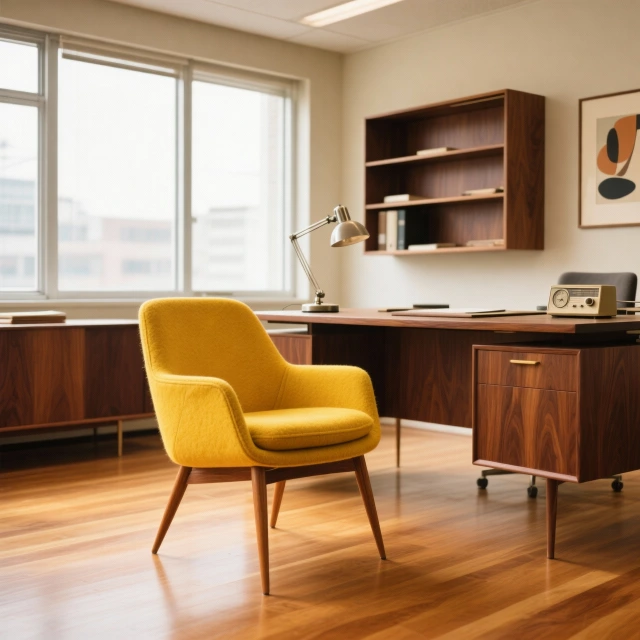
A mustard yellow or olive green accent chair — upholstered in fine wool, bouclé, or textured fabric and mounted on the precisely tapered wooden legs that define mid-century seating design — introduces the most important and most characteristically mid-century chromatic energy into the home office, providing the warm, saturated color accent that the palette of walnut, teak, cream, and white that dominates mid-century interiors genuinely requires to feel completely alive, fully realized, and authentically period-accurate. These deeply warm, slightly muted mid-century accent colors — drawn from the natural world of autumn leaves, ripening wheat, and Mediterranean olive groves — possess a timeless psychological warmth that both energizes and comforts the workspace occupant during extended working hours.
The placement of a mustard or olive accent chair in the mid-century office reading corner — positioned at a comfortable angle to the main desk, accompanied by a small side table and a warm floor lamp — creates a secondary workspace zone of considerable charm and practical utility that provides both a physical change of working position and a visual compositional anchor of bold color that balances the warm wood tones dominating the primary desk area. The visual relationship between a mustard yellow accent chair and surrounding walnut furniture surfaces creates one of the most instinctively harmonious and authentically mid-century color and material combinations available to the contemporary workspace designer, their shared warmth and tonal depth creating a richly satisfying chromatic dialogue that never resolves into monotony.
12. Nelson Bubble Pendant Light
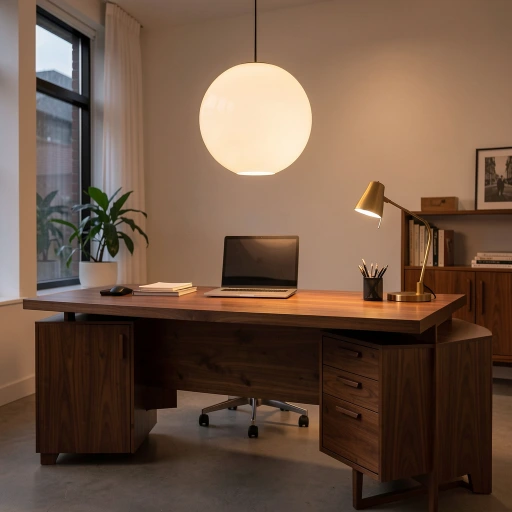
The George Nelson bubble pendant lamp — its translucent white hand-sprayed plastic shell creating a softly glowing spherical or ovoid form of pure, organic simplicity — represents one of mid-century modern lighting design’s most beloved and most immediately recognizable achievements, hanging above mid-century office desks and reading areas with a warm, diffused luminosity that manages to feel simultaneously scientifically innovative and organically natural in a way that perfectly encapsulates the mid-century modern aesthetic at its most optimistic and most beautifully resolved. Originally designed in 1952 for Herman Miller and still produced today in close collaboration with the Nelson estate, the bubble lamp has demonstrated a formal timelessness that few designed objects of any period or discipline can claim.
The warm, shadow-free light produced by the Nelson bubble pendant — its translucent shell distributing illumination evenly across its entire glowing surface rather than directing it from a single point — creates a particularly beautiful and psychologically comfortable working light that reduces eye strain during extended desk sessions while simultaneously establishing a warm, welcoming atmospheric quality in the mid-century home office that conventional directional pendant lighting entirely fails to produce. Hanging a single large bubble pendant directly above the primary work surface at the correct height — low enough to feel intimate and warmly present, high enough to avoid visual obstruction — creates a mid-century office lighting moment of remarkable simplicity and enduring beauty that justifies the investment with daily aesthetic pleasure of the highest quality.
13. Cork or Wood Paneled Accent Wall
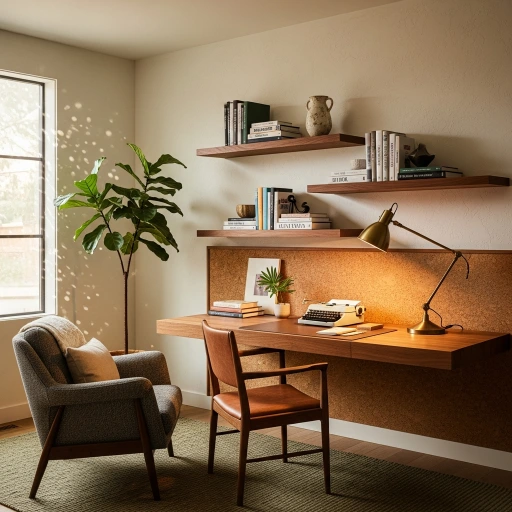
A cork or warm wood paneled accent wall in the mid-century home office creates the period’s most characteristically warm and texturally rich vertical surface treatment, bringing an organic, natural material presence to the workspace that smooth painted drywall surfaces categorically lack while simultaneously providing the sound-dampening acoustic properties that make concentrated intellectual work in a home office environment genuinely more comfortable and productive. Cork paneling was widely embraced by mid-century modern interior designers for its extraordinarily harmonious combination of practical acoustic performance, tactile warmth, natural visual texture, and the ability to function as a continuous pinboard surface for the inspiration images, project references, and working notes that characterize genuinely active creative and professional workspaces.
Contemporary mid-century office designers are returning enthusiastically to cork wall paneling precisely because it satisfies multiple workspace requirements simultaneously — its warm honey tones complement walnut and teak furniture with instinctive material harmony, its textured surface absorbs sound and reduces echo in hard-floored home office spaces, and its pinboard functionality provides a practical, visually dynamic working display surface that keeps reference materials visible and accessible without cluttering the desk surface. Wood paneled accent walls in horizontal or vertical tongue-and-groove profiles offer a slightly more formal and architecturally permanent version of the same warm, organic wall treatment, their linear patterns adding directional visual rhythm that enhances the spatial proportions of the mid-century office with authentic period precision.
14. Sculptural Ceramic or Brass Desk Objects
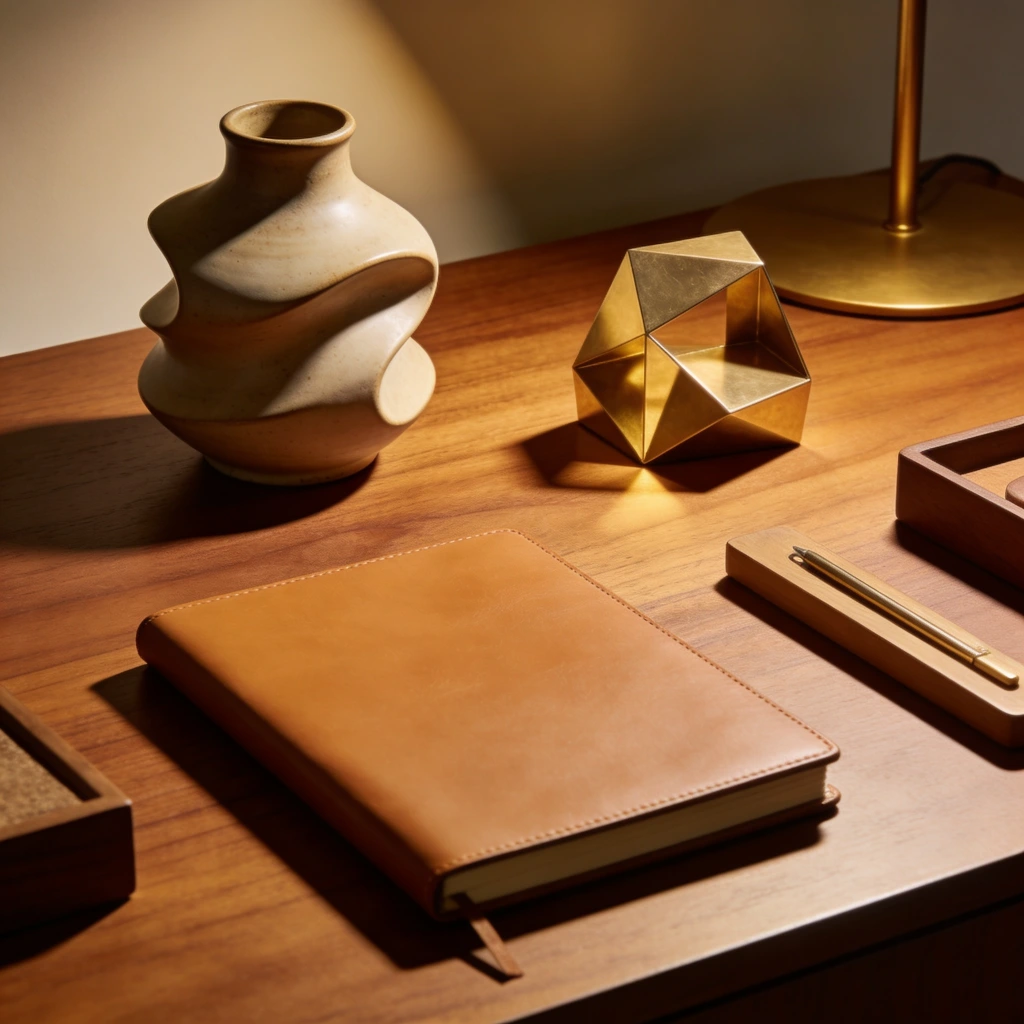
Sculptural ceramic vessels and precisely crafted brass desk objects — small geometric paperweights, elegantly proportioned pen trays, cast brass bookends, and hand-thrown ceramic bowls serving as catchalls for daily essentials — bring to the mid-century home office desk surface the same commitment to beautiful functional objects that the broader mid-century modern design movement applied to every category of manufactured domestic artifact throughout the remarkable two decades of its peak cultural influence. The mid-century conviction that objects used daily in the workplace deserve the same level of formal consideration, material quality, and aesthetic resolution as the finest furniture and architectural elements finds its most intimate and most personally immediate expression in the small, handled, daily-touched objects that populate the active working desk surface.
Selecting mid-century desk objects with attention to material harmony — warm terracotta and cream ceramic tones that echo the amber tones of walnut wood, warm brass accents that relate to the gold and honey colors appearing throughout the mid-century office palette — creates a desk surface of quiet, cohesive material beauty that communicates genuine aesthetic intentionality without the self-conscious excess of over-styled decorator showroom compositions. The deliberate limitation of desk objects to a precisely edited selection — resisting the accumulation of unnecessary items and maintaining the open, breathing quality of the mid-century aesthetic philosophy — ensures that each individually beautiful object retains the visual dignity and presence it deserves within the carefully curated mid-century workspace composition.
15. Hairpin Leg Side Table or Plant Stand
The hairpin leg — its two or three precisely bent steel rods welded to a simple plate mount creating a slender, structural elegance of extraordinary visual lightness — represents one of mid-century modern furniture design’s most brilliant and most enduringly influential constructional innovations, providing tables, desks, benches, and shelving units with a minimal supporting structure of genuine engineering elegance that contributes almost nothing visually to the overhead surface while contributing enormously to the overall aesthetic character of the mid-century office interior. Originally developed by Henry P. Glass in 1941 and popularized throughout the mid-century modern period as the definitive expression of honest structural design, the hairpin leg remains as formally fresh and as aesthetically satisfying today as at any point in its eight-decade history.
A hairpin leg side table positioned beside a mid-century office reading chair — bearing a small trailing plant in a terracotta pot, a coffee cup, and perhaps a single design book — creates a workspace corner vignette of charming material contrast between the delicate industrial precision of the steel legs and the organic warmth of the plants and ceramics resting above them. This productive tension between industrial craft and organic nature is entirely characteristic of the mid-century modern design sensibility at its most thoughtful and most humanely balanced, making the hairpin leg side table not merely a practical workspace accessory but a genuine philosophical statement about the relationship between manufactured precision and natural beauty that defined mid-century design’s most enduring and most beloved aesthetic achievements.
16. Potted Indoor Plants in Ceramic Planters
Potted indoor plants displayed in beautifully proportioned ceramic planters and warm teak or walnut plant stands bring the mid-century modern home office the organic vitality, natural color, and genuine biological presence that no manufactured design element — however beautifully crafted or period-accurately chosen — can provide, connecting the carefully composed workspace to the living, breathing natural world with an immediacy and authenticity that transforms the office from a designed environment into a genuinely inhabited, naturally alive domestic space. The mid-century modern movement maintained a strong philosophical connection to organic form — its furniture curves echoing natural shapes, its material palette drawn from living wood and natural fibers — making the presence of living plants within the mid-century office feel not like a decorative addition but like a genuine completion of the design’s fundamental organic intentions.
The mid-century office plant palette should favor the bold, architecturally sculptural species that complement rather than visually compete with the clean geometric furniture forms surrounding them — the large, glossy leaves of the rubber plant and fiddle-leaf fig, the dramatic aerial root formations of the monstera deliciosa, and the elegant vertical lines of the snake plant all provide organic visual interest of the right scale and formal character for the mid-century workspace. Displaying plants in ceramic planters whose warm terracotta, cream, and earth tones echo the broader mid-century color palette — perhaps elevated on teak plant stands of varying heights to create a layered, multi-level botanical composition — creates a home office corner of extraordinary natural beauty that improves the workspace environment aesthetically, acoustically, and genuinely biologically through the documented cognitive and psychological benefits of daily proximity to living plants.
17. A Gallery Wall of Vintage Travel and Design Posters
A gallery wall of vintage travel posters and mid-century graphic design prints — the bold, flat-color lithographs produced by the great mid-century airline, railway, and tourism companies alongside the precise, visually inventive commercial graphic art of the Bauhaus-influenced design studios of the 1950s and 1960s — creates the mid-century home office’s most graphically energetic and culturally referential wall composition, filling the workspace with visual storytelling, period design history, and the optimistic, forward-looking spirit of an era that believed profoundly in the power of beautiful design to improve every aspect of human life including the daily experience of working. These prints distill the mid-century modern era’s graphic sensibility into its most portable, most accessible, and most visually concentrated form.
The consistent framing of a mid-century poster gallery wall — simple black profiles, warm walnut frames, or clean natural oak all work with equal authenticity — creates visual coherence across a deliberately varied selection of print subjects, styles, and sizes that allows the individual graphic energy of each poster to contribute to the overall wall composition without creating visual chaos. Selecting posters whose color palettes share warm tonal relationships — ochres, teals, burnt oranges, and warm creams appearing across different prints in varying proportions — creates a gallery wall of remarkable chromatic sophistication that reinforces rather than disrupts the carefully composed mid-century color harmony of the surrounding workspace. This highly personal, endlessly customizable mid-century office wall treatment consistently generates extraordinary Pinterest engagement from design audiences who recognize in vintage poster collecting both an accessible design investment and a genuinely rich engagement with the cultural and visual history of the mid-century modern era’s most creatively productive decades.