18 Midcentury Modern Decor Ideas with Vintage Appeal
1. Iconic Tulip Dining Table and Chairs
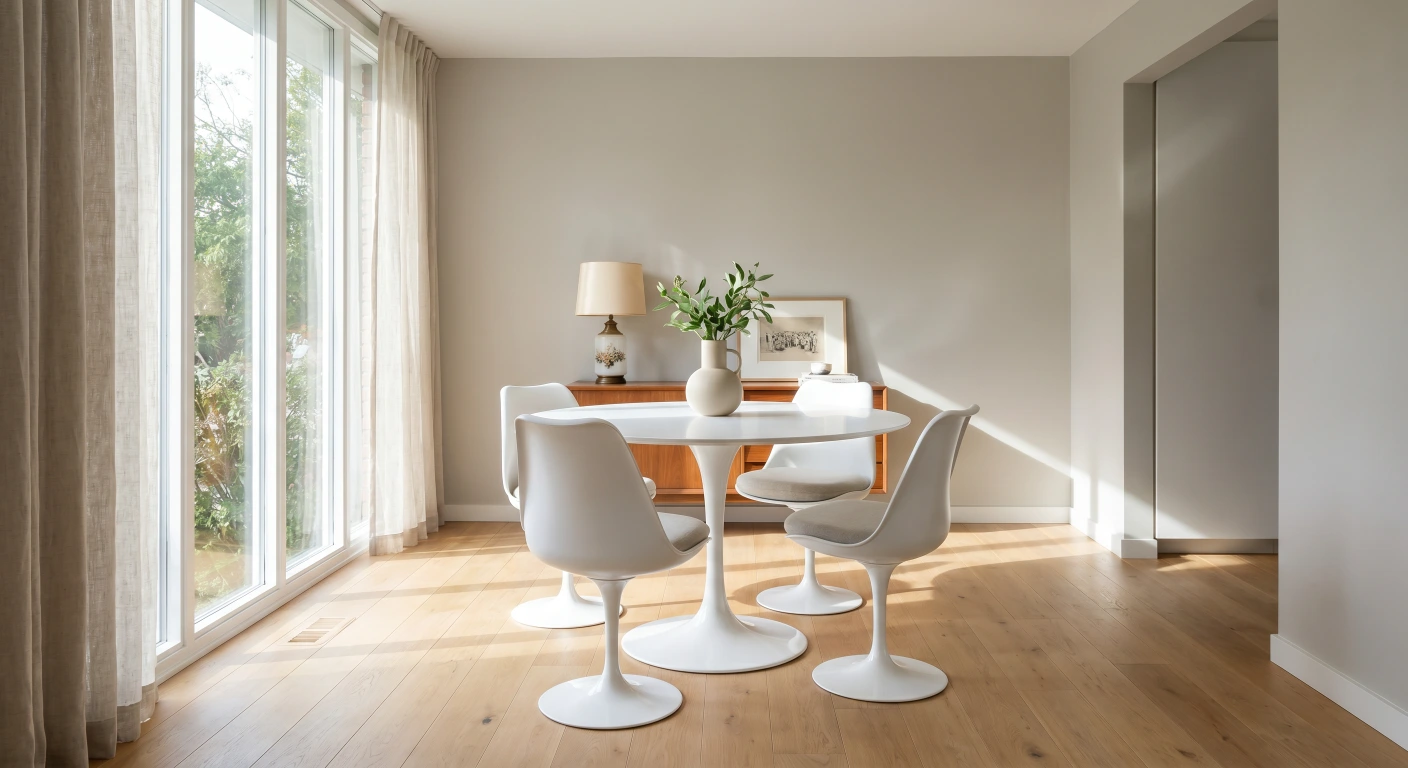
The Saarinen tulip dining table and chair set represents one of the most intellectually ambitious and formally perfect achievements in the entire history of midcentury modern furniture design, its revolutionary single-pedestal base eliminating the visual complexity of conventional four-legged dining furniture with a sculptural elegance that has made it one of the most widely recognized and enduringly admired designed objects of the twentieth century. Eero Saarinen’s 1956 Pedestal Collection for Knoll grew from his determination to resolve what he famously described as the “slum of legs” cluttering the floors of contemporary interiors, producing in the tulip table a form of such pure organic intelligence that it appears to have been discovered rather than designed — an inevitable, natural solution to the problem of supporting a horizontal surface above a floor with maximum visual economy and minimum spatial intrusion.
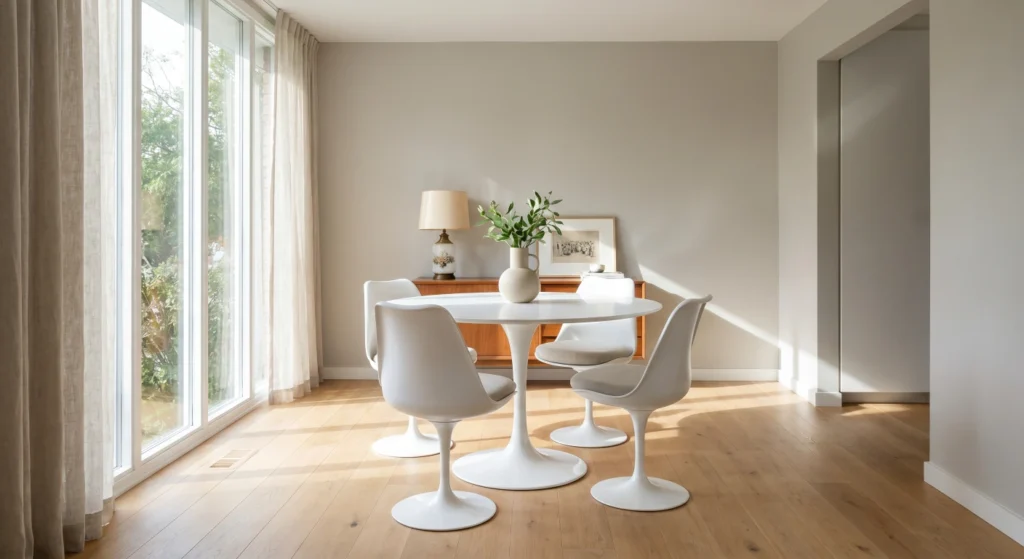
The white fiberglass shell chairs surrounding the tulip table create a dining composition of extraordinary formal coherence and spatial generosity, their gentle curves and single-leg bases maintaining the visual openness of the dining area while providing seating comfort of genuine ergonomic thoughtfulness. Contemporary interiors pair the tulip dining set with warm wood floors, simple linen window treatments, and carefully chosen midcentury accessories to create dining rooms of timeless modernist elegance that feel as architecturally resolved and aesthetically current today as they did when first exhibited at the Museum of Modern Art nearly seven decades ago. This iconic midcentury modern decor investment consistently generates the most passionate design appreciation from audiences worldwide who recognize in it the pinnacle of twentieth-century furniture design achievement.
2. Starburst Sunburst Mirror Above Sideboard
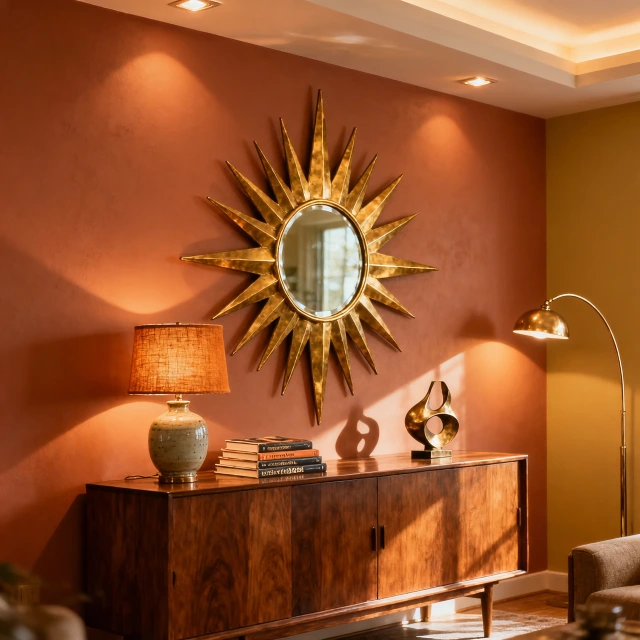
A large gold starburst or sunburst mirror positioned prominently above a teak sideboard creates one of the most visually dramatic and authentically midcentury modern wall compositions available to the contemporary decorator, combining the era’s signature decorative motif with its defining furniture form in a pairing of such natural aesthetic harmony that it has become the single most recognizable and most widely replicated midcentury modern interior vignette across every major home decor and interior design platform globally. The radiating brass or painted gold spokes of the sunburst mirror simultaneously reference the atomic age optimism, solar symbolism, and dynamic geometric adventurousness that characterized midcentury decorative arts at its most boldly expressive and culturally confident period of production.
The practical optical function of the sunburst mirror — amplifying natural and artificial light, creating the illusion of additional spatial depth, and introducing a circular focal point that balances the strong horizontal line of the sideboard below — complements its purely decorative contribution with genuine interior design utility that makes the investment doubly justified. Styling the teak sideboard surface beneath a sunburst mirror with curated vintage ceramics, a small sculptural object, and a pair of matching table lamps creates a complete midcentury modern vignette of extraordinary visual authority that anchors the living or dining room with confident period accuracy and enduring decorative elegance. This quintessential midcentury modern decor pairing consistently earns exceptional Pinterest saves from audiences who recognize it as the most immediately communicative shorthand for the entire midcentury aesthetic.
3. Eames Molded Plastic Shell Chairs
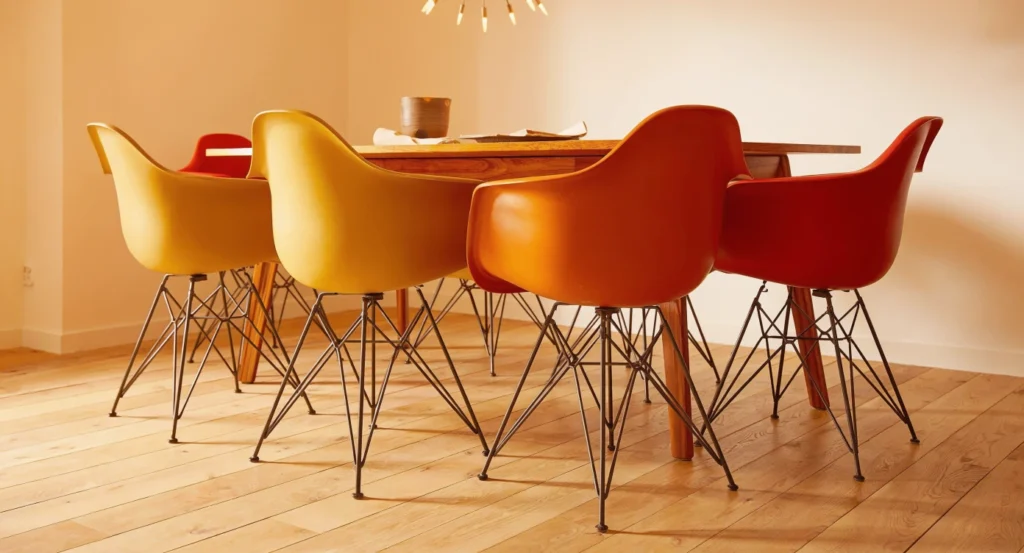
The Eames molded plastic shell chair — Charles and Ray Eames’s 1948 design for Herman Miller featuring a single-piece fiberglass or polypropylene seat shell of organically contoured form mounted on a range of interchangeable bases — represents perhaps the most successful and most democratically influential furniture design achievement of the entire midcentury modern movement, bringing genuinely beautiful, ergonomically sophisticated seating design to mass-market production at a price point that made authentic midcentury modernism accessible to ordinary households rather than exclusively to wealthy collectors and design connoisseurs. The shell chair’s organic, body-conforming curve captures the essential midcentury design ambition of combining industrial production methods with humanistic formal sensitivity in a single, supremely elegant object.
The extraordinary versatility of the Eames shell chair — available in warm ochre, primary red, sky blue, pure white, elephant grey, and numerous other colors, and mountable on the iconic Eiffel tower wire base, wooden dowel leg base, rocker base, and swivel office base — makes it the single most adaptable and compositionally flexible piece of midcentury modern furniture for contemporary interior use, capable of serving simultaneously as dining chair, desk chair, accent chair, and reading seat across every room of the home. Mixing two or three complementary shell chair colors around a natural wood dining table creates a living, playfully composed midcentury modern dining area of genuine visual joy and period authenticity that communicates the original democratic, optimistic spirit of the Eames design philosophy with complete fidelity and enduring contemporary relevance.
4. Organic Kidney-Shaped Coffee Table
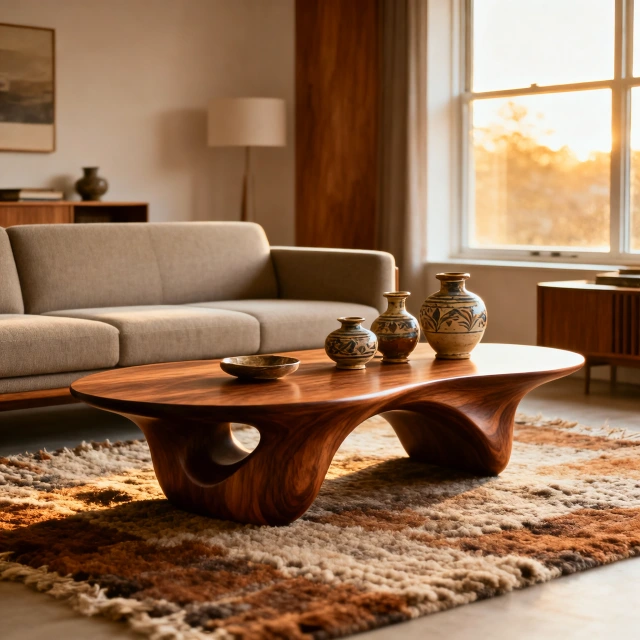
The organic kidney-shaped coffee table — its biomorphic, asymmetrically curved form drawn from the language of natural organisms, amoebic cells, and the abstract sculptural forms that fascinated midcentury artists and designers with equal intensity — represents the living room expression of midcentury modern design’s most philosophically distinctive formal innovation: the liberation of furniture from the tyranny of right angles and geometric regularity in pursuit of curves that feel genuinely alive, naturally derived, and humanly welcoming in a way that rectangular forms, however beautifully proportioned, inherently resist. This organic design language, explored simultaneously by Isamu Noguchi, Vladimir Kagan, and numerous Scandinavian designers throughout the late 1940s and 1950s, produced coffee table forms of extraordinary sculptural vitality.
The kidney-shaped coffee table’s gently curving perimeter creates a living room seating arrangement of unusual spatial generosity and social comfort — its asymmetric form allowing multiple seated positions around the sofa and chairs to maintain relatively equal proximity to the table surface without the awkward corner dead zones that rectangular coffee tables inevitably create. A warm walnut kidney table styled with a small ceramic bowl, a curated stack of design books, and a single sculptural candle holder creates a midcentury living room centerpiece of genuine organic beauty and period accuracy that connects the contemporary interior to the most formally inventive and humanistically motivated strand of midcentury modern design philosophy. This distinctive midcentury decor piece consistently generates enthusiastic appreciation from audiences drawn to the era’s most creatively liberated and formally adventurous design achievements.
5. Walnut and Brass Credenza as Statement Piece
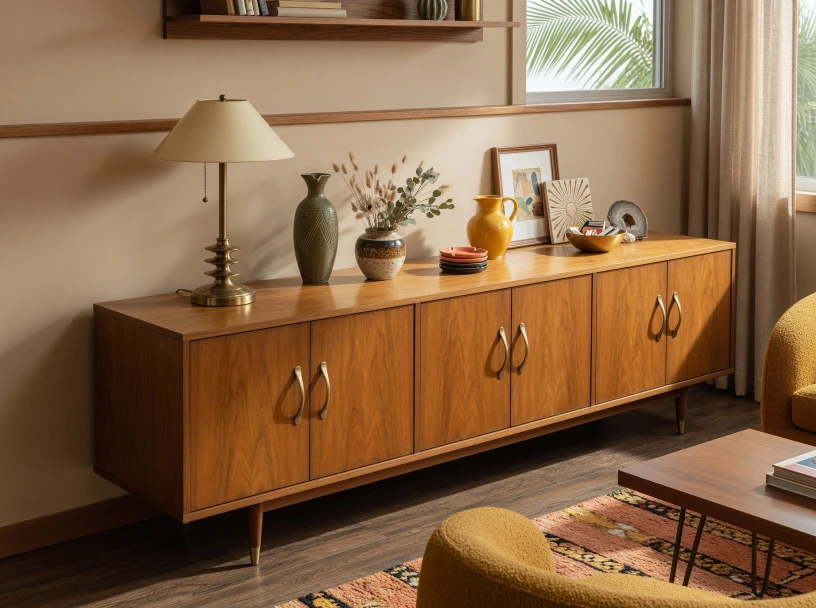
A long, low walnut credenza with brass hardware pulls and precisely tapered legs serves as the midcentury modern living or dining room’s most commanding statement piece — its strong horizontal presence, material warmth, and architectural confidence establishing the entire room’s design register with a single decisive furniture choice that communicates period knowledge, aesthetic intentionality, and genuine material appreciation simultaneously. The credenza form — originally developed for the dining rooms of Italian Renaissance palaces and continuously refined through centuries of European furniture design before finding its definitive midcentury modern expression in the workshops of Herman Miller, Knoll, and the great Scandinavian furniture makers — achieves in its midcentury incarnation a perfect balance of generous storage capacity and visual elegance that no other furniture form in the midcentury vocabulary quite matches.
The combination of warm walnut grain, cool brass hardware, and precisely tapered legs that defines the classic midcentury credenza creates a material conversation of extraordinary richness and period accuracy — the natural warmth of the wood, the refined luminosity of the brass, and the architectural precision of the tapered legs each contributing to a whole that feels more resolved and more beautiful than the sum of its already beautiful individual parts. Styling the credenza top surface with a vintage ceramic lamp, a curated selection of art books, a small sculptural vessel, and perhaps a trailing plant creates a midcentury modern display vignette of considerable personal warmth and aesthetic sophistication that transforms a storage piece into the living room’s most characterful and most revealing design statement. This essential midcentury decor investment consistently inspires the most passionate appreciation from design audiences who recognize it as the era’s definitive domestic furniture achievement.
6. Terrazzo Flooring and Accessories
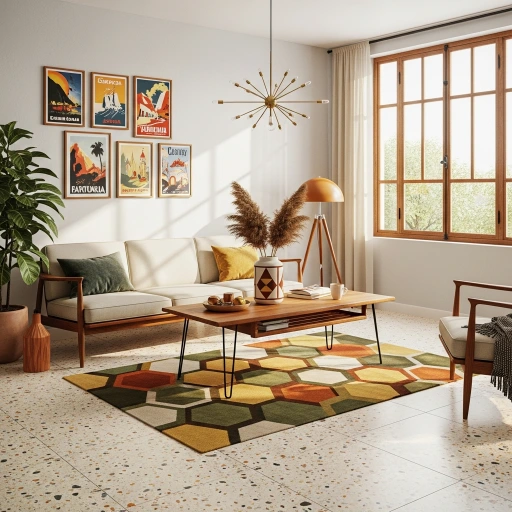
Terrazzo — the ancient composite flooring material experiencing its most enthusiastic contemporary revival since its original midcentury modern peak of popularity — brings to the midcentury interior a surface of extraordinary visual complexity and material richness created from the irregular aggregate of marble, granite, glass, and metal chips suspended in a cement or resin binder that is ground and polished to a smooth, luminous finish of remarkable decorative sophistication. Midcentury modern designers embraced terrazzo with particular enthusiasm for its ability to introduce color, pattern, and material variety into floor surfaces without the visual regularity of tile grids or the organic grain variation of wood — creating floors that feel genuinely designed rather than simply selected from standard material catalogs.
The contemporary revival of terrazzo extends well beyond flooring to encompass a complete range of midcentury-inspired accessories — side tables, lamp bases, plant pots, serving trays, and bathroom surfaces — all sharing the material’s characteristic speckled surface pattern in colorways ranging from the warm creams and earth tones of traditional Italian terrazzo to the bold primary color combinations that characterized the most adventurous midcentury modern applications of the material. Incorporating terrazzo elements at multiple scales throughout a midcentury interior — a terrazzo floor beneath, a terrazzo side table beside an armchair, a small terrazzo tray on the coffee table — creates a cohesive material narrative of considerable period authenticity and contemporary design relevance that connects the modern interior to one of midcentury modernism’s most visually distinctive and culturally significant material preferences.
7. Sputnik Chandelier as Room Centerpiece
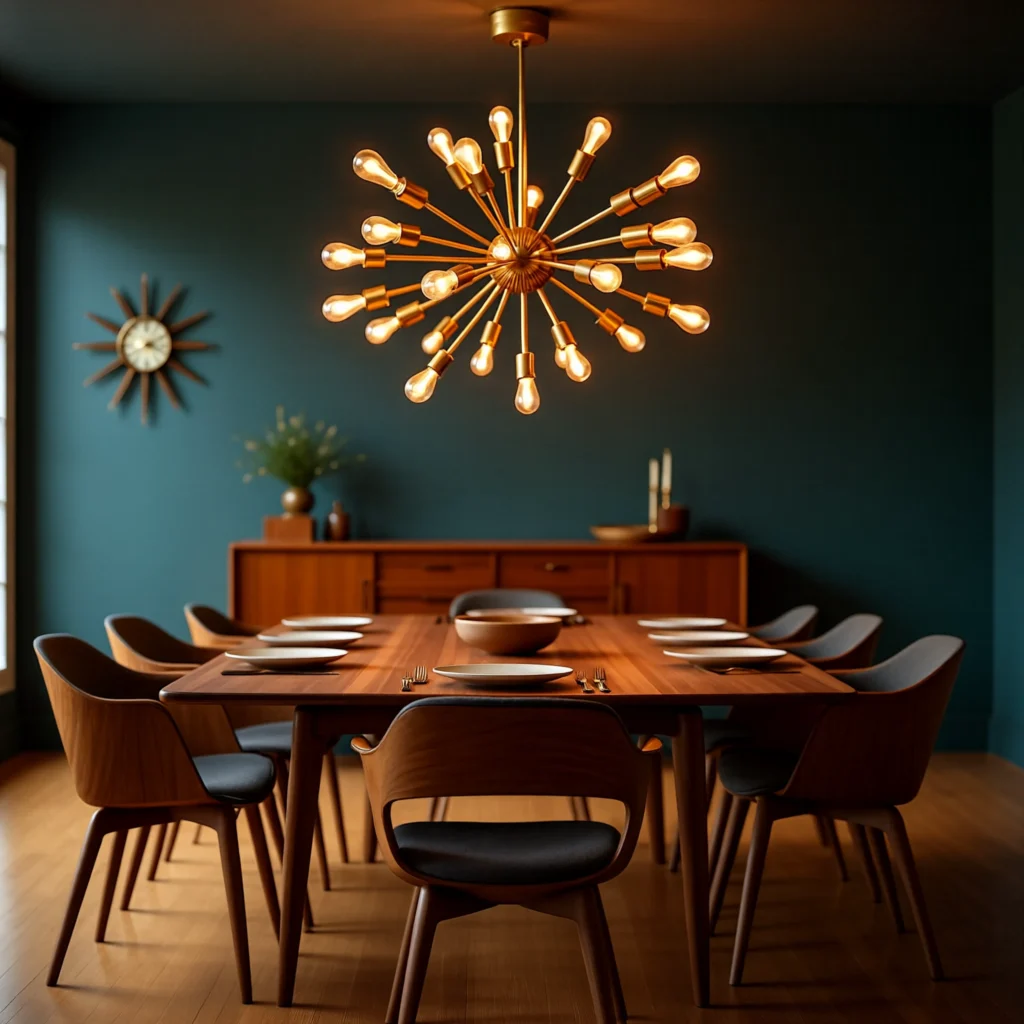
The Sputnik chandelier — its multiple arms radiating outward from a central sphere in a design that simultaneously referenced the orbiting Soviet satellite that shocked the Western world in 1957 and the broader atomic age fascination with energy, radiation, and the dynamic forms of the subatomic universe — stands as the single most culturally loaded and visually dramatic lighting fixture in the entire midcentury modern decorative vocabulary, transforming any ceiling into an immediate, conversation-generating statement of period design knowledge and atomic age aesthetic enthusiasm. Originally produced in the late 1950s as a direct cultural response to the Space Race, the Sputnik chandelier captured perfectly the midcentury modern movement’s belief that contemporary design should reflect and celebrate the scientific and technological achievements of its extraordinary historical moment.
The warm glow of multiple exposed Edison bulbs radiating from a Sputnik chandelier’s brass or chrome arms creates a lighting composition of remarkable atmospheric richness — part dramatic spatial focal point, part ambient warmth generator, and part genuine sculptural art object that commands attention and admiration from every position in the room beneath it. Hanging a Sputnik chandelier above a walnut dining table, over a living room seating arrangement, or in an entrance hall creates a midcentury modern interior moment of such immediate visual impact and period accuracy that all surrounding design decisions seem to organize themselves naturally around its confident, radiating authority. This iconic midcentury modern decor centrepiece consistently generates the strongest aspirational responses from global design audiences who recognize in it the atomic age’s most beautiful and most enduringly popular domestic design legacy.
8. Teak Sideboard with Sliding Doors
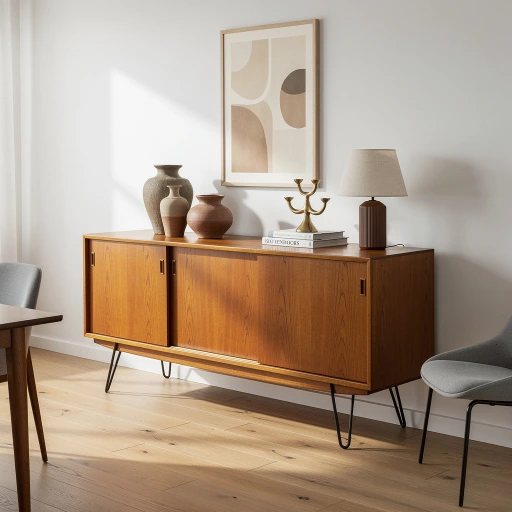
The teak sideboard with sliding panel doors represents the Danish and Scandinavian midcentury modern furniture tradition at its most perfectly resolved and most enduringly beautiful — its long, low horizontal form, warm honey-toned teak grain, clean panel door faces sliding smoothly on precisely engineered tracks, and elegantly proportioned tapered or hairpin legs creating a piece of such complete formal satisfaction and practical generosity that it has maintained its position as the definitive Scandinavian midcentury modern furniture achievement for over sixty years without requiring revision or reinterpretation to remain fully contemporary and fully desirable. The teak sideboard embodies the Scandinavian design philosophy of demokratisk design — beautiful, functional objects designed for genuine daily use by ordinary people rather than exclusively for wealthy collectors.
Original teak sideboards produced by Danish furniture makers including Finn Juhl, Hans Wegner, Arne Vodder, and Ejvind Johansson during the golden decade of Danish modern furniture production between 1955 and 1965 now command significant prices in the vintage furniture market — testament to their extraordinary design quality and the passionate contemporary appreciation for authentic midcentury Scandinavian craftsmanship that transcends fashionable trend cycles with permanent aesthetic authority. Contemporary reproductions and inspired-by pieces make the teak sideboard aesthetic accessible at a wider range of price points, allowing the warm horizontal presence and characteristic sliding door design of this iconic midcentury piece to anchor dining rooms and living spaces of every budget with genuine period character and the enduring visual warmth that only beautifully grained real teak wood can provide.
9. Atomic Age Boomerang Shapes and Patterns
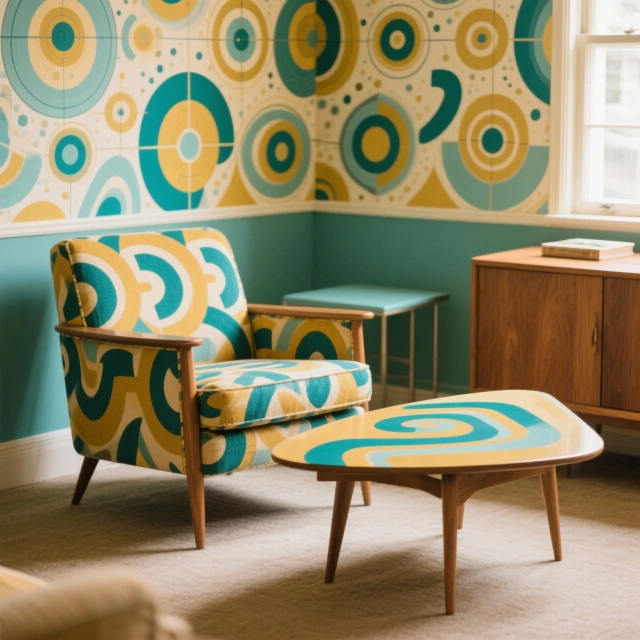
The boomerang shape and atomic dot-and-dash pattern — perhaps the most instantly recognizable graphic signature of midcentury popular design, appearing across fabrics, wallpapers, Formica surfaces, ceramics, and furniture forms throughout the 1950s and early 1960s with delirious, exuberant frequency — captures the midcentury modern movement’s most playful, optimistic, and culturally specific visual expression, translating the era’s fascination with atomic science, cellular biology, and space exploration into a graphic language of joyful, accessible domestic decoration that communicated modernity and forward-looking cultural confidence to the mass market with enormous popular success. These distinctively mid-twentieth-century decorative motifs have returned to contemporary interiors with considerable nostalgic and ironic cultural resonance.
Contemporary interior designers and vintage enthusiasts incorporate atomic boomerang patterns into midcentury modern spaces through carefully sourced original period fabrics and wallpapers, sympathetically designed reproduction textiles, and furniture forms whose biomorphic curves reference the boomerang shape with varying degrees of literal directness or abstract suggestion. A boomerang-patterned accent chair, a boomerang-shaped coffee table, or a carefully hung panel of original atomic-era fabric introduces an immediately legible period graphic vocabulary that communicates authentic midcentury design enthusiasm with playful precision and genuine historical awareness. This characterful midcentury modern decor approach generates consistent appreciation from design audiences who celebrate the era’s most exuberantly expressive graphic design achievements alongside its more formally restrained furniture and architectural accomplishments.
10. Egg Chair in a Reading Corner
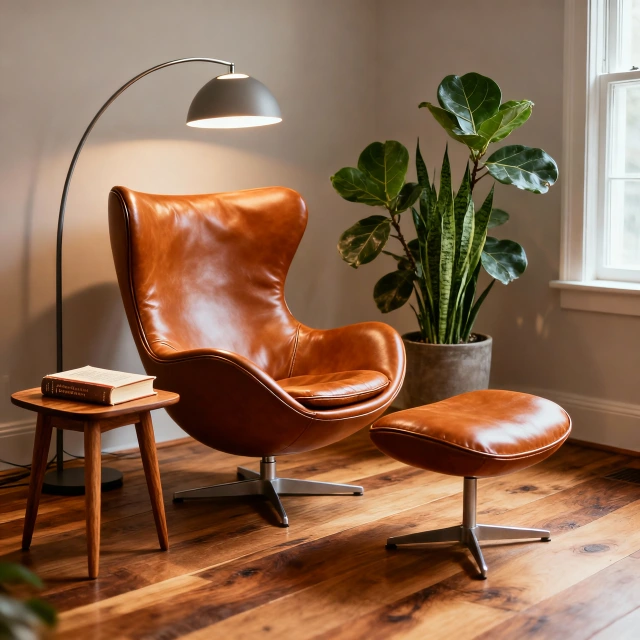
The Arne Jacobsen Egg Chair — designed in 1958 for the Radisson SAS Royal Hotel in Copenhagen and immediately recognized as one of the most formally inventive and psychologically sophisticated seating designs of the entire midcentury period — creates within any contemporary interior reading corner a moment of such complete, enveloping physical comfort and sculptural visual beauty that it justifies its considerable investment with daily dividends of aesthetic pleasure and genuine postural support that no other single chair can provide in quite the same extraordinary combination. Jacobsen’s design intention was explicit and perfectly realized: to create a chair that sheltered its occupant from the surrounding environment, providing a private, cocoon-like acoustic and visual enclosure within the necessarily public space of a hotel lobby, a quality that proves equally valuable within the contemporary home.
The Egg Chair’s upholstered shell — available in an extraordinarily wide range of leather and fabric colorways from classic black and white through warm caramel, rich cognac, and bold primary tones — swivels on a brushed aluminum four-star base that provides both practical rotational flexibility and a note of cool industrial precision that complements the warmth of the upholstered shell with characteristic midcentury modern material contrast. Positioning an Egg Chair in a home reading corner — accompanied by its matching ottoman, a warm architectural floor lamp, a small teak side table bearing a plant and a current book, and a personal bookshelf within arm’s reach — creates the most perfectly realized and most personally satisfying midcentury modern domestic vignette imaginable, a complete world of comfort, beauty, and intellectual pleasure contained within a single carefully composed corner of the home.
11. Vintage Ceramic Table Lamps
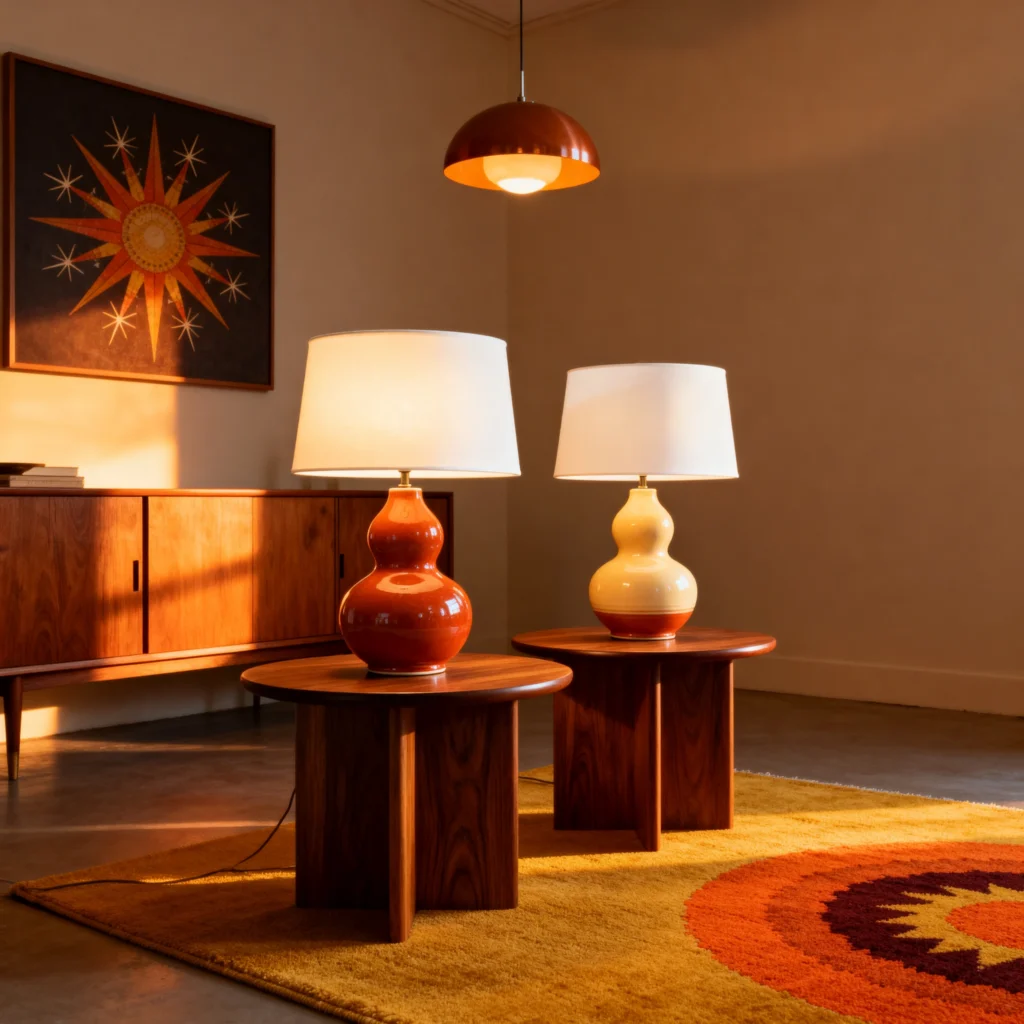
Vintage ceramic table lamps with organically shaped bases — their gourd, teardrop, and rounded cylindrical forms glazed in the warm terracottas, mustard yellows, olive greens, and matte creams most closely associated with authentic midcentury modern decorative ceramics production — bring to the midcentury interior a quality of handcrafted warmth, material variety, and gentle organic presence that mass-produced contemporary lamps entirely lack, their individual character communicating the irreplaceable quality of genuine vintage objects that have already lived through decades of domestic use and survived with their beauty not merely intact but genuinely enhanced by the soft patina of age. Each vintage ceramic lamp base tells a small material story of midcentury domestic life that new reproductions, however carefully designed, cannot replicate.
Building a midcentury modern living room around a matched pair of vintage ceramic table lamps positioned symmetrically on teak side tables flanking a sofa creates a lighting composition of considerable domestic warmth and period accuracy — the paired lamps providing both the practical ambient illumination that makes living rooms genuinely comfortable for evening occupation and the strong, balanced visual framework that anchors the sofa arrangement with classical symmetry. The warm glow produced by incandescent or warm-toned LED bulbs through simple white linen or paper drum shades falls across walnut furniture surfaces and textile upholstery with a quality of illumination that overhead recessed lighting and cool-toned contemporary fixtures entirely fail to provide, creating the intimate, flattering, psychologically comfortable atmosphere that characterizes the most beautifully lit midcentury modern interiors at their most evocative and most authentically warm.
12. Hairpin Leg Dining Table
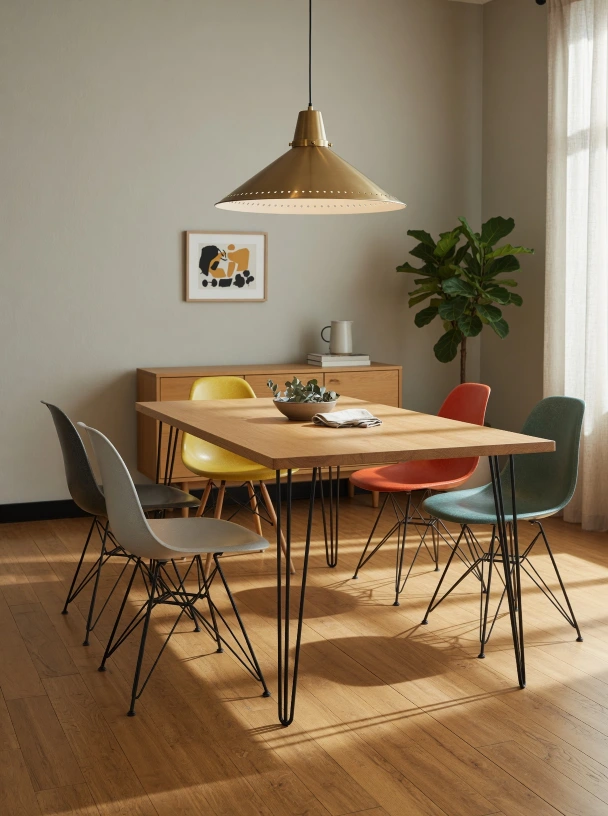
The hairpin leg dining table — its solid wood tabletop supported on the minimal structural elegance of bent steel rod legs that communicate maximum engineering intelligence with minimum visual presence — represents one of midcentury modern furniture design’s most enduring and most democratically beloved innovations, achieving the era’s fundamental aesthetic goal of honest material expression and structural transparency with a simplicity so complete and so formally satisfying that it has required no design revision in the eight decades since its original development. The hairpin leg’s visual contribution to the dining table composition is paradoxical in the most productive possible way — its extreme slenderness draws attention to itself through its very minimal presence, the structural improbability of such thin steel supporting a heavy solid wood surface creating a pleasing, quietly impressive demonstration of engineering confidence.
Contemporary production of hairpin leg dining tables encompasses an extraordinary range of tabletop materials and sizes that make the form accessible across every domestic scale and aesthetic preference — solid oak, walnut, ash, and pine tabletops in warm natural finishes provide the organic material warmth that the cool precision of the steel legs requires as an aesthetic counterbalance, creating the characteristic midcentury modern dialogue between industrial manufacture and natural material that gives the period’s best furniture designs their enduring formal vitality and emotional warmth. Surrounding a hairpin leg dining table with mixed Eames shell chairs in complementary colors creates a midcentury modern dining room of joyful, energetic visual variety that captures the democratic, optimistic spirit of the era’s design philosophy with authentic period accuracy and genuine daily functional delight.
13. Macramé and Woven Wall Art
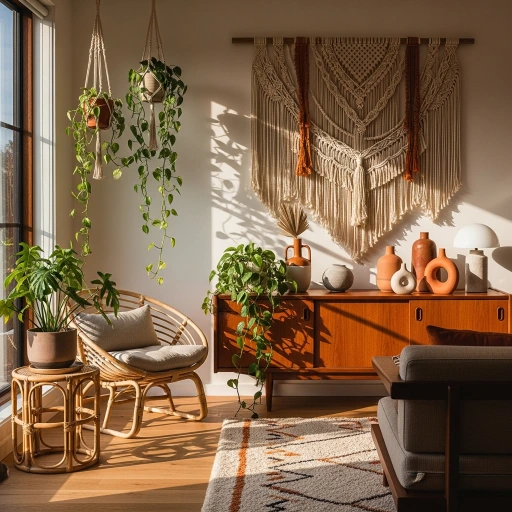
Macramé and hand-woven textile wall art occupy a cherished and culturally specific position within the midcentury modern decorative vocabulary, their knotted natural rope textures and organic, loosely geometric patterns providing the warm, handcrafted counterpoint to the precision-engineered furniture forms and manufactured materials that dominated the midcentury modern interior’s harder design elements. The craft revival that ran parallel to the high design achievements of midcentury modernism — embracing macramé, weaving, ceramics, and other hand-making traditions as necessary humanizing complements to industrial production — produced textile wall works of considerable artistic ambition and genuine decorative power that contemporary audiences are rediscovering with enormous enthusiasm across every major home decor platform.
The material qualities of macramé and woven wall hangings — their dimensional rope textures catching light from multiple angles, their fringing and loose threads introducing gentle movement in air currents, and their warm natural fiber tones harmonizing instinctively with the wood, leather, and ceramic palette of the midcentury modern interior — make them uniquely effective wall treatments for spaces that risk feeling too hard, too geometric, and insufficiently warm in their exclusive reliance on the precision-crafted furniture and architectural forms of the midcentury modern canon. A large macramé hanging positioned above a teak credenza softens the strong horizontal line of the sideboard with organic verticality and tactile warmth, creating a wall composition of genuine material contrast and aesthetic balance that represents the midcentury modern interior at its most humanely, most beautifully resolved.
14. Bold Geometric Wallpaper Accent Wall
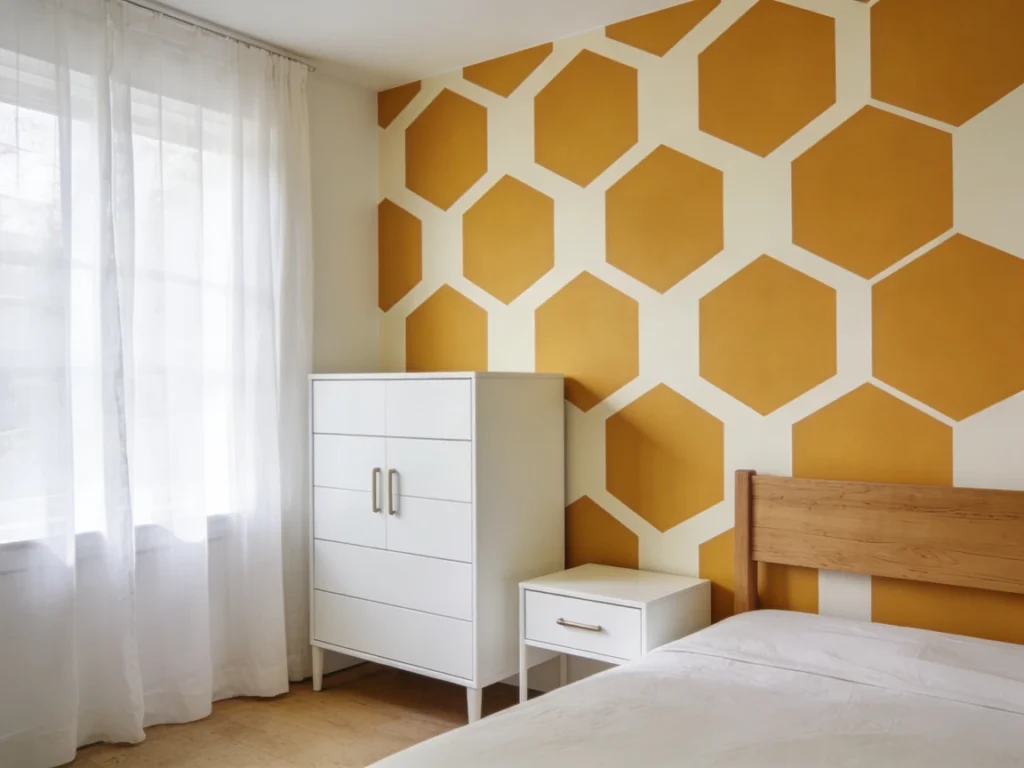
Bold geometric wallpaper — its large-scale hexagonal, diamond, chevron, or abstract repeating patterns printed in the warm mustard yellows, burnt oranges, teal blues, and olive greens that define the midcentury modern chromatic vocabulary — transforms a single accent wall into a powerful graphic statement of period design confidence and decorative ambition that immediately establishes the entire room’s aesthetic register with a clarity and visual authority that painted walls, however beautifully colored, simply cannot match in terms of pattern richness and surface visual complexity. The midcentury modern movement’s enthusiastic embrace of bold decorative pattern on walls and upholstery reflected the era’s broader confidence in the power of design to enrich daily domestic experience through color, form, and graphic energy applied without apology or hesitation.
Contemporary geometric wallpaper designs draw direct inspiration from the most graphically adventurous midcentury period wallpapers — including the celebrated designs produced for companies including Cole and Son, Sanderson, and numerous American wallpaper manufacturers throughout the 1950s and 1960s — while offering improved print technology, more precisely calibrated colorways, and environmentally responsible production methods that make authentic-feeling period-inspired pattern available to contemporary homeowners who want genuine midcentury graphic energy without sacrificing modern performance standards. Limiting bold geometric wallpaper to a single accent wall behind the bed headboard, sofa, or dining sideboard allows the pattern to deliver its maximum visual impact without overwhelming the room, creating a midcentury modern interior of bold graphic confidence and precisely calibrated decorative balance.
15. Cone Pendant Lights in Brass or Copper
Cone-shaped pendant lights in brushed brass, warm copper, or painted metal — their simple, geometrically pure downward-pointing form directing warm, focused light pools onto dining tables and kitchen work surfaces with engineering clarity and decorative elegance in equal measure — represent the midcentury modern kitchen and dining room’s most characteristic and most authentically period-accurate lighting choice, combining the era’s fundamental commitment to honest functional design with the warm material richness of brass and copper that gives midcentury modern interiors their distinctive golden atmospheric quality. The cone pendant’s formal simplicity belies the considerable design intelligence invested in achieving the precise proportional relationship between opening diameter, cone depth, and mounting height that determines whether a pendant light feels architecturally resolved or merely adequate.
Hanging a cluster of cone pendants at slightly varying heights above a dining table — three pendants arranged in a loose triangular configuration, or five pendants in a linear row above a long rectangular table — creates a midcentury modern lighting composition of considerable visual drama and warm functional performance that surpasses both single-pendant and chandelier alternatives in its combination of intimate task illumination and decorative ceiling interest. The warm brass and copper tones of cone pendants establish a rich metallic color note that relates harmoniously to the walnut furniture, warm wood floors, and amber ceramic accessories that populate the midcentury modern interior’s characteristic material palette, contributing to the overall chromatic coherence of the designed space with the subtle but significant authority of genuinely considered material selection.
16. Noguchi Paper Lantern Floor Lamp
The Noguchi Akari paper lantern lamp — Isamu Noguchi’s 1951 design series in which hand-made Japanese washi paper stretched over delicate bamboo ribbing creates light-diffusing shades of breathtaking organic sculptural beauty — represents the midcentury modern movement’s most poetic and most culturally synthesizing design achievement, bringing together the Japanese craft tradition of paper lantern making, the Western modernist commitment to sculptural form as functional object, and the universal human desire for warm, gentle, naturally diffused light that mimics the quality of sunlight filtered through translucent natural materials. Noguchi conceived the Akari series as sculpture that provided light rather than lamps that happened to be beautiful, and this fundamental inversion of design priorities produced objects of genuinely artistic rather than merely decorative significance.
The warm, shadowless glow produced by an Akari floor lamp — its translucent washi paper shade distributing illumination evenly across its entire surface in a way that eliminates harsh shadows and creates an atmosphere of serene, meditative calm — makes it the midcentury modern interior’s most psychologically restorative lighting choice, filling living rooms and bedrooms with a quality of light that feels genuinely organic and naturally warm in a way that no other electric lamp achieves with comparable completeness. Positioning a Noguchi floor lamp beside a reading chair or in a living room corner where its sculptural silhouette can be fully appreciated against a plain wall creates a midcentury modern interior moment of quiet, contemplative beauty that transcends pure decoration to achieve the status of genuine domestic art — an everyday object of such refined beauty that its presence subtly but permanently elevates the aesthetic quality of every moment spent in its warm, gentle, paper-filtered light.
17. Vintage Vinyl Record Display Wall
A vintage vinyl record display wall — album covers arranged in carefully composed grid formations that transform beloved music into a dynamic, constantly evolving gallery of graphic art, personal cultural autobiography, and midcentury graphic design history — creates within the midcentury modern living room a wall treatment of extraordinary personal depth and visual richness that simultaneously celebrates the era’s most important artistic medium, its most adventurous commercial graphic design, and the intimate, analog relationship between music, physical objects, and domestic space that defined midcentury modern cultural life at its most authentically and most joyfully lived. The album covers produced during the golden era of vinyl — roughly 1954 through 1979 — represent some of the most inventive and most beautifully printed graphic art of the twentieth century.
Pairing a vinyl display wall with a vintage or modern-retro turntable positioned on the teak credenza below creates a complete midcentury music corner of such concentrated cultural authenticity and aesthetic richness that it functions simultaneously as the living room’s primary entertainment system, its most characterful decorative feature, and its most intimate autobiographical statement about the values, tastes, and cultural enthusiasms of the home’s inhabitant. The deliberate choice to display physical vinyl records rather than streaming music through invisible digital systems communicates a philosophy of conscious, attentive, analog cultural engagement that aligns perfectly with the midcentury modern movement’s broader commitment to beautiful, honestly made physical objects experienced directly and without technological mediation. This deeply personal midcentury modern decor idea generates the most emotionally resonant Pinterest engagement from audiences who share its fundamental values of material authenticity and mindful aesthetic pleasure.
18. Sunken Living Room Revival
The sunken living room — or conversation pit as it was affectionately known throughout its midcentury modern heyday — represents the most architecturally ambitious and most spatially dramatic of all midcentury modern interior design ideas making a passionate comeback in contemporary homes, its recessed seating area set deliberately below the surrounding floor level creating an intimate, shelter-like social environment of extraordinary psychological warmth and genuine architectural inventiveness that no surface-level furniture arrangement can replicate regardless of its individual design quality or compositional sophistication. Originally popularized by architect Bruce Goff and interior designer Alexander Girard in the early 1950s before achieving mainstream aspirational status through its appearance in the most progressive American homes of the late 1950s and 1960s, the conversation pit embodied the midcentury modern belief that architecture should actively shape human social behavior toward greater intimacy, comfort, and genuine face-to-face connection.
The contemporary revival of the sunken living room responds directly to a widespread cultural dissatisfaction with the open-plan, furniture-on-a-flat-floor living room that has dominated residential design since the 1990s — a format that provides spatial flexibility at the cost of genuine spatial definition, intimacy, and the sense of architectural shelter that makes rooms feel truly inhabited rather than simply occupied. Modern sunken living room designs interpret the conversation pit through a refined contemporary aesthetic vocabulary — deep teal or warm terracotta velvet curved sectionals filling the recessed space, warm wood surrounds defining the transition between floor levels, architectural floor lamps providing warm pools of light, and carefully chosen midcentury accessories completing the composition — creating domestic spaces of such compelling beauty, social warmth, and genuine architectural drama that they consistently inspire the most passionate and most aspirational responses from interior design audiences encountering them across every major design platform worldwide.