15 Japandi Balcony Ideas for Calm Minimalist Living
1. Zen Bamboo Privacy Screen with Trailing Plants
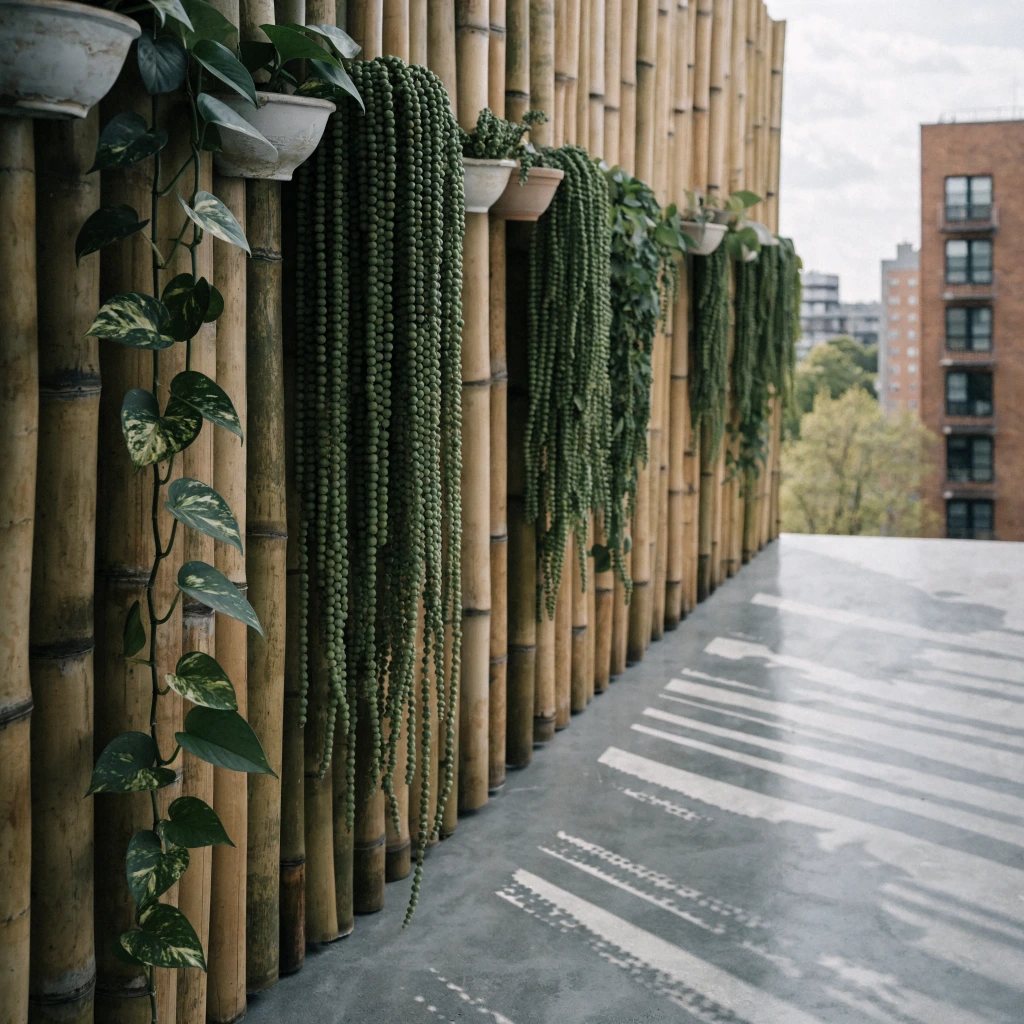
The zen bamboo privacy screen with trailing plants solves the most fundamental challenge of urban balcony living — the lack of visual privacy from neighboring buildings and street level — while simultaneously introducing the most quintessentially Japandi material into your outdoor space in its most architecturally purposeful and beautiful form. Natural bamboo poles lashed together vertically with dark twine create a floor-to-ceiling privacy wall of extraordinary organic beauty, filtering harsh direct sunlight into the soft, dappled luminosity that Japanese garden design has always prized above all other light qualities. Small wall-mounted ceramic planters holding trailing pothos, string of pearls, or climbing jasmine allow living plants to cascade through the bamboo framework in a gradual softening of the screen’s geometry.
Install the bamboo screen using a simple freestanding frame system that requires no permanent drilling or structural modification, making it equally suitable for renters and homeowners who want flexibility in their balcony layout. Choose bamboo poles of consistent diameter in the most natural, unbleached honey tone available rather than artificially darkened or lacquered finishes that sacrifice the material’s inherent organic warmth for a more manufactured appearance. The combination of vertical bamboo geometry and cascading trailing plants creates a living wall composition of extraordinary sensory richness that changes subtly with every season, every weather condition, and every hour of changing light throughout the day.
2. Low Platform Daybed with Linen Cushions
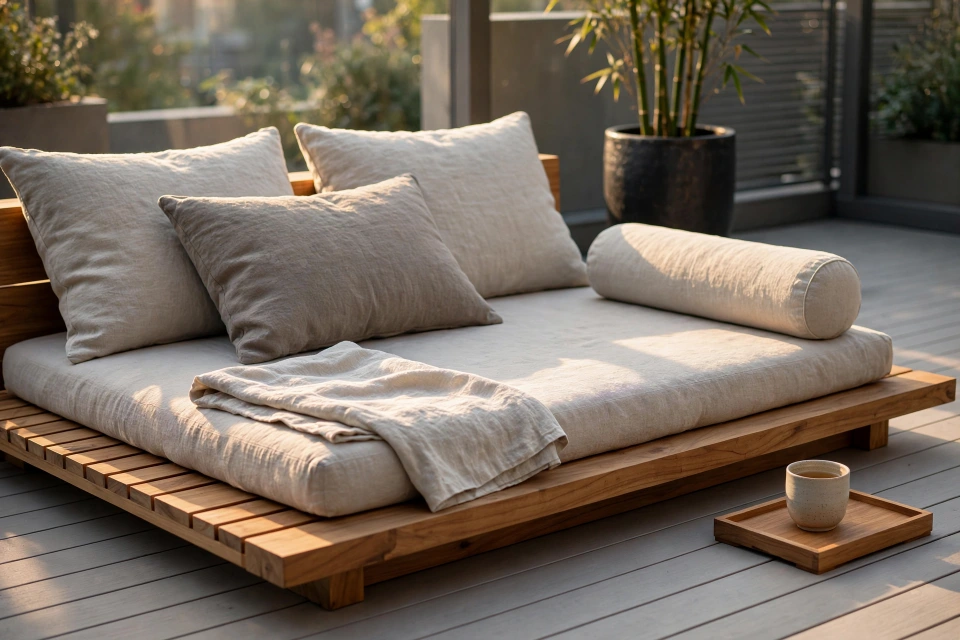
The low platform daybed with linen cushions is the single most transformative furniture investment you can make in a Japandi balcony, converting what might otherwise function as a transitional space passed through on the way somewhere else into a genuine destination — a private outdoor room with a specific, compelling, irresistible invitation to lie down, slow down, and simply be present in the open air. The deliberately low profile of the Japanese-influenced platform frame — sitting perhaps twelve to fourteen inches above the deck surface — creates an immediate psychological effect of groundedness and repose that standard-height patio furniture simply cannot replicate, connecting the body to the horizontal plane of the outdoor floor in a way that feels simultaneously relaxing and meditative.
Choose teak or sustainably sourced FSC-certified hardwood for the platform frame in a natural, minimally finished state that will develop a beautiful silvery grey patina with outdoor exposure over time, embodying the wabi-sabi principle of finding beauty in natural aging and impermanence. Dress the platform with generously thick cushions in undyed natural linen — the slightly rough, honest texture of pure linen fabric is far more authentically Japandi than smooth polyester outdoor fabric — and layer a lightweight linen throw at the foot for cooler mornings and evenings. A single low wooden tray beside the daybed holding a ceramic cup, a smooth river stone, and a small potted moss arrangement completes the vignette with quiet Japandi eloquence.
3. Gravel and Stepping Stone Floor Treatment
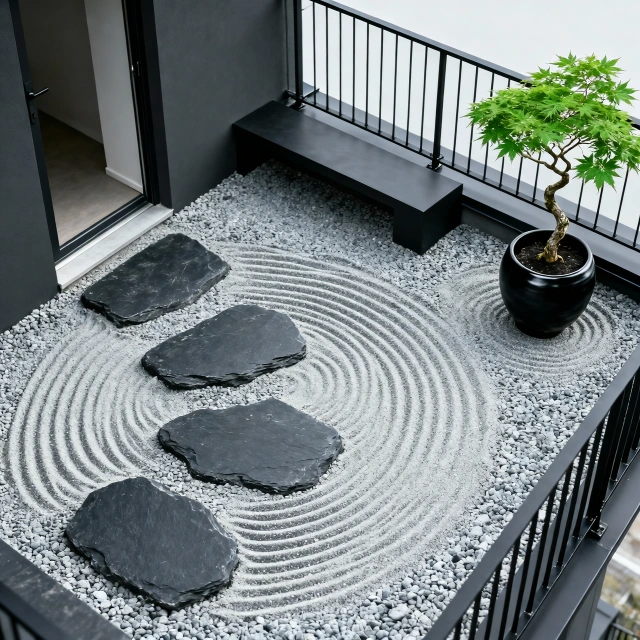
The gravel and stepping stone floor treatment is the most direct and uncompromising translation of the Japanese karesansui dry garden tradition into the intimate scale of an urban balcony, creating a contemplative ground plane of extraordinary visual stillness that grounds every other design element placed upon it with quiet authority. Smooth pale grey pea gravel raked into gentle concentric or parallel patterns around asymmetrically placed dark charcoal slate stepping stones references the meditative raked gravel gardens of Kyoto’s great zen temples, distilling their centuries-old design wisdom into a format achievable on even the smallest urban balcony footprint with minimal materials and maximum atmospheric impact.
Verify your balcony’s structural load capacity with a building engineer before installing gravel, as even a shallow layer of pea gravel adds considerable weight per square meter that must be within your building’s structural parameters. Use a weed membrane beneath the gravel to prevent any organic material accumulation, and border the gravel area with low-profile aluminium edging strips that contain the stones neatly without introducing a visible frame that interrupts the floor composition. A single sculptural Japanese maple or acer in a tall dark ceramic pot positioned asymmetrically at one corner of the gravel garden provides the living focal point that traditional Japanese garden design always insists upon — one perfectly placed plant speaking with more design authority than a dozen plants arranged symmetrically.
4. Minimalist Black Steel Railing with Washi Paper Lanterns
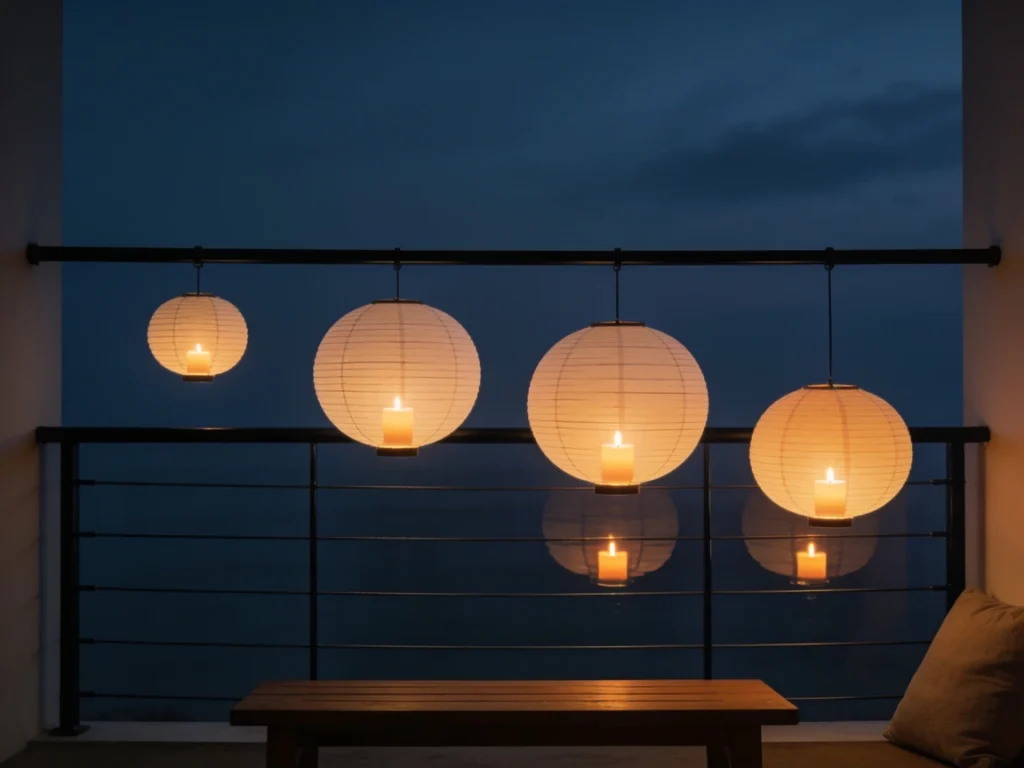
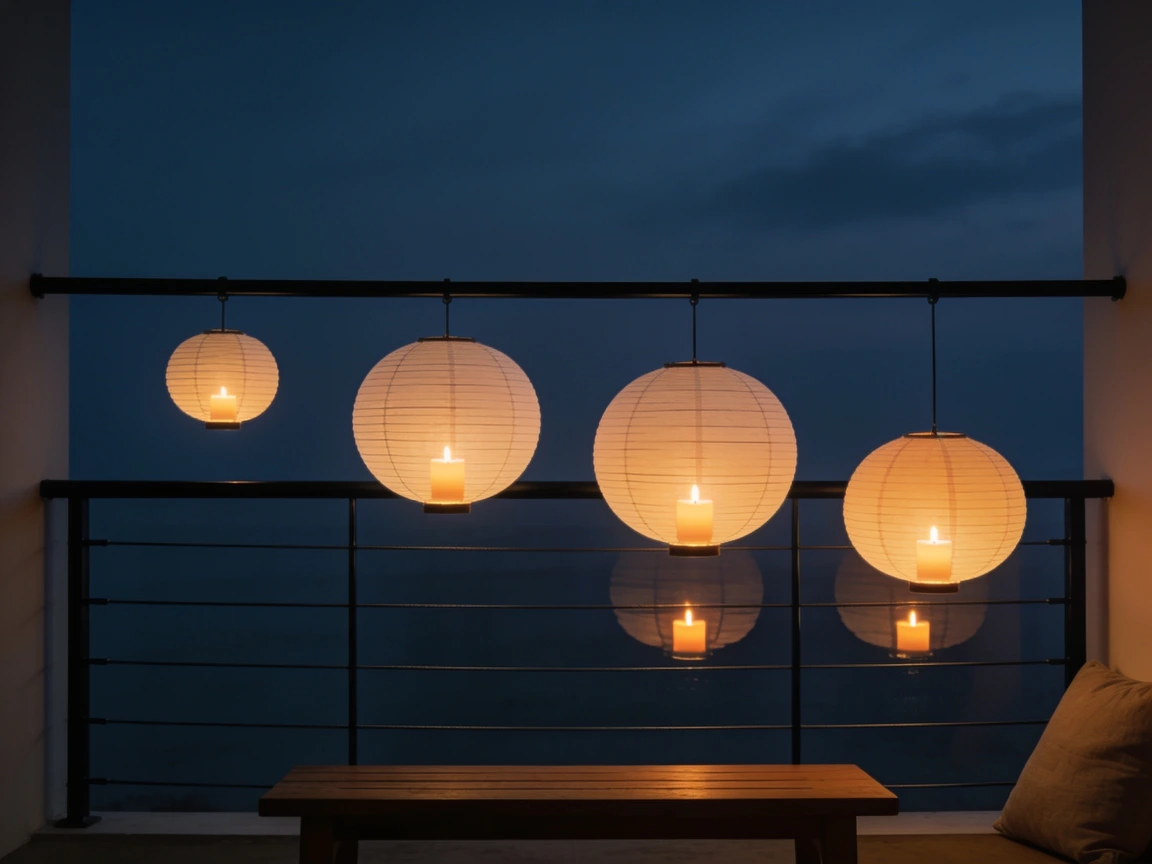
Minimalist black steel railing paired with softly glowing washi paper lanterns creates the most atmospherically beautiful Japandi balcony evening experience possible, combining the precise, linear geometry of contemporary Scandinavian industrial design with the warm, handcrafted luminosity of traditional Japanese paper lantern craft in a pairing of extraordinary visual and emotional complementarity. The thin black powder-coated steel cables of a minimalist railing system disappear against the evening sky with elegant discretion, allowing the softly glowing amber spheres of the washi paper lanterns to float in the darkening air with an almost levitating quality that transforms the balcony into a space of quiet nocturnal magic.
Mount lanterns at varying heights from a simple black horizontal rod using thin black fishing cord that is effectively invisible in evening light, creating a floating cluster of warm light sources that illuminates the balcony with the most flattering, most mood-enhancing quality of light imaginable for outdoor evening relaxation. Choose washi paper lanterns with LED candle inserts rather than real candles for both safety and convenience, selecting the warmest available color temperature — ideally 1800K to 2200K — to achieve the most authentic candlelight effect through the translucent handmade paper. The shadows cast by the washi paper’s irregular fibrous texture on surrounding surfaces as light passes through it creates an endlessly subtle and beautiful secondary decorative effect.
5. Hinoki Wood Soaking Tub Corner
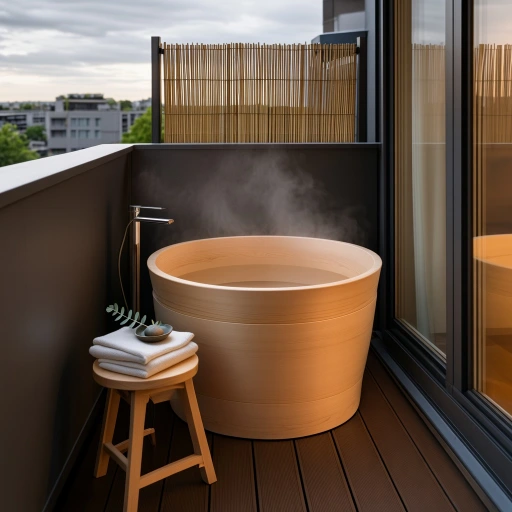
The hinoki wood soaking tub corner is the most luxuriously immersive and most authentically Japanese Japandi balcony idea on this list — a private outdoor bathing sanctuary that brings the profound physical and psychological restorative tradition of the Japanese onsen experience directly into the intimate space of your own private outdoor room. Hinoki cypress is the sacred timber of Japanese bathing culture, prized for millennia for its extraordinary aromatic properties — the naturally occurring hinoki oil released by warm water contact produces a deeply calming, forest-like fragrance of such concentrated natural beauty that it has been clinically documented to reduce cortisol levels and promote genuine relaxation responses in the body and mind.
Verify structural load capacity as an absolute prerequisite before planning a water-filled tub installation on any balcony surface, and consult with a licensed plumber regarding drainage and water supply connection options before committing to the design. A simple wooden stool beside the tub holding a neatly folded white linen towel, a small ceramic dish with a smooth river stone and a fresh eucalyptus sprig, and a bamboo privacy screen creating an enclosed sanctuary behind the tub composes a complete bathing ritual environment of such sensory completeness that every use of the tub becomes a genuine ceremony of self-restoration rather than a merely practical act of personal hygiene.
6. Bonsai Collection Display Shelf

A bonsai collection display shelf transforms one wall of your Japandi balcony into a living gallery of extraordinary horticultural art, introducing the most quintessentially Japanese contemplative practice into your outdoor space through a collection of miniature trees that embody the wabi-sabi principles of patient cultivation, acceptance of impermanence, and the discovery of profound beauty in deliberately constrained and carefully tended natural forms. Each bonsai tree on its individual shelf is simultaneously a living sculpture, a horticultural achievement, a philosophical statement, and a daily contemplative practice — the ongoing care and observation of bonsai has been practiced by Japanese artists and monks for over a thousand years as a meditative discipline of extraordinary depth.
Mount the display shelves at deliberately staggered heights rather than in a uniform horizontal row to create an asymmetric vertical composition that references the natural growth patterns of trees in a mountain landscape — always irregular, always seeking their own individual balance, never perfectly mirrored or evenly spaced. Choose handmade dark clay pots in simple, undecorated forms for each tree, as the quality of the pot is considered as important as the quality of the tree in traditional Japanese bonsai aesthetics, and a genuinely beautiful, honestly made ceramic pot honors its tree with the dignity and respect that the practice demands. Begin with three trees of genuinely different species, ages, and visual characters to create immediate collection depth and visual diversity on your shelf from the very first day.
7. Shou Sugi Ban Timber Cladding Accent Wall
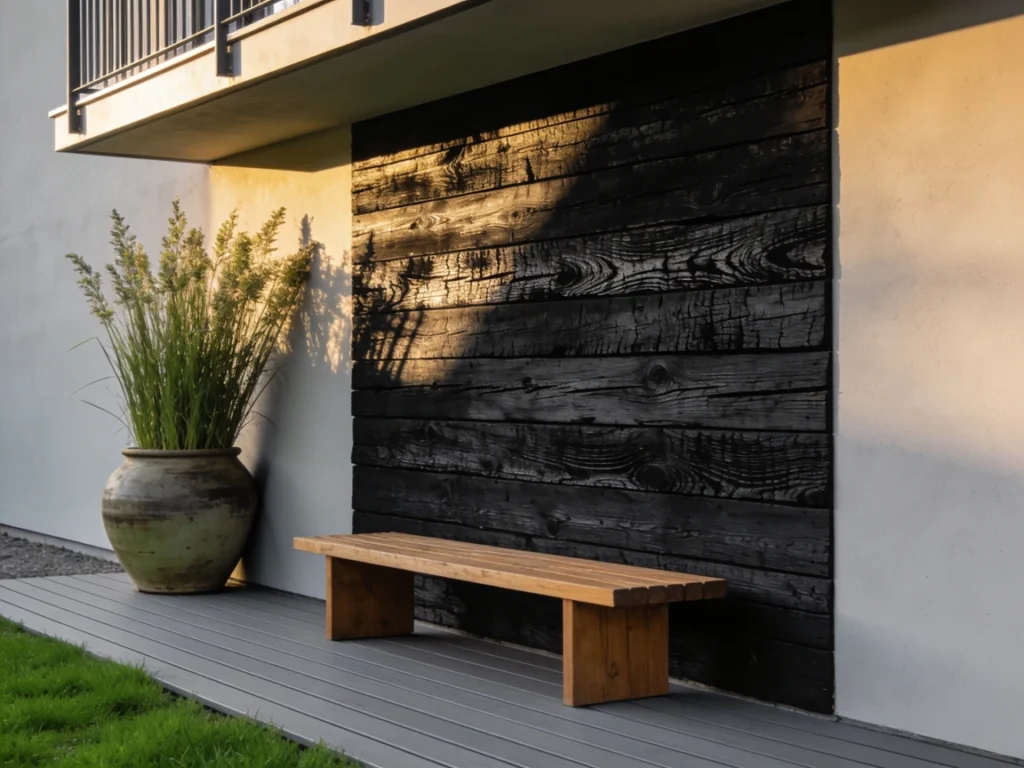
Shou sugi ban timber cladding — the ancient Japanese technique of deeply charring cedar timber to create a naturally weather-resistant, insect-resistant, and extraordinarily beautiful black surface finish — creates the most dramatically sophisticated and authentically Japanese accent wall treatment available to the Japandi balcony designer. The deeply carbonized surface of shou sugi ban cedar develops a three-dimensional texture of extraordinary visual complexity as the charring process reveals and amplifies the timber’s natural grain patterns in relief, creating a wall surface that changes character with every shift of light direction throughout the day — from a flat matte black in diffuse overcast light to a richly textured landscape of light and shadow under raking afternoon sun.
The shou sugi ban technique has been used in Japanese architecture for centuries precisely because the charring process creates a naturally durable outdoor cladding material that requires minimal maintenance, resists moisture penetration, and develops an increasingly beautiful surface as it weathers and ages — an embodiment of wabi-sabi philosophy expressed through material science rather than mere aesthetics. Install the charred cedar boards in a simple horizontal or vertical linear pattern with uniform narrow gaps between boards rather than any decorative pattern that would distract from the material’s own inherent surface drama. A single large ceramic pot with a tall ornamental grass or bamboo planting positioned against the completed wall provides the single living accent that the composition requires, as shou sugi ban walls need only one well-placed plant to achieve their full contemplative power.
8. Wabi-Sabi Ceramic Planter Grouping
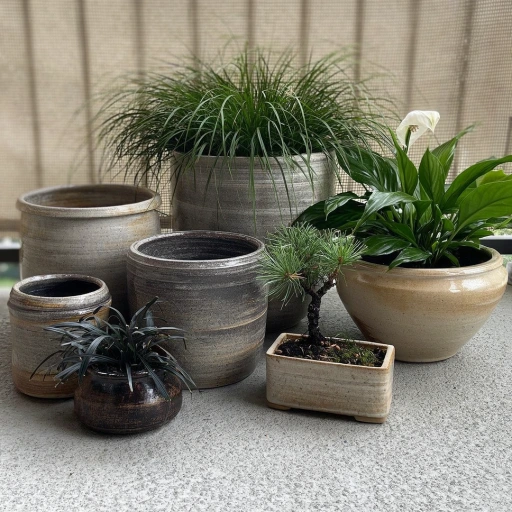
A wabi-sabi ceramic planter grouping is the most accessible and immediately achievable Japandi balcony idea on this list, requiring no structural modification or professional installation — only a thoughtful selection of genuinely beautiful handmade ceramic vessels and an understanding of how to compose a plant grouping with the relaxed asymmetric confidence that distinguishes authentic Japandi outdoor styling from generic patio decorating. The deliberate embrace of imperfection that wabi-sabi ceramic aesthetics demands means that the most beautiful planters for this grouping are precisely those that show the most honest evidence of their making — visible throwing lines on the clay body, natural glaze variations and drips, kiln marks and slight irregularities of form that remind us these objects were made by human hands from earth.
Compose the grouping using the traditional Japanese principle of odd-number arrangements — three, five, or seven planters of genuinely varying heights and widths — positioned in a naturally asymmetric cluster rather than a geometric arrangement, as asymmetry is the fundamental compositional principle of Japanese garden and interior design that most directly opposes and corrects the Western decorating instinct toward bilateral symmetry and paired arrangements. Plant each vessel with species chosen for their textural and tonal variety rather than their color — Japanese forest grass, dark leafed mondo grass, white flowering peace lily, a small pine bonsai, and delicate maidenhair fern create a palette that is entirely green, white, and black yet possesses extraordinary visual richness through the diversity of leaf texture, scale, and growth habit represented.
9. Kokedama Moss Ball Hanging Garden
The kokedama moss ball hanging garden introduces one of Japan’s most beloved and meditative horticultural art forms directly into the vertical plane of the Japandi balcony, creating a floating garden of living sculptural spheres that occupies no floor space whatsoever while delivering maximum visual impact, biological diversity, and genuine contemplative beauty in the most space-efficient planting format conceivable. Kokedama — literally “moss ball” in Japanese — is the ancient practice of wrapping a plant’s root ball in a mixture of clay and peat soil formed into a perfect sphere, then binding the entire surface with living sheet moss secured with dark natural twine, creating a self-contained growing vessel of extraordinary organic beauty that requires only periodic soaking in water rather than conventional potted plant watering.
Mount a simple black iron or bamboo horizontal rod above the railing at a height that allows the hanging kokedama to float at eye level when seated on the balcony, positioning them at three to four different cord lengths to create a naturally varied canopy of hanging moss spheres. Choose plants suited to the specific light conditions of your balcony — shade-tolerant ferns, pothos, and peace lilies for north-facing balconies with indirect light, while orchids, bromeliads, and small succulents tolerate brighter exposures with more direct sun. The act of weekly kokedama care — lifting each moss ball down from its cord, immersing it gently in a water-filled basin until the moss is saturated, then re-hanging it to drain — becomes one of the most genuinely meditative regular practices that Japandi balcony living naturally generates.
10. Minimalist Outdoor Tea Ceremony Corner
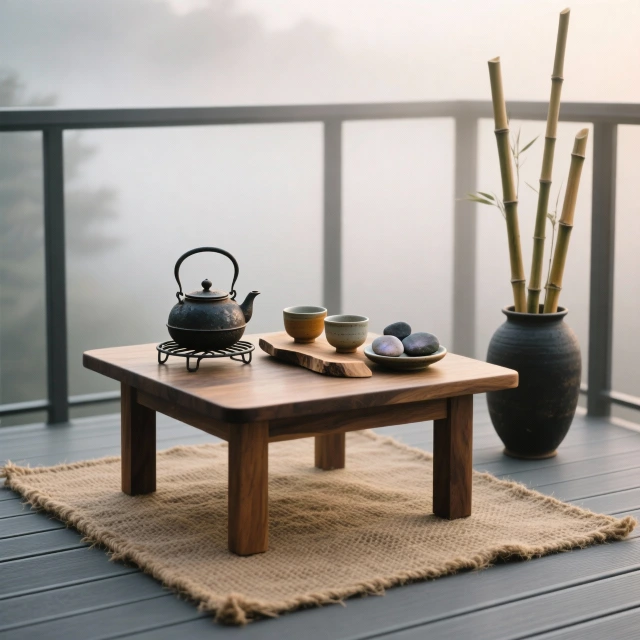
The minimalist outdoor tea ceremony corner is the most quietly profound and daily-life-transforming Japandi balcony idea on this list, creating a dedicated space for the deliberate, unhurried practice of making and drinking tea outdoors — an activity so simple in its requirements and so genuinely restorative in its effects that it deserves its own permanently designated, beautifully considered place in the outdoor domestic environment. The Japanese tea ceremony tradition — chado, the Way of Tea — is at its philosophical heart about creating a brief, fully present, completely mindful interlude in the otherwise distracted flow of daily life, and establishing even a simplified version of this practice on your own balcony imports that centuries-old intention into your everyday morning or evening routine.
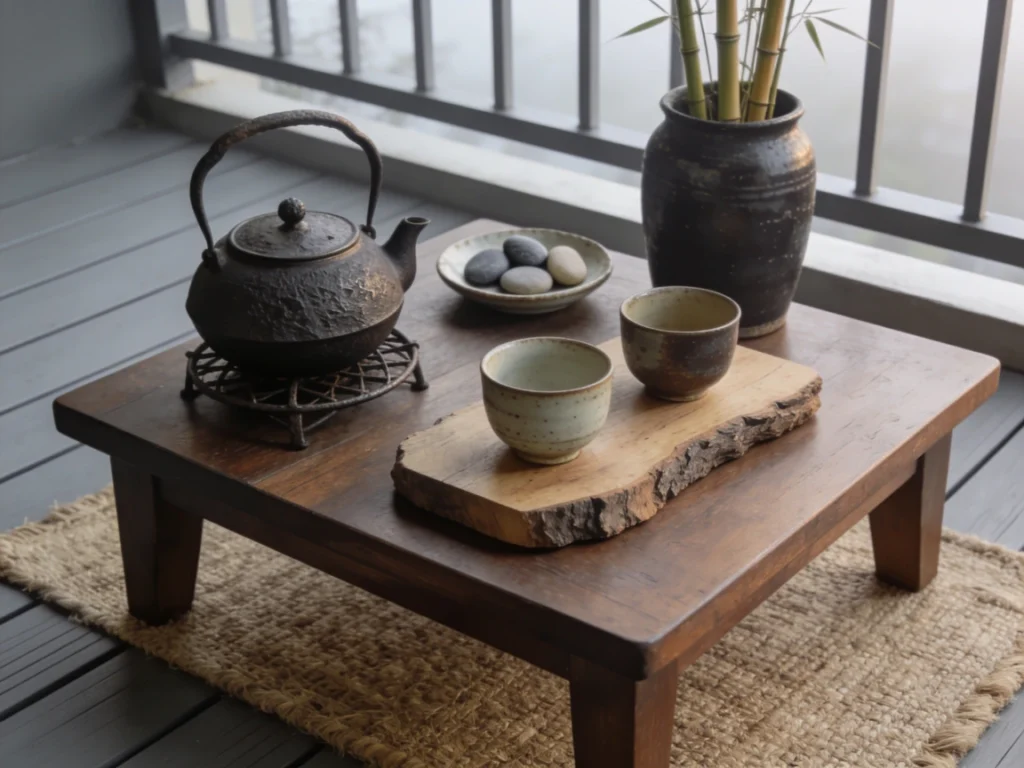
The material requirements of the tea corner are deliberately and beautifully minimal — a low square table in natural teak, a cast iron tetsubin teapot of traditional Japanese form, two handmade ceramic yunomi cups on a simple raw-edge wood serving board, a small ceramic dish holding three smooth river stones as the sole decorative element, and a natural jute or woven grass mat beneath the table to define the floor area of the ceremony space. Resist the temptation to add more objects, more plants, or more decorative elements to this corner — the deliberate emptiness and restraint of the minimally furnished tea space is precisely what creates the psychological shift from ordinary daily consciousness to the heightened present-moment awareness that the tea ceremony tradition has always sought to cultivate in its participants.
11. Scandinavian Teak Lounger with Japanese Side Table
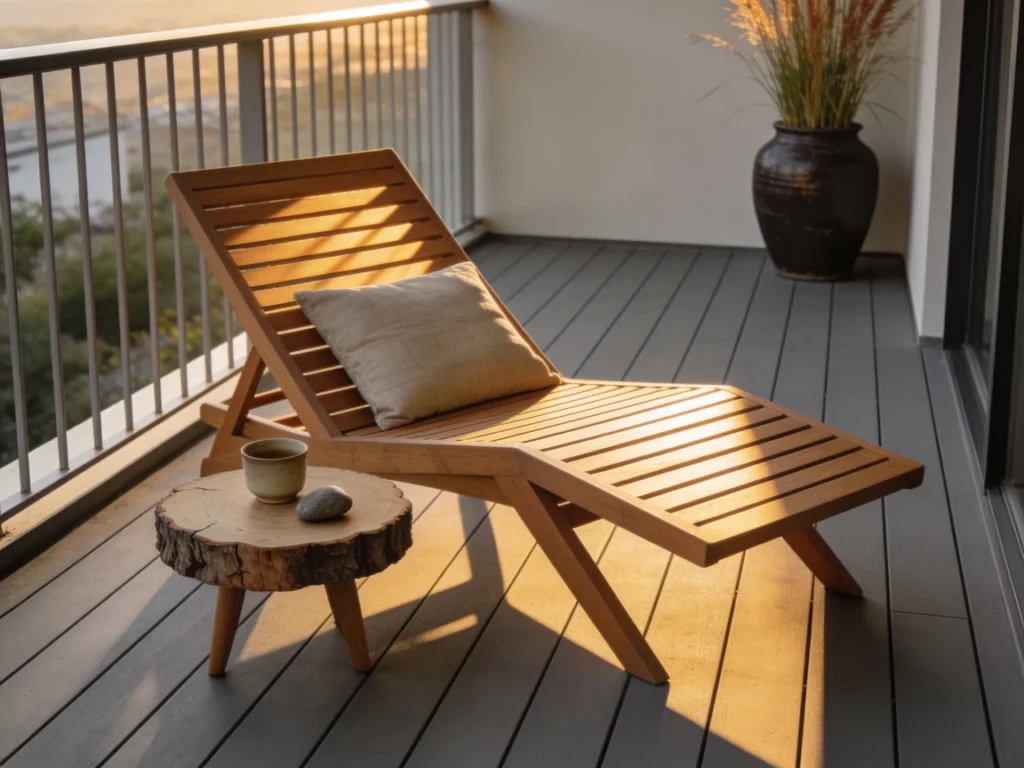
The Scandinavian teak lounger paired with a Japanese natural edge wood slice side table is the definitive Japandi furniture pairing — one object from each parent culture, combined in a balcony composition that honors and expresses the finest qualities of both traditions simultaneously in a dialogue of extraordinary design intelligence and natural material beauty. The Scandinavian lounger contributes its signature values of rational, ergonomically excellent construction in sustainably sourced teak with clean angular lines and precisely spaced slats that are as satisfying in their mathematical regularity as a carefully composed haiku — each element exactly where it must be and nowhere else. The Japanese natural edge wood slice side table brings the opposite quality — organic irregularity, preserved natural form, the specific beauty of a cross-section of a particular tree’s life preserved in its most honest possible material state.
The teak of the lounger will silver gracefully to a beautiful driftwood grey if left to weather naturally, which is the most authentically wabi-sabi approach to furniture maintenance — embracing the natural aging process rather than fighting it with regular oiling that maintains artificial newness. Position the lounger at a slight angle to the balcony railing rather than perfectly parallel to it, as the slight diagonal placement creates a more relaxed, inhabited quality than perfectly orthogonal furniture arrangement while also directing the body’s gaze toward the most interesting portion of the available outdoor view. A single linen outdoor cushion in undyed natural cream provides the only softening layer needed on this beautiful, spare outdoor furniture composition.
12. Moss Wall Art Installation
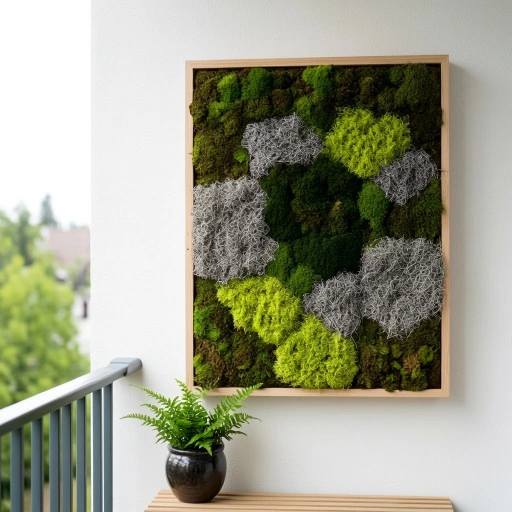
A preserved moss wall art installation brings the deep biological richness and extraordinary textural complexity of the forest floor directly onto your balcony wall in a permanently beautiful, zero-maintenance living artwork that captures the essence of the Japanese shinrin-yoku forest bathing tradition in a form scaled to domestic urban outdoor spaces. Preserved moss — natural moss that has been stabilized using a glycerin-based process that maintains its color, texture, and dimensional quality indefinitely without requiring water, sunlight, or any ongoing horticultural care — is the most practically perfect plant material for balcony wall art because it requires literally nothing from its environment beyond the visual attention it so richly rewards.
Commission a custom preserved moss panel from a specialist maker or construct your own using a natural wood frame, a backing of preserved sheet moss as the base layer, and individual clusters of different moss varieties — reindeer moss in silvery grey, cushion moss in deep forest green, and flat moss in bright chartreuse — arranged into a composition using floral adhesive in a pattern that references the natural distribution of moss colonies on a forest rock face rather than any geometric or symmetrical design intention. The finished panel functions as both living artwork and sound-absorbing acoustic panel, softening the ambient noise of the urban environment surrounding the balcony with the same quiet biological efficiency that a real moss-covered forest floor absorbs and dampens sound in a woodland environment.
13. Pebble and Fern Micro Garden Trough
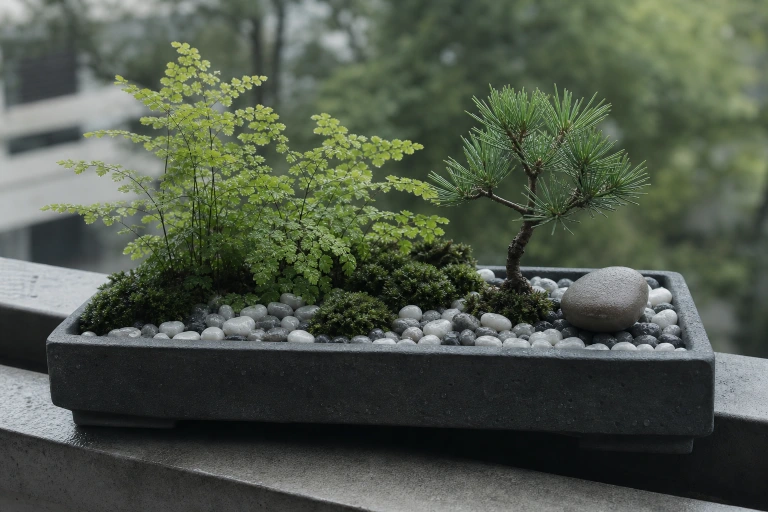
The pebble and fern micro garden trough is the most meditative and spatially efficient Japandi balcony planting idea — a long, low rectangular vessel containing a complete, self-contained miniature landscape of pebbles, moss, ferns, and a single small conifer that distills the entire aesthetic and philosophical vocabulary of the Japanese garden into a form that occupies less than one square foot of precious balcony surface area. The art of creating miniature landscape compositions within shallow rectangular troughs — a practice related to the Japanese tray garden tradition of bonkei and suiseki — is fundamentally about selection, reduction, and the discovery of the maximum with the minimum: one perfect pebble, one small fern, one patch of moss, one tiny pine, and nothing else.
Choose a trough in raw concrete, dark fired clay, or riven dark slate for the most authentically Japandi material quality — the vessel itself should be as beautiful and honestly made as its contents, with visible material texture and the honest evidence of its own making process. Compose the interior landscape using the same asymmetric compositional principles that govern Japanese garden design — the single stone placed at the intersection of organic and geometric, the fern clustered at one end rather than centered, the moss distributed in irregular natural patterns rather than uniform coverage. Water the micro garden by misting gently with a fine spray bottle each morning, a daily ritual of mindful attention that maintains both the health of the plants and the contemplative quality of care that distinguishes Japandi outdoor living from ordinary patio gardening.
14. Shoji Screen Room Divider
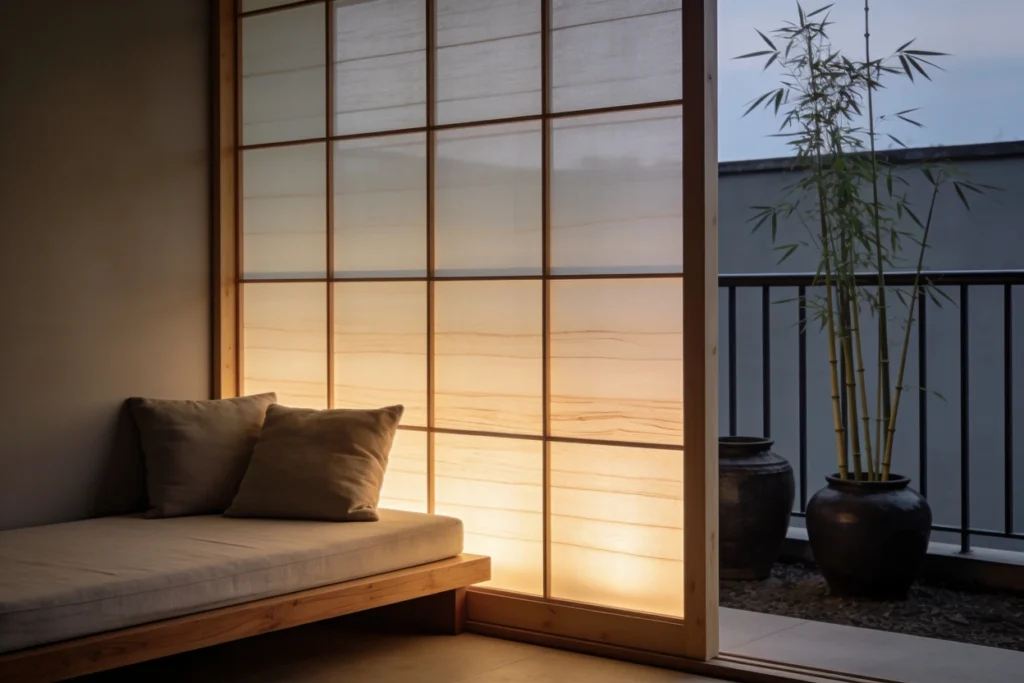
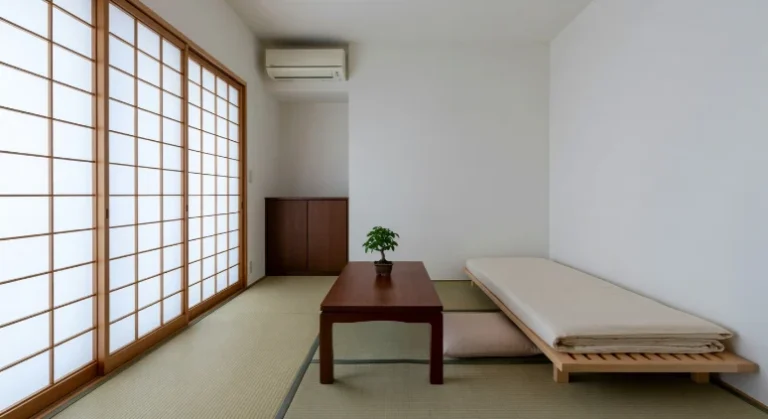
A shoji screen room divider introduces the most architecturally elegant and culturally authentic Japanese design element into the Japandi balcony, simultaneously solving the practical problem of creating a sense of spatial enclosure and private sanctuary on an exposed outdoor balcony while contributing an object of such refined material beauty and translucent luminosity that it elevates the entire balcony’s atmospheric quality from pleasant outdoor space to genuinely contemplative outdoor room. The translucent washi paper panels of the traditional shoji screen transmit light with an extraordinary softening and diffusing quality — not blocking it, not passing it through completely, but transforming it into the most beautiful, most even, most flattering quality of ambient illumination that any room divider could conceivably provide.
Choose an outdoor-rated shoji screen with a naturally treated timber frame and UV-resistant washi paper or polycarbonate panels that replicate the visual quality of traditional washi while withstanding the moisture and UV exposure of outdoor installation. Position the screen to divide your balcony length into approximately two-thirds private seating sanctuary and one-third planting zone, with the screen acting as both a spatial divider and a backdrop for the planting area’s dark ceramic pots and bamboo that read as living silhouettes against the glowing translucent panels when viewed from the seating side. The freestanding construction using weighted base feet requires no permanent fixation and can be repositioned seasonally to follow changing light and privacy needs as the surrounding trees and neighboring spaces evolve throughout the year.
15. Night Lighting with Solar Bamboo Stakes and Paper Lanterns
Night lighting with solar bamboo stakes and hanging paper lanterns creates the most atmospherically magical and most complete sensory transformation of the Japandi balcony, turning the outdoor space from a daytime retreat into an evening sanctuary of such warm, layered, quietly spectacular beauty that the balcony becomes as compelling a destination after dark as it is in the clear light of morning. The combination of two complementary light sources operating at different heights and scales — the tiny, intimate amber pools of solar bamboo stake lights at ground level and the generous, glowing warmth of hanging paper lanterns overhead — creates exactly the layered lighting composition that interior Japandi design achieves indoors through the careful combination of floor, table, and pendant light sources.
Solar bamboo stake lights require no electrical connection and charge silently throughout daylight hours before activating automatically at dusk, making them the most practically effortless lighting solution available for any balcony without existing outdoor electrical points. Push the stakes into the soil of existing planter pots along the railing edge so they appear to grow naturally from the planting rather than being inserted into bare ground, integrating the lighting elements into the plant composition rather than positioning them as separate decorative objects. The paper lanterns overhead — lit by warm LED candle inserts controlled by a simple remote — complete a night lighting composition of such natural, unhurried beauty that every evening spent on the completed Japandi balcony becomes a daily reminder of why the deliberate creation of beauty in the smallest domestic spaces is one of the most genuinely life-enriching investments any person can choose to make.