16 Mexican Living Room Ideas for a Warm Vibrant Home
1. Talavera Tile Fireplace Surround
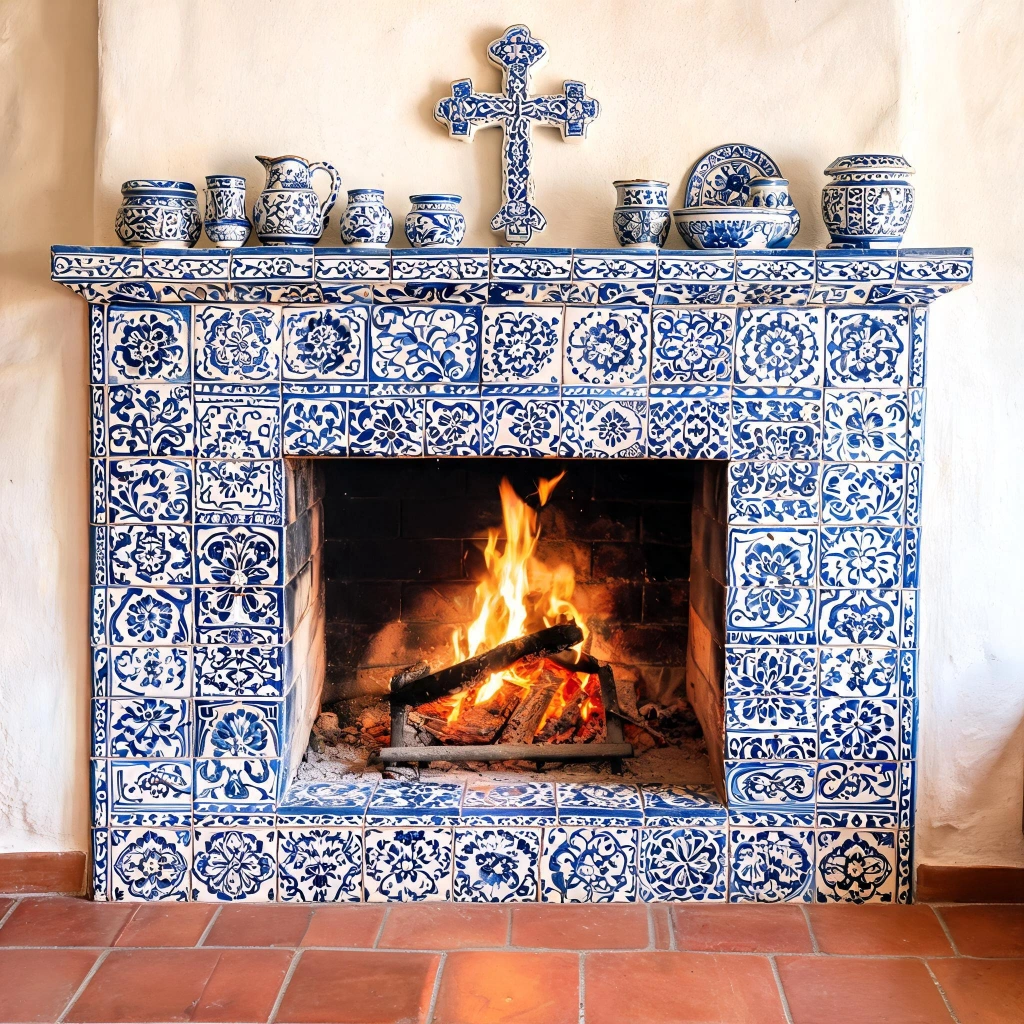
The talavera tile fireplace surround is the single most culturally specific and most immediately powerful Mexican living room decorating statement available — a design decision that transforms the most architecturally prominent element of the living room into a spectacular hand-painted ceramic installation of such extraordinary decorative richness, such genuine craft beauty, and such unmistakable Mexican cultural identity that every other element in the room organizes itself naturally around the fireplace’s dominant, authoritative, magnificently blue and white presence. Talavera pottery and tile-making is one of Mexico’s oldest and most deeply rooted ceramic traditions, brought to Puebla by Spanish Dominican friars in the sixteenth century and combining European Majolica techniques with indigenous Mexican ceramic traditions and Chinese porcelain influences arrived via the Manila Galleon trade route to create a completely distinctive ceramic style of extraordinary beauty that UNESCO recognized in 2019 as an Intangible Cultural Heritage of Humanity — making a genuine talavera tile installation not merely a beautiful decorating choice but an act of genuine cultural celebration and preservation.
Source genuine Puebla talavera tiles from certified Mexican talavera producers rather than manufactured imitations — authentic talavera tiles are distinguished from industrial reproductions by the slight irregularity of their hand-formed surfaces, the characteristic warmth and slight variation of their tin-glazed white background, the organic imprecision of the hand-painted blue cobalt designs where brush pressure variation creates lines of varying weight and intensity, and the slight color variation between individual tiles that reveals the natural variation of hand-painting rather than the mechanical uniformity of screen printing. Install the tiles across the complete fireplace surround — the two vertical side panels, the horizontal lintel panel, and the hearth surface — using a pattern of alternating individual design tiles and plain white background tiles in the proportion of one patterned to one plain, which creates the most classically beautiful and most authentically Pueblan tile arrangement while allowing the individual painted designs to read clearly against the white breathing space that surrounds each one.
2. Serape Textile Sofa Styling
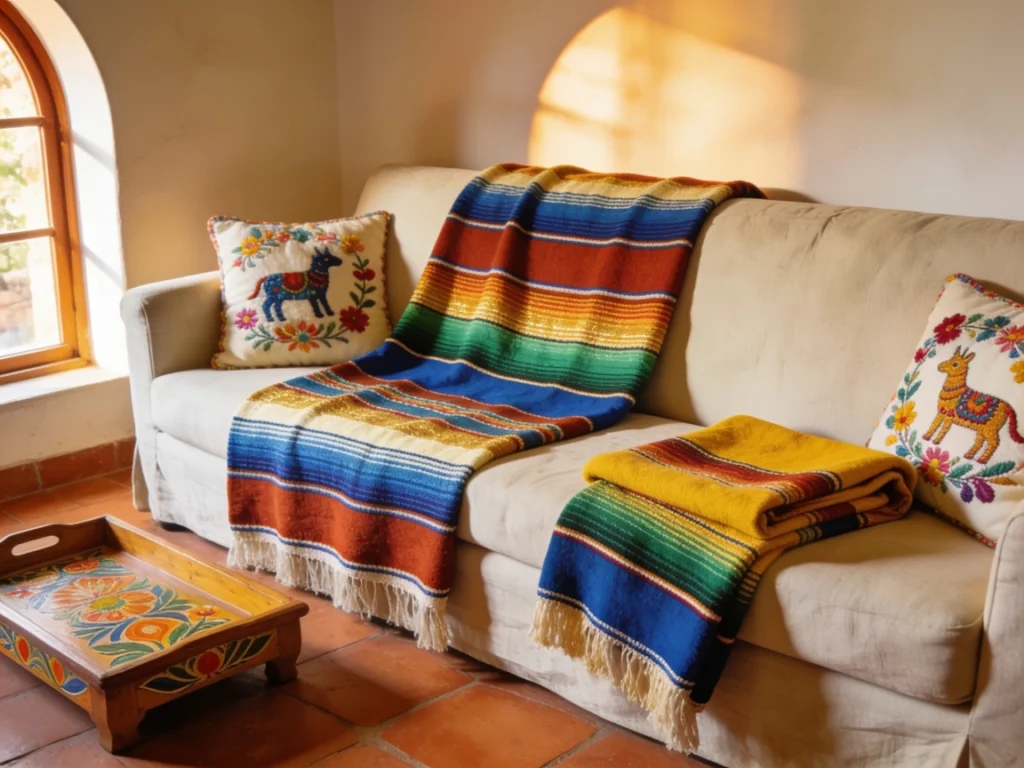
Serape textile sofa styling is the most immediately colorful and most completely transformative Mexican living room decorating idea available — a single textile decision that introduces the entire vivid, joyful, uncompromisingly bold color vocabulary of traditional Mexican weaving into the neutral canvas of a natural linen sofa in the most casual and most effortlessly beautiful way possible, requiring no structural changes, no permanent installation, and no significant investment beyond the acquisition of genuinely beautiful, genuinely authentic handwoven textiles that deserve to be displayed and celebrated rather than stored in a chest. The serape is one of Mexico’s most iconic and most culturally significant woven textiles — a large, brightly striped wool blanket of pre-Columbian origin whose characteristic multi-stripe pattern in vivid, saturated colors is simultaneously the most immediately recognizable symbol of Mexican textile culture and one of the world’s most beautiful abstract color compositions, achieving through the pure formal language of colored stripes a visual richness and emotional warmth that sophisticated contemporary textile designers consistently cite as one of their primary sources of color and pattern inspiration.
Source genuine hand-woven serapes from Oaxacan, Saltillo, or Teotitlán del Valle weavers rather than machine-made imitations — the specific quality of genuine hand-woven serape textiles is immediately and completely apparent in the slight irregularity of the stripe widths, the specific warmth and depth of naturally dyed wool colors, and the particular weight and drape of hand-spun wool that machine-made versions using synthetic fibers cannot replicate with any convincing fidelity. Layer the serape textiles on the sofa with the casual, generous abandon of genuine Mexican domestic hospitality — a large blanket thrown over the sofa back with its full striped pattern visible, a second blanket folded along one arm with its stripe pattern running horizontally, and a collection of embroidered Otomí cushion covers in cream with their characteristically exuberant animal and floral embroidery supplementing the serape’s geometric stripe language with the flowing, organic imagery of another of Mexico’s great embroidery traditions.
3. Hand-Hammered Copper Accent Wall
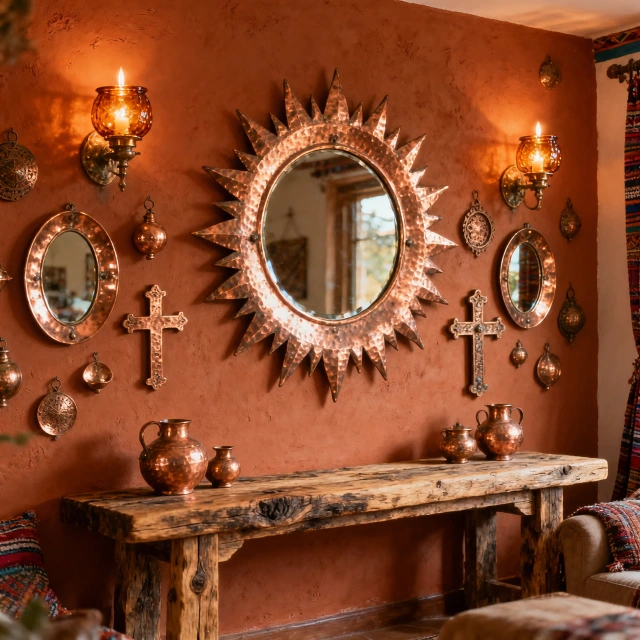
The hand-hammered copper accent wall is the most warmly luminous and most craft-authentically distinguished Mexican living room decorating idea available — a wall installation that combines the extraordinary warmth of hand-worked copper in its most beautifully aged and most deeply textured artisan form with the decorative vocabulary of traditional Mexican metalwork to create a wall surface of such complete, warm, deeply glowing beauty that it transforms the entire surrounding room with the amber warmth of copper’s specific, irreplaceable light quality. Santa Clara del Cobre in Michoacán is the world capital of hand-hammered copper work, a village where the tradition of beating raw copper sheets into functional and decorative objects has been practiced continuously for over four hundred years, producing a craft tradition of such refined skill and such beautiful aesthetic development that the most accomplished Santa Clara copper work is collected by major museums and regarded internationally as one of Mexico’s finest and most original contributions to the world’s decorative arts heritage.
The hand-hammered copper mirror in its sunburst frame is the most spectacular and most immediately impactful single copper decorating piece available for the Mexican living room wall — the sunburst frame’s radiating hammered copper rays creating a secondary light show around the central mirror as they catch and scatter the warm light of the room from every facet of their hammered surface, and the central mirror multiplying the warm copper light of the surrounding wall installation in the reflective surface of its polished face. Source copper pieces from certified Santa Clara del Cobre artisans or from reputable Mexican craft importers who work directly with the craft communities producing this work, as the quality differential between genuinely hand-hammered artisan copper and mass-produced copper-look decorative items is as complete and as immediately visible as the quality differential between hand-painted talavera tiles and their industrial imitations.
4. Arch Doorway with Mosaic Tile Surround
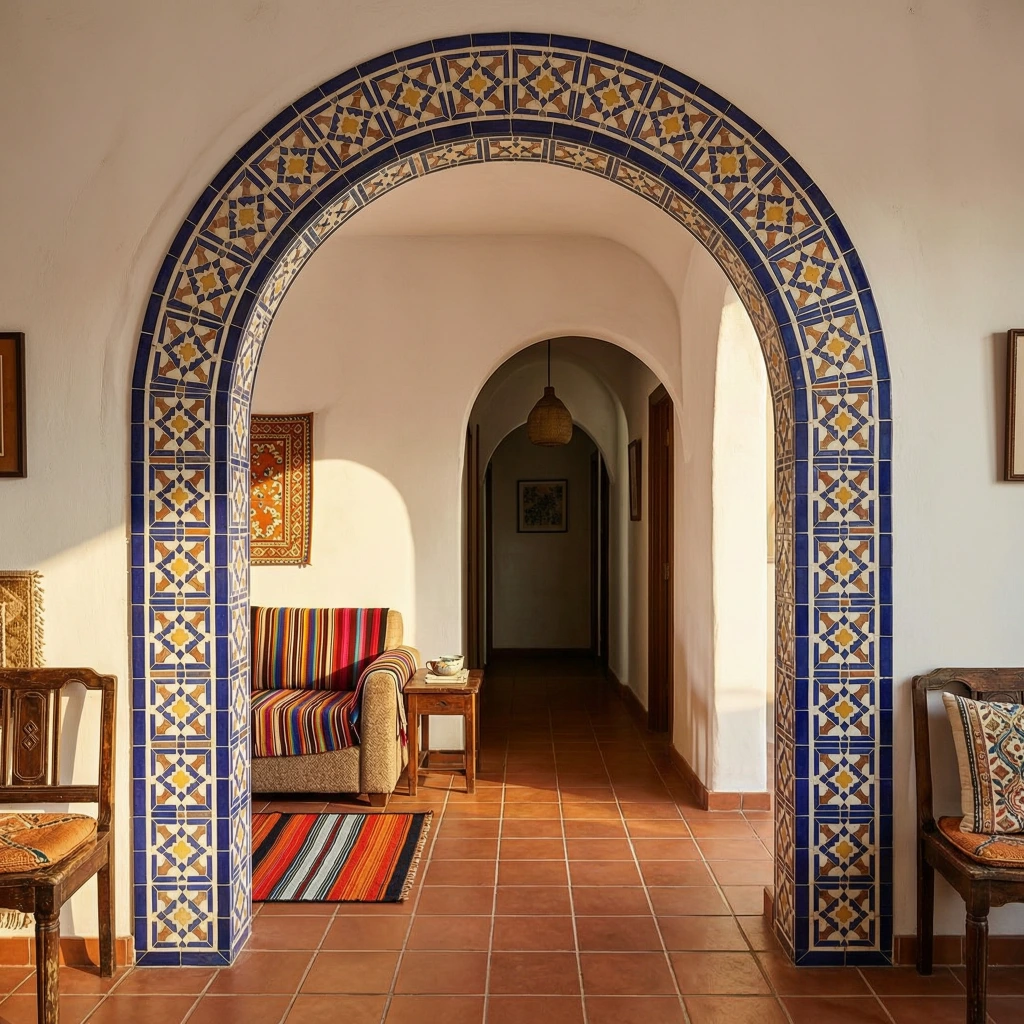
The arch doorway with mosaic tile surround is the most architecturally transformative and most permanently beautiful Mexican living room design idea available — a structural element of such complete, lasting impact that it fundamentally changes the spatial character and cultural identity of the entire room rather than merely adding decorative surface interest to an existing space. The arched doorway is the most distinctly Mexican and most deeply Moorish-influenced architectural form in traditional Mexican domestic architecture, arriving in Mexico through the Spanish colonial buildings that combined the Moorish architectural traditions of southern Spain with indigenous Mexican building techniques to create a colonial architecture of distinctive grace, thick-walled solidity, and the extraordinary play of light and shadow in arched openings that is perhaps the single most immediately recognizable and most universally beautiful quality of Mexican domestic architecture. The mosaic tile surround amplifies the arch’s architectural impact by framing the opening with a hand-laid border of such decorative richness and such genuine craft skill that the doorway becomes the living room’s most spectacular focal point as well as its most practical architectural feature.
Create the mosaic tile border using broken talavera tile fragments rather than whole tiles — the mosaic technique of setting irregular ceramic fragments into a cement base with contrasting grout lines produces a uniquely beautiful and genuinely handmade quality of surface that is simultaneously more economical than whole tile installation and more visually interesting in its organic irregularity and the specific, unpredictable way that broken tile edges catch and reflect light from different angles. The pattern of the mosaic border should reference the traditional geometric vocabulary of Moorish-influenced Mexican tile work — interlocking geometric shapes, star and cross motifs, and the flowing arabesque border patterns that appear in the finest colonial Mexican architecture — creating an arch surround of genuine cultural depth and genuine decorative beauty that honors the specific historical tradition from which it draws rather than simply borrowing its aesthetic without acknowledgment.
5. Otomí Embroidery Wall Gallery
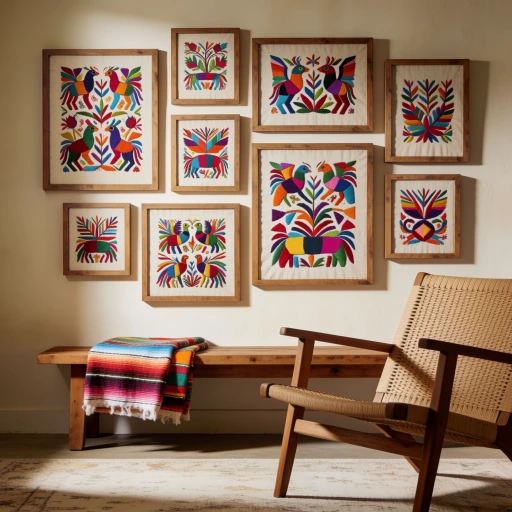
The Otomí embroidery wall gallery is the most visually spectacular and most culturally generous Mexican living room wall installation available — a gallery of embroidered textile artworks of such extraordinary visual complexity, such vivid color abundance, and such genuinely fascinating subject matter that it functions simultaneously as the room’s most spectacular decorating statement and as a genuine collection of internationally recognized folk art that tells the complete story of the Otomí people’s cosmological worldview, natural environment, and mythological tradition in the most direct and most beautifully accessible visual language imaginable. Otomí embroidery from the Hidalgo and Querétaro regions of central Mexico is one of the world’s most extraordinary textile art traditions — the characteristic designs featuring a densely packed, exuberantly imaginative world of deer, jaguars, eagles, rabbits, hummingbirds, flowers, trees, and mythological creatures embroidered in the most vivid, most saturated, and most completely unapologetic color combinations available in the contemporary craft textile world, creating a visual universe of such complete joy, such genuine artistic confidence, and such absolutely unconstrained creative abundance that every person who encounters it for the first time experiences an immediate, involuntary response of pure aesthetic delight.
Frame each Otomí embroidery piece identically — matching natural wood frames of the same profile and the same warm honey tone create the gallery coherence that allows the extraordinary variety of the individual embroidery designs to read as a unified collection rather than a random assortment of unrelated textile pieces — and display them in an organic salon-hang arrangement that varies the frame sizes between large feature pieces and smaller accent works in a composition that fills the wall from approximately eighteen inches above the floor to within one foot of the ceiling, creating the most complete and most visually immersive gallery installation available within a domestic interior setting. The warm directional gallery lighting is essential rather than optional for the Otomí embroidery gallery because the embroidery’s extraordinary color saturation and textural richness are most completely revealed and most beautifully expressed in the warm, directional light of individually positioned picture lights or adjustable ceiling spots that illuminate each piece from above at a slight angle, creating the specific quality of light on textile that emphasizes the dimensional texture of the embroidery stitches while maximizing the depth and saturation of the thread colors.
6. Carved Wooden Furniture Collection
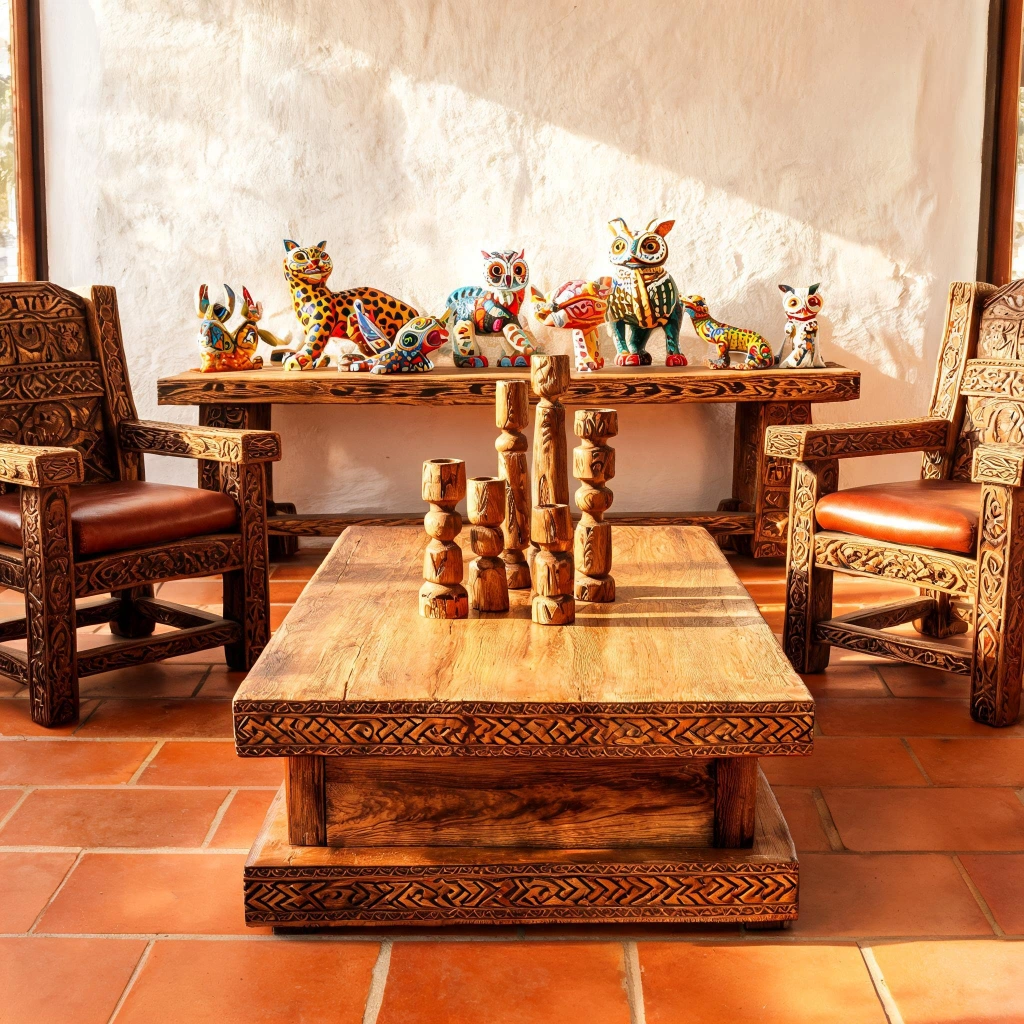
The carved wooden furniture collection is the most structurally important and most permanently beautiful element of the authentic Mexican living room — the foundation of the room’s material character from which every other decorating decision naturally and graciously radiates in the warm, earthy, completely honest style that Mexican craft furniture uniquely provides. Mexican carved wood furniture — particularly pieces made from the indigenous hardwood species of mesquite, sabino, and parota that have been worked by Mexican craftsmen for centuries into some of the most beautiful and most durably functional domestic furniture produced anywhere in the world — possesses a quality of material honesty and craft completeness that manufactured furniture of any kind simply cannot replicate, because the genuine character of the wood itself — its grain pattern, its natural color variation, its specific weight and hardness — participates actively in the beauty of the finished piece rather than being concealed beneath veneers, lacquers, or manufactured finishes that substitute the appearance of wood for the genuine material reality of it.
The most beautiful Mexican carved wooden furniture pieces for the living room are those that show the most complete and most confident integration of the carving decoration with the furniture form — the hand-carved geometric borders of a mesquite coffee table that follow the natural edges of the wood slab and respond to the specific grain pattern of the individual piece, the deeply carved floral motifs of a cabinet door panel that create genuine dimensional relief visible as shadow at any light angle, and the hand-shaped, slightly irregular legs of a Mexican side chair that communicate the maker’s hand in every gentle deviation from geometric perfection that a machine-turned leg would never permit. Source Mexican carved furniture from reputable Mexican craft importers or from artisan furniture makers working directly with the woodworking communities of Michoacán, Oaxaca, and Jalisco, where the longest continuous traditions of quality craft furniture production are maintained by families of woodworkers whose skills have been passed through multiple generations of apprenticeship and practice.
7. Terracotta and Cobalt Blue Color Palette
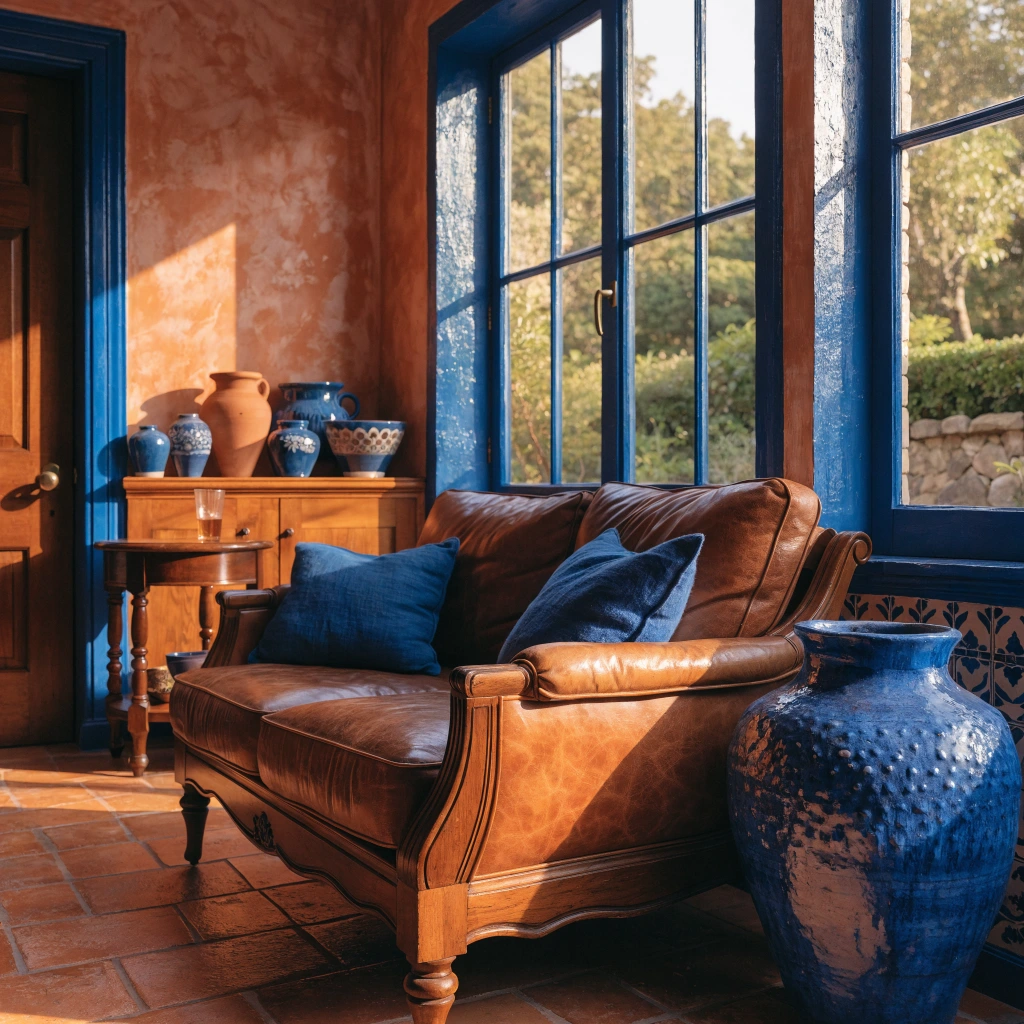
The terracotta and cobalt blue color palette is the most quintessentially Mexican and most powerfully evocative color combination available for the Mexican living room — a pairing drawn directly from the two most beautiful and most culturally significant material colors in the Mexican decorative arts tradition, the warm, sun-baked, earthen red of terracotta clay that has been the building material of Mexican domestic architecture for thousands of years, and the brilliant, saturated cobalt blue that arrived in Mexico with the Spanish and their Moorish-influenced ceramic tradition and became so completely absorbed into Mexican aesthetic culture that it is now considered as essentially and authentically Mexican as the terracotta it was paired with. The warm-cool contrast between terracotta’s deep, advancing warmth and cobalt’s brilliant, receding intensity creates a chromatic tension of such extraordinary visual energy and such complete mutual enhancement that each color makes the other appear more beautiful, more saturated, and more architecturally powerful than either would achieve in any other color pairing.
Apply the terracotta and cobalt blue palette to the largest possible architectural surfaces of the living room for maximum impact — terracotta-colored limewash or clay paint on the primary wall surfaces, cobalt blue on window frames, door surrounds, and the decorative plaster band that traditionally runs at chair-rail height around Mexican domestic rooms, creating an architectural color framework of such complete, bold, completely committed conviction that every other element introduced into the room — the carved wooden furniture, the talavera ceramics, the woven textiles — finds its natural, beautiful place within the palette without any additional coordination required. The specific cobalt blue used for the painted architectural elements should reference the deep, slightly warm, slightly purple-toned blue of genuine talavera tile glaze rather than the cooler, more neutral blue of contemporary interior paint ranges — a color that reads as genuinely ancient, genuinely mineral, and genuinely Mexican rather than as a contemporary decorating color selection.
8. Mexican Papel Picado Ceiling Installation
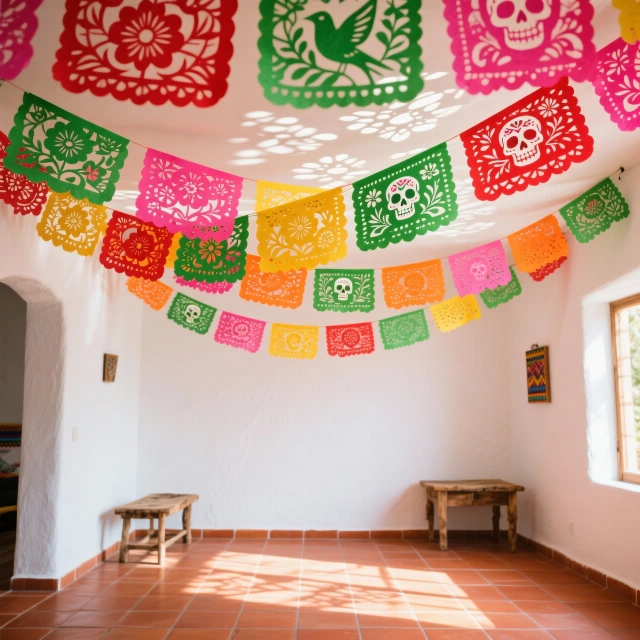
The Mexican papel picado ceiling installation is the most joyfully celebratory and most immediately festive Mexican living room decorating idea available — a temporary or semi-permanent overhead installation of such complete, exuberant, completely unapologetic chromatic abundance and such genuinely extraordinary traditional craft beauty that it transforms the ceiling plane from the room’s most neglected and least interesting architectural surface into its most spectacular visual feature, creating an overhead canopy of colored light and shadow of such completely unique and genuinely transporting beauty that the room beneath it becomes genuinely, completely extraordinary in the most joyful possible way. Papel picado — the traditional Mexican art of cutting intricate designs from thin tissue paper to create translucent decorative banners — is one of Mexico’s most beloved and most widely practiced traditional crafts, used to decorate streets, markets, churches, and domestic spaces for every major celebration in the Mexican calendar and producing, in its finest examples, tissue paper masterpieces of such extraordinary delicacy, such precise intricate cutting, and such vibrant color that they represent a genuine pinnacle of paper craft achievement.
Install the papel picado ceiling installation by stretching thin wire or cotton cord across the ceiling at three to four different heights — varying the installation height prevents all the banners from occupying the same visual plane and creates the dimensional, layered quality of depth that makes the best papel picado ceiling installations appear genuinely like a canopy of colored light rather than simply a collection of paper decorations hung at uniform height. Mix genuine handmade papel picado from Mexican craft producers — available in traditional single-color cutting on tissue paper in each individual color and in more elaborate multi-colored versions where different colored papers are layered before cutting — with simpler commercially available versions to achieve the most abundant possible coverage of the ceiling area at the most manageable investment level, as the visual impact of the installation depends primarily on coverage density and color variety rather than on the consistent quality of every individual banner.
9. Alebrijes Folk Art Display
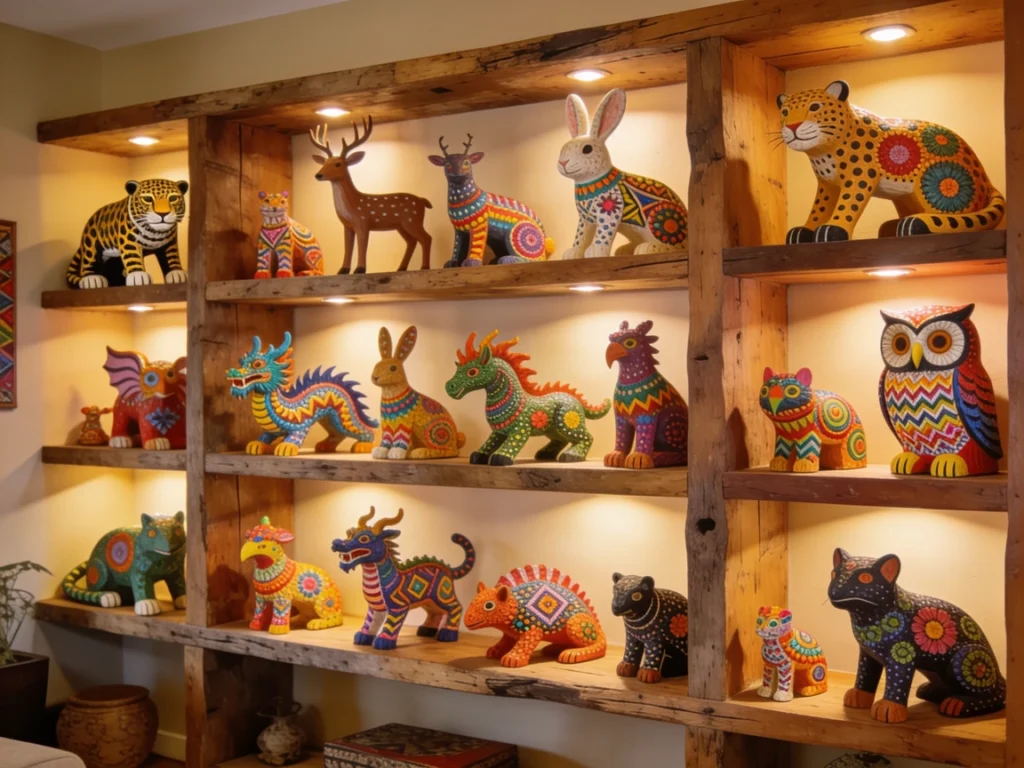
The alebrijes folk art display is the most visually extraordinary and most genuinely fascinating Mexican living room decorating element available — a collection of carved and painted wooden figures of such complete, extraordinary, utterly individual artistic vision that each individual piece functions as a genuinely unique work of art that rewards close, extended examination with the discovery of increasingly astonishing painting detail, carving skill, and imaginative exuberance. Oaxacan alebrijes — carved from copal wood by artisan families in the Oaxacan villages of San Martín Tilcajete and Arrazola — represent one of the most extraordinary developments in Mexican folk art of the twentieth century, a tradition that began in the 1980s when artisans adapted the fantastical carved and painted figures of Mexico City artist Pedro Linares into carved wood forms and developed a painting vocabulary of such extraordinary intricacy, such uncompromising commitment to dense, all-over pattern and color, and such genuinely fantastic imaginary zoology that the finest Oaxacan alebrijes are now collected by major museums of folk and decorative art worldwide.
Build the alebrije collection gradually and deliberately over time — adding pieces from specific artisan families whose painting style and carving skill most completely satisfy the discerning eye — rather than purchasing a complete collection simultaneously from a single commercial source, as the most beautiful alebrije displays always show the specific variety of vision, style, and technical approach that emerges when pieces from different Oaxacan artisan families are collected and displayed together. The carving skill of the finest alebrije makers is visible in the cleanness and precision of the individual carved surfaces — the sharp, confident cuts that create the raised scale patterns of a carved jaguar’s body, the smooth curves of a carved owl’s plumage, the precisely articulated individual toes and fingers of smaller animal forms — while the painting skill is visible in the extraordinary density and precision of the dot, line, and geometric pattern work applied over every square centimeter of the carved surface in colors of such vivid, saturated intensity and such completely committed chromatic courage that they make the most adventurous contemporary pattern design appear timid by comparison.
10. Mexican Hacienda Style Ceiling Beams
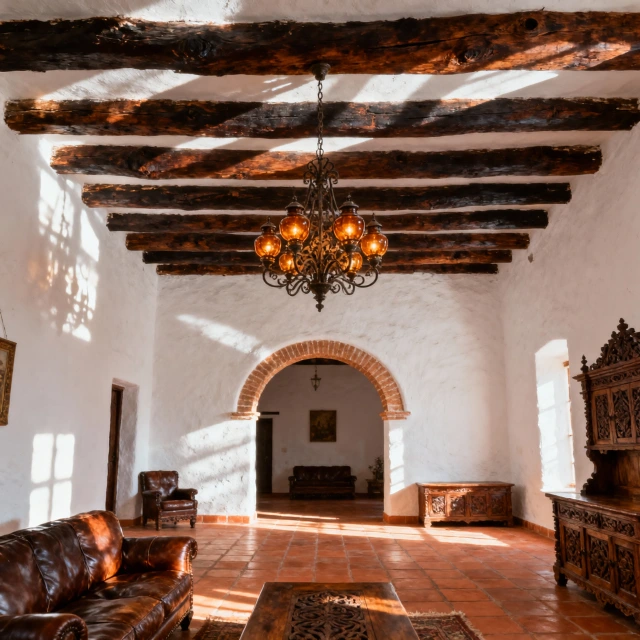
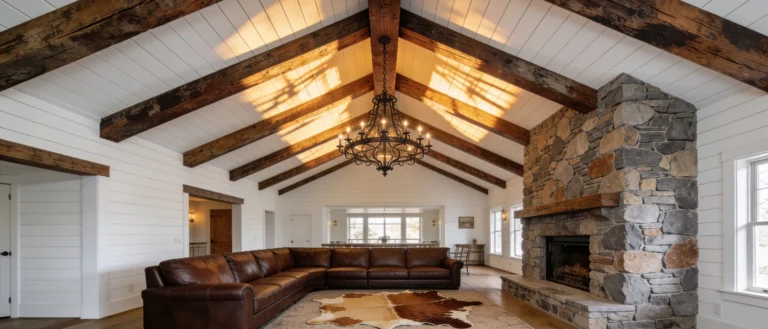
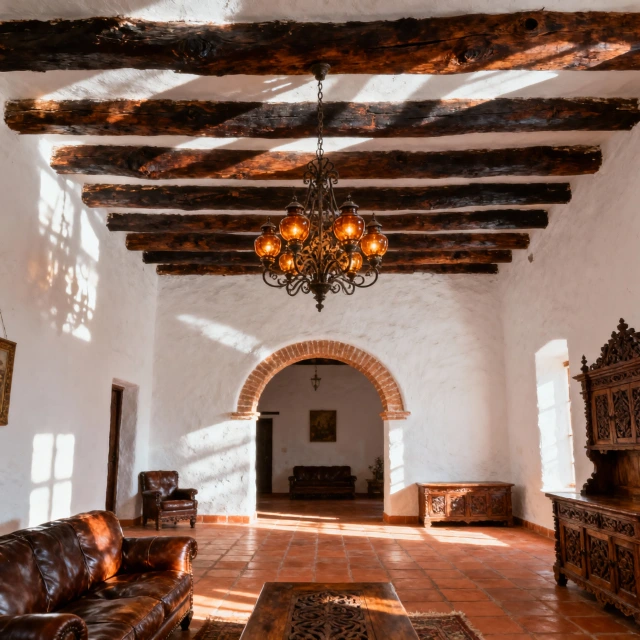
Mexican hacienda style ceiling beams are the single most architecturally transformative and most permanently impactful Mexican living room design element available — a structural feature of such complete, commanding visual authority that it fundamentally changes the spatial character and cultural identity of the entire room from the moment it is installed, creating an overhead architectural presence of such completely Mexican historical resonance and such genuine, dramatic beauty that every subsequent decorating decision in the room is simplified by the beams’ powerful establishment of the space’s material and cultural vocabulary. The exposed wooden ceiling beam is the defining architectural feature of the traditional Mexican hacienda — the great colonial-era agricultural estates that produced Mexico’s most magnificent domestic architecture from the seventeenth through the nineteenth centuries — where rough-hewn vigas of pine, oak, or mesquite spanning the rooms of thick-walled hacienda buildings created the most beautiful and most structurally honest ceiling treatment available in the pre-industrial building world.
Install the ceiling beams in genuine rough-hewn timber rather than manufactured faux beam substitutes — the specific beauty of a genuine rough-hewn wooden beam derives entirely from the evidence of the hand tools that shaped it, the natural variation of the wood grain across its irregular surface, and the specific warmth and depth of color that genuine old timber develops through age and exposure to the heated air of occupied rooms over many years of domestic life, qualities that manufactured polyurethane faux beams can approximate in superficial appearance but never replicate in the material reality that gives genuine timber its specific, irreplaceable warmth and character. Space the beams at intervals that create the most beautiful and most proportionally correct relationship to the ceiling’s specific width and the room’s specific ceiling height — the traditional Mexican hacienda proportion places beams at approximately twenty-four to thirty inch intervals, close enough to create a genuinely substantial visual presence overhead without the claustrophobic compression of beams placed too closely together.
11. Huichol Yarn Painting Collection
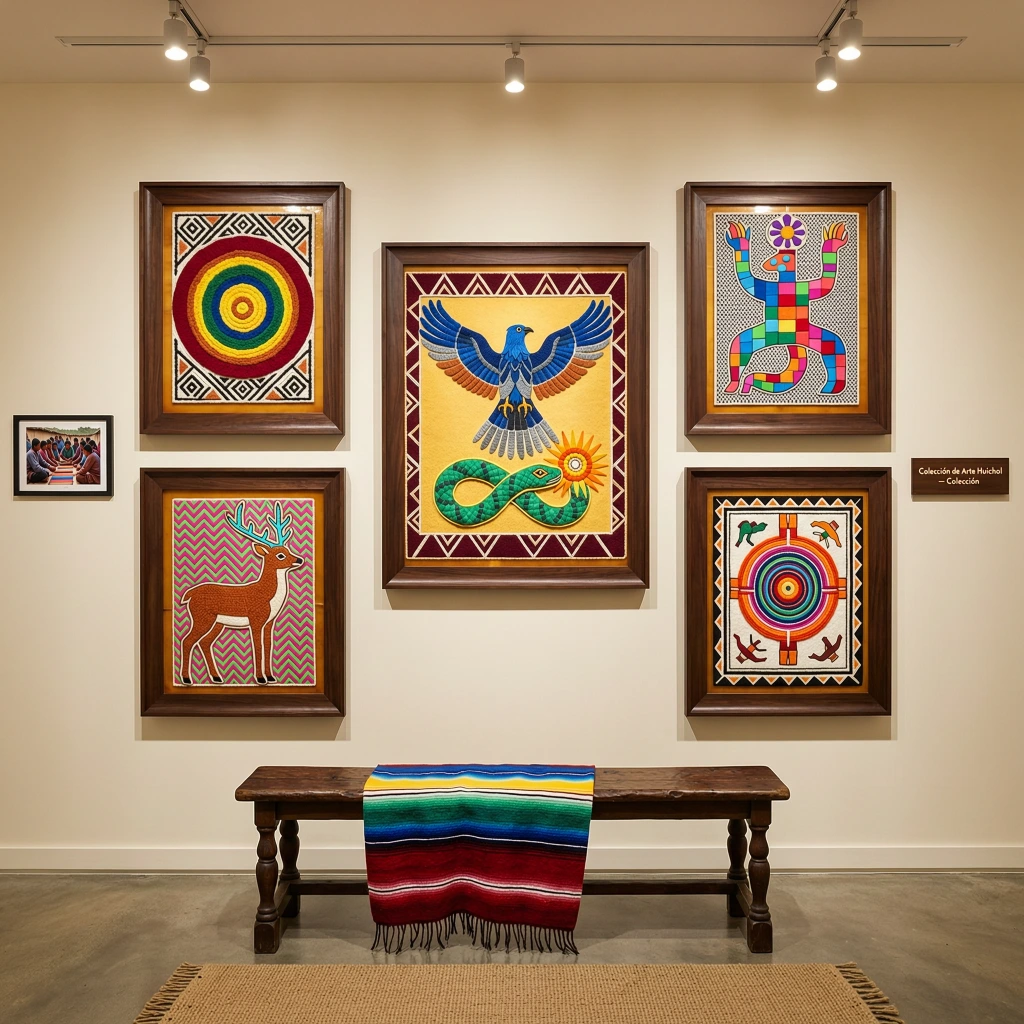
The Huichol yarn painting collection is the most visually extraordinary and most spiritually profound Mexican living room art installation available — a gallery of textile paintings of such complete, densely packed, vibrantly saturated color and such genuinely complex cosmological imagery that it creates in the living room a portal into one of the world’s most remarkable indigenous spiritual traditions, the Huichol people of the Sierra Madre Occidental whose entire visual culture is organized around the sacred experience of the peyote pilgrimage and the divine visions that the cactus’s alkaloids produce in the consciousness of the pilgrim who has prepared themselves through months of ritual fasting, prayer, and ceremonial observance. Huichol yarn paintings — created by pressing dyed wool yarns carefully into boards coated with beeswax and resin, building up the composition yarn by yarn in a technique of extraordinary patience and extraordinary precision — translate the visions of the peyote journey into visual form using the most vivid, most completely saturated color palette available in the craft textile world, creating compositions of such dense, all-over color that every centimeter of the painted surface vibrates with equal intensity and equal visual energy simultaneously.
Frame each Huichol yarn painting in a deep-set shadow box frame rather than a conventional picture frame — the dimensional nature of the yarn painting surface, which projects slightly from the board as individual yarn strands lie slightly above the board surface rather than being flush with it, requires sufficient depth in the frame to allow the composition to exist without being pressed against the glass. The deep shadow box frame also creates a visual presentation of greater formality and greater apparent art-object status that honors the genuine cultural and artistic significance of the works displayed within it — Huichol yarn paintings are not decorative crafts but genuinely sacred objects created by artists who are simultaneously religious practitioners and visual communicators of their community’s most deeply held cosmological beliefs, and their display in domestic art galleries should reflect the seriousness and the beauty of the tradition they represent.
12. Indoor Courtyard Garden Corner
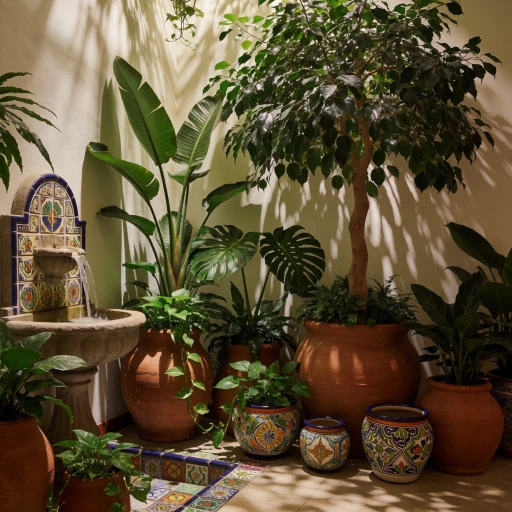
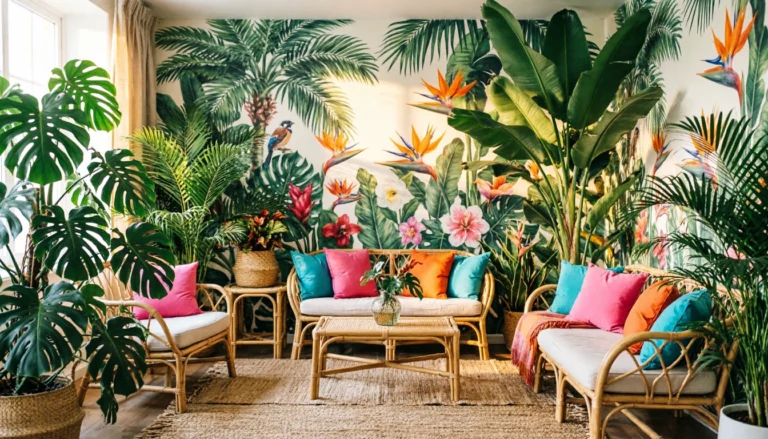
The indoor courtyard garden corner is the most atmospherically complete and most genuinely transporting Mexican living room idea on this list — a design concept that brings the most fundamental and most beloved element of traditional Mexican domestic architecture directly into the living room interior, creating a lush, fragrant, visually extraordinary living garden corner that references the inner courtyard — the patio — that has been the spiritual and physical heart of Mexican domestic life since the earliest days of Spanish colonial architecture. The patio is the most distinctly Mexican spatial contribution to the world’s domestic architecture tradition — a private, inward-looking garden enclosed within the house’s own walls, accessible only through the house itself and completely hidden from the street, creating a world of green abundance, running water, and filtered light that exists in extraordinary, almost miraculous contrast to the arid exterior landscape of much of Mexico and that has served as the Mexican family’s most treasured and most intimately personal domestic space for four centuries of continuous use.
Create the indoor courtyard corner by establishing a genuine water feature as its central, most essential element — the sound of running water is as important as any visual element in recreating the specific quality of the Mexican patio experience, as the sound of water splashing in a stone or talavera-tiled fountain or basin is the auditory signature of the patio that any Mexican person of any generation recognizes immediately and responds to with the specific quality of calm, pleasant recognition that a beloved childhood sound always produces in the adult who encounters it unexpectedly. A small wall-mounted fountain with a talavera tile surround, allowing water to fall from a lion’s head or a simple spout into a shallow basin below, provides the most authentic and most architecturally appropriate water feature for the indoor courtyard corner while requiring minimal floor space and creating maximum sensory impact through the continuous, gentle sound of falling water that fills the surrounding room with the specific, tranquilizing quality of a genuine Mexican patio.
13. Vintage Mexican Tin Mirror Collection
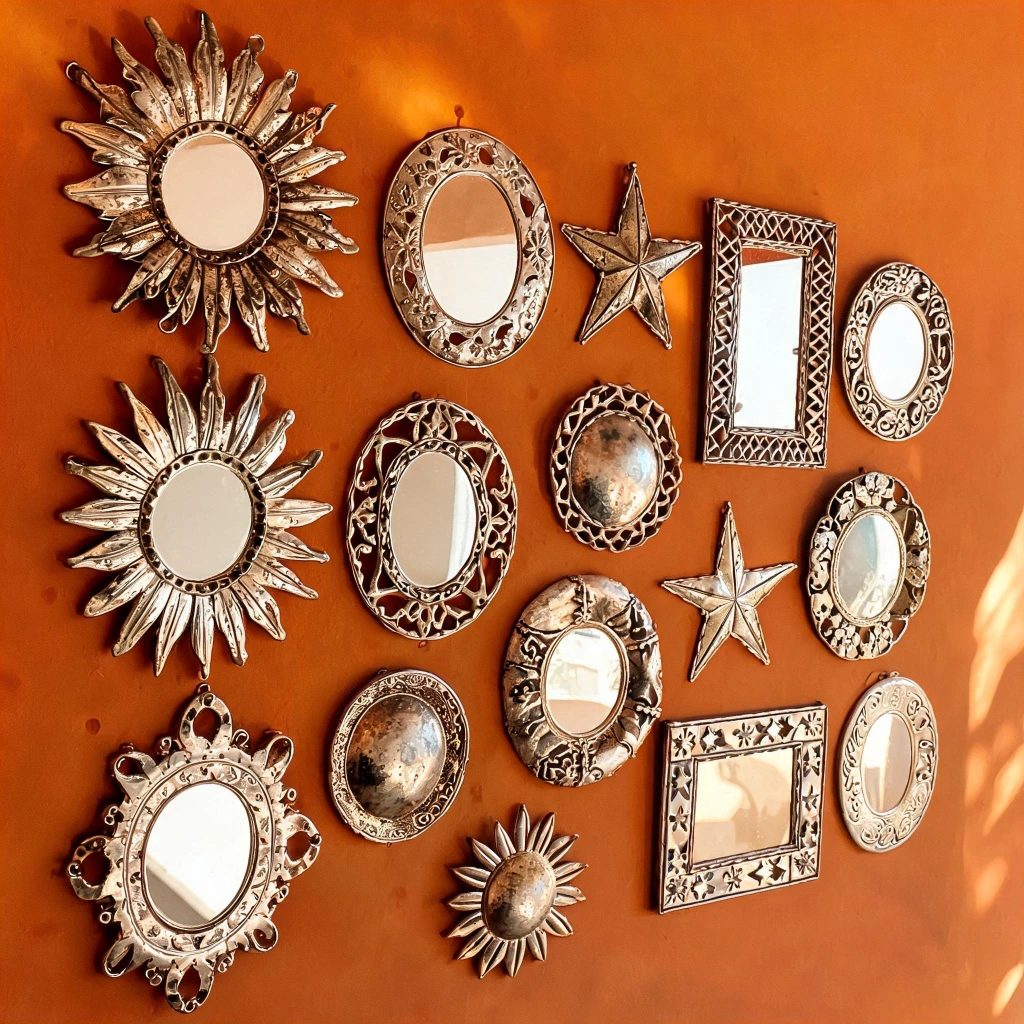
The vintage Mexican tin mirror collection is the most charming and most folk-art-celebrating Mexican living room wall idea available — a collection of hand-made decorative objects of such completely individual character, such genuine craft beauty, and such wonderful variety that every wall they inhabit becomes a museum of the extraordinary folk art tradition of Mexican tin work, a tradition of hand-cut and hand-stamped sheet tin decoration that has produced some of Mexico’s most beloved and most widely recognized decorative objects since the colonial period when Mexican artisans adapted the tin-working techniques of Spanish craftsmen to create a distinctly Mexican decorative idiom of great charm and genuine artistic originality. Mexican tin mirrors are the most perfect and most practically useful folk art objects available for wall collection — combining the decorative beauty of the hand-worked tin frame with the practical light-multiplying function of the mirror itself, creating individual pieces that contribute to the wall installation both as decorative art objects and as functional room-brightening elements that catch and scatter light from their multiple reflecting surfaces throughout the day.
Collect the tin mirrors over time from Mexican artisan markets, specialist folk art importers, and antique dealers who source directly from Mexican producing regions rather than purchasing a uniform collection from a single commercial source — the most beautiful tin mirror collections always show the specific variety of frame pattern, tin patina, mirror age, and individual maker’s hand that emerges from pieces sourced across multiple origins and multiple periods, as this variety creates the organic, genuinely collected quality that distinguishes a real folk art collection from a display of commercially uniform decorative objects. The arrangement of the collection on the wall should follow the organic, asymmetric logic of a salon hang rather than the geometric precision of a grid or a perfectly centered formal grouping — varying the heights, sizes, and orientations of individual mirrors in a composition that feels gathered over time and arranged with intuitive confidence rather than calculated according to a measured plan.
14. Painted Equipale Leather Chair Grouping
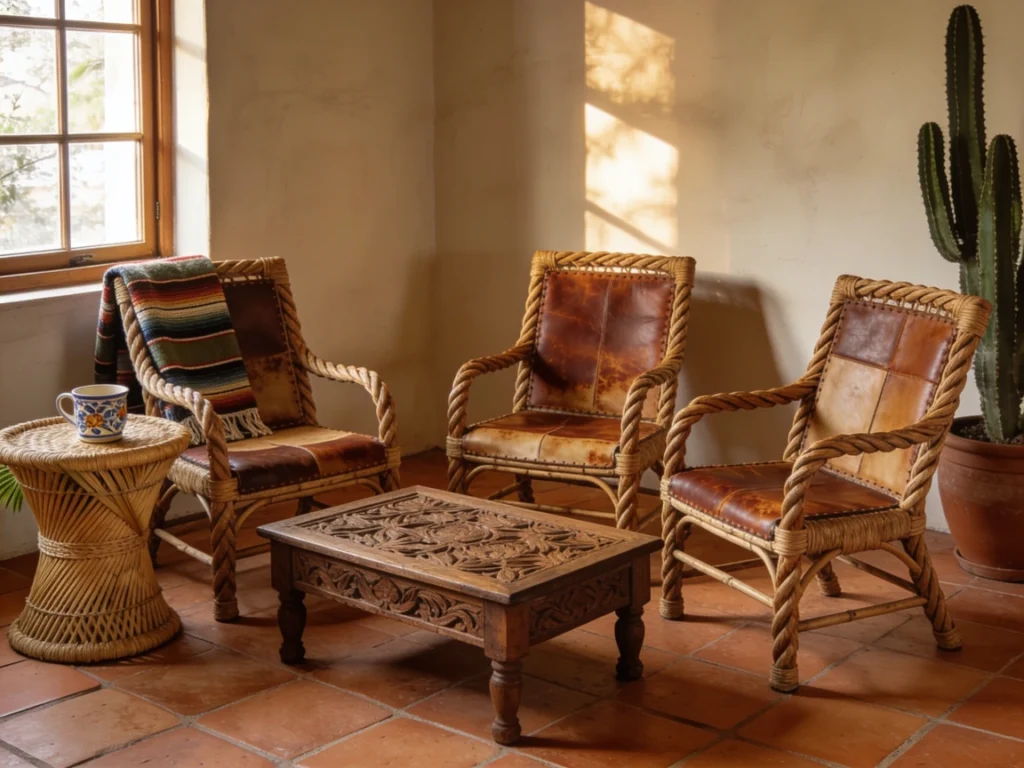
The equipale leather chair grouping is the most authentically Mexican and most materially honest seating furniture available for the Mexican living room — pieces of such genuine craft tradition, such honest material beauty, and such completely distinctive Mexican formal identity that they immediately and completely establish the room’s cultural character from the moment they are introduced, requiring no additional Mexican decorating elements to communicate with complete clarity the cultural vocabulary and the decorating intention of the space they inhabit. The equipale chair — constructed from twisted and bent willow wood strips woven into the characteristic barrel-shaped or rounded form, then stretched with natural pigskin leather across the seat, back, and armrests in a construction technique that has remained essentially unchanged for over a thousand years of continuous production — is one of Mexico’s oldest and most beloved craft furniture traditions, produced primarily in the Jalisco town of Zacoalco de Torres whose artisans have been making equipale furniture for generations using the same techniques and the same materials that their ancestors employed before the arrival of the Spanish.
The specific beauty of genuine equipale furniture lies in its honest materiality and its quiet, completely unpretentious structural logic — the twisted willow frame creating an organic, slightly irregular geometry that is simultaneously more structurally interesting and more visually beautiful than any machined frame could produce, the natural pigskin leather developing a beautiful patina of deepening color and surface texture with every year of use, and the woven willow strip pattern on the chair’s sides and back creating a geometric textile-like surface texture in wood that is completely unique to the equipale tradition and that gives the chair its instantly recognizable visual identity. Arrange three equipale chairs in a conversational grouping that emphasizes the sociable, warm, genuinely hospitable quality of Mexican domestic life — slightly angled toward each other rather than aligned in formal parallel, close enough to allow genuine intimate conversation without requiring raised voices, and supplemented with the kind of casual personal touches that make the seating area feel genuinely lived-in and genuinely welcoming.
15. Cactus and Succulent Indoor Garden
The cactus and succulent indoor garden is the most botanically authentic and most geographically rooted Mexican living room plant display available — a collection of plant forms that are not merely decoratively appropriate for the Mexican interior but that are genuinely, deeply, inseparably of Mexico in their botanical origin, their cultural significance, and their extraordinary formal beauty as living sculptural objects of such complete, confident, architecturally self-assured botanical intelligence that they make every environment they inhabit more interesting, more beautifully structured, and more authentically connected to the specific landscape and specific natural world of Mexico than any other plant collection could achieve with the same directness and the same material honesty. The cactus has been a central element of Mexican cultural life, Mexican cuisine, and Mexican symbolic imagery since the earliest human habitation of the Mexican territory — appearing in the founding myth of Tenochtitlan, providing the nopal that feeds millions of Mexican families, hosting the cochineal insect that produced Mexico’s most valuable colonial export dye, and standing as one of the most immediately recognizable natural symbols of Mexico’s landscape in every form of Mexican visual culture from pre-Columbian codices to contemporary graphic design.
Build the indoor cactus garden gradually and deliberately by beginning with the largest, most structurally impressive specimen plants available — a mature columnar cactus of the Cereus or Pachycereus family reaching at least three feet in height provides the vertical anchor around which all other elements of the collection organize themselves, its tall, ribbed, quietly magnificent form establishing the garden’s architectural scale and setting the standard of botanical confidence that all subsequent additions must meet. The container selection is as important as the plant selection in the Mexican cactus garden — genuine Mexican terracotta pots from Oaxacan or Jalisco potters in their most beautifully formed and most naturally terracotta-colored state provide the most appropriate and most beautiful vessels for a cactus collection that is itself deeply rooted in the same Mexican soil that the terracotta was formed from.
16. Mexican Festive Color Maximalist Living Room
The Mexican festive color maximalist living room is the most completely realized and most emotionally complete Mexican interior design concept available — a room that embraces with complete, joyful, entirely unapologetic conviction the maximalist aesthetic that has always been intrinsic to Mexican decorative culture and that the restraint of contemporary minimalism has for too long prevented Mexican home enthusiasts from celebrating with the fullness and the freedom that the tradition genuinely deserves. Mexican maximalism is not the accumulation of things for the sake of accumulation — it is the deliberate, loving, completely intentional celebration of the extraordinary richness of the Mexican craft tradition through the generous display of beautiful handmade objects that individually deserve to be seen, appreciated, and celebrated and that collectively create an environment of such complete, overwhelming, genuinely extraordinary beauty and cultural richness that it constitutes one of the world’s great domestic interior achievements rather than merely a decorating style.
The maximalist Mexican living room achieves its most spectacular and most beautiful expression when every element within it is genuine — genuinely hand-painted, genuinely hand-woven, genuinely hand-carved, genuinely hand-hammered by Mexican craftspeople working within living traditions of extraordinary cultural depth and extraordinary artistic skill. The specific quality that distinguishes a genuinely beautiful Mexican maximalist interior from a merely chaotic one is not restraint but discernment — the ability to recognize and select only the most beautiful and most genuinely crafted examples of each Mexican decorating element and to arrange them with the confidence, generosity, and aesthetic intelligence that the tradition itself demands, creating an interior that is simultaneously abundant and completely, deeply, genuinely beautiful in every detail of its extraordinary, joyful, magnificently Mexican whole.