18 Fall Garden Ideas That Look Straight Out of a Magazine
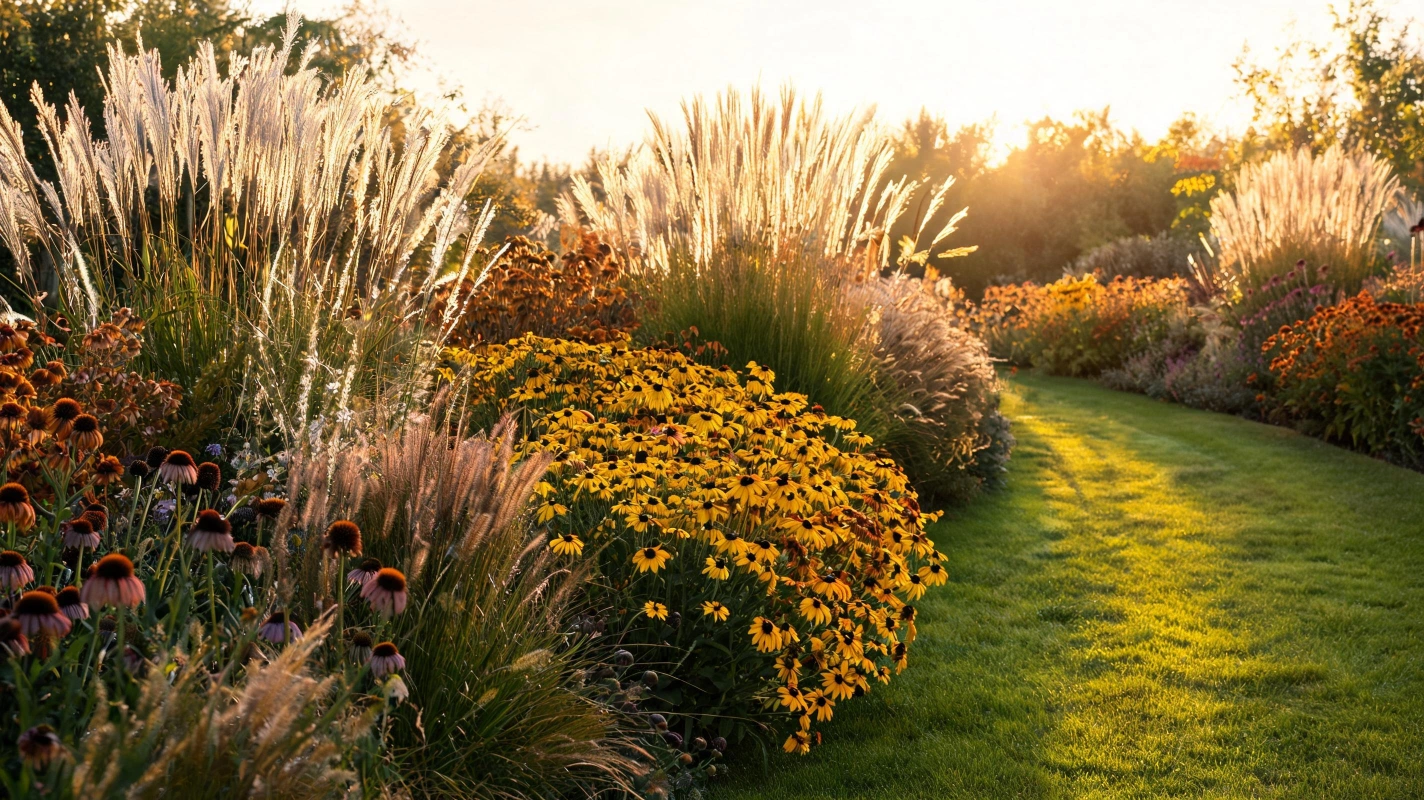
1. Ornamental Grass and Rudbeckia Prairie Border
The ornamental grass and Rudbeckia prairie border is the most breathtakingly dramatic and most genuinely naturalistic fall garden idea available — a planting scheme of such complete, effortlessly beautiful seasonal abundance that it achieves the specific quality of designed wildness that the most admired contemporary garden photography consistently celebrates as the highest form of garden art. The prairie border style draws its visual vocabulary directly from the North American tall grass prairie at its autumn peak — the specific combination of feathery ornamental grass plumes catching low September and October light, the brilliant golden daisy forms of black-eyed Susans persisting into the season’s latest weeks, the architectural seed heads of dried Echinacea providing sculptural interest against the moving softness of the surrounding grasses — creating a garden border of such extraordinary, layered, continuously changing beauty that it looks genuinely different and genuinely spectacular at every hour of the day as the light angle changes and at every week of the autumn season as the planting evolves through its successive stages of late flower, seed head, and finally dried winter structure.
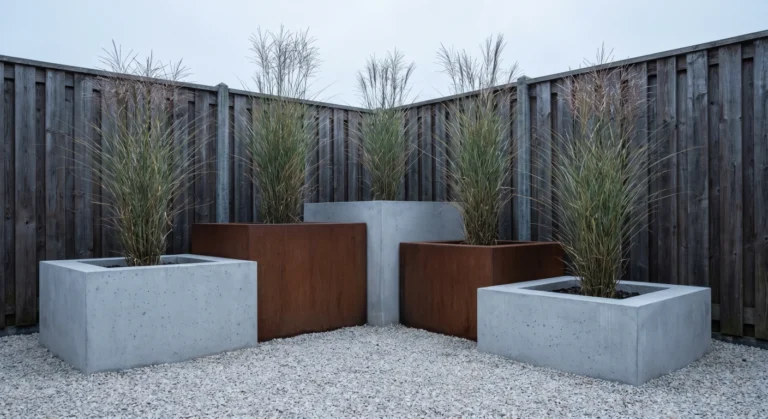
Plant the prairie border in late spring for first-year establishment, selecting Miscanthus sinensis varieties for the tallest structural grasses — ‘Gracillimus’ for its elegant narrow form and beautiful silver autumn plumes, ‘Zebrinus’ for its extraordinary horizontal gold banding on dark green foliage that creates a uniquely decorative leaf texture — and supplementing with lower Pennisetum alopecuroides varieties whose bottlebrush flower heads in burgundy and bronze provide the most beautiful and most tactilely irresistible close-level textures in the border’s mid-height zone. The Rudbeckia planting should be massively generous rather than sparingly dotted — a genuine prairie planting uses hundreds of individual plants of a single species rather than small groups, and the visual impact of a massed Rudbeckia planting of fifty to one hundred plants blooming simultaneously in the border’s most prominent foreground zone is categorically different from the modest contribution of a five-plant grouping that reads as a punctuation mark rather than the bold botanical statement that the prairie border requires.
2. Japanese Maple Focal Point Garden
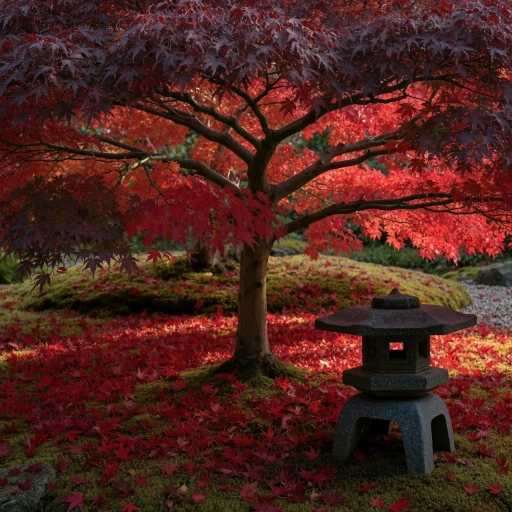
The Japanese maple focal point garden is the most elegantly concentrated and most purely beautiful fall garden composition available — a planting scheme that achieves extraordinary seasonal impact through the complete commitment to a single magnificent specimen tree as the garden’s entire raison d’être, surrounding it with the most carefully chosen and most perfectly scaled complementary elements to create a composition of Japanese garden restraint and completeness that is as beautiful in its every detail as it is spectacular in its seasonal whole. The Japanese maple is the most perfect fall garden tree available in any temperate climate because no other single plant species offers the same combination of extraordinary autumn leaf color across such a varied and beautifully cultivated palette of available cultivars, such refined architectural grace in the naturally layered horizontal structure of mature specimens, and such genuine year-round garden beauty that makes the specimen worth its prominent placement in every season rather than merely the autumn weeks when its color performance is at its most spectacular.
Choose the planting position for the focal point Japanese maple with the specific understanding that the tree’s greatest beauty is backlighting — the specific, incandescent quality of crimson and orange maple leaves seen with the sun behind them rather than illuminating their surface is the most extraordinarily beautiful natural light effect available in the autumn garden, transforming individual leaves into stained glass panels of translucent colored light that makes the tree appear to glow from within with an almost supernatural intensity. Orient the planting so that the maple occupies a position where the house or garden’s primary viewing angle looks toward the tree with the morning or afternoon sun behind it, ensuring that the tree’s peak autumn performance is witnessed in its most magnificent possible lighting condition from the most frequently occupied garden viewing position.
3. Pumpkin and Gourd Kitchen Garden Display
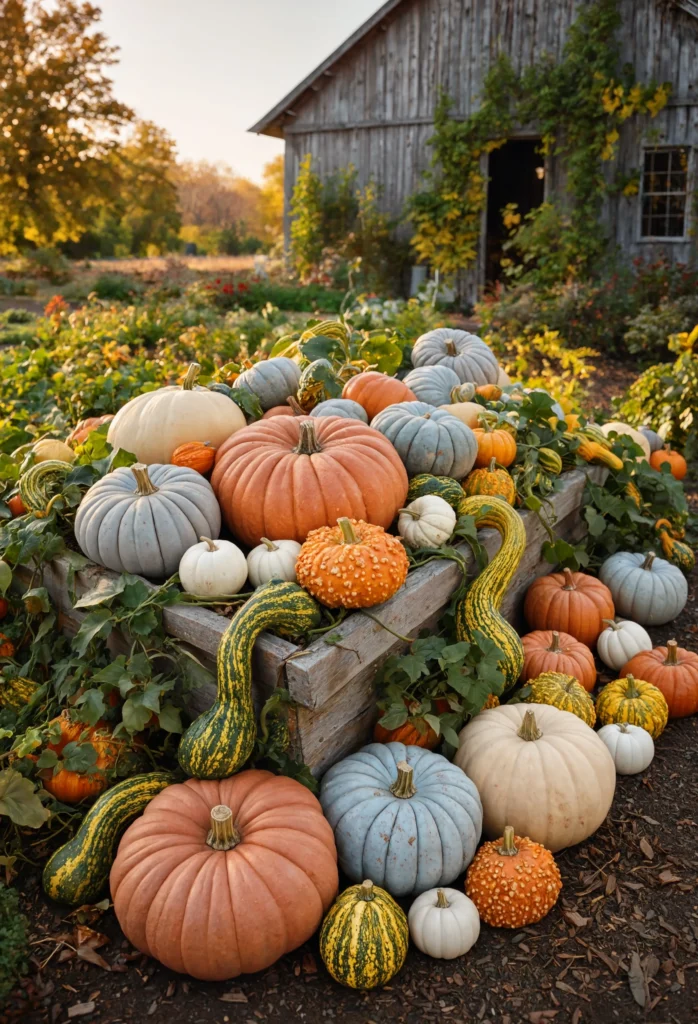
The pumpkin and gourd kitchen garden display is the most abundantly joyful and most genuinely harvest-authentic fall garden display idea available — a celebration of the extraordinary biological diversity and decorative beauty of the Cucurbita genus at its most exuberantly varied, producing a kitchen garden visual spectacle of such complete, astonishing botanical variety that the sheer range of forms, colors, textures, and sizes available within a single plant family becomes itself the most compelling and most completely satisfying decorating statement the autumn garden can make. The specific beauty of a kitchen garden at the peak of pumpkin harvest — the heavy, colorful fruits resting against the earth with their dried tendrils still attached, some having tumbled naturally over raised bed edges to rest on the path below, the dried golden foliage of spent plants providing a papery, crackling background — is a beauty of such complete natural authenticity and such genuine agricultural abundance that no manufactured decorating element of any kind could add to it without diminishing the specific honesty and completeness of what nature has itself arranged.
Grow the pumpkin and gourd harvest display by planting a genuinely varied selection of Cucurbita varieties in late spring rather than defaulting to a single variety — the botanical diversity of a genuinely mixed pumpkin planting, where no two adjacent fruits share the same color, size, or surface texture, is the essential quality that separates a spectacular harvest display from a merely abundant one. Select varieties specifically for their visual impact rather than purely for their culinary value — ‘Atlantic Giant’ for sheer scale that dominates the display from ten feet away, ‘Jarrahdale’ for its extraordinary blue-grey ribbed exterior that provides the most surprising and most sophisticated color note in the autumn palette, ‘Rouge Vif d’Etampes’ for the deep, saturated terracotta red of the classic Cinderella pumpkin that photographs more beautifully than any other variety in warm autumn light, and ‘Lumina’ for the ghostly white that creates the most dramatic tonal contrast against the warm orange and terracotta of its neighboring varieties.
4. Dahlia and Cosmos Late Summer Border
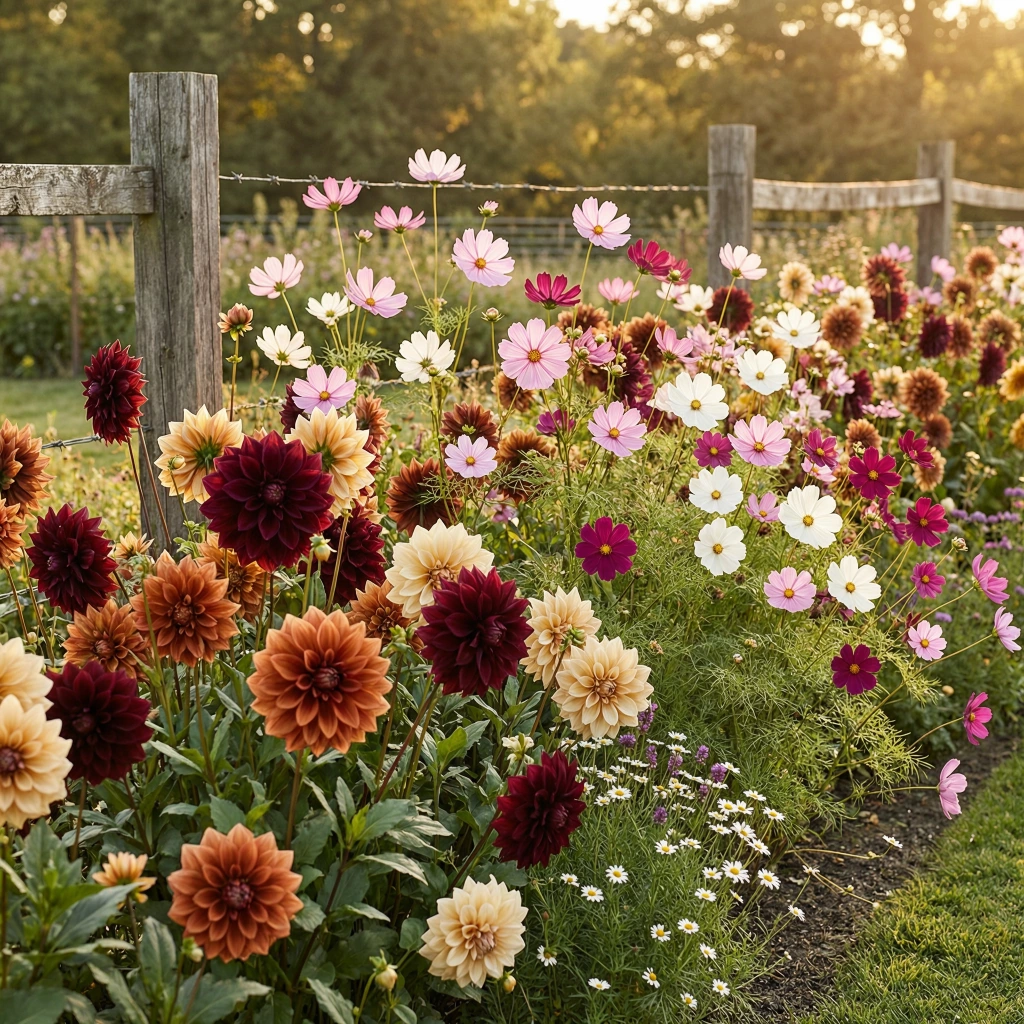
The dahlia and cosmos late summer border is the most extravagantly beautiful and most continuously spectacular fall garden display available to the cutting garden or ornamental border — a planting combination of such complete, generously abundant floral magnificence that it produces the specific quality of garden beauty that stops visitors mid-path, makes them exhale involuntarily, and creates the immediate impulse to photograph and share what they are seeing with every person they love. Dahlias are the undisputed queen of the autumn garden in terms of sheer floral spectacle — no other garden plant produces flowers of such extraordinary size, such staggering variety of form and color, and such complete, undiminished flamboyance at precisely the time of year when every other garden plant is retreating from its summer peak toward winter dormancy.
The cosmos partnership with the dahlias is the essential design decision that elevates the border from spectacular to genuinely sublime — the cosmos provides the light, airy, dancing quality of movement and delicacy that the dahlia’s large, structured, rather formal floral forms require as counterbalance, creating between them the same design tension that the best garden borders always exploit between structural formality and romantic wildness, between the bold statement of a large specimen and the gentle animation of a mass planting of smaller, more delicate flowers surrounding it. Plant cosmos in genuinely generous drifts of forty to fifty plants per color between and around the dahlia planting, choosing the tall Sensation series varieties that reach four to five feet in height and create the most convincingly naturalistic and most romantically beautiful intermingling with the dahlia stems rather than being overwhelmed by them.
5. Topiary and Box Hedge Autumn Garden
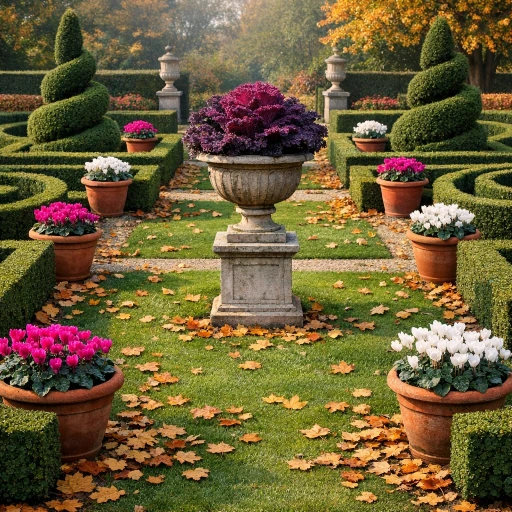
The topiary and box hedge autumn garden represents the most classically elegant and most architecturally controlled fall garden idea available — a seasonal garden approach that celebrates autumn’s richness not through the abandonment of structure to naturalistic planting but through the contrast of permanent geometric order against the seasonal abundance and warmth that autumn contributes in the form of fallen leaves, richly colored flowering bulbs, and the warm tones of terracotta pots filled with cool-season plants. The formal topiary garden achieves its specific, incomparable beauty in autumn precisely because the contrast between the control and permanence of the clipped evergreen structure and the temporary, organic, beautifully disordered contribution of autumn’s own decorative vocabulary — fallen leaves settling naturally in the angles of box hedges, cyclamen flowers appearing at the base of spiral topiary in organic rather than planted distribution — creates a tension between human design intention and natural seasonal process of extraordinary visual interest and genuine garden beauty.
Maintain the box hedge structure in its most impeccable condition by completing the final topiary cut of the season in early September, before the first autumn frosts arrive and before the coolest overnight temperatures slow the recovery of cut surfaces, so that the geometric forms are at their crispest, most precisely defined state throughout the autumn season when they perform their most important visual function as the structural foil against which the autumn planting colors perform. The terracotta pots of Cyclamen hederifolium positioned at the hedges’ base provide the autumn garden’s most perfectly scaled and most completely beautiful small-scale floral contribution — the deeply marbled silver and green ivy-shaped leaves of hardy cyclamen are as beautiful as the flowers they accompany, and the flowers themselves in their delicate, swept-back petal form in deep magenta, pale pink, and pure white are among the most refined and most genuinely beautiful small flowers available for any garden situation in the autumn months.
6. Wild Hedge and Berry Autumn Wall
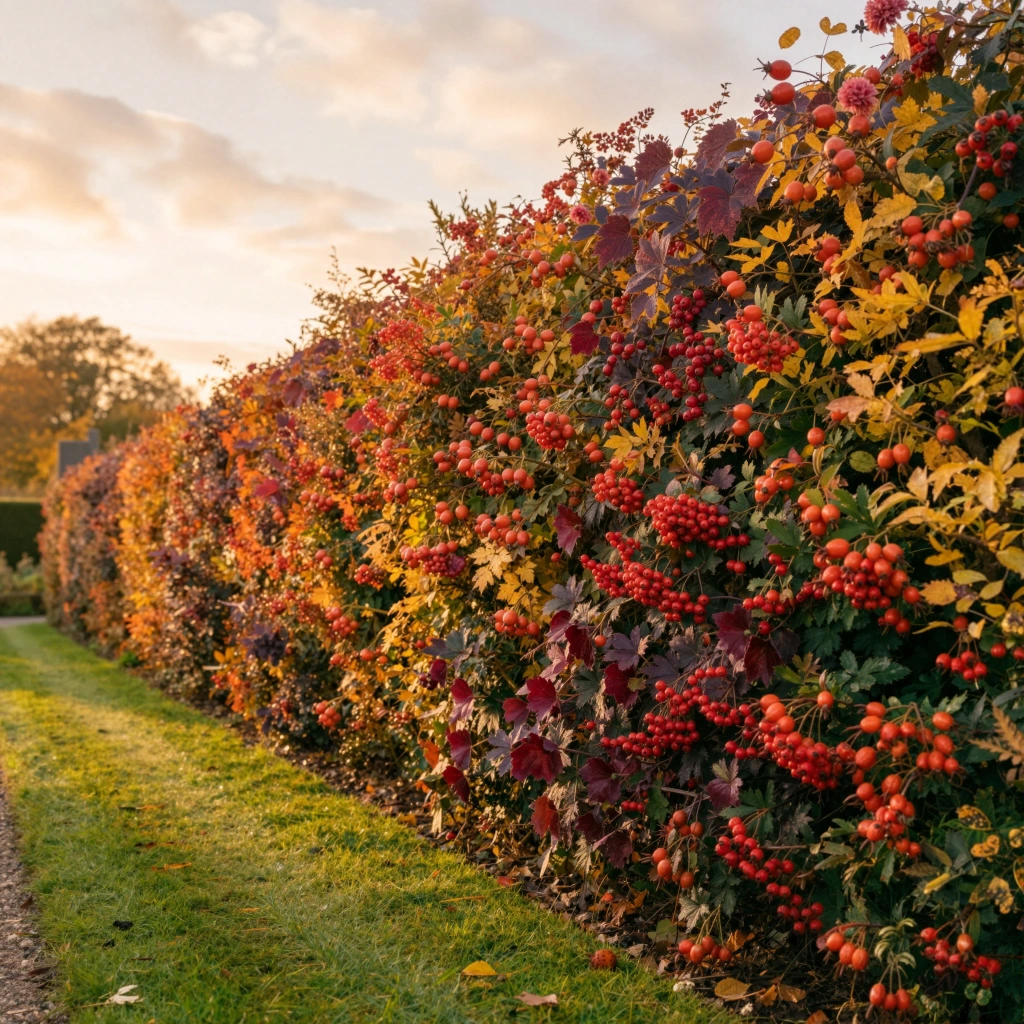
The wild hedge and berry autumn wall is the most naturalistically spectacular and most ecologically generous fall garden boundary treatment available — a planting approach that replaces the conventional single-species garden hedge with a mixed native hedgerow of extraordinary seasonal beauty, year-round wildlife value, and genuinely breathtaking autumn color that rivals the best ornamental borders in its depth of color and variety of berry and foliage interest while simultaneously providing the most important and most irreplaceable ecological resource available to any garden — a native plant community that supports pollinators, nesting birds, overwintering insects, and the complete web of garden wildlife that depends on genuinely diverse native plant communities for its survival and abundance. The mixed hedgerow at autumn peak is one of the most spectacular and most genuinely moving natural spectacles available to the garden visitor — the combination of rose hip orange, viburnum berry red, hawthorn crimson, sloe purple-black, and elder dark purple against the yellowing and reddening foliage of the hedge’s deciduous components creates a wall of such complete, simultaneous color abundance that it challenges the finest ornamental border for sheer decorative impact while requiring none of the intervention, fertilization, or deadheading that the ornamental border demands.
Establish the mixed hedgerow by planting bare root native hedge plants in the most diverse possible species mix during the winter planting window — ideally a combination of at least eight to ten different species in genuinely varied proportions rather than the standard five-species commercial mixes, adding species specifically for their autumn and winter visual contribution including Rosa canina for the most beautiful rose hips available in any British native plant species, Viburnum opulus for its spectacular translucent red berry clusters that glow with extraordinary intensity in low autumn light, and Sorbus aucuparia rowan for its exceptional orange-red berry bunches that appear in late summer and persist through winter providing both spectacular color and the most important food source available to migrating thrushes and fieldfares throughout the autumn and early winter months.
7. Container Autumn Garden with Sedums and Ornamental Kale
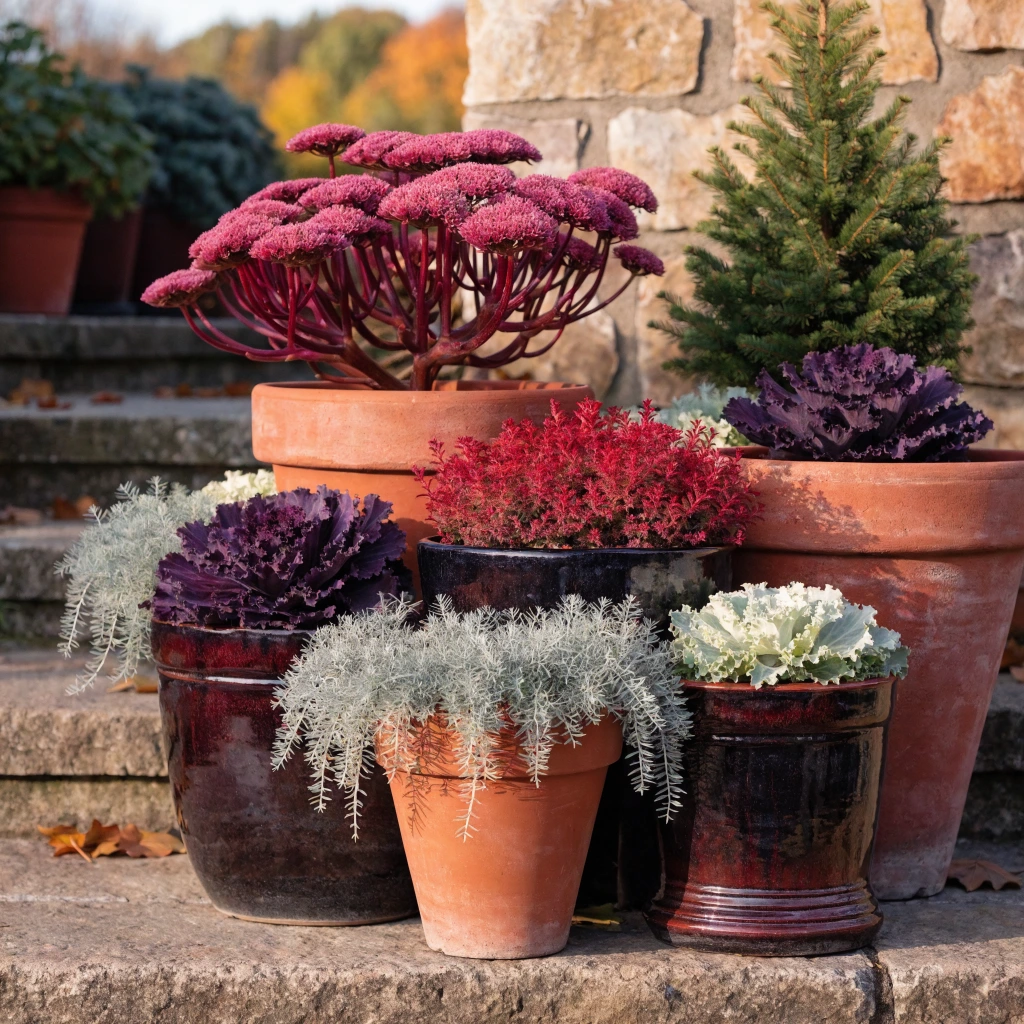
The container autumn garden with sedums and ornamental kale is the most completely styled and most immediately achievable fall garden idea on this list — a container planting approach that creates a spectacular seasonal display of such complete, professional quality and such genuine botanical interest that it genuinely rivals the planted borders of established gardens in its visual impact while requiring none of the bed preparation, soil improvement, or long-term establishment waiting period that planted borders demand. The container autumn planting format is particularly valuable for the garden owner who wants to achieve magazine-quality fall garden photography results in the shortest possible time with the most reliable and most controllable results available in any gardening situation — containers can be positioned, repositioned, grouped, and regrouped with complete flexibility until the exact composition is achieved that produces the most beautiful possible arrangement of the individual plants and their individual contributions to the collective seasonal display.
Sedum spectabile in its deep burgundy-pink late-season flower form is the anchor plant of the autumn container composition — its flat-headed flower clusters held horizontally at exactly the right height to create a strong horizontal plane within the vertical composition of the grouped containers, its deep color providing the most important saturated hue note in the autumn palette, and its extraordinary value to late-season pollinators making it the most ecologically as well as aesthetically justified choice for prominent container placement. Ornamental kale in the most deeply colored available cultivars — ‘Redbor’ for the most intensely purple, almost black crinkled leaf surface, ‘Peacock Red’ for the most beautifully dissected and most ornately decorative leaf form in deep wine red, and ‘White Crane’ for the most dramatically pale and most structurally rosette-formed specimen available — provides the most immediately striking and most photographically spectacular large-scale architectural element available for autumn container planting at any scale or in any situation.
8. Apple Orchard Autumn Garden Scene
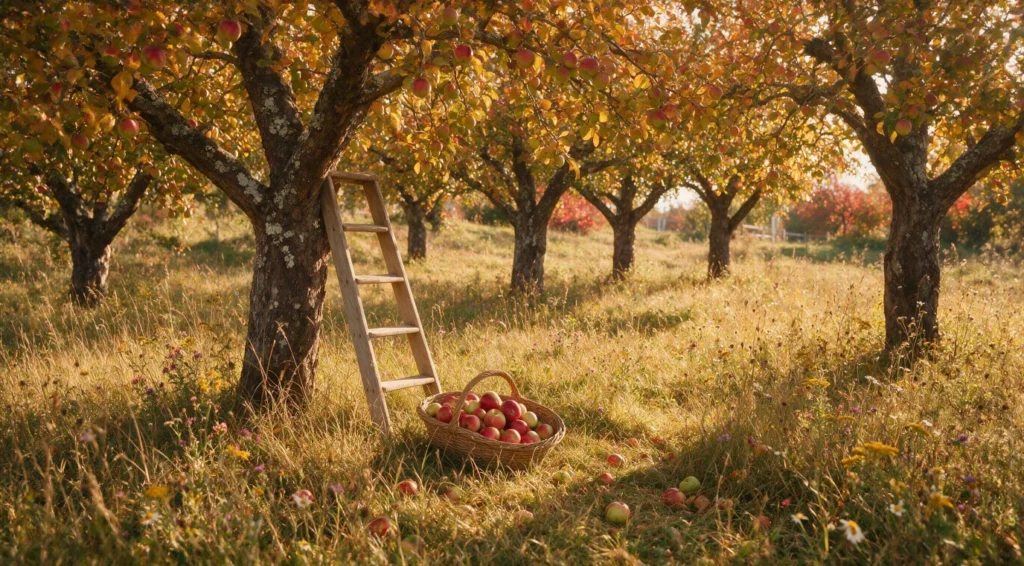
The apple orchard autumn garden scene is the most romantically pastoral and most purely English in its seasonal beauty of all the fall garden ideas on this list — a garden environment of such complete, unhurried, genuinely ancient beauty that it achieves the specific quality of landscape that has been described, painted, and photographed by every generation of British and European garden artists since the earliest days of recorded garden appreciation, because the orchard in autumn, with its gnarled old trees heavy with fruit above a long grass floor scattered with windfalls, is one of the most perfect expressions of the relationship between cultivation and wildness, between human garden intention and the magnificent indifference of natural seasonal process, available in any domestic landscape. The orchard garden requires the longest establishment time of any idea on this list but delivers the most extraordinary long-term seasonal beauty, as mature apple trees in their second and third decades develop the character, the lichen-covered bark texture, and the architectural branch structure that make them genuinely magnificent garden specimens rather than merely fruiting plants in a domestic setting.
The management of the orchard floor is the single most important decision in creating the most beautiful autumn orchard scene — allowing the grass beneath the trees to grow long from July onward rather than maintaining it as a neatly mown lawn creates the naturalistic, romantic, genuinely wild quality that distinguishes a truly beautiful orchard from a merely productive one. The long orchard grass in autumn develops a beautiful mixture of golden seed heads, late wildflowers including field scabious, devil’s bit, and knapweed, and the bronze and amber tones of drying autumn grasses that create a genuinely complex, genuinely alive ground-level botanical world beneath the apple trees that is as beautiful in its own right as the fruit-laden canopy above it.
9. Rose Garden in Autumn Hip Season
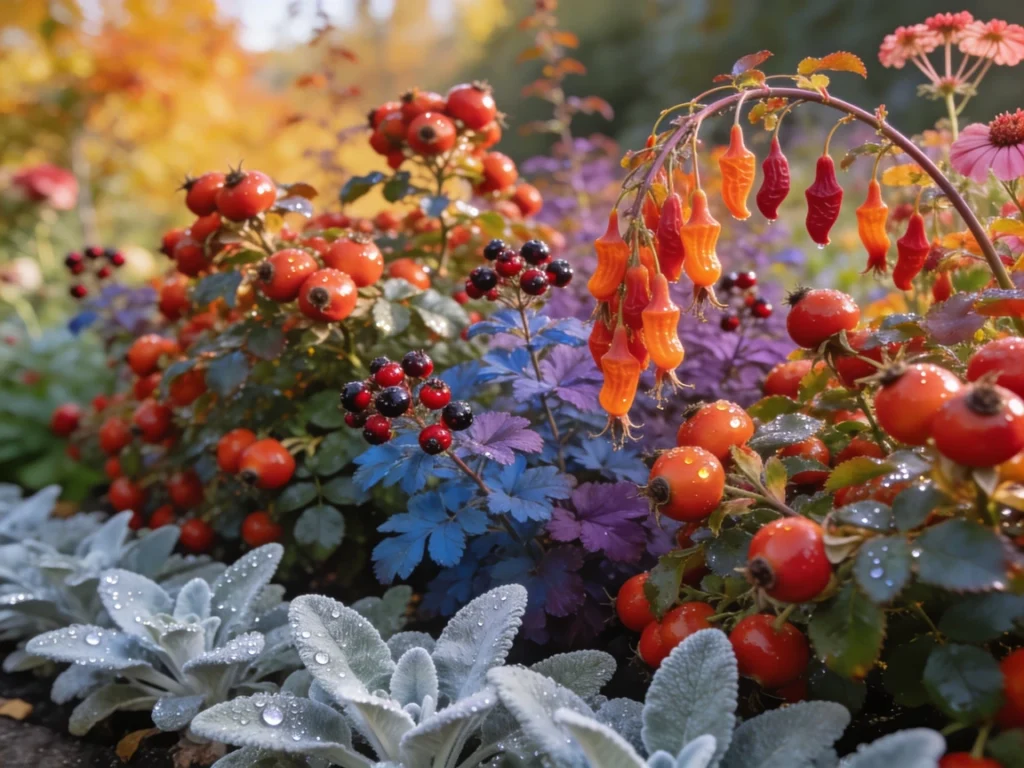
The rose garden in its autumn hip season is the most unexpectedly spectacular and most overlooked fall garden idea available — a seasonal garden display of such extraordinary beauty that most gardeners who have never deliberately planned for rose hip production are genuinely astonished by the richness and completeness of the garden picture that hip-season roses create in September and October, when the architectural forms, the jewel-like colors, and the extraordinary variety of hip shapes and sizes available across different rose species produces a garden border of ornamental interest that rivals, and in many gardeners’ honest assessment exceeds, the spectacle of the same border in June’s full flower. The rose hip garden celebrates the specific beauty of the rose plant beyond and after its flower season — the beauty of the plant’s fruiting body in all its variety of form, from the large, smooth, glossy spheres of Rosa rugosa to the elongated, pendulous, almost exotic flask shapes of Rosa moyesii, from the tiny, clustered, brilliant red spheres of Rosa multiflora to the soft, rounded, amber-orange hips of Rosa canina — creating a botanical display of genuine fascination and genuine visual richness that rewards slow, close examination as richly as it rewards the broader garden view.
Plan the hip-season rose garden by selecting varieties specifically for their hip production quality and beauty rather than for their flower performance alone — a selection that includes Rosa rugosa ‘Roseraie de l’Hay’ for the most spectacular large hip production combined with strongly fragrant summer flowers, Rosa glauca for the most beautiful and most architecturally distinctive grey-blue foliage that turns extraordinary colours in autumn combined with abundant small hip production, and Rosa moyesii ‘Geranium’ for the most dramatically beautiful hip form available in any commonly grown garden rose species. Resist deadheading any of these varieties after their summer flowering season, as the production of hips requires the flowers to be left on the plant to set fruit — a pruning restraint that is simultaneously the most important horticultural decision in the hip garden’s management and the most enjoyable garden management decision available, as it simply requires the gardener to do less rather than more, leaving the plants to complete their own natural seasonal cycle in their own beautiful way.
10. Woodland Garden Autumn Leaf Carpet
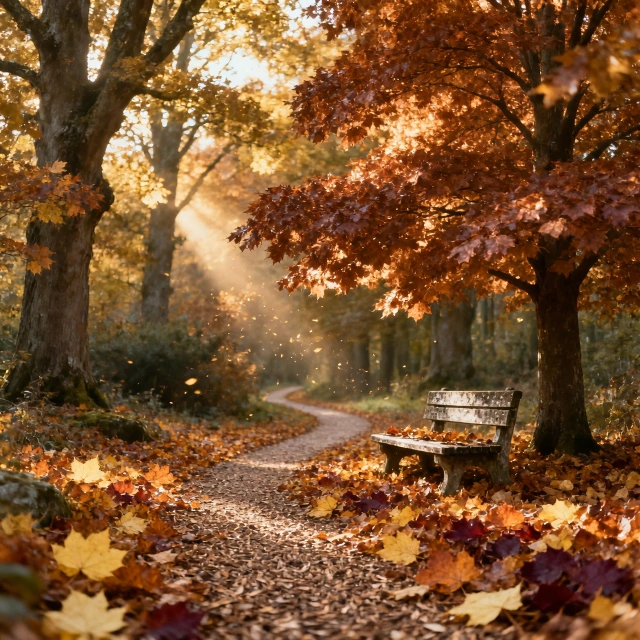
The woodland garden autumn leaf carpet is the most purely seasonal and most genuinely effortless fall garden beauty available — a garden effect created entirely by the natural process of deciduous trees completing their annual leaf fall and the gardener’s deliberate and loving decision to leave the fallen leaves exactly where nature has placed them rather than raking them into bags and removing them from the scene that they have spontaneously, magnificently, and without any human assistance created. The autumn leaf carpet is the most democratic of all fall garden ideas because it requires no planting, no expenditure, no horticultural skill, and no advance planning whatsoever — only the possession of mature deciduous trees and the willingness to recognize that the natural process of leaf fall produces a ground-level botanical display of such extraordinary color depth, such genuinely infinite textural variety, and such completely authentic seasonal beauty that any intervention to tidy, organize, or remove it would be an act of aesthetic vandalism rather than garden maintenance.
The quality of the autumn leaf carpet depends almost entirely on the species diversity of the trees that created it — a leaf carpet composed of leaves from a single tree species, however beautiful that individual species may be, lacks the extraordinary color and textural complexity that a genuine mixed woodland carpet achieves when leaves from oak, beech, maple, hornbeam, cherry, and birch all fall and accumulate together, each species contributing its own specific color range and leaf form to a collective ground-level display of almost painterly visual richness. The oak contributes its warm brown to deep russet tones in large, deeply lobed leaves that curl and curl further as they dry. The beech contributes its extraordinary copper and pale gold in its smaller, more elliptical leaves that catch and hold the light with a specific, papery luminosity. The field maple contributes the most brilliantly yellow leaves available from any British native tree, small and perfectly lobed, that scatter across the darker background of the other species’ contributions like fallen sunshine.
11. Autumn Potager Garden
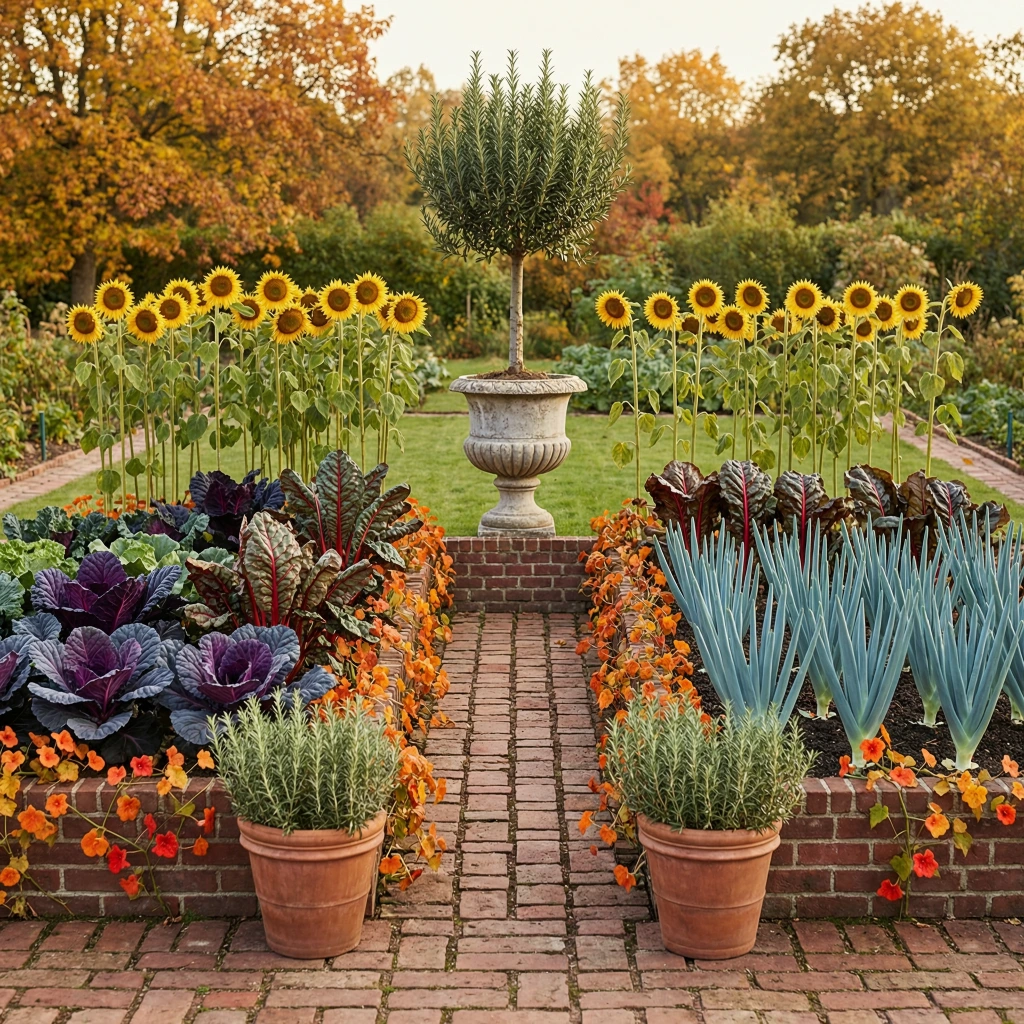
The autumn potager garden is the most complete and most satisfying fall garden idea for the gardener who values the union of beauty and productivity — a kitchen garden designed and planted on the formal French potager principle that the vegetable garden should be as beautiful as it is useful, with every plant selection, bed layout, and plant combination chosen for its decorative contribution as rigorously as for its culinary value, creating a kitchen garden that is as worthy of contemplative appreciation and photographic admiration as any ornamental garden of comparable scale and investment. The autumn potager is in many respects more beautiful than its summer equivalent because the cool-season vegetables that come into their prime in September and October — the brassicas in particular — achieve their most extraordinary ornamental quality in the cool air of autumn, their colors deepening to the most saturated purples, the most vivid crimsons, and the most architectural blue-greens available in any garden plant genus.
Plant the autumn potager for maximum visual impact by treating the cool-season brassica planting as a primarily ornamental rather than purely culinary exercise — choosing Cavolo Nero kale for the most dramatically architectural dark leaf form available, its narrow, deeply crinkled, near-black leaves creating vertical columns of extraordinary Gothic beauty in the raised beds; Rainbow chard for the most vivid and most varied stem color palette available in any vegetable plant, its red, yellow, orange, pink, and white stems creating a brilliantly colored abstract painting at ground level; red Drumhead cabbage for the most perfectly spherical and most richly saturated purple forms available in the autumn kitchen garden; and Romanesco broccoli for the most breathtaking and most mathematically extraordinary vegetable form in cultivation, its lime-green fractal spiral heads achieving a geometric complexity of such genuine perfection that every visitor to the potager who sees it for the first time regards it with a mixture of botanical wonder and mathematical astonishment that no other garden plant in any season reliably produces.
12. Meadow Garden with Autumn Seed Heads
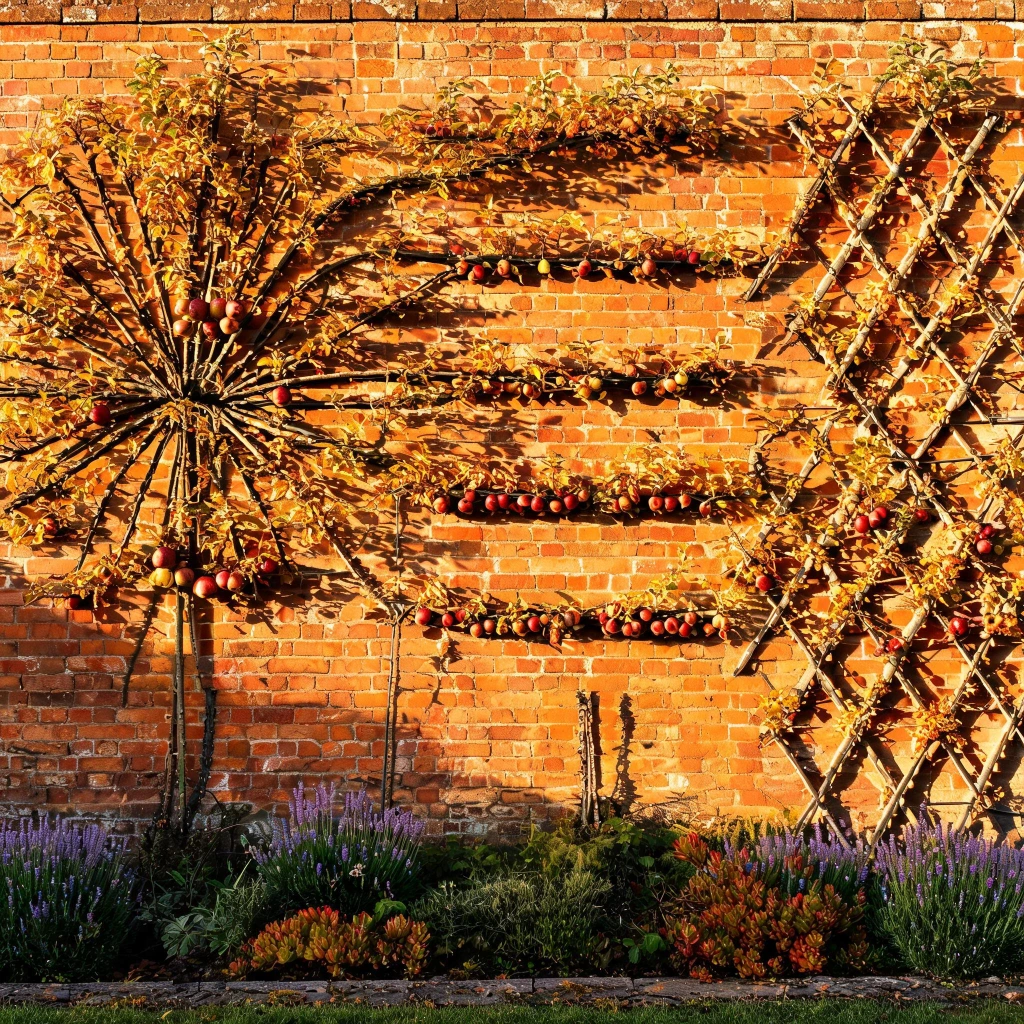
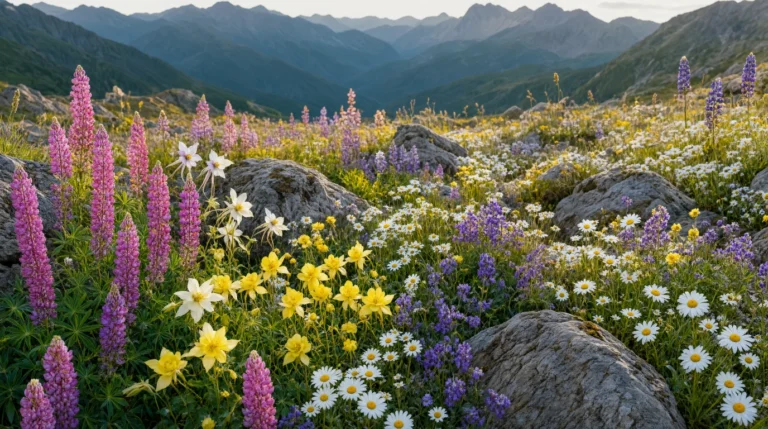
The meadow garden with autumn seed heads is the most artistically inspired and most genuinely painterly fall garden idea available — a garden approach that treats the dried, finished botanical remains of the summer’s wildflower meadow not as evidence of seasonal decline requiring removal but as one of the garden’s most extraordinarily beautiful seasonal expressions, a gallery of natural sculptural forms of such variety, such complexity, and such completely unique botanical character that the meadow in its autumn seed head phase creates a more beautiful and more intellectually fascinating garden picture than the meadow in its summer flowering peak. The autumn seed head garden is the most explicitly botanical of all fall garden ideas because it invites the viewer to look with genuine attention at the specific physical structures that plants have evolved for seed dispersal — the perfect spherical geometry of the allium seed head, the flat architectural disc of the scabious, the plumed efficiency of the clematis seed — and to find in that close attention a quality of botanical wonder and genuine aesthetic appreciation that the more obviously beautiful flowering phase of the same plants rarely generates with the same depth and the same specificity.
Establish the seed head meadow by selecting plant species specifically for the beauty of their dried autumn forms rather than — or in addition to — the beauty of their summer flowers. Allium giganteum and A. christophii produce the most dramatically beautiful large spherical seed heads available in any garden plant species, their perfectly geometric orb forms on tall bare stems creating the most immediately striking and most photographically spectacular seed head presence in any meadow composition. Scabiosa columbaria wildflower creates the most delicately beautiful small disc seed heads, their geometric precision becoming visible only in the dried form and creating at close range a display of botanical structural beauty that is entirely invisible at the casual viewing distance from which most meadow visitors observe the summer flowers. Phlomis russeliana produces perhaps the most architecturally beautiful seed head form of any commonly grown garden perennial — its tiered whorls of dried seed calyces encircling the stem at regular intervals create a botanical candelabra of extraordinary formal beauty that persists through autumn, winter, and into early spring with complete structural integrity.
13. Espalier Fruit Tree Wall Garden
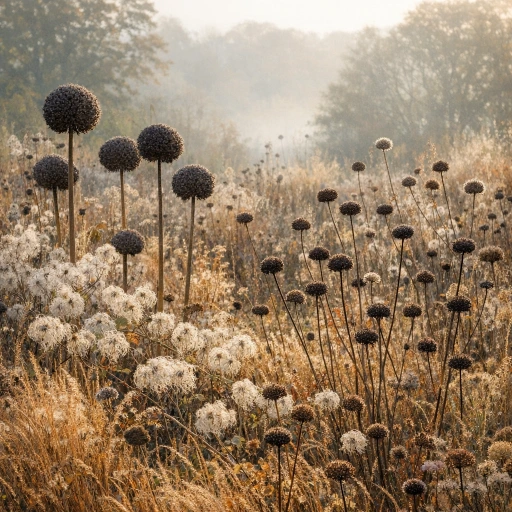
The espalier fruit tree wall garden is the most architecturally ambitious and most permanently beautiful fall garden idea available for a walled or enclosed garden space — a trained fruit tree system of such extraordinary formality, such complete union of horticultural science and decorative art, and such genuine long-term increasing beauty that it represents the highest form of the gardener’s art applied to a practical fruiting plant, creating a garden wall of living, seasonal, completely magnificent botanical architecture that improves in beauty with every year of skilled management and careful training. The espalier fruit tree achieves its specific, incomparable beauty in autumn through the combination of ripening fruit in the most decorative colors and forms available in the apple and pear world — the deep crimson of ‘Spartan’, the bright striped red of ‘Discovery’, the warm russeted gold of ‘Egremont Russet’, the elongated green-gold of ‘Doyenné du Comice’ — against the warm terracotta of the brick wall that has been acting as a heat store throughout the summer, and the golden to amber autumn foliage of the trained trees that frames and decorates the geometric branch patterns as they transition toward their leafless winter architectural form.
Select the espalier training system appropriate to the specific wall dimensions, aspect, and long-term aesthetic vision of the garden — the horizontal tier system for the most classical and most broadly applicable trained tree form, the fan system for the most graceful and most fluid trained silhouette against a wall of any scale, the Belgian fence for the most geometrically dramatic and most formally ambitious trained pattern available, requiring significant skill and patience to establish but delivering the most striking and most photographically spectacular trained tree wall installation possible in any domestic garden context. Match specific variety choices to the wall’s aspect — the warmest south and west-facing walls can ripen the finest dessert varieties including ‘Cox’s Orange Pippin’, ‘Doyenné du Comice’, and ‘Conference’, while the cooler north and east-facing walls are better suited to culinary varieties and early-ripening dessert varieties that do not require the accumulated summer warmth that the finest keeping dessert varieties demand for their fullest flavor development.
14. Autumn Night Garden with Lighting
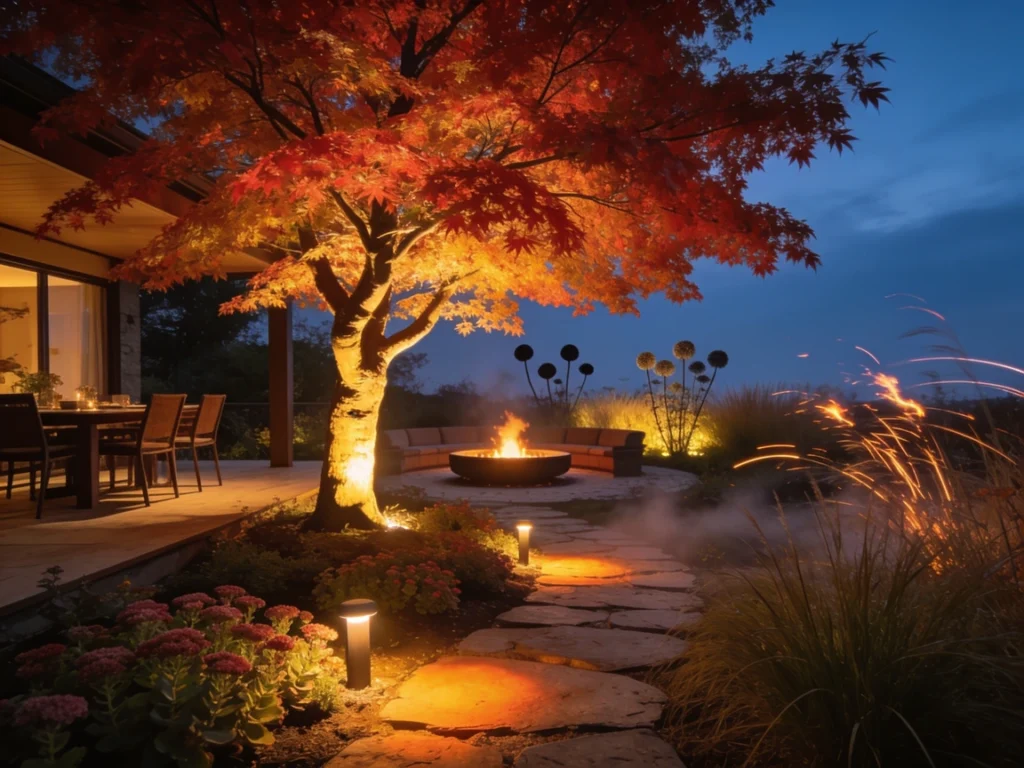
The autumn night garden with lighting is the most transformatively dramatic and most completely unexpected fall garden idea on this list — a garden design concept that extends the extraordinary visual beauty of the autumn garden beyond the daylight hours and into the evening, creating a nocturnal garden landscape of such complete, theatrical, genuinely breathtaking beauty that the garden becomes more spectacular at night than it is by day, its architectural forms illuminated with precise directional light that creates drama, mystery, and the specific, irreplaceable quality of a well-lit garden scene that no amount of daylight illumination can replicate. The autumn night garden exploits the specific advantages that the season’s particular botanical materials offer in artificially lit contexts — the skeleton of seed heads and dried grass plumes creates extraordinary silhouette and shadow effects when backlit, the crimson and amber leaves of illuminated deciduous trees glow with an intensity and depth of color that daylight cannot achieve, and the bare branches of deciduous specimens cast the most dramatically beautiful shadow patterns on illuminated walls and surfaces that any plant structure can produce in any season.
Design the autumn night lighting scheme around the concept of layered light at multiple heights rather than a single uniform lighting level — uplighting positioned at the base of the garden’s most structurally spectacular specimens including Japanese maples, standard trees, and ornamental grasses, creating dramatic light-from-below silhouettes that reveal the beautiful architectural structure of each specimen in ways that overhead daylight never allows; path lighting at ground level in warm amber LED that illuminates the walking surface safely while creating beautiful pools of warm light along the garden’s movement routes; and festoon or string lighting woven through the branches of larger trees or suspended between posts above a seating area, providing the most romantically atmospheric overhead light quality available for evening garden entertaining in the most beautiful and most gently human season of the outdoor year.
15. Raised Bed Autumn Harvest Display
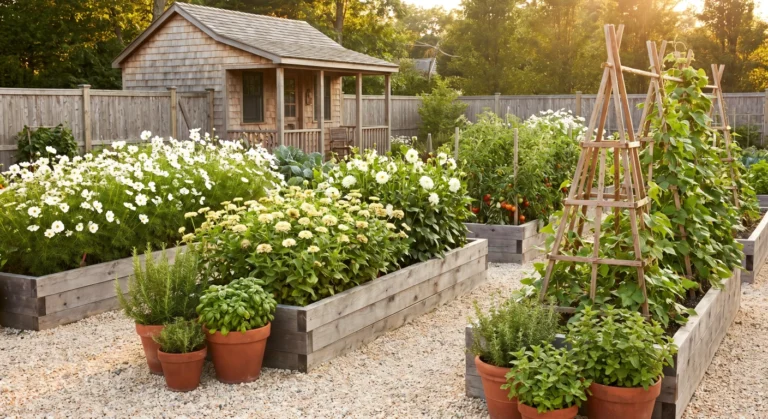
The raised bed autumn harvest display is the most productively beautiful and most genuinely satisfying fall garden idea for the kitchen gardener who wants their vegetable garden to achieve true magazine-quality visual beauty at precisely the moment of the season’s greatest agricultural abundance and biological completeness. The raised bed kitchen garden in full autumn harvest mode represents the garden at its most completely achieved seasonal state — the spring’s patient seed sowing, the summer’s careful cultivation, the season’s disciplined watering and feeding all culminating in this moment of extraordinary botanical abundance when the garden simultaneously contains ripening fruits, drying seed heads, still-productive foliage vegetables, and the first beautiful evidence of cool-season planting that extends the kitchen garden’s productivity and decorative interest through the autumn and into winter. The raised bed format concentrates this abundance within clean, defined boundaries that create a controlled, visually legible display of the garden’s productivity in a format that photographs with exceptional clarity and compositional satisfaction.
The autumn harvest display achieves its most spectacular quality when the beds are not cleared and tidied of their summer planting before they have contributed their maximum visual interest — leaving dried corn stalks standing on their roots rather than cutting them to the ground, allowing climbing bean plants to dry and rattle in their full vertical structure on their bamboo supports, keeping pumpkins and squash on the vine until genuinely ripe rather than harvesting prematurely for storage, and allowing the dried flower heads of any ornamental plants included in the potager to remain on their stems until the autumn wind has finally exhausted their structural beauty — creating a harvest display of maximal complexity and richness rather than the tidy emptiness of a cleared and prepared garden awaiting its winter cover.
16. Fern and Moss Autumn Shade Garden
The fern and moss autumn shade garden is the most serene and most quietly extraordinary fall garden idea available for the challenging north-facing or heavily shaded garden space — a planting approach that transforms the difficult garden condition most commonly associated with limitation and disappointment into one of the most beautiful and most intimate seasonal garden environments available, using the specific plants that genuinely thrive in the conditions that cause most garden favorites to struggle and decline. The shade garden in autumn possesses a specific quality of beauty entirely different from the more extrovert seasonal spectacle of the sunny border or the orchard — a quieter, more contemplative, more intimately scaled beauty of deep green and warm amber that reveals itself gradually and rewards patient, close observation more generously than it rewards the quick glance from a distance, creating a garden environment of genuine calm and genuine botanical interest that is the most restorative and most personally nourishing of all the autumn garden experiences available.
Establish the moss carpet as the foundational layer of the shade garden by transplanting genuinely diverse moss species collected from different microhabitats within the garden or its immediate surroundings — the specific variety of texture, color, and form between cushion moss, sheet moss, and feather moss creating a ground-level botanical tapestry of far greater visual complexity and genuinely greater natural beauty than any single species moss planting could achieve over the same area. The autumn emergence of Cyclamen hederifolium flowers directly from the moss carpet — before their leaves appear, the flowers pushing up naked from the bare tuber at soil level and opening in the most delicate and most beautifully formed small flowers available in the autumn shade garden palette — creates the most perfectly magical and most genuinely surprising botanical moment available in the autumn garden, as guests who are familiar with the summer appearance of the bare moss carpet discover the cyclamen flowers appearing among it in September and October like the most exquisite miniature jewels scattered by a careful and loving hand across the deep green surface.
17. Climbing Rose and Wisteria Wall in Autumn
The climbing rose and wisteria wall in autumn is the most romantically beautiful and most architecturally magnificent fall garden wall treatment available — a combination of two of the most spectacular and most beloved climbing plants in the entire temperate garden palette, each contributing completely different but completely complementary qualities to the autumn wall picture in a partnership of such botanical generosity and such layered seasonal richness that the result is genuinely one of the most beautiful and most frequently photographed garden scenes available at any season in any garden style. The specific beauty of the climbing rose and wisteria combination in autumn is entirely different from their more obvious summer partnership — the wisteria’s extraordinary clear butter-yellow autumn foliage color transforms the plant from its summer role as a structural green presence into the wall garden’s most dramatically beautiful autumn foliage display, creating a wall of such warm, luminous golden color that it appears to generate its own light against the stone or brick behind it on overcast autumn days when actual sunlight is in short supply.
The partnership of autumn rose color — the deep amber, warm cream, and apricot tones of repeat-flowering climbing roses in their October flush, combined with the brilliant orange and red of rose hips produced by earlier-blooming clusters — against the wisteria’s golden foliage creates a layered wall picture of such complete, harmoniously warm color abundance that it requires no supplementary planting, no additional decoration, and no human embellishment of any kind to achieve genuine magazine-quality beauty. The most beautiful climbing rose varieties for this autumn partnership are those that combine both late-season reflowering and attractive hip production — Rosa ‘Albertine’ for its extraordinary perfume and warm copper-salmon flowers, R. ‘Gloire de Dijon’ for its deep apricot-yellow tones that harmonize most beautifully with the wisteria’s golden foliage, and R. ‘Zephirine Drouhin’ for its thornless stems and continuous deep pink flowers that continue the latest into autumn of any climbing rose variety available in cultivation.
18. Autumn Fire Pit Garden with Surrounding Planting
The autumn fire pit garden with surrounding planting is the most completely seasonal and most genuinely multi-sensory fall garden experience available — a garden design concept that addresses the full richness of the autumn outdoor experience, combining the extraordinary visual spectacle of carefully chosen autumn planting with the irreplaceable warmth, light, fragrance, and social magnetism of a well-positioned fire pit to create an outdoor garden room of such complete, enveloping, sensory-rich beauty and warmth that it extends the usable outdoor season deep into autumn and genuinely competes with the most comfortable interior room in the house for the preference of anyone fortunate enough to experience it on a fine October evening. The fire pit is the most socially transformative single garden element available for the autumn garden — its warmth making the season’s cooler evening temperatures not merely tolerable but genuinely pleasurable, its light creating a dramatic nocturnal garden environment that the surrounding autumn planting inhabits with extraordinary beauty in the warm amber illumination of the flames, and its ancient, deeply instinctive social magnetism gathering people around it in the spontaneous, relaxed, completely unselfconscious way that no other garden furniture or feature achieves with the same ease and the same completeness.
Design the planting that surrounds the fire pit garden specifically for its performance in evening firelight rather than only for its quality in daytime conditions — the plants that appear most beautiful in firelight are those that possess either strongly backlightable qualities, like the feathery plumes of Miscanthus grasses that catch amber light on their individual fiber surfaces to create a warm, glowing halo around each plume, or deeply saturated color in shades of orange, amber, and burgundy that are amplified rather than altered by the warm color temperature of firelight. Cotinus coggygria ‘Royal Purple’ positioned beyond the seating circle provides the most dramatic and most spectacular fire-lit backdrop available — its deeply saturated burgundy-purple foliage turning to brilliant orange-red in autumn and appearing, when illuminated from the front by firelight against the dark evening sky beyond, to be genuinely on fire itself, creating an involuntary optical effect of such complete, stunning beauty that every person present in the fire pit garden on a perfect October evening falls briefly silent in collective appreciation of what they are seeing.