17 Modern Farmhouse Garden Ideas Where Rustic Meets Contemporary
1. Black Steel Raised Garden Beds
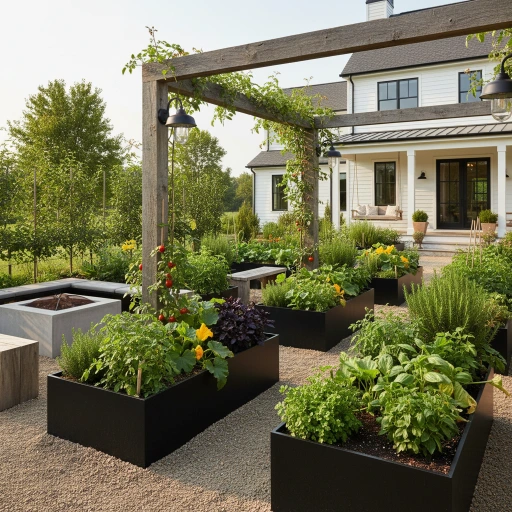
Black powder-coated steel raised garden beds represent the single most defining and most immediately recognizable element of the modern farmhouse garden aesthetic, combining the clean, architectural precision of contemporary industrial design with the productive, deeply practical tradition of kitchen garden growing that has been central to farmhouse domestic life for centuries — creating garden beds of such complete, resolved visual elegance and genuine horticultural functionality that they have rapidly become the most widely aspirational and most consistently Pinterest-saved garden design element among homeowners seeking to unite contemporary design sensibility with authentic rural growing tradition in their outdoor spaces. The matte black steel finish creates a striking visual contrast against the green of growing vegetables, the warm brown of quality garden soil, and the white or grey painted timber of the modern farmhouse exterior that positions these beds as deliberate, confident design statements rather than merely functional growing infrastructure.
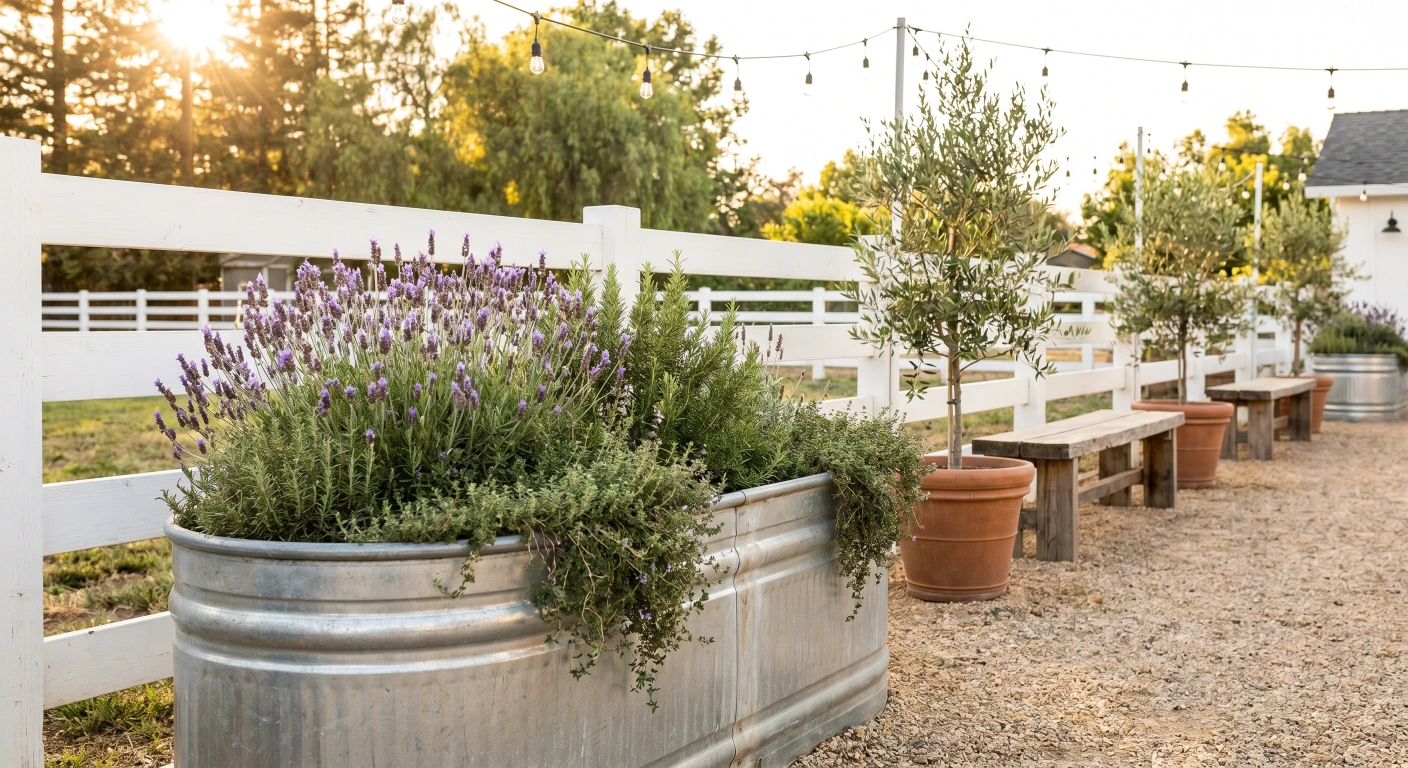
The practical advantages of powder-coated steel raised beds extend considerably beyond their obvious aesthetic contributions to the modern farmhouse garden — their walls warm the soil several weeks earlier in spring than unraised ground-level beds, extending the productive growing season with genuine horticultural benefit; their elevated sides exclude ground-level pests and reduce the back strain of kneeling that conventional ground-level gardening imposes; their durable steel construction requires no maintenance, painting, or replacement for decades unlike timber-framed alternatives that deteriorate through seasonal moisture exposure; and their clean, defined geometry creates precise, orderly productive garden layouts of the formal kitchen garden tradition that complements the modern farmhouse aesthetic’s characteristic combination of clean architectural lines with abundant natural growing. These exceptional garden features consistently generate the highest engagement from audiences seeking genuinely beautiful, genuinely productive modern farmhouse gardens.
2. Galvanized Water Trough Planters
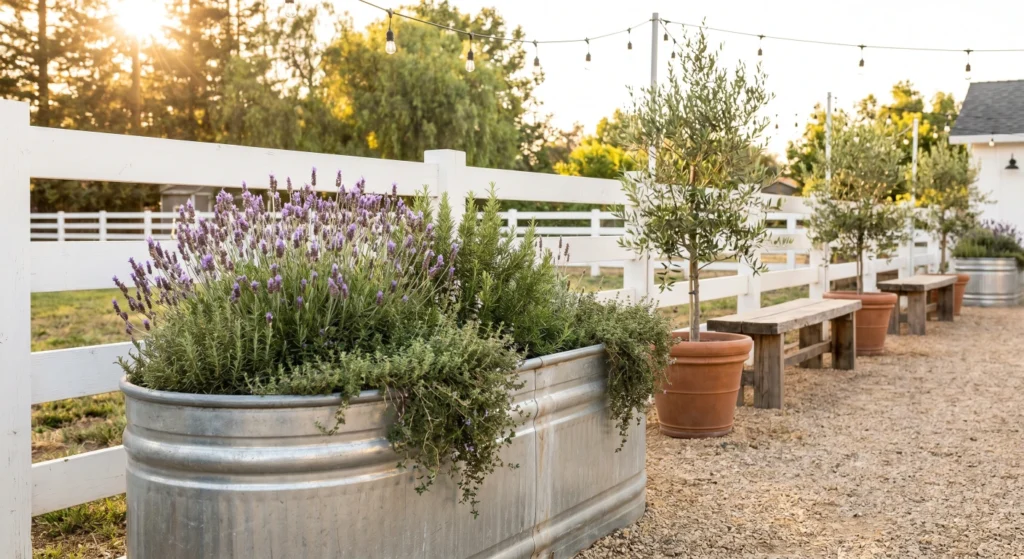
Galvanized metal water troughs repurposed as generous, characterful garden planters represent one of the most authentically farmhouse-rooted and most visually distinctive modern farmhouse garden ideas available — their large, oval or rectangular forms providing planting volumes of considerable horticultural generosity, their distinctive grey galvanized metal surface developing a beautiful, subtly varied patina of weathering that communicates genuine agricultural authenticity and honest material age with a visual character that purpose-made decorative planters, however expensive or carefully designed, simply cannot replicate without the irreplaceable quality of genuine working provenance. The galvanized trough planter embodies the modern farmhouse garden’s most fundamental design philosophy: finding and celebrating the beauty in honest, purposeful farm objects repurposed with creative intelligence and genuine aesthetic appreciation.
Planting galvanized troughs with abundant, overflowing combinations of lavender, rosemary, trailing herbs, ornamental grasses, and seasonal flowering plants creates the modern farmhouse garden’s most effortlessly beautiful and most photographically irresistible planting vignette — the contrast between the cool, industrial character of the weathered galvanized metal and the soft, natural exuberance of abundant plant growth producing a productive tension of materials and forms that perfectly encapsulates the rustic-meets-contemporary aesthetic duality at the heart of the modern farmhouse garden design philosophy. Positioning galvanized trough planters along a white painted fence line, flanking a barn door entrance, or arranged in a casual grouping on a gravel courtyard surface creates planting compositions of considerable visual impact and genuine farmhouse character that connect the contemporary garden directly to the agricultural working traditions from which the modern farmhouse aesthetic draws its most authentic and most enduring design inspiration.
3. White Painted Post and Rail Fencing
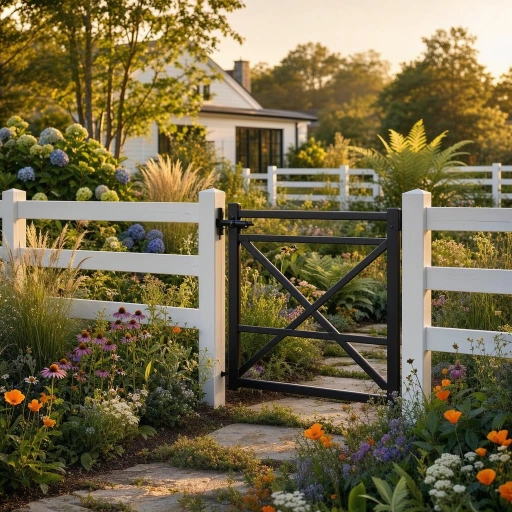
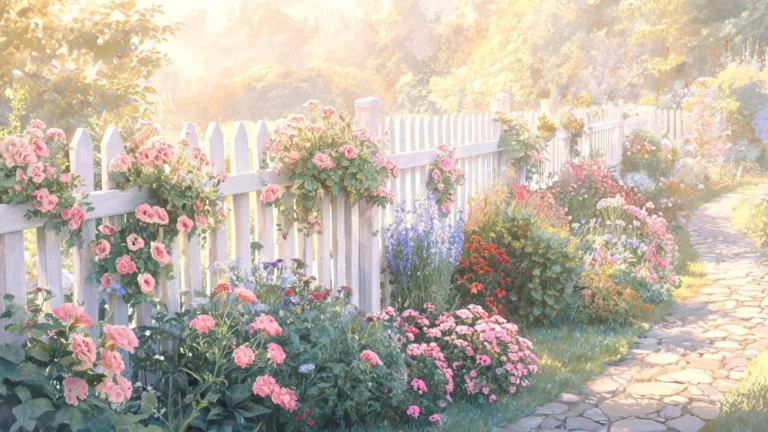
White painted post and rail fencing creates the modern farmhouse garden’s most immediately recognizable perimeter statement — its crisp, clean horizontal rail lines providing a visual boundary of such architectural clarity and period-authentic farmhouse character that it simultaneously defines the garden space with confident geometric precision and connects the contemporary outdoor design directly to the centuries-long tradition of American and European agricultural landscape where painted timber rail fencing has served as the definitive boundary marker of productive farmland, paddock, and domestic homestead with a simplicity and honest functionality that no contemporary designed fencing alternative approaches in terms of genuine rural authenticity. The freshly painted white post and rail fence is a powerful visual signal — it says farmhouse with immediate, universal legibility.
The contemporary interpretation of post and rail fencing in the modern farmhouse garden elevates this traditional agricultural boundary element through the quality of its timber selection, the precision of its installation, and the deliberate contrast it creates with adjacent design elements of more obviously contemporary character — black powder-coated steel garden gates, modern rectilinear planting beds, architectural concrete pathways, and sleek outdoor lighting fixtures that position the white timber fence as a deliberately chosen rustic element within an overall garden composition of considerable contemporary design sophistication rather than a default heritage choice made without design awareness. Planting a low, informal wildflower meadow or cottage garden border along the inner face of the white fence — allowing naturalistic planting to soften the fence line’s clean geometry with organic plant abundance — creates a modern farmhouse garden boundary of exceptional beauty that combines structural architectural clarity with the loose, generously growing plant character that the farmhouse garden aesthetic most deeply celebrates.
4. Gravel Courtyard with Herb Wheel
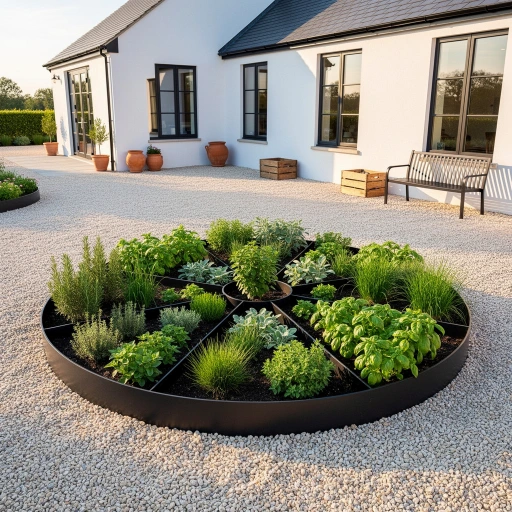
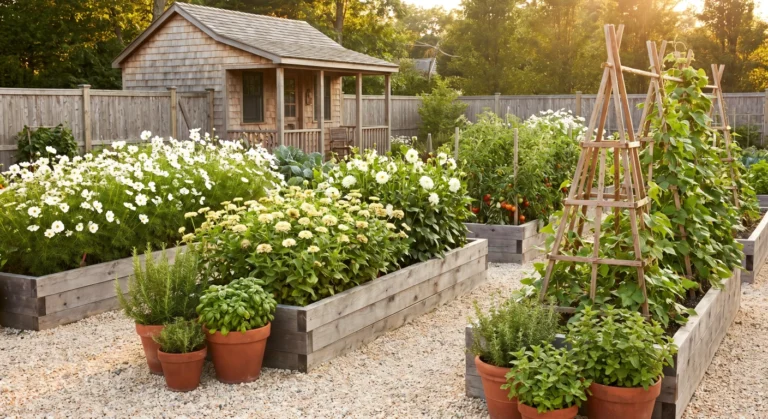
A gravel courtyard centered on a traditional herb wheel planting — its circular form divided into geometric sections by low black steel or reclaimed brick edging, each segment planted with a different culinary or medicinal herb whose varying heights, textures, and seasonal colors create a productive growing display of considerable ornamental beauty — creates the modern farmhouse garden’s most complete expression of the contemporary kitchen garden tradition, combining the formal geometry of the historic physic garden with the clean, contemporary material palette of modern garden design in a courtyard composition of extraordinary visual coherence and genuine horticultural productivity that serves both the aesthetic ambitions of the modern farmhouse garden and the practical needs of a working kitchen with equal grace and effectiveness. The herb wheel is simultaneously a functional growing structure and a garden ornament of genuine formal beauty.
Surrounding the herb wheel with a generous gravel courtyard in warm cream or golden gravel rather than conventional grey or slate tones creates a ground surface of considerable warmth and Mediterranean informality that complements the modern farmhouse aesthetic’s characteristic combination of rustic material warmth with contemporary design precision — the loose, permeable gravel providing excellent drainage for the herb wheel’s drought-tolerant plantings while creating the informal, relaxed courtyard character of the classic Provençal farmhouse garden that has inspired so much of the contemporary rural garden design movement. Edging the gravel courtyard with a clean band of black steel lawn edging or reclaimed farmhouse brick creates a satisfying material transition between the gravel surface and surrounding lawn or planted borders that maintains the contemporary precision of the modern farmhouse garden’s characteristic clean-line aesthetic throughout the entire garden composition.
5. Barn Door Garden Gate
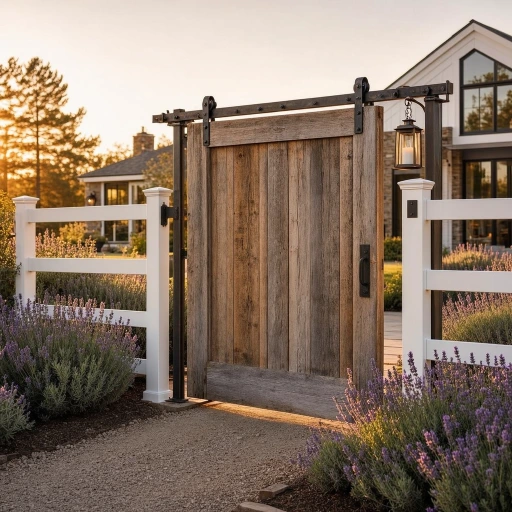
A sliding barn door garden gate — its large, weathered timber panels hung on exposed black steel track hardware with the same confident industrial-agricultural aesthetic that the interior barn door trend has brought to modern farmhouse home design — creates the modern farmhouse garden’s most architecturally dramatic and most culturally resonant entrance statement, transforming the practical requirement of a garden boundary opening into a genuine design moment of considerable visual impact and authentic farmhouse character that sets the aesthetic tone for the entire garden experience that lies beyond it. The barn door gate brings to the exterior landscape the same creative repurposing of working agricultural elements that defines the modern farmhouse interior design philosophy, creating a seamless design narrative that flows from house through garden with consistent aesthetic language and genuine material continuity.
The contrast between the warm, organic texture of natural or whitewashed timber barn door panels and the cool, precise geometry of their black powder-coated steel track hardware and fixing brackets creates the same productive material tension that characterizes the most successful modern farmhouse garden designs throughout — the rustic warmth of natural aged timber providing the authentic rural character, the clean industrial precision of the black steel hardware providing the contemporary edge, and the combination of both producing a design statement of greater sophistication and greater visual interest than either material could achieve in isolation from the other. Flanking the barn door garden gate with lavender-planted white post fencing on each side, and positioning a cluster of terracotta pots with rosemary topiaries at the garden entrance creates a complete arrival composition of genuine modern farmhouse charm and considerable horticultural beauty.
6. Wildflower Meadow with Mown Path
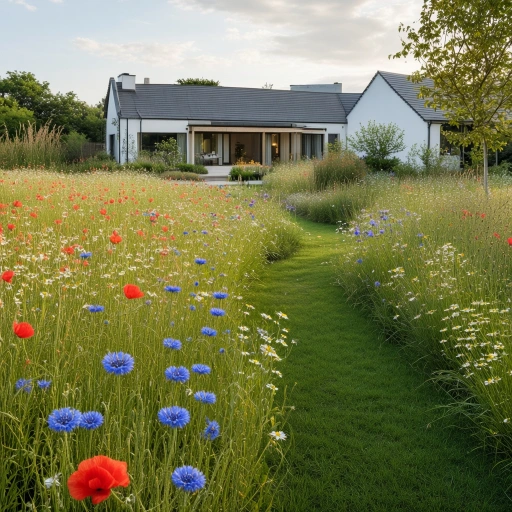
A wildflower meadow with a mown grass path cutting through its flowering abundance creates the modern farmhouse garden’s most romantically beautiful and most ecologically valuable planting feature — its mix of native wildflowers providing irreplaceable habitat for bees, butterflies, moths, and beneficial insects that make a measurable positive contribution to local biodiversity while simultaneously creating a garden landscape of such natural beauty, seasonal changing character, and genuine countryside authenticity that it consistently generates the most passionate admiration from garden visitors and the most enthusiastic photography from homeowners who have discovered the extraordinary visual reward that a well-established wildflower meadow delivers throughout the long, abundantly flowering growing season. The wildflower meadow is the modern farmhouse garden’s greatest ecological and aesthetic achievement combined in a single garden feature.
The mown path through the wildflower meadow provides not just a practical route through the garden but a genuinely poetic design element of considerable symbolic and experiential significance — its clean, precisely mown grass edges contrasting with the wild, uncontrolled abundance of the flowering meadow on either side in a deliberate juxtaposition of controlled and uncontrolled nature that perfectly encapsulates the modern farmhouse garden’s fundamental rustic-meets-contemporary design philosophy. Establishing a wildflower meadow requires the patience of a two to three year establishment period during which the native flower species develop their root systems and naturalize fully into the meadow community, but the extraordinary beauty and genuine ecological value of a fully established wildflower meadow more than justifies this patient investment with annual dividends of natural beauty and biological vitality that continue to grow and improve with every successive growing season.
7. Reclaimed Brick Pathways
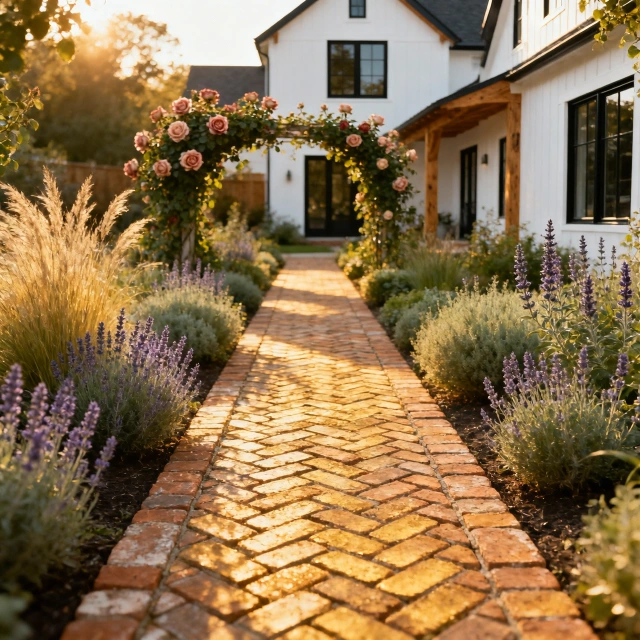
Reclaimed brick pathways laid in herringbone, basketweave, or running bond patterns provide the modern farmhouse garden with its most authentic, most historically rooted, and most materially beautiful hard landscaping surface — their warm honey, terracotta, and russet tones developing a rich, complex visual character from the individual variation of each reclaimed brick’s color, texture, and weathering history that machine-made new bricks, however carefully color-matched to period originals, categorically cannot replicate in terms of the genuine material age, absorbed lichen growth, and honest surface variation that make old brick one of the most beautiful of all garden hard landscaping materials. Reclaimed brick pathways feel like they belong in the landscape rather than having been recently installed — they arrive with the patina of apparent permanence already established.
Sourcing reclaimed bricks from architectural salvage specialists, demolished Victorian and Edwardian buildings, and specialist brick matching services provides the modern farmhouse garden pathway with materials of genuine historical provenance — bricks that may have served as factory floors, market hall surfaces, or urban street paving in previous lives carry an authenticity and material character that connects the contemporary garden directly to the long history of human building and landscape making with an honesty of material inheritance that newly manufactured alternatives entirely lack. Edging reclaimed brick pathways with low clipped box hedging, lavender, or cottage garden perennial borders creates the classic productive garden path composition of the historic kitchen garden tradition — the soft, abundant plant growth framing the warm brick surface with organic generosity while the brick’s precise geometry provides architectural clarity and navigational purpose within the planting abundance that surrounds it throughout the growing season.
8. Potting Shed with Contemporary Detailing
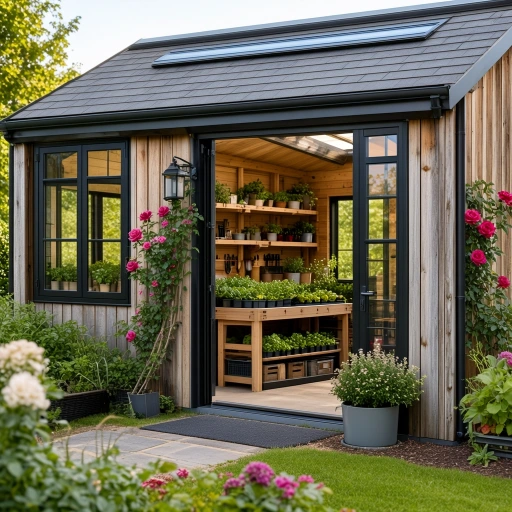
A potting shed with contemporary detailing — its traditional timber-framed structure and weathered board-and-batten cladding honoring the authentic agricultural building tradition, while black steel casement window frames, precision-engineered door hardware, and a clean metal roof add the contemporary design precision that elevates the structure from simple garden shed to deliberate architectural feature of genuine design quality — embodies the modern farmhouse garden’s most complete and most spatially significant expression of the rustic-meets-contemporary design philosophy, creating a garden building of such resolved aesthetic character and practical horticultural functionality that it transforms the garden from an outdoor space with a shed into a designed landscape with a genuine garden building worthy of architectural consideration and genuine daily pleasure in its material beauty and purposeful form. The potting shed is the modern farmhouse garden’s most important architectural element.
Equipping the potting shed interior with a long wooden potting bench at ergonomic working height, open shelving displaying terracotta pots organized by size, tools hung from a Shaker-style peg rail, vintage galvanized watering cans arranged with casual decorative intention, and a simple pendant light providing adequate working illumination creates an interior of considerable organized beauty and genuine horticultural functionality that makes the potting shed a genuinely pleasurable place to spend working hours preparing seedlings, potting on plants, and engaging with the daily maintenance tasks of a productive modern farmhouse garden. Planting climbing roses, wisteria, or a combination of both against the exterior walls of the potting shed — allowing their flowering growth to soften the building’s walls with seasonal botanical beauty — creates a garden structure of truly extraordinary visual charm during the flowering months that makes the potting shed the most photographed and most admired element of the entire modern farmhouse garden composition.
9. Contemporary Orchard with Espaliered Fruit Trees
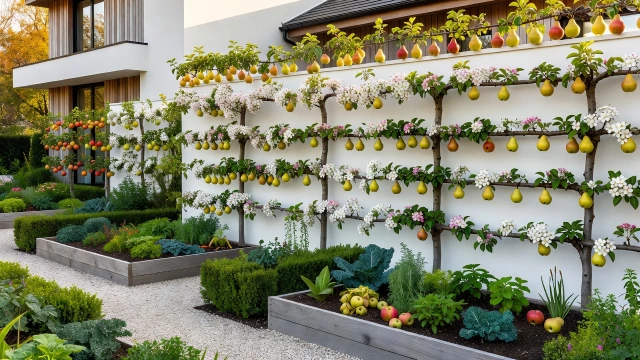
Espaliered fruit trees trained flat against a white rendered wall or along a series of horizontal wires stretched between black steel posts create the modern farmhouse garden’s most structurally precise and most artistically accomplished productive planting feature — their deliberately trained horizontal branch structures creating living wall compositions of extraordinary geometric beauty that change through the four seasons from the sculptural winter silhouette of bare trained branches against white rendered surfaces through the breathtaking spring display of blossom held in precise horizontal tiers to the summer abundance of developing fruit and fresh foliage and the autumn harvest of ripe apples, pears, plums, or quinces within easy reaching distance of the productive garden path. The espaliered fruit tree is simultaneously horticulture and garden art of the highest order.
The ancient French and Belgian tradition of espaliered fruit training, refined over centuries of walled kitchen garden practice to maximize fruit production in limited garden space while creating garden structures of genuine architectural and ornamental beauty, translates with remarkable naturalness into the modern farmhouse garden context — its combination of productive horticultural purpose, formal geometric discipline, and genuine plant beauty perfectly expressing the contemporary garden design movement’s most admired qualities of purposefulness, beauty, and the considered, skilled management of living plant material in service of both food production and aesthetic pleasure. Training a series of espaliered apple and pear trees along the south-facing wall of the modern farmhouse garden creates a productive garden boundary of incomparable seasonal beauty and genuine culinary reward that improves in visual drama and fruit-bearing abundance with every successive year of patient, skillful training and fruit tree husbandry.
10. Stone Trough Water Feature
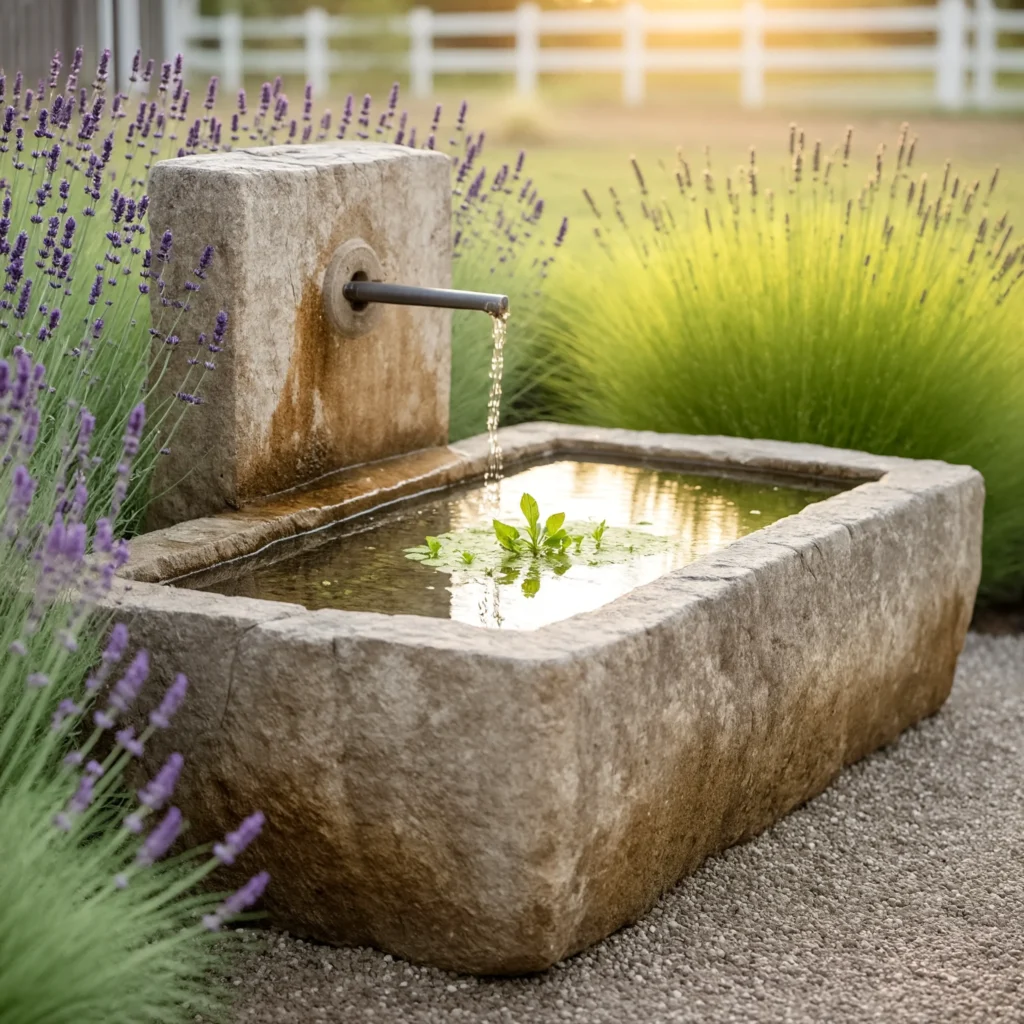
An antique stone trough water feature — its thick, rough-hewn limestone or sandstone walls bearing the beautiful evidence of centuries of agricultural service in the form of surface weathering, lichen colonies, moss growth, and the particular softening of original chisel marks that decades of outdoor exposure produces in natural stone — creates the modern farmhouse garden’s most genuinely aged, most materially authentic, and most quietly atmospheric focal point, its still or gently circulating water surface reflecting sky, plants, and passing clouds with a meditative, philosophical quality that manufactured water features of contemporary design entirely fail to achieve in terms of the genuine historical weight and organic material beauty of antique stone that has spent generations in a specific agricultural landscape before arriving in the modern farmhouse garden as an object of extraordinary repurposed beauty. Antique stone troughs carry the weight of history visibly and materially.
Planting the stone trough water feature with a carefully chosen selection of aquatic and semi-aquatic plants — miniature water lilies for surface coverage and summer flower display, water irises for vertical architectural interest at the trough edges, water mint for fragrant trailing growth, and oxygenating plants below the surface to maintain water clarity without chemical intervention — creates a complete miniature aquatic ecosystem of considerable natural beauty and genuine ecological value within the confines of a single, beautifully weathered stone vessel. Positioning the stone trough water feature at a garden junction where multiple paths meet, within a gravel courtyard setting that allows its full form to be appreciated from multiple angles, or as a focal point at the end of a reclaimed brick garden path creates a modern farmhouse garden moment of genuine contemplative beauty that rewards unhurried observation with continuously revealing natural detail and the deeply calming quality of still water in a garden of purposeful, beautifully managed natural abundance.
11. Cutting Garden in Grid Formation
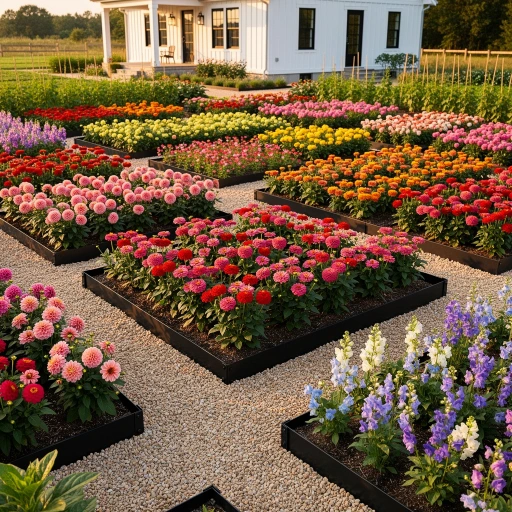
A cutting garden laid out in a precise grid formation — its rectangular beds of equal dimensions organized in orderly rows separated by gravel or mown grass pathways of consistent width, each bed dedicated to a specific genus or color palette of cut flower species grown in productive quantity for harvesting throughout the growing season — creates the modern farmhouse garden’s most visually dramatic and most genuinely useful productive planting feature, combining the formal organizational clarity of the historic French potager garden tradition with the abundant, flower-filled generosity of the English cottage garden to produce a kitchen garden of extraordinary cutting flower productivity and remarkable ornamental beauty that serves both the flower-arranging needs of the farmhouse interior and the aesthetic ambitions of the garden exterior with equal effectiveness and considerable shared visual pleasure. The cutting garden in bloom is simply one of the most beautiful garden sights available.
Choosing a cutting garden plant palette of dahlias in warm sunset tones for late summer and autumn abundance, sweet peas in pastel and jewel tones for early summer fragrance, zinnias in vivid warm colors for heat-tolerant midsummer productivity, sunflowers in warm gold and rich burgundy for height and drama, and cosmos in white and pink for airy, self-seeding naturalness creates a cutting flower collection of extraordinary seasonal range and considerable variety of form, scale, and cutting stem length that provides fresh flowers for farmhouse interior arrangements from early summer through first frost with a generous, continuous abundance that genuinely transforms the experience of living within the modern farmhouse home. The grid formation layout of the cutting garden makes succession sowing, crop rotation, and the organized harvest of cutting flowers straightforward and pleasurable — the orderly beds providing clear visual inventory of what is ready to cut and what is approaching harvest maturity throughout the productive growing season.
12. Rusted Corten Steel Garden Dividers
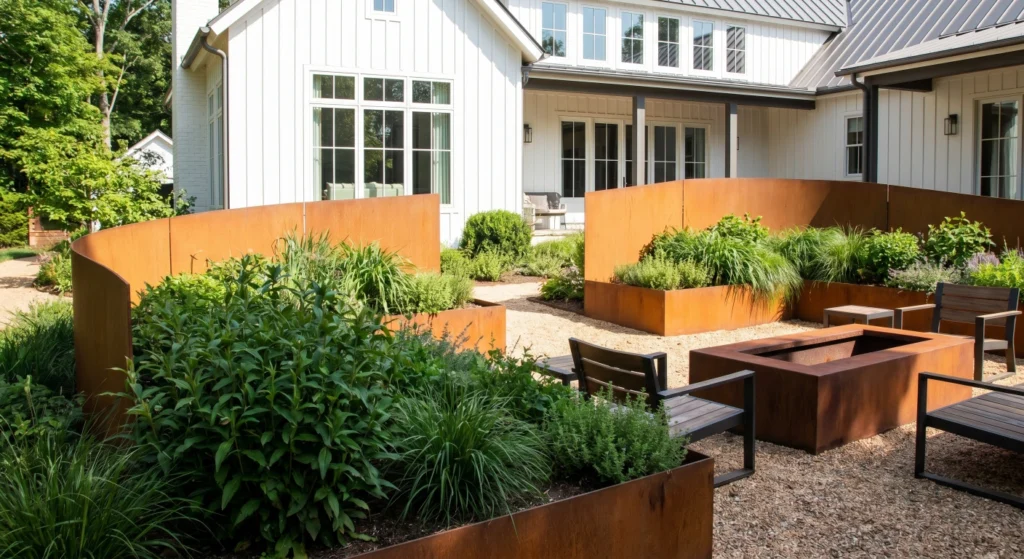
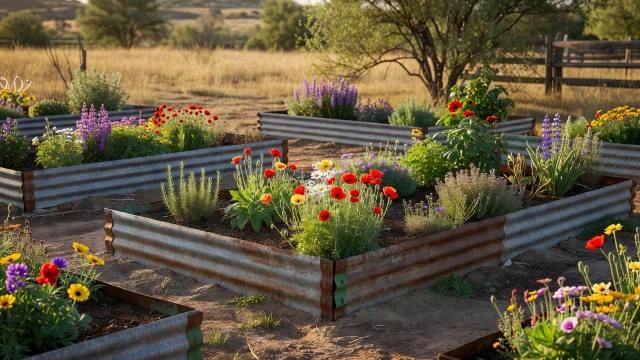
Corten steel garden dividers, raised bed edging, and sculptural garden elements — their characteristic warm orange-brown rusted patina developing naturally through weathering to create a protective oxide layer of self-maintaining, continuously deepening color beauty — bring to the modern farmhouse garden a material of extraordinary visual warmth and contemporary industrial authenticity that bridges the rustic-meets-modern design philosophy with particular formal intelligence, its weathered, earth-toned surface simultaneously evoking the warm color world of agricultural rust and the sophisticated material palette of contemporary architectural landscape design. Corten steel’s deliberate, beautiful oxidation makes it the modern garden’s most philosophically interesting hard landscape material — a material that improves with age and exposure rather than deteriorating, whose beauty is a direct product of honest weathering rather than applied surface treatment.
Using corten steel as raised bed edging, path edging, garden room dividers, and low retaining walls throughout the modern farmhouse garden creates a cohesive hard landscape material narrative of considerable contemporary sophistication — the warm rust tones relating harmoniously to the terracotta, honey brick, and warm timber colors of the garden’s rustic material palette while the material’s contemporary architectural associations and precise geometric fabrication provide the modern edge that prevents the farmhouse garden from tipping from contemporary-rustic into purely period reproduction. The contrast between the warm, textured surface of rusted corten steel edging and the vivid green of growing plants immediately adjacent to it creates one of the most visually satisfying color and texture combinations in the entire modern garden landscape design vocabulary — a contrast of such natural rightness and complementary material vitality that it consistently generates the most enthusiastic design appreciation from garden visitors and landscape design audiences.
13. Kitchen Garden with Glass Cloche Collection
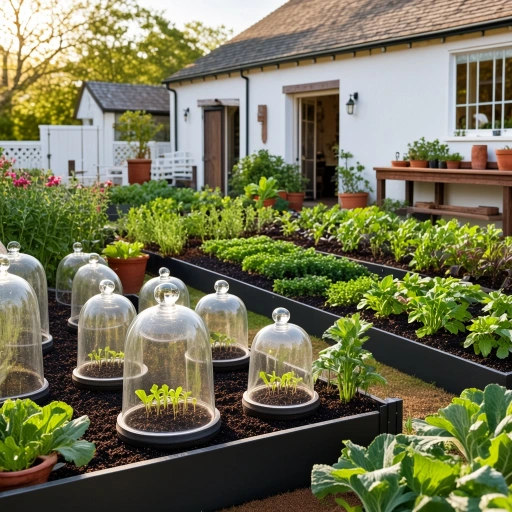
A productive kitchen garden featuring a curated collection of vintage glass cloches — their elegant bell-shaped forms in clear or antique green glass creating beautiful individual protective micro-environments for tender seedlings, early salad crops, and precious young plants while simultaneously functioning as decorative garden objects of considerable period charm and horticultural historical authenticity — combines the practical seed-starting and frost protection function of the traditional French market garden with the modern farmhouse garden’s characteristic appreciation for beautiful, purposeful garden antiques that serve contemporary horticultural needs while contributing genuine period character and visual interest to the productive garden composition. Glass cloches are the kitchen garden’s most beautiful functional objects and its most eloquent connection to centuries of skilled market garden growing tradition.
Arranging a collection of glass cloches of varying sizes and ages across the raised beds of the modern farmhouse kitchen garden — some protecting individual specimen plants, some covering rows of direct-sown seeds, and some simply placed as decorative garden objects on the empty beds during the winter months when their sculptural forms provide visual interest in the productive garden’s off-season — creates a kitchen garden composition of extraordinary charm and visual sophistication that rewards close inspection with the discovery of growing plants at various stages of protected development beneath the clear glass domes. Sourcing vintage glass cloches from French agricultural antique dealers, English garden antique specialists, and horticultural salvage merchants provides the modern farmhouse kitchen garden with objects of genuine horticultural provenance and authentic period beauty — each cloche bearing the slight imperfections, bubbles, and tonal variations of hand-blown antique glass that machine-manufactured reproductions cannot replicate with complete authenticity.
14. Outdoor Dining with Farm Table and Bench Seating
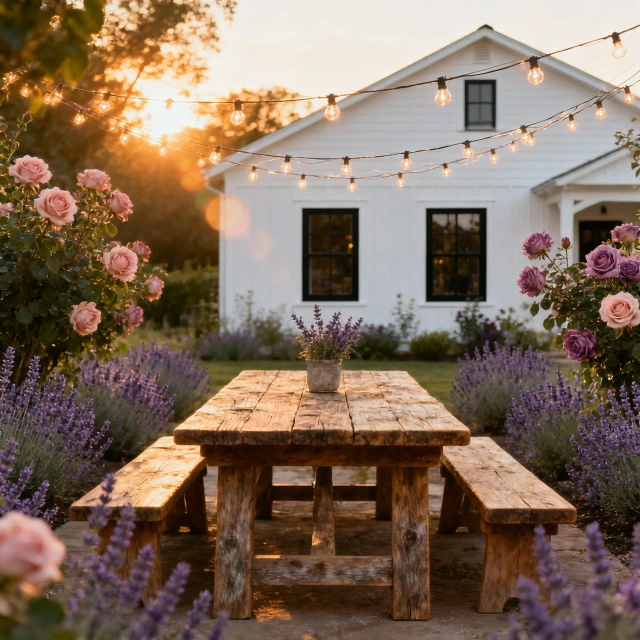
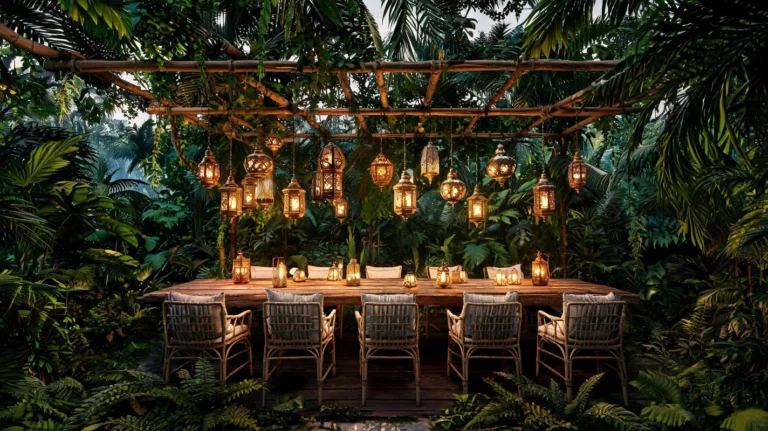
A long reclaimed wood farm table with simple bench seating positioned on a natural stone or gravel terrace beneath a canopy of warm string lights creates the modern farmhouse garden’s most convivial and most genuinely farmhouse-spirited outdoor living feature — its generous length accommodating the abundant, extended, multi-generational garden gatherings that farmhouse living at its most authentic and most richly social has always celebrated, its reclaimed timber surface bearing the beautiful marks of previous agricultural working life that connect every meal eaten at it to the long tradition of communal farmhouse dining that nourished working communities through generations of seasonal labor and celebration. The farm table outdoor dining area is where the modern farmhouse garden most completely fulfills its promise of a life beautifully and generously lived in genuine connection with land, food, and the people we love most.
The planting setting for the modern farmhouse garden outdoor dining area should create an immersive, enclosed garden room quality through the deliberate cultivation of surrounding plant abundance — lavender planted in generous rows along the terrace edge providing fragrant, bee-attracting purple flower display throughout summer, climbing roses trained over a simple rustic arch or along horizontal wires providing flower canopy above the dining area, and informal mixed planting borders of cottage garden perennials softening the transition between hard landscaping and the broader garden beyond with the loose, abundant, naturalistic plant generosity that the modern farmhouse garden aesthetic most deeply celebrates throughout every season of the productive, beautiful, genuinely lived-in rural garden year.
15. Meadow Planting Between Paving Slabs
Meadow plants and creeping ground cover herbs growing freely between generous natural stone or concrete paving slabs — thyme, chamomile, Corsican mint, and creeping Jenny filling the gaps between paving with soft, fragrant, foot-tolerant ground cover that releases aromatic essential oils when gently compressed underfoot — create the modern farmhouse garden’s most naturalistic and most sensuously pleasurable hard path surface, transforming a simple stone paved pathway into a living, breathing, fragrant garden experience of considerable organic richness and natural sensory delight that conventional point-mortared paving entirely prevents by sealing every growth opportunity in grey cement. The planted paving gap is a small but significant act of garden ecological generosity that rewards the gardener with beauty, fragrance, and the sounds of bees working the low-growing flowers throughout the warm months of the productive growing season.
Selecting the right plants for between-slab planting in a modern farmhouse garden path requires attention to the specific conditions of the pathway — sun-exposed paths between generous stone slabs suit thyme, chamomile, and sedum beautifully; semi-shaded paths between timber sleepers accommodate Corsican mint, mind-your-own-business, and creeping Jenny with remarkable success. Allowing self-seeding annual meadow flowers including calendula, annual poppies, and forget-me-nots to colonize the wider gravel areas between stone slab paths creates an exuberantly naturalistic pathway planting of the kind that makes modern farmhouse gardens feel genuinely alive, genuinely uncontrolled in their most beautiful moments, and genuinely connected to the wildflower-rich countryside landscape that the contemporary rural garden aesthetic most deeply aspires to celebrate and honor within the designed boundaries of the productive, beautiful modern farmhouse garden space.
16. Wisteria Covered Pergola over Outdoor Kitchen
A wisteria-covered black steel pergola structure spanning a stone or concrete outdoor kitchen creates the modern farmhouse garden’s most dramatically beautiful and most architecturally impressive feature — its clean, precisely fabricated black steel frame providing the contemporary industrial structure over which wisteria’s extraordinarily romantic, cascade-forming flowering growth creates a natural canopy of such breathtaking seasonal beauty that it consistently produces some of the most widely shared and most enthusiastically admired garden photography across every major outdoor living and garden design platform during its spectacular spring flowering period. The combination of black steel precision and wisteria’s exuberant, ancient-looking gnarled trunk growth and cascading flower racemes embodies the rustic-meets-contemporary tension at the heart of the modern farmhouse garden with particular formal intelligence and natural dramatic effect.
The outdoor kitchen positioned beneath the wisteria pergola — its stone countertops, integrated grill, and outdoor sink providing all the cooking infrastructure necessary for serious outdoor entertaining within an architectural setting of extraordinary natural beauty — creates the modern farmhouse garden’s most complete and most functionally sophisticated outdoor living space, transforming the productive rural garden into a genuine extension of the farmhouse domestic interior with the full cooking and entertaining capabilities of a well-equipped kitchen combined with the incomparable beauty of a garden dining setting that no indoor space, however beautifully designed, can replicate during the warm months when wisteria, roses, and abundant garden planting create an outdoor room of natural splendor. Wisteria on a pergola requires patient establishment of five to seven years before full flowering maturity is achieved, but the extraordinary flowering display of a mature wisteria pergola amply rewards every year of that patient, expectant horticultural investment.
17. Productive Greenhouse with Black Aluminum Frame
A black aluminum framed greenhouse — its contemporary industrial aesthetic combining the functional glass and metal construction of the traditional Victorian glasshouse with the modern design sensibility of powder-coated black aluminum framing that creates a structure of genuine architectural sophistication and considerable visual drama — provides the modern farmhouse garden with its most productive, most seasonally extending, and most architecturally impressive permanent garden building, enabling year-round growing of tender crops, tropical plants, and early season seedlings that would be impossible in the open garden’s unprotected conditions while simultaneously creating a garden building of such complete, resolved contemporary-rustic design character that it enhances the overall garden aesthetic with the confident visual authority of a genuinely designed structure rather than a purely functional horticultural utility building. The black framed greenhouse has become the definitive modern farmhouse garden building of the current generation.
The interior organization of the modern farmhouse greenhouse — its staging arranged with tiered terracotta pots, its reclaimed timber shelving displaying seedling trays and propagating pots in organized abundance, its central path of reclaimed brick providing a warm, permanent growing floor surface, and its glazed panels admitting the quality of light that transforms growing plants into luminous, sun-backlit botanical displays of extraordinary natural beauty visible from the garden outside — creates a productive indoor growing environment of genuine daily pleasure and continuous horticultural reward that makes every visit to the greenhouse during the growing season an experience of discovering new growth, new abundance, and the endlessly renewing natural vitality of plants responding to warmth, light, and attentive human care with the same generous, life-affirming productive energy that has made the kitchen garden greenhouse the most beloved and most personally meaningful productive garden building in the entire long and richly beautiful tradition of the British and European kitchen garden.