🌸 16 English Cottage Garden Ideas for a Dreamy Backyard
1. Overflowing Mixed Perennial Cottage Border
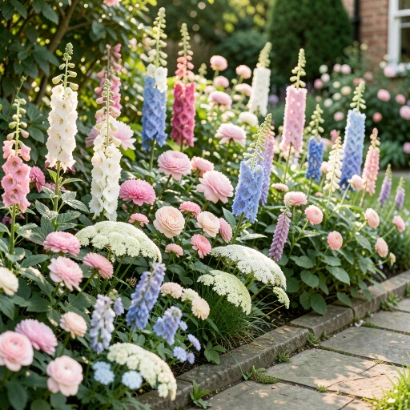
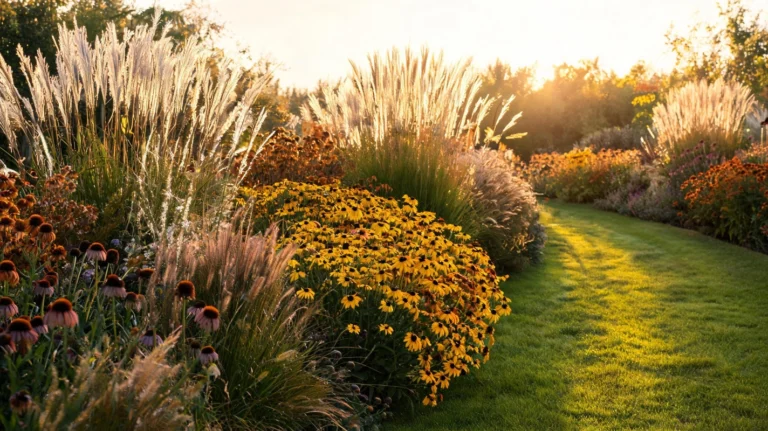
A generously planted mixed perennial border overflowing with the layered abundance of classic English cottage garden plants is the defining feature of the dreamy backyard garden — a living composition that rewards daily observation with constantly changing colour, texture, and seasonal drama from the first snowdrops of February through the last chrysanthemums of November. The apparent informality of the great cottage garden border conceals considerable horticultural knowledge and compositional skill, with tall delphiniums and hollyhocks forming the dramatic backdrop against which medium geraniums and peonies perform, and low alchemilla and catmint softening the path edge with their frothy abundance.
Plan the border with careful attention to the succession of flowering across the entire growing season, ensuring that no single period is left visually empty by the simultaneous finishing of one plant group before another has begun. Interplant spring bulbs — alliums, camassia, and tulips — among the dormant perennial crowns in autumn so that the border moves seamlessly from bulb display into emerging perennial foliage and early summer flower without a single dull transitional week. Allow generous self-seeding of foxgloves, aquilegia, and nigella throughout the planting to introduce the spontaneous naturalistic quality that distinguishes an authentically exuberant English cottage border from any amount of carefully designed but ultimately soulless horticultural arrangement.
2. Rambling Rose Covered Garden Arch
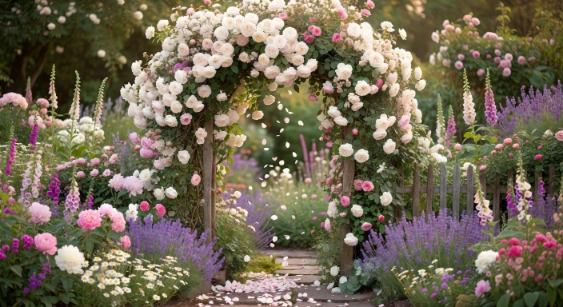
A wooden garden arch completely smothered in a rambling or climbing rose in full bloom is the single most romantically beautiful structural feature available to the English cottage garden backyard — a living gateway that transforms the simple act of moving from one part of the garden to another into a sensory experience of extraordinary floral magnificence, fragrance, and visual poetry. In its peak June flowering, a well-established rose arch becomes so densely covered in bloom that the wooden structure beneath virtually disappears beneath a cascading waterfall of flowers, petals falling onto the path below with every breath of summer breeze.
Choose varieties specifically selected for their arch-covering potential — ‘Paul’s Himalayan Musk’ for its extraordinary vigour and cascading sprays of small blush pink flowers, ‘Rambling Rector’ for its massive clusters of creamy white semi-double blooms and powerful fragrance, or ‘Veilchenblau’ for its unusual and beautiful violet-purple flowers that fade attractively to lilac-grey. Build the arch from pressure-treated oak or sweet chestnut timber in generous proportions — a minimum of two metres wide and 2.2 metres tall — to allow sufficient structural strength to support the considerable weight of a mature established rambling rose in full leaf and bloom without sagging or leaning as the years accumulate on its climbing stems.
3. Wildflower Meadow Lawn Alternative
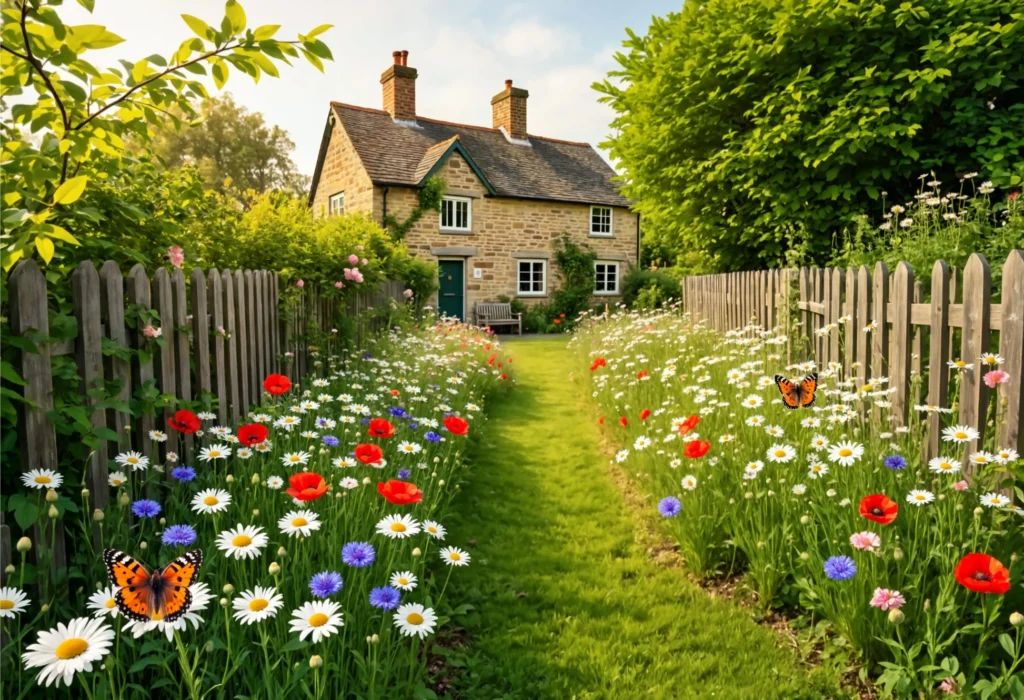
Replacing a conventional close-mown lawn with a naturalistic wildflower meadow is the most ecologically transformative and visually dramatic single change available to the English cottage garden backyard — creating a seasonal spectacle of such extraordinary colour, movement, and living abundance that it makes the uniform green of a traditional lawn appear impoverished by comparison. A meadow of ox-eye daisies, red field poppies, cornflowers, yellow rattle, knapweed, and native grasses in full summer bloom is a garden feature of genuinely breathtaking natural beauty that improves every year as the seed bank establishes and enriches.
Establish the meadow successfully by first reducing soil fertility through stripping turf and removing topsoil — wildflowers evolved on poor, thin soils and will be outcompeted by rank grass on rich garden soil without this critical preparatory step. Sow with a native wildflower and grasses mix formulated for your specific soil type and aspect, including yellow rattle as a grass parasite that naturally reduces competitive grass vigour over the first three seasons of establishment. Mow a single winding path through the meadow with a conventional lawnmower each week during the growing season, leaving the meadow itself uncut until late August after seeds have ripened and dispersed, then cutting once and removing all cuttings to further reduce soil fertility and strengthen the wildflower component year upon year.
4. Espaliered Apple Tree Boundary Wall
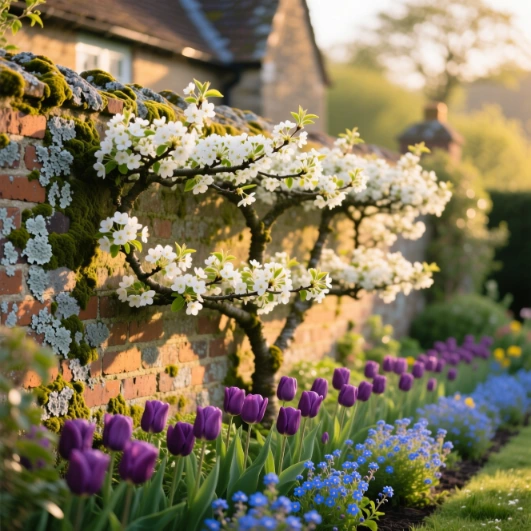
An espalier apple tree trained in perfect horizontal tiers against a warm south or west-facing boundary wall transforms a plain garden boundary into a productive, beautiful, and horticulturally accomplished feature of the English cottage garden backyard that contributes spring blossom, summer foliage, and autumn fruit harvest to the garden’s seasonal calendar while occupying minimum ground space in a two-dimensional flat trained form that makes efficient use of a warm wall’s favourable microclimate. The formal geometric beauty of the trained horizontal tier structure creates an elegant architectural counterpoint to the informality of the cottage border planting below.
The espalier training programme begins with purchasing a part-trained two or three tier specimen from a specialist fruit nursery — saving several years of early training work — and continuing the development of additional upper tiers by tying new growth onto training wires fixed to the wall at forty-five centimetre vertical intervals. Underplant the espalier’s lower stem area with a cottage garden border of spring bulbs, forget-me-nots, and geraniums that exploits the warm wall conditions to extend the growing season while providing a beautiful ground-level planting composition beneath the tree’s architectural framework. The combination of disciplined espalier training above and exuberant cottage border planting below perfectly captures the English garden’s characteristic and uniquely beautiful tension between formal structure and informal abundance.
5. Hazel Wigwam Sweet Pea Supports
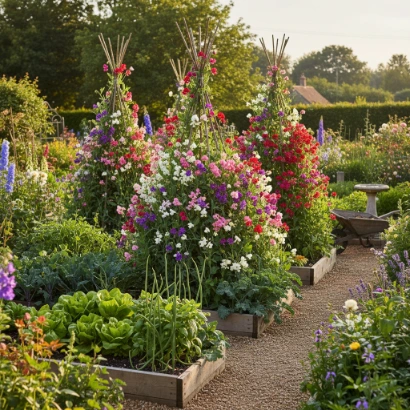
Rustic hazel pole wigwams supporting climbing sweet peas in their full summer glory — the slender stems twining enthusiastically upward through the crossing poles to produce abundant clusters of intensely fragrant flowers in every shade from the deepest burgundy and violet through cerise pink to the most delicate shell pink and pure white — are one of the most charming and quintessentially English cottage garden backyard features available, combining practical growing support with a decorative garden structure of considerable rustic beauty and handmade character.
Cut hazel poles from a coppiced woodland in late winter when the wood is at its most pliable, selecting straight stems of approximately 1.8 metres in length and 2-3 centimetres in diameter for the optimum combination of structural strength and visual elegance. Push eight poles in a circle of approximately sixty centimetres diameter and gather and tie the tops together with natural jute twine into a pointed apex that gives the wigwam its characteristic conical form. Sow sweet pea seeds in autumn for the earliest, strongest plants — planting out the young seedlings around the wigwam base in March — choosing old-fashioned Spencer varieties for their extraordinary fragrance and long, graceful stems rather than modern patio varieties that trade scent for compact habit in a compromise the true sweet pea devotee could never willingly accept.
6. Stone-Edged Herb Garden with Sundial
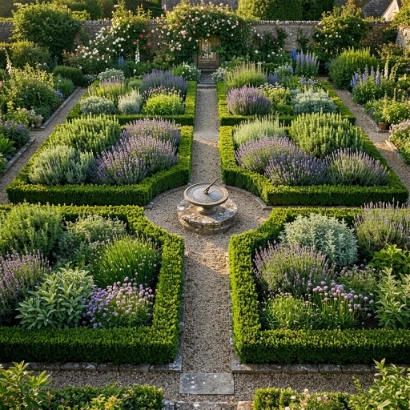
A formally arranged stone-edged herb garden with a central weathered stone sundial as the focal feature brings the ancient tradition of the monastery physic garden into the English cottage garden backyard with a combination of geometric order, aromatic abundance, and historical resonance that makes it one of the most intellectually satisfying and sensorially rewarding garden features imaginable. The contrast between the crisp stone edging, the low box hedging dividing the beds, and the exuberant aromatic planting spilling generously over both creates the characteristic English garden tension between structure and abundance at its most condensed and beautiful scale.
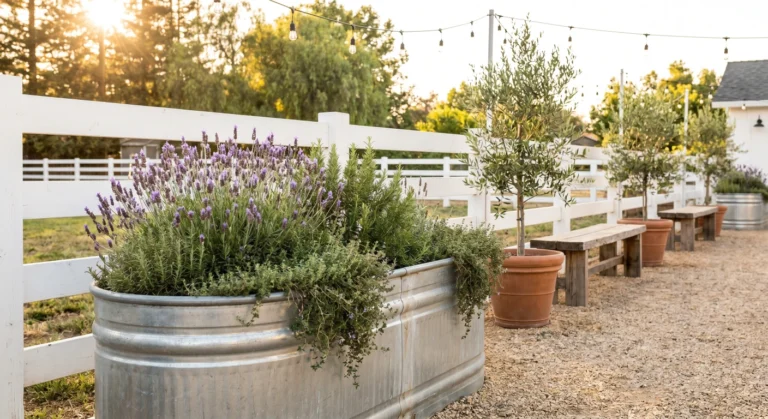
Plant each geometrically defined bed with a different herb family or culinary theme — one bed dedicated to Mediterranean aromatics such as lavender, rosemary, sage, and thyme; another to kitchen herbs of mint, chives, parsley, and tarragon; a third to medicinal herbs of echinacea, chamomile, and calendula for a complete and historically informed herb garden of considerable practical and visual depth. A sundial in aged limestone or Portland stone at the crossing point of the main gravel paths provides the definitive focal centrepiece — its motto, ideally a reflective Latin inscription about the passing of time, adding a layer of contemplative literary beauty entirely appropriate to the meditative atmosphere of the enclosed herb garden.
7. Cottage Garden Pond with Marginal Planting
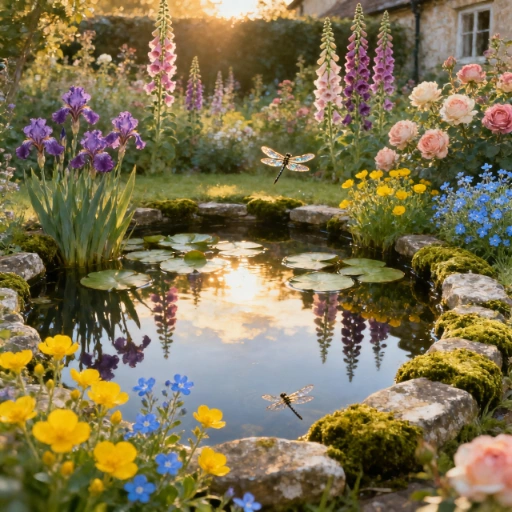
A natural, informally shaped wildlife pond with lush marginal planting of native aquatic and moisture-loving plants brings the English cottage garden backyard into intimate and genuinely transformative ecological contact with the natural water world — creating a habitat feature of such extraordinary biodiversity value and visual beauty that it functions simultaneously as the garden’s most productive wildlife sanctuary and its most contemplatively beautiful focal feature. Within weeks of filling, a new garden pond will be visited by dragonflies, water boatmen, frogs, and birds, becoming a living centre of natural activity that changes with mesmerising detail every single day.
Edge the pond with a combination of natural stone and deliberately planted marginal species — yellow flag iris, marsh marigold, water forget-me-not, purple loosestrife, and flowering rush creating a dense, layered planting that blurs the boundary between water and land with beautifully naturalistic effect. Plant water lilies — Nymphaea alba for large ponds, the smaller ‘Pygmaea Helvola’ for more intimate water features — to provide surface coverage that reduces algal growth while offering the most extravagantly beautiful summer flowering of any aquatic plant. The reflective surface of a well-planted cottage garden pond, mirroring the sky and surrounding planting in its still surface on calm summer evenings, creates photographic opportunities of extraordinary beauty that make this backyard feature among the most consistently admired and saved on Pinterest garden boards.
8. Romantic Bower Seat with Climbing Plants
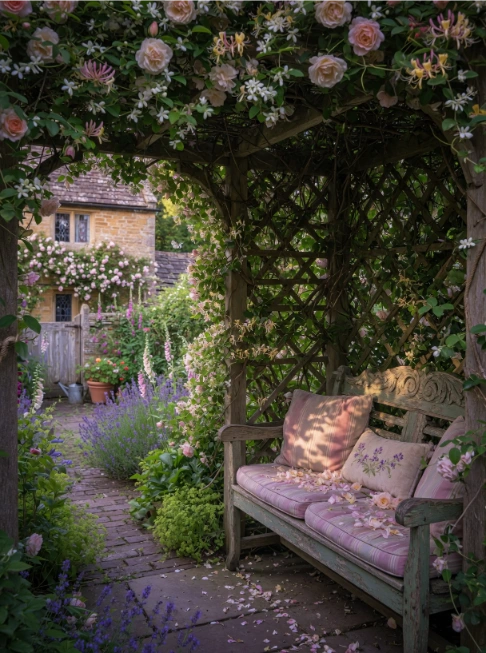
A bower seat — a garden bench positioned within a living alcove of climbing plants trained over a supporting wooden or metal framework to create a fragrant, flower-canopied outdoor sitting room — is one of the most romantically beautiful and deeply appealing features of the English cottage garden backyard, offering a sheltered, intimate seating destination entirely enclosed in climbing roses, jasmine, and honeysuckle that makes every moment spent within it feel like inhabiting a scene from a Tennyson poem or a Waterhouse painting of midsummer garden idyll.
Construct the bower framework from rustic sweet chestnut poles or steam-bent hazel, or commission a bespoke oak structure with a simple pitched roof form for a more permanent architectural quality that will outlast the climbers trained over it by generations. Plant a combination of scented climbers chosen for sequential flowering to ensure the bower remains fragrant and beautiful from the first jasmine flowers of late May through the rose abundance of June and July to the honeysuckle’s late summer evening fragrance of August and September. Cushion the bench within with weather-resistant cushions in a William Morris-inspired floral fabric for a seating experience of such complete, enveloping beauty and fragrant sensory richness that the bower seat becomes the most beloved and most regularly occupied spot in the entire cottage garden.
9. Foxglove & Fern Shaded Garden Corner
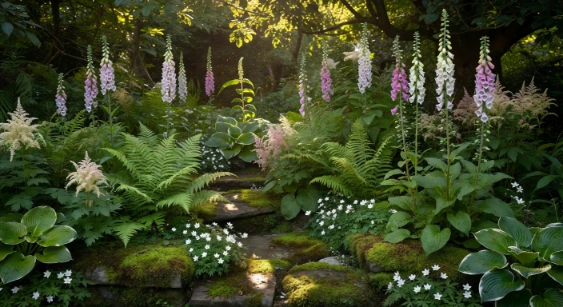
A shaded garden corner planted with tall foxgloves rising above a lush carpet of ferns, hostas, and astilbe creates one of the most atmospheric and botanically beautiful features of the English cottage garden backyard — a cool, green, dappled retreat that celebrates the woodland garden tradition with the most graceful and naturally harmonious combination of shade-loving plants available to the British gardener. The vertical drama of the foxglove’s flower spires, rising to 1.5 metres or more in the finest strains, provides architectural punctuation above the horizontal layers of fern and hosta foliage below.
Allow foxgloves to self-seed freely through the shaded area, thinning the resulting rosettes in autumn to the most vigorously healthy and well-positioned individuals for flowering the following summer — building over three to four years a naturalised foxglove population that perpetuates itself with minimal intervention through the constant cycle of flowering, seeding, and germination. Interplant the fern and hosta groundcover with spring woodland bulbs — snowdrops, wood anemones, bluebells, and wild garlic — that exploit the shaded area before the perennial foliage closes the canopy, creating a sequential ground-level display that begins in January and carries the shaded corner through to the foxglove’s June flowering with continuous botanical interest and natural woodland beauty.
10. Picket Fence with Cottage Border Planting
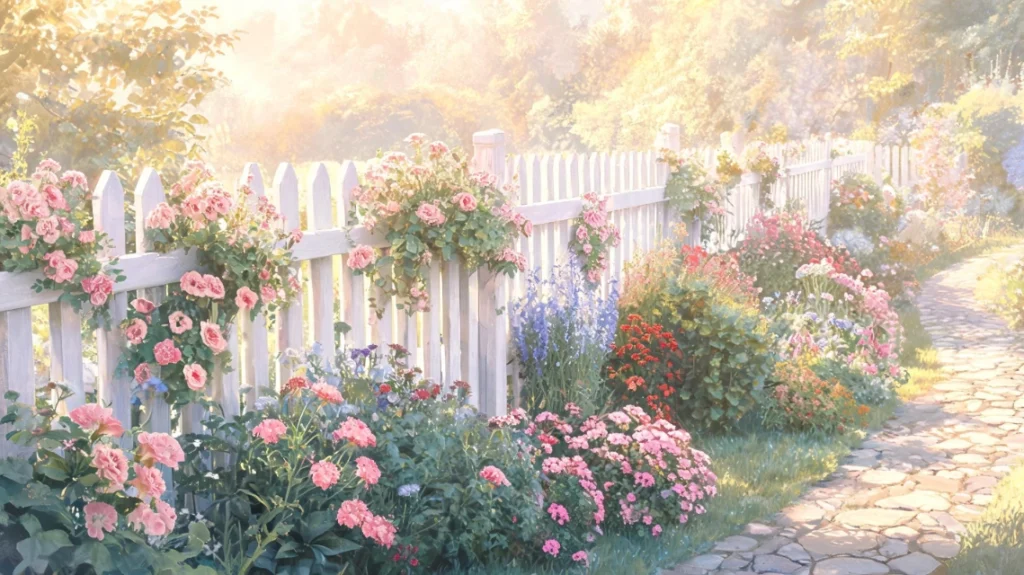
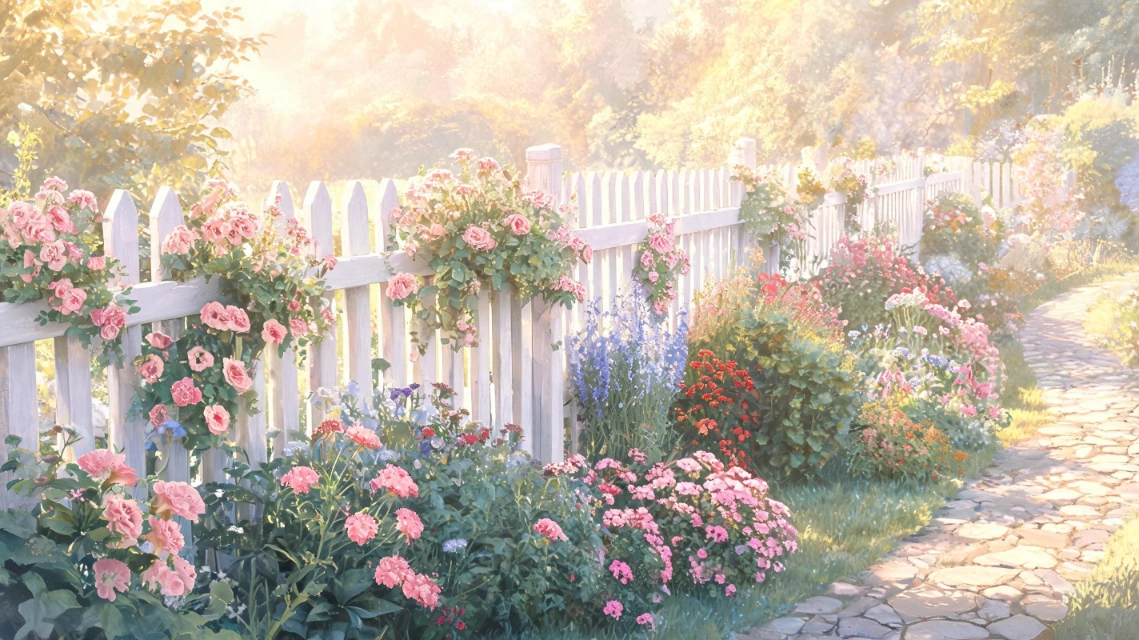
A white painted picket fence with a generously planted cottage border overflowing through and over its rails creates one of the most archetypal and enduringly beloved English cottage garden backyard compositions — the formal geometric repetition of the fence pickets providing the perfect crisp structural framework against which the soft, tumbling informality of cottage garden planting performs with its most beautiful and most characteristically English abandon. Sweet williams, campanulas, roses, and hardy geraniums threading their stems through the fence rails blur the boundary between contained garden and open space with charming, painterly naturalness.
Paint the picket fence in traditional white lead paint colour — achieved with modern white exterior timber paint for a period-appropriate result without the historic paint’s environmental concerns — and maintain it with periodic repainting every three to four years to preserve the crisp white backdrop that makes the cottage border planting’s colour palette sing at maximum intensity against it. Plant the border immediately inside the fence at generous depth — a minimum of 1.5 metres — to allow the layered cottage planting scheme adequate space to achieve its characteristic depth and complexity, with tall roses and delphiniums at the back, medium geraniums and campanulas in the middle, and low sweet williams and violas tumbling over the fence base in a complete three-tier planting composition of classic English cottage garden perfection.
11. Moss-Covered Stone Steps & Terrace
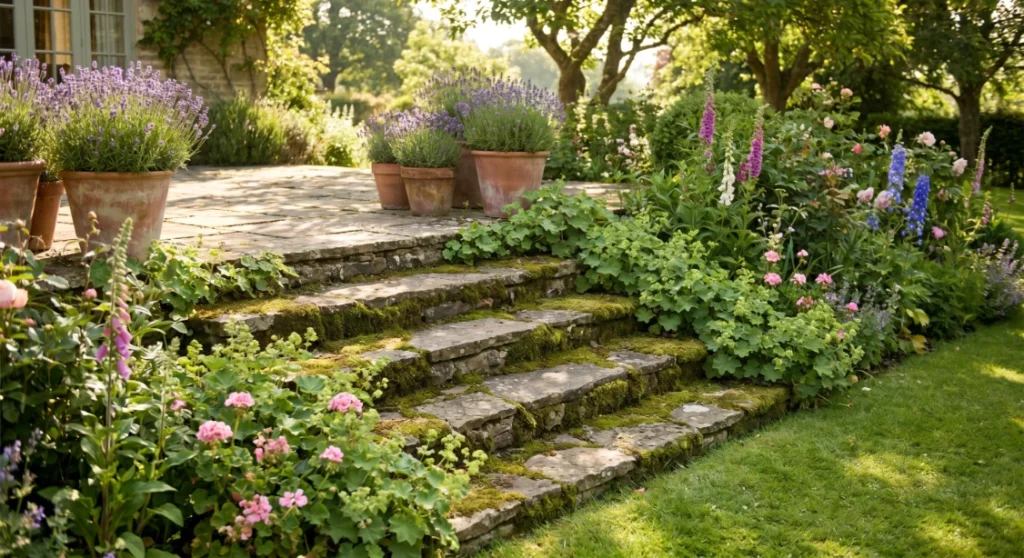
Natural stone steps carpeted in soft green moss, with trailing alchemilla, creeping thyme, and hardy geraniums spilling over their edges, create the most beautifully aged and organically integrated level change available to the English cottage garden backyard — steps that appear to have been part of the garden for so long that the moss and plants have claimed them as their own territory, the garden’s living green abundance refusing to acknowledge any boundary between planted border and constructed paving. This deeply settled, organically colonised appearance is the aesthetic goal of the English cottage garden terrace and is what distinguishes it so completely from the sharp-edged, pressure-washed perfection of the contemporary urban garden aesthetic.
Accelerate moss establishment on new stone steps by painting the stone surfaces with a slurry of natural yoghurt and water in autumn when moisture conditions favour spore germination and establishment. Plant alchemilla mollis immediately beside and between the steps — its lime-yellow flower sprays and scalloped water-beading leaves among the most beautiful and useful of all cottage garden plants — allowing it to self-seed freely into every available crevice and joint. The combination of warm honey-coloured stone, soft emerald moss, and the frothy yellow-green of alchemilla flowers creates a terrace and steps composition of such natural, effortless beauty that it becomes one of the most reliably beautiful photographic subjects in the entire cottage garden throughout the long months of the growing season.
12. Hollyhock-Lined Garden Wall Path
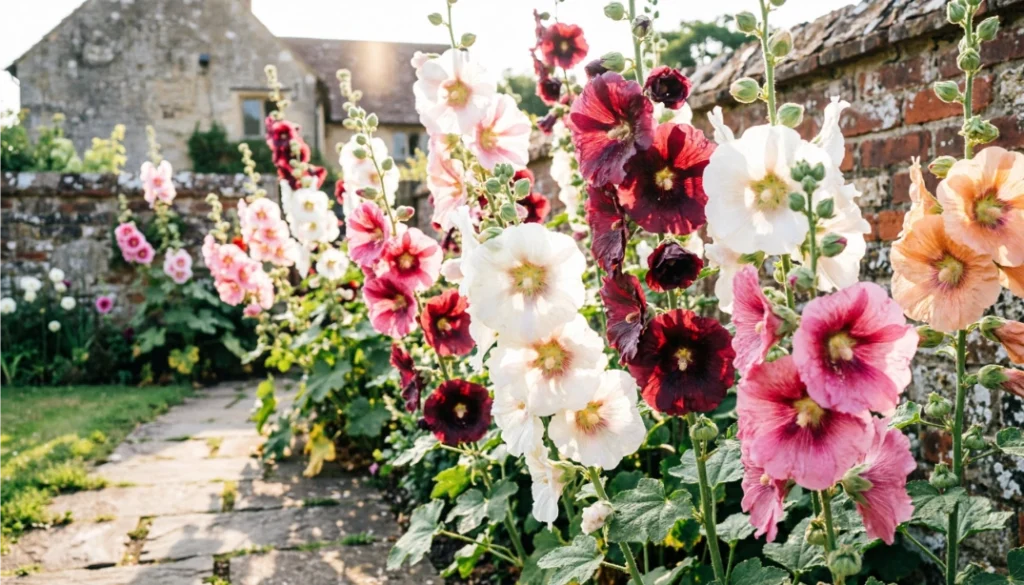
Towering double hollyhocks growing in a dense colony against an old stone or brick garden wall — their flower spires rising to three metres in the finest conditions, each stem a succession of densely petalled blooms in the richest range of pinks, crimsons, burgundies, apricots, creams, and near-blacks — create the most dramatically vertical and visually theatrical cottage garden planting available to the English backyard, transforming a simple garden wall path into a passage through a living cathedral of summer flowers of extraordinary scale and magnificence.
Hollyhocks perform their finest display when grown hard against a warm south or west-facing wall that provides the radiant heat they love, supports their tall stems against wind rock, and creates a warm-coloured architectural backdrop that complements their rich flower tones with maximum dramatic effect. Treat them as biennials in most gardens — sowing seed in June for planting out in autumn to flower magnificently the following summer — allowing them to self-seed freely at the wall base to perpetuate the colony with minimal annual intervention. The simplest, most beautiful hollyhock path planting is achieved by allowing a self-seeded mix of double and single-flowered forms in a naturally varied colour range to colonise the wall base freely, the random mixing of colours and forms creating a more naturally beautiful and spontaneous composition than any deliberately planned colour-coordinated scheme.
13. Rambling Rose over Garden Shed Roof
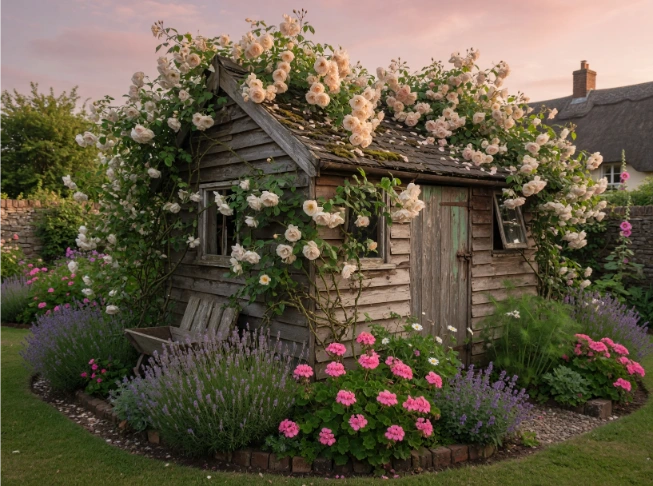
A rambling rose allowed to clamber freely over a wooden garden shed roof — its long, arching flowering stems draping themselves across the roof ridge and cascading down the sides in a waterfall of cream, blush, or deep pink flower clusters — transforms one of the garden’s most purely functional structures into one of its most enchanting and photographed features, the romance of the rose-covered shed having captured the imagination of English cottage garden lovers since the Edwardian era and showing absolutely no signs of diminishing in its enduring aspirational appeal.
Choose a vigorous, disease-resistant rambling variety capable of covering a shed roof without requiring extensive support — ‘Albéric Barbier’ for its long, pliable stems and beautiful creamy white flowers with a hint of yellow, ‘American Pillar’ for its dramatic carmine-pink single flowers with white eye, or ‘Francis E. Lester’ for its masses of small single blush flowers and magnificent autumn hips that extend the shed’s decorative interest well beyond the June flowering period. Underplant the shed’s sunny side with a cottage border of lavender, catmint, and hardy geraniums, and its shadier aspects with ferns, hostas, and astilbe for a completely planted shed setting that gives the rose-covered structure the appearance of rising naturally from the surrounding garden rather than sitting in it as a separate utilitarian object.
14. Cut Flower Cottage Garden Patch
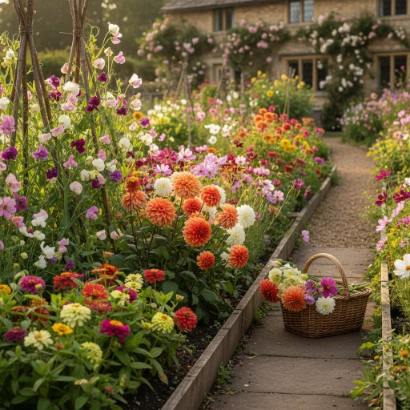
A dedicated cut flower patch within the English cottage garden backyard — rows and blocks of sweet peas, dahlias, cosmos, zinnias, and lisianthus grown specifically for cutting and bringing into the home — combines the productive pleasure of kitchen garden growing with the aesthetic richness of cottage garden planting in a garden feature that delivers daily rewards from midsummer through the first autumn frosts in the form of beautiful, home-grown flower arrangements for every room of the house. The cut flower patch is both a garden feature of considerable beauty in its own right and a productive resource of extraordinary daily domestic value.
Design the cut flower patch as a series of simple rectangular beds — whether raised timber frames or simply defined ground-level rows — separated by narrow grass or gravel paths wide enough for comfortable kneeling and harvesting access. Grow a selection of plants specifically chosen for their excellent vase life, cutting stem length, and successive cropping ability — sweet peas sown every fortnight from March for continuous summer flowering, dahlias started from tubers in April for August through October cutting, and cosmos sown direct in May for their feathery-leaved, long-stemmed flowers that cut magnificently and last well in water. Harvest cut flowers in the early morning when stems are fully turgid with water for the longest vase life and carry them immediately to a bucket of cool water for conditioning before arranging.
15. Vintage Garden Furniture & Rose Dining Area
A cottage garden outdoor dining area furnished with vintage cast iron garden furniture beneath a rose-covered pergola creates the most perfectly English and deeply romantic backyard entertaining space imaginable — a setting that makes every meal taken within it feel like an event of unhurried, abundantly beautiful leisure borrowed directly from the golden Edwardian summer afternoon of collective cultural memory. The combination of patinated cast iron furniture, a faded floral tablecloth, mismatched china, and a simple jar of garden-cut flowers on the table beneath cascading rose blooms is the defining image of English cottage garden outdoor living at its most aspirational and most loved.
Build the dining pergola from pressure-treated oak posts and beams in generous proportions — at minimum 2.5 metres tall and large enough to accommodate a table for six comfortably — training a combination of climbing roses, clematis, and wisteria over the framework to create a floral canopy that provides dappled shade and extraordinary fragrance during summer meals. Source vintage cast iron garden furniture from antique dealers, specialist outdoor furniture salvage companies, or garden sales — choosing pieces whose patina of rust, old paint layers, and weathered surface tells the story of decades of outdoor use with more character and beauty than any new reproduction could achieve. This rose-canopied garden dining room photographs with extraordinary beauty in the warm, dappled light of a June afternoon, making it consistently one of the most saved English cottage garden backyard images on Pinterest throughout the summer months.
16. Moon Gate & Walled Garden Room Entrance
.
A moon gate — a perfect circular opening cut through a garden wall or hedge — creates the most architecturally dramatic and romantically mysterious garden room entrance available to the English cottage garden backyard, framing the garden beyond in a perfect circle that transforms the view through it into a living painting of extraordinary compositional beauty and tantalising partial revelation. Originally a feature of Chinese garden design, the moon gate was enthusiastically adopted into the English garden tradition in the eighteenth and nineteenth centuries, finding its most beautiful expression when framed with climbing roses and clematis in the exuberant cottage garden style.
Train climbing roses and clematis on both faces of the wall surrounding the circular opening, allowing their stems to frame the perfect circle of the gate with romantic floral abundance that draws the eye irresistibly toward the garden room glimpsed beyond with the most seductive garden design gesture imaginable. Position the moon gate at the intersection of two garden paths so that it is approached with deliberate ceremony and its circular framing of the view beyond is experienced at its maximum compositional impact from the optimum viewing distance. The garden room revealed through the moon gate should be planted as a complete, self-contained cottage garden composition — a secret garden within the garden — so that the partial view offered through the circular opening always suggests greater beauty and abundance beyond, making every approach to the moon gate threshold an experience of excited anticipation and genuine visual delight.