17 Provençal Rustic Hallway Ideas with Old World Charm
1. Aged Terracotta Tile Floor with Pale Limestone Borders
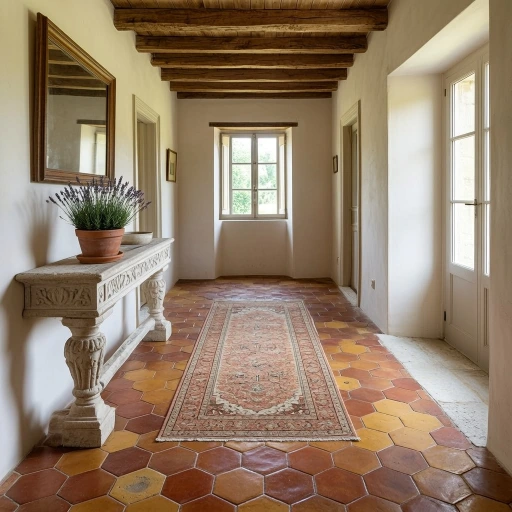
Aged terracotta hexagonal tiles with pale limestone border framing create the single most authentically Provençal and the most immediately atmospheric hallway floor treatment available, because genuine antique terracotta — with its warm variation in color from honey through rust to deep orange, its slight surface irregularity, and its centuries of accumulated patination from foot traffic and natural light exposure — creates a floor of irreplaceable warmth, historical depth, and completely specific regional character.
Source genuinely reclaimed antique terracotta tiles from specialist French architectural salvage companies — Emery and Cie, Terres d’Avignon, or specialist Provençal brocante dealers — specifying hexagonal tomettes of 17cm diameter in the most traditionally Provençal size. New reproduction terracotta tiles, however carefully produced, lack the accumulated patination, the subtle surface wear, and the specific color depth of genuinely antique tiles that have been walked upon in Provençal farmhouses for one hundred or more years.
2. Whitewashed Stone or Plaster Walls
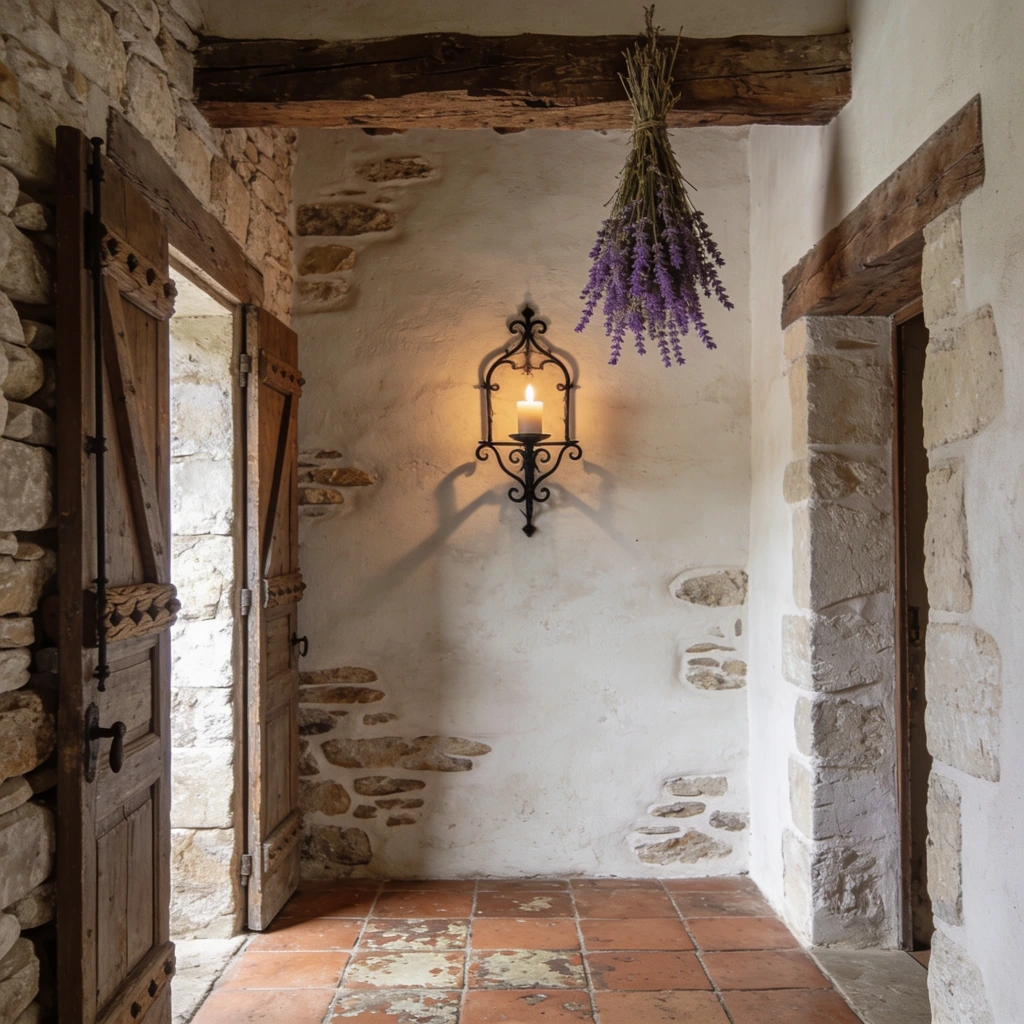
Whitewashed lime-plastered stone walls with the characteristic cloudy, layered quality of genuine hot lime wash create the most materially authentic and the most atmospherically beautiful Provençal hallway wall treatment available, because the lime wash’s natural mineral application — brushed onto the stone in multiple thin coats that leave each underlying coat partially visible — creates a wall surface of extraordinary visual complexity and depth that industrial paint simply cannot replicate regardless of its decorative intention or technical sophistication.
Apply genuine hot lime wash — chaux aérienne mixed to a fluid consistency with natural pigments of raw sienna, yellow ochre, or titanium white — using a large natural bristle brush in wide, overlapping X-stroke applications that create the most convincingly ancient and the most beautifully varied surface texture available. Allow each coat to dry completely — typically twelve to twenty-four hours depending on humidity and ventilation — before applying the next coat for the most layered and the most genuinely beautiful final result.
3. Heavy Timber Entrance Door with Iron Hardware
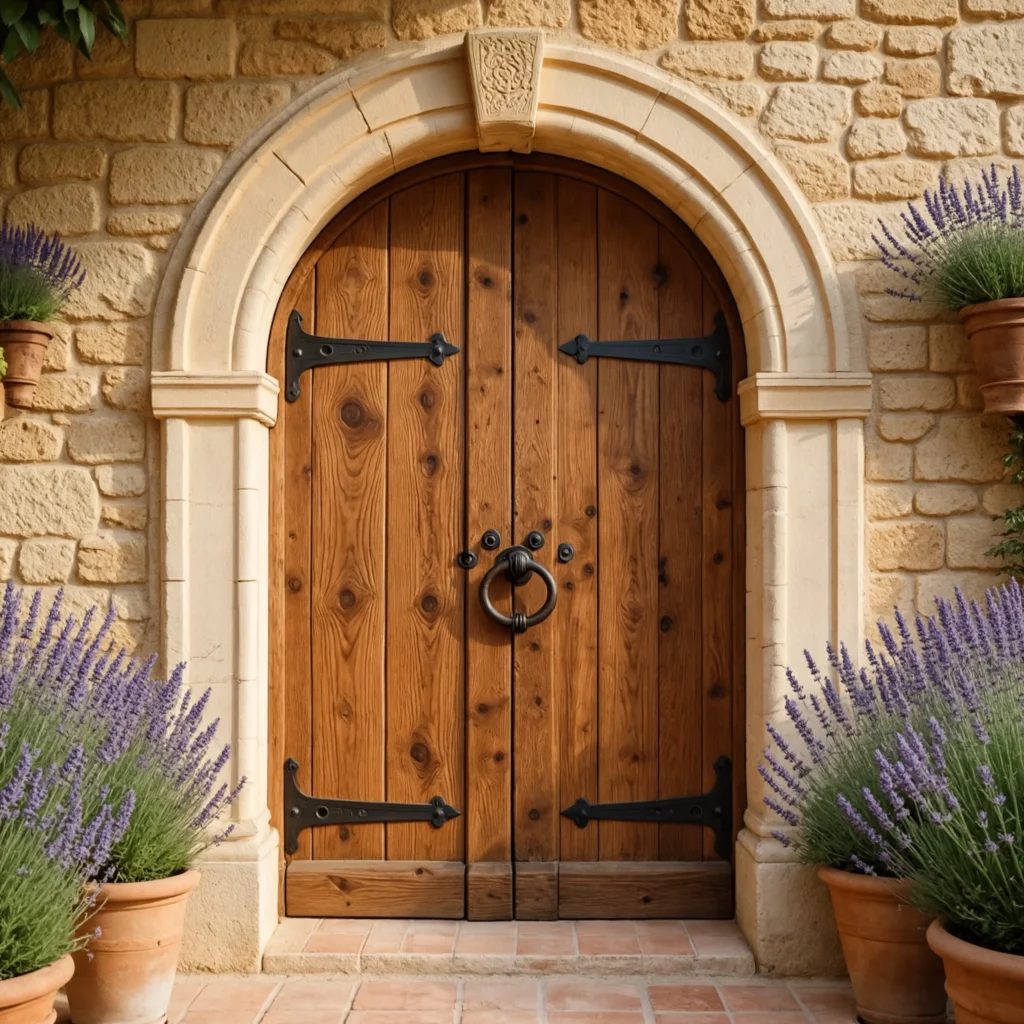
A massive reclaimed chestnut or oak entrance door with hand-forged iron strap hinges and an iron ring knocker creates the most powerfully architectural and the most genuinely old-world Provençal hallway entrance available, establishing the complete regional aesthetic identity of the interior from the very first moment of arrival through the quality, the material authenticity, and the sheer physical weight of a properly constructed traditional Provençal timber door of genuine historical character and considerable agricultural heritage.
Source reclaimed timber doors from specialist Provençal salvage dealers or commission from traditional French menuisiers using genuinely aged timber — old-growth chestnut being the most authentically regional species and the most beautifully grained wood available for Provençal door construction. The door’s thickness — minimum 60mm for a genuine traditional Provençal entrance door — communicates the building’s stone wall thickness and the door’s serious weather-excluding purpose through its considerable physical mass and solid construction.
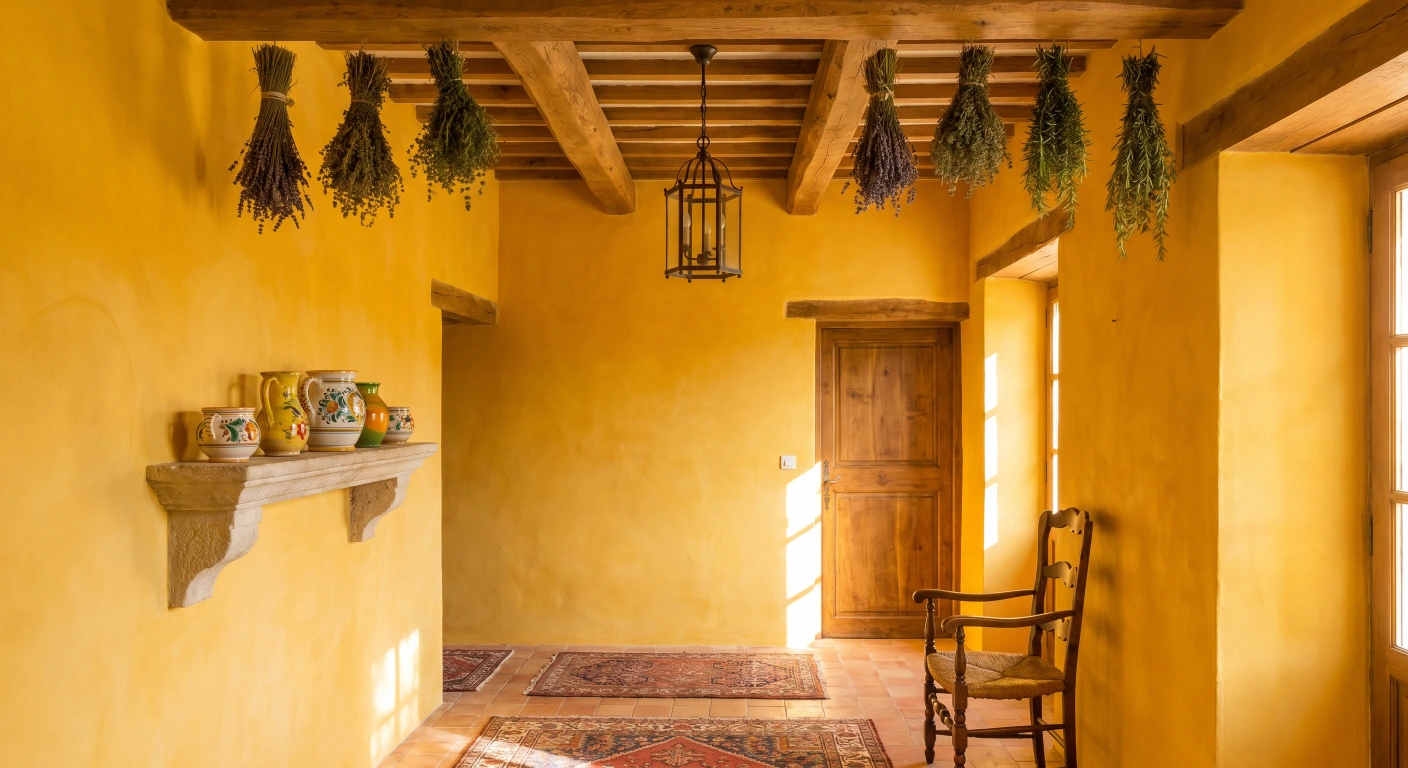
4. Dried Lavender and Herb Bunches Hanging from Beams
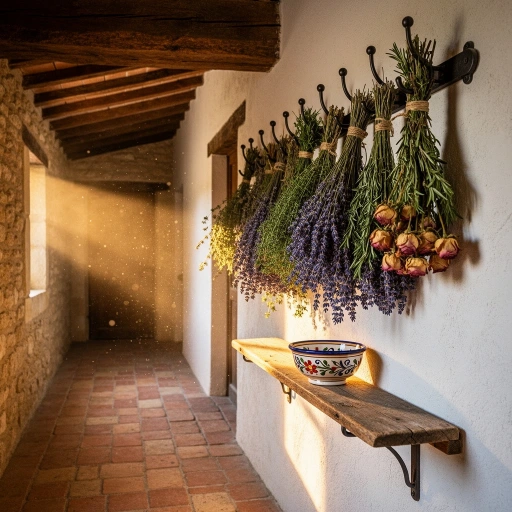
Dried lavender, rosemary, thyme, and rose bunches hanging in generous clusters from exposed timber ceiling beams create the most fragrant, the most authentically Provençal, and the most immediately sensory-transporting hallway decoration available, because the specific combined fragrance of dried Provençal herbs and flowers in warm summer air is one of the most powerfully evocative scent memories available — instantly conjuring the specific landscape, light, and agricultural life of genuine Provence with complete and irresistible conviction.
Harvest lavender bunches when the flower spikes are approximately 50% in bloom — the partially open flowers retaining their fragrance most persistently through the drying process, lasting twelve to eighteen months before requiring replacement. Tie each bunch tightly with natural raffia or cotton twine at the stem base and hang inverted from ceiling hooks or beam nails in a cool, well-ventilated space for three weeks before relocating to the hallway where the dried bunches will continue releasing fragrance for months of genuinely aromatic enjoyment.
5. Wrought Iron Lantern or Chandelier Lighting
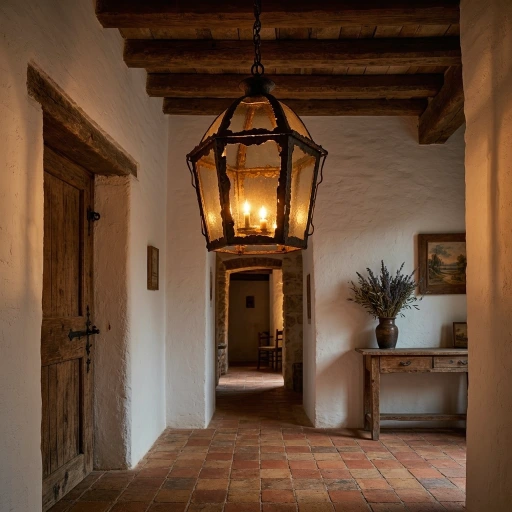
A hand-forged wrought iron lantern with amber glass panels suspended from a timber beam creates the most atmospherically warm and the most authentically Provençal hallway lighting available, casting the specific quality of amber-tinted lantern light across terracotta floors and whitewashed stone walls in a combination of warm material surfaces that collectively produce the most beautiful and the most unmistakably old-world French interior lighting effect achievable in any hallway regardless of its specific architectural character.
Source the wrought iron lantern from a specialist artisan forger rather than from a mass-produced decorative lighting manufacturer — the slight irregularities of genuinely hand-forged iron, the individual character of each component’s hammer marks, and the specific variation in surface texture between worked and unworked iron sections being the precise qualities that immediately and unmistakably distinguish a genuinely handmade lantern from its manufactured alternative in any quality of light and from any viewing distance.
6. Carved Stone Console Table
A genuinely antique carved limestone console table with scrolled supports and a decorative carved apron creates the most materially distinguished and the most historically significant hallway furniture piece available to any Provençal interior, providing a surface of genuine cultural and artistic value that immediately and powerfully communicates the hallway’s authentic Provençal character through the quality of its material, the skill of its carving, and the beautiful surface evidence of its considerable age and genuine provenance.
Source antique limestone console tables from specialist Provençal antique dealers in L’Isle-sur-la-Sorgue — the Luberon’s most celebrated antique center — or from Parisian antique markets including the Marché aux Puces de Saint-Ouen where Provençal architectural antiques of genuine quality appear regularly. The limestone’s natural age should be visible in the stone’s slightly softened carving edges, its developing surface patination, and the occasional minor surface repair that confirms the piece’s genuine historical use rather than recent manufacture.
7. Antique Faience Ceramic Vases and Pottery
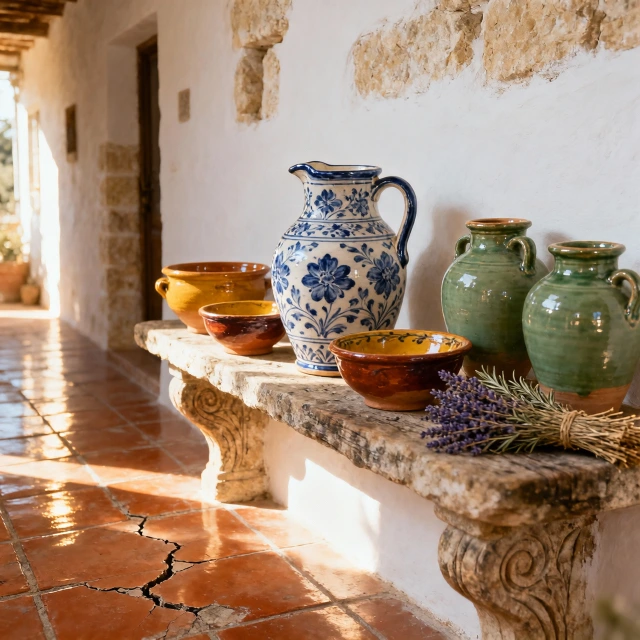
A curated collection of antique Provençal faience ceramics — Moustiers blue-and-white pieces, Apt ochre earthenware, and Vallauris green-glazed pottery — creates the most culturally specific and the most genuinely art-historical hallway decorative display available to a Provençal interior, because these three ceramic traditions represent distinct regional craft identities of the Provençal landscape that collectively communicate a deep knowledge of and genuine engagement with the specific artistic heritage of the region being referenced and celebrated.
Source genuinely antique Provençal faience from specialist dealers in Moustiers-Sainte-Marie, L’Isle-sur-la-Sorgue, and Aix-en-Provence rather than contemporary reproduction pieces — the antique examples’ characteristic slightly irregular glaze application, their evident age and use marks, and their specific ceramic body color being immediately distinguishable from the more uniformly perfect surface of newly manufactured reproductions regardless of how carefully the reproduction follows the original’s visual pattern and color scheme.
8. Aged Mirror in a Carved Gilt or Painted Frame
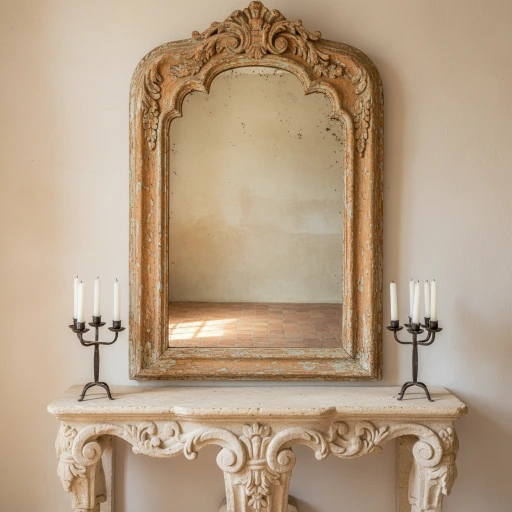
An antique mirror in a carved painted or gilt frame with genuine age patination — areas of original paint worn through to gesso or bare wood — creates the most decoratively magnificent and the most light-amplifying hallway feature available to any Provençal interior, simultaneously expanding the visual depth of the entrance space through its reflective surface and contributing a genuine piece of decorative art of significant historical and artistic value to the hallway’s complete aesthetic program.
Choose a frame with genuinely aged painted or gilded surface rather than a recently manufactured frame artificially distressed to appear aged — the genuine article’s irregular surface wear, its specific sequence of paint layers visible at wear points, and the particular quality of depth in the original paint or gilding distinguishing it from newly made alternatives whose distressing inevitably appears mechanical and uniform rather than the naturally varied and completely unpredictable surface of genuinely aged decorative painted work.
9. Lavender Blue or Ochre Yellow Wall Color
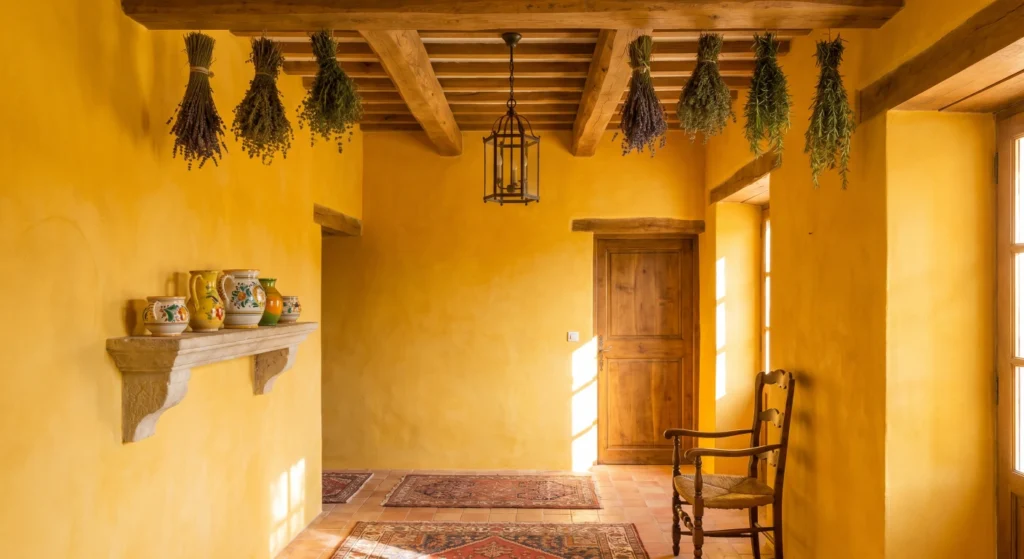
Ochre yellow or lavender blue mineral paint on Provençal hallway walls creates the most regionally specific and the most immediately evocative color treatment available, because these two colors are the most characteristic and the most historically consistent pigments of the Provençal decorative tradition — ochre yellow derived from the specific mineral deposits of the Luberon’s ochre quarries at Roussillon, and lavender blue referencing the endlessly blooming lavender fields that define the Provençal landscape’s most universally recognized visual identity.
Apply ochre yellow paint in a genuine mineral or limewash formula — Bauwerk’s Colour Limewash, Graphenstone’s mineral paint, or a traditional chaux aérienne mixture with Roussillon ochre pigment — rather than conventional latex that lacks the specific luminosity, the natural mineral depth, and the characteristic slightly chalky surface quality that mineral pigments applied in traditional techniques produce on plaster or stone surfaces in a way that no synthetic paint formulation has successfully replicated.
10. Antique Wooden Chair or Bench with Rush Seat
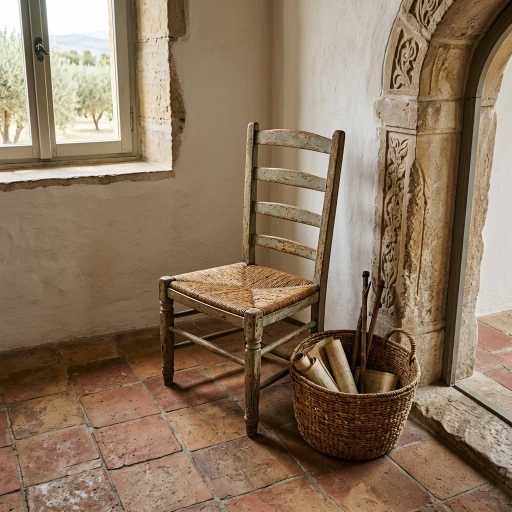
A genuine antique Provençal ladder-back chair with an original hand-woven rush seat in warm honey tone creates the most culturally authentic and the most genuinely French rural furniture piece available to any Provençal hallway, because the ladder-back rush-seat chair is the single most consistently and the most ubiquitously used furniture form in the traditional Provençal domestic interior — found in every farmhouse kitchen, dining room, and hallway throughout the region’s agricultural communities for more than three centuries.
Source genuine antique Provençal ladder-back chairs from Provençal brocante markets, village vide-greniers, or specialist regional antique dealers rather than contemporary reproduction pieces — the antique examples’ specific paint wear patterns, their particular rush weave technique, and their characteristic slightly irregular hand-turned ladder rungs being the visual qualities that most immediately and most unmistakably distinguish genuinely aged regional furniture from its newly manufactured alternative regardless of the reproduction’s technical quality.
11. Exposed Stone Archway Between Hallway and Interior
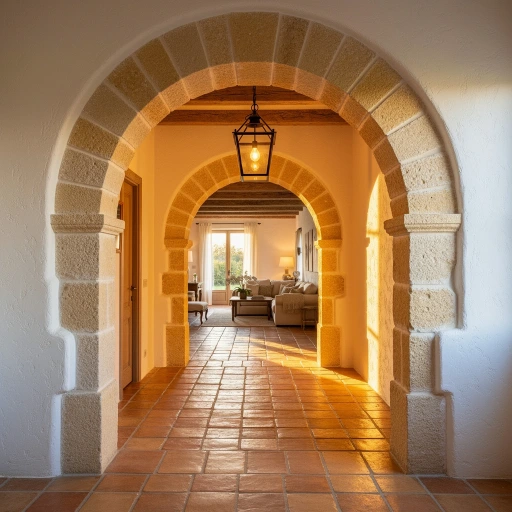
An exposed limestone stone archway with dressed voussoir blocks forming a perfect semicircular opening between the hallway and the adjacent living space creates the single most architecturally magnificent and the most genuinely old-world Provençal transition available between connected interior spaces, because the stone arch simultaneously celebrates the building’s original construction technique with complete material honesty and creates a framed architectural view of extraordinary beauty that makes every passage from hallway to interior a genuinely pleasurable spatial experience.
Expose existing stone arches hidden beneath plaster or drywall finishes rather than constructing new stone archways that cannot convincingly replicate the genuine structural logic, the specific stone coursing, and the beautiful variation in individual voussoir dimensions of an arch constructed in genuine lime mortar by a traditional Provençal maçon centuries before any contemporary interior decoration was applied to conceal its considerable architectural beauty and historical significance.
12. Hand-Painted Provençal Tile Stair Risers
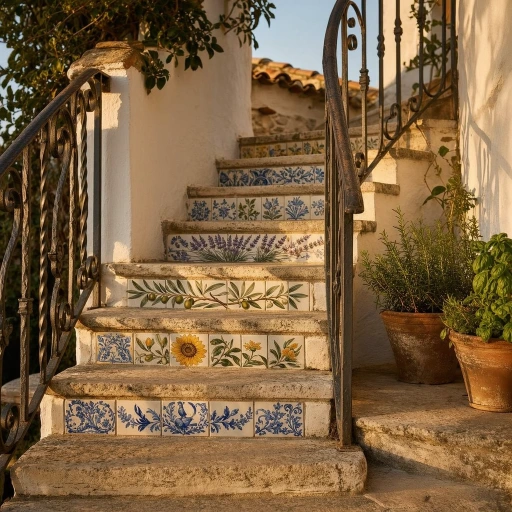
Hand-painted faience tiles on each staircase riser — each riser decorated with a different Provençal botanical or geometric pattern in the blue-and-white Moustiers tradition, ochre sunflower motifs, or lavender illustrations — creates the most charming and the most culturally specific Provençal staircase decoration available, transforming the functional riser surface from a plain, undecorated building element into a continuous gallery of regional ceramic art that rewards every ascending or descending passage with new visual discovery and genuine decorative pleasure.
Commission hand-painted Provençal tile risers from a specialist faience atelier in Moustiers-Sainte-Marie or Aubagne — the traditional centers of Provençal painted ceramic production — rather than applying commercially printed tile transfers that lack the delicate variation in brushwork, the natural slight irregularity of hand-painted line, and the specific quality of hand-applied ceramic glaze that distinguishes a genuinely hand-painted tile from any printed or decal alternative at every close viewing distance.
13. Vintage Provençal Textile Runner or Wall Hanging
A genuine vintage Provençal cotton boutis or traditional woven textile runner in warm yellow, red, and blue geometric patterns creates the most texturally rich and the most specifically Provençal floor decoration available to any hallway terracotta tile treatment, adding the specific warmth of traditional hand-printed or woven Provençal textile craft to the hard, cool terracotta surface in a combination of floor materials that is completely characteristic of and completely beautiful within the authentic Provençal domestic interior tradition.
Source genuine vintage Provençal textiles from specialist dealers in Arles, Tarascon, or Avignon — the historical centers of the Souleiado and Les Olivades cotton printing traditions that produced the most celebrated and the most specifically regional Provençal textile designs. Vintage examples with genuinely faded colors, softened handle, and occasional minor repairs communicate decades of genuine household use that new textile productions however faithfully patterned cannot provide regardless of their specific pattern and color quality.
14. Rustic Wooden Beam Coat and Hat Hooks
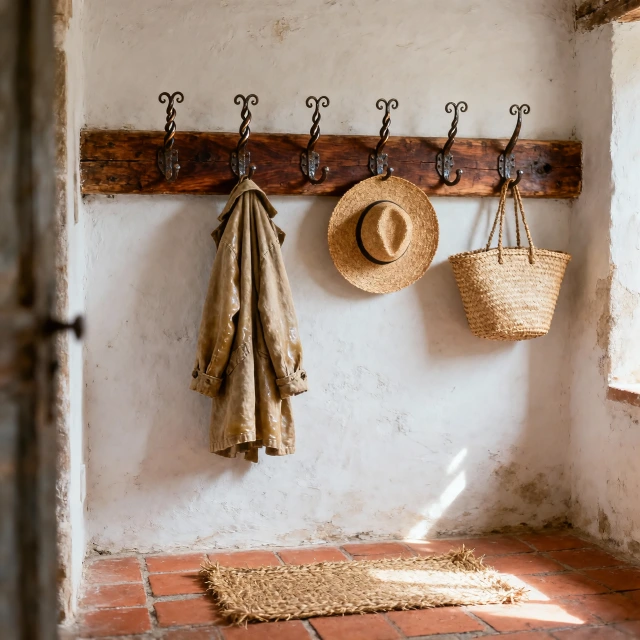
A reclaimed chestnut or oak beam mounted horizontally at coat-hanging height and fitted with hand-forged iron hooks of individually varied decorative form creates the most materially honest and the most authentically Provençal coat and hat storage available, combining genuinely aged timber with individually hand-forged metalwork in a hallway storage element of complete artisanal character whose material quality and modest functional ambition are entirely consistent with the authentic Provençal domestic aesthetic of honest materials used with genuine craft skill.
Source the reclaimed beam from an architectural salvage specialist in beams recovered from Provençal mas or bergerie demolitions — the centuries of smoke staining, insect tracking, and agricultural use visible in the timber’s surface being precisely the qualities that give the beam its most beautiful and its most irreplaceable surface character. Hand-forged hooks should be commissioned from a local forgeron rather than purchased from commercial hardware suppliers whose products lack the individual variation of genuinely hand-made iron work.
15. Wooden Chest or Coffre for Hallway Storage
A genuine antique Provençal coffre — a carved chestnut or walnut wedding chest — positioned against the hallway wall creates the most culturally significant and the most emotionally resonant furniture piece available to any Provençal hallway, because the coffre is the most symbolically important traditional furniture form in the Provençal domestic heritage, representing the accumulated household linen, textiles, and personal objects that formed the essential material foundation of traditional Provençal family life across many generations of continuous regional domestic culture.
Source genuine antique Provençal coffres from specialist antique dealers in the Luberon and Alpilles regions — Gordes, Les Baux-de-Provence, and Saint-Rémy being particularly rich sources of high-quality traditional Provençal furniture — choosing pieces with their original carved decorative panels intact, their original iron hinges and lock hardware, and the beautiful deep walnut or chestnut patination that genuine antique pieces develop through centuries of wax polishing and natural oxidation in the warm, dry Provençal domestic interior climate.
16. Herbs in Terracotta Pots on Window Ledges
Terracotta pots of growing rosemary, lavender, thyme, and sage on deep stone window ledges create the most fragrant and the most genuinely botanically alive Provençal hallway feature available, because the growing herbs’ combined fragrance in warm afternoon sunlight — intensifying as the sun heats the essential oils in the plant’s leaves — fills the hallway with the specific aromatic landscape of the Provençal garrigue that is the region’s single most instantly recognizable and most powerfully evocative sensory signature.
Allow the terracotta pots to weather completely naturally without cleaning or sealing — the progressive development of white mineral salt deposits, green moss patches, and the orange-to-grey weathering of exposed terracotta clay creating a pot surface of extraordinary beauty and authenticity that contrasts most beautifully with the living green of the herb plants growing from within. Genuinely weathered terracotta is among the most beautiful and the most difficult-to-replicate natural surfaces in the complete Provençal decorative vocabulary.
17. Natural Beeswax Candles and Iron Candlesticks
Natural beeswax candles in hand-forged iron candlesticks on the carved stone console create the most atmospherically beautiful and the most authentically pre-electric Provençal hallway lighting available for evening use, because genuine beeswax candles — made from unbleached, naturally honey-colored beeswax from local apiaries — produce a warm, clean-burning flame of extraordinary beauty that illuminates stone walls, terracotta floors, and the burnished surfaces of antique furniture with the most flattering and the most historically appropriate quality of light available to any Provençal interior for evening atmospheric enhancement and the most genuinely beautiful old-world French domestic visual experience imaginable.
Source natural beeswax candles from a local apiculteur or a specialist natural candle producer using genuine local beeswax — the specific warm honey-gold color and the characteristic subtle fragrance of pure beeswax being immediately distinguishable from paraffin or palm wax alternatives that lack these qualities. The beeswax candle’s longer burning time, its cleaner burn without the black soot deposits of paraffin alternatives, and its genuinely beautiful warm amber flame color make it the most practically excellent as well as the most aesthetically authentic Provençal hallway candle material available.