17 Walkway Pavers Ideas for a Stunning Outdoor Path
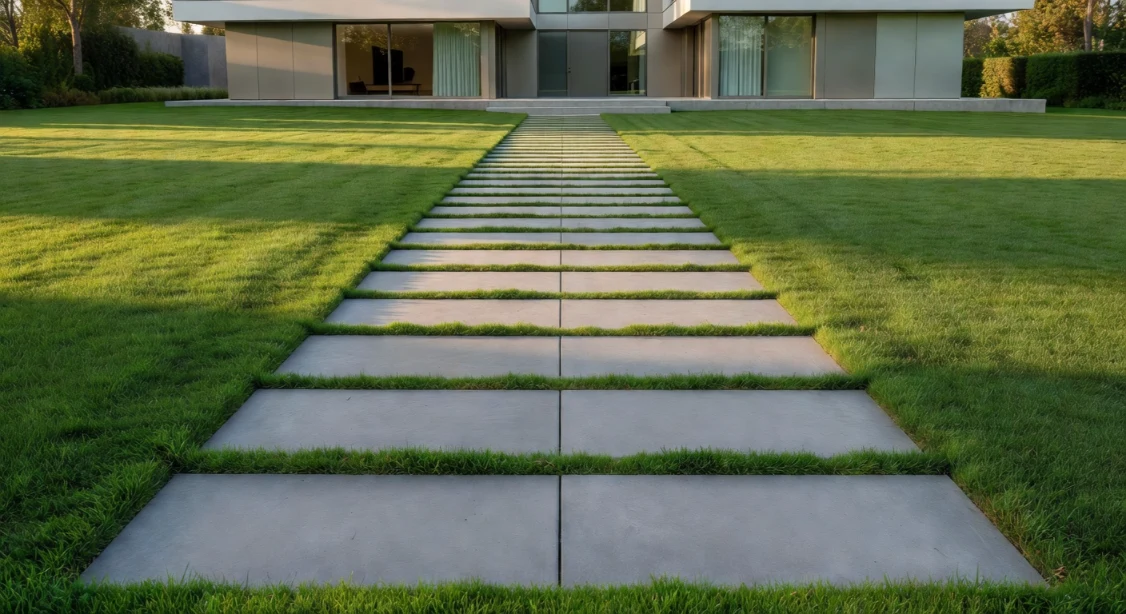
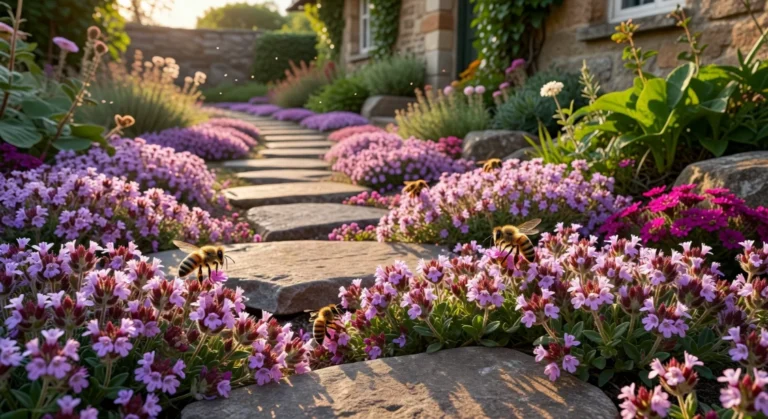
1. Natural Flagstone Walkway
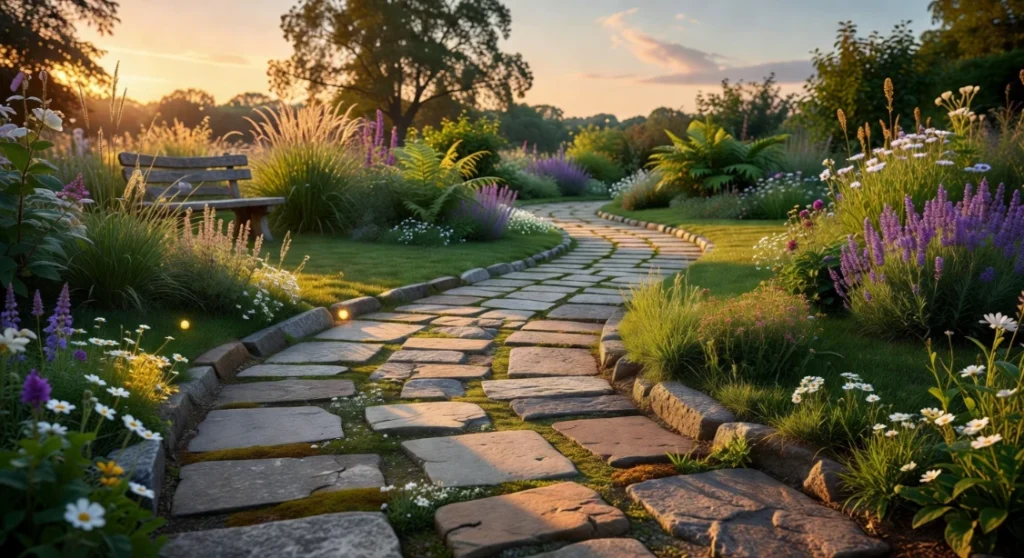
Natural flagstone is one of the most timeless and beloved walkway paver materials available. Each stone is uniquely shaped and coloured, creating a pathway that feels organic, handcrafted, and deeply connected to the natural landscape around it. Flagstone works beautifully in cottage gardens, woodland settings, and Mediterranean-style outdoor spaces. The irregular edges and earthy tones blend effortlessly with surrounding plants, making the path feel like it has always been part of the garden.
One of flagstone’s greatest advantages is its versatility — it can be laid tightly together for a formal effect or spaced apart with ground cover plants or gravel filling the gaps for a more relaxed, naturalistic look. Popular flagstone varieties include bluestone, limestone, slate, and sandstone, each offering a different colour palette and surface texture. Moss naturally colonises the joints over time, adding a beautiful aged quality. This is a walkway style that consistently earns enormous engagement on outdoor and garden design boards across Pinterest.
2. Brick Herringbone Pattern Walkway
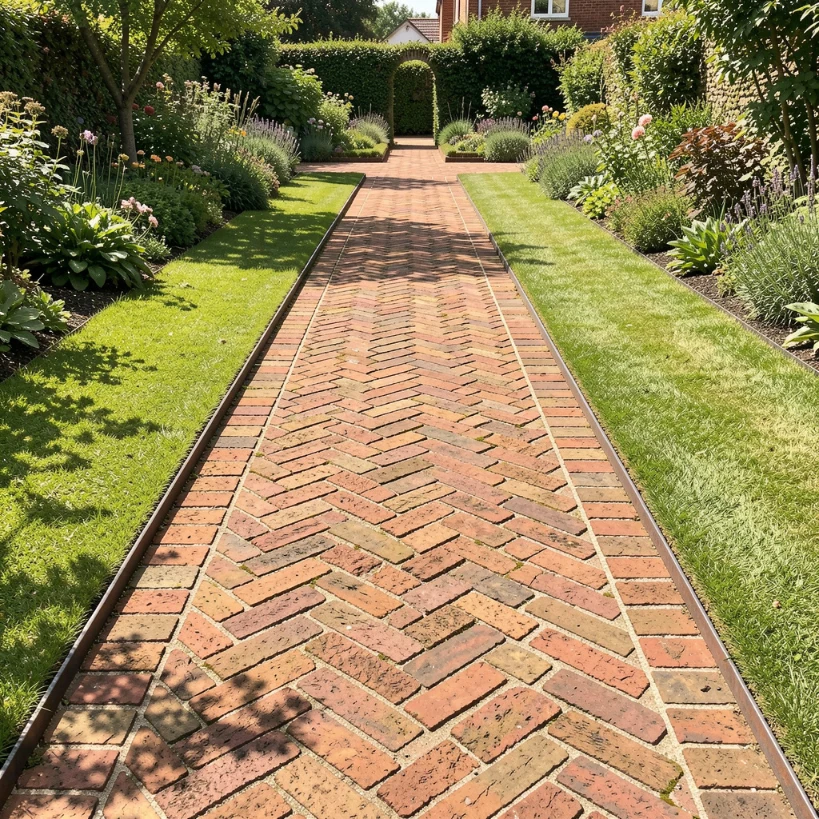
A brick walkway laid in the classic herringbone pattern is a timeless choice that brings warmth, structure, and historic character to any outdoor space. The interlocking V-shaped arrangement of the bricks creates a path that is both visually dynamic and exceptionally strong underfoot. Herringbone-patterned brickwork has been used in gardens and courtyards for centuries, and its appeal shows no sign of fading — it remains one of the most popular walkway designs on Pinterest’s outdoor living boards.
The warm red, terracotta, and brown tones of traditional clay brick complement virtually every garden style, from formal English gardens to relaxed cottage landscapes. Steel or aluminium edging strips keep the brick pattern clean and prevent the edges from spreading over time. For a more contemporary twist, choose grey or charcoal engineering bricks and lay them in the same herringbone pattern — the result is a walkway that feels modern without losing the classic appeal of the brick format. This pathway idea suits front gardens and backyard entertaining areas equally well.
3. Large Format Concrete Stepping Stones
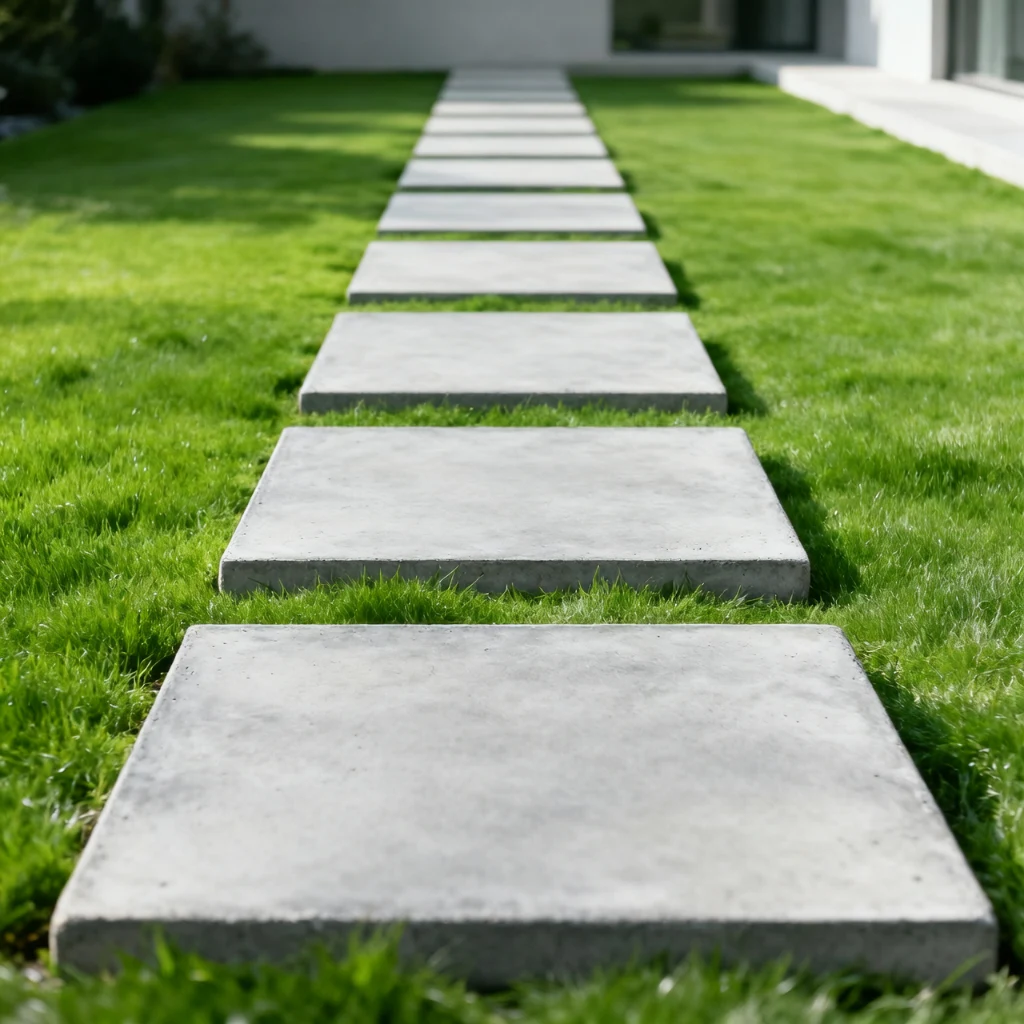
Large format concrete stepping stones placed across a green lawn create one of the cleanest, most architecturally satisfying walkway effects in modern landscape design. The simplicity of square or rectangular grey concrete pavers against vibrant green grass is visually striking in its restraint — a deliberate, graphic composition that feels designed rather than accidental. This walkway style suits contemporary and minimalist outdoor spaces beautifully, particularly in gardens designed around clean lines and open space.
The spacing between each stepping stone is a key design decision — wider gaps with grass growing between each paver feel relaxed and naturalistic, while tighter spacing creates a more formal, confident path. Large format pavers are typically 600x600mm or larger, which means fewer joints, fewer weed issues, and a smoother walking experience. Concrete stepping stones are also highly durable, frost-resistant, and low maintenance. Their clean grey tones photograph exceptionally well, making them a firm favourite in landscape design features shared across Pinterest and Instagram.
4. Pea Gravel and Timber Sleeper Walkway
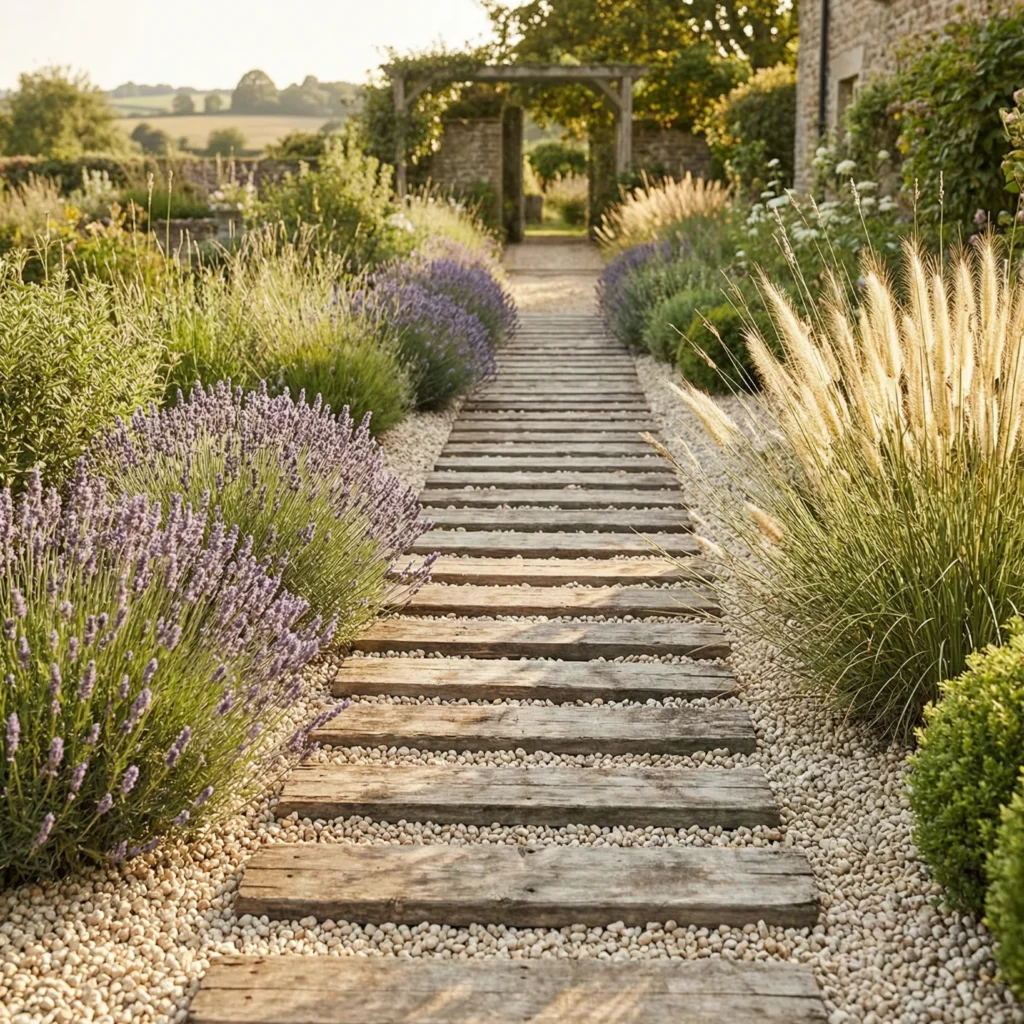
A combination of reclaimed timber sleepers and pea gravel creates a walkway that is effortlessly charming, budget-friendly, and deeply satisfying in its rustic simplicity. The dark, weathered tones of the timber contrast beautifully with the pale, rounded pebbles of pea gravel, creating a natural colour palette that harmonises with virtually any garden planting scheme. This style of walkway feels particularly at home in cottage gardens, country properties, and relaxed informal outdoor spaces.
Timber sleepers define the edges and structure of the path, preventing the gravel from spreading into surrounding planting beds. The gravel itself provides excellent drainage — an important practical consideration for pathways in wet climates. As the timber ages naturally, it develops a silver-grey patina that becomes increasingly beautiful over time. Lavender, ornamental grasses, and other soft planting along the edges of this walkway style create a sensory-rich garden experience that is among the most-pinned outdoor path aesthetics on Pinterest worldwide.
5. Mosaic Tile Inlay Walkway
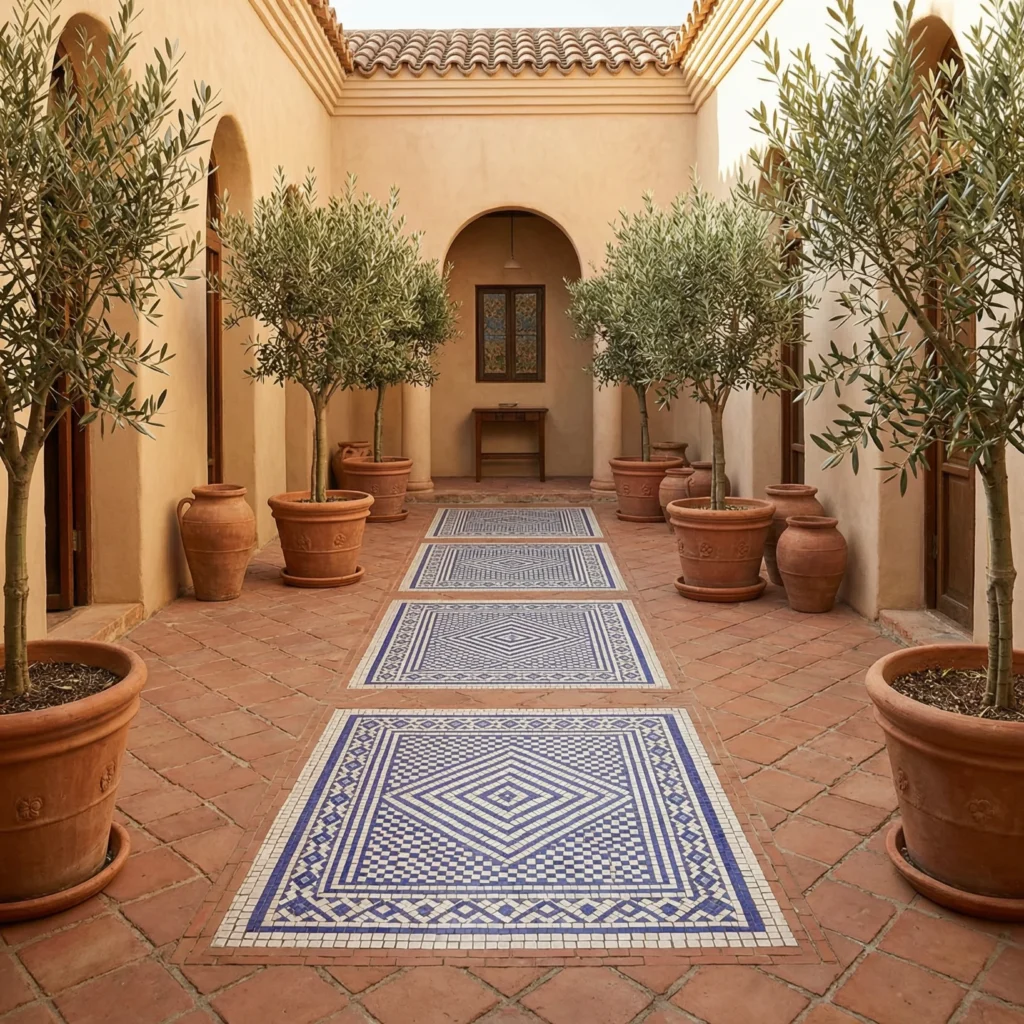
A mosaic tile inlay walkway transforms an ordinary outdoor path into a genuine work of art. By embedding decorative mosaic panels within a framework of standard pavers or terracotta tiles, you create a pathway with the kind of craftsmanship and individuality that cannot be manufactured or replicated. This style draws heavily from Mediterranean, Moroccan, and Spanish design traditions, where decorative tilework has been used to beautify outdoor spaces for thousands of years.
The geometric blue and white patterns typical of Moroccan zellige tilework are perhaps the most instantly recognisable and widely loved mosaic style for garden walkways. These inlaid panels can be placed at regular intervals along the path or concentrated at key points — at the entrance gate, the front doorstep, or the centre of a courtyard. The contrast between the decorative mosaic and the plain surrounding pavers gives each inlay panel the quality of a framed artwork. This walkway idea generates exceptional engagement on Pinterest boards dedicated to global and artisan-influenced garden design.
6. Slate Stacked Stepping Stone Path
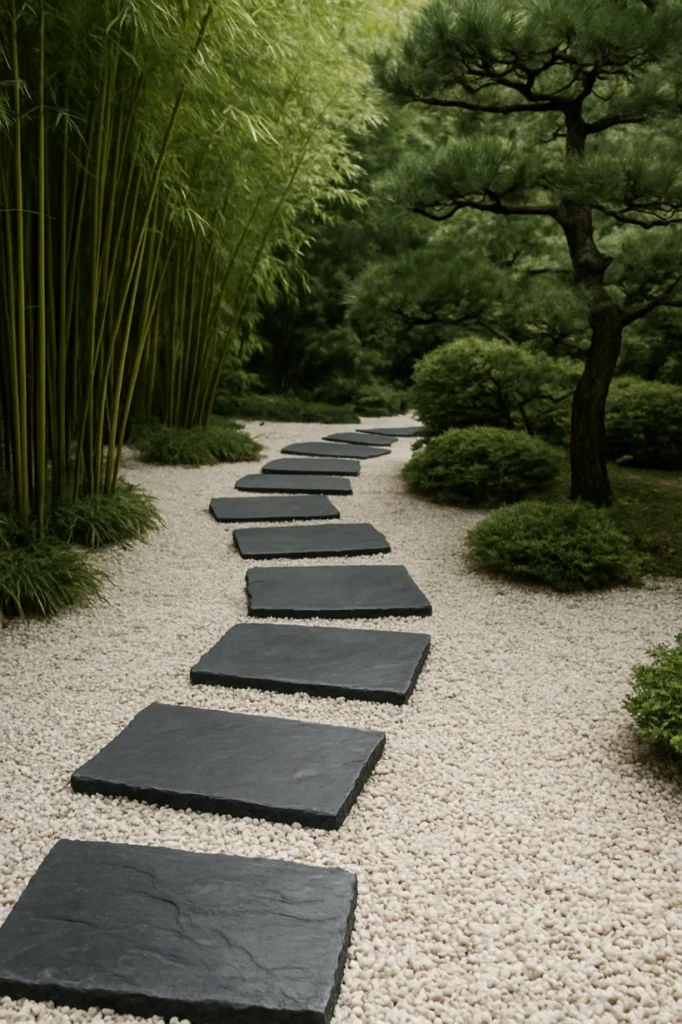
Dark grey slate stepping stones elevated slightly above a white gravel base create a walkway with a strong Japanese Zen garden aesthetic. The sharp, geometric quality of slate — its naturally cleaved flat surface and dark anthracite colour — feels deliberate and meditative in a way that few other materials can achieve. Against the pale negative space of raked white gravel or pale crushed stone, each slate slab reads as a bold, confident design element in its own right.
Bamboo, black pine, ornamental grasses, and carefully placed river stones complete the Zen-inspired landscape around this style of walkway. The slight elevation of each stepping stone above the gravel surface creates an interesting tactile experience underfoot — walking the path becomes a mindful, intentional act rather than a hurried transit. Slate is naturally slip-resistant when wet, making it an excellent practical choice as well as a beautiful one. This walkway style is among the most-saved garden path ideas on Pinterest by fans of Asian-influenced and meditative garden design.
7. Reclaimed Cobblestone Driveway Walkway
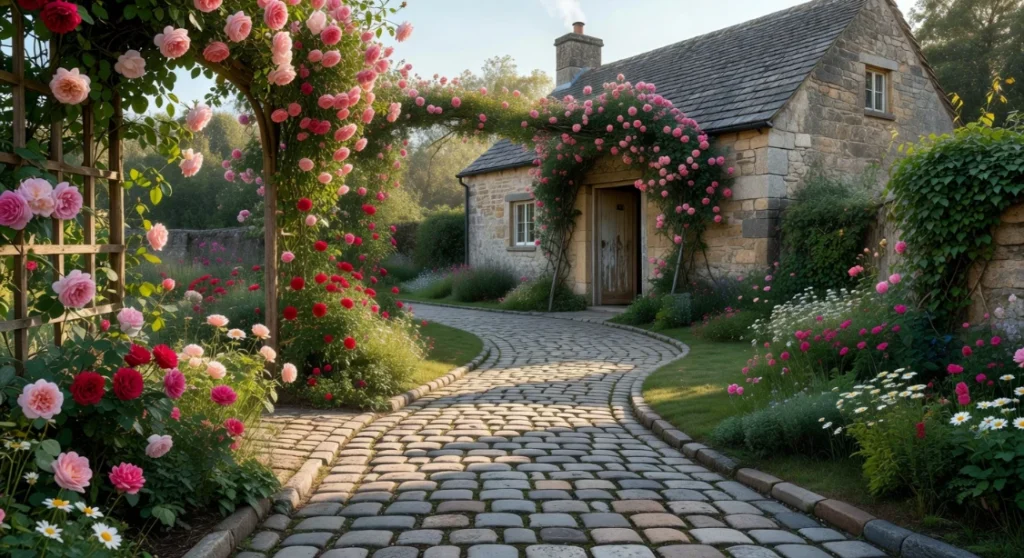
Reclaimed cobblestones carry centuries of history in every rounded, weathered surface. Originally used to pave city streets and town squares across Europe, these stones are now highly prized for their authentic aged character and exceptional durability. A cobblestone walkway leading to a traditional cottage or period home creates an immediate sense of heritage and permanence — the feeling that this path has always been here and always will be. No new material can replicate this quality of age.
The uneven surface and rounded profiles of cobblestones create a slightly undulating walking experience that slows the pace and encourages you to look down and appreciate the texture beneath your feet. This is particularly desirable in front garden settings where the journey to the front door should feel welcoming and considered. Grey cobblestones suit almost any stone or brick building, while warmer terracotta cobbles complement rendered or painted facades beautifully. This walkway material is a consistent favourite among heritage and traditional home owners sharing their spaces on Pinterest.
8. Concrete Pavers with Grass Joints
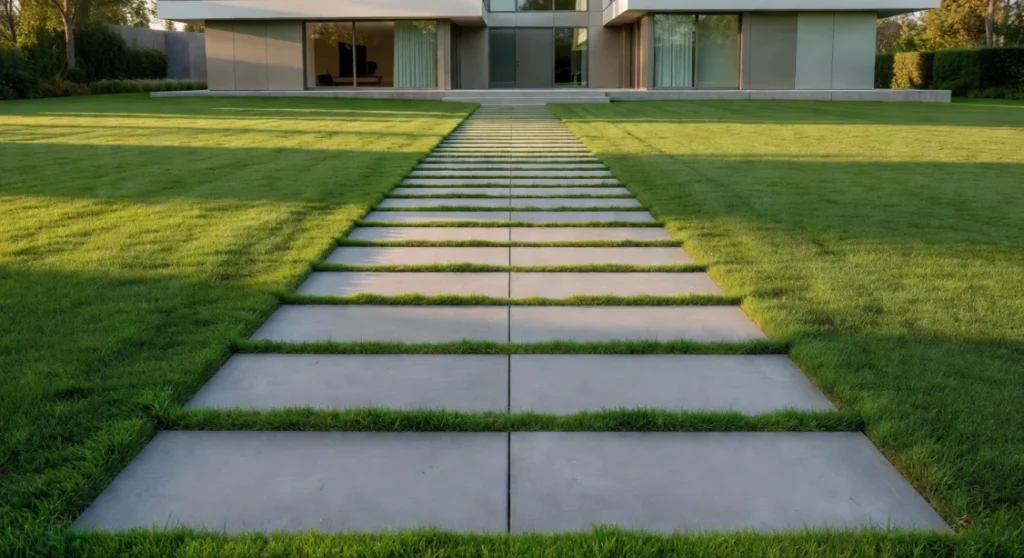
Concrete pavers with grass growing between the joints create a walkway that seems to dissolve into the lawn — a seamless integration of hard landscaping and soft planting that feels effortlessly modern. Setting the pavers flush with the surrounding turf level is the critical detail that makes this effect work. The grass fills the gaps naturally and is trimmed level with the paver surface, creating a grid-like pattern of grey concrete and green that is graphic, elegant, and deeply satisfying to look at.
This walkway style suits contemporary homes with simple, geometric gardens and is particularly popular in Scandinavian and Australian landscape design, where the connection between architecture and garden is treated as a continuum rather than a contrast. Maintenance is relatively straightforward — the grass between the pavers is trimmed with a lawn edger or string trimmer. During dry summers, the grass joints may turn brown, creating an interesting seasonal colour shift. This pathway idea earns considerable admiration on Pinterest for its clever merging of the natural and the constructed.
9. Wooden Deck Boardwalk Garden Path
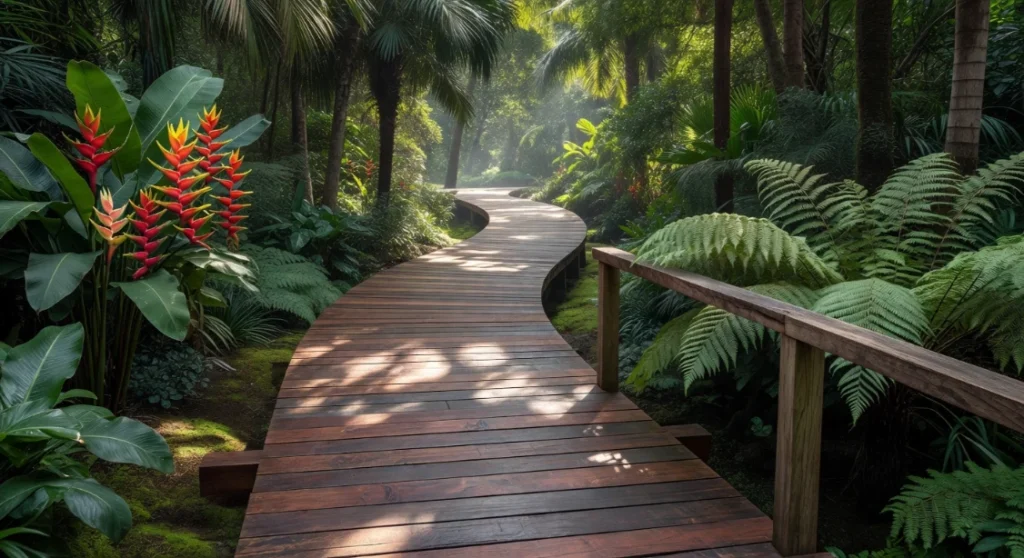
A timber boardwalk path brings the warmth and natural beauty of wood into the garden in a way that feels generous and inviting. Wide hardwood boards — teak, ipe, or composite decking — create a smooth, comfortable walking surface that is softer underfoot than stone or concrete. Raised slightly above the ground on hidden joists, the boardwalk path also provides excellent drainage and prevents pooling of water beneath the structure. This walkway style is particularly well-suited to gardens with uneven terrain or wet, clay-heavy soil.
The warm golden and honey tones of natural hardwood complement lush tropical planting beautifully, creating a resort-like atmosphere in even modest suburban gardens. Composite decking offers a lower-maintenance alternative that retains its colour and resists warping and splitting year after year. Directional decking boards — running perpendicular to the direction of travel — add a subtle visual rhythm that draws the eye along the path. Garden boardwalk paths are among the most aspirational walkway ideas shared on Pinterest’s outdoor living and tropical garden boards.
10. River Rock and Stepping Stone Combination
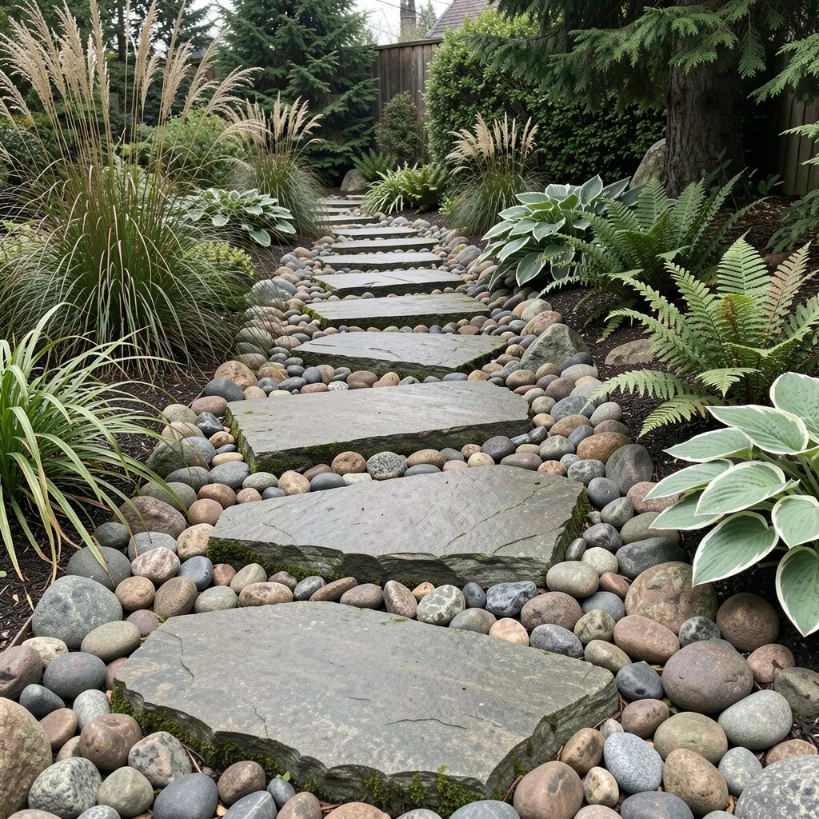
Combining flat stepping stones with a surrounding bed of smooth river rocks creates a walkway that mimics the beauty of a natural streambed or dry riverbed. The rounded river stones provide a stable, permeable surface between each stepping stone, allowing rainwater to drain freely into the soil below. This is both an aesthetically pleasing and ecologically responsible walkway solution, supporting garden drainage and reducing surface water runoff — an increasingly important consideration in contemporary landscape design.
The variety of colours and sizes within natural river rock — grey, brown, cream, and rust tones all appearing together — creates a rich, textured surface that feels entirely organic. Ornamental grasses, ferns, and shade-loving hostas planted along the edges soften the boundary between path and planting bed, blurring the line between garden design and natural landscape. This walkway style suits woodland gardens, rain gardens, and Pacific Northwest-inspired planting schemes with particular elegance. It is a consistently popular idea on Pinterest among gardeners who prioritise sustainability alongside aesthetics.
11. Black Basalt Lava Stone Path
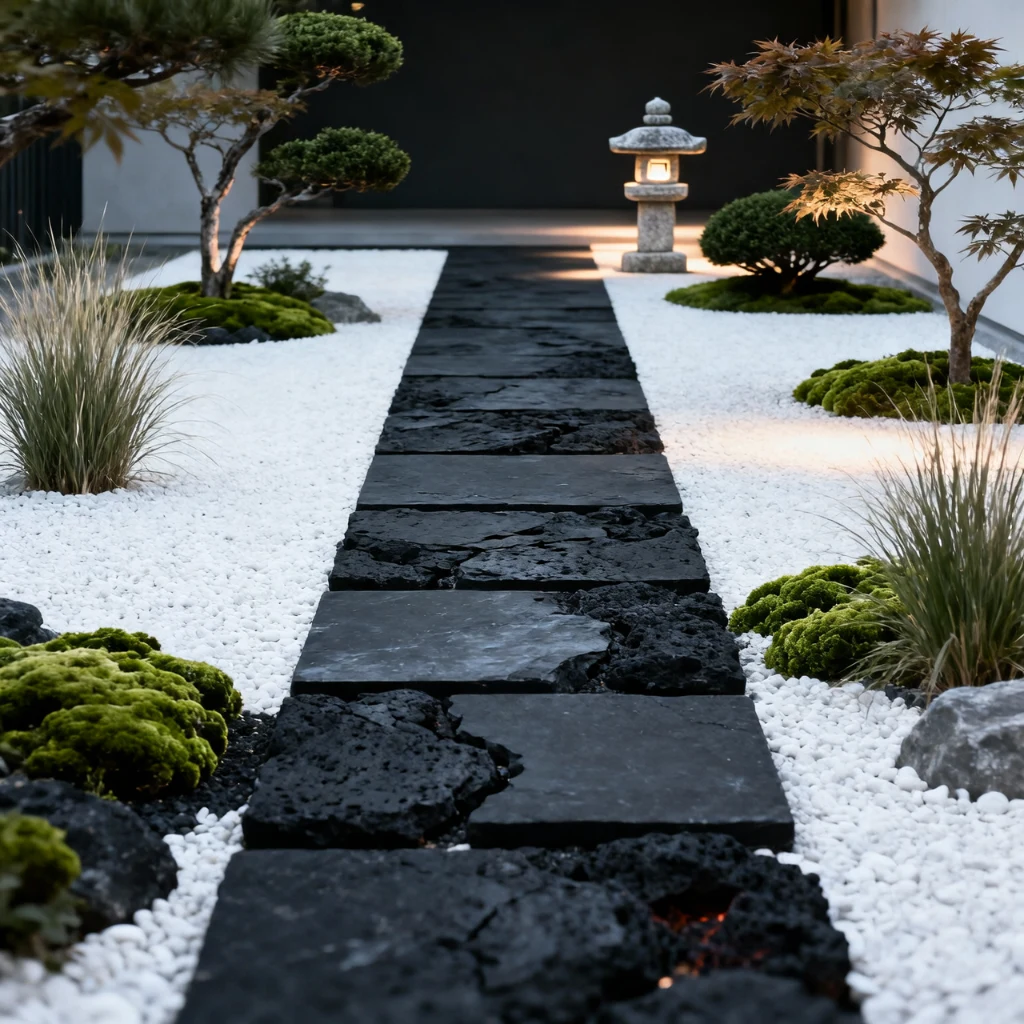
Black basalt lava stone pavers create a walkway of extraordinary visual drama. The deep, near-black colour of volcanic basalt is unlike any other paving material — intensely dark, slightly textured, and almost otherworldly in its appearance. Set in a formal straight line through a pale gravel garden, black basalt pavers create a powerful graphic composition of extreme contrast. This is a walkway that makes a statement from the moment you see it — confident, bold, and completely unforgettable.
Basalt is also one of the hardest and most durable paving stones available, formed under intense volcanic pressure and essentially impervious to weathering, staining, or frost damage. Its naturally textured surface provides excellent grip even in wet conditions. In a contemporary Japanese or minimalist garden, black basalt pavers paired with pale gravel, raked sand, and carefully positioned boulders create a landscape of meditative beauty. This striking walkway material is gaining rapidly growing popularity on Pinterest’s luxury garden and contemporary landscape design boards.
12. Terracotta Paver Mediterranean Path
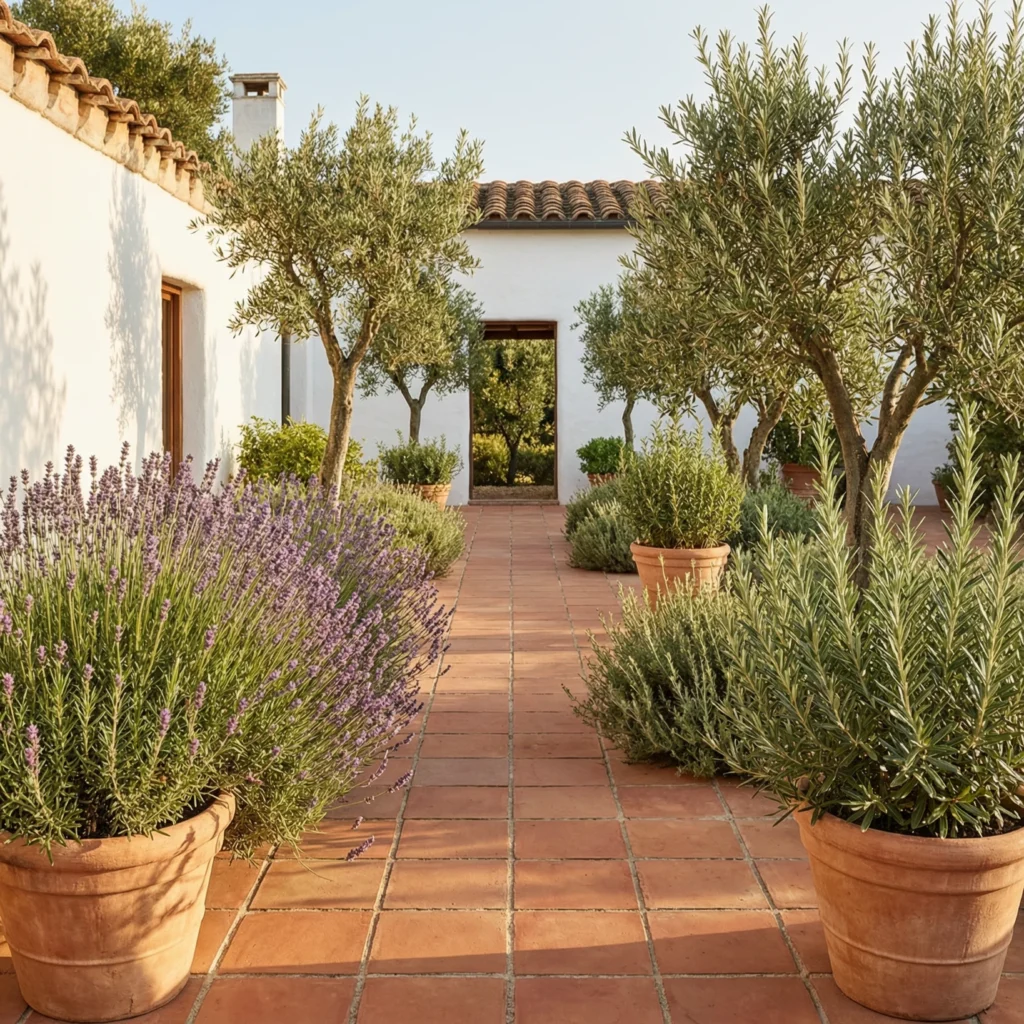
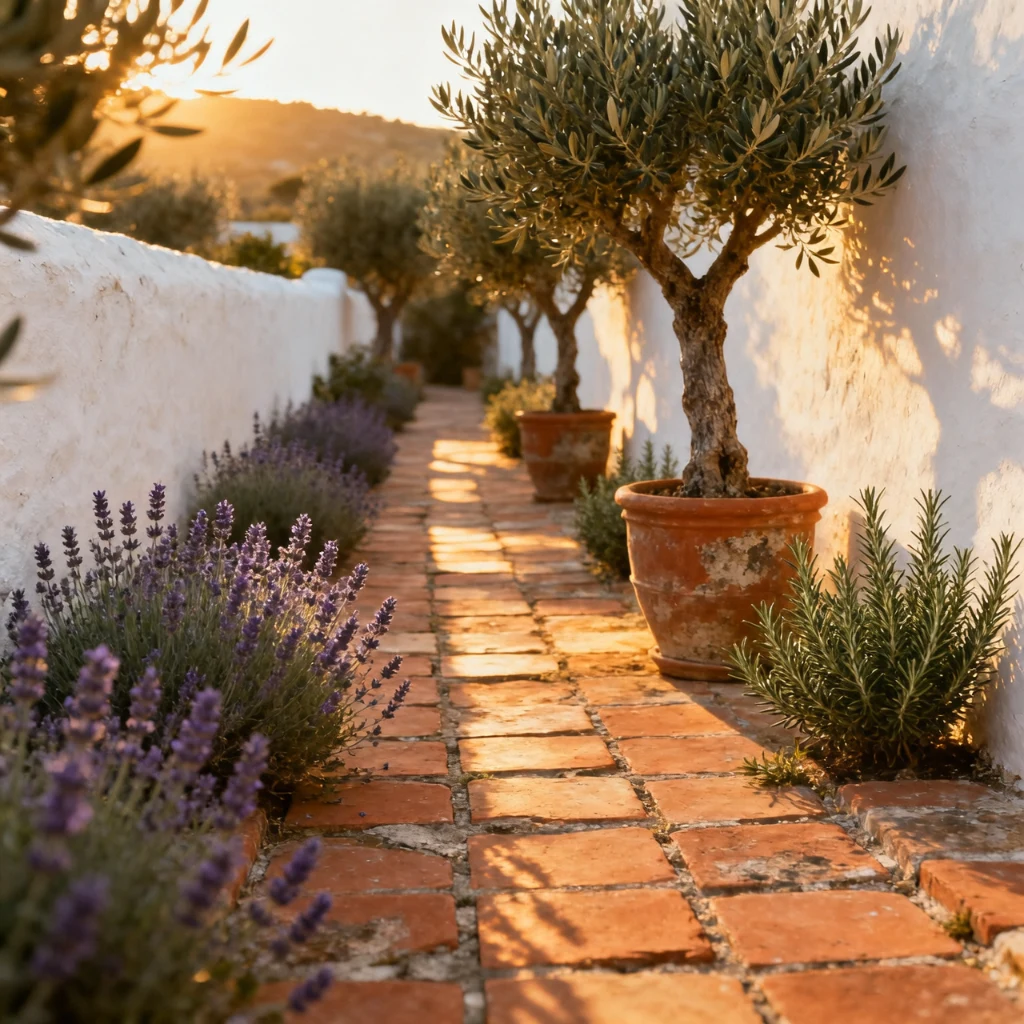
Terracotta pavers bring the warmth of the Mediterranean sun into any garden, their rich burnt orange and clay tones evoking the courtyards of Tuscany, Andalusia, and the Greek islands. The earthy warmth of traditional fired clay tiles is instantly welcoming and creates an outdoor atmosphere that feels relaxed, convivial, and deeply connected to the natural world. This walkway material is particularly well-suited to warm-climate gardens, south-facing terraces, and outdoor entertaining spaces designed for long, leisurely days outdoors.
Terracotta pavers weather beautifully with age, developing a deeper, more varied patina as seasons pass. They are porous by nature, which means they absorb and release heat slowly — pleasant underfoot even on the hottest summer days. Flanked by lavender, rosemary, salvias, and olive trees in matching terracotta pots, this walkway style creates a complete Mediterranean landscape experience that engages all the senses. It is a timeless, deeply romantic garden path idea that generates consistent high engagement from the global Pinterest community.
13. Glow-in-the-Dark Luminescent Paver Path
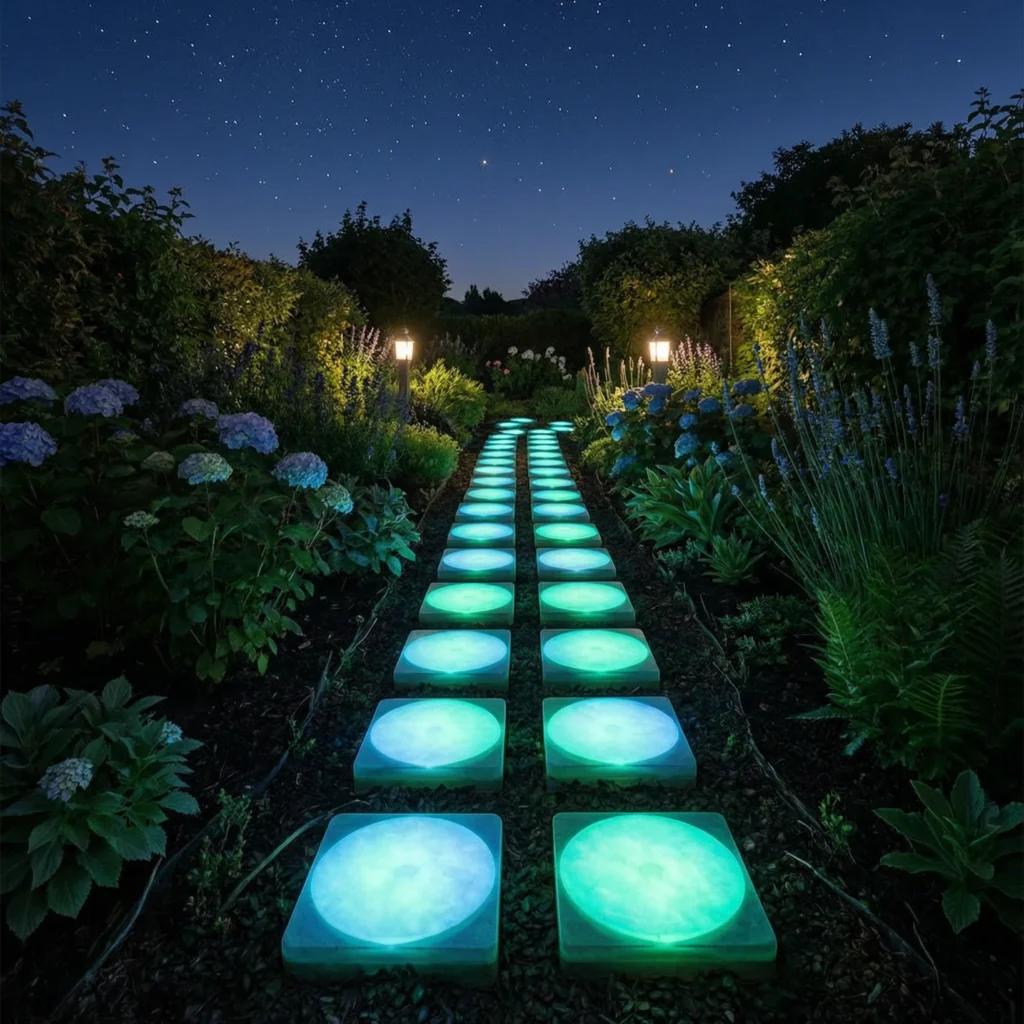
Glow-in-the-dark luminescent pavers represent one of the most exciting and innovative developments in modern outdoor walkway design. These specially manufactured pavers contain phosphorescent aggregates that absorb natural daylight and release it as a soft, ethereal glow after dark — no electricity required. The effect transforms an ordinary garden path into something genuinely magical at night, creating a walkway that seems to emerge from the darkness like a scene from a fantasy film.
The practical benefits match the visual spectacle — a glowing path is inherently safer to navigate after dark, eliminating the need for electrical cable runs and external lighting fittings. The luminescent glow typically lasts for eight to ten hours after sufficient daylight exposure, making it reliable throughout the night. Available in cool blue-green tones that complement the darkness of the night garden beautifully, these pavers are a genuine conversation piece. This innovative walkway idea consistently goes viral on Pinterest and home design social media platforms, earning exceptional save and share counts from garden enthusiasts worldwide.
14. Permeable Resin Bound Gravel Path
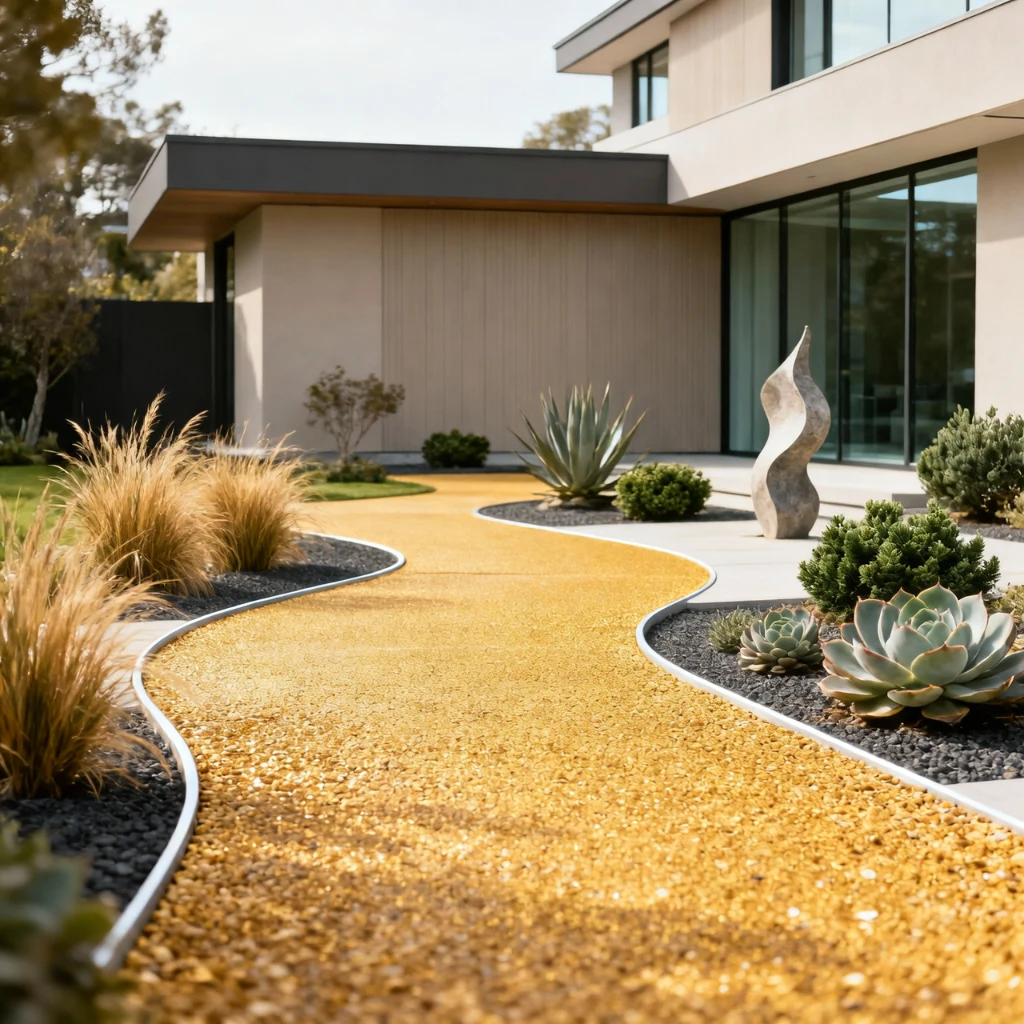
Resin bound gravel paths offer the natural appearance of loose gravel with none of its disadvantages. The small, rounded aggregate stones are permanently bound in a clear resin matrix and trowelled onto a solid base, creating a smooth, seamless surface that is comfortable underfoot, fully permeable to rainwater, and completely resistant to displacement or raking. The result looks and feels premium — a flowing, uninterrupted surface that suits contemporary front gardens and estate driveways equally well.
Available in a wide range of aggregate colours — warm golden, cool grey, terracotta, and even multicolour blends — resin bound paths can be tailored to complement any house style or garden palette. The permeable surface satisfies sustainable urban drainage requirements and prevents puddle formation after heavy rain. Maintenance is minimal — occasional brushing and periodic jet washing keeps the surface looking fresh for many years. Resin bound gravel walkways have become one of the fastest-growing front garden upgrades shared on Pinterest, particularly popular with homeowners seeking a polished, low-maintenance alternative to traditional paving.
15. Crazy Paving Irregular Stone Walkway
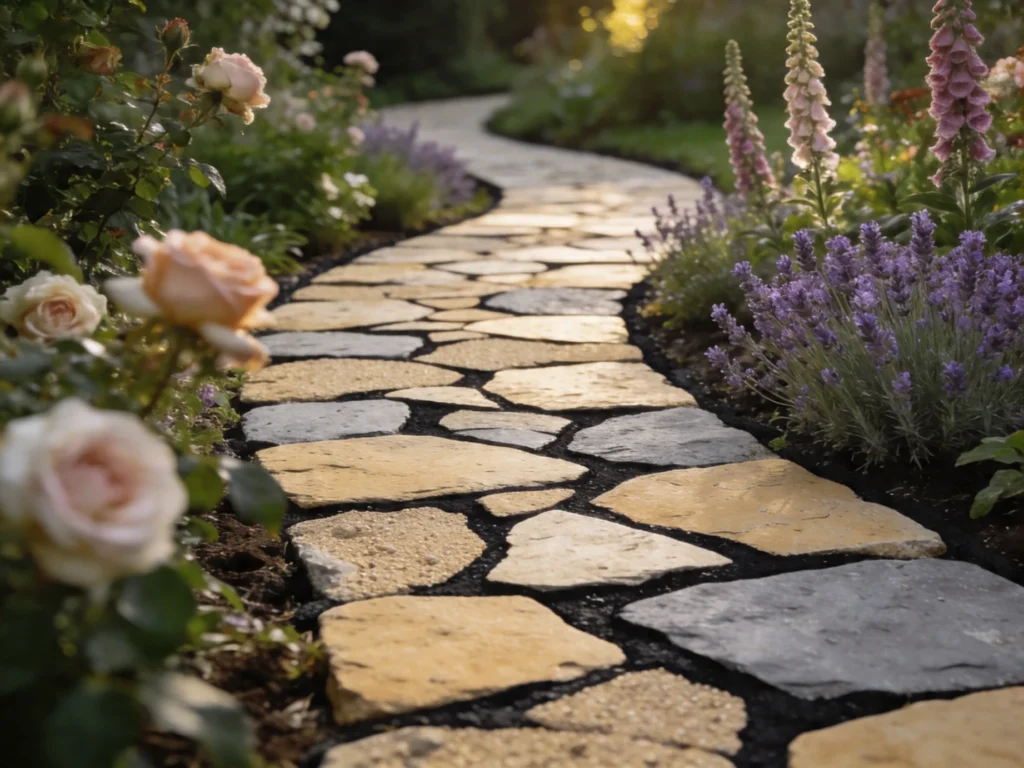
Crazy paving — the art of laying irregular, broken pieces of natural stone in an apparently random yet carefully considered arrangement — creates a walkway with enormous character and handmade charm. Despite its name, successful crazy paving requires considerable skill and patience to execute well. Each irregular stone piece must be fitted together like a jigsaw puzzle, with gaps filled by contrasting dark mortar that emphasises the outline of each individual stone and creates a beautiful mosaic-like effect across the entire path surface.
Buff limestone, grey sandstone, York stone, and reclaimed slate are all popular materials for crazy paving, each offering a different colour story and surface texture. The irregular, organic quality of this walkway style suits cottage gardens, farmhouse outdoor spaces, and any landscape where a sense of age and informality is desirable. When crazy paving paths are well executed, they have a quality of artistic spontaneity that feels genuinely unique — no two paths are ever the same. This cottage-garden staple remains one of the most-searched walkway ideas on Pinterest among fans of traditional British garden design.
16. Porcelain Tile Outdoor Walkway
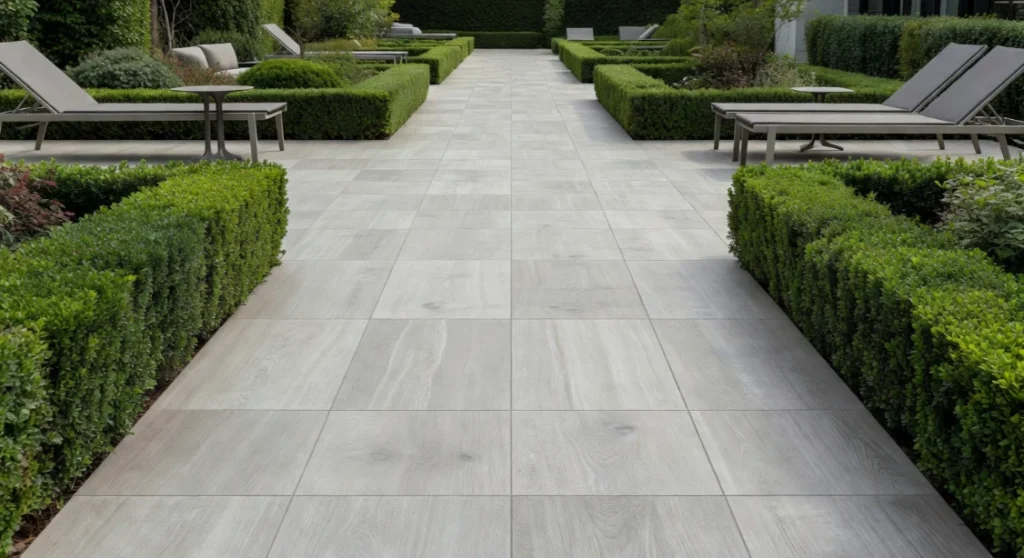
Large format outdoor porcelain tiles bring interior design standards of finish and precision to the garden walkway. Available in an enormous range of finishes — from realistic stone and concrete effects to wood-grain textures — porcelain tiles allow homeowners to achieve any aesthetic in the garden with consistent colour, uniform format, and exceptional durability. Unlike natural stone, porcelain is non-porous, frost-proof, and virtually maintenance-free, requiring only occasional washing to keep it looking as pristine as the day it was laid.
The light grey wood-effect porcelain finish is currently one of the most popular choices for contemporary garden paths and terraces, offering the warmth and organic quality of timber with the longevity and weather resistance of ceramics. Porcelain tiles also offer excellent slip resistance when specified with the correct anti-slip surface rating for exterior use. Their clean, uniform appearance suits formal garden layouts, minimalist outdoor spaces, and urban courtyard gardens beautifully. This walkway material is consistently featured on the most-followed luxury garden and exterior design boards on Pinterest.
17. Stepping Stone Path Through a Wildflower Meadow
A simple path of stepping stones winding through a wildflower meadow creates one of the most romantic and emotionally resonant garden experiences imaginable. The contrast between the hard, man-made simplicity of the stepping stones and the exuberant, colourful chaos of the wildflowers growing around them is deeply beautiful. This walkway idea requires minimal materials — a series of simple round or irregular flat stones pressed into the ground at comfortable walking intervals — but delivers maximum visual and sensory impact.
The wildflower meadow surrounding the path changes character through the seasons — green and expectant in early spring, explosively colourful through summer, and golden and seed-heavy in autumn. Walking through this path becomes a daily sensory experience, with scent, colour, and the sound of bees and butterflies accompanying every journey. This idea requires very little hard landscaping investment but demands commitment to the meadow planting and its annual management. It is among the most emotionally compelling and