16 Desert Kitchen Design Ideas with Warm Minimalism
1. Terracotta Tile Backsplash with Adobe Walls
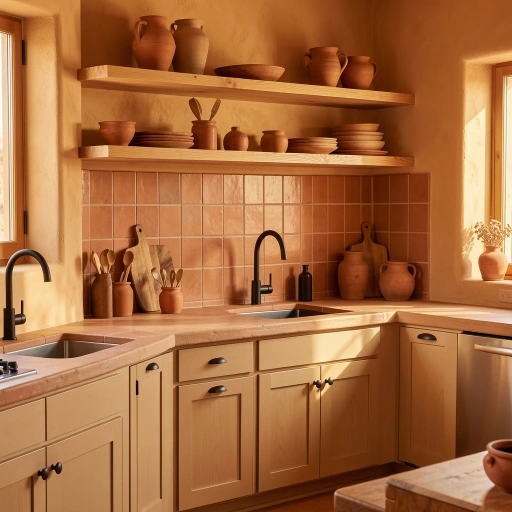
Handmade terracotta tile applied as a full backsplash behind the cooking zone — its warm, earthy reddish-orange tone and deliberately imperfect surface texture carrying the visual warmth and handcraft authenticity most powerfully associated with traditional Southwestern and Mexican ceramic tile craft — creates the most immediately and powerfully desert-evoking backsplash treatment available for a warm minimalist kitchen design, establishing the entire room’s color story and material vocabulary with a single installation of genuine handcrafted beauty and earthy material conviction. The slight variations in color, thickness, and surface texture between individual handmade terracotta tiles create a backsplash of organic visual complexity that machine-manufactured tile cannot replicate.
Pair the terracotta backsplash with adobe-inspired plaster walls in a warm ochre, sand, or pale canyon-wall tone that creates a cohesive warm envelope of earthy color throughout the entire kitchen space, wrapping the room in the specific palette of sun-baked Southwest landscape with genuine tonal sensitivity and material warmth. The combination of terracotta tile, warm plaster walls, and natural wood open shelving creates a material trifecta of desert kitchen authenticity that references the centuries-old tradition of Southwestern domestic architecture with direct material honesty and contemporary design sensibility. Finish with matte black fixtures and hardware that provide clean visual punctuation against the warm, earthy background palette without introducing cold industrial energy that would undermine the warmly organic desert aesthetic.
2. Warm White Plaster Walls with Natural Wood
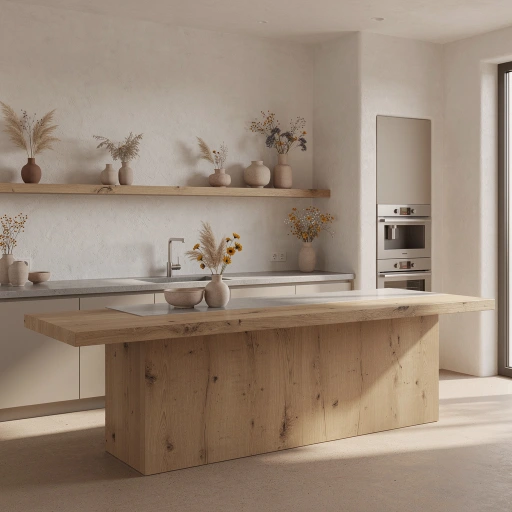
Warm white lime plaster walls — their characteristic smooth, slightly undulating surface texture created by hand application and burnishing of natural lime putty plaster — create the most beautifully luminous and genuinely organic wall finish available for the desert warm minimalist kitchen, providing a backdrop of extraordinary subtle beauty that photographic reproduction struggles to fully capture, because the natural lime plaster surface interacts with changing light throughout the day in a continuously shifting, living quality that flat painted drywall surfaces entirely lack. The warmth embedded in the white plaster tone prevents the minimal palette from feeling cold or stark.
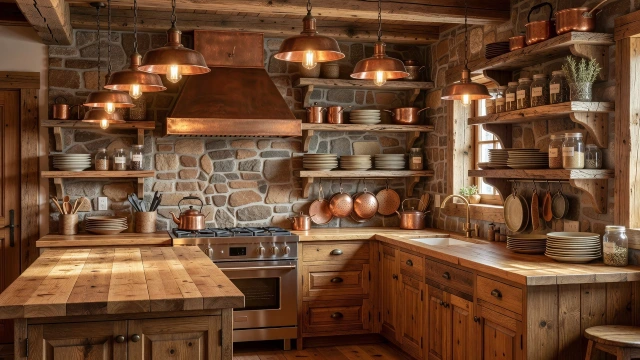
Natural wood floating shelves and a butcher block or live-edge wood island countertop introduce the warmth, grain variation, and organic material quality that prevents the warm white plaster kitchen from feeling overly austere or uncomfortably sparse, adding the specific quality of genuine natural material presence that defines warm minimalism as a distinct design philosophy separate from the colder, more rigidly spare interpretations of conventional minimalism. Concrete countertops in a warm grey or buff tone complete the desert material palette with a surface of considerable tactile and visual interest that suits the handcraft-forward aesthetic of the warm white plaster kitchen with particular material and design language consistency.
3. Arched Doorways and Curved Kitchen Details
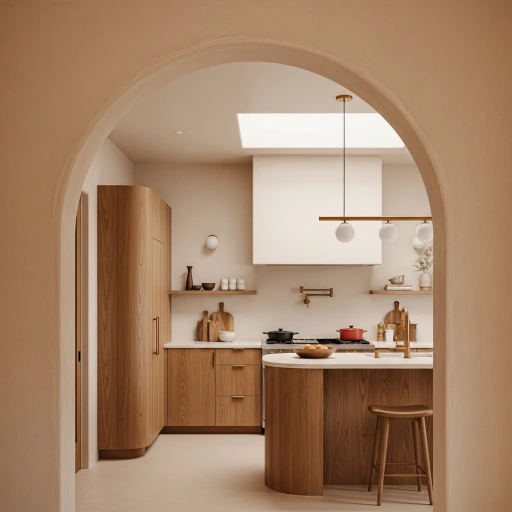
Arched doorways, rounded cabinet corners, curved island forms, and softly undulating plaster niches introduce the most architecturally distinctive and genuinely desert-referencing design element into the warm minimalist kitchen — the soft, organic curves of Southwestern adobe architecture that distinguish it from the angular precision of conventional residential construction and create interior spaces of extraordinary sensory warmth and sculptural beauty. The curved arch form references centuries of Pueblo and Spanish Colonial architectural tradition with genuine historical depth and regional authenticity that cannot be achieved through surface decoration alone.
The arched kitchen entry is the single most impactful curved architectural element available within the kitchen design vocabulary — a properly proportioned, smoothly plastered arch framing the kitchen doorway creates an entry moment of considerable architectural drama and genuine Southwestern authenticity that immediately establishes the desert design identity of the entire kitchen space with architectural rather than merely decorative conviction. Build the arch form from curved drywall framing or shaped foam substrate covered with multiple skim coats of smooth plaster in the warm sand or ochre tone of the kitchen’s primary wall color, finishing the arch soffit and reveals in the same continuous plaster treatment as the surrounding wall surfaces for complete architectural integration.
4. Wabi-Sabi Concrete Countertops
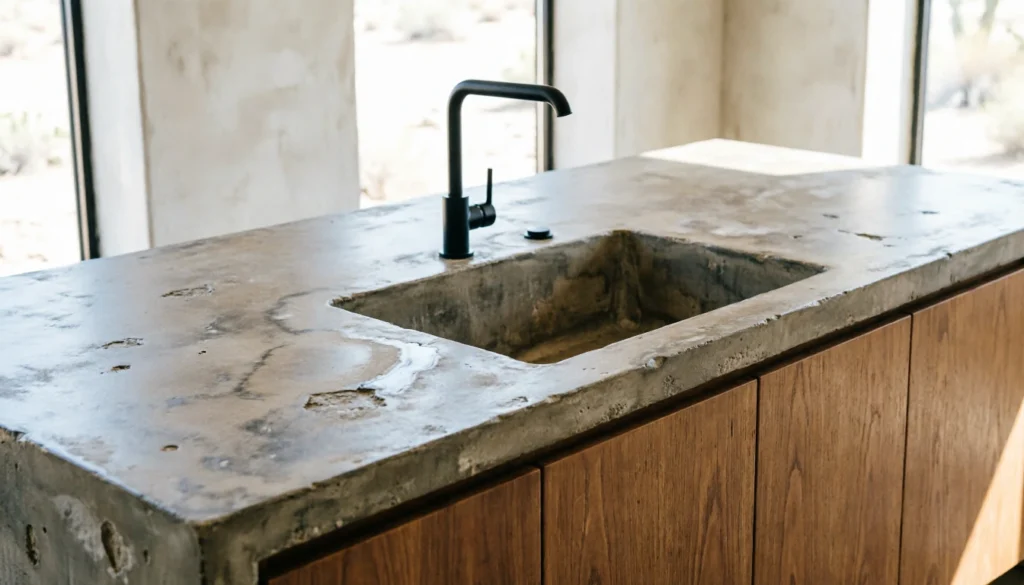
Wabi-sabi concrete countertops — embracing the natural color variation, subtle surface pitting, and occasional organic imperfection that characterize genuinely handcrafted concrete as distinctive qualities of beauty rather than flaws requiring correction — create a kitchen work surface of extraordinary tactile interest and quietly compelling visual character that perfectly expresses the warm minimalist philosophy of finding genuine beauty in natural materials and their honest, unmasked authenticity. The wabi-sabi approach to concrete celebrates the specific personality that each individually cast and finished concrete slab develops rather than seeking the artificial perfection of manufactured stone imitations.
Concrete countertops in a warm buff, sandstone, or desert-grey tone — achieved through the careful selection of aggregate materials, pigment additions to the concrete mix, and finishing techniques that create the specific warm undertone desired — create a counter surface of complete desert material appropriateness and genuine tactile pleasure. The surface of properly sealed and waxed concrete has a sensory quality entirely distinct from both stone and manufactured solid surface materials — smooth and cool to the touch, with a subtle porosity that the sealer makes impractical but does not entirely eliminate as a textural quality perceptible to careful fingers. Finish concrete countertops with a penetrating sealer and food-safe wax topcoat maintained annually for a surface of lasting practical beauty.
5. Open Shelving with Handmade Ceramic Display
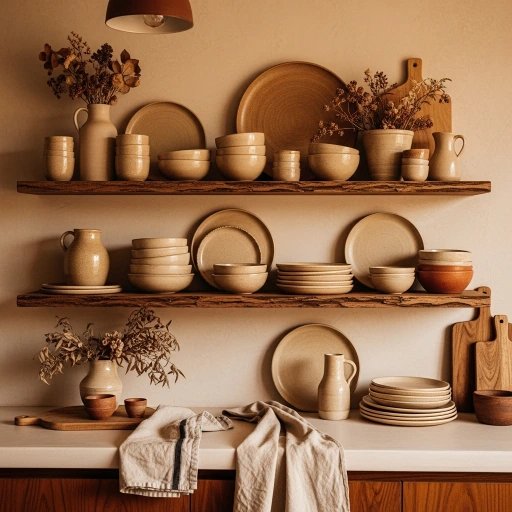
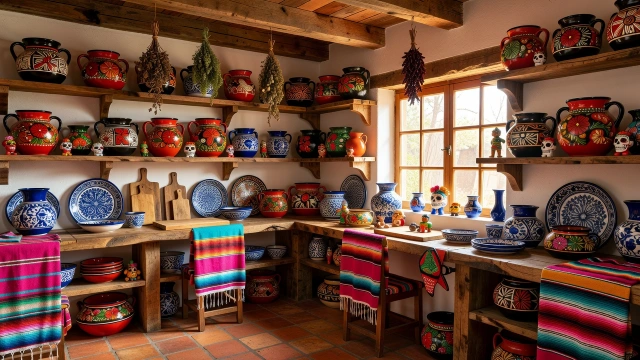
Open floating shelves displaying a curated collection of handmade ceramics — vessels, bowls, plates, and cups in the warm terracotta, sandy beige, sage green, and warm white tones most characteristic of Southwestern and Japanese ceramic traditions — create the most authentically warm minimalist kitchen display available, transforming functional storage surfaces into a gallery of quietly beautiful handmade objects whose individual irregularities, glaze variations, and handcraft marks are as visually interesting and aesthetically valuable as their functional utility as kitchen vessels. The open shelf display embodies the warm minimalist principle that only genuinely beautiful objects earn the right to be visible.
The curation discipline required for genuinely beautiful open shelf displays is the most critical design skill in the entire warm minimalist kitchen aesthetic — each object displayed must justify its presence through genuine beauty, quality of making, and visual harmony with its shelf companions, while the overall shelf composition must maintain a visual rhythm of occupied and unoccupied space that prevents the display from feeling either overcrowded with visual noise or uncomfortably sparse with awkward emptiness. Intersperse ceramic objects with small dried botanical arrangements — a bundle of dried pampas grass, a single dried protea bloom, a small terracotta pot of living succulents — that add organic material variety and gentle visual punctuation throughout the ceramic display composition.
6. Zellige Moroccan Tile Backsplash
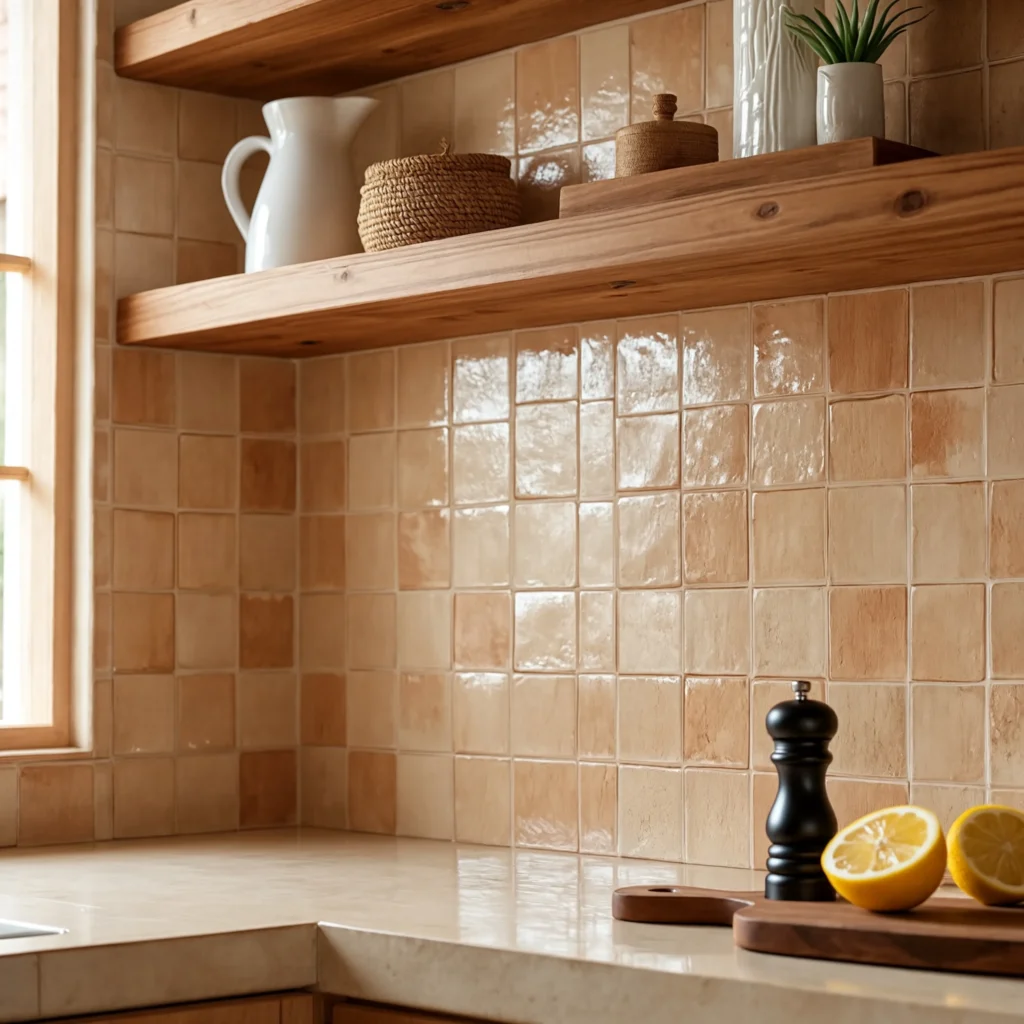
Authentic zellige tile — the handmade Moroccan ceramic tile whose characteristic slightly irregular surface, subtle color variation between individual tiles, and brilliant light-reflective quality result from a centuries-old traditional production process that creates each tile individually by hand — creates the most genuinely artisan and internationally cross-cultural backsplash treatment available for the desert warm minimalist kitchen, connecting the American Southwest design inspiration with the parallel warm minimalist ceramic traditions of North African and Andalusian domestic architecture in a material synthesis of genuine cross-cultural beauty.
The specific visual quality that makes zellige tile so extraordinarily beautiful in kitchen applications is its surface behavior under changing light conditions — the slightly convex and manually smoothed surface of each individual zellige piece creates a mosaic of micro-reflections that collectively produce a shimmering, liquid quality across the entire tiled surface that flat, machine-made tiles with perfectly uniform surfaces cannot produce regardless of their glaze quality. Install zellige tiles in a traditional all-over pattern without grout joints for the most authentic and visually continuous surface, or with minimal thin grout joints in a tone closely matching the tile color for a more contemporary interpretation that maintains the visual continuity of the handmade surface while accommodating the slight dimensional variation of genuinely handmade tiles.
7. Rammed Earth Kitchen Island
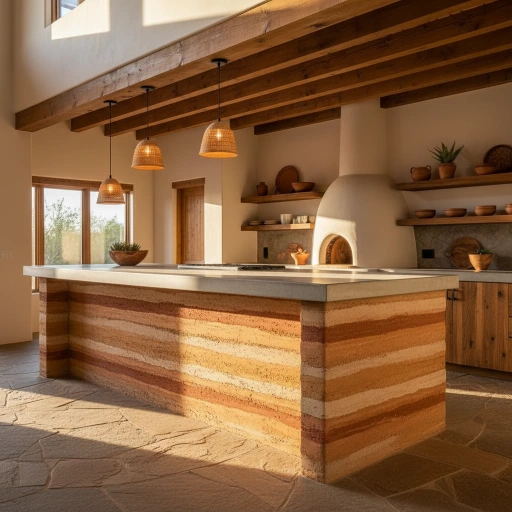
A rammed earth kitchen island — its compressed earth base exposing the beautiful stratified layers of different colored soil compacted into a structural mass of remarkable visual richness, tactile warmth, and genuine architectural presence — creates the most dramatically authentic and architecturally extraordinary desert kitchen design element conceivable, a kitchen island that is simultaneously a piece of structural furniture and a direct expression of the geological landscape from which the entire desert design vocabulary draws its fundamental material inspiration. Rammed earth brings the literal material of the desert landscape into the kitchen as a functional architectural element of profound authenticity.
The stratified visual quality of rammed earth construction — where different layers of compacted soil in varying tones from pale cream through warm ochre to deep terracotta create natural horizontal bands that reference geological strata and the exposed canyon walls of the desert landscape — creates a kitchen island base of extraordinary visual complexity and natural beauty that no manufactured material can approach in terms of direct geological authenticity and organic color richness. Seal the rammed earth surface with a breathable natural sealer that protects the compressed material from moisture and physical abrasion in the kitchen environment while preserving the natural color depth and textural quality of the exposed earth surface. Top with a concrete or natural stone counter slab that complements the rammed earth palette with material consistency.
8. Minimalist Wood and Plaster Cabinet Design
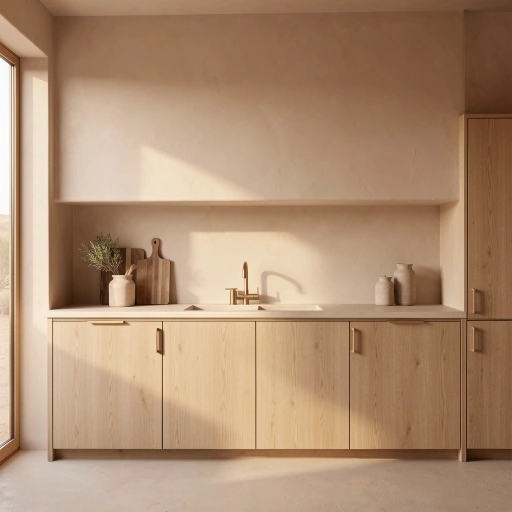
A minimalist cabinet design combining flat-front natural oak or walnut cabinet doors with plaster-finished upper cabinet zones that blend seamlessly into the surrounding wall surface creates the most architecturally resolved and genuinely warm minimalist kitchen cabinetry treatment available — a design approach that deliberately blurs the boundary between furniture and architecture, allowing the kitchen’s storage infrastructure to dissolve partially into the wall envelope rather than asserting itself as a collection of distinctly separate box-like furniture pieces that interrupt the spatial continuity of the kitchen interior. The result is a kitchen of extraordinary spatial calm and architectural sophistication.
The seamless integration between plaster wall surfaces and plaster-fronted upper cabinet zones requires careful planning of the kitchen layout and precise execution of the plaster application to ensure that the wall-cabinet transition is genuinely invisible rather than merely approximate — the plaster surface must continue across the cabinet door fronts without any visible change in texture, color, or plane that would reveal the boundary between fixed wall and operable cabinet door. Recess the cabinet hardware — selecting push-to-open mechanisms, minimal finger-pull channels cut directly into the plaster or wood, or very thin integrated handle strips — to maintain the clean, continuous surface quality of the plaster and wood cabinet composition without visual interruption from protruding hardware elements.
9. Desert Botanical Kitchen Display
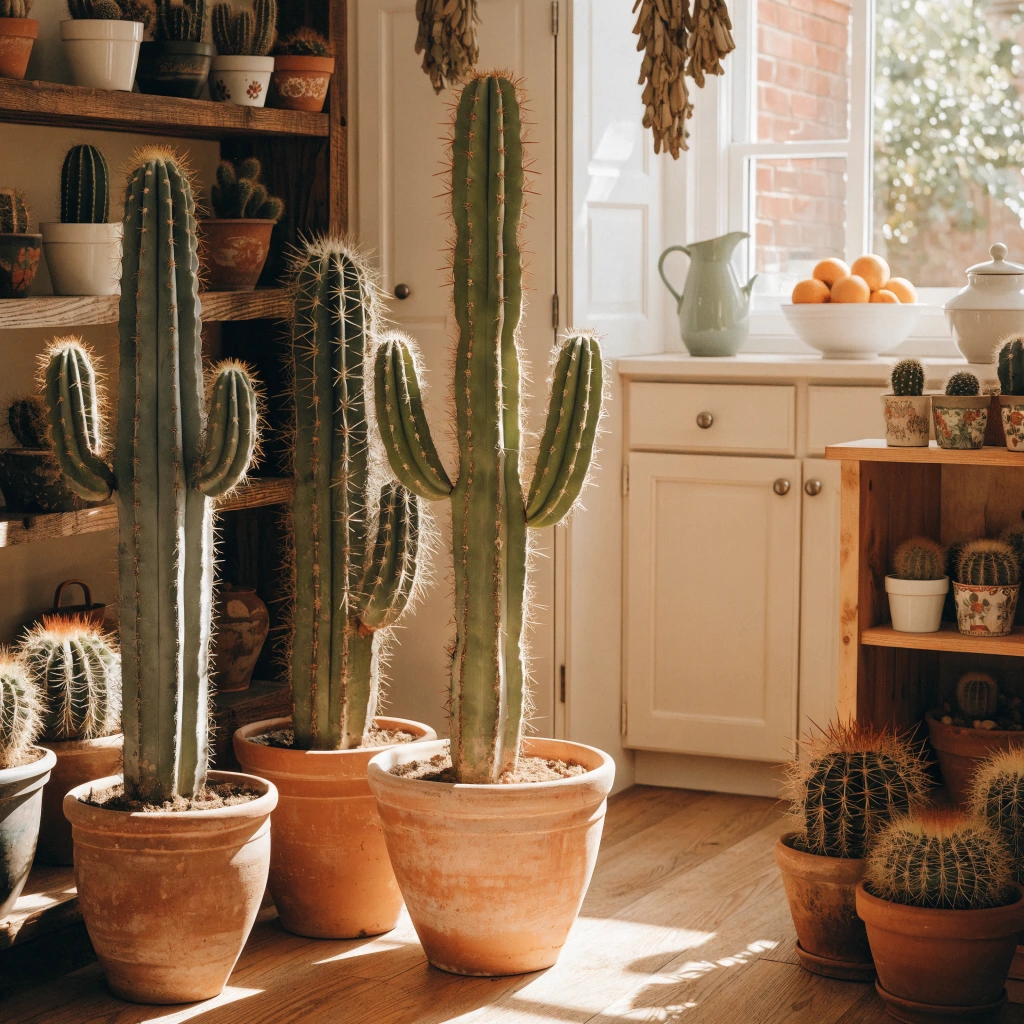
A living desert botanical kitchen display — large columnar or saguaro cactus specimens in generous terracotta pots positioned on the kitchen floor as sculptural living room dividers or statement corner placements, complemented by smaller cactus and succulent arrangements on open shelving and a collection of dried desert botanical elements including sage bundles, dried cholla skeletons, and pressed desert flowers hung from ceiling hooks or displayed in wall-mounted frames — creates the most genuinely and directly desert-connected kitchen environment available, bringing living fragments of the actual desert landscape into the kitchen interior as the primary decorative expression of the warm minimalist desert aesthetic.
The selection of desert botanical species for kitchen display should balance genuine desert plant authenticity with the practical growing requirements of an interior kitchen environment — columnar cacti and most Opuntia species tolerate the lower light and relatively stable temperatures of interior spaces with considerable resilience, while flowering desert annuals require the intensity of natural desert sunlight that most kitchen environments cannot consistently provide. Position large cactus specimens near the kitchen’s largest window openings where they receive maximum available natural light, and supplement with grow lights positioned discreetly above shelving displays of smaller succulents and cacti to ensure healthy long-term growth in lower natural light conditions further from windows.
10. Warm Sand and Bone Color Palette Kitchen
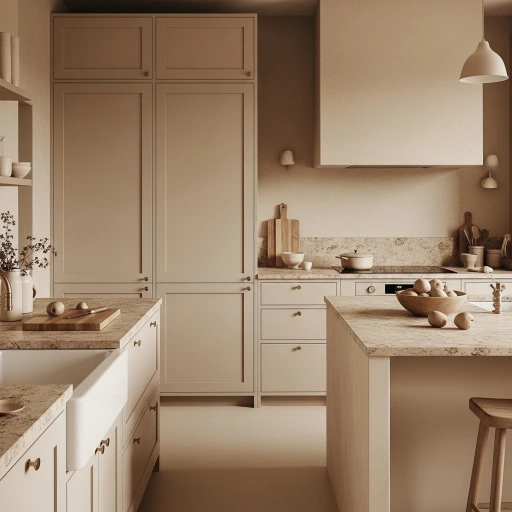
A kitchen designed entirely within a warm sand and bone color palette — cabinetry in soft warm off-white or bone tone, countertops in buff limestone or warm cream-colored quartz, walls in warm sand plaster, and natural wood accents in a light honey or pale ash tone — creates the most serenely beautiful and tonally sophisticated desert warm minimalist kitchen aesthetic available, one that achieves its remarkable visual impact not through contrast or color variety but through the extraordinary subtlety of its tonal relationships and the genuinely warm quality of its seemingly neutral palette that references the specific colors of sun-bleached desert terrain with quiet precision.
The tonal success of a sand and bone kitchen palette depends entirely on maintaining genuine warmth throughout every element — selecting materials with yellow, pink, or amber undertones rather than grey, blue, or green undertones in what might appear superficially to be similar neutral tones. A bone-toned cabinet with pink undertones, a buff limestone counter with amber undertones, and a warm sand plaster with yellow undertones all share the same warm color temperature that creates the cohesive, sun-drenched quality of a genuine desert palette, while any single element with cool grey undertones introduces a discordant chill that undermines the carefully constructed warmth of the overall tonal composition. Test material samples together in the actual kitchen lighting conditions before committing to final selections.
11. Textured Plaster Hood Range Surround
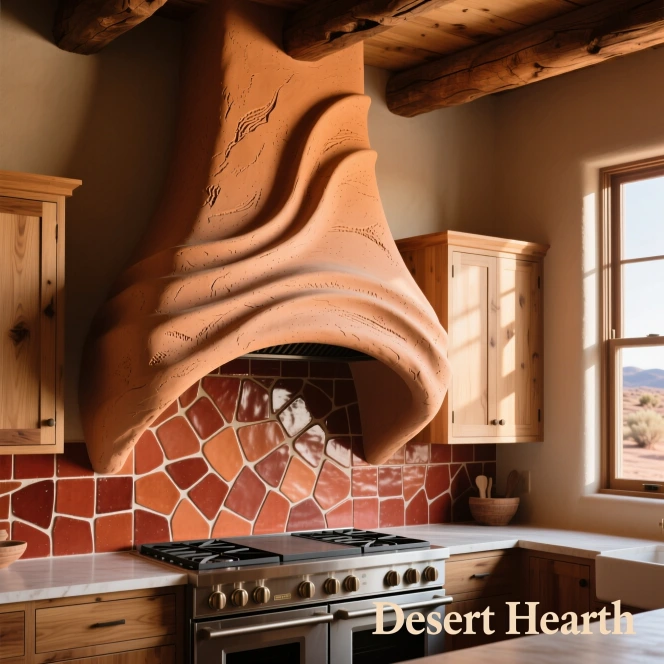
A sculptural textured plaster range hood surround — hand-formed into a generous, softly curved form that dominates the cooking zone wall with genuine architectural presence and three-dimensional sculptural quality, finished in a warm ochre, terracotta, or sand tone with a deliberately textured hand-troweled surface that catches raking light in a continuously shifting pattern of warm highlights and cool shadow — creates the single most architecturally impressive and genuinely desert-referencing design element available for the warm minimalist kitchen, establishing the cooking zone as the space’s primary architectural moment of dramatic design intention and skilled handcraft execution.
The range hood is the kitchen element that most readily accommodates architectural ambition and sculptural design expression because its primary functional requirement — extracting cooking fumes and steam — is entirely compatible with virtually any exterior form that provides adequate interior duct volume and proper connection to the extraction system. The plaster hood form can be constructed over a metal frame by a skilled plasterer using traditional wet plaster techniques, or by a skilled designer using modern substrate materials including expanded metal mesh and reinforced plaster products that create equivalent visual quality with more accessible construction methods. Commission from an artisan plaster contractor with specific experience in sculptural plaster form work rather than attempting this technically demanding finish with general drywall contractors.
12. Natural Stone Countertops in Warm Desert Tones
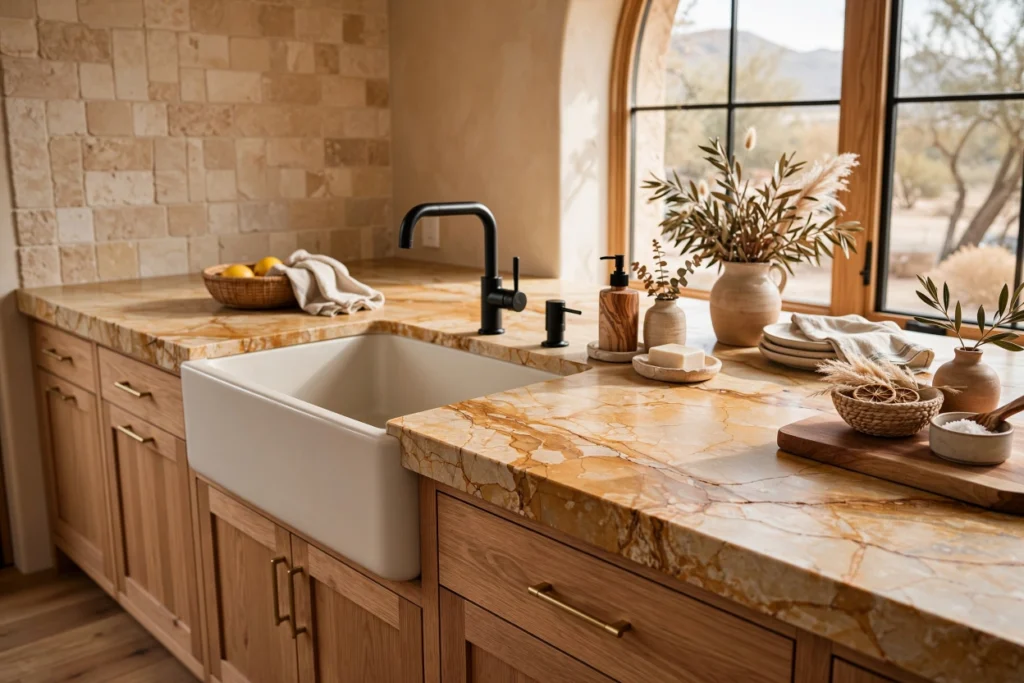
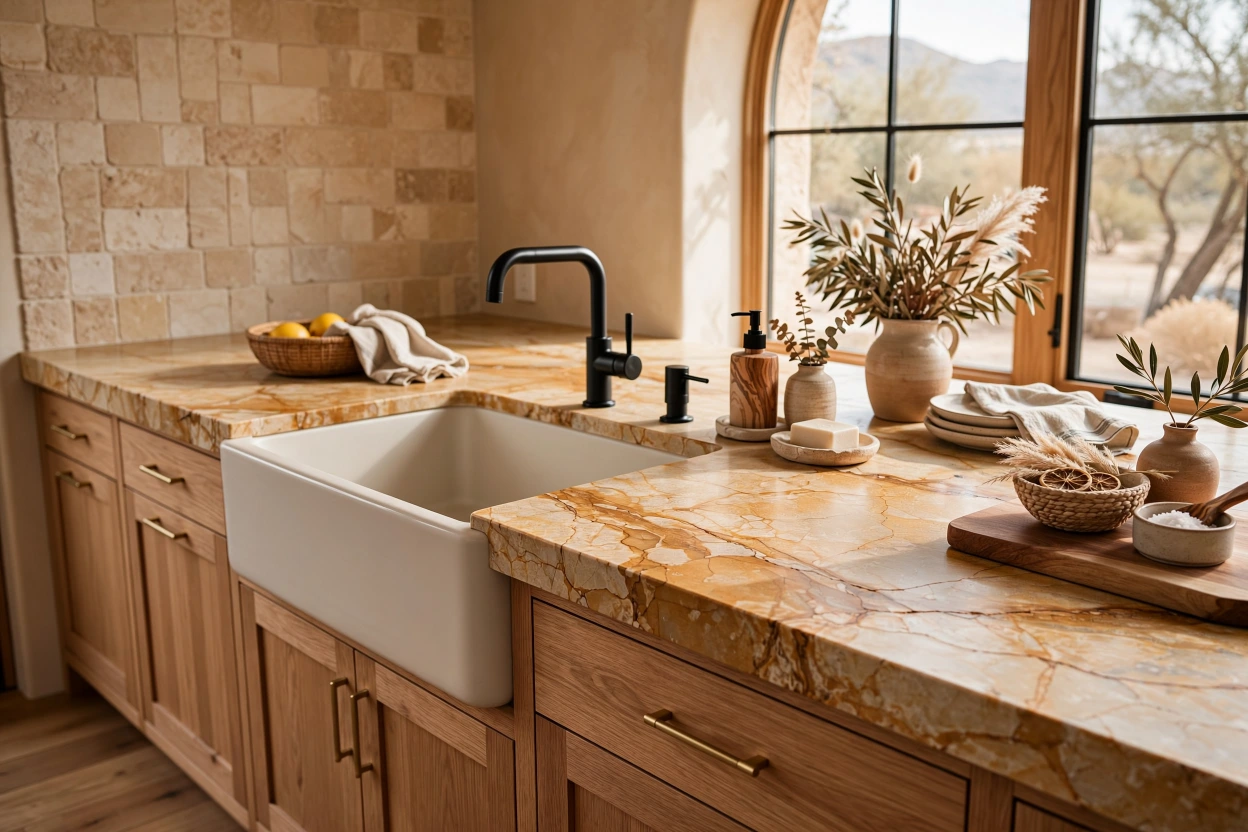
Natural stone countertops in warm desert tones — quartzite slabs in warm honey and amber with soft natural veining, honed travertine in its characteristic warm cream and buff tones, or a pale warm limestone with subtle fossil inclusions — create kitchen work surfaces of genuine geological beauty and natural material luxury that manufactured stone alternatives cannot approach in terms of authentic material depth, the quality of natural light interaction, or the specific geological history embedded in every square foot of genuine stone surface. Each natural stone slab is completely unique, carrying an individual pattern of color, veining, and crystalline structure that makes every stone countertop a genuinely one-of-a-kind design element.
The honed finish — a matte surface achieved by stopping the polishing process before the stone surface develops its mirror-like polished sheen — creates the most appropriate and visually harmonious stone surface treatment for desert warm minimalist kitchen design, because the matte stone surface absorbs and diffuses light rather than reflecting it sharply, creating a softer, more organic material quality that suits the restrained, warm aesthetic of desert design with far greater appropriateness than the high-gloss polished surfaces more commonly associated with luxury kitchen design in other aesthetic contexts. Seal honed natural stone countertops with a quality penetrating impregnating sealer immediately upon installation and maintain with annual resealing to prevent staining from the inevitable cooking spills of active kitchen use.
13. Integrated Adobe-Style Kitchen Nook
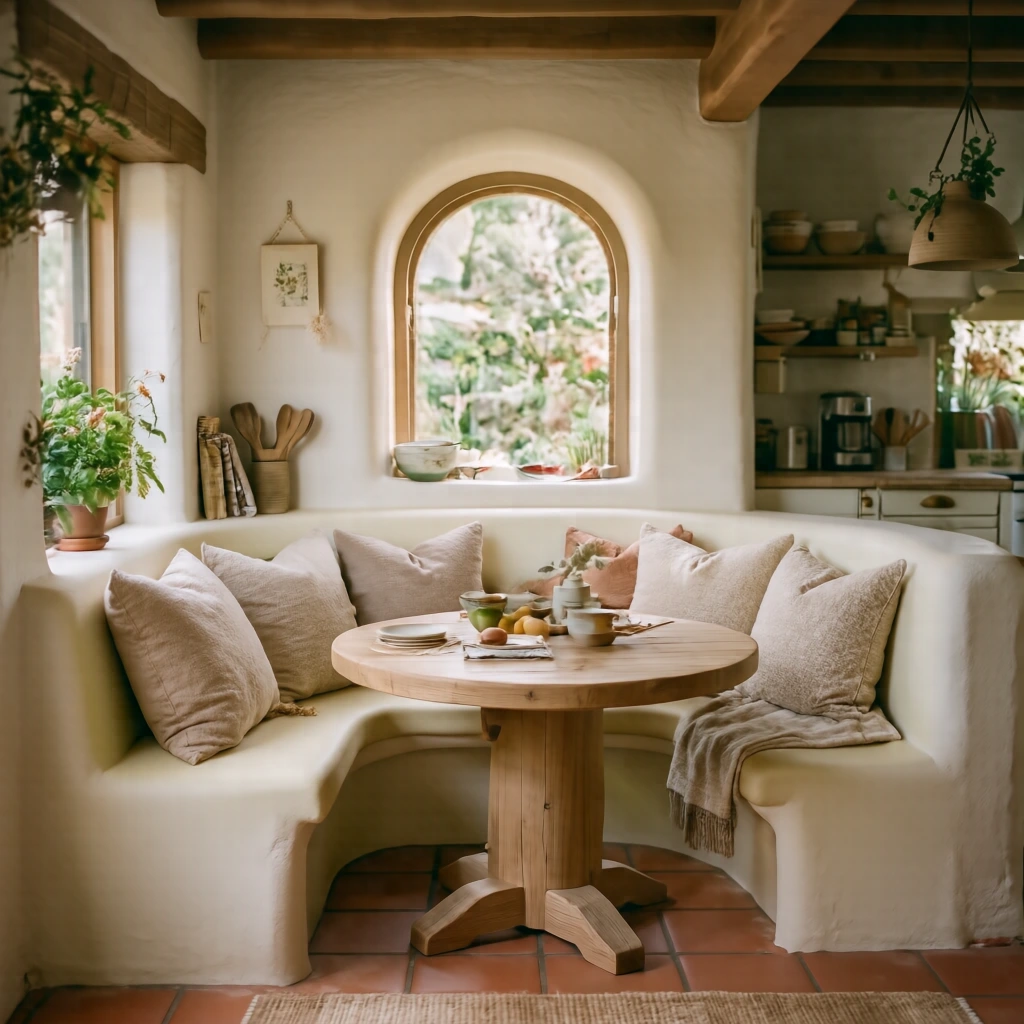
An integrated adobe-style kitchen dining nook — a curved built-in banquette bench formed from shaped plaster over a structural block or framing substrate, upholstered with deep, comfortable cushions in warm linen or woven wool fabric, positioned beneath a small arched window that admits a focused beam of warm natural light into the intimate dining alcove — creates the most genuinely domestic and warmly human element available within the desert kitchen design vocabulary, a dedicated zone of quiet, contained intimacy within the kitchen space that references the traditional corner banquette niches of historic Pueblo and Spanish Colonial domestic architecture with direct architectural authenticity and considerable functional beauty.
The banquette bench form is entirely built up from shaped plaster applied over a structural substrate — curved in plan to create a semi-circular or L-shaped seating arrangement that wraps the dining nook with a feeling of gentle spatial enclosure without full physical separation from the adjacent kitchen space. The plaster surface of the banquette bench base matches the surrounding kitchen wall finish precisely, creating a seamless architectural continuity between seating furniture and surrounding wall architecture that is the definitive quality of genuine adobe-inspired built-in furniture design. Upholster the seat cushion in a quality outdoor-grade indoor fabric of sufficient durability for daily dining use, in a tone drawn from the kitchen’s primary warm sand and terracotta palette.
14. Black Matte Fixtures Against Warm Plaster
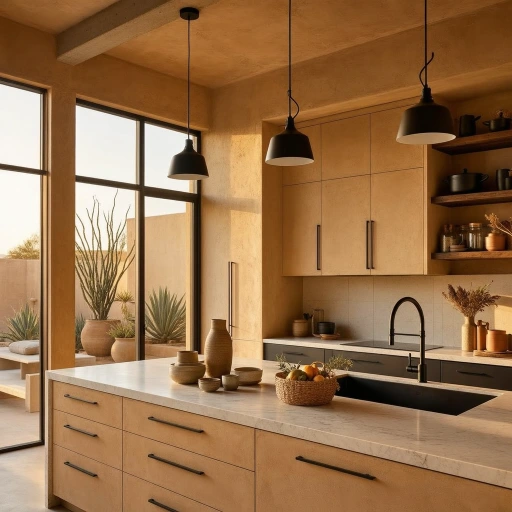
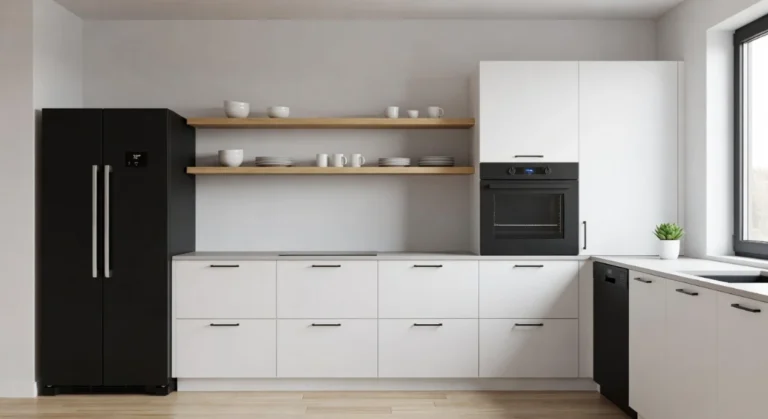
Matte black fixtures deployed consistently throughout the desert kitchen — cabinet hardware, faucets, pendant light fixtures, window frames, and door hardware all specified in a consistent matte black finish — create a graphic, architecturally decisive contrast against the warm sand, ochre, and terracotta tones of the surrounding plaster and tile surfaces that simultaneously provides essential visual punctuation within the warm, tonally subtle desert palette and introduces a quality of contemporary design confidence and architectural clarity that prevents the warm minimalist aesthetic from feeling soft or indistinct in its design intent. The matte black and warm sand combination is one of contemporary design’s most compelling and visually satisfying material relationships.
The consistency of the matte black finish across all fixture types and hardware categories is the critical design discipline that makes the black and warm plaster combination work with genuine sophistication rather than appearing as a collection of unrelated black accessories against a warm background — every piece of visible metal in the kitchen space must participate in the unified matte black language for the material contrast to read as a deliberate and architecturally resolved design decision rather than a coincidental accumulation of individually selected black items. Source all fixtures and hardware from a single supplier or carefully cross-reference finish specifications across multiple suppliers to ensure genuine consistency of the black finish tone — variations between cool charcoal black and warm near-black can undermine the visual unity of the complete fixture scheme when viewed together in the kitchen environment.
15. Woven Textile and Navajo Pattern Accents
Woven textile accents in Navajo-inspired geometric patterns — a runner along the kitchen island in the characteristic diamond and stepped zigzag patterns of traditional Southwestern weaving, woven basket storage pieces on open shelves, handwoven linen dish towels in earthy natural tones, and perhaps a single striking woven wall hanging positioned as a textile artwork on a prominent kitchen wall — introduce the rich craft tradition of Southwestern Indigenous textile arts into the desert kitchen space with genuine cultural reference and considerable visual warmth, adding pattern, texture, and handcraft authenticity that purely material and architectural desert kitchen design elements cannot provide on their own.
Source Navajo-pattern textiles from genuine Indigenous artisan producers or from quality textile companies that produce Southwestern-pattern woven goods in authentic traditional geometric designs using quality natural fiber construction — wool, cotton, and natural fiber blends all create textile products of greater quality, longer wear life, and more authentic visual character than synthetic alternatives in equivalent pattern designs. The geometric precision of Navajo textile patterns — their perfectly regular diamond repeats, stepped triangles, and bilateral symmetry — creates a visual quality of considerable graphic sophistication that reads well in the clean, architecturally restrained environment of the warm minimalist desert kitchen without introducing visual noise or decorative complexity inconsistent with the overall design philosophy.
16. Desert Sunrise Color Gradient Kitchen
A desert sunrise color gradient kitchen — where cabinet colors, tile tones, and wall finishes transition gradually from deeper, richer terracotta and burnt orange at the lower zones of the kitchen through warm ochre and amber at mid-height to the palest sand and cream tones at the upper wall and ceiling level, mimicking the breathtaking color progression of a desert sunrise sky from the warm horizon glow through the graduated atmosphere to the pale morning blue above — creates the most poetically inspired and genuinely landscape-referencing kitchen color design available, one that brings the specific emotional quality of desert dawn light into the domestic interior with painterly sensitivity and considerable design ambition.
Executing the desert sunrise gradient successfully requires careful planning of the color progression across every material and finish surface in the kitchen — cabinetry specified in progressively lighter tones from base cabinets through mid-height and upper cabinets, backsplash tile selected in a tone that sits appropriately within the color progression at its specific vertical position, and wall paint or plaster tones graduating imperceptibly from the richer lower wall tone through carefully chosen intermediate tones to the palest upper wall and ceiling color without any single transition step appearing abrupt or disconnected from the smooth gradient progression above and below it. The gradient color story creates a kitchen of extraordinary visual movement and genuine landscape poetry that rewards prolonged inhabitation with a continuously beautiful quality of color and light.