15 Open Kitchen Layout Ideas for Modern Living
1. Island-Centered Open Plan Kitchen
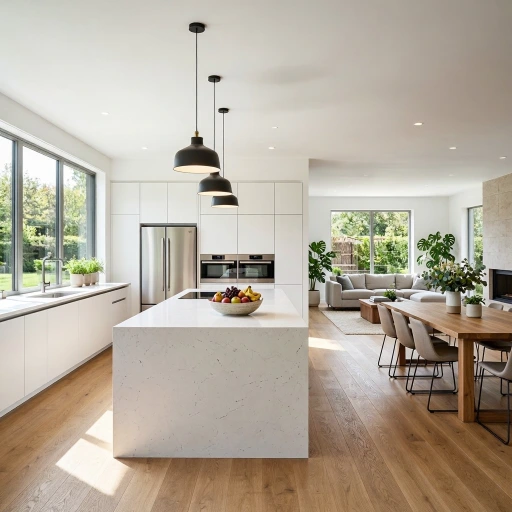
An island-centered open plan kitchen is the single most functional and the most socially generous kitchen layout available, positioning the island as the kitchen’s primary work surface, secondary preparation zone, casual dining counter, and social gathering point simultaneously — a multifunctional architectural element that resolves the open plan kitchen’s most essential design challenge of providing sufficient work surface while maintaining the connected, unobstructed social flow the format requires.
Choose a waterfall edge island in a continuous quartz or stone surface for the most visually complete and the most architecturally resolved island design available, allowing the countertop material to wrap continuously from the horizontal work surface down the island’s vertical sides to the floor. The waterfall detail creates a seamless material continuity that makes the island appear as a single monolithic object rather than a cabinet with an applied top.
2. Galley Kitchen Opening to a Living Space
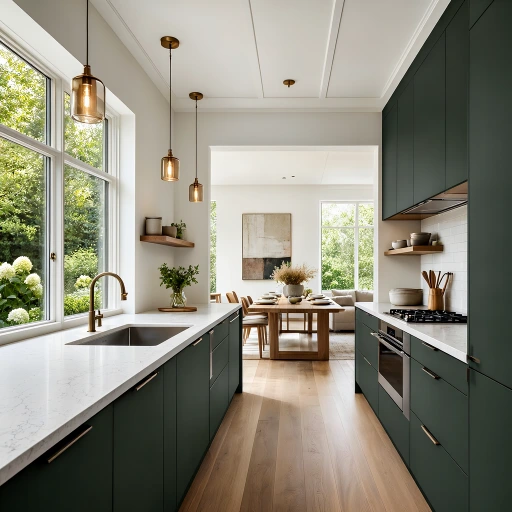
A galley kitchen with two efficient parallel work runs opening at one end to a connected living and dining space creates the most operationally efficient and the most ergonomically resolved open kitchen layout available for narrower floor plans, because the galley format’s parallel work surfaces create the shortest possible distances between all cooking zones while the open end’s connection to the living space maintains the social openness that modern family living requires.
The critical design decision in a galley kitchen opening to a living space is the treatment of the opening end — whether to terminate with a full-height opening that completely merges kitchen and living, a partial breakfast bar that creates a transitional social boundary while maintaining visual connection, or a strategically positioned island that bridges the galley and living space in a spatial gesture of genuine architectural intelligence and functional generosity.
3. L-Shaped Kitchen with a Dining Peninsula
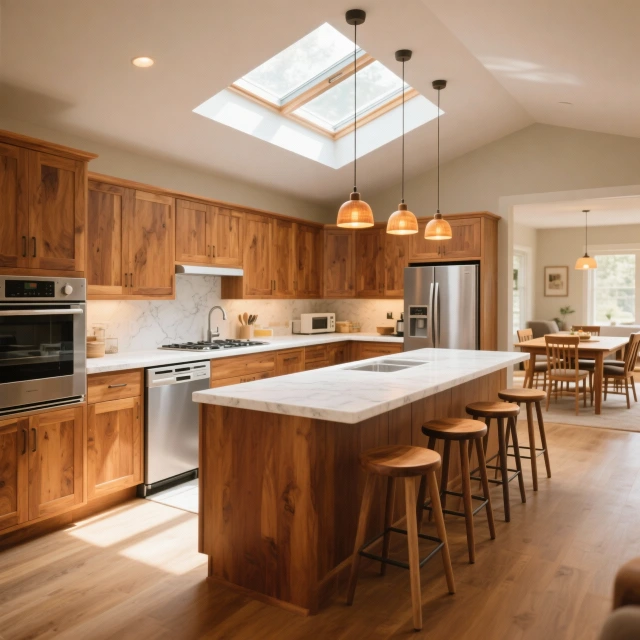
An L-shaped kitchen with a dining peninsula extending from the shorter arm creates the most naturally sociable and the most elegantly transitioned open kitchen layout available, because the peninsula’s casual bar seating positions family members and guests in a direct social relationship with the cooking activity — visible, accessible, conversationally engaged — without occupying the kitchen’s actual work zone or interrupting the triangulated efficiency of the cooking triangle.
Design the peninsula at a height of 900mm for dining bar use with appropriately scaled bar stools, or at the standard 850mm countertop height for a more formal dining bench arrangement with counter-height seating. The peninsula’s length should be sufficient for at least three comfortable place settings — a minimum of 600mm per person — while maintaining adequate circulation space on the kitchen-facing side between the peninsula and the island or main cabinetry run.
4. Kitchen with Full-Height Glass Wall Opening to Garden
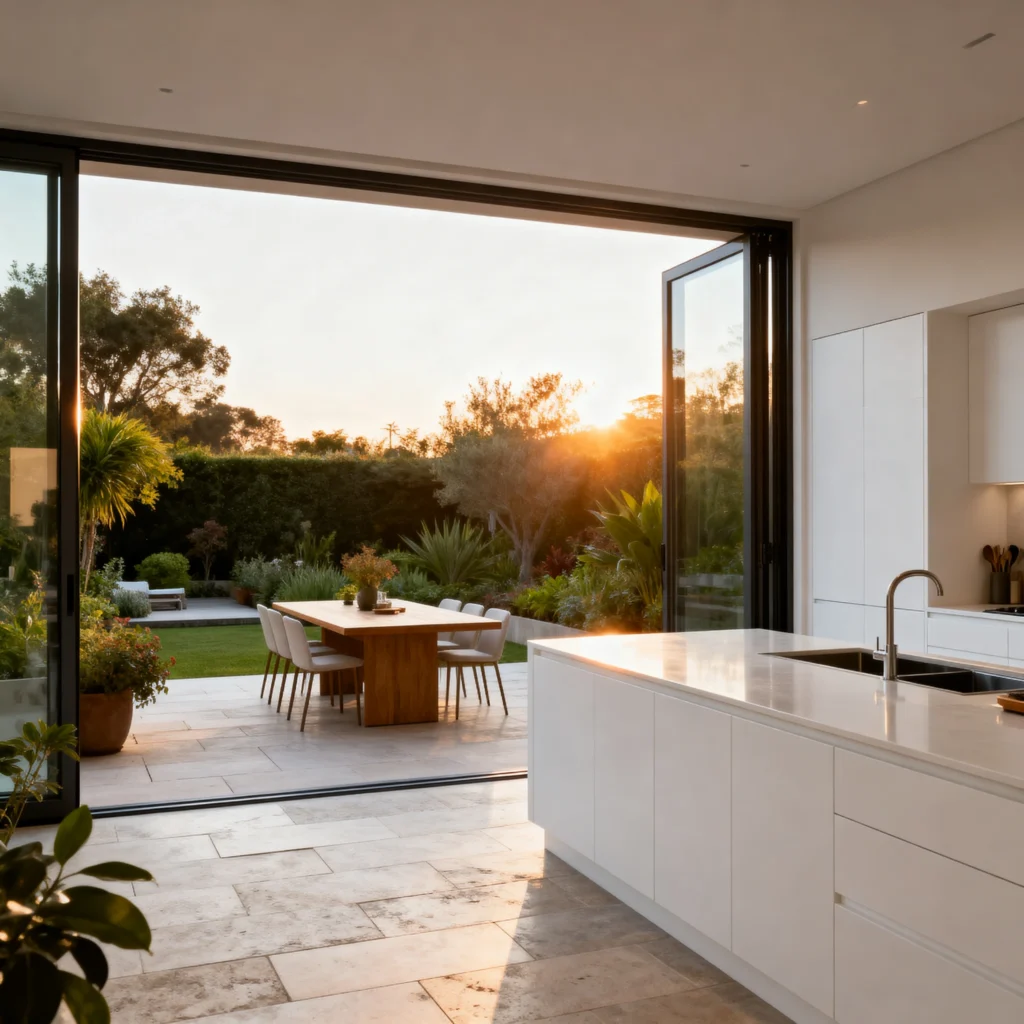
A kitchen with a full-height glazed sliding or folding wall opening completely to a garden terrace creates the most spatially dramatic and the most genuinely indoor-outdoor open kitchen layout available, because the completely retractable glass wall allows the kitchen and garden dining space to merge into a single continuous living environment in warm weather — a spatial transformation of extraordinary generosity that makes the connected indoor-outdoor area feel substantially larger than either space achieves independently.
Specify a thermally broken aluminium sliding or bifold door system with the largest available individual glass panel dimensions — maximizing the glazed area and minimizing the visible frame width — for the most seamless visual connection between kitchen interior and garden exterior when closed and the most completely unobstructed spatial merger when the glass panels are fully retracted into their pocketed storage positions within the adjacent wall construction.
5. White Kitchen with a Contrasting Dark Island
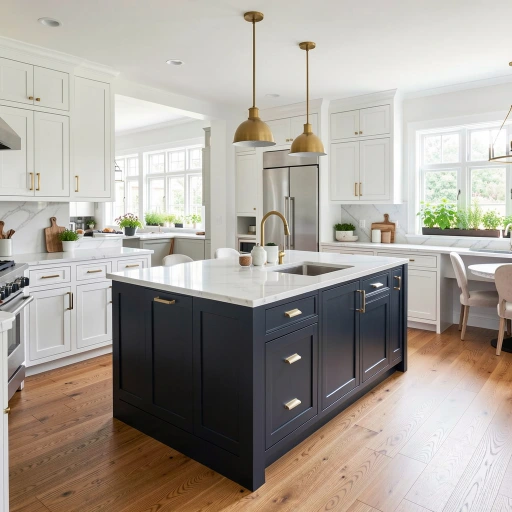
A white perimeter kitchen with a contrasting deep-toned island in charcoal or navy creates the most classically sophisticated and the most timelessly elegant two-tone kitchen layout available, because the deliberate color contrast establishes the island as the kitchen’s unambiguous visual focal point and architectural centerpiece while the crisp white perimeter cabinetry maintains the open plan’s most essential quality of bright, reflective spatial generosity that larger, connected living spaces most require.
Choose the island color from a genuinely deep, saturated tone rather than a mid-grey or faded blue that lacks the necessary contrast authority against the white perimeter to read as a deliberate, confident design decision. Deep navy, charcoal, forest green, and warm black are the most consistently beautiful and the most timelessly resolved island color choices available for the classic two-tone open kitchen layout across every architectural style and every connected living space configuration.
6. Open Kitchen with Breakfast Nook Corner
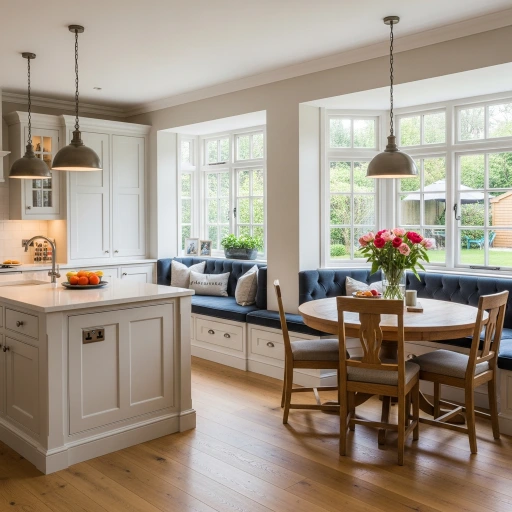
An open kitchen with a built-in breakfast nook corner creates the most intimate and the most family-warmly domestic open kitchen layout available, providing a specifically defined, architecturally sheltered eating space of genuine human-scaled comfort within the larger open plan’s potentially undifferentiated spatial generosity — a nook that makes the open kitchen feel more richly inhabited, more domestically warm, and more genuinely family-oriented than a plan relying entirely on a formal dining table arrangement.
Design the breakfast nook with a continuous built-in bench seat wrapping two or three sides of the corner, specifying a seat depth of minimum 450mm and a seat height of 450mm for comfortable adult sitting with the appropriately scaled table height of 720mm above floor level. The banquette’s upholstered seat and back cushions should be in a durable, easily cleaned fabric appropriate to a family breakfast setting.
7. Scullery and Open Kitchen Combination
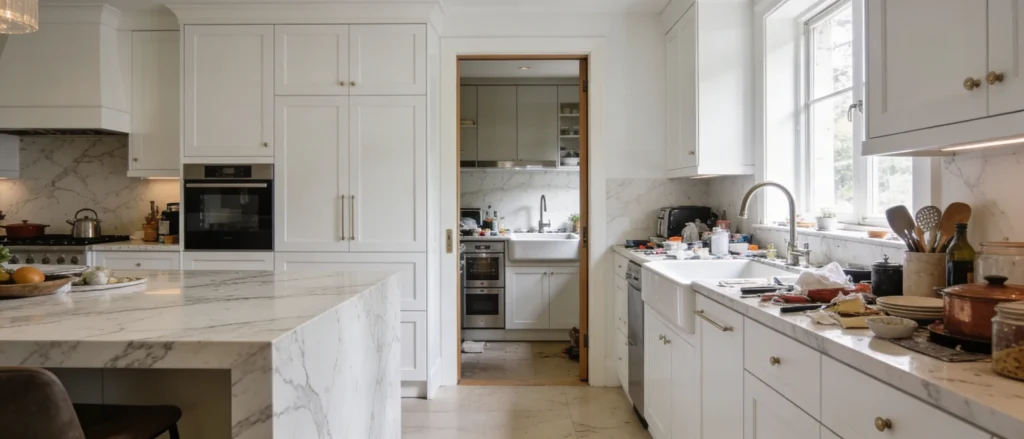
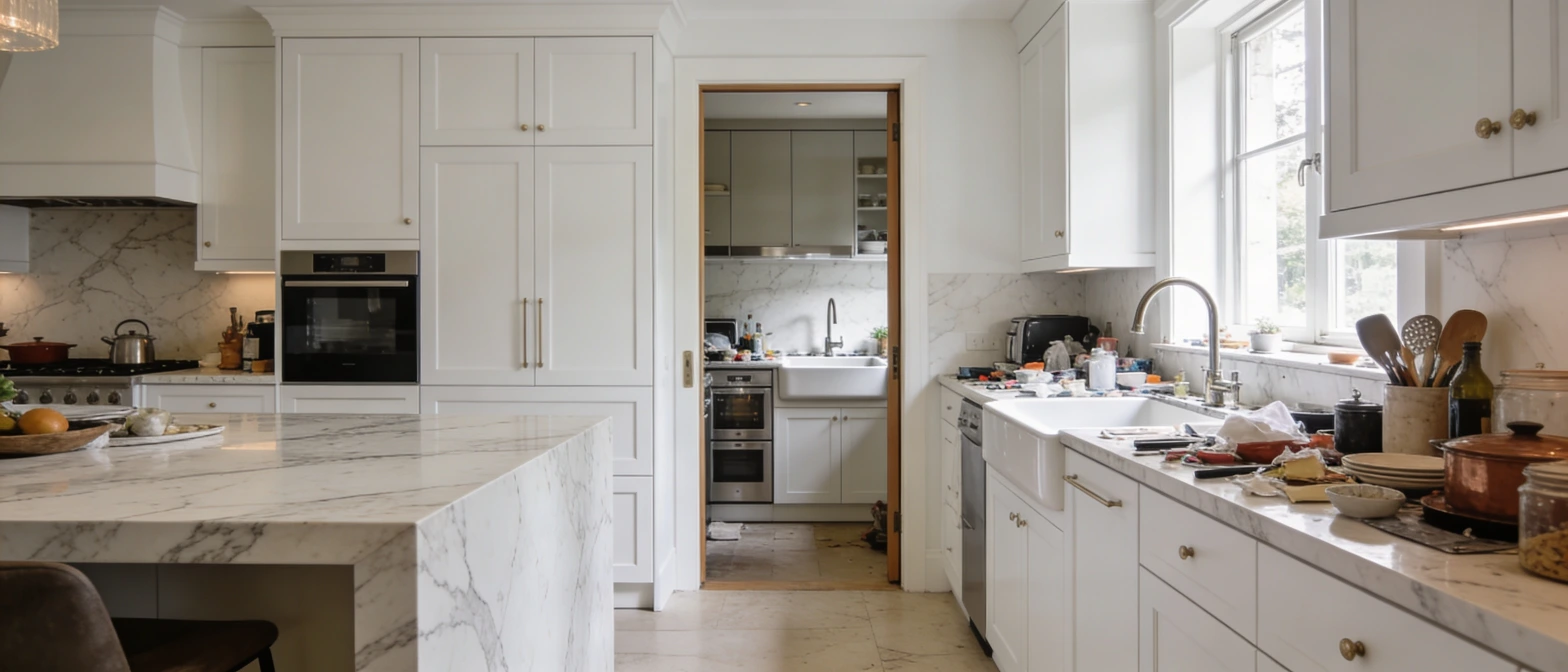
An open kitchen combined with a hidden scullery creates the most socially sophisticated and the most practically intelligent open kitchen layout available, because the scullery absorbs all the visual and olfactory messiness of serious food preparation, washing up, and appliance storage that would otherwise compromise the primary kitchen’s maintained appearance during the entertaining occasions that an open kitchen format specifically and most powerfully enables and supports.
Design the scullery with a minimum width of 1.8 meters for comfortable single-person use, incorporating a second sink, dishwasher, additional refrigeration, extensive pantry shelving, a stand mixer station, and all secondary preparation appliances. The scullery door — typically a pocket door or a flush-faced concealed door matching the adjacent cabinetry — should close completely during entertaining to maintain the primary kitchen’s pristine, uncluttered appearance for arriving and circulating guests.
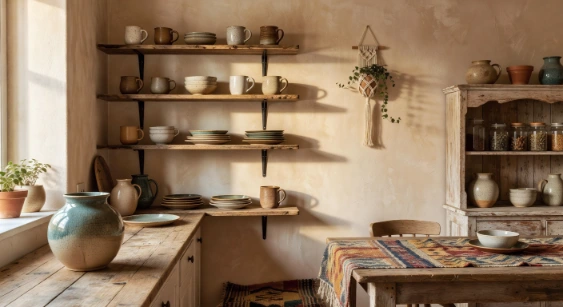
8. Kitchen with Open Shelving Instead of Upper Cabinets
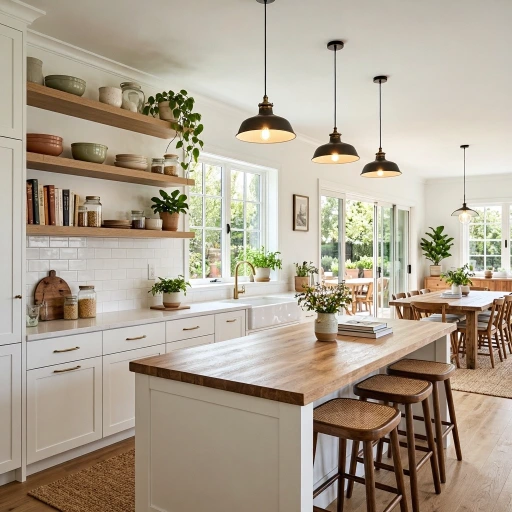
An open kitchen replacing all upper wall cabinets with floating timber shelves creates the most visually open and the most personally expressive kitchen layout available, transforming the typically heavily cabineted upper wall zone into a display surface of genuine domestic warmth, personal character, and the specific beauty of carefully chosen, attractively arranged kitchen objects that communicate the household’s culinary personality and aesthetic sensibility with complete visibility and genuine warmth.
Style the open shelves with a deliberately curated edit of only the most visually beautiful kitchen objects — avoiding the visual chaos of randomly stored everyday items by relocating purely functional storage to base cabinets and the pantry. Group objects in odd numbers, vary heights deliberately, and include at least one living plant, one cookbook stack, and several genuinely beautiful ceramics on every shelf for the most consistently beautiful and the most architecturally resolved open shelf display.
9. Waterfall Island with Integrated Dining Table
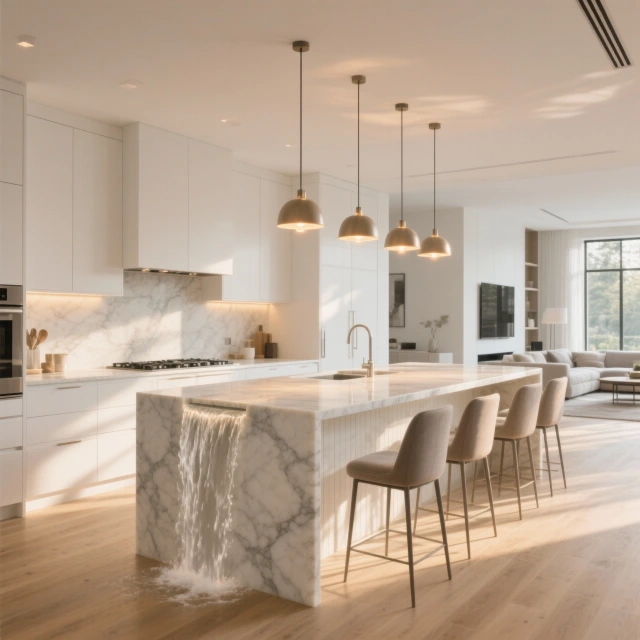
A waterfall island with one end extending seamlessly as a continuous dining table at lower height creates the most spatially efficient and the most formally elegant open kitchen layout available, combining the kitchen island’s primary work surface function with an integrated dining table in a single continuous material gesture that eliminates the conventional distinction between island and separate dining furniture through the most architecturally sophisticated and the most materially extravagant joint design.
The height transition from kitchen countertop at 900mm to dining table at 750mm must be designed as a deliberate stepped or angled material detail — typically a clean horizontal step at the transition point where the countertop material drops to dining height in a single, precisely detailed material move that reads as intentionally designed rather than awkwardly improvised. The waterfall’s continuous material flow from countertop through the step and down the dining table end creates a genuinely spectacular object.
10. Industrial Open Kitchen with Exposed Services
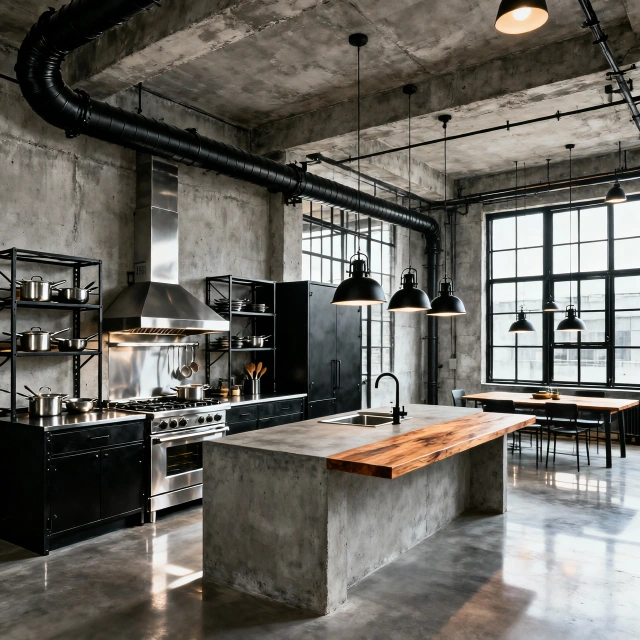
An industrial-style open kitchen with exposed concrete ceiling, visible steel ductwork, black metal cabinetry, and polished concrete floors creates the most architecturally bold and the most commercially influenced kitchen layout available, referencing the aesthetic language of professional kitchen design and urban loft conversion in a residential context that communicates genuine confidence in the raw, honest beauty of exposed building services and deliberately unfinished material character.
Choose commercial-style cooking equipment — a professional range with multiple burners and a powerful extraction hood — for both the genuine cooking performance enhancement that professional equipment delivers and the visual authority that professional kitchen equipment contributes to the industrial kitchen’s overall aesthetic credibility. The extraction hood’s scale and specification is the industrial kitchen’s single most visually dominant element and its most important design decision.
11. Sage Green Kitchen with Warm Timber Accents
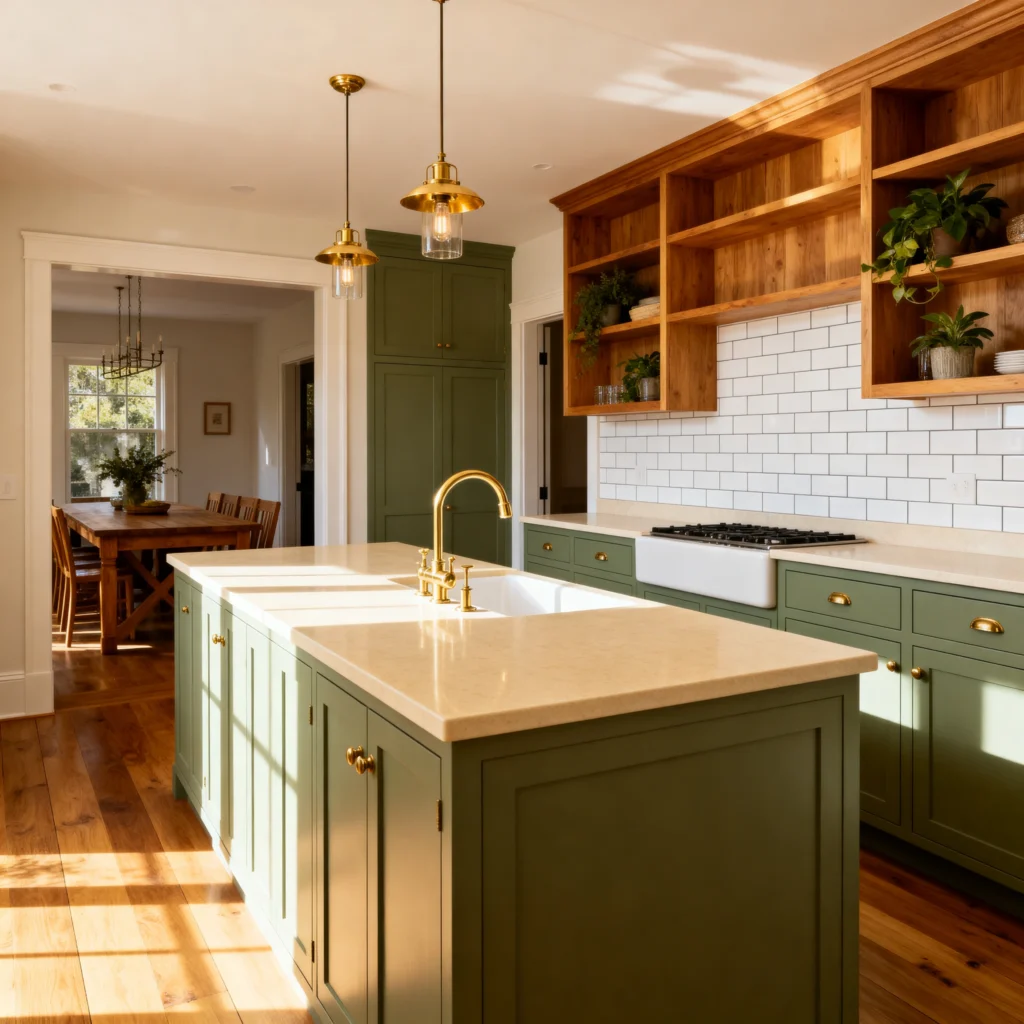
A sage green shaker kitchen with warm oak timber accents, brass hardware, and cream quartz countertops creates the most warmly sophisticated and the most timelessly beautiful colored kitchen layout available, because sage green’s specific muted, grey-toned botanical quality creates an organic, naturally beautiful kitchen palette that connects the cooking space to the natural world’s color vocabulary while the warm timber and brass accents provide complementary warmth that prevents the green from reading as cold or clinical.
Choose a shaker door profile with a sufficiently deep rail and stile width — minimum 70mm — for the most substantial and the most authentic shaker character available, avoiding the shallow-relief shaker profiles of budget cabinetry that lack the visual weight and the genuine architectural shadow quality of properly proportioned shaker construction. The door’s rail and stile depth creates the shadow lines that give the shaker kitchen its most essential and most beautiful surface character.
12. Kitchen with a Full-Width Backsplash Mural
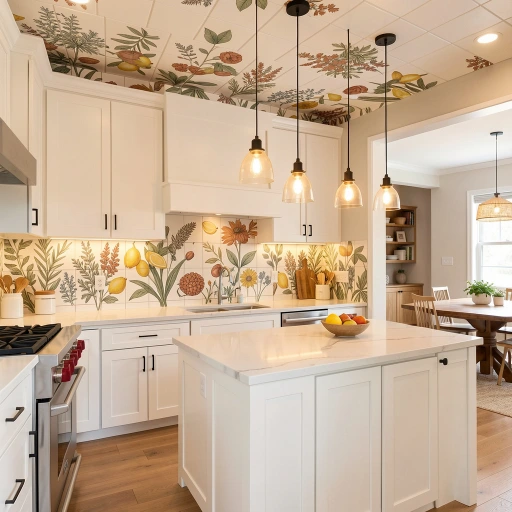
A full-width hand-painted ceramic tile backsplash mural covering the complete wall from countertop to ceiling creates the most artistically ambitious and the most genuinely individual open kitchen layout available, transforming the kitchen’s most visible and most continuously observed surface into a commissioned artwork of permanent beauty that makes the open kitchen the most personally distinctive and the most decoratively memorable room in the entire house.
Commission the backsplash mural from a ceramic artist who specializes in architectural tile work — specifying the mural’s subject matter, color palette, and scale in close collaboration with the artist to ensure the finished mural is both personally meaningful and architecturally appropriate to the kitchen’s specific proportions, cabinetry color, and the adjacent open-plan spaces’ decorative character. A genuinely hand-painted mural tile requires minimum eight weeks of production time before installation.
13. Double Island Open Kitchen
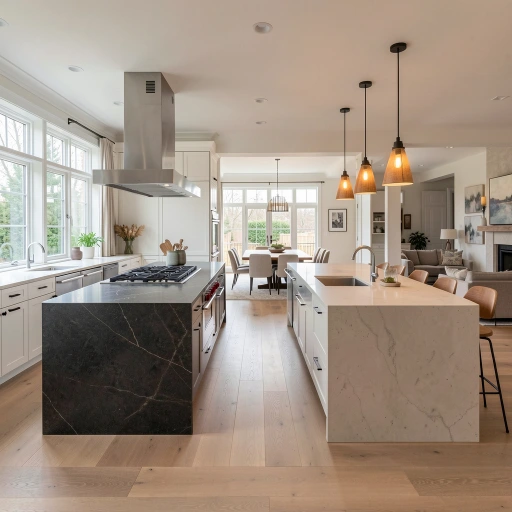
A double island open kitchen with a primary cooking island and a secondary preparation and bar island creates the most generously equipped and the most socially abundant open kitchen layout available — a kitchen of considerable scale and genuine spatial confidence that simultaneously accommodates serious professional cooking activity and extensive social entertaining within a single integrated kitchen space of extraordinary functional richness and visual drama.
Position the two islands in parallel alignment with a minimum 1.2 meter circulation gap between them — the absolute minimum for comfortable passage between islands during simultaneous use by multiple people. The primary island houses the hob, extraction, and main food preparation; the secondary island provides additional prep surfaces, bar seating, and the social zone where guests gather during cooking without obstructing the primary working kitchen activity.
14. Dark Moody Kitchen with Velvet Seating
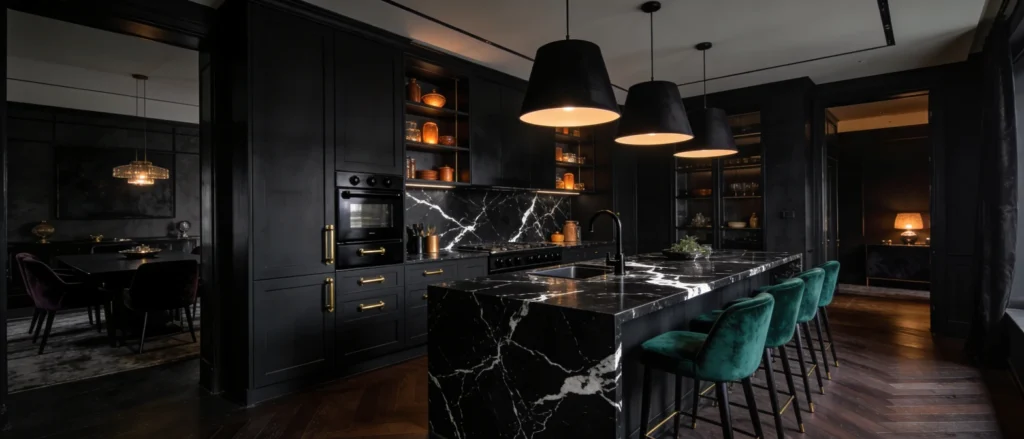
A dark moody open kitchen in deep charcoal cabinetry with black marble countertops, black brass hardware, and emerald velvet bar stools creates the most dramatically atmospheric and the most genuinely jewel-box open kitchen layout available, creating an interior of exceptional visual intensity and warm, enveloping darkness that makes the connected open-plan space feel richly inhabited, deeply luxurious, and completely distinct from the predominantly white and light-toned kitchen interiors that dominate the contemporary domestic design landscape.
Light the dark kitchen exclusively with warm-toned light sources — pendant lights above the island with amber-toned Edison bulbs, under-cabinet LED strips in the warmest available color temperature of 2700K, and concealed plinth lighting at floor level — avoiding cool white lighting that would destroy the deliberately warm, moody, and jewel-like atmospheric quality that is the dark kitchen’s single most essential and most irreplaceable spatial characteristic.
15. Seamless Kitchen-to-Garden Open Layout
A kitchen with a completely threshold-free continuous floor surface extending seamlessly from the kitchen interior through fully opened bifold doors to the outdoor terrace creates the most spatially generous and the most genuinely indoor-outdoor open kitchen layout available, because the absence of any floor level change or material transition at the door opening creates the strongest possible spatial connection between interior and exterior — a complete dissolution of the conventional architectural boundary between inside and outside.
Achieve the threshold-free transition by specifying a drained channel recessed into the floor at the door’s outer leaf position — the channel collecting any weather-driven water penetration without requiring a conventional upstand threshold that would interrupt the continuous floor plane. Specify the interior flooring material in the same or closely complementary tile or stone as the exterior terrace surface, ensuring the material continuity reinforces the spatial connection at the visual level as well as the spatial level.