16 Stockholm Inspired Japandi Garden Ideas for Minimalist Beauty
1. Raked Gravel Meditation Garden with Moss Islands
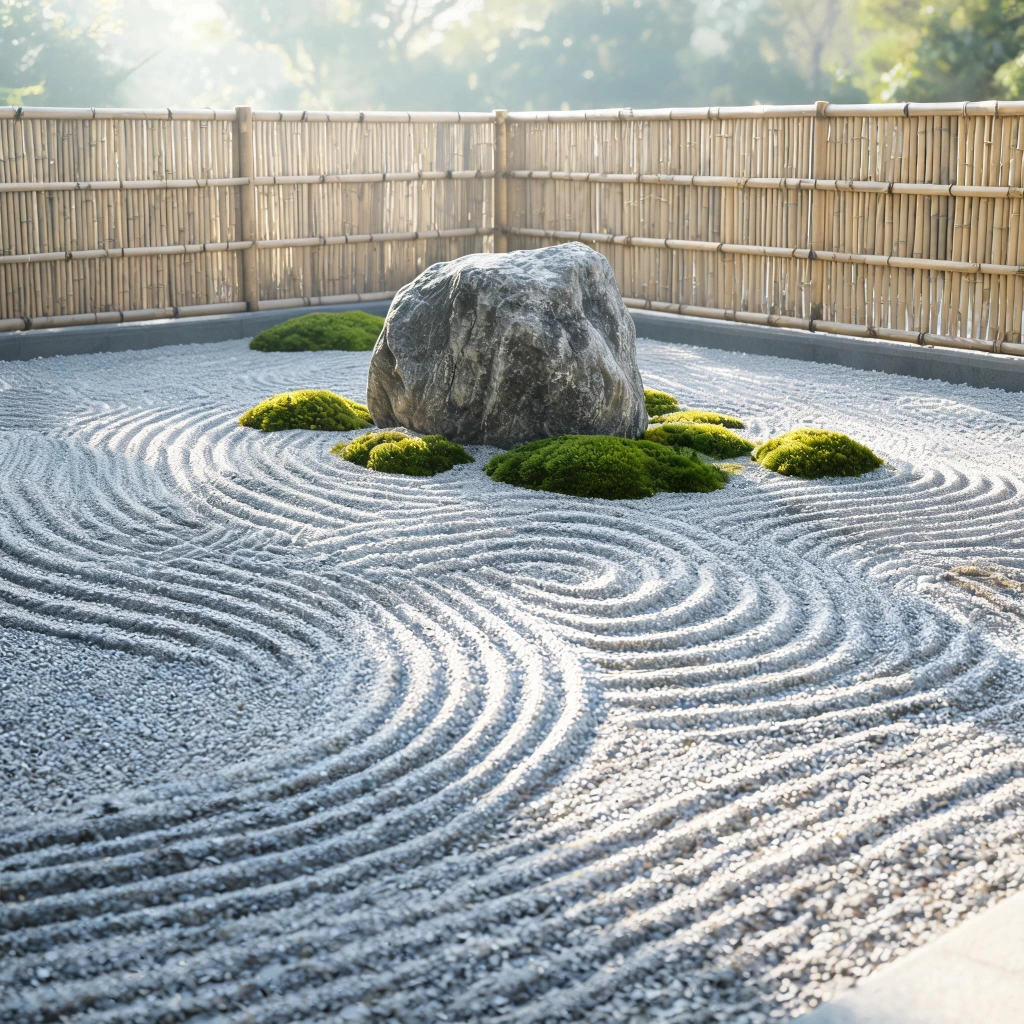
A raked gravel meditation garden with moss islands and a single weathered granite boulder is the most contemplatively beautiful and philosophically authentic Japandi garden idea that combines the Japanese zen garden tradition — the karesansui, or dry landscape garden — with the Scandinavian appreciation for quiet, unadorned natural beauty to create an outdoor space of extraordinary stillness, refined simplicity, and the specific, deeply restorative quality that only genuinely minimalist garden environments can provide to the minds and nervous systems of people who spend deliberate, unhurried time within them.
Select a fine-grade decomposed granite or crushed limestone in silver-gray or pale cream tones for the raked gravel surface — avoiding both the too-white artificial appearance of marble chips and the too-dark visual weight of black lava rock in favor of a warm, light-reflective neutral that creates the most authentic zen garden visual quality. Use a traditional Japanese raking tool with widely spaced tines to create the characteristic curved raking patterns — concentric circles emanating from the granite boulder focal point, linear parallel lines representing flowing water through the broader gravel expanse. Establish moss islands by transplanting sheets of established moss directly onto slightly raised, moisture-retentive planting areas within the gravel field.
2. Minimalist Water Feature — Bamboo Tsukubai
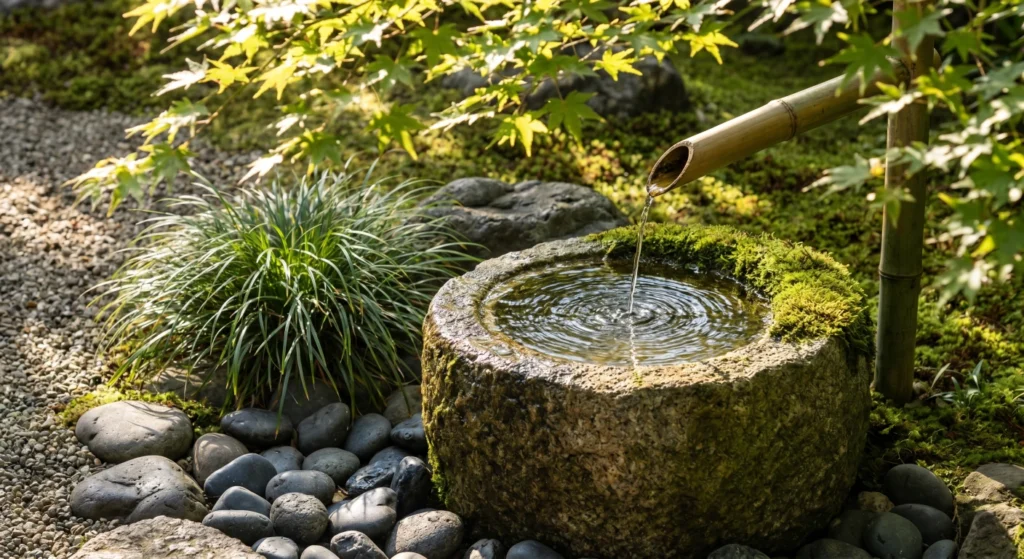
A bamboo tsukubai — the traditional Japanese stone basin water feature with a single bamboo spout delivering a thin, continuous stream of water — is the most authentically Japanese and acoustically beautiful Japandi garden idea for a water element that introduces the most ancient, most contemplatively significant, and most sensory-rich aspect of traditional Japanese garden design into the Japandi outdoor space in the most refined, smallest-scale, and most philosophically appropriate form available.
Source a genuine carved granite or natural stone basin from a Japanese garden specialty supplier or a quality stone importer who can provide hand-carved basins in the appropriate proportions — a basin approximately twelve to sixteen inches in diameter and eight to ten inches deep, with a slightly rough exterior surface and a smoothly carved interior that holds water cleanly. Install the bamboo spout at a height that delivers water in a thin, unbroken stream — not a dramatic cascade but a gentle, almost silent trickle that produces a soft, barely audible water sound audible only in close proximity. Surround the basin with carefully selected smooth river stones of varied sizes arranged in a natural, unhurried composition.
3. Structured Japanese Maple as Garden Centerpiece
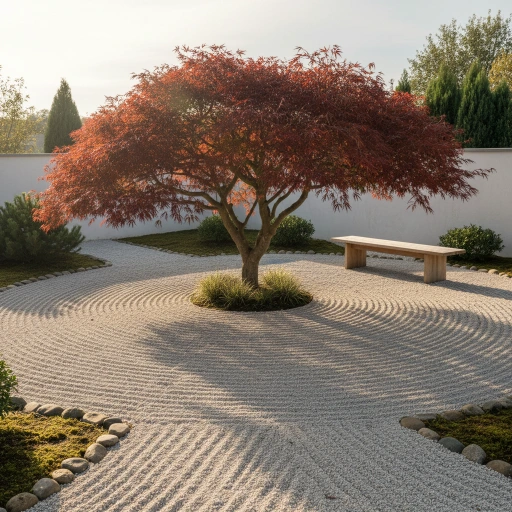
A carefully pruned Japanese maple as the garden’s singular, celebrated focal point is the most botanically beautiful and genuinely wabi-sabi Japandi garden idea for plant selection that honors the Japanese principle of finding profound beauty in a single, extraordinary specimen — one perfectly formed, meticulously maintained, deeply characterful tree worth more contemplative attention and aesthetic investment than an entire garden filled with competing plants that collectively produce visual abundance without individual depth, botanical significance, or the specific, irreplaceable beauty of a genuinely magnificent specimen tree.
Select a dissectum or laceleaf Japanese maple variety — Acer palmatum dissectum ‘Crimson Queen,’ ‘Tamukeyama,’ or ‘Inaba-shidare’ — for the most dramatically beautiful, most architecturally distinctive weeping form that creates the most sculptural, most contemplatively worthy garden centerpiece. Position the maple at the garden’s compositional center or primary viewing axis and surround it with a generous raked gravel circle that isolates and frames the tree as a deliberate, gallery-like focal presentation. Prune annually in late winter using traditional Japanese tree-pruning techniques that reveal and celebrate the tree’s natural branching architecture rather than imposing an artificial shape.
4. Linear Timber Boardwalk Through Planted Areas
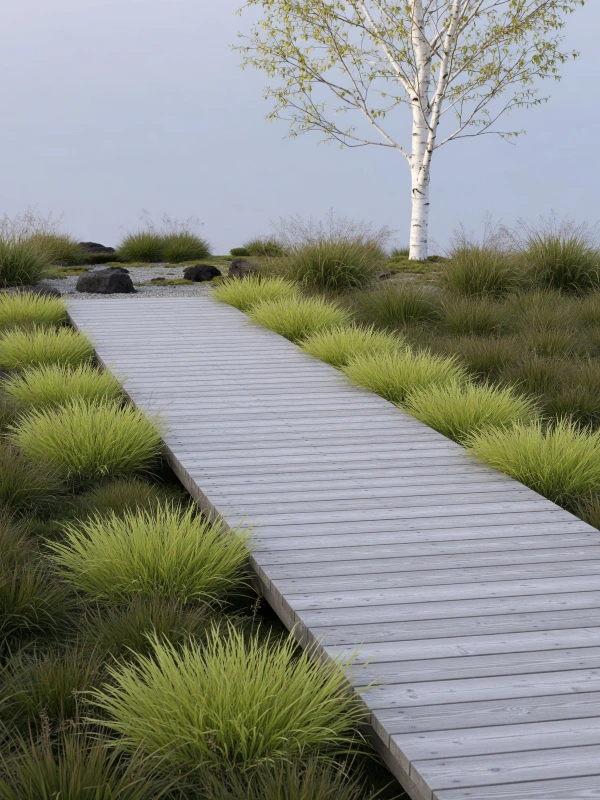
A linear timber boardwalk constructed from weathered pale gray larch, ipe, or naturally silvered teak planks running through carefully planted garden areas is the most architecturally elegant and Scandinavian-influenced Japandi garden idea for connecting different garden zones — the clean, geometrically precise boardwalk representing the Swedish design principle of structured functional beauty while the softly planted margins of ornamental grass, fern, and sedge on either side express the Japanese appreciation for the specific, quiet beauty of understated botanical textures growing in natural-feeling arrangements alongside precisely made human structures.
Specify the boardwalk planks in a consistent width — typically four to six inch wide planks — with uniform gaps between planks that allow rainwater to drain freely and create the characteristic shadow lines that give timber boardwalks their most attractive visual rhythm and textural interest. Allow the timber to weather naturally to a soft, pale silver-gray rather than staining or sealing it with a colored finish that would introduce an artificial, maintained quality incompatible with the wabi-sabi principle of honest material aging. Plant the boardwalk margins asymmetrically — thicker plantings on one side than the other — for a natural, uncontrived quality that feels grown rather than designed.
5. Clipped Buxus and Gravel Parterre
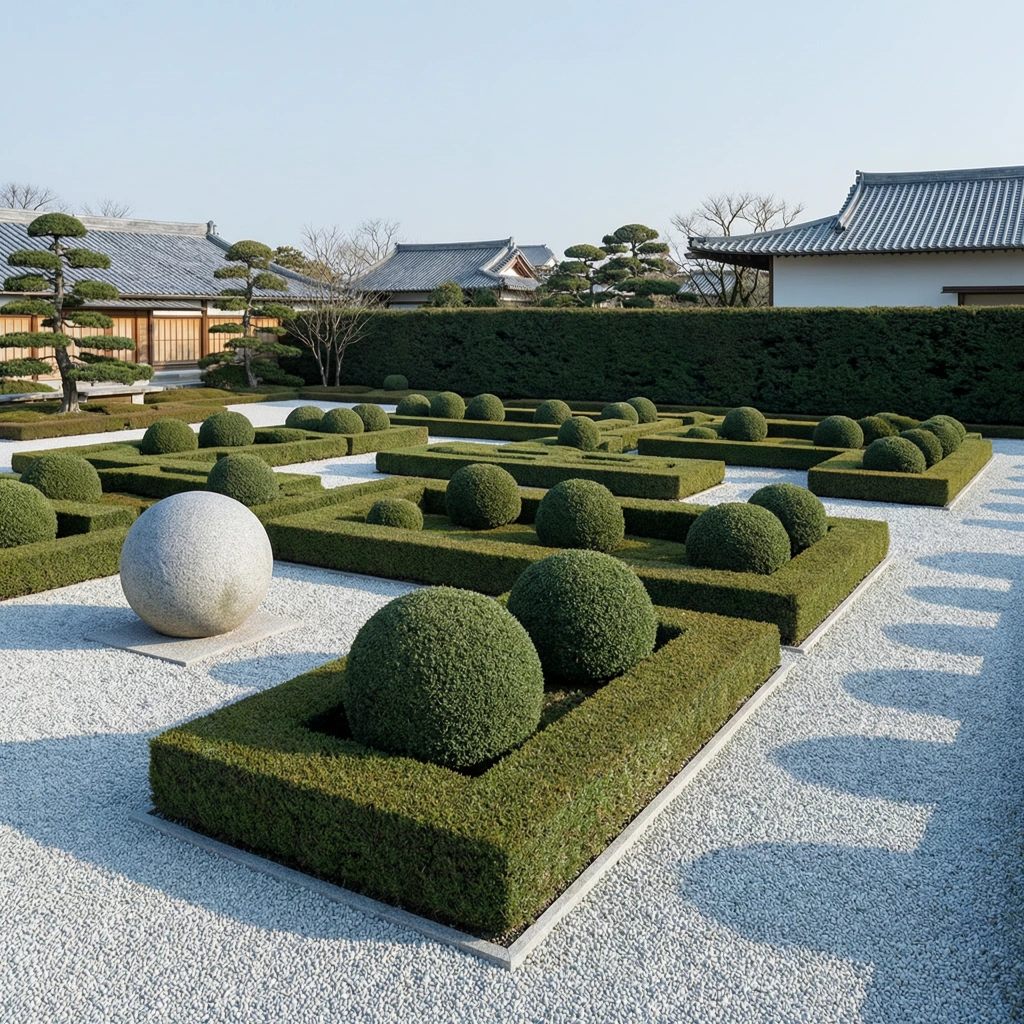
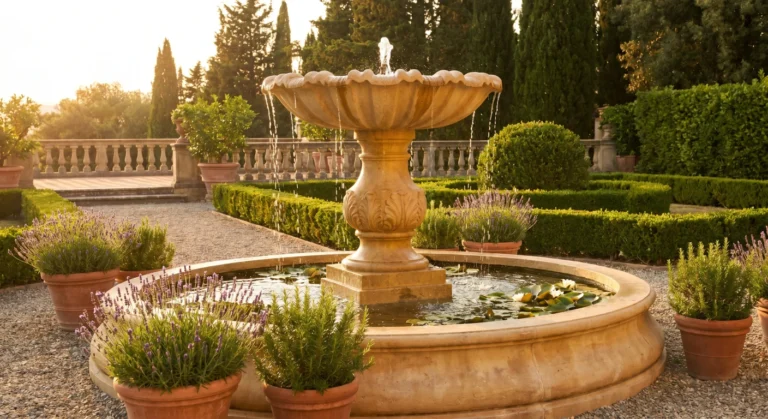
A clipped buxus parterre featuring precisely shaped spheres, cubes, and low hedges arranged in a clean asymmetric composition on a pale gravel ground is the most refined and architecturally satisfying Japandi garden idea that combines Swedish formality and design precision with the Japanese appreciation for perfectly maintained, laboriously cultivated plant forms — the topiary tradition of both cultures sharing a common reverence for the hours of careful, skilled attention required to maintain living plant material in a state of deliberate, precise, and genuinely beautiful geometric perfection.
The asymmetric arrangement distinguishes this Japandi buxus parterre from the bilateral symmetry of classical European formal gardens — instead, position three or five buxus spheres of varied sizes in a natural-feeling but carefully considered diagonal grouping across the gravel field, pairing with one or two low rectangular buxus hedges positioned at perpendicular angles that create spatial definition without rigid geometric formality. If buxus blight is a concern in your region, substitute Ilex crenata, Taxus baccata ‘Repandens,’ or Pittosporum tobira ‘Nanum’ as alternative clipping subjects that offer similar dense, small-leaved quality without the susceptibility to Cylindrocladium buxicola disease.
6. Birch Grove with Ground-Level Planting
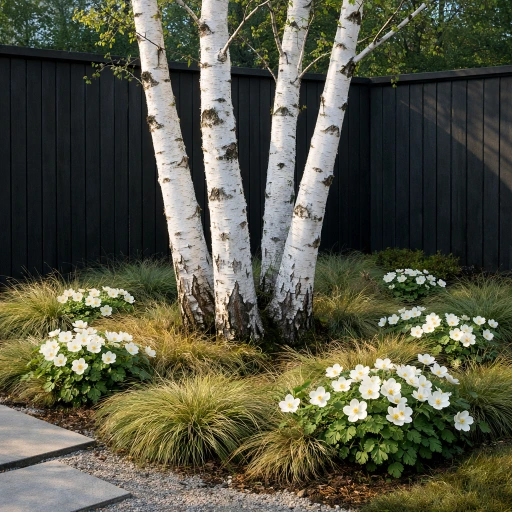
A grove of three white-stemmed silver birch trees underplanted with a carpet of ornamental sedge and scattered white anemone is the most quintessentially Scandinavian and genuinely poetic Japandi garden idea for a planting scheme of quiet, extraordinary beauty — the white birch stems being one of Nordic design culture’s most beloved and most frequently referenced natural forms, their papery white bark, delicate branch structure, and softly trembling leaves creating a garden presence of understated elegance and seasonal beauty that genuinely no other tree genus can replicate or substitute.
Plant birch in a naturalistic grouping of three — using the traditional Japanese and Scandinavian grouping principle of odd numbers for the most naturally balanced and compositionally beautiful result. Choose Betula utilis var. jacquemontii for the most brilliantly white bark among all available birch species, or Betula pendula for the most gracefully weeping, architecturally beautiful branch structure. The underplanting should be deliberately simple and tonally restrained — Carex oshimensis ‘Evergold’ or Carex morrowii ‘Ice Dance’ for fine-textured ground cover, white Anemone blanda or white Helleborus for seasonal flower interest without chromatic distraction from the birch stems’ primary visual role.
7. Wooden Garden Screen with Geometric Pattern
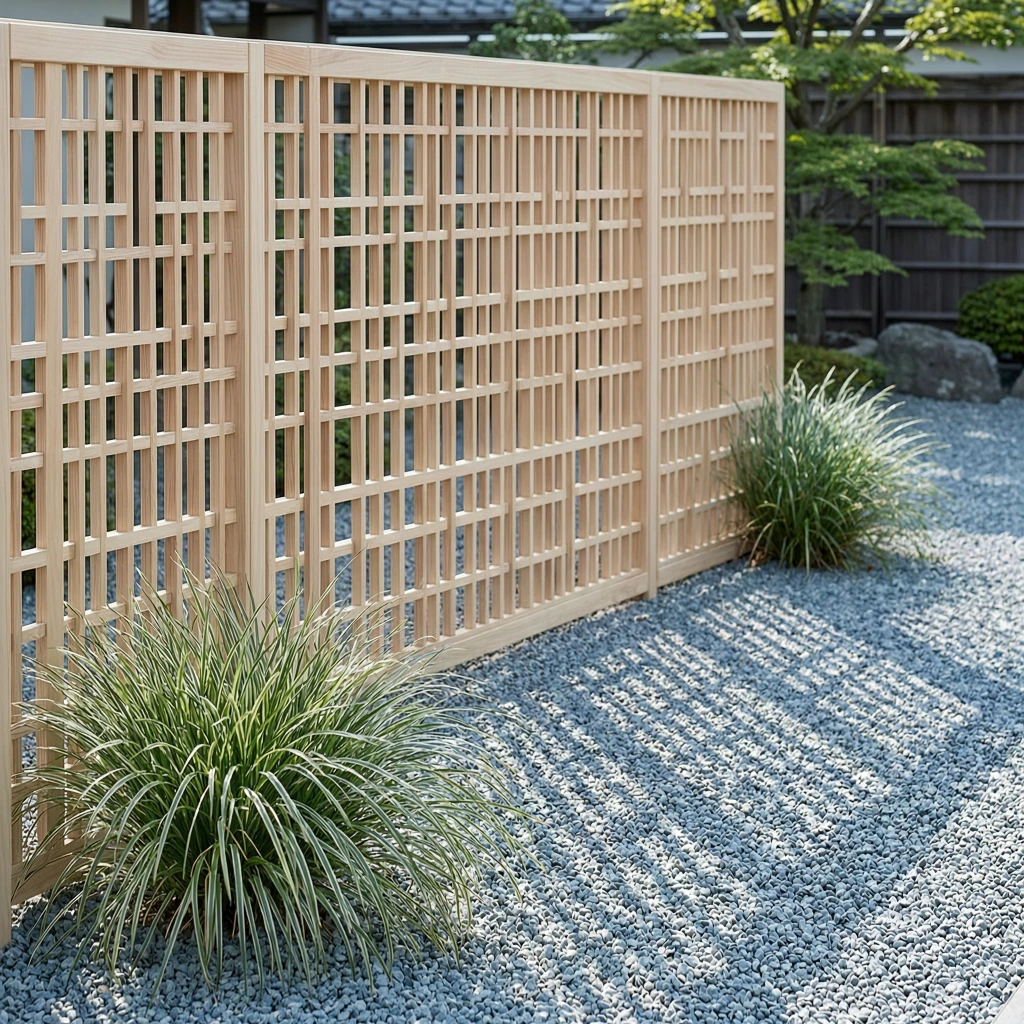
A custom wooden garden screen with a precisely cut geometric pattern — a simple square grid, a diagonal lattice, or a clean vertical slat arrangement — is the most architecturally refined and genuinely craft-forward Japandi garden idea for spatial definition that uses a single, carefully designed and skillfully made timber element to simultaneously create privacy, define garden zones, provide a planting backdrop, and contribute a piece of genuine visual beauty through the interplay between the screen’s geometric pattern and the constantly changing shadow it casts across the gravel or paving surface beneath throughout every light-changing hour of the day.
Specify the screen in natural, unfinished larch or cedar that will silver gracefully to a soft pewter gray over its first two to three outdoor seasons — the weathered gray timber surface being the most visually beautiful and most wabi-sabi appropriate finish for a Japandi garden element. Design the geometric pattern with horizontal and vertical spacing relationships that reference classical proportions — the golden ratio between panel width and height, or a grid based on the Fibonacci sequence — for a geometric composition that feels mathematically beautiful and visually satisfying at every viewing scale from close examination of individual panel details to the screen’s overall silhouette against the sky.
8. Moss and Stone Contemplation Path
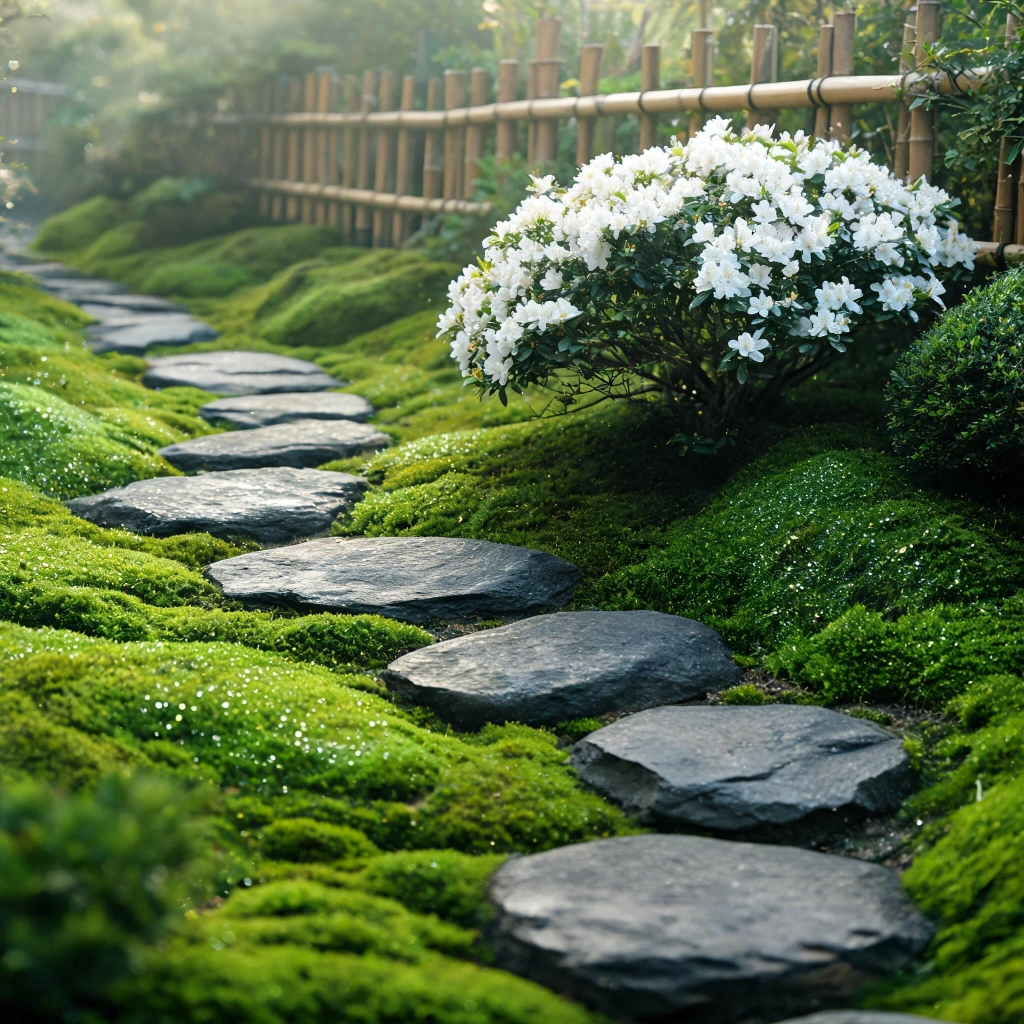
A contemplation path of irregular stepping stones surrounded by thick, living emerald moss is the most sensuously beautiful and genuinely meditative Japandi garden idea for a garden pathway that creates a walking experience of extraordinary sensory richness and deliberate slowness — the slightly irregular stone placement requiring attentive foot placement, the surrounding moss’s intense emerald color and velvety surface quality creating a visual richness that makes every step along the path feel genuinely precious and worth taking with full, appreciative presence.
Select stepping stones with naturally irregular forms rather than cutting them to uniform shapes — sourcing large pieces of basalt, granite, or local fieldstone in flatfish, walkable profiles that vary between twelve and twenty-four inches across for the most naturalistically varied, organically beautiful stone composition. Set each stone at a consistent height — approximately one inch above the surrounding moss surface — for safe, comfortable walking while maintaining the appearance of stones naturally settled into the garden floor over years of gentle moss growth. Establish moss by transplanting sheets of Polytrichum, Thuidium, or Hypnum species during consistently moist weather conditions.
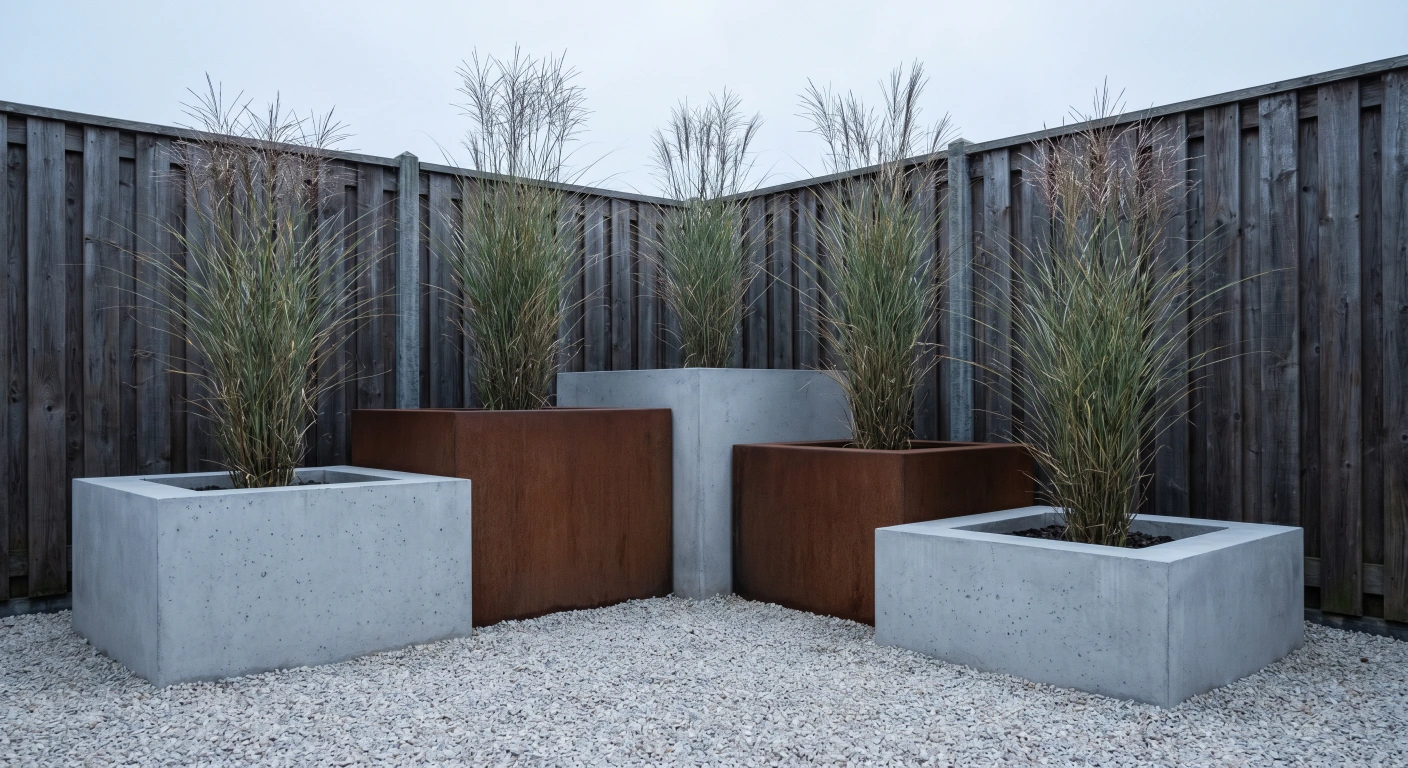
9. Minimalist Concrete and Steel Planter Design
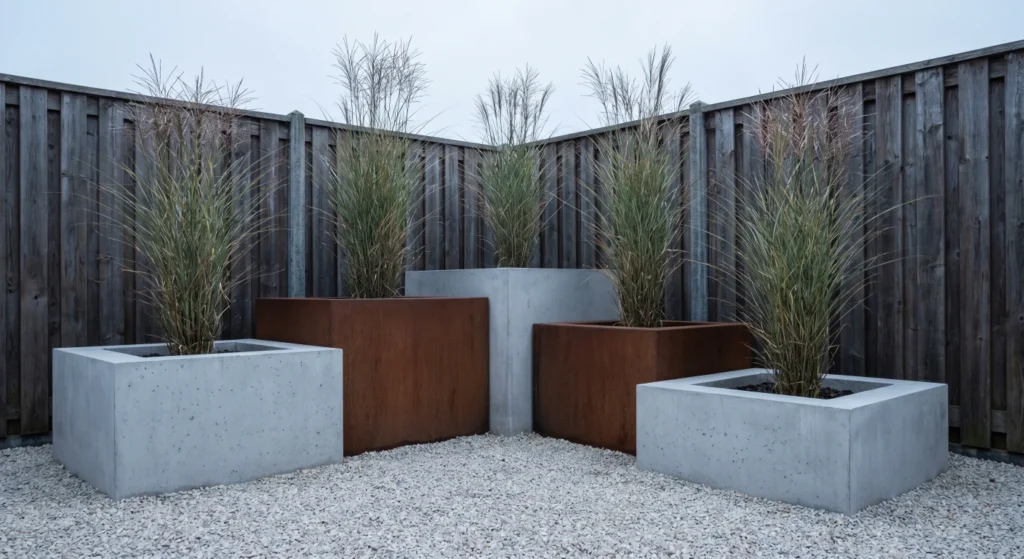
Precisely crafted concrete and weathering steel Corten planters in varied heights arranged in a deliberate geometric composition are the most industrially beautiful and material-honest Japandi garden idea for container planting that honors both the Scandinavian design tradition of elevating functional objects through exceptional material quality and refined craft execution and the Japanese appreciation for honest, direct material expression — the raw concrete’s mineral warmth, the Corten steel’s oxidized rust patina, and the living plant material within each planter creating a composition of genuine material sophistication.
Commission the planters from a concrete or metalwork specialist who can produce genuinely precise, consistently surfaced concrete in a smooth gray mix proportioned to your specific height and width dimensions — avoiding commercially available planters that lack the precise material quality and clean geometric proportions necessary for the most refined Japandi design result. Vary the planter heights significantly — perhaps twelve, eighteen, and twenty-four inches — while maintaining consistent width and material for the most visually interesting and compositionally dynamic arrangement. Plant each planter with a single architectural subject — one clump of Hakonechloa macra, one Carex, or one dwarf conifer — for the most restrained, most focused botanical presentation.
10. Snow-White Gravel Garden with Dark Planted Accents
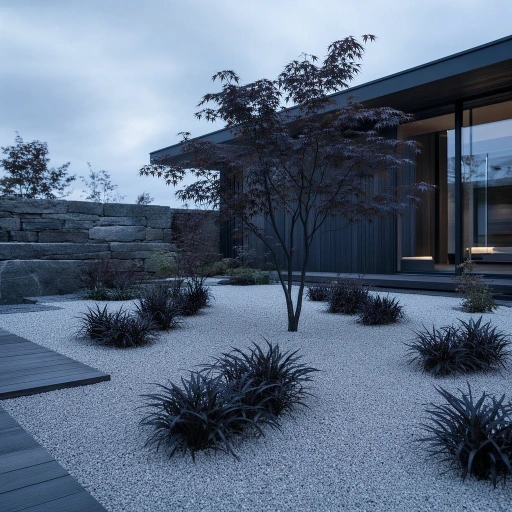
A pale white-gray gravel garden punctuated by dramatically dark plant accents — black mondo grass, dark-stemmed Acer, and deep burgundy ornamental grasses — is the most visually striking and genuinely sophisticated Japandi garden idea for a high-contrast planting composition that exploits one of garden design’s most powerful and most underused compositional principles — the dramatic visual tension created by placing the palest, most light-reflecting ground material against the darkest, most light-absorbing plant material in a deliberate, boldly committed contrast that makes both elements appear more dramatically beautiful and more individually significant than either would in a more tonally similar pairing.
Source Japanese Shirakawa gravel or quality pale gray decomposed granite for the ground plane — the specific, warm-toned pale gray of quality Japanese garden gravel being significantly more sophisticated and more visually beautiful than the too-white artificial quality of marble chips or the too-yellow warmth of standard pea gravel alternatives. Plant the dark accent plants in deliberate, asymmetric groupings of odd numbers — three clumps of Ophiopogon planiscapus ‘Nigrescens’ black mondo grass, a single Acer palmatum ‘Black Lace,’ and five specimens of Imperata cylindrica ‘Red Baron’ for a dark plant palette of genuine variety and visual interest against the pale gravel ground.
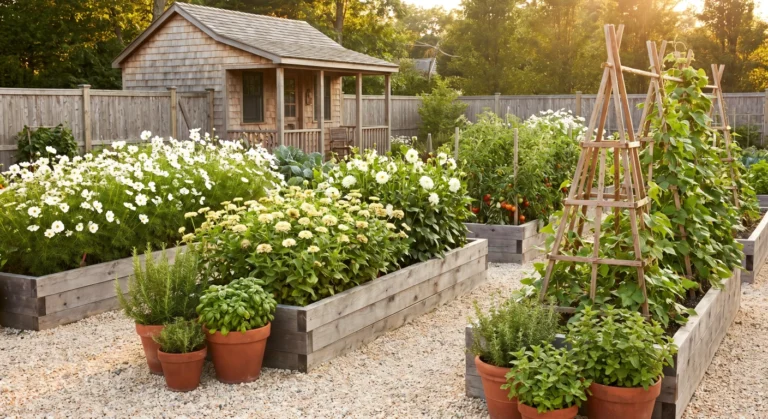
11. Swedish-Inspired Kitchen Garden with Clean Lines
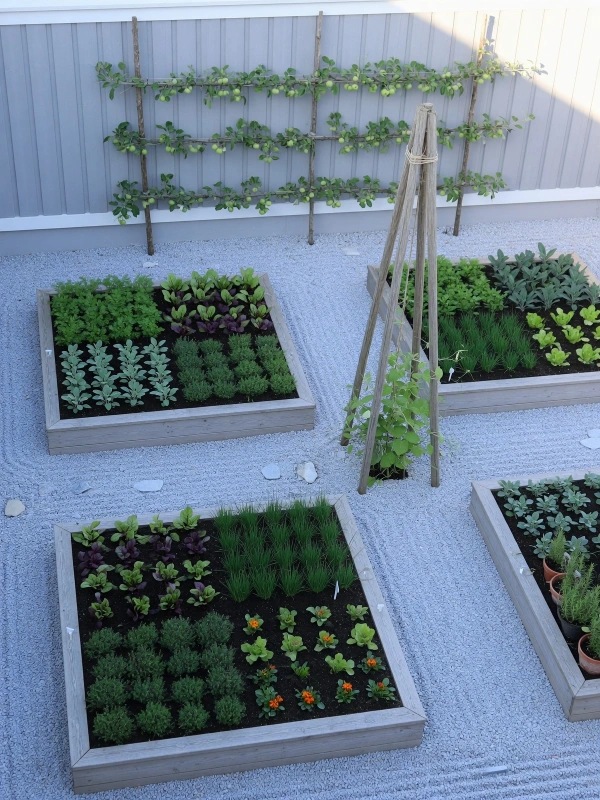
A Swedish-inspired kitchen garden with clean-lined weathered larch raised beds, geometric organized plantings, and simple wooden obelisks for climbing plants is the most practically beautiful and genuinely Nordic-influenced Japandi garden idea that combines the Swedish tradition of the productive, beautifully ordered kitchen garden — the köksträdgård — with the Japanese appreciation for simple, functional objects executed with exceptional material quality and honest craft precision, creating a food-growing garden of genuine visual beauty that justifies growing vegetables as much for the visual pleasure of an impeccably maintained, geometrically satisfying growing space as for the culinary bounty it produces.
Construct raised beds in consistent dimensions — typically four feet wide for comfortable reach from either side without stepping inside — using weathered or naturally treated larch, oak, or cedar planks at a consistent height of twelve to sixteen inches. Organize planting within each bed in deliberately clean geometric blocks rather than random scatter — herbs in a four-square arrangement within one bed, salad greens in bold rectangular bands of single varieties within another, climbing beans trained up simple wooden obelisks in the garden’s back beds where vertical interest is most architecturally appropriate and most compositionally useful.
12. Fog Garden — Ornamental Grass Landscape
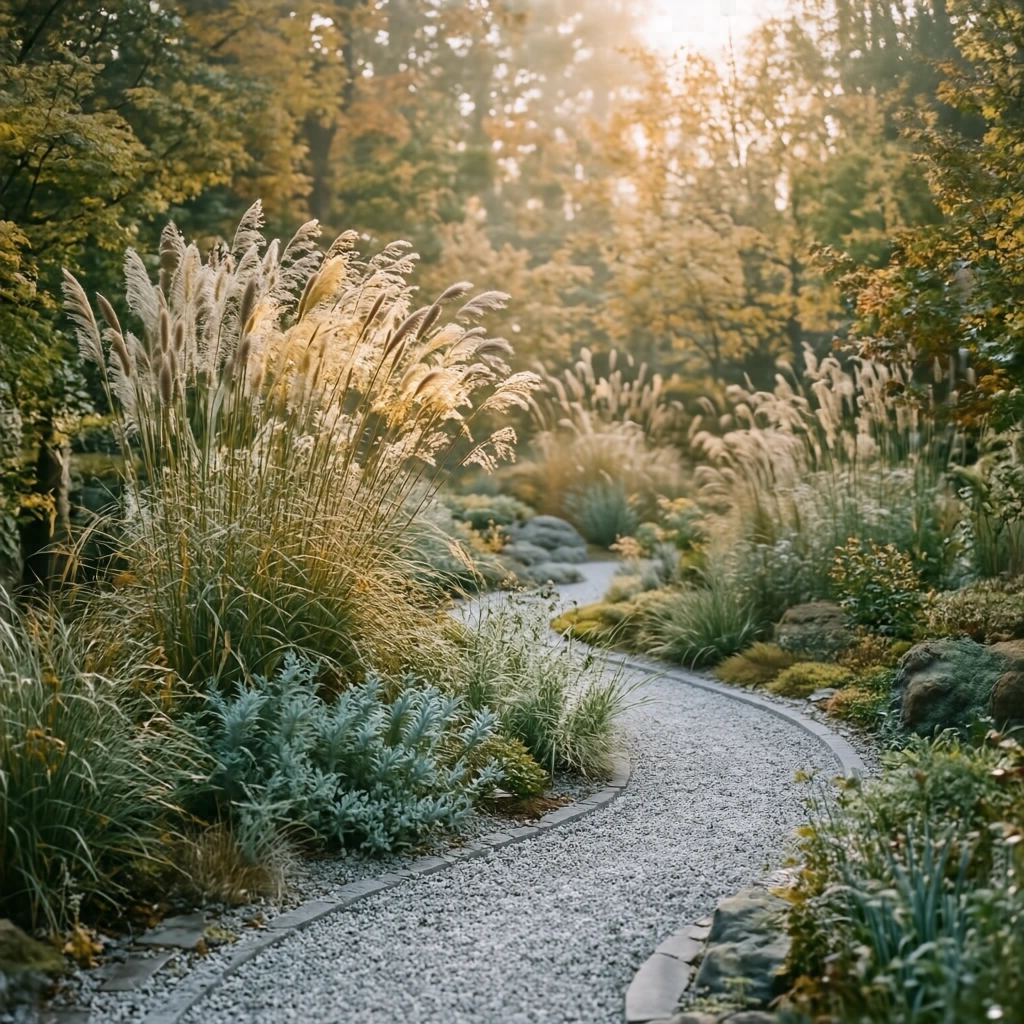
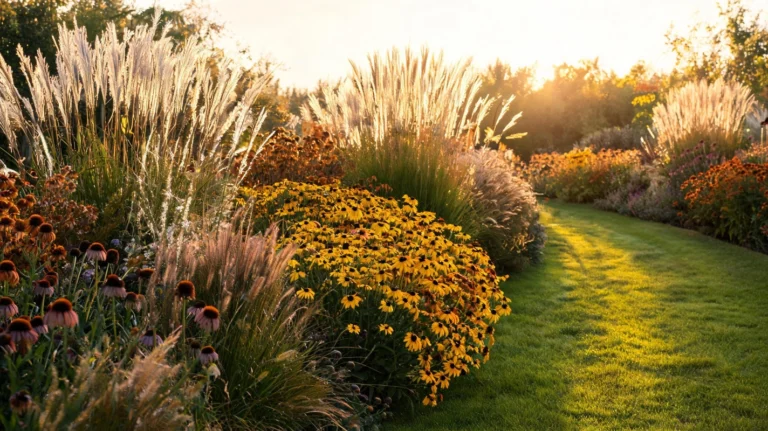
An ornamental grass garden planted entirely with varied grass species in a naturalistic, flowing composition is the most hauntingly beautiful and seasonally extraordinary Japandi garden idea for a low-maintenance planting scheme of genuine naturalistic beauty — the grasses’ seed heads catching low autumn and winter light in a luminous, fog-like translucency that makes the garden most spectacularly beautiful precisely in the seasons when most gardens are at their least visually interesting, creating a year-round seasonal narrative of germination, growth, flowering, seed-head glory, and winter structure that rewards continuous, attentive observation throughout all four seasons.
Select grass species for a complete range of heights, bloom times, and textural qualities — tall Miscanthus sinensis ‘Gracillimus’ for the back layer providing height and autumn gold drama, medium Calamagrostis x acutiflora ‘Karl Foerster’ for the middle layer providing the earliest bloom and most upright architectural form, and low Festuca glauca, Hakonechloa macra, and Carex oshimensis for the front layer providing ground-level textural variety and year-round evergreen or semi-evergreen interest. Plant in generous, flowing drifts of five to seven specimens rather than individual clumps for the most convincingly naturalistic, wind-swept aesthetic quality that makes the composition feel like a designed interpretation of a natural landscape rather than a domestic garden.
13. Single Specimen Conifer as Living Sculpture
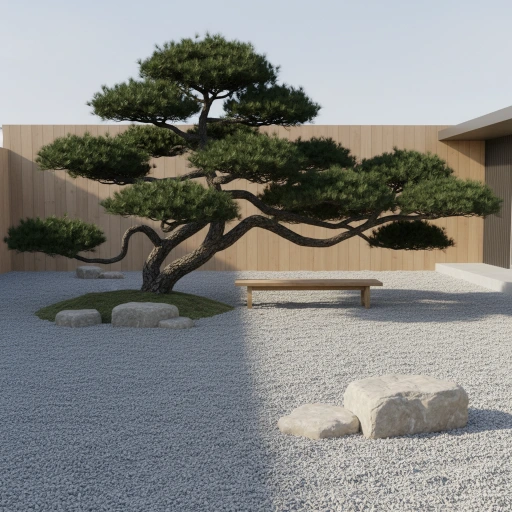
A single cloud-pruned conifer — a Japanese black pine or Scots pine trained through years of patient, skilled pruning into a cloud-form living sculpture — is the most profound and genuinely extraordinary Japandi garden idea for a specimen plant that represents the highest achievement of the Japanese niwaki garden tree pruning tradition, transforming a naturally beautiful tree into a work of collaborative art between the gardener’s patient, long-term vision and the tree’s own growth intelligence — a living sculpture that becomes more beautiful, more complex, and more deeply characterful with every year of skilled, attentive maintenance.
The cloud-pruned pine requires a minimum five to ten years of consistent, skilled pruning to develop the characteristic floating horizontal foliage pads — the distinctive cloud forms — that define niwaki aesthetics, making the commitment to purchase an already-trained specimen from a specialist niwaki grower the most immediately rewarding option for gardeners who want this extraordinary effect without the decade-long cultivation investment. Source trained specimens from dedicated niwaki nurseries — Jake Hobson’s Niwaki nursery in the UK, or specialist Japanese garden nurseries in the US Pacific Northwest — accepting the premium price as a justified investment in the acquisition of a living sculpture of genuine artistic value and horticultural significance.
14. Outdoor Meditation Bench with Garden Frame View
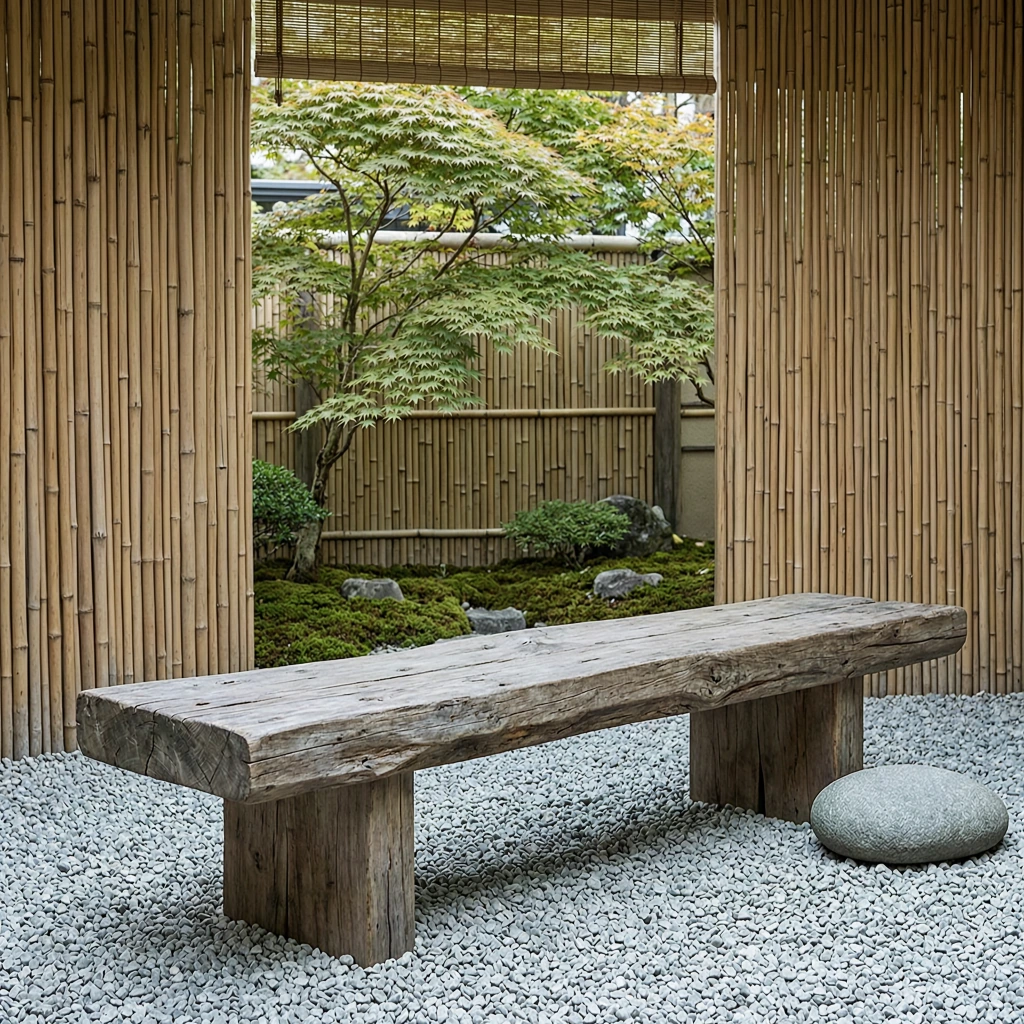
A single handcrafted meditation bench made from a thick weathered timber slab positioned at a carefully considered viewing point to frame the garden’s most beautiful composition is the most contemplatively refined and genuinely philosophical Japandi garden idea for outdoor seating that treats sitting in the garden not as incidental relaxation but as a deliberate, practiced act of attentive presence — the bench’s specific placement, viewing angle, and material simplicity all contributing to a seating experience that actively encourages the quieting of mental activity and the deepening of sensory attention to the garden’s subtle, time-varying beauty.
Commission the bench from a skilled furniture maker who can create a genuinely beautiful, structurally sound seat from a single thick slab of naturally edged timber — preferably weathered oak, sweet chestnut, or locally significant wood species that carries regional material authenticity rather than imported exotic timber. Specify the bench without a back or armrests for the most minimal, most honest form — the backless bench requiring engaged, upright posture from the sitter that is most appropriate for the meditative, attentive quality of presence that the Japandi garden’s design philosophy is most fundamentally intended to cultivate and support in the people who use and inhabit it most regularly.
15. Sculptural Boulder Collection with Ground Cover
A sculpted boulder collection arranged according to the traditional Japanese sansonseki — three stone grouping — principle, surrounded by low mounding ground cover, is the most compositionally sophisticated and genuinely Japanese-philosophical Japandi garden idea for stone placement that treats individual boulders not as decorative accessories to be arranged for superficial visual appeal but as deeply significant, carefully selected natural objects worthy of the same attentive consideration and compositional intelligence that a sculptor brings to the arrangement of forms within a gallery installation.
Select boulders with genuine geological character and visual interest — weathered granite with lichen patches, basalt with pronounced crystalline structure, or local fieldstone with naturally occurring color variations — rather than smooth, undistinguished boulders that lack the specific, individual visual presence necessary for meaningful contemplative engagement. The sansonseki grouping principle positions one tall, vertical boulder as the shin or primary stone, one medium boulder inclined at a slight angle as the soe or secondary stone, and one low, horizontal boulder as the tai or tertiary stone — the three stones together suggesting the composition of a mountain landscape in miniature through the specific arrangement of their relative heights, angles, and spatial relationships.
16. Twilight Garden — Night-Blooming Plants and Moonlight Design
A twilight garden designed for evening and moonlight viewing — planted with white-flowered species that appear luminous in low light, silver-foliaged plants that seem to glow, and fragrant night-blooming subjects that fill the garden with scent as darkness falls — is the most hauntingly beautiful and most originally conceived Japandi garden idea that extends the outdoor space’s beauty and usefulness into the evening hours when the quality of light transforms the garden’s visual character most dramatically and creates the most ethereally beautiful, most contemplatively profound garden experience available to the thoughtful, attentive garden designer.
Design the twilight garden’s plant palette exclusively from white-flowered and silver-foliaged species — white Nicotiana sylvestris, white Echinacea, silver Stachys byzantina, white Astilbe, Phlox paniculata ‘David,’ and the extraordinarily fragrant white-flowered Hesperis matronalis for genuine night fragrance. Position a traditional Japanese stone lantern at a key garden pathway intersection — the andon or snow-viewing lantern being the most authentically Japandi form — fitted with a warm LED candle for safe, convincingly flame-like illumination. Install a simple pale gravel path that reflects maximum moonlight and lantern light, glowing softly through the entire twilight garden with a luminous, ethereal quality that makes the garden feel most magical, most beautiful, and most deeply worth inhabiting at the precise hour of its most extraordinary daily transformation.