16 Industrial Loft Bedroom Ideas for Urban Comfort

1. Exposed Brick Feature Wall with Edison Bulb Lighting

An exposed brick feature wall behind the bed is the single most defining and most architecturally powerful element in the industrial loft bedroom design vocabulary — a surface that carries within its aged, irregular, color-varied face the complete visual history of the building’s working industrial past, communicating authenticity, material permanence, and a specific quality of urban beauty that no applied finish, wallpaper, or painted surface can replicate or approximate with genuine conviction. The exposed brick wall requires nothing added to it to be beautiful — its inherent texture, the natural color variation between individual bricks, the mortar joints with their slightly recessed shadow lines, and the occasional repair patches in different brick types or mortar colors all contribute to a surface whose visual richness increases with closer examination and rewards the long daily familiarity of someone who wakes up facing it every morning.
String vintage Edison bulb lights directly across the brick surface — attaching the wire to small cup hooks driven into the mortar joints at irregular intervals to create loose, drooping loops rather than taut, parallel runs — for the warm amber light that most sympathetically illuminates the brick’s warm red and orange tones while creating the specific romantic industrial atmosphere that makes loft bedrooms feel simultaneously urban and intimate. Choose Edison bulbs with visible carbon-filament or spiral-filament designs that provide their own decorative interest even when unlit, extending the wall’s visual richness into the daytime hours when the bulbs are dark. Position the bed centrally against this wall — a simple, low-profile bed frame in blackened steel or natural walnut that allows the brick to remain the dominant visual element rather than competing with it — and dress with dark linen bedding in charcoal, slate, or deep navy that echoes the urban palette without fighting the brick’s natural warmth.
2. Concrete Ceiling with Black Steel Pendant Lights
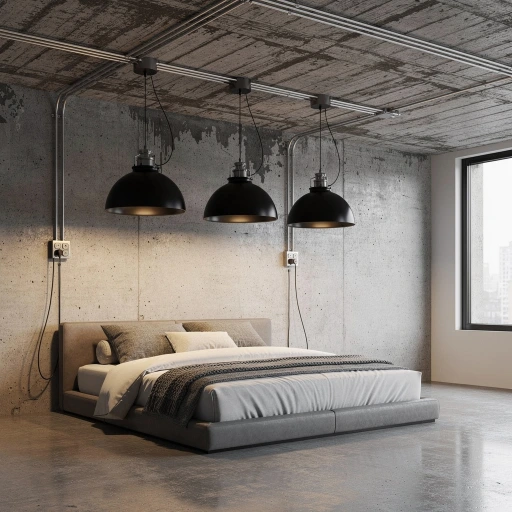
A raw concrete ceiling with its original formwork texture — the wood grain impressions left by the boards used to form the concrete pour, the irregular surface topography of a hand-finished industrial ceiling, and the natural color variation between grey, cream, and warm buff tones — paired with large black steel dome pendant lights hanging at dramatically varying heights is the industrial loft bedroom overhead composition that most powerfully and most authentically communicates the raw, unfinished, deliberately exposed aesthetic that defines the industrial design approach at its most genuine and most architecturally honest. The concrete ceiling represents the industrial loft’s fundamental design philosophy made literal overhead — the refusal to conceal structural reality behind conventional finishing, the celebration of industrial materials as inherently beautiful objects of design attention rather than utilitarian substrates requiring aesthetic improvement through applied surface treatments.
Choose pendant lights with the specific character of industrial workshop and factory lighting rather than contemporary lighting designed to evoke industrial aesthetics — look for original factory pendant shades in blackened steel or enamel-coated cast iron, sourced from industrial salvage dealers, or quality reproductions that replicate the functional, unornamented design language of genuine mid-twentieth century industrial luminaries with complete fidelity and without the decorative additions that betray a contemporary design agenda. Hang three pendants over the sleeping area at dramatically varied heights — the lowest at approximately 180 centimeters from floor level, the middle at 200 centimeters, and the highest at 220 centimeters — to create the dynamic, asymmetric overhead composition that gives the industrial bedroom ceiling its most interesting and most architecturally active visual presence. Use exposed conduit rather than surface cable or ceiling roses to bring power to each pendant, maintaining the industrial installation aesthetic in the electrical infrastructure as consistently as in the luminaire choice itself.
3. Steel and Wood Platform Bed Frame
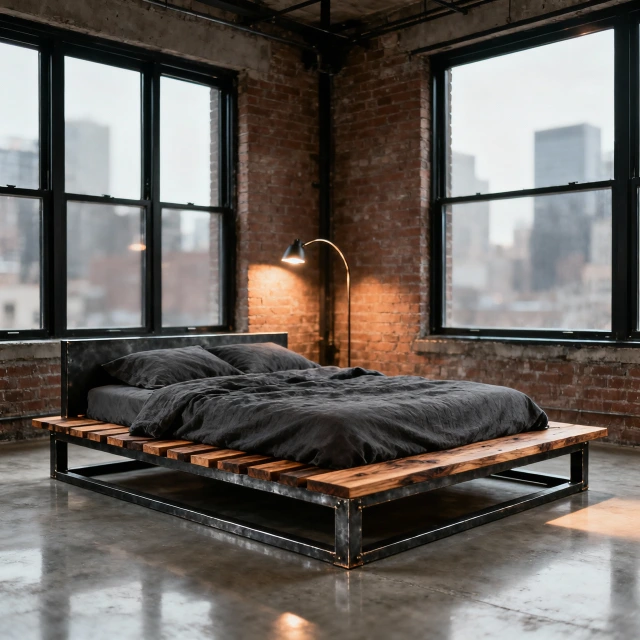
A low platform bed frame constructed from blackened steel angles and solid walnut wood planks is the industrial loft bedroom’s most architecturally pure furniture piece — a design that resolves the tension between the warmth of natural timber and the cool hardness of structural steel into a single, unified object whose material contrast creates more visual interest and more design honesty than either material could achieve independently. The blackened steel angle frame — its surface treated with a heat-applied oxidation process or a dark wax finish that creates the specific matte, slightly uneven blackened surface of aged industrial ironwork — provides the structural skeleton whose visible joints, bolt heads, and deliberate engineering expression communicate the industrial design language of exposed construction without apology or aesthetic concealment.
The solid walnut platform surface sits within the steel frame with the specific material dignity of a genuinely premium natural timber — its warm chocolate-brown grain, its slightly oily surface texture, and the natural color variation between heartwood and sapwood creating a surface of organic beauty that counterbalances and softens the industrial hardness of the steel frame beneath and around it. Source walnut boards from a sawmill or specialist timber merchant and have them planed to a consistent thickness with a simple hand-sanded finish and a light oil treatment that protects the wood while maintaining the matte, natural surface quality appropriate for the industrial bedroom aesthetic — avoid high-gloss lacquer finishes that would introduce a surface sheen incompatible with the design’s commitment to honest, unadorned materiality. Keep the bed frame low — a platform height of approximately thirty centimeters from floor level — for the specific quality of grounded, horizontal emphasis that makes a low bed look intentionally designed for a loft space with generous ceiling height rather than simply purchased without attention to proportion.
4. Warehouse Window Wall with Blackout Roller Blinds
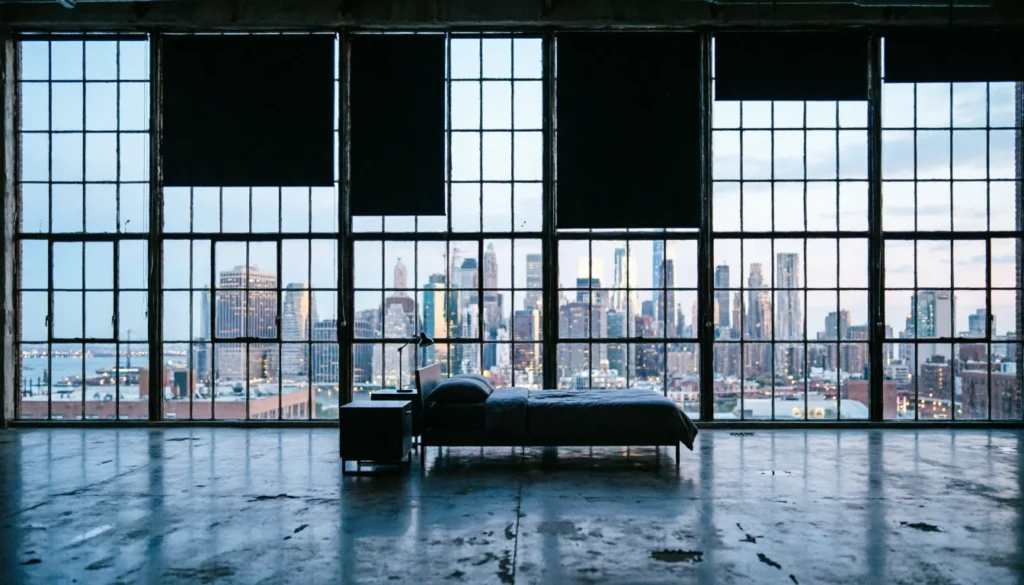
A full wall of original steel-framed warehouse windows in a regular grid pattern — their multiple small panes, their blackened steel muntins, and their specific industrial proportion communicating the building’s authentic manufacturing past with complete architectural honesty — paired with simple black roller blinds for light control, is the industrial loft bedroom design feature that most dramatically connects the interior sleeping space to the urban landscape beyond, making the city skyline, rooftop water towers, and the ambient glow of urban nightlife an active, ever-changing element of the bedroom’s atmosphere rather than a view to be excluded behind conventional window treatments. The warehouse window wall creates the industrial loft bedroom’s most powerful experiential quality — the feeling of sleeping within the city rather than simply in proximity to it, surrounded by the visual evidence of urban life at every hour of the day and night.
Preserve original steel window frames with a simple rust inhibitor treatment followed by a flat black paint in a heat-resistant formulation that prevents further oxidation while maintaining the surface character of aged industrial metalwork rather than replacing it with the smooth, uniform appearance of new powder-coated steel. Where original windows require replacing for thermal or acoustic performance, source purpose-made steel-framed windows from specialist manufacturers who replicate the grid patterns, profile dimensions, and surface character of authentic warehouse glazing with architectural fidelity. Install simple fabric roller blinds in a flat black or deep charcoal — the most visually recessive color choice that allows the windows to remain the dominant visual element of the wall both when the blinds are raised and when they are lowered — operated by individual pull cords rather than motorized systems that would introduce contemporary technology incompatibly into the industrial aesthetic’s honest material world.
5. Reclaimed Wood Floating Shelves on Steel Brackets
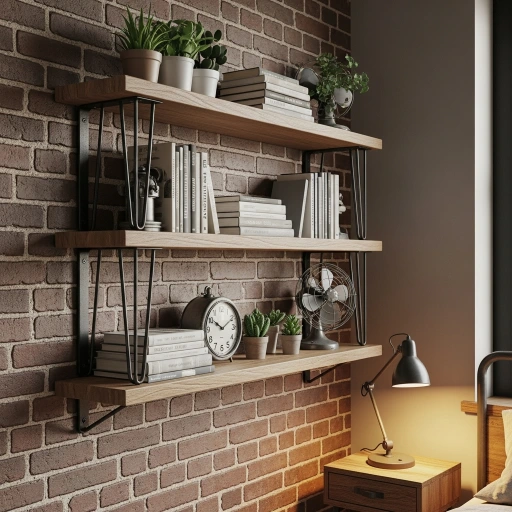
Reclaimed timber floating shelves mounted on thick blackened steel hairpin or flat bar brackets are the industrial loft bedroom storage and display solution that most elegantly and most honestly combines the two foundational materials of the industrial design vocabulary — salvaged natural timber and structural steel — into a single functional element whose material honesty, formal simplicity, and display versatility make it the most versatile and most frequently used component of the industrial bedroom’s furniture and storage system. The reclaimed timber shelf carries within its surface all the visual interest that only genuine age and genuine use can create — the nail holes and bolt marks of previous structural application, the weathering patina of outdoor exposure, the paint layers of previous decorative lives, and the specific grain depth and color richness that only develops in timber dried and aged over decades of seasonal moisture and temperature cycling.
Source shelves from a specialist reclaimed timber supplier or urban salvage yard — choosing boards with the most visually interesting surface character, the richest patina, and the most authentic evidence of previous use, rather than the cleanest and most uniform examples that would defeat the aesthetic purpose of using reclaimed material in the first place. Have the boards cleaned of loose paint and organic material, treated for any structural issues, and planed lightly on the top surface only for a practical flatness that allows objects to stand without rocking, while preserving the rough, aged surface character of the board’s sides and underside that contribute most to its visual authenticity. Mount on blackened steel hairpin brackets in a size that provides sufficient visual presence — bracket diameter of at least twelve millimeters in a matte black finish — to read clearly against the wall surface and to communicate the structural honesty of a visible, undecorated fixing system. Style shelves with an edited, intentional selection of objects rather than the abundant, overlapping accumulation of general storage — three or four books stood with a small industrial object as a bookend, a single trailing plant, one vintage industrial lamp, and one or two pieces with genuine personal meaning.
6. Polished Concrete Floor with Vintage Persian Rug
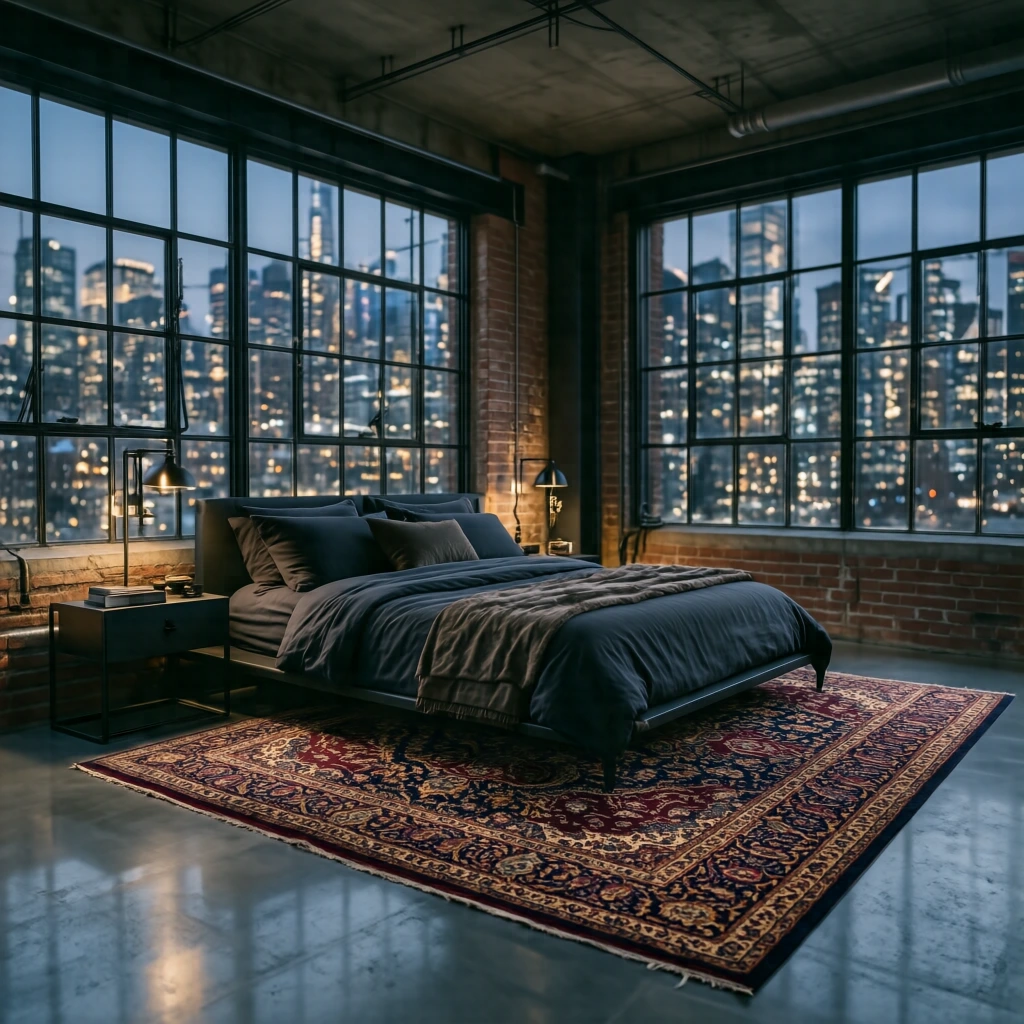
A polished concrete floor in its natural grey tone — seamless, slightly light-reflective, and possessing the specific cool, hard quality of the industrial building substrate that underlies the entire loft aesthetic — positioned against a large vintage Persian rug in deep jewel tones of burgundy, midnight navy, and aged gold is the industrial loft bedroom flooring combination that most beautifully and most successfully resolves the central tension inherent in the design challenge of making an industrial space genuinely comfortable and genuinely livable as a sleeping environment. The concrete floor is the industrial bedroom’s most honest and most architecturally appropriate floor surface, its smooth continuity across the entire space creating the visual impression of a single, unified surface that allows furniture, wall treatments, and decorative objects to read clearly against an uninterrupted, neutral background.
The vintage Persian rug is the element that transforms this honesty from aesthetic achievement into genuine human comfort — its dense pile providing warmth and softness underfoot in the transition zone around the bed where bare feet meet floor in the morning and evening, its complex botanical and geometric pattern introducing visual warmth, color richness, and the handmade textile tradition of a completely different cultural world into deliberate, beautiful contrast with the industrial room’s raw materiality and urban aesthetic. The contrast is the point — the unexpected meeting of a hand-knotted nineteenth century Persian rug and a mid-twentieth century industrial concrete floor creates more visual interest, more design intelligence, and more genuine aesthetic pleasure than either surface could generate in the company of a conventionally matched partner. Source the rug from a specialist Persian rug dealer, an antique textile auction, or a reputable online vintage rug marketplace — choosing a worn example with genuine age patina rather than a crisp, unfaded piece, as the worn quality of an aged Persian rug in an industrial bedroom creates a particularly beautiful and particularly honest aesthetic partnership between two surfaces that have both been genuinely, productively used across decades of preceding life.
7. Exposed Steel I-Beam Ceiling Details
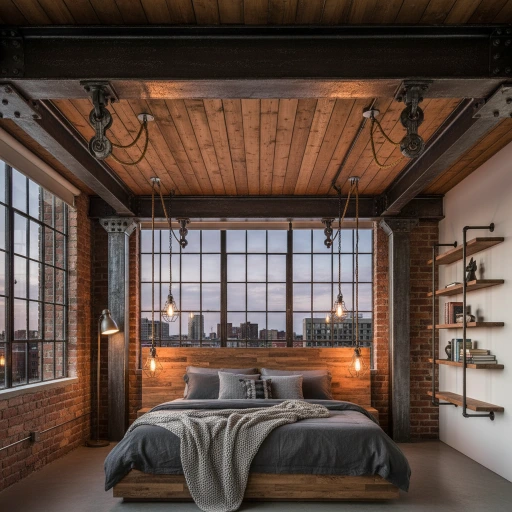
Original structural steel I-beams left exposed across the bedroom ceiling — their blackened mill scale surface maintained rather than painted over, their flange widths and web depths communicating genuine structural scale and industrial purpose, their precise engineering forms carrying the complete visual language of heavy industrial construction directly into the most intimate domestic space in the home — are the industrial loft bedroom’s most authentic and most architecturally significant original features, deserving preservation, celebration, and the specific kind of design attention that enhances rather than competes with their inherent structural beauty. The I-beam’s formal perfection as a structural element — the engineering logic of its flanges and web proportion optimized for bending resistance — is simultaneously a genuinely beautiful object of design interest whose specific profile, surface character, and spatial presence define the industrial loft ceiling more completely and more authentically than any decorative intervention could approach.
Maintain the original mill scale surface of the steel beams rather than wire brushing, priming, and painting them — the mill scale finish, a thin layer of iron oxide that forms naturally on the steel surface during the hot-rolling manufacturing process, provides both a natural rust inhibitor and the specific dark, slightly iridescent grey-black surface character that is the visual signature of structural steel in its most honest, undecorated state. Apply a penetrating clear wax or a specialized mill scale preservative to stabilize the surface and prevent active rust progression without altering the surface color or texture. Mount industrial pendant lights from the beam flanges using purpose-made beam clamp fittings rather than drilling into the steel web — the clamp fittings maintain the beam’s structural integrity, allow repositioning of the light as the room’s furniture arrangement evolves over time, and communicate the industrial installation logic of a fitting designed for a structural steel building rather than a conventional domestic ceiling. Expose the timber deck between the beams — the wooden ceiling planks that span between the beams in a typical steel-framed industrial building — rather than covering with plasterboard, for the material contrast between the steel’s industrial hardness and the timber’s organic warmth that most beautifully expresses the industrial loft aesthetic’s foundational material dialogue.
8. Industrial Pipe Clothing Rail and Open Wardrobe
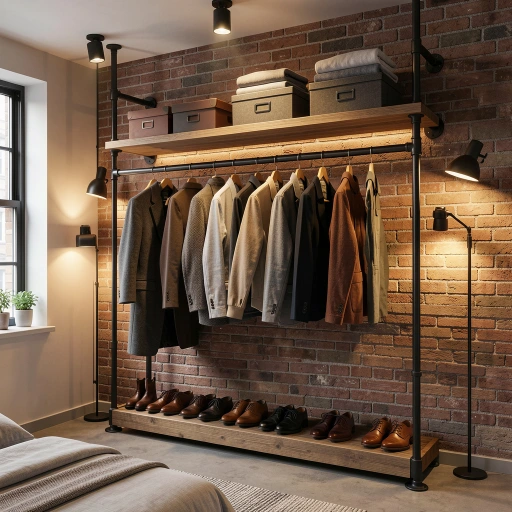
An open wardrobe system constructed from black steel pipes and floor flanges — a horizontal clothing rail supported between two vertical pipe uprights mounted from floor flange bases on the floor and wall flange brackets on the ceiling — is the industrial loft bedroom storage solution that most directly and most honestly expresses the design philosophy of functional infrastructure made visible and aesthetically valued rather than concealed behind cabinet doors and conventional wardrobe casework. The steel pipe wardrobe system is assembled from the same industrial plumbing pipe and fittings vocabulary used in genuine factory and warehouse construction, repurposed for domestic storage with a directness and material honesty that makes it simultaneously more interesting, more architecturally appropriate, and paradoxically more stylish than any conventional wardrobe in an industrial loft context.
Build the system using nominal one-and-a-half-inch black steel pipe — its internal diameter oversized for genuine plumbing application but its surface character, thread ends, and fitting vocabulary authentically industrial — connected with standard tee fittings, elbow fittings, and flanges sourced from a plumbing supplies merchant rather than a furniture retailer. The fittings’ genuine industrial origin communicates a design authenticity that purpose-made decorative pipe systems, however well-made, cannot fully replicate — the slightly irregular threading, the cast steel surface texture of standard industrial fittings, and the specific matte black finish of standard pipe all contribute to a visual character that reads as genuinely found and genuinely repurposed rather than deliberately designed. Mount a reclaimed wooden shelf above the hanging rail using a bracket welded from flat steel bar, add industrial caster wheels beneath a wooden shoe rack at floor level, and install adjustable track lighting directed specifically at the hanging area for the functional illumination that an open wardrobe requires to be genuinely practical as a daily dressing space.
9. Dark Painted Ceiling for Visual Depth
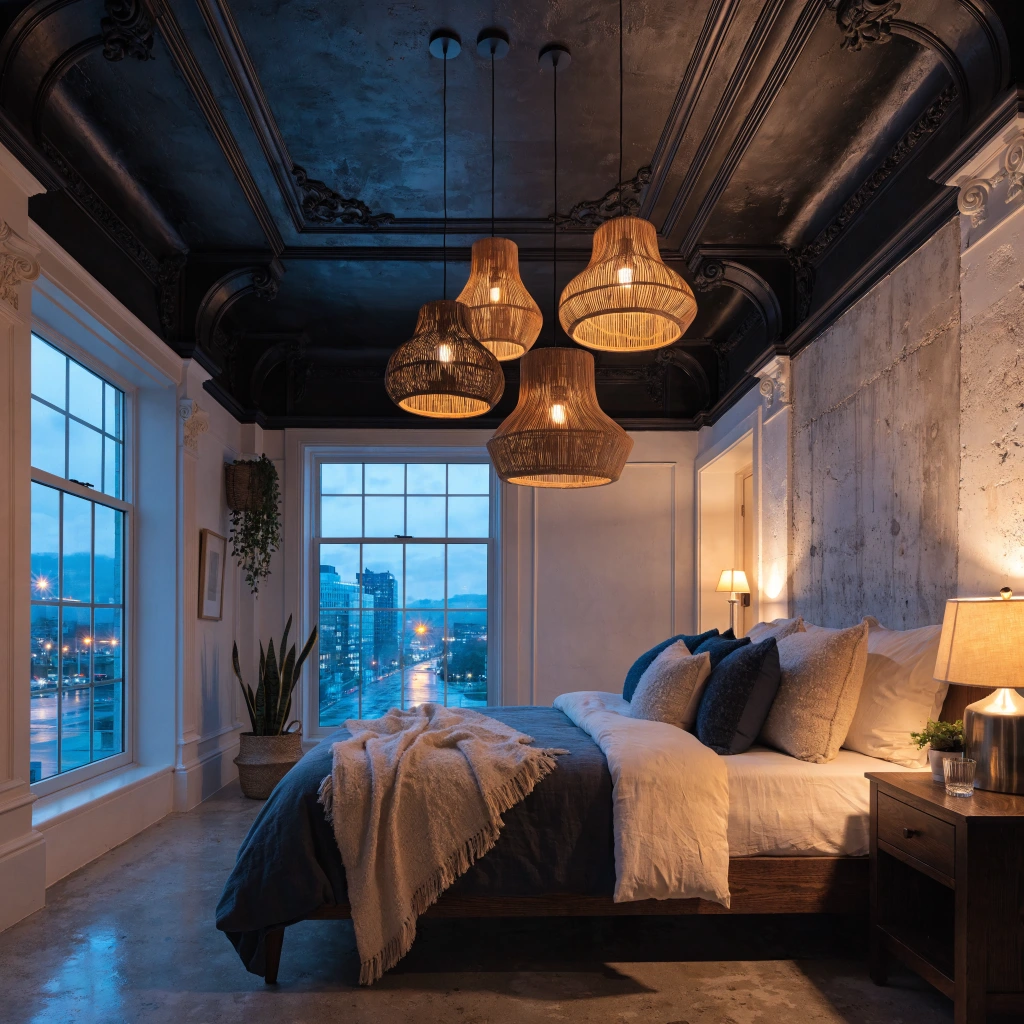
A ceiling painted in deep charcoal or flat black — creating a dramatic visual recession that makes the ceiling appear to dissolve into darkness above the warm, lit space of the bedroom below — is the industrial loft bedroom ceiling treatment that most powerfully and most atmospherically enhances the spatial drama of a high-ceilinged loft conversion, using color psychology and visual perception principles to create the specific quality of intimate, enveloping darkness overhead that transforms a potentially cold, cavernous industrial volume into a warmly enclosed, atmospherically rich sleeping environment where the bed becomes a warm, glowing island of comfort beneath a receding void of comforting darkness. The dark ceiling technique draws on the visual logic of the night sky — the human instinct to feel safe, sheltered, and at rest beneath darkness overhead — translating the outdoor experience of lying under a night sky into a domestic architectural intervention that makes bedtime feel like a genuinely restorative transition from the lit, busy world of waking life.
Choose a flat or dead-flat finish paint specifically formulated for ceilings — avoiding eggshell or satin finishes that would introduce a surface sheen creating unwanted light reflection across the dark ceiling surface. Deep charcoal rather than absolute black creates the most successful result for most loft bedroom proportions — the slight warmth of a charcoal tone prevents the ceiling from feeling oppressive or spatially crushing in the way that a true black ceiling can in spaces with lower ceiling heights, while still creating sufficient visual darkness to achieve the dramatic recession effect that makes the treatment so atmospherically powerful. Extend the dark paint down the upper twenty to thirty centimeters of each wall from the ceiling junction to soften the transition between the dark ceiling and the lighter walls below, creating a gentle blending of the ceiling color into the wall plane that makes the dark zone feel more organically continuous and less sharply delineated. Use warm-toned pendant lights and wall sconces that create pools of amber light within the darkened space — the contrast between warm light sources and the dark overhead creates the most dramatic and most intimate industrial bedroom atmosphere available through purely painterly means.
10. Vintage Factory Clock and Industrial Wall Art
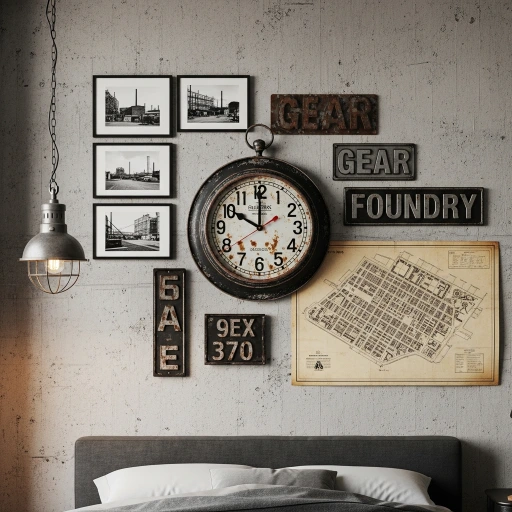
A large original factory clock with a metal face, visible movement housing, and a blackened iron case mounted as the centerpiece of the industrial loft bedroom’s feature wall — surrounded by a carefully curated selection of vintage factory photography prints, large-scale city blueprint reproductions, and metal typography signs in the visual language of industrial commercial graphics — is the wall art program that most completely and most authentically populates the industrial bedroom’s decorative surfaces with the specific visual culture of the manufacturing world that originally inhabited the space. Factory clocks — produced in large quantities for industrial timekeeping applications in the early to mid-twentieth century by specialist manufacturers including International Time Recording Company, Simplex, and Synchronome — are objects of extraordinary functional beauty whose design language of visible engineering, legible scale, and complete absence of decorative ornament beyond what the clock’s functional purpose demands makes them the most appropriate and most aesthetically compelling of all available wall objects for the industrial bedroom context.
Source a genuine vintage factory clock from an industrial salvage dealer, a specialist antique clock retailer, or an online auction platform — choosing an example with original surface patina, original dial graphics, and the specific signs of industrial use that communicate genuine provenance rather than decorative repurposing. Mount the clock at a height that makes it practically readable from the bed — approximately 160 to 180 centimeters from floor level — and position it centrally on the feature wall with sufficient surrounding space for the clock’s visual presence to register as the dominant element before the other wall art pieces are encountered. Select accompanying wall art pieces that extend the industrial photographic and graphic tradition rather than departing into decorative territory — large format black and white factory photography prints from the FSA and WPA archives of the 1930s and 1940s, reproduction city planning blueprints in their characteristic cyan-on-white format, and original metal letterpress printing blocks mounted directly on the wall as three-dimensional typographic objects rather than framed prints.
11. Sliding Barn Door in Blackened Steel and Glass
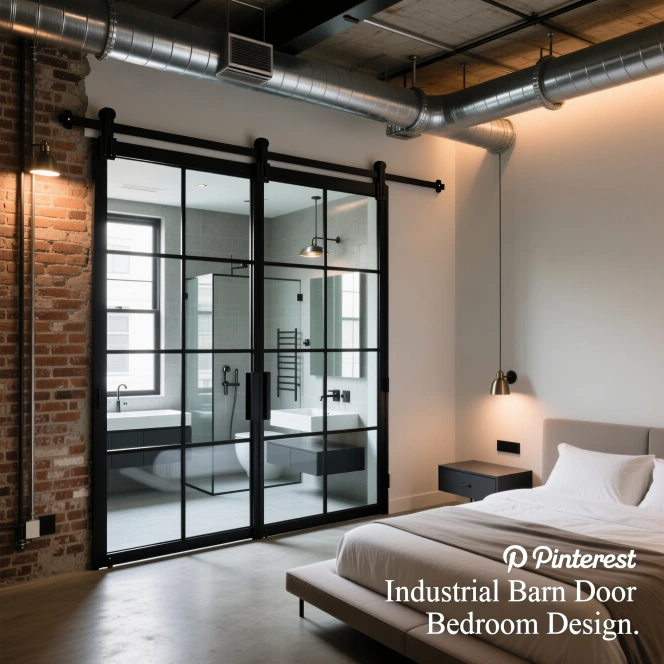
A large sliding door constructed from a blackened steel frame with clear glass panels, running on an exposed overhead steel barn door track mounted directly to the brick or concrete wall surface, is the industrial loft bedroom’s most architecturally sophisticated and most spatially intelligent internal division solution — separating the bedroom from an adjacent bathroom, dressing room, or open-plan living space with the specific combination of visual transparency, spatial flexibility, and industrial material honesty that a conventional hinged door in a timber frame would completely fail to achieve within the industrial loft context. The barn door’s sliding operation — its visible track, its roller hardware, its full panel exposure when open and full panel coverage when closed — communicates the functional, mechanism-celebrating aesthetic of industrial design with a directness and visual completeness that makes it not merely a practical door solution but a genuine architectural feature whose exposed hardware and visible operation are design statements in themselves rather than necessities to be aesthetically minimized.
Fabricate the door frame from fifty-millimeter square steel hollow section in a blackened finish, filled with either clear float glass for maximum visual transparency or reeded glass for diffused privacy with light transmission — the reeded glass option creates the specific quality of milky, pattern-filtered light passing between spaces that is particularly beautiful in an industrial loft context where the raw surrounding materials appreciate the soft visual relief of a translucent surface. Mount the steel barn door track — a heavy-duty industrial profile in blackened steel with cast iron roller carriages — directly to the wall surface without any timber header or concealing soffit construction, allowing the full visual complexity of the track, rollers, and door panel to read as a complete, openly expressed mechanical system. Specify a door panel wide enough to overlap the door opening by at least fifteen centimeters on each side when closed for effective visual division, and heavy enough — at minimum thirty kilograms — that its movement feels substantial and deliberate rather than lightweight and casual in a way inappropriate for the industrial aesthetic’s commitment to material weight and structural honesty.
12. Vintage Industrial Locker Bedside Storage
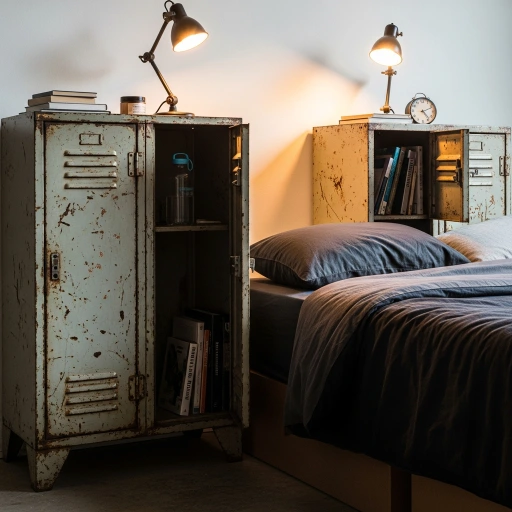
Original metal school or factory lockers repurposed as bedside tables and storage units — their painted steel bodies carrying the specific beauty of decades of institutional use in the form of accumulated paint layers, chips, scratches, rust blooms, and the faded stenciling of previous ownership numbers or ownership marks — are the industrial loft bedroom furniture pieces that most directly and most honestly bring the material culture of the industrial and institutional world into the domestic bedroom space with complete authenticity and without the sanitizing distance of reproduction or decorative interpretation. The repurposed locker is the industrial bedroom’s most literal expression of its design philosophy — taking an object from the industrial world, appreciating rather than concealing or apologizing for the evidence of its previous life, and finding within that evidence of use and age a beauty that conventional furniture manufacture, with its commitment to pristine surfaces and uniform finishes, is structurally incapable of producing.
Source lockers from school surplus dealers, factory clearance sales, industrial salvage yards, and specialist vintage industrial furniture retailers — choosing examples with the most visually interesting surface histories rather than the least damaged specimens. The most beautiful industrial lockers for bedroom use have multiple paint layers in different colors, indicating multiple institutional ownerships over decades, with peeling and chipping that reveals earlier color layers beneath the most recent application — a green locker revealing cream beneath revealing grey beneath grey is a more interesting and more beautiful object than one that has been consistently painted throughout its life. Clean the lockers of organic material and treat active rust areas with a rust converter product that chemically stabilizes the iron oxide without changing its visual character, then seal the entire surface with a matte clear lacquer that prevents further deterioration while preserving the complete surface history intact. Position one locker on each side of the bed — its flat top providing a practical surface for lamp, book, and water glass, its interior compartments providing organized storage for the specific small objects that populate bedside space in daily use.
13. Black Steel Window Frame Room Divider
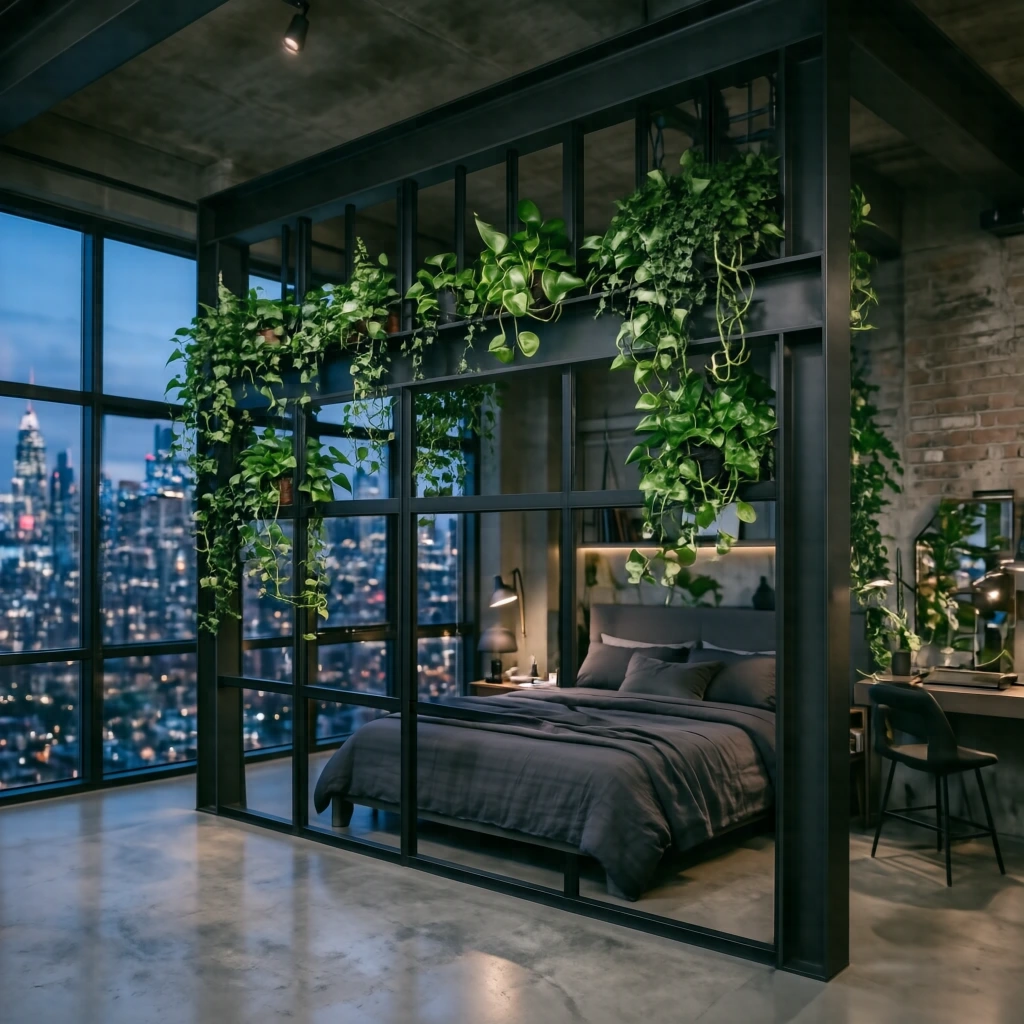
A large black steel window frame structure — constructed from welded square steel hollow section in the proportion and gridded pattern of an industrial warehouse window — used as a freestanding or wall-mounted open room divider is the industrial loft bedroom design solution that most inventively and most architecturally resolves the challenge of creating spatial division within an open-plan loft without introducing the visual weight and spatial closure of a full partition wall that would destroy the generous, unencumbered spatial character that makes the industrial loft format so experientially distinctive and so architecturally appealing. The open steel frame divider creates the psychological sense of spatial separation — defining the sleeping zone as a distinct area within the larger loft volume — while maintaining the visual continuity, light transmission, and sense of spatial generosity that genuine walls would permanently and irreversibly eliminate.
Fabricate the frame from forty-millimeter square steel hollow section welded into a regular grid of approximately thirty-by-thirty-centimeter openings — the approximate proportion of industrial warehouse window panes — in a blackened or dark grey powder-coated finish. Make the frame large enough to read as a genuine spatial boundary rather than a decorative screen — a minimum height of 210 centimeters and a minimum width of 180 centimeters for the most convincing room division effect in a typical loft bedroom context. Integrate a narrow steel shelf along one horizontal member at approximately 100 centimeters height for placing trailing plants whose cascading growth will, over time, begin to partially fill the frame’s grid openings with organic botanical material — creating the gradual, beautiful integration of living plant material and hard industrial structure that is among the most characteristically and most genuinely beautiful visual effects available in the plant-enriched industrial bedroom. Mount frame-mounted clip lights at the top rail for flexible directional lighting that can be adjusted to illuminate either side of the divider independently.
14. Exposed Plumbing Pipes as Decorative Feature
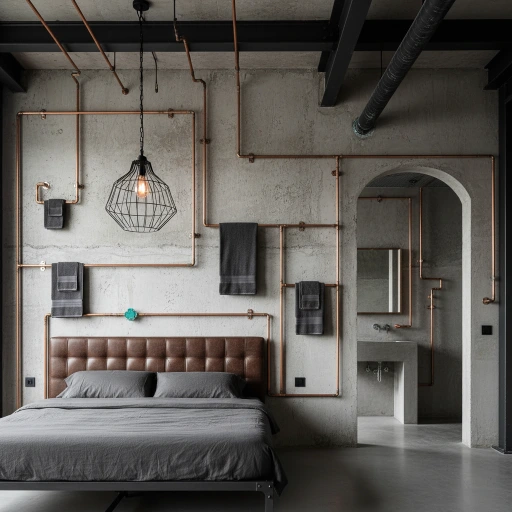
Exposed plumbing pipes left visible on the bedroom’s wall and ceiling surfaces — copper hot water pipes developing their characteristic green verdigris patina over time, black steel cold water mains maintaining their dark, mill scale surface character, and the various junction fittings, valve bodies, and pipe brackets that constitute the full infrastructure vocabulary of an industrial building’s service distribution system — are the industrial loft bedroom’s most authentically architectural decorative feature because they are not decorative at all in intention but rather genuinely functional infrastructure whose visibility is a philosophical position rather than a stylistic choice. The exposed pipe communicates the industrial loft’s core design commitment more clearly than almost any other single element — the commitment to honesty about how buildings work, to the beauty of functional objects observed without the mediation of concealing finishes, and to the specific quality of visual interest that industrial infrastructure creates when encountered at the intimate scale of a domestic interior rather than at the industrial scale for which it was originally designed and proportioned.
Preserve original pipes in their existing condition wherever possible — cleaning of surface deposits and mechanical scale without chemical stripping or painting that would erase the patina of genuine age and use. Where new plumbing is required for renovation work, specify exposed installation deliberately — routing pipes on the surface of walls and ceiling rather than chasing them into the structure, using proper industrial pipe clips at regular intervals, and selecting pipe materials and finishes that are honest expressions of their functional purpose rather than decorative approximations of it. Allow copper pipes to develop their natural patina over time without polishing or lacquering — the progression from bright new copper through the warm brown of initial oxidation to the eventual blue-green of mature verdigris is one of the most beautiful natural material aging processes available in the domestic interior, creating a surface that becomes more visually interesting with every passing year rather than deteriorating toward replacement as conventional decorative finishes inevitably do. Frame particularly interesting pipe runs with subtle directional lighting that allows the pipe’s surface character, patina depth, and fitting details to be appreciated from the vantage point of the bed during the quiet, observant hours of evening and morning.
15. Monochromatic Dark Bedding and Textile Layering
Deeply layered monochromatic bedding in the specific dark palette of charcoal, slate, and near-black — a generous linen duvet cover in washed charcoal, a loosely woven cotton blanket in deep slate thrown casually across the lower third of the bed, a velvet throw in near-black with the specific surface sheen that distinguishes velvet from matte textiles even in the same color, and multiple pillows in the same dark palette with enough textural variety between their fabric surfaces to create visual distinction without color contrast — is the industrial loft bedroom textile approach that most successfully transforms a potentially cold and hard urban interior into a genuinely sensuous, deeply comfortable, and visually sophisticated sleeping environment. The dark monochromatic bed creates the specific quality of a luxurious, enveloping retreat within the industrial space — a warm, soft, visually rich island of human comfort that contrasts with and thereby enhances the room’s raw, hard surfaces rather than competing with them through inappropriate domestic softness or conventional bedroom color choices.
Layer textiles with genuine attention to surface texture as the primary vehicle of visual interest within the constrained color palette — the slight sheen of washed linen against the flat matte of cotton canvas, the pile depth of velvet against the open weave of a loosely woven blanket, and the crisp, cool surface of a cotton percale pillowcase against the rumpled, lived-in softness of a linen pillowcase communicate the bed’s tactile richness to the eye even before touch confirms it. Source bedding from brands that treat textile quality with the same seriousness that the industrial design approach brings to its architectural and material choices — Cultiver, Rough Linen, and Society Limonta all produce bed linens in the specific dark colour palette and matte surface quality appropriate for the industrial bedroom aesthetic, with the fabric weights and construction quality that justify their premium positioning as genuine long-term bedding investments. Add one small, warm-colored accent — a single terracotta or rust cushion, a natural linen pillow with botanical embroidery — within the dark monochromatic bed composition for the subtle color warmth that prevents the dark palette from feeling oppressive or uncomfortably austere in a space where genuine human rest and genuine human comfort are the ultimate design objectives.
16. Urban Rooftop View and Minimal Window Treatment
Floor-to-ceiling steel-framed windows offering a genuinely spectacular urban rooftop view — water towers, industrial chimneys, neighboring loft buildings, the city’s layered skyline, and the constantly changing sky above it all — treated with the absolute minimum of window covering necessary for privacy and light control, with sheer steel-grey linen panels pushed entirely to the sides when not needed, represents the industrial loft bedroom’s most fundamental and most powerful design statement: that the city itself is the room’s most magnificent decoration, that the view of the urban landscape is the bedroom’s most spectacular artwork, and that any window treatment beyond the minimum necessary for privacy and sleep is an obstruction of the room’s greatest visual asset rather than an enhancement of its comfort or beauty. The industrial loft bedroom that most fully realizes its design potential is the one that most completely embraces the city — not as a backdrop to be managed and softened behind layers of fabric and glass, but as an active, dynamic, perpetually interesting visual environment that changes its character hourly from the cool blue light of early morning through the warm gold of afternoon to the amber and neon glow of urban nighttime.
Position the bed to face the window wall directly — making the city view the first and last thing seen each day, creating the experience of waking up inside the urban landscape rather than beside it — and resist the conventional impulse to orient the bed toward an interior wall that would place the view at the bedroom’s visual periphery rather than its experiential center. Install sheer panels in a steel-grey or natural linen tone that, when drawn across the glass, soften direct sunlight without eliminating the view’s silhouette and the ambient quality of exterior light — choosing a fabric with sufficient open weave to transmit the colored light of sunset and city illumination rather than completely filtering it. Add blackout roller blinds recessed within the window reveals for genuine darkness during sleeping hours, sized to retract completely and invisibly into the reveal when raised so that nothing interrupts the clean steel frame and the spectacular unmediated view that the industrial loft bedroom’s highest and most genuinely extraordinary design achievement always ultimately is — the view of the living city, framed in steel, from within the warm shelter of a beautifully designed urban home.